Rust Mastery Blueprint
Your Step-by-Step Journey to Rust Proficiency
Master Rust and write safe, efficient code that runs reliably in production.
207 pages11 chaptersJan 5, 2026Rust
About this book
This step-by-step guide takes you from syntax basics through advanced concurrency and async programming, designed for programmers ready to level up. You'll learn Rust's revolutionary ownership model that eliminates memory bugs at compile time, handle errors with confidence, and build concurrent applications without fear of data races. Each chapter builds on the last with clear explanations, practical examples, and hands-on exercises. Whether you're building systems software, web services, or performance-critical applications, you'll gain the skills to write Rust code that's not just correct, but elegant. Progress at your own pace through foundational concepts, memory safety principles, testing strategies, and real-world package development. By the end, you'll have the confidence and competence to tackle any Rust project.
Table of contents
- IntroductionWhy Rust Matters Now, How to Use This Book, What You'll Learn and BuildRead below
- Chapter 1: Getting Started with RustInstallation and Setup, Your First Rust Program, Understanding Cargo
- Chapter 2: Rust Syntax FundamentalsVariables, Types, and Mutability, Functions and Control Flow, Comments and Code Style
- Chapter 3: The Ownership Model ExplainedThe Three Rules of Ownership, Move Semantics and Transfer, Practicing Ownership Patterns
- Chapter 4: Borrowing and ReferencesImmutable References and Borrowing, Mutable References and the Borrow Checker, Common Reference Patterns
- Chapter 5: Error Handling MasteryResult and Option Types, Error Propagation and the ? Operator, Creating Custom Error Types
- Chapter 6: Collections and Data StructuresVectors and Strings, HashMaps and HashSets, Choosing the Right Collection
- Chapter 7: Concurrency FundamentalsCreating and Managing Threads, Message Passing Between Threads, Shared State and Mutexes
- Chapter 8: Async Programming EssentialsAsync/Await Syntax and Concepts, Futures and Runtime Execution, Common Async Patterns
- Chapter 9: Testing Your Rust CodeWriting Unit Tests, Integration Tests and Test Organization, Testing Best Practices
- Chapter 10: Building and Publishing PackagesStructuring Cargo Projects, Managing Dependencies and Versions, Publishing to Crates.io
- Chapter 11: Practical Projects and Real-World ApplicationsBuilding a Command-Line Application, Creating a Simple Web Service, Systems Programming Basics
- ConclusionYour Rust Journey Continues, Next Steps and Resources
Introduction
Learning a new programming language can feel overwhelming, especially when that language challenges fundamental assumptions about how code should work. Rust is different from most languages you've encountered. It doesn't just offer new syntax or a fresh set of libraries—it presents an entirely new way of thinking about memory, safety, and concurrency. This book exists to guide you through that transformation, step by step, without assuming you need to become a systems programming expert overnight. Whether you're coming from Python, JavaScript, Java, or any other language, you'll find that Rust's approach makes you a better programmer, even if you eventually return to your original language of choice.
The journey ahead is structured around a simple principle: understanding comes from doing. You won't find pages of abstract theory without practical application. Instead, each concept is introduced with clear explanations, followed immediately by concrete examples and exercises that cement your understanding. This approach respects your time and your intelligence. You're an intermediate programmer already—you understand loops, functions, and data structures. What you need isn't a patronizing introduction to programming itself, but a clear path through Rust's unique features and the reasoning behind them. That's exactly what this book provides.
Rust has gained remarkable momentum in recent years, and for good reason. Major technology companies are adopting it for critical infrastructure. Open source projects are rewriting core components in Rust. Developers consistently rank it as one of the most loved programming languages in industry surveys[1]. This isn't hype—it's recognition that Rust solves real problems that have plagued software development for decades. Memory safety bugs, data races, and undefined behavior have caused countless security vulnerabilities and system crashes. Rust eliminates these entire categories of errors at compile time, without sacrificing performance. That's not just impressive; it's transformative for anyone building reliable software.
Why Rust Matters Now
The software industry faces a crisis of reliability and security. According to Microsoft's security research, approximately 70% of security vulnerabilities in their products over the past decade have been memory safety issues[2]. Buffer overflows, use-after-free errors, and null pointer dereferences aren't just academic concerns—they're the root cause of exploits that compromise systems worldwide. Traditional languages like C and C++ offer performance but require programmers to manually manage memory, creating countless opportunities for mistakes. Garbage-collected languages like Java and Python eliminate these errors but introduce runtime overhead and unpredictable pauses. Rust breaks this false dichotomy by providing memory safety without garbage collection, achieving both safety and performance simultaneously.
Rust's ownership system is the key innovation that makes this possible. Instead of relying on runtime checks or programmer discipline, Rust encodes memory safety rules directly into the type system. The compiler verifies at compile time that your code follows these rules, catching errors before they ever reach production. This might sound restrictive, but it's actually liberating. Once your code compiles, you can be confident it won't crash due to memory errors. You won't spend hours debugging segmentation faults or tracking down mysterious crashes that only appear in production. The borrow checker—Rust's compile-time guardian—becomes your ally, catching mistakes immediately with clear error messages that explain exactly what went wrong and how to fix it.
Concurrency is another area where Rust shines. Modern applications need to handle multiple tasks simultaneously, whether processing user requests, performing background calculations, or responding to real-time events. Traditional approaches to concurrency are notoriously difficult to get right. Data races—where multiple threads access shared data without proper synchronization—create bugs that are nearly impossible to reproduce and debug. Rust's type system prevents data races at compile time. If your concurrent code compiles, it's free from data races. This guarantee transforms concurrent programming from a minefield of subtle bugs into a straightforward engineering task. You can write parallel code with confidence, knowing the compiler has your back.
The practical implications extend beyond just safety. Rust's performance characteristics make it suitable for domains traditionally dominated by C and C++. Systems programming, embedded devices, game engines, web browsers, operating systems—all of these benefit from Rust's combination of low-level control and high-level safety. But Rust isn't limited to systems programming. Web services built with frameworks like Actix or Axum achieve impressive throughput with minimal resource usage. Command-line tools written in Rust start instantly and run efficiently. The language's versatility means you can use it for everything from microcontrollers to cloud infrastructure, learning one language deeply rather than juggling multiple languages for different domains.
Rust's ecosystem has matured significantly. Cargo, Rust's package manager and build tool, provides a seamless experience for managing dependencies, running tests, and building projects. The crates.io registry hosts over 100,000 packages covering everything from web frameworks to machine learning libraries. Documentation is first-class—every package on crates.io automatically generates browsable documentation, and the community maintains high standards for code quality and API design. The tooling includes excellent IDE support through rust-analyzer, integrated testing frameworks, and helpful compiler messages that often suggest exactly how to fix errors. This mature ecosystem means you can focus on solving problems rather than fighting with tools.
The timing for learning Rust couldn't be better. Industry adoption is accelerating across multiple sectors. The Linux kernel now includes Rust code. Amazon Web Services uses Rust for performance-critical services. Discord rewrote performance-sensitive components in Rust and saw dramatic improvements. Cloudflare, Dropbox, and Mozilla all rely on Rust for production systems. This isn't just a trend—it's a fundamental shift in how the industry approaches systems programming. Learning Rust now positions you at the forefront of this transformation, opening opportunities in companies that value reliability, performance, and modern engineering practices. The skills you develop with Rust—thinking carefully about ownership, handling errors explicitly, designing for concurrency—will make you a better programmer regardless of which language you ultimately use.
Perhaps most importantly, Rust respects your intelligence and your time. The language doesn't hide complexity behind magic abstractions that break in mysterious ways. Instead, it provides powerful tools with clear semantics and predictable behavior. When something goes wrong, the error messages point you toward the solution. When you need to optimize performance, you have fine-grained control without sacrificing safety. This transparency and control make Rust particularly satisfying for programmers who want to understand what their code actually does. You're not just writing code that works—you're writing code you can reason about, maintain, and trust in production.
How to Use This Book
This book is designed for sequential reading, with each chapter building on concepts from previous chapters. Unlike reference manuals that you can jump around in, this is a learning path that takes you from fundamentals to practical proficiency. Start at the beginning, even if some early concepts seem familiar. Rust's approach to seemingly basic ideas like variables and functions differs from other languages in subtle but important ways. Skipping ahead might leave gaps in your understanding that cause confusion later. The progression is deliberate—ownership before borrowing, error handling before collections, concurrency before async programming. Each concept prepares you for the next, creating a solid foundation that supports advanced topics.
Every chapter follows a consistent structure designed to maximize learning efficiency. You'll start with clear explanations of concepts, followed immediately by practical examples that demonstrate those concepts in action. The examples aren't toy code—they're realistic scenarios you'll encounter in actual Rust development. After examples, you'll find exercises that challenge you to apply what you've learned. Don't skip these exercises. The difference between reading about Rust and actually understanding Rust comes from writing code, making mistakes, reading compiler errors, and fixing those mistakes. The exercises are carefully designed to reinforce key concepts and expose common pitfalls in a safe learning environment. Struggle with them. That struggle is where learning happens.
Set up a proper development environment before diving into the content. You'll need Rust installed on your system, along with a text editor or IDE that supports Rust development. Chapter 1 walks you through this setup process in detail, but don't rush through it. A good development environment makes learning significantly easier. Configure your editor to show inline error messages from rust-analyzer. Set up automatic formatting with rustfmt. These tools provide immediate feedback as you write code, catching errors before you even compile. The faster you can iterate—write code, see errors, fix them, repeat—the faster you'll learn. Invest time in your tooling upfront, and it will pay dividends throughout your learning journey.
Pace yourself appropriately. This book contains substantial material, and trying to rush through it will undermine your learning. A realistic pace might be one chapter per week, giving you time to read carefully, work through examples, complete exercises, and let concepts sink in. Some chapters, particularly those on ownership and borrowing, might require more time. That's normal and expected. These concepts are genuinely new for most programmers, and they take time to internalize. Don't measure progress by how quickly you finish chapters. Measure it by how confidently you can write Rust code that compiles on the first try. Speed comes naturally with practice; understanding requires patience and deliberate effort.
When you encounter compiler errors—and you will encounter many—treat them as learning opportunities rather than frustrations. Rust's compiler is famously helpful, often suggesting exactly what you need to change to fix an error. Read these messages carefully. They're teaching you how Rust thinks about code. Early on, you might find yourself fighting the borrow checker, trying to write code that the compiler rejects. This is a normal part of learning Rust. The borrow checker isn't being difficult—it's catching real problems with your code's logic. When you hit these walls, step back and think about ownership. Who owns this data? How long does it need to live? Who needs to access it? Answering these questions will guide you toward solutions that satisfy both your requirements and Rust's safety guarantees.
Supplement your reading with hands-on experimentation. After completing a chapter, try building something small that uses the concepts you just learned. These mini-projects don't need to be complex or original. Build a simple calculator. Create a program that reads a file and counts words. Write a basic HTTP client. The goal isn't to create impressive software—it's to practice applying concepts in contexts slightly different from the book's examples. This experimentation reveals gaps in your understanding and forces you to solve problems independently. Keep these projects simple enough to finish in a few hours, but challenging enough to require thought. The combination of structured learning from the book and unstructured exploration through projects creates a powerful learning experience.
Join the Rust community as you learn. The Rust community is known for being welcoming and helpful to newcomers. The official Rust Discord and forums are excellent places to ask questions when you're stuck. When asking for help, provide context: what you're trying to accomplish, what you've tried, and what error you're encountering. The community appreciates well-formed questions and will often provide detailed explanations that deepen your understanding. Reading others' questions and the responses they receive is also valuable—you'll encounter problems you haven't hit yet and learn solutions before you need them. Community involvement transforms learning from a solitary struggle into a collaborative journey, and the connections you make can last throughout your career.
What You'll Learn and Build
Your journey through this book follows a carefully designed progression from fundamentals to practical application. You'll begin with Rust's syntax and basic concepts, ensuring you can read and write simple Rust programs comfortably. This foundation includes variables, types, functions, and control flow—the building blocks of any program. But even at this early stage, you'll notice differences from other languages. Rust's approach to mutability, its expression-based syntax, and its pattern matching capabilities offer glimpses of the language's power. These early chapters move quickly because you're already a programmer. The goal isn't to teach you what a loop is, but to show you how Rust implements loops and why those implementation details matter.
The heart of the book focuses on Rust's ownership system, the feature that makes Rust unique. You'll learn the three rules of ownership and understand why they exist. Move semantics, borrowing, and lifetimes will transform from mysterious concepts into intuitive tools for managing memory safely. This section requires careful attention because ownership is genuinely different from anything in mainstream languages. You'll work through numerous examples that demonstrate common ownership patterns and learn to recognize situations where different approaches are appropriate. By the end of these chapters, you'll think about data ownership automatically, and the borrow checker's complaints will make immediate sense. This mental model is the key that unlocks everything else in Rust.
Error handling receives dedicated attention because Rust's approach differs dramatically from exception-based languages. You'll master the Result and Option types, learning to handle errors explicitly and propagate them elegantly using the ? operator. The chapter on error handling shows you how to create custom error types that provide meaningful context, making debugging easier and your APIs more user-friendly. You'll see how Rust's error handling forces you to think about failure cases upfront, leading to more robust code. This might feel tedious initially, but you'll come to appreciate how it prevents the silent failures and unexpected crashes that plague other languages. Explicit error handling is one of Rust's greatest strengths, turning potential runtime disasters into compile-time considerations.
Collections and data structures form the practical foundation for real programs. You'll learn when to use vectors versus arrays, how strings work in Rust (and why they're more complex than in other languages), and how to leverage HashMaps and HashSets effectively. This chapter emphasizes choosing the right collection for your use case, considering factors like performance characteristics, memory usage, and API ergonomics. You'll work through examples that demonstrate common collection patterns, such as building lookup tables, processing sequences of data, and managing dynamic collections that grow and shrink. These practical skills are essential for building real applications, and the chapter provides patterns you'll use repeatedly in your Rust career.
Concurrency and async programming represent Rust's most impressive achievements. The concurrency chapter shows you how to create and manage threads, communicate between them using channels, and share state safely using mutexes and atomic types. You'll understand why Rust's approach to concurrency prevents data races at compile time and how to structure concurrent programs that are both safe and efficient. The async programming chapter builds on these foundations, introducing async/await syntax, futures, and runtime execution models. You'll learn when to use async programming versus traditional threading, and how to structure async code that's readable and maintainable. These chapters include practical examples like building a concurrent web scraper and an async HTTP server, demonstrating real-world applications of these powerful features.
Testing receives first-class treatment because it's integral to Rust's culture and tooling. You'll learn to write unit tests that verify individual functions, integration tests that validate component interactions, and documentation tests that ensure your examples stay current. The testing chapter covers best practices like test organization, using test fixtures, and writing tests that are both thorough and maintainable. You'll see how Cargo's built-in test runner makes testing effortless, and how to use property-based testing to find edge cases you might not think to test manually. By the end of this chapter, writing tests alongside your code will feel natural, and you'll understand how testing accelerates development rather than slowing it down.
The final chapters bring everything together through practical projects. You'll build a command-line application that parses arguments, reads files, and produces formatted output. You'll create a simple web service that handles HTTP requests and returns JSON responses. You'll explore systems programming basics, working with file systems and processes. These projects aren't trivial exercises—they're realistic applications that demonstrate how Rust's features combine to solve real problems. Each project includes complete code, detailed explanations, and suggestions for extensions you can implement to deepen your understanding. By building these applications, you'll gain confidence that you can tackle your own Rust projects, applying the concepts you've learned to solve problems that matter to you.
What You'll Be Able to Do: After completing this book, you'll write Rust programs that compile reliably and run safely. You'll understand ownership deeply enough to design APIs that are both ergonomic and efficient. You'll handle errors explicitly and gracefully. You'll write concurrent code without fear of data races. You'll test your code thoroughly using Rust's built-in tools. You'll navigate the Rust ecosystem confidently, finding and using crates that solve your problems. Most importantly, you'll think like a Rust programmer, considering ownership, borrowing, and lifetimes as natural parts of your design process rather than obstacles to overcome.
The skills you develop here extend beyond Rust itself. Understanding ownership makes you think more carefully about resource management in any language. Explicit error handling improves your code's reliability regardless of the language you're using. The discipline of satisfying a strict type system and borrow checker trains you to reason about your code's correctness before running it. These habits and mental models make you a better programmer in any language, even if you eventually work primarily in languages other than Rust. Consider this book an investment not just in learning Rust, but in fundamentally improving how you think about and write code. The journey ahead is challenging but rewarding, and every step forward builds skills that will serve you throughout your career.
This is the end of the free sample. The full book has 11 chapters.
Want this book written for you?
Tell us your goals and background, and get your own version of this book, tailored by AI to you.


Benefits of AI-tailored books
- Read one book, not ten:
- all the Rust knowledge you need, gathered into a single book.
- Save days of learning:
- tell us your goals, choose your topics, and the whole book is built around them.
- Learn effortlessly:
- Rust book written for your specific background and expertise.
- Understand at a glance:
- includes charts, tables, timelines, checklists, decision trees, and more.
- Stay current:
- written the day you order it, not years ago.
- Trust what you read:
- every book is checked for accuracy, with real research when your subject needs it.
Create your unique book in 3 steps
- 1. Select your focus
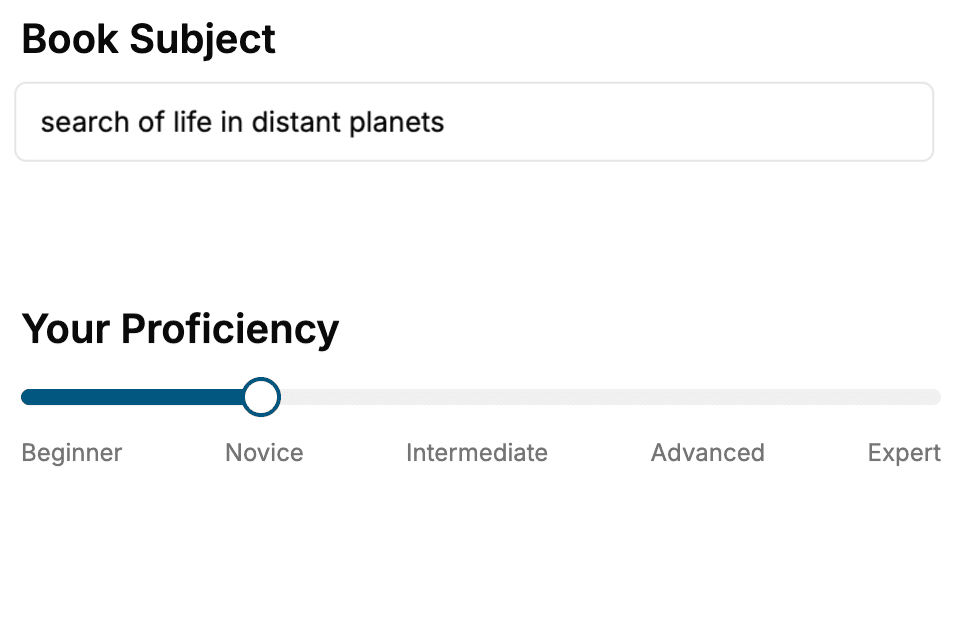
Select the focus of your Rust book and share your background
- 2. Personalize your book
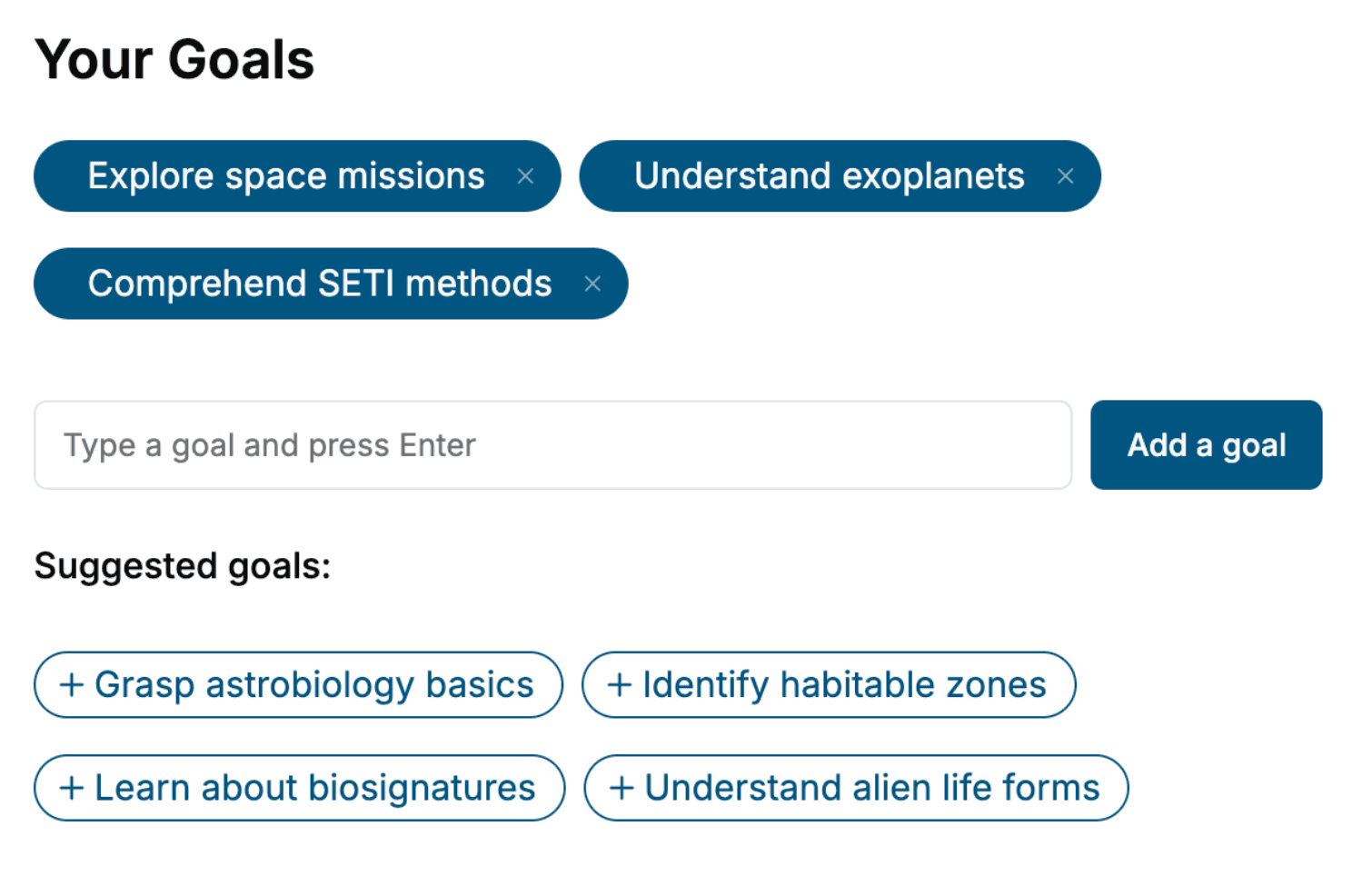
Specify your goals and choose sub-topics to include
- 3. Get your tailored book
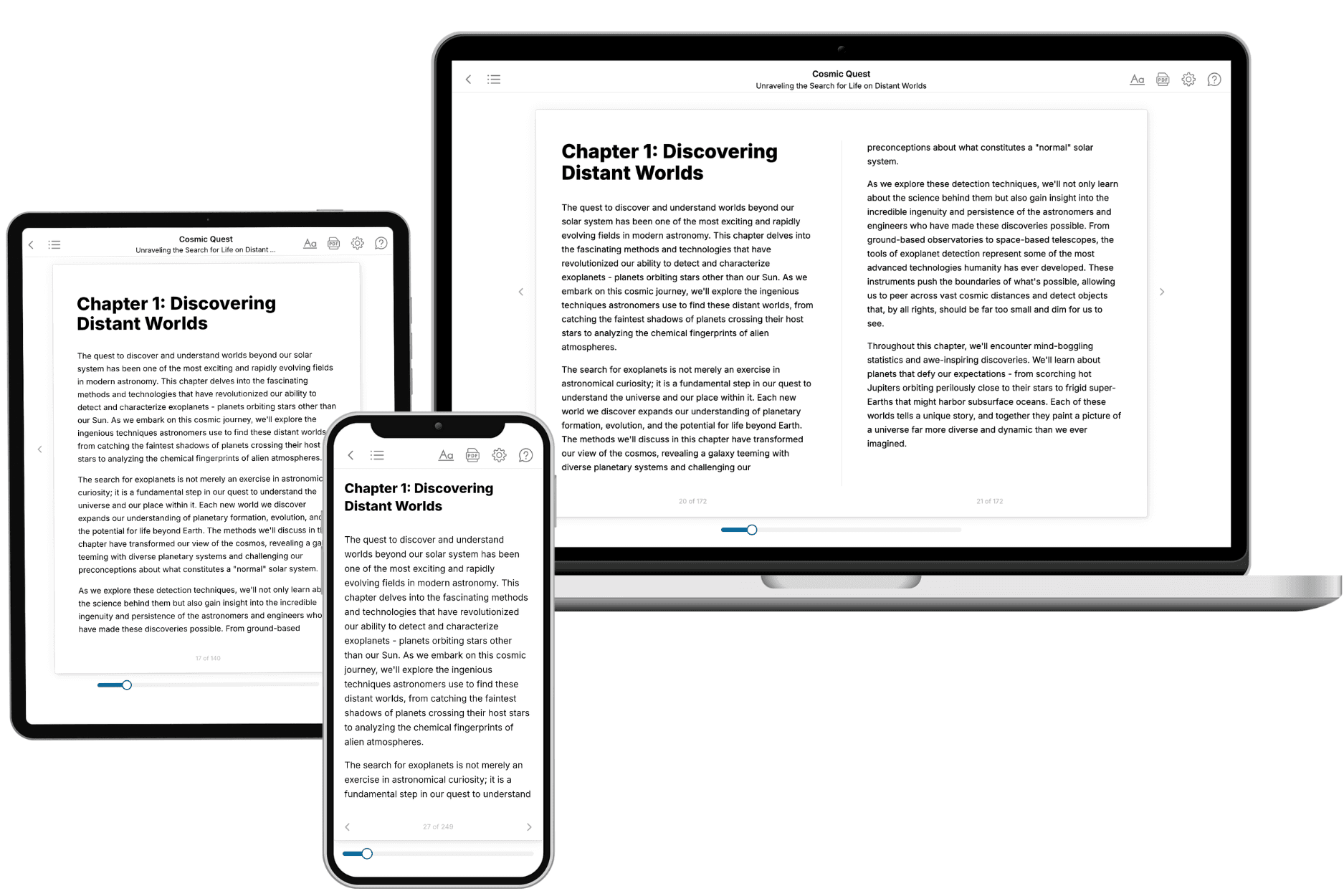
Your book is ready in 10 minutes. Read it online, download as EPUB or PDF, or send to Kindle.
Frequently asked questions
- What is TailoredRead?
TailoredRead creates complete, full-length nonfiction ebooks, written specifically for you. Tell us what you want to learn and why, and TailoredRead writes you a complete ebook on it, with charts, tables, and diagrams throughout. Read it online, on Kindle, or on any e-reader, or download it as a PDF or EPUB. Every book is written fresh the day you order it.
- How is the book tailored to me?
Before anything is written, you answer a few short questions about your goals, your background, and the topics you care about. Your book is then planned around your answers: written at your level, focused on your goals, and covering the topics you chose, instead of the one-size-fits-all book a store sells everyone.
- Will it read like generic AI content?
No. Your book isn't a chat transcript: it's planned chapter by chapter before a single word is written, told in a clear book voice, and explains ideas visually with charts, tables, and diagrams. After writing, every book goes through an editorial pass that polishes chapters so the book reads consistent from start to finish. Judge for yourself: browse thousands of sample books on our Explore Books page.
- How accurate is the content?
Our AI first checks whether your subject needs live research. Niche and fast-moving subjects are researched before writing, and the book plan and chapters are grounded in what it finds. After writing, every book goes through a quality pass that checks its facts and consistency, and researched books list their sources in a Notes section at the back.
- How long is the book?
You choose the length: Comprehensive (250-300 pages), Detailed (150-200 pages), Essential (70-100 pages), or Short (30-50 pages).
- Does the book include visuals?
Yes. Every book includes charts, tables, and diagrams: timelines, checklists, step-by-step guides, decision trees, comparison tables, matrices, and bar charts. A typical book includes dozens of these visual elements.
- Can I read it on Kindle? What formats can I download?
Yes. Every book can be read in our online reader or downloaded as a PDF or EPUB. The EPUB can be opened with Kindle, Apple Books, Kobo, and any e-reader. The Commercial and Author licenses also include an editable Word (DOCX) and Markdown download.
- How much does it cost?
About the price of a regular ebook. The exact price depends on your book's length and complexity, from $2 for the shortest books to $35 for the most comprehensive, and it's shown when you review your book, before you commit to anything. Each book is a one-time purchase, yours to keep, no subscription. Licenses that let you share, teach, or publish your book range from $35.99 to $49.99.
- Can I preview the book before purchasing?
Before you pay, you'll see what your book will cover: the title, a detailed description, the estimated length, and the complete chapter-by-chapter table of contents, so you know what you're getting before you decide. The full text itself is written after you purchase.
- How long does it take to create a book?
About 10 minutes. You can start reading the opening chapters while the rest is still being written.