The Safety Professional's Playbook
Strategies for Creating a Safer, More Productive Workplace
Your workplace is about to become a beacon of safety excellence.
300 pages15 chaptersApr 3, 2025Workplace SafetyCreated by Jason
About this book
As you dive into The Safety Professional's Playbook, you'll discover a wealth of practical strategies and innovative approaches to transform your organization's safety culture. This comprehensive guide takes you through the essential elements of workplace safety, from hazard identification and risk assessment to emergency planning and safety leadership. You'll learn how to implement cutting-edge safety protocols, conduct thorough audits, and develop effective training programs that resonate with your team. The book delves into the nuances of creating ergonomic workspaces, optimizing PPE usage, and leveraging behavior-based safety techniques to prevent accidents before they happen. With real-world examples and actionable insights, you'll be equipped to tackle the most pressing safety challenges in your workplace. Whether you're looking to streamline incident reporting, enhance hazard communication, or develop meaningful safety metrics, this book provides the tools and knowledge you need to succeed. By the time you finish reading, you'll have a clear roadmap to not only meet compliance standards but to exceed them, creating a workplace where safety is ingrained in every aspect of operations.
Table of contents
- IntroductionThe Current Workplace Safety Landscape, Overview of the Book's Contents, How to Use This Guide EffectivelyRead below
- Chapter 1: Foundations of Workplace SafetyCore Principles of Occupational Safety, Understanding the Regulatory Framework, Introduction to Safety Management Systems, Building a Positive Safety Culture
- Chapter 2: Hazard Identification and Risk AssessmentTypes of Workplace Hazards, Techniques for Hazard Recognition, Using Risk Assessment Matrices, Conducting Job Hazard Analysis
- Chapter 3: Implementing Safety ControlsThe Hierarchy of Controls, Engineering Controls for Workplace Safety, Administrative Controls and Safe Work Practices, Personal Protective Equipment Selection and Use
- Chapter 4: Developing Effective Safety ProceduresWriting Clear and Concise Safety Procedures, Lockout/Tagout Procedures, Confined Space Entry Protocols, Fall Protection Systems and Procedures
- Chapter 5: Ergonomics in the WorkplacePrinciples of Ergonomic Design, Ergonomic Workstation Design, Safe Manual Handling Techniques, Conducting Ergonomic Assessments
- Chapter 6: Industrial Hygiene and Health HazardsChemical Safety and Handling, Noise Level Monitoring and Control, Indoor Air Quality Management, Respiratory Protection Programs
- Chapter 7: Fire Safety and Emergency ResponseFire Prevention Strategies, Fire Protection Systems, Emergency Evacuation Planning, Developing an Emergency Response Plan
- Chapter 8: Safety Training and EducationAssessing Training Needs, Effective Safety Training Methods, Evaluating Training Effectiveness, Continuous Safety Education Programs
- Chapter 9: Safety Communication and SignageHazard Communication Standards, Conducting Effective Safety Meetings, Designing and Implementing Safety Signage, Understanding and Using Safety Data Sheets
- Chapter 10: Incident Management and InvestigationIncident Reporting Systems, Incident Investigation Techniques, Root Cause Analysis Methods, Implementing Corrective Actions
- Chapter 11: Safety Performance Metrics and AnalysisKey Safety Performance Indicators, Safety Data Collection and Management, Analyzing Safety Trends, Benchmarking Safety Performance
- Chapter 12: Safety Audits and InspectionsTypes of Safety Audits, Planning and Conducting Safety Audits, Developing Effective Inspection Checklists, Managing Audit Findings and Recommendations
- Chapter 13: Behavior-Based Safety ProgramsPrinciples of Behavior-Based Safety, Safety Observation Techniques, Providing Effective Safety Feedback and Coaching, Reinforcing Safe Behaviors
- Chapter 14: Safety Leadership and ManagementRoles and Responsibilities of Safety Leaders, Establishing and Managing Safety Committees, Strategies for Employee Safety Engagement, Managing Safety Culture Change
- Chapter 15: Continuous Improvement in SafetyThe Safety Improvement Cycle, Implementing Industry Best Practices, Integrating New Safety Technologies, Future Trends in Workplace Safety
- ConclusionKey Takeaways for Safety Excellence, Next Steps for Implementing Your Safety Strategy
- Glossary of Safety Terms
- Additional Resources
Introduction
Welcome to "The Safety Professional's Playbook: Strategies for Creating a Safer, More Productive Workplace." This comprehensive guide is designed to empower you, as a safety professional, with the knowledge, tools, and strategies needed to elevate workplace safety practices, minimize hazards, and cultivate a robust safety culture within your organization. Whether you're new to the field or a seasoned professional looking to enhance your skills, this book serves as an invaluable resource in your journey towards safety excellence.
In today's rapidly evolving work environment, the role of a safety professional has never been more critical. As industries advance and new technologies emerge, so too do the challenges and complexities of maintaining a safe workplace. This book aims to address these challenges head-on, providing you with a comprehensive framework for understanding, implementing, and continuously improving safety practices across various sectors and work settings.
Throughout this guide, you'll find a wealth of practical advice, evidence-based strategies, and real-world examples that illustrate the principles of effective safety management. From foundational concepts to advanced techniques, each chapter is designed to build upon your existing knowledge and provide actionable insights that you can apply immediately in your workplace.
As we embark on this journey together, it's important to remember that creating a truly safe work environment is not just about compliance with regulations or implementing a set of procedures. It's about fostering a culture where safety is valued, prioritized, and integrated into every aspect of operations. It's about empowering employees at all levels to take ownership of their safety and the safety of those around them. And ultimately, it's about creating a workplace where everyone can thrive, confident in the knowledge that their well-being is paramount.
Let's begin by exploring the current landscape of workplace safety, providing an overview of what you can expect from this book, and discussing how to make the most of the information and strategies presented in the following chapters.
The Current Workplace Safety Landscape
The field of occupational safety and health has undergone significant transformations in recent years, driven by technological advancements, evolving regulatory frameworks, and a growing recognition of the importance of holistic approaches to worker well-being. To effectively navigate this landscape, it's crucial to understand the current trends, challenges, and opportunities shaping workplace safety practices today.
One of the most notable trends is the increasing integration of technology in safety management. From wearable devices that monitor worker fatigue and exposure to hazards, to sophisticated data analytics tools that predict potential safety issues before they occur, technology is revolutionizing how organizations approach safety. For instance, the use of virtual reality (VR) for safety training has shown promising results, with some studies reporting up to a 75% increase in knowledge retention compared to traditional training methods[1].
Another significant shift in the safety landscape is the growing emphasis on mental health and psychosocial risks in the workplace. The recognition that psychological well-being is integral to overall worker safety has led to the development of more comprehensive safety programs that address both physical and mental health concerns. This holistic approach is particularly relevant in light of the global COVID-19 pandemic, which has brought unprecedented challenges to workplace safety and highlighted the interconnectedness of physical and mental health.
The regulatory environment continues to evolve, with many jurisdictions updating their occupational safety and health standards to address emerging risks and changing work patterns. For example, the rise of remote and flexible work arrangements has prompted discussions about how to ensure safety in non-traditional work settings. Safety professionals must stay abreast of these regulatory changes and be prepared to adapt their strategies accordingly.
Sustainability and corporate social responsibility have also become increasingly intertwined with safety practices. Organizations are recognizing that a strong safety culture not only protects workers but also contributes to overall business sustainability and reputation. This has led to a more strategic approach to safety management, with safety performance being viewed as a key indicator of organizational excellence.
Despite these advancements, significant challenges remain. According to the International Labour Organization (ILO), approximately 2.3 million workers die each year from work-related accidents and diseases, and an additional 340 million suffer from non-fatal occupational injuries[2]. These statistics underscore the ongoing need for effective safety interventions and the critical role that safety professionals play in protecting worker health and well-being.
Moreover, the rapid pace of technological change and the emergence of new industries, such as renewable energy and artificial intelligence, present novel safety challenges that require innovative solutions. Safety professionals must be prepared to address risks associated with new technologies, materials, and work processes that may not have existed even a few years ago.
The globalization of supply chains has also added complexity to safety management, requiring organizations to consider safety practices not just within their immediate operations but across their entire value chain. This expanded scope of responsibility demands a more collaborative and systemic approach to safety management.
In this dynamic landscape, the role of the safety professional has evolved from that of a compliance officer to a strategic partner in organizational success. Today's safety professionals are expected to be adept at risk management, data analysis, communication, and change management, in addition to their technical expertise in safety practices. They must be able to articulate the business case for safety investments and demonstrate how safety initiatives contribute to overall organizational performance.
As you navigate this complex and evolving landscape, "The Safety Professional's Playbook" will serve as your guide, providing you with the knowledge, tools, and strategies needed to address current challenges and anticipate future trends in workplace safety. By staying informed about the latest developments in the field and adopting a proactive, strategic approach to safety management, you can play a pivotal role in creating safer, healthier, and more productive workplaces.
Overview of the Book's Contents
"The Safety Professional's Playbook" is structured to provide a comprehensive and logical progression through the key aspects of workplace safety management. Each chapter builds upon the knowledge and concepts introduced in previous sections, allowing you to develop a holistic understanding of safety practices and their implementation. Here's an overview of what you can expect from the contents of this book:
The book begins with the foundational elements of workplace safety in Chapter 1, "Foundations of Workplace Safety." This chapter introduces core principles of occupational safety, provides an overview of the regulatory framework governing workplace safety, and explores the concept of safety management systems. It also delves into the crucial topic of building a positive safety culture, setting the stage for the more detailed discussions that follow.
Chapter 2, "Hazard Identification and Risk Assessment," equips you with the essential skills for recognizing and evaluating workplace hazards. You'll learn about different types of hazards, techniques for hazard recognition, and how to use risk assessment matrices to prioritize safety initiatives. This chapter also covers the process of conducting job hazard analyses, a fundamental tool in proactive safety management.
Moving from identification to action, Chapter 3, "Implementing Safety Controls," explores the hierarchy of controls and how to apply it effectively in your workplace. You'll gain insights into engineering controls, administrative controls, safe work practices, and the selection and use of personal protective equipment (PPE). This chapter provides practical guidance on choosing and implementing the most appropriate safety controls for various workplace scenarios.
Chapter 4, "Developing Effective Safety Procedures," focuses on the critical task of creating clear, concise, and effective safety procedures. It covers general principles of procedure writing and then delves into specific high-risk areas such as lockout/tagout procedures, confined space entry protocols, and fall protection systems. By the end of this chapter, you'll have the skills to develop robust safety procedures tailored to your organization's needs.
The often-overlooked but crucial area of ergonomics is addressed in Chapter 5, "Ergonomics in the Workplace." This chapter covers principles of ergonomic design, workstation setup, safe manual handling techniques, and how to conduct ergonomic assessments. You'll learn how to integrate ergonomic principles into your safety program to prevent musculoskeletal disorders and improve overall worker comfort and productivity.
Chapter 6, "Industrial Hygiene and Health Hazards," delves into the management of chemical, physical, and biological hazards in the workplace. Topics include chemical safety and handling, noise level monitoring and control, indoor air quality management, and respiratory protection programs. This chapter provides you with the knowledge to identify, evaluate, and control a wide range of occupational health hazards.
Fire safety, a critical aspect of workplace safety, is covered in depth in Chapter 7, "Fire Safety and Emergency Response." You'll learn about fire prevention strategies, fire protection systems, emergency evacuation planning, and how to develop comprehensive emergency response plans. This chapter emphasizes the importance of preparedness and quick action in emergency situations.
Chapter 8, "Safety Training and Education," focuses on developing and implementing effective safety training programs. It covers assessing training needs, choosing appropriate training methods, evaluating training effectiveness, and establishing continuous safety education programs. You'll gain insights into adult learning principles and how to create engaging, impactful safety training experiences.
Effective communication is crucial in safety management, and Chapter 9, "Safety Communication and Signage," addresses this important topic. It covers hazard communication standards, conducting effective safety meetings, designing and implementing safety signage, and understanding and using Safety Data Sheets (SDS). This chapter will help you develop strategies to ensure that safety information is clearly communicated and understood throughout your organization.
Chapter 10, "Incident Management and Investigation," provides a comprehensive guide to handling workplace incidents. It covers incident reporting systems, investigation techniques, root cause analysis methods, and implementing corrective actions. You'll learn how to turn incidents into learning opportunities that drive continuous improvement in your safety program.
Measuring and analyzing safety performance is crucial for improvement, and Chapter 11, "Safety Performance Metrics and Analysis," addresses this need. It covers key safety performance indicators, data collection and management, trend analysis, and benchmarking safety performance. This chapter will help you develop a data-driven approach to safety management.
Chapter 12, "Safety Audits and Inspections," provides guidance on conducting thorough safety evaluations. It covers different types of safety audits, planning and conducting audits, developing effective inspection checklists, and managing audit findings and recommendations. You'll learn how to use audits and inspections as powerful tools for identifying areas for improvement in your safety program.
The human factor in safety is addressed in Chapter 13, "Behavior-Based Safety Programs." This chapter explores the principles of behavior-based safety, safety observation techniques, providing effective feedback and coaching, and reinforcing safe behaviors. You'll gain insights into how to influence and shape safety behaviors across your organization.
Chapter 14, "Safety Leadership and Management," focuses on the critical role of leadership in driving safety excellence. It covers the roles and responsibilities of safety leaders, establishing and managing safety committees, strategies for employee safety engagement, and managing safety culture change. This chapter will help you develop the leadership skills needed to champion safety in your organization.
The book concludes with Chapter 15, "Continuous Improvement in Safety," which ties together all the previous chapters into a framework for ongoing safety enhancement. It introduces the safety improvement cycle, discusses implementing industry best practices, explores the integration of new safety technologies, and looks at future trends in workplace safety.
Throughout the book, you'll find case studies, practical examples, and actionable advice that you can apply directly to your work. Each chapter also includes key takeaways and reflection questions to help reinforce your learning and encourage critical thinking about how to apply the concepts in your specific workplace context.
By the time you reach the conclusion, you'll have a comprehensive understanding of modern safety management practices and the tools to implement them effectively. The book closes with a glossary of safety terms and a list of additional resources to support your ongoing professional development in the field of workplace safety.
How to Use This Guide Effectively
To maximize the value you derive from "The Safety Professional's Playbook," it's important to approach the material with a strategic mindset and a commitment to applying the concepts in your day-to-day work. Here are some recommendations for making the most of this guide:
First and foremost, consider your current role and responsibilities in workplace safety. As you read through each chapter, reflect on how the concepts and strategies presented relate to your specific work context. Are there areas where your organization excels? Where are the opportunities for improvement? By continuously connecting the book's content to your real-world experiences, you'll be better equipped to translate knowledge into action.
Take an active reading approach. Don't simply skim through the material; engage with it critically. As you encounter new ideas or strategies, pause to consider how they might be implemented in your workplace. What challenges might you face? What resources would you need? This type of reflective thinking will help you internalize the concepts and prepare you for practical application.
Utilize the case studies and examples provided throughout the book as learning tools. These real-world scenarios offer valuable insights into how safety principles are applied in various industries and situations. As you read these examples, consider how you might adapt the approaches described to fit your own workplace challenges.
Pay special attention to the key takeaways at the end of each chapter. These summaries highlight the most important points and can serve as quick reference guides when you need to revisit specific topics. Consider creating your own summary notes or action items based on these takeaways, tailored to your organization's needs.
Engage with the reflection questions provided. These questions are designed to stimulate critical thinking and help you apply the chapter's concepts to your specific work environment. Take the time to write out your responses or discuss them with colleagues. This process can lead to valuable insights and ideas for improving your safety practices.
Don't hesitate to revisit chapters or sections as needed. Workplace safety is a complex field, and you may find that certain concepts become more relevant or clearer as you gain experience applying others. Use the book as an ongoing reference, returning to specific sections when you encounter related challenges in your work.
Consider forming a study group or discussion circle with other safety professionals in your organization or network. Discussing the book's concepts with peers can provide new perspectives and ideas for implementation. It can also help reinforce your learning and keep you accountable for applying the strategies in your work.
As you progress through the book, start developing an action plan for your organization. Identify the most pressing safety issues in your workplace and use the strategies and tools provided in the book to create a roadmap for addressing these challenges. Set realistic goals and timelines, and be prepared to adjust your plan as you learn and gather more information.
Make use of the additional resources provided at the end of the book. These can help you delve deeper into specific topics or stay updated on the latest developments in workplace safety. Consider setting aside regular time for ongoing professional development, using these resources as a starting point.
Finally, remember that implementing effective safety practices is an ongoing process. Don't expect to transform your organization's safety culture overnight. Instead, focus on making consistent, incremental improvements. Celebrate small wins and use setbacks as learning opportunities. By maintaining a commitment to continuous improvement, you'll be able to create lasting positive change in your workplace safety practices.
By approaching "The Safety Professional's Playbook" with these strategies in mind, you'll be well-positioned to extract maximum value from its contents and translate that knowledge into tangible improvements in workplace safety. Remember, the ultimate goal is not just to read and understand, but to apply and adapt these principles to create a safer, healthier, and more productive work environment for all.
Notes
Introduction
- 1. R. Sacks and others, "Construction safety training using immersive virtual reality," Construction Management and Economics, 2013
- 2. International Labour Organization, "Safety and health at work," 2021
This is the end of the free sample. The full book has 15 chapters.
Want this book written for you?
Tell us your goals and background, and get your own version of this book, tailored by AI to you.


Benefits of AI-tailored books
- Read one book, not ten:
- all the Workplace Safety knowledge you need, gathered into a single book.
- Save days of learning:
- tell us your goals, choose your topics, and the whole book is built around them.
- Learn effortlessly:
- Workplace Safety book written for your specific background and expertise.
- Understand at a glance:
- includes charts, tables, timelines, checklists, decision trees, and more.
- Stay current:
- written the day you order it, not years ago.
- Trust what you read:
- every book is checked for accuracy, with real research when your subject needs it.
Create your unique book in 3 steps
- 1. Select your focus
Select the focus of your Workplace Safety book and share your background
- 2. Personalize your book
Specify your goals and choose sub-topics to include
- 3. Get your tailored book
Your book is ready in 10 minutes. Read it online, download as EPUB or PDF, or send to Kindle.


Frequently asked questions
- What is TailoredRead?
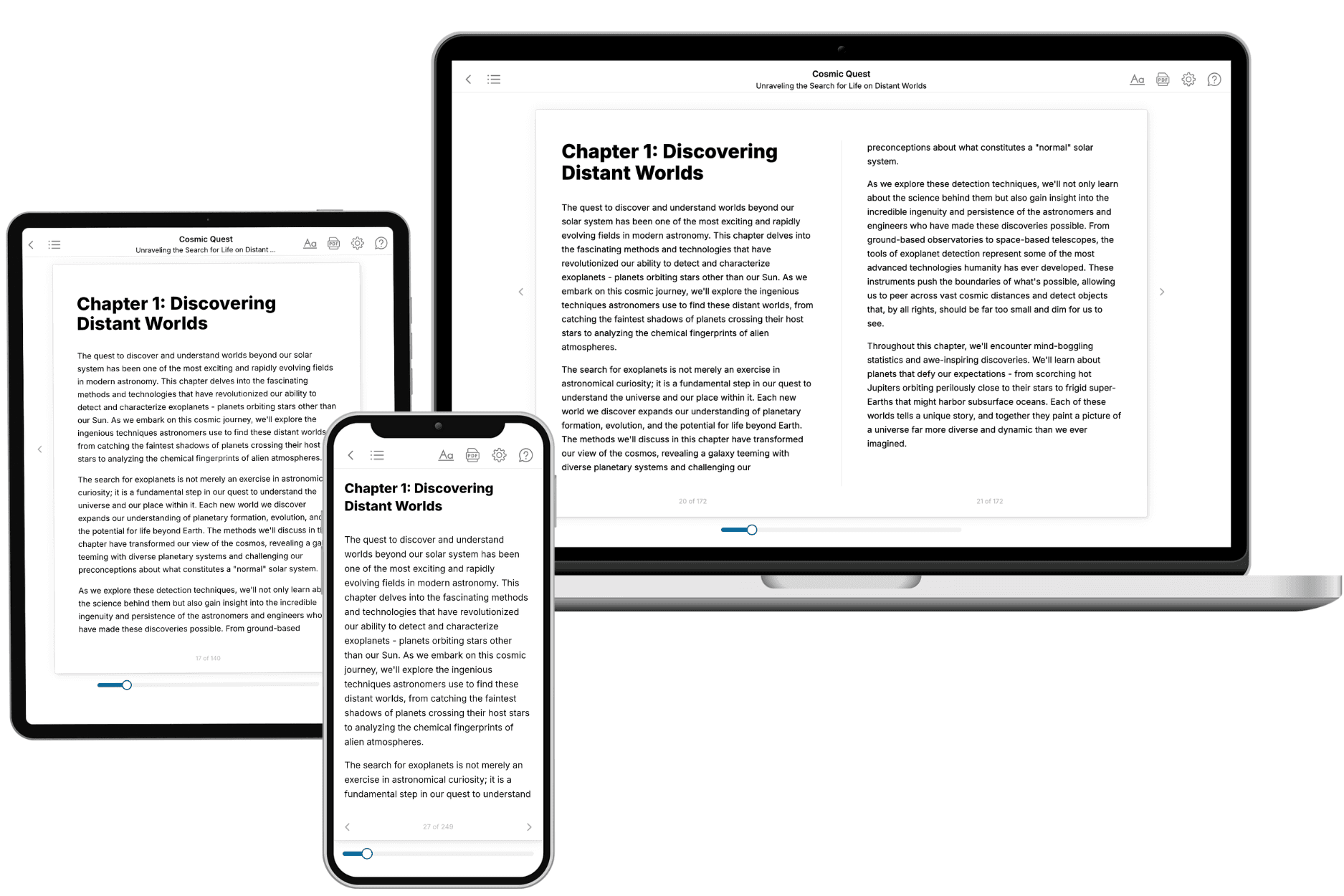
TailoredRead creates complete, full-length nonfiction ebooks, written specifically for you. Tell us what you want to learn and why, and TailoredRead writes you a complete ebook on it, with charts, tables, and diagrams throughout. Read it online, on Kindle, or on any e-reader, or download it as a PDF or EPUB. Every book is written fresh the day you order it.
- How is the book tailored to me?
Before anything is written, you answer a few short questions about your goals, your background, and the topics you care about. Your book is then planned around your answers: written at your level, focused on your goals, and covering the topics you chose, instead of the one-size-fits-all book a store sells everyone.
- Will it read like generic AI content?
No. Your book isn't a chat transcript: it's planned chapter by chapter before a single word is written, told in a clear book voice, and explains ideas visually with charts, tables, and diagrams. After writing, every book goes through an editorial pass that polishes chapters so the book reads consistent from start to finish. Judge for yourself: browse thousands of sample books on our Explore Books page.
- How accurate is the content?
Our AI first checks whether your subject needs live research. Niche and fast-moving subjects are researched before writing, and the book plan and chapters are grounded in what it finds. After writing, every book goes through a quality pass that checks its facts and consistency, and researched books list their sources in a Notes section at the back.
- How long is the book?
You choose the length: Comprehensive (250-300 pages), Detailed (150-200 pages), Essential (70-100 pages), or Short (30-50 pages).
- Does the book include visuals?
Yes. Every book includes charts, tables, and diagrams: timelines, checklists, step-by-step guides, decision trees, comparison tables, matrices, and bar charts. A typical book includes dozens of these visual elements.
- Can I read it on Kindle? What formats can I download?
Yes. Every book can be read in our online reader or downloaded as a PDF or EPUB. The EPUB can be opened with Kindle, Apple Books, Kobo, and any e-reader. The Commercial and Author licenses also include an editable Word (DOCX) and Markdown download.
- How much does it cost?
About the price of a regular ebook. The exact price depends on your book's length and complexity, from $2 for the shortest books to $35 for the most comprehensive, and it's shown when you review your book, before you commit to anything. Each book is a one-time purchase, yours to keep, no subscription. Licenses that let you share, teach, or publish your book range from $35.99 to $49.99.
- Can I preview the book before purchasing?
Before you pay, you'll see what your book will cover: the title, a detailed description, the estimated length, and the complete chapter-by-chapter table of contents, so you know what you're getting before you decide. The full text itself is written after you purchase.
- How long does it take to create a book?
About 10 minutes. You can start reading the opening chapters while the rest is still being written.