Scaling Horizontally
Building Systems That Grow Without Limits
What if your system could handle ten times more users without requiring ten times more infrastructure?
191 pages9 chaptersMay 26, 2026Software Architecture
About this book
Horizontal scaling offers a path to building systems that grow efficiently, but it requires rethinking how you design applications, manage data, and handle concurrency. This book cuts through the complexity and shows you practical strategies for distributing work across multiple machines while maintaining reliability and performance. You'll learn when horizontal scaling makes sense, how to architect stateless applications, implement effective load balancing, manage distributed data, and monitor systems that span multiple nodes. Whether you're building microservices, handling real-time data processing, or preparing for unpredictable growth, this guide provides the patterns, trade-offs, and real-world insights you need to scale confidently.
Table of contents
- IntroductionWhy Scaling Matters in Modern Systems, Vertical vs. Horizontal Scaling: Understanding the Difference, What You'll Learn in This Book, How to Use This BookRead below
- Chapter 1: Foundations of Horizontal ScalingCore Principles of Horizontal Scaling, When Horizontal Scaling Makes Sense, Costs and Benefits of Distributed Systems, Common Pitfalls to Avoid
- Chapter 2: Stateless Application DesignThe State Problem in Distributed Systems, Building Stateless Applications, Managing Sessions and User State, Testing Stateless Systems
- Chapter 3: Load Balancing StrategiesLoad Balancing Fundamentals, Load Balancing Algorithms and Techniques, Sticky Sessions and Affinity, Health Checks and Failover
- Chapter 4: Concurrent Programming PatternsConcurrency Models and Paradigms, Thread Pools and Executors, Message Queues and Asynchronous Processing, The Actor Model for Distributed Concurrency
- Chapter 5: Data Consistency in Distributed SystemsUnderstanding Consistency Models, Strong Consistency and Its Trade-offs, Eventual Consistency and Conflict Resolution, Choosing the Right Consistency Model
- Chapter 6: Database Scaling and ShardingIdentifying Database Bottlenecks, Sharding Strategies and Partitioning, Replication and High Availability, Caching Layers and Read Optimization
- Chapter 7: Network Communication and LatencyNetwork Challenges in Distributed Systems, Communication Patterns and Protocols, Batching and Compression Techniques, Optimizing for Latency
- Chapter 8: Monitoring and ObservabilityWhy Observability Matters at Scale, Collecting and Analyzing Metrics, Distributed Tracing and Request Flow, Alerting and Incident Response
- Chapter 9: Practical Implementation PatternsMicroservices and Service-Oriented Architecture, Containerization and Orchestration, API Design for Scalable Systems
- ConclusionKey Takeaways, Your Path Forward
- Further Reading and Resources
Introduction
There's a moment every engineering team dreads. Traffic spikes, response times climb, and the system that worked perfectly yesterday starts buckling under the weight of its own success. Maybe it's a product launch, a viral moment, or simply the slow accumulation of users over months. Whatever the cause, the result is the same: your infrastructure can't keep up, and you need a solution fast. This book is about building systems that never reach that breaking point, or at least, systems that can grow gracefully when the pressure arrives.
Horizontal scaling is one of the most powerful ideas in modern software engineering. Instead of making a single machine bigger and faster, you add more machines and distribute the work among them. It sounds simple, but the implications run deep. Distributing work across multiple nodes changes how you design applications, how you store and access data, how you handle failures, and how you think about consistency. Done well, horizontal scaling lets you handle ten times the load without ten times the cost. Done poorly, it creates a distributed system that's harder to debug, more expensive to run, and less reliable than what you started with.
This book exists because the gap between "I understand the concept" and "I can actually build this" is wider than most resources acknowledge. There are plenty of articles explaining what horizontal scaling is. There are far fewer that walk you through the real trade-offs, the concrete patterns, and the specific decisions you'll face when building systems that need to grow. That's the gap this book fills. Every chapter is grounded in practical patterns, real-world scenarios, and the kind of hard-won insight that only comes from working through these problems in production environments.
Whether you're a developer who has never deployed beyond a single server, or an architect who has managed distributed systems but wants a clearer framework for making decisions, this book meets you where you are. The goal isn't to make you an expert in every distributed systems paper ever written. The goal is to give you the mental models, the practical patterns, and the confidence to build systems that scale without falling apart.
Why Scaling Matters in Modern Systems
The scale of modern software systems is genuinely staggering. Netflix streams to over 230 million subscribers simultaneously.[1] Amazon processes millions of transactions every hour. WhatsApp, at its peak growth, was adding one million new users every day. These aren't just impressive numbers. They represent engineering challenges that would have been considered unsolvable just two decades ago. The systems behind these products didn't start at that scale. They grew into it, and the decisions made early in their architecture either enabled that growth or had to be painfully undone.
For most teams, the scaling challenge isn't about reaching Netflix-level traffic. It's about building systems that can handle growth without requiring a complete rewrite every time the user base doubles. A startup that builds a monolithic application on a single server might do just fine at a thousand users. At ten thousand users, cracks start to appear. At a hundred thousand, the original architecture often becomes a liability. The teams that navigate this transition smoothly are the ones that understood scaling principles early, even if they didn't implement them all from day one.
Scaling also matters because user expectations have fundamentally changed. A decade ago, a few seconds of load time was acceptable. Today, research from Google shows that 53% of mobile users abandon a site that takes longer than three seconds to load.[2] Users expect instant responses, zero downtime, and consistent performance regardless of how many other people are using the system at the same time. Meeting those expectations at scale requires deliberate architectural choices, not just faster hardware.
There's also a business dimension that's easy to overlook. Downtime is expensive. Amazon has estimated that every 100 milliseconds of latency costs them 1% in sales.[3] For smaller companies, the numbers are proportionally similar. A system that goes down during peak traffic doesn't just lose revenue in that moment. It erodes user trust in ways that are hard to recover from. Scaling isn't just a technical concern. It's a business-critical capability.
Beyond performance and reliability, scaling matters because it shapes how teams work. A system that can only run on a single server creates bottlenecks in development, testing, and deployment. A horizontally scalable system, by contrast, enables teams to deploy independently, test in isolation, and roll out changes gradually. The architectural decisions you make about scaling ripple outward into your team structure, your deployment pipeline, and your ability to move quickly without breaking things.
Finally, scaling matters because the cost of getting it wrong compounds over time. Technical debt in a monolithic system is painful. Technical debt in a distributed system is catastrophic. Every shortcut taken in the early design of a scalable system becomes a potential failure point at higher load. Understanding scaling principles from the start, even if you're not implementing them all immediately, gives you the ability to make informed trade-offs rather than stumbling into expensive mistakes.
Vertical vs. Horizontal Scaling: Understanding the Difference
Before going further, it's worth being precise about what horizontal scaling actually means, because the contrast with vertical scaling reveals why horizontal scaling is so powerful and why it's also so much more complex. These two approaches represent fundamentally different philosophies about how to handle growing demand, and choosing between them (or combining them) is one of the first decisions you'll face when designing for scale.
Vertical scaling, sometimes called "scaling up," means adding more resources to a single machine. You upgrade from a server with 8 CPU cores to one with 32 cores. You increase RAM from 16 GB to 128 GB. You move to faster storage. This approach is intuitive and often the right first step. It requires no changes to your application code, no new infrastructure complexity, and no rethinking of your architecture. For many systems, vertical scaling is sufficient for years.
Horizontal scaling, or "scaling out," means adding more machines and distributing the workload across them. Instead of one powerful server, you run ten smaller servers, each handling a portion of the traffic. This approach has a fundamentally different ceiling. While vertical scaling is limited by the largest machine you can buy (and those machines get exponentially more expensive as they get more powerful), horizontal scaling is theoretically unlimited. You can keep adding nodes as long as your architecture supports it.
The practical differences between these two approaches are significant. Consider a concrete example: a web application serving 10,000 requests per second. With vertical scaling, you might upgrade to a machine with 64 cores and 256 GB of RAM. That machine might cost $20,000 per month in cloud infrastructure. With horizontal scaling, you might run 20 smaller machines at $500 per month each, for a total of $10,000 per month, while also gaining redundancy. If one of those 20 machines fails, the other 19 continue serving traffic. If your single large machine fails, everything goes down.
A useful mental model: Vertical scaling is like replacing a two-lane road with a four-lane highway. Horizontal scaling is like building a second road running parallel to the first. The second approach costs more to coordinate (you need traffic signals, routing signs, and merge points), but it has no theoretical upper limit and doesn't fail completely if one lane is blocked.
That said, horizontal scaling isn't always the right answer. It introduces complexity that vertical scaling doesn't. When you run multiple instances of an application, you have to think about how those instances share state, how requests get routed between them, how data stays consistent across nodes, and how you detect and recover from node failures. These are solvable problems, but they require real engineering effort. For a small team with a simple application, that effort might not be justified.
The decision between vertical and horizontal scaling often comes down to a few key factors:
- Growth trajectory: If you expect traffic to grow by 10x or more, horizontal scaling becomes necessary because vertical scaling hits physical and economic limits.
- Availability requirements: If you need high availability with no single point of failure, horizontal scaling is essential.
- Cost efficiency: At high scale, many smaller machines are typically cheaper than one very large machine with equivalent capacity.
- Team capability: Horizontal scaling requires expertise in distributed systems. If your team doesn't have that expertise yet, starting with vertical scaling while building toward horizontal is often the pragmatic choice.
Most real-world systems use both approaches in combination. You might vertically scale your database server while horizontally scaling your application servers. You might run a small number of large machines for memory-intensive workloads while using many small machines for stateless request processing. The art is in knowing which approach fits which part of your system, and that's a theme that runs throughout this book.
One more distinction worth making: horizontal scaling isn't just about web servers. It applies to databases (through sharding and replication), message queues, caching layers, background job processors, and virtually every component of a modern system. Each of these components has its own scaling characteristics, its own trade-offs, and its own set of patterns. Understanding horizontal scaling means understanding how to apply these principles across your entire stack, not just at the application layer.
What You'll Learn in This Book
This book is organized around the core challenges you'll face when building horizontally scalable systems. Each chapter addresses a specific problem domain, provides the conceptual foundation you need to understand it, and then gives you practical patterns and techniques you can apply immediately. The goal is to move you from understanding to implementation, not just to leave you with a collection of interesting ideas.
Chapter 1: Foundations of Horizontal Scaling establishes the core principles that underpin everything else in the book. You'll learn what makes a system horizontally scalable, when horizontal scaling makes sense versus when it's overkill, and what the real costs and benefits of distributed systems look like. This chapter also covers the most common pitfalls teams fall into when first attempting to scale horizontally, so you can avoid them from the start.
Chapter 2: Stateless Application Design tackles what is arguably the most important prerequisite for horizontal scaling. If your application stores state locally on each server, you can't distribute requests freely across multiple servers. This chapter shows you how to identify and eliminate local state, how to manage sessions and user data in a distributed environment, and how to test stateless systems effectively. You'll see concrete before-and-after examples of applications transformed from stateful to stateless.
Chapter 3: Load Balancing Strategies covers how traffic gets distributed across your fleet of servers. You'll learn the major load balancing algorithms (round-robin, least connections, IP hash, and more), when to use each one, and how to handle the tricky cases like sticky sessions and health-based routing. This chapter also covers health checks and failover, so your system can automatically route around failed nodes without human intervention.
Chapter 4: Concurrent Programming Patterns goes inside individual nodes to look at how work gets parallelized within a single machine. Thread pools, executors, message queues, and the actor model are all covered here. Understanding concurrency within a node is essential for getting the most out of each machine in your horizontally scaled fleet. You'll see practical examples in common languages and frameworks, along with guidance on choosing the right concurrency model for your workload.
Chapter 5: Data Consistency in Distributed Systems addresses one of the hardest problems in distributed computing. When data is spread across multiple nodes, keeping it consistent becomes genuinely difficult. This chapter explains the major consistency models (strong, eventual, and causal consistency), the trade-offs each one involves, and how to choose the right model for your specific use case. You'll also learn practical conflict resolution strategies for eventually consistent systems.
Chapter 6: Database Scaling and Sharding focuses on the data layer, which is often the hardest part of a system to scale. You'll learn how to identify database bottlenecks, how to implement sharding strategies that distribute data across multiple database nodes, and how replication works to provide high availability. The chapter also covers caching layers and read optimization techniques that can dramatically reduce database load.
Chapter 7: Network Communication and Latency examines the network as a first-class concern in distributed systems. When your application runs on multiple machines, network communication becomes a critical performance factor. This chapter covers the major communication patterns (synchronous vs. asynchronous, request-response vs. event-driven), batching and compression techniques, and practical strategies for minimizing latency in distributed systems.
Chapter 8: Monitoring and Observability addresses how you understand what's happening in a system spread across dozens or hundreds of nodes. Traditional debugging approaches don't work in distributed systems. This chapter covers metrics collection, distributed tracing, log aggregation, and alerting strategies designed specifically for horizontally scaled environments. You'll learn how to build the observability infrastructure that lets you diagnose problems quickly, even when those problems span multiple services and nodes.
Chapter 9: Practical Implementation Patterns brings everything together with a focus on real-world implementation. You'll see how microservices architecture enables horizontal scaling at the service level, how containerization and orchestration tools like Kubernetes make it practical to manage large fleets of nodes, and how to design APIs that support scalable systems. This chapter is the most hands-on in the book, with concrete examples and implementation guidance throughout.
How to Use This Book
This book is designed to be read sequentially, but it's also structured so you can jump to the chapters most relevant to your current challenges. If you're new to distributed systems, reading from the beginning will give you the strongest foundation. If you're already working with horizontally scaled systems and have a specific problem to solve, the chapter structure makes it easy to find what you need without reading everything first.
Each chapter follows a consistent structure. It opens with the core concepts and mental models you need to understand the problem space. It then moves into practical patterns and techniques, with concrete examples drawn from real-world scenarios. Each chapter closes with a summary of key decisions and trade-offs, so you can quickly review the most important points. This structure is intentional: understanding the "why" before the "how" makes the practical guidance much easier to apply correctly.
Throughout the book, you'll encounter several recurring elements designed to make the content more actionable:
- Concrete examples: Every major concept is illustrated with a specific scenario, often showing both a problematic approach and a better alternative. These examples are drawn from common application types (web APIs, data pipelines, real-time systems) so they're likely to resemble something you've worked with.
- Decision frameworks: Many of the choices in distributed systems don't have a single right answer. Where that's the case, the book provides frameworks for thinking through the trade-offs based on your specific context, rather than prescribing a one-size-fits-all solution.
- Code patterns: Where implementation details matter, the book includes code examples that illustrate the pattern being discussed. These are written to be clear and instructive rather than production-ready, so focus on the pattern rather than copying the code verbatim.
- Common mistakes: Each chapter highlights the mistakes teams most commonly make in that area, along with guidance on how to avoid or recover from them.
A word about prerequisites: this book assumes you have intermediate experience with software development and some familiarity with concurrent programming concepts. You don't need to have built distributed systems before, but you should be comfortable with concepts like threads, processes, network requests, and basic database operations. If you're completely new to these topics, spending some time with foundational resources first will make this book much more valuable.
It's also worth being honest about what this book doesn't cover. Distributed systems is an enormous field, and no single book can cover all of it. This book focuses on the practical patterns most relevant to application developers and architects building production systems. It doesn't go deep into the theoretical computer science behind distributed systems (consensus algorithms, formal proofs of consistency models, and so on), though it does explain the practical implications of those theories. For readers who want to go deeper into the theory, the Further Reading section at the end of the book points to the best resources available.
One of the most important things to keep in mind as you read is that horizontal scaling is not a destination. It's a capability you build incrementally, making trade-offs at each step based on your current needs and constraints. The best horizontally scaled systems weren't designed all at once. They evolved through a series of deliberate decisions, each one informed by real data about where the bottlenecks were and what the cost of addressing them would be. This book will give you the knowledge to make those decisions well, but the decisions themselves will always depend on your specific context.
Finally, the most effective way to use this book is to apply what you learn as you go. After each chapter, take a few minutes to think about how the concepts apply to a system you're currently working on or have worked on in the past. Where would the patterns described have helped? Where would the trade-offs have been difficult? This kind of active reflection is what turns reading into genuine understanding, and genuine understanding is what lets you build systems that scale confidently when it matters most.
The journey from a single-server application to a horizontally scalable distributed system is one of the most challenging and rewarding paths in software engineering. It requires rethinking assumptions you've probably held for years, learning new patterns, and developing a tolerance for the inherent complexity of distributed systems. But the payoff is real: systems that can grow without limits, handle failures gracefully, and serve users reliably at any scale. That's what this book is here to help you build.
This is the end of the free sample. The full book has 9 chapters.
Want this book written for you?
Tell us your goals and background, and get your own version of this book, tailored by AI to you.


Benefits of AI-tailored books
- Read one book, not ten:
- all the Software Architecture knowledge you need, gathered into a single book.
- Save days of learning:
- tell us your goals, choose your topics, and the whole book is built around them.
- Learn effortlessly:
- Software Architecture book written for your specific background and expertise.
- Understand at a glance:
- includes charts, tables, timelines, checklists, decision trees, and more.
- Stay current:
- written the day you order it, not years ago.
- Trust what you read:
- every book is checked for accuracy, with real research when your subject needs it.
Create your unique book in 3 steps
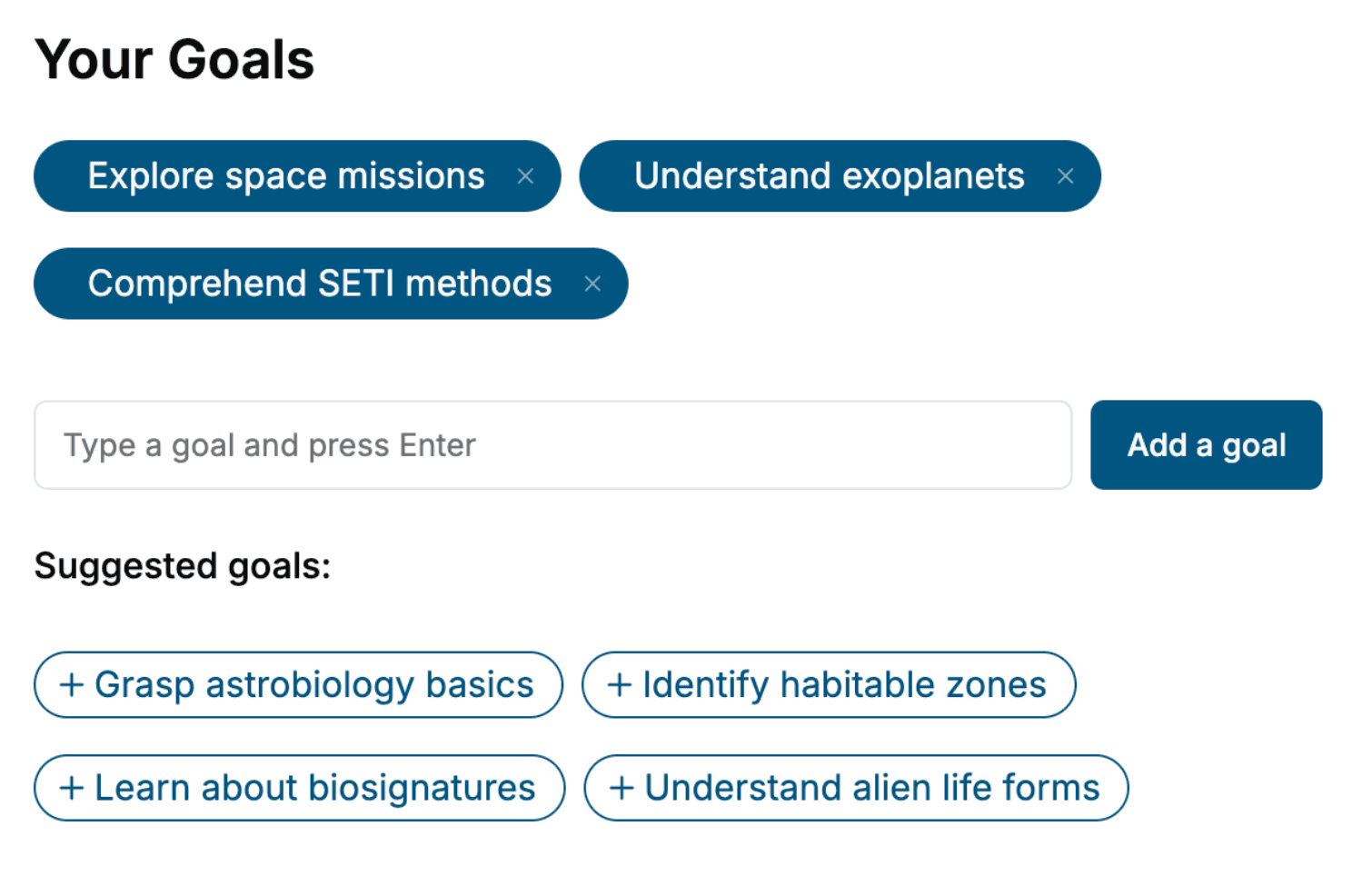
- 1. Select your focus
Select the focus of your Software Architecture book and share your background
- 2. Personalize your book
Specify your goals and choose sub-topics to include
- 3. Get your tailored book
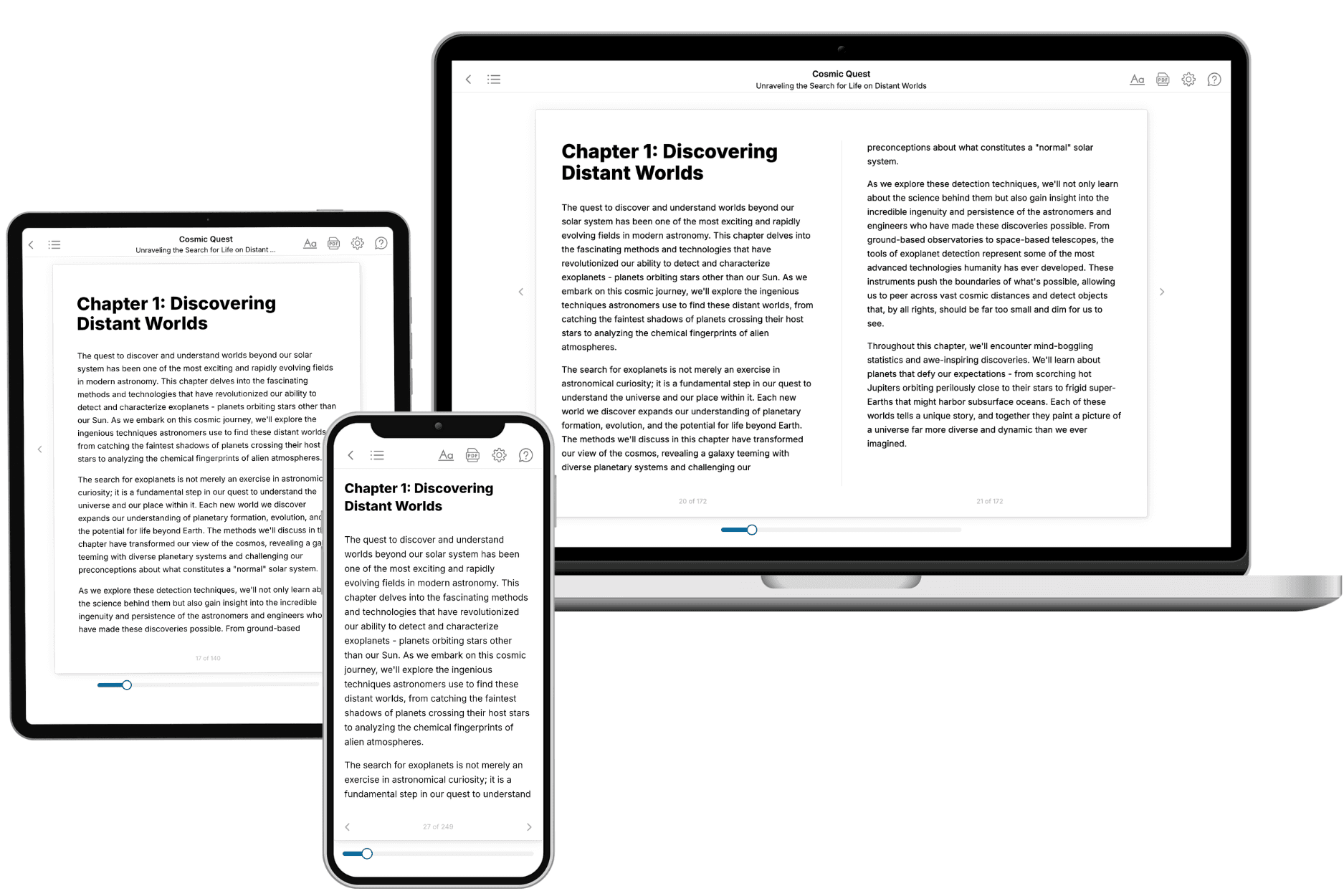
Your book is ready in 10 minutes. Read it online, download as EPUB or PDF, or send to Kindle.

Frequently asked questions
- What is TailoredRead?
TailoredRead creates complete, full-length nonfiction ebooks, written specifically for you. Tell us what you want to learn and why, and TailoredRead writes you a complete ebook on it, with charts, tables, and diagrams throughout. Read it online, on Kindle, or on any e-reader, or download it as a PDF or EPUB. Every book is written fresh the day you order it.
- How is the book tailored to me?
Before anything is written, you answer a few short questions about your goals, your background, and the topics you care about. Your book is then planned around your answers: written at your level, focused on your goals, and covering the topics you chose, instead of the one-size-fits-all book a store sells everyone.
- Will it read like generic AI content?
No. Your book isn't a chat transcript: it's planned chapter by chapter before a single word is written, told in a clear book voice, and explains ideas visually with charts, tables, and diagrams. After writing, every book goes through an editorial pass that polishes chapters so the book reads consistent from start to finish. Judge for yourself: browse thousands of sample books on our Explore Books page.
- How accurate is the content?
Our AI first checks whether your subject needs live research. Niche and fast-moving subjects are researched before writing, and the book plan and chapters are grounded in what it finds. After writing, every book goes through a quality pass that checks its facts and consistency, and researched books list their sources in a Notes section at the back.
- How long is the book?
You choose the length: Comprehensive (250-300 pages), Detailed (150-200 pages), Essential (70-100 pages), or Short (30-50 pages).
- Does the book include visuals?
Yes. Every book includes charts, tables, and diagrams: timelines, checklists, step-by-step guides, decision trees, comparison tables, matrices, and bar charts. A typical book includes dozens of these visual elements.
- Can I read it on Kindle? What formats can I download?
Yes. Every book can be read in our online reader or downloaded as a PDF or EPUB. The EPUB can be opened with Kindle, Apple Books, Kobo, and any e-reader. The Commercial and Author licenses also include an editable Word (DOCX) and Markdown download.
- How much does it cost?
About the price of a regular ebook. The exact price depends on your book's length and complexity, from $2 for the shortest books to $35 for the most comprehensive, and it's shown when you review your book, before you commit to anything. Each book is a one-time purchase, yours to keep, no subscription. Licenses that let you share, teach, or publish your book range from $35.99 to $49.99.
- Can I preview the book before purchasing?
Before you pay, you'll see what your book will cover: the title, a detailed description, the estimated length, and the complete chapter-by-chapter table of contents, so you know what you're getting before you decide. The full text itself is written after you purchase.
- How long does it take to create a book?
About 10 minutes. You can start reading the opening chapters while the rest is still being written.