Scrum with Asana
Master Agile Project Management with the Right Tools and Practices
You're about to discover how to run your team like a high-performing Scrum unit using Asana as your command center.
238 pages11 chaptersAug 3, 2026Scrum
About this book
This book walks you through the complete Scrum framework—from understanding the roles and ceremonies that make it work, to configuring Asana's sprint boards and tracking metrics that actually matter. You'll learn how to structure sprints that deliver predictable results, facilitate standups that move the needle, and use retrospectives to build a culture of continuous improvement. Whether you're managing software development, marketing campaigns, or product launches, you'll see exactly how to apply Scrum principles in your context and leverage Asana's features to eliminate bottlenecks. By the end, you'll have a clear roadmap for implementing Scrum with confidence, the practical knowledge to troubleshoot common challenges, and the tools to measure your team's progress every single day.
Table of contents
- IntroductionWhy Scrum Matters in Today's Workplace, How Asana Becomes Your Scrum Operating System, What You'll Learn and How to Use This BookRead below
- Chapter 1: The Scrum Framework FundamentalsThe Origins and Evolution of Scrum, The Three Pillars: Transparency, Inspection, and Adaptation, Scrum vs. Agile: Understanding the Relationship
- Chapter 2: The Three Core Roles of ScrumThe Product Owner: Vision and Prioritization, The Scrum Master: Servant Leader and Facilitator, The Development Team: Self-Organization and Accountability
- Chapter 3: Scrum Artifacts and How Asana Represents ThemThe Product Backlog: Your Single Source of Truth, The Sprint Backlog: Work Committed for the Sprint, The Increment: Potentially Shippable Product, Mapping Artifacts to Asana Features
- Chapter 4: Setting Up Asana for Scrum SuccessConfiguring Your Asana Workspace and Projects, Using Custom Fields for Story Points and Sprint Assignment, Connecting Asana with Slack, Teams, GitHub, and GitLab
- Chapter 5: Sprint Planning: Setting Your Team Up to WinBacklog Refinement: Preparing Work Before the Sprint, The Sprint Planning Ceremony: Commitment and Clarity, Capacity Planning and Velocity Forecasting, Creating and Configuring Your Sprint Board in Asana
- Chapter 6: Daily Standups and Sprint ExecutionThe Daily Standup: Format, Timing, and Facilitation, Tracking Progress with Asana's Sprint Board, Identifying and Removing Blockers in Real Time
- Chapter 7: Metrics That Matter: Burndown, Velocity, and BeyondUnderstanding and Using Burndown Charts, Measuring Team Velocity and Capacity, Leveraging Asana's Reporting and Analytics Features, Interpreting Metrics to Drive Decisions
- Chapter 8: Sprint Review and Stakeholder CommunicationConducting an Effective Sprint Review, Preparing and Delivering Demos in Asana, Gathering and Incorporating Stakeholder Feedback
- Chapter 9: Retrospectives: Building a Culture of Continuous ImprovementStructuring Retrospectives for Psychological Safety, Identifying What Went Well and What to Improve, Creating and Tracking Retrospective Action Items in Asana
- Chapter 10: Scaling Scrum and Managing Multiple TeamsCommon Challenges When Scaling Scrum, Coordinating Multiple Teams with Asana Portfolios, Managing Dependencies and Cross-Team Communication
- Chapter 11: Common Pitfalls and How to Avoid ThemPreventing Scope Creep and Mid-Sprint Changes, Keeping Ceremonies Focused and Valuable, Overcoming Team Resistance and Building Buy-In
- ConclusionYour Scrum Journey Starts Now, Embracing Continuous Learning and Adaptation
- Glossary of Scrum and Asana Terms
- Further Reading and Resources
Introduction
Most teams don't fail at Scrum because the framework is too complicated. They fail because they try to run it without a clear system underneath it. Sticky notes fall off walls. Spreadsheets go stale by Tuesday. Slack threads bury decisions that nobody can find a week later. The ceremonies happen, but the work stays invisible, and invisible work doesn't get done on time. What separates teams that thrive with Scrum from those that quietly abandon it after two sprints is usually not talent or intention. It's infrastructure.
This book is built around a specific combination: Scrum as the framework, and Asana as the operating system that makes it run. That pairing matters because Scrum gives you the structure, the rhythm, and the accountability model, while Asana gives you the shared workspace where all of that becomes visible and actionable. Together, they solve the infrastructure problem that kills most Scrum adoptions before they gain momentum. You don't need to choose between good process and good tooling. This book shows you how to have both.
The chapters ahead move in a deliberate sequence. They start with the foundations of the Scrum framework, build through the roles, artifacts, and ceremonies, and then get into the practical mechanics of configuring Asana, running sprints, reading metrics, and scaling across teams. Each chapter is designed to be immediately applicable. By the time you finish, you won't just understand Scrum in theory. You'll have a working setup, a set of repeatable practices, and a clear picture of what good looks like at every stage of the sprint cycle.
Before diving into the chapters themselves, this introduction covers three things worth understanding upfront: why Scrum has become the dominant delivery framework across industries, how Asana fits into that picture as more than just a task list, and how to get the most out of the structure of this book based on where your team is right now.
Why Scrum Matters in Today's Workplace
Work has changed faster than most management frameworks have been able to keep up with. Projects that once unfolded over quarters now need to deliver value in weeks. Stakeholder expectations shift mid-project. Requirements that seemed locked in at kickoff turn out to be assumptions. Teams that plan everything upfront and execute in a straight line often find themselves delivering something that no longer matches what the business actually needs. Scrum was designed specifically for this kind of environment, where change is the norm rather than the exception.
At its foundation, Scrum is a framework for iterative delivery. Instead of building everything and releasing once, teams work in short, fixed cycles called Sprints, typically one to four weeks long. At the end of each Sprint, they produce a working Increment of the product, something real and usable, not just a status update. This rhythm creates natural checkpoints where the team can inspect what they've built, gather feedback, and adapt their plan before the next cycle begins. The result is a tighter feedback loop between the people doing the work and the people who need it.
Scrum also addresses a problem that purely technical frameworks ignore: the human side of delivery. The Scrum values of commitment, courage, focus, openness, and respect aren't decorative. They describe the behaviors that make the framework function. A team that commits to a Sprint goal and then quietly drops half the work by Thursday isn't running Scrum. A team where people are afraid to raise blockers isn't running Scrum either. The framework only works when the culture supports it, and the values are the bridge between process and culture.
Beyond software development, Scrum has spread into marketing, operations, product design, and even finance teams. The reason is straightforward: the core problem Scrum solves, delivering complex work in unpredictable environments, is not unique to engineering. A marketing team launching a campaign faces the same challenges as a software team shipping a feature. Requirements change, priorities shift, and the work is rarely as simple as it looked at the start. Scrum gives any team a repeatable structure for navigating that complexity without losing momentum.
The Three Pillars of Scrum, transparency, inspection, and adaptation, are what make the framework self-correcting. Transparency means the team's work, progress, and problems are visible to everyone involved. Inspection means the team regularly examines that work against the goal. Adaptation means they change course when the inspection reveals a gap. These three pillars work together as a continuous loop. Remove any one of them and the loop breaks. A team that is transparent but never inspects is just broadcasting noise. A team that inspects but never adapts is just documenting failure. All three have to be present for Scrum to deliver its promise.
Understanding why Scrum matters is the first step, but it's not enough on its own. The framework requires consistent execution across ceremonies, roles, and artifacts. That's where the right tooling becomes essential, and where Asana enters the picture.
How Asana Becomes Your Scrum Operating System
Think of Scrum as the playbook and Asana as the field where the game is actually played. The playbook tells you what to do: run Sprint Planning, maintain the Product Backlog, hold a Daily Scrum, deliver an Increment. Asana is where all of that happens in practice. It's where tasks live, where priorities are visible, where blockers get flagged, and where the team's progress is tracked in real time. Without a shared workspace like Asana, Scrum ceremonies produce decisions that evaporate before the next standup.
Asana's Asana Board view maps directly onto the Scrum workflow. Columns represent stages of work, typically To Do, In Progress, and Done, and tasks move across the board as the sprint progresses. This visual layout makes the state of the sprint immediately readable to anyone on the team or in the organization. A Product Owner can see at a glance whether the team is on track. A Scrum Master can spot tasks that have been sitting in "In Progress" for three days without moving. Stakeholders can check progress without interrupting the team to ask for a status update.
Beyond the board itself, Asana supports the full Scrum artifact structure. The Product Backlog lives as a project in Asana, with tasks ordered by priority and enriched with details like acceptance criteria and story point estimates. The Sprint Backlog is a filtered view of that project, showing only the tasks committed to the current sprint. The Increment is represented by the tasks that reach "Done" by the end of the sprint. Each artifact has a clear home, and the relationship between them is visible without any manual translation.
Custom fields are one of Asana's most practical features for Scrum teams. You can add a Story points field to every task, making estimation visible and consistent across the backlog. You can add a Sprint assignment field to tag tasks to specific sprints, making it easy to filter the board by sprint and track what was committed versus what was completed. These fields turn Asana from a generic task manager into a Scrum-specific workspace without requiring any external plugins or workarounds.
Asana's integration ecosystem extends the workspace beyond its own interface. Connecting Asana with tools like Slack or Microsoft Teams means that sprint updates, task completions, and blocker flags can surface in the channels where the team already communicates. Connecting it with GitHub or GitLab means that code commits and pull requests can be linked directly to the tasks they address. These Asana integrations reduce context switching, which is one of the most consistent sources of friction in distributed or hybrid teams. The work and the conversation about the work stay connected.
Asana also provides reporting and analytics features that support the metrics side of Scrum. Burndown charts, velocity tracking, and workload views give the Scrum Master and Product Owner the data they need to make informed decisions about sprint capacity, team health, and backlog prioritization. These aren't just dashboards for management. They're tools the team uses to understand its own performance and improve sprint over sprint. The chapters on metrics and retrospectives cover this in detail, but the foundation is the data that Asana collects automatically as the team works.
One thing worth being clear about upfront: Asana is not a replacement for good Scrum practice. A team that runs dysfunctional ceremonies won't fix them by switching tools. But a team that understands Scrum and uses Asana well will find that the tool amplifies every good habit they build. The setup chapters later in this book walk through exactly how to configure Asana so that it supports rather than complicates the Scrum workflow.
What You'll Learn and How to Use This Book
This book is organized to follow the natural arc of a Scrum implementation. It starts with the framework itself, moves through the roles and artifacts, then gets into the practical mechanics of running sprints, reading metrics, and handling the challenges that come up as teams mature. Each chapter builds on the ones before it, so reading in sequence gives you the most complete picture. That said, if your team already has Scrum basics in place and you're specifically trying to improve your Asana setup or your retrospective process, you can jump directly to the relevant chapter without losing the thread.
Here's a map of what each part of the book covers:
- The Scrum Framework Fundamentals covers where Scrum came from, the Three Pillars, and how it relates to the broader Agile movement. This is the conceptual foundation everything else builds on.
- The Three Core Roles breaks down the responsibilities of the Product Owner, Scrum Master, and Development Team, with specific attention to where role boundaries matter and where they commonly blur.
- Scrum Artifacts and How Asana Represents Them connects the Product Backlog, Sprint Backlog, and Increment to specific Asana features, so the abstract becomes concrete.
- Setting Up Asana for Scrum Success is the configuration chapter. It covers workspace structure, Custom fields, and Asana integrations with the tools your team already uses.
- Sprint Planning covers Backlog refinement, the Sprint Planning ceremony itself, Capacity planning, and how to build a sprint board in Asana that the team will actually use.
- Daily Standups and Sprint Execution covers the Daily Scrum format, how to track progress on the Asana Board view, and how to surface and remove Blockers before they derail the sprint.
- Metrics That Matter covers Burndown charts, Velocity, and how to use Asana reporting to make data-driven decisions rather than gut-feel ones.
- Sprint Review and Stakeholder Communication covers how to run a Sprint Review that generates useful Stakeholder feedback and feeds it back into the Product Backlog.
- Retrospectives covers how to structure a Sprint Retrospective for Psychological safety, surface real improvements, and track Retrospective action items in Asana so they don't disappear.
- Scaling Scrum covers the challenges that emerge when multiple teams need to coordinate, and how Asana Portfolios and Cross-team dependencies management keep things coherent at scale.
- Common Pitfalls covers Scope creep, ceremony fatigue, and Team buy-in, with concrete strategies for each.
Each chapter is designed to be actionable, not just informational. You'll find specific configurations to set up in Asana, facilitation approaches for ceremonies, and frameworks for making decisions when things don't go as planned. The goal is that after reading each chapter, you have something concrete to do, not just something new to think about.
A few practical notes on how to get the most out of this book. If you're implementing Scrum for the first time, work through the chapters in order and set up your Asana workspace as you go. Don't wait until you've finished reading to start configuring. The setup chapters are written to be followed in real time, alongside the reading. If you're an experienced Scrum practitioner who is new to Asana, the chapters on artifacts, setup, and metrics will be the most immediately useful. If you're a Scrum Master trying to improve a team that's already running sprints, the chapters on retrospectives, pitfalls, and metrics will give you the most leverage.
The book also assumes you have some familiarity with Agile thinking, even if you haven't run a formal Scrum process before. You don't need to be a certified practitioner to follow along. But if terms like iterative delivery, backlog, or sprint are completely new to you, the first chapter will bring you up to speed before the more practical content begins.
One of the most common mistakes teams make when adopting Scrum is treating it as a checklist rather than a system. They hold the ceremonies, fill in the fields, and update the board, but the underlying behaviors, transparency, honest inspection, and genuine adaptation, never take hold. This book tries to address both layers: the mechanics you can configure and the habits you have to build. The tools make the habits easier to sustain, but they can't substitute for them.
Scrum with Asana works best when the whole team is engaged with both the framework and the workspace. That means the Product Owner is actively maintaining the Product Backlog in Asana, not just attending Sprint Planning. It means the Development Team is updating task statuses daily, not just at the end of the sprint. It means the Scrum Master is using the board and the metrics to facilitate better conversations, not just to generate reports. The chapters ahead show each role exactly how to do that, with specific examples drawn from the kinds of teams and projects where this combination is most commonly applied.
The work of building a high-performing Scrum team is iterative, just like the sprints themselves. The first sprint won't be perfect. The second will be better. By the fifth or sixth, the team will have developed its own rhythm, its own conventions, and its own way of using Asana that fits its specific context. This book gives you the starting point and the principles to keep improving from there. The rest is practice.
This is the end of the free sample. The full book has 11 chapters.
Want this book written for you?
Tell us your goals and background, and get your own version of this book, tailored by AI to you.


Benefits of AI-tailored books
- Read one book, not ten:
- all the Scrum knowledge you need, gathered into a single book.
- Save days of learning:
- tell us your goals, choose your topics, and the whole book is built around them.
- Learn effortlessly:
- Scrum book written for your specific background and expertise.
- Understand at a glance:
- includes charts, tables, timelines, checklists, decision trees, and more.
- Stay current:
- written the day you order it, not years ago.
- Trust what you read:
- every book is checked for accuracy, with real research when your subject needs it.
Create your unique book in 3 steps
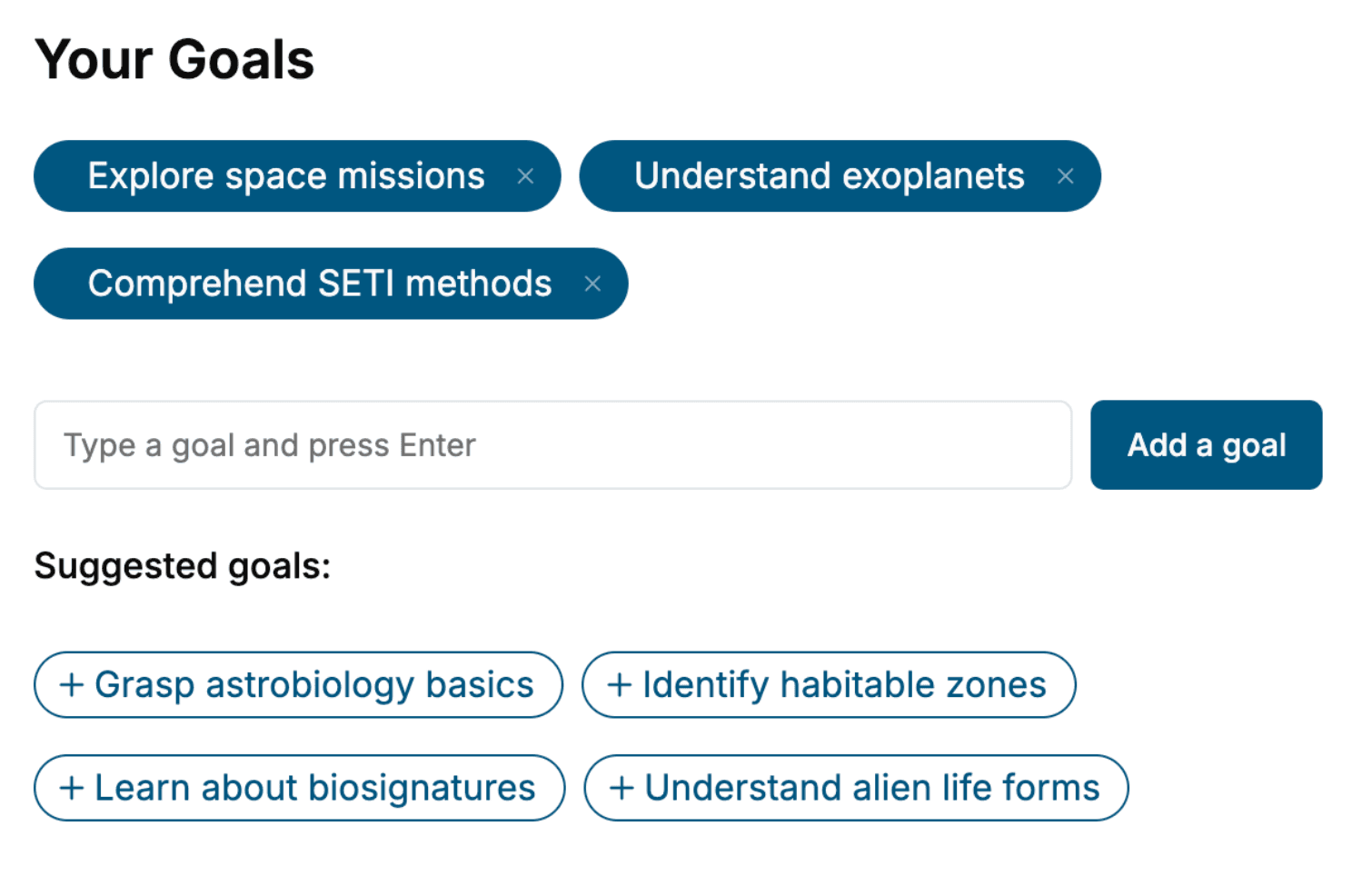
- 1. Select your focus
Select the focus of your Scrum book and share your background
- 2. Personalize your book
Specify your goals and choose sub-topics to include
- 3. Get your tailored book
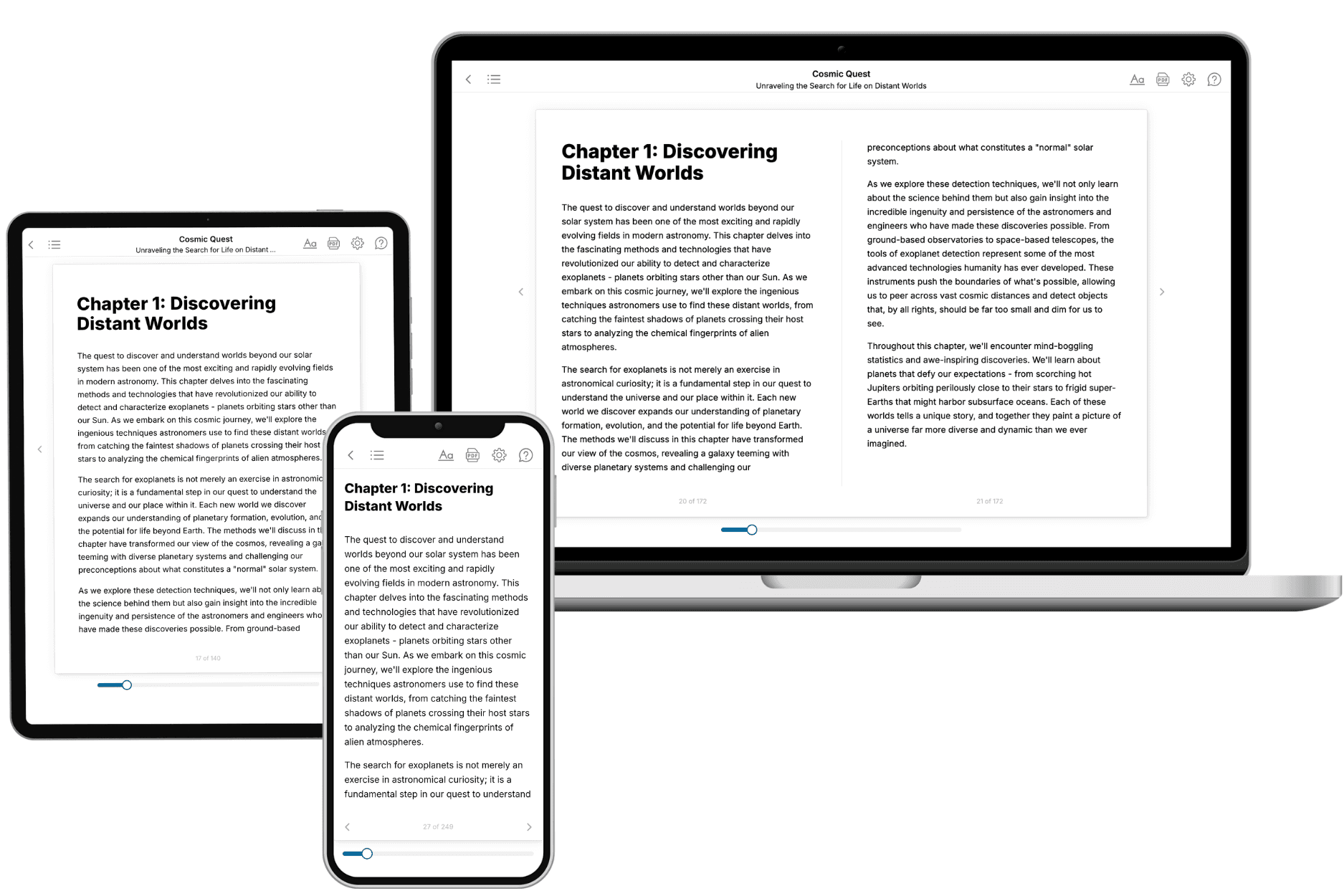
Your book is ready in 10 minutes. Read it online, download as EPUB or PDF, or send to Kindle.

Frequently asked questions
- What is TailoredRead?
TailoredRead creates complete, full-length nonfiction ebooks, written specifically for you. Tell us what you want to learn and why, and TailoredRead writes you a complete ebook on it, with charts, tables, and diagrams throughout. Read it online, on Kindle, or on any e-reader, or download it as a PDF or EPUB. Every book is written fresh the day you order it.
- How is the book tailored to me?
Before anything is written, you answer a few short questions about your goals, your background, and the topics you care about. Your book is then planned around your answers: written at your level, focused on your goals, and covering the topics you chose, instead of the one-size-fits-all book a store sells everyone.
- Will it read like generic AI content?
No. Your book isn't a chat transcript: it's planned chapter by chapter before a single word is written, told in a clear book voice, and explains ideas visually with charts, tables, and diagrams. After writing, every book goes through an editorial pass that polishes chapters so the book reads consistent from start to finish. Judge for yourself: browse thousands of sample books on our Explore Books page.
- How accurate is the content?
Our AI first checks whether your subject needs live research. Niche and fast-moving subjects are researched before writing, and the book plan and chapters are grounded in what it finds. After writing, every book goes through a quality pass that checks its facts and consistency, and researched books list their sources in a Notes section at the back.
- How long is the book?
You choose the length: Comprehensive (250-300 pages), Detailed (150-200 pages), Essential (70-100 pages), or Short (30-50 pages).
- Does the book include visuals?
Yes. Every book includes visual elements such as timelines, checklists, step-by-step guides, decision trees, comparison tables, and matrices, and many include bar charts. A typical book includes dozens of these visual elements.
- Can I read it on Kindle? What formats can I download?
Yes. Every book can be read in our online reader or downloaded as a PDF or EPUB. The EPUB can be opened with Kindle, Apple Books, Kobo, and any e-reader. The Commercial and Author licenses also include an editable Word (DOCX) and Markdown download.
- How much does it cost?
About the price of a regular ebook. The exact price depends on your book's length and complexity, from $2 for the shortest books to $35 for the most comprehensive, and it's shown when you review your book, before you commit to anything. Each book is a one-time purchase, yours to keep, no subscription. Licenses that let you share, teach, or publish your book range from $35.99 to $49.99.
- Can I preview the book before purchasing?
Before you pay, you'll see what your book will cover: the title, a detailed description, the estimated length, and the complete chapter-by-chapter table of contents, so you know what you're getting before you decide. The full text itself is written after you purchase.
- How long does it take to create a book?
About 10 minutes. You can start reading the opening chapters while the rest is still being written.