Seeing the Signs
How to Recognize Relationship Red Flags Before They Become Serious Problems
You sense something is off in your relationship, but you can't quite put your finger on it.
191 pages9 chaptersJun 27, 2026Relationship Problems
About this book
Maybe your partner's behavior feels controlling, or their words don't match their actions. Perhaps you're constantly walking on eggshells, doubting your own perceptions, or feeling isolated from friends and family. These feelings aren't paranoia—they're your internal warning system trying to protect you. This book teaches you to decode the subtle and obvious signs of unhealthy relationships before they cause lasting damage. You'll learn to identify manipulation tactics, understand why certain red flags matter, and discover how to establish boundaries that actually work. Through clear explanations, real-world examples, and practical strategies, you'll develop the confidence to trust your instincts and make decisions that prioritize your wellbeing. Whether you're in a new relationship or questioning a long-term partnership, this guide empowers you to recognize patterns, understand your own vulnerabilities, and take control of your relationship choices.
Table of contents
- IntroductionWhy Red Flags Matter, Your Intuition Is Valid, How to Use This BookRead below
- Chapter 1: Early Warning SignsWhat Are Red Flags?, The Difference Between Flaws and Flags, Trusting Your Gut Feeling
- Chapter 2: Manipulation TacticsGaslighting and Reality Distortion, Love-Bombing and Idealization, Isolation and Control, Blame-Shifting and Deflection
- Chapter 3: Emotional Red FlagsInconsistency Between Words and Actions, Emotional Volatility and Unpredictability, Lack of Empathy and Accountability
- Chapter 4: Behavioral Red FlagsControlling and Possessive Behavior, Dishonesty and Deception, Disrespect for Boundaries, Aggressive or Hostile Patterns
- Chapter 5: Red Flags in Different RelationshipsDating and Early Relationships, Long-Term Partnerships and Marriage, Family Relationships, Friendships and Social Connections
- Chapter 6: Understanding BoundariesWhat Healthy Boundaries Look Like, Why Boundaries Are Not Selfish, Identifying Your Boundary Needs
- Chapter 7: Setting and Maintaining BoundariesCommunicating Boundaries Clearly, Handling Boundary Pushback, Enforcing Consequences, Maintaining Consistency
- Chapter 8: Understanding Your Vulnerability PatternsRecognizing Your Patterns, Past Experiences and Attachment Styles, Breaking the Cycle
- Chapter 9: Taking ActionAssessing Your Current Situation, When to Stay and Work on It, When to Leave Safely, Seeking Professional Support
- ConclusionYour Power to Choose, Moving Forward
- Resources and Support
Introduction
Something feels off. You can't always name it, and you might not even be able to describe it clearly to a friend. But there's a quiet unease that follows you around, a low hum of discomfort that shows up when your partner speaks to you a certain way, or when you notice yourself editing your words before you say them out loud. You find yourself replaying conversations, wondering if you overreacted, or apologizing for things you're not sure you actually did wrong. That feeling has a name, and it matters more than you might think.
Unhealthy relationship patterns rarely announce themselves loudly. They tend to creep in slowly, disguised as passion, protectiveness, or even love. A partner who texts constantly might seem devoted at first. Someone who gets upset when you spend time with friends might frame it as missing you. Behavior that would seem alarming in a stranger can feel flattering or even romantic when it comes from someone you care about. This is exactly why so many people find themselves deep inside a difficult relationship before they realize something has gone wrong.
This book exists to change that. It's designed to give you a clear, practical framework for recognizing the early signs of unhealthy dynamics, understanding the tactics that manipulative people use, and building the kind of boundaries that protect your wellbeing without requiring you to become someone you're not. The goal isn't to make you suspicious of everyone you date or to turn every relationship into a checklist exercise. The goal is to help you see clearly, trust yourself, and make choices that genuinely serve you.
Throughout these pages, you'll find real-world examples, concrete explanations, and actionable steps you can apply whether you're in a new relationship, questioning a long-term partnership, or simply trying to understand patterns from your past. Each chapter builds on the last, moving from recognizing warning signs to understanding manipulation, setting boundaries, and ultimately taking informed action. You don't need to read this book in a moment of crisis. In fact, the best time to learn these skills is before you need them urgently.
Why Red Flags Matter
The term red flag gets used casually in everyday conversation, but its meaning in the context of relationships is specific and important. A red flag is an early warning sign that something in a relationship dynamic may be harmful, incompatible, or heading in a damaging direction. These signs don't always mean a relationship is doomed, but they do mean something deserves your attention. Ignoring them doesn't make them disappear. It usually just gives them more time to grow.
Research consistently shows that the patterns present in the early stages of a relationship tend to intensify over time rather than resolve on their own.[1] A partner who dismisses your feelings once might do it occasionally. A partner who dismisses your feelings as a habit is showing you something about how they fundamentally relate to other people. The difference between a one-time mistake and a recurring pattern is one of the most important distinctions this book will help you make.
Red flags matter because they give you information at a point when you still have the most freedom to act on it. Early in a relationship, emotional investment is lower, practical entanglements are fewer, and the cost of walking away is smaller. The longer an unhealthy dynamic continues, the harder it becomes to leave, not because the situation improves, but because the psychological and practical ties deepen. Recognizing warning signs early is genuinely one of the most protective things you can do for yourself.
Consider a concrete example. Imagine someone you've been dating for six weeks who makes a joke at your expense in front of friends, then tells you you're too sensitive when you bring it up privately. That single incident might feel minor. But if it happens again two weeks later, and again after that, a pattern is forming. The red flag isn't the joke itself. It's the dismissal of your feelings when you tried to address it. That dismissal tells you something about how this person handles conflict, accountability, and your emotional needs.
The stakes of missing red flags can be significant. Studies on intimate partner relationships suggest that emotional abuse, which often begins with subtle patterns of control and dismissal, can have lasting effects on mental health, including increased rates of anxiety, depression, and reduced self-esteem.[2] These outcomes aren't inevitable, but they are preventable when warning signs are caught and addressed early.
It's also worth saying clearly: noticing red flags is not about being cynical or assuming the worst about people. It's about being informed. A doctor who knows the early symptoms of a serious illness isn't being pessimistic. They're being prepared. The same logic applies here. Learning to recognize warning signs gives you options. It puts you in the driver's seat of your own relationship choices rather than leaving you to react after the damage is already done.
Red flags also matter because they often reveal deeper incompatibilities that go beyond behavior. When someone consistently prioritizes their own needs without regard for yours, that's not just a bad habit. It reflects a set of values and a way of relating to others that is unlikely to change without significant self-awareness and effort on their part. Understanding this helps you evaluate not just what someone does, but what their behavior reveals about who they are.
Your Intuition Is Valid
One of the most common experiences people describe after leaving an unhealthy relationship is this: I knew something was wrong, but I talked myself out of it.
They had a feeling, sometimes from very early on, that something didn't sit right. But they dismissed it as anxiety, insecurity, or unfair judgment. They gave the benefit of the doubt, again and again, until the doubt became impossible to ignore. If this sounds familiar, you're not alone, and your instincts were probably right.
Intuition is not magic. It's the result of your brain processing enormous amounts of information below the level of conscious thought. When something feels off about a person or situation, it's often because your mind has picked up on subtle inconsistencies, micro-expressions, tone shifts, or behavioral patterns that haven't yet risen to the surface of your awareness.[3] That uneasy feeling in your stomach isn't irrational. It's data.
The challenge is that intuition can be overridden by other powerful forces. Romantic attraction, the desire to make a relationship work, fear of being alone, and social pressure to stay in a relationship can all drown out the quieter signal of your gut instinct. Add to that the influence of a partner who actively tells you that your perceptions are wrong, and it becomes very easy to stop trusting yourself entirely. This is one reason why manipulation tactics like gaslighting are so effective. They target your ability to trust your own mind.
Learning to distinguish between intuition and anxiety is a skill worth developing. Anxiety often shows up as a general, unfocused worry that isn't tied to specific observations. Intuition tends to be more specific. It's the feeling that something a person said doesn't add up, or that their reaction to a situation was disproportionate in a way you can't quite explain yet. When you notice that feeling, the right response isn't to dismiss it. It's to pay closer attention and gather more information.
Here's a practical way to start honoring your intuition right now:
- Keep a private journal. Write down moments that felt uncomfortable, confusing, or off, even if you can't explain why. Over time, patterns become visible on paper that are easy to miss in the moment.
- Name the feeling without judging it. Instead of telling yourself "I'm being paranoid," try "I noticed I felt uneasy when X happened." This keeps the observation alive without turning it into a verdict.
- Talk to someone you trust. A close friend or family member who knows you well can often reflect back what they're observing in ways that validate or clarify your own perceptions.
- Give yourself permission to be wrong. Trusting your intuition doesn't mean acting on every feeling immediately. It means taking your feelings seriously enough to investigate them rather than suppressing them.
It's also important to acknowledge that intuition can be shaped by past experiences, including trauma. If you've been in unhealthy relationships before, your nervous system may be calibrated to expect certain dynamics, which can sometimes make it harder to read new situations accurately. This doesn't mean your intuition is broken. It means it may need some recalibration, which is something this book will help you work through, particularly in the chapters on vulnerability patterns and attachment styles.
The bottom line is this: your feelings about your relationship are valid data. They deserve to be taken seriously, examined carefully, and used as part of how you make decisions. This book will give you the tools to do exactly that, combining your instincts with concrete knowledge so that you can see your situation more clearly and respond to it more effectively.
One more thing worth saying here: trusting your intuition is not the same as acting impulsively. It means creating space to listen to yourself, to slow down when something feels wrong, and to ask questions rather than immediately explaining away your discomfort. That kind of self-trust is a skill, and like any skill, it gets stronger with practice.
How to Use This Book
This book is organized to take you through a complete journey, from recognizing warning signs to understanding manipulation, setting boundaries, identifying your own patterns, and ultimately deciding what to do with what you've learned. Each chapter builds on the previous one, so reading from beginning to end will give you the fullest picture. That said, if you're in the middle of a specific situation right now, it's completely fine to jump to the chapter that feels most relevant and come back to fill in the rest later.
Here's a quick overview of what each part of the book covers, so you can navigate it with intention:
- Chapters 1 through 4 focus on recognition. You'll learn what red flags actually are, how to tell them apart from ordinary human flaws, and how to identify specific manipulation tactics and emotional and behavioral warning signs.
- Chapter 5 looks at red flags across different relationship types, including dating, long-term partnerships, family relationships, and friendships, because the warning signs aren't always the same in every context.
- Chapters 6 and 7 shift to action. You'll learn what healthy boundaries look like, why they matter, and how to set, communicate, and maintain them even when someone pushes back.
- Chapter 8 turns inward. It explores the patterns and vulnerabilities that can make certain people more susceptible to unhealthy dynamics, including the role of attachment styles and past experiences.
- Chapter 9 is about making decisions. It walks you through how to assess your current situation honestly, when it makes sense to stay and work on a relationship, and how to leave safely when that's the right choice.
Throughout the book, you'll find real-world scenarios and examples that illustrate the concepts being discussed. These examples are drawn from common relationship dynamics and are designed to make abstract ideas feel concrete and recognizable. Some of them may feel uncomfortably familiar. That's intentional. Recognition is the first step toward change.
You'll also find practical tools embedded throughout each chapter. These include reflection questions, frameworks for evaluating behavior, and specific steps you can take to apply what you're learning. Don't skip these. The knowledge in this book is most useful when it connects to your actual life and relationships, not just as theory you've read and filed away.
A note on how to approach this material: reading about manipulation tactics and red flags can sometimes feel activating, especially if you're currently in a difficult relationship or processing a past one. If you find yourself feeling overwhelmed, it's okay to take a break. This book isn't going anywhere. Your wellbeing comes first, and processing this kind of information at a pace that feels manageable is far more valuable than rushing through it.
This book is not a substitute for professional support. If you're in a situation that feels unsafe, or if you're dealing with significant emotional distress, please reach out to a therapist, counselor, or a support organization. The Resources section at the back of this book includes a list of organizations and hotlines that can help. Recognizing that you need support and asking for it is one of the most courageous things you can do.
One thing this book will not do is tell you exactly what to do about your specific relationship. That decision belongs to you. What it will do is give you the clearest possible picture of what's happening, why it matters, and what your options are. Armed with that clarity, you'll be in a much stronger position to make choices that reflect your values, your needs, and your long-term wellbeing.
Finally, approach this material with curiosity rather than judgment, both toward others and toward yourself. If you recognize patterns in your past relationships, or even in your current one, that's not a reason to feel ashamed. Most people have been in at least one relationship where the warning signs were there but went unnoticed or unaddressed. That's not a character flaw. It's a human experience. The fact that you're reading this book means you're already doing something about it, and that matters enormously.
The chapters ahead are designed to be honest, practical, and grounded in real human experience. They won't talk down to you or assume you're helpless. You're not. You're someone who wants to understand your relationships more clearly and make better choices going forward. That's exactly the right place to start.
Notes
Introduction
This is the end of the free sample. The full book has 9 chapters.
Want this book written for you?
Tell us your goals and background, and get your own version of this book, tailored by AI to you.


Benefits of AI-tailored books
- Read one book, not ten:
- all the Relationship Problems knowledge you need, gathered into a single book.
- Save days of learning:
- tell us your goals, choose your topics, and the whole book is built around them.
- Learn effortlessly:
- Relationship Problems book written for your specific background and expertise.
- Understand at a glance:
- includes charts, tables, timelines, checklists, decision trees, and more.
- Stay current:
- written the day you order it, not years ago.
- Trust what you read:
- every book is checked for accuracy, with real research when your subject needs it.
Create your unique book in 3 steps
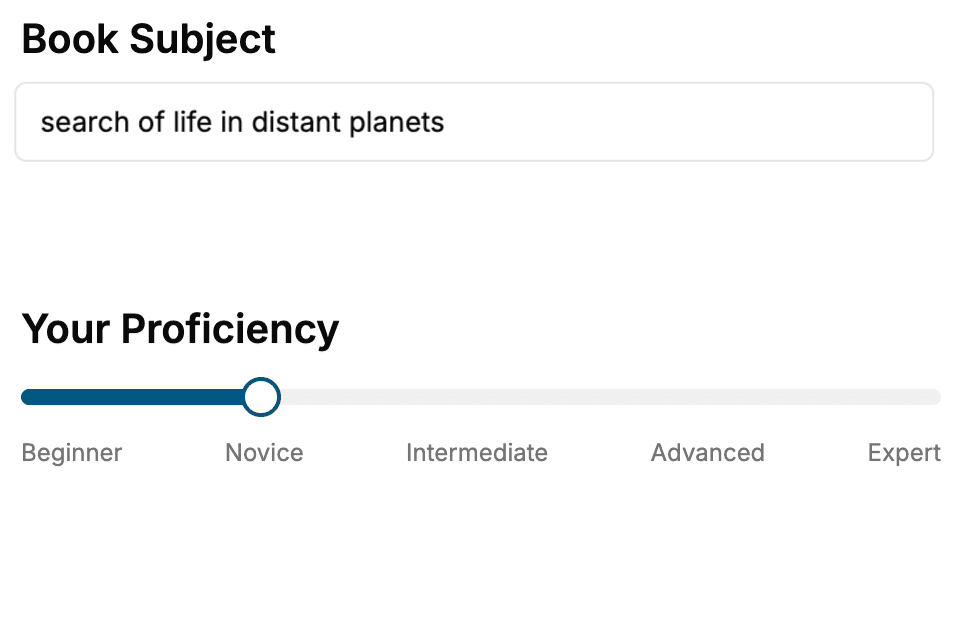
- 1. Select your focus
Select the focus of your Relationship Problems book and share your background
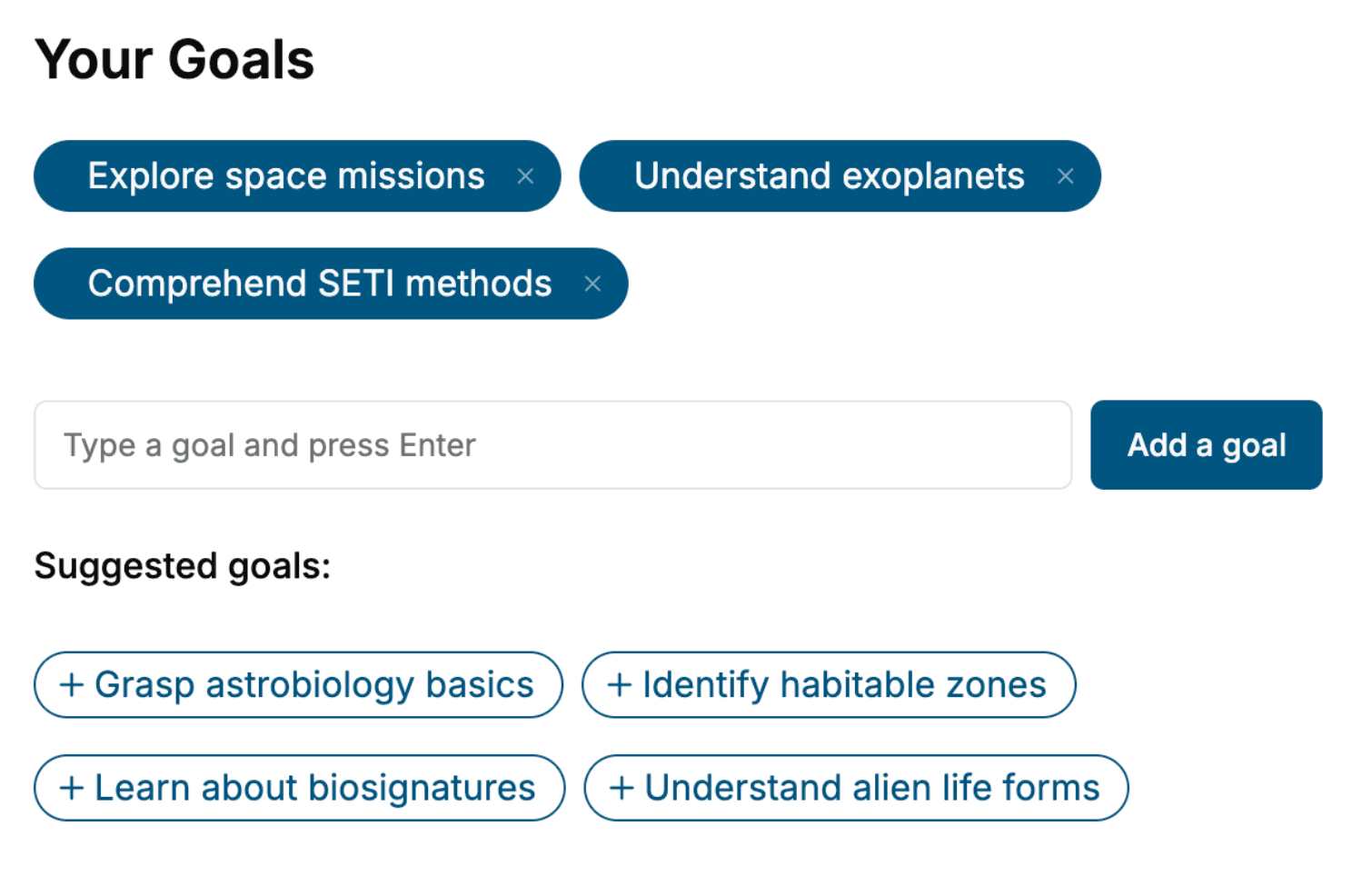
- 2. Personalize your book
Specify your goals and choose sub-topics to include
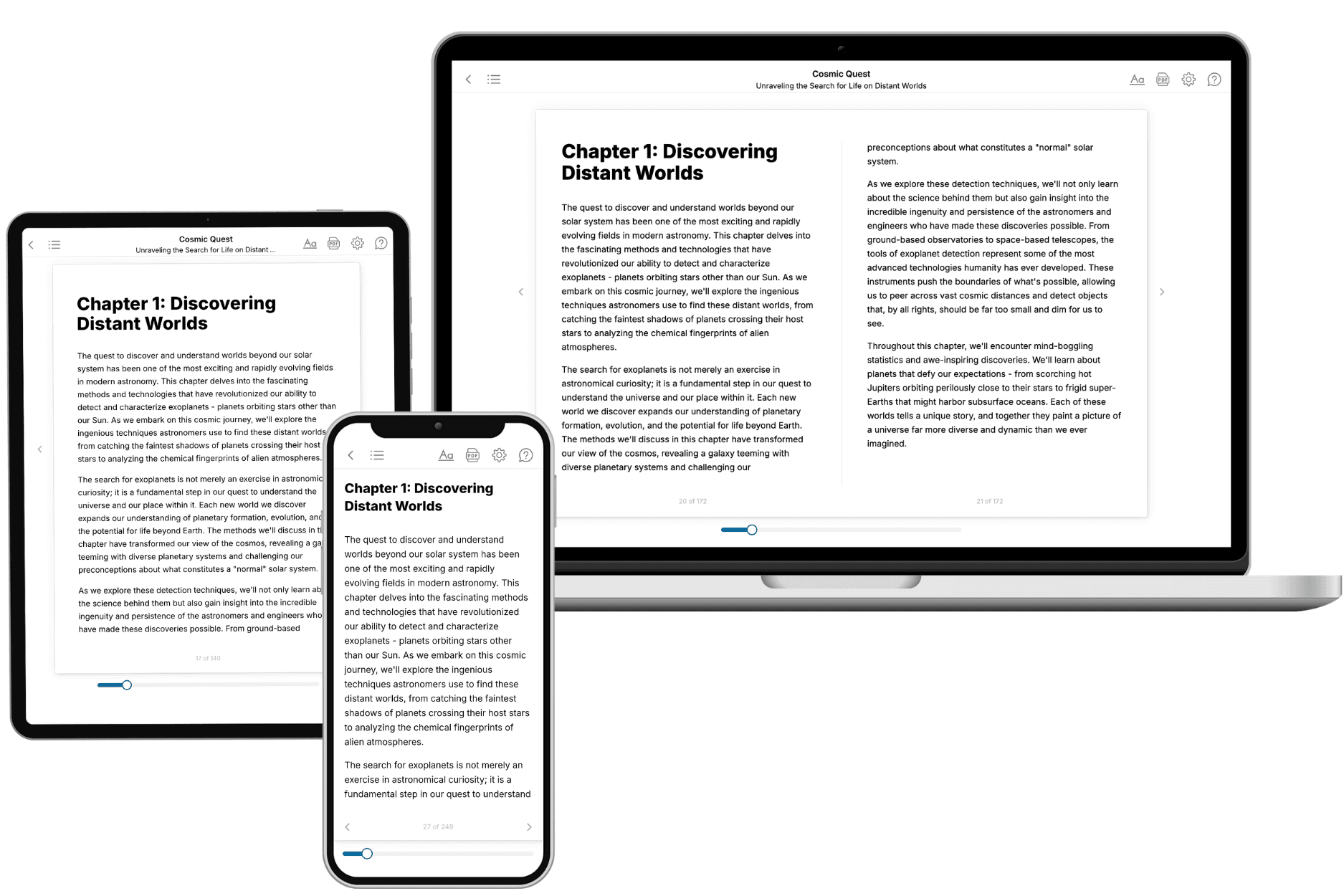
- 3. Get your tailored book
Your book is ready in 10 minutes. Read it online, download as EPUB or PDF, or send to Kindle.
Frequently asked questions
- What is TailoredRead?
TailoredRead creates complete, full-length nonfiction ebooks, written specifically for you. Tell us what you want to learn and why, and TailoredRead writes you a complete ebook on it, with charts, tables, and diagrams throughout. Read it online, on Kindle, or on any e-reader, or download it as a PDF or EPUB. Every book is written fresh the day you order it.
- How is the book tailored to me?
Before anything is written, you answer a few short questions about your goals, your background, and the topics you care about. Your book is then planned around your answers: written at your level, focused on your goals, and covering the topics you chose, instead of the one-size-fits-all book a store sells everyone.
- Will it read like generic AI content?
No. Your book isn't a chat transcript: it's planned chapter by chapter before a single word is written, told in a clear book voice, and explains ideas visually with charts, tables, and diagrams. After writing, every book goes through an editorial pass that polishes chapters so the book reads consistent from start to finish. Judge for yourself: browse thousands of sample books on our Explore Books page.
- How accurate is the content?
Our AI first checks whether your subject needs live research. Niche and fast-moving subjects are researched before writing, and the book plan and chapters are grounded in what it finds. After writing, every book goes through a quality pass that checks its facts and consistency, and researched books list their sources in a Notes section at the back.
- How long is the book?
You choose the length: Comprehensive (250-300 pages), Detailed (150-200 pages), Essential (70-100 pages), or Short (30-50 pages).
- Does the book include visuals?
Yes. Every book includes charts, tables, and diagrams: timelines, checklists, step-by-step guides, decision trees, comparison tables, matrices, and bar charts. A typical book includes dozens of these visual elements.
- Can I read it on Kindle? What formats can I download?
Yes. Every book can be read in our online reader or downloaded as a PDF or EPUB. The EPUB can be opened with Kindle, Apple Books, Kobo, and any e-reader. The Commercial and Author licenses also include an editable Word (DOCX) and Markdown download.
- How much does it cost?
About the price of a regular ebook. The exact price depends on your book's length and complexity, from $2 for the shortest books to $35 for the most comprehensive, and it's shown when you review your book, before you commit to anything. Each book is a one-time purchase, yours to keep, no subscription. Licenses that let you share, teach, or publish your book range from $35.99 to $49.99.
- Can I preview the book before purchasing?
Before you pay, you'll see what your book will cover: the title, a detailed description, the estimated length, and the complete chapter-by-chapter table of contents, so you know what you're getting before you decide. The full text itself is written after you purchase.
- How long does it take to create a book?
About 10 minutes. You can start reading the opening chapters while the rest is still being written.