The Self Beyond Self
A Practical Guide to Understanding Advaita Vedanta and Non-Dual Reality
Imagine a life where the constant struggle between who you think you are and who you truly are finally dissolves.
191 pages8 chaptersDec 16, 2025Philosophy
About this book
Where the anxiety of separation, the fear of loss, and the endless pursuit of fulfillment give way to a profound recognition of your fundamental wholeness. This is the promise of Advaita Vedanta, one of the world's most profound philosophical traditions. This book guides you through the essential teachings of Advaita Vedanta with clarity and depth, exploring how ancient Indian wisdom addresses the deepest questions of existence. You'll discover what the great sages meant by non-duality, how the illusion of separation arises, and why recognizing your true nature is the ultimate freedom. Whether you're seeking intellectual understanding or practical transformation, this exploration of Advaita Vedanta offers both—grounded in classical texts yet relevant to your contemporary life. Prepare to question your assumptions about reality, consciousness, and identity in ways that may fundamentally shift your perspective.
Table of contents
- IntroductionWhy Advaita Vedanta Matters Today, Ancient Wisdom for Modern Questions, How to Use This BookRead below
- Chapter 1: Foundations of Indian PhilosophyThe Vedic Tradition and Its Evolution, The Six Schools of Indian Philosophy, The Emergence of Advaita Vedanta
- Chapter 2: The Core Concept: Non-DualityUnderstanding Brahman: The Ultimate Reality, Atman: The Individual Self and Its True Nature, The Great Statements (Mahavakyas) of Advaita, What Non-Duality Really Means
- Chapter 3: Maya: The Power of IllusionThe Nature and Function of Maya, How the Appearance of Multiplicity Arises, Why Maya Is Neither Real Nor Unreal
- Chapter 4: The Three States of ConsciousnessThe Waking State and Its Nature, The Dream State and Its Significance, Deep Sleep and the Witness Consciousness, The Fourth State: Turiya and Pure Consciousness
- Chapter 5: The Nature of the Individual SelfThe Ego: Understanding the False Identity, The Mind, Intellect, and Sense of Doership, The Witness: Your True Nature Beyond Mind
- Chapter 6: The Path of Knowledge: Jnana YogaThe Four Qualifications for Spiritual Seekers, Viveka: Discrimination Between Eternal and Temporary, Self-Inquiry and the Method of Negation, The Role of the Guru in Direct Realization
- Chapter 7: Removing Ignorance: The Process of RealizationUnderstanding Avidya: The Nature of Ignorance, How Knowledge Is Revealed, Not Acquired, Common Obstacles and How to Overcome Them
- Chapter 8: Practical Application in Daily LifeMeditation and Contemplative Practices, Living Ethically: Dharma and Right Action, Freedom From Bondage: Practical Liberation
- ConclusionIntegrating Non-Dual Understanding Into Your Life, Your Continuing Journey of Self-Discovery
- Glossary of Key Terms
- Further Reading and Resources
Introduction
You live in a world of constant change, where everything you perceive seems separate from everything else. Your body appears distinct from the chair you sit on, your thoughts seem different from the sounds around you, and most fundamentally, you experience yourself as separate from the world and from others. This sense of separation feels so obvious, so undeniable, that questioning it might seem absurd. Yet what if this most basic assumption about reality—that you are a separate individual navigating a world of distinct objects—is fundamentally mistaken? What if the anxiety, fear, and endless seeking that characterize much of human experience arise directly from this misunderstanding?
Advaita Vedanta, one of the most sophisticated philosophical systems ever developed, offers a radically different perspective. The term itself provides a clue to its central teaching: Advaita means "not two" in Sanskrit, while Vedanta refers to the culmination of the Vedas, the ancient scriptures of India. At its core, Advaita Vedanta teaches that reality is fundamentally non-dual—that beneath the apparent multiplicity of forms, names, and experiences lies a single, infinite, unchanging reality. More remarkably, it asserts that your true nature is identical to this ultimate reality, not separate from it. The sense of being a limited, isolated individual is not your actual condition but a case of mistaken identity, like someone who has forgotten who they truly are.
This book serves as your guide to understanding and exploring this profound teaching. Whether you approach Advaita Vedanta as a philosophical system to be intellectually understood or as a practical path to transformation, you'll find both dimensions addressed here. The wisdom of Advaita is not meant to remain abstract theory but to fundamentally shift how you experience yourself and the world. Throughout these pages, you'll encounter concepts that may challenge your most basic assumptions, practices that can deepen your inquiry, and insights that bridge ancient wisdom with contemporary understanding. The journey ahead requires both intellectual rigor and openness to perspectives that may initially seem counterintuitive or even impossible.
Why Advaita Vedanta Matters Today
In an age characterized by information overload, constant connectivity, and unprecedented material abundance in many parts of the world, a curious paradox has emerged: despite having more of everything, many people report feeling less fulfilled, more anxious, and increasingly disconnected. Mental health challenges have reached epidemic proportions in developed nations, with anxiety and depression affecting hundreds of millions globally[1]. The promise that external achievements, possessions, or experiences would bring lasting satisfaction has proven hollow for countless individuals who have attained their goals only to find the sense of completion elusive. This widespread existential dissatisfaction points to something deeper than circumstantial problems—it suggests a fundamental misunderstanding about the nature of happiness and who we truly are.
Advaita Vedanta addresses this crisis at its root by questioning the very framework through which you interpret experience. Modern life operates on certain unexamined assumptions: that you are fundamentally separate from others and the world, that happiness comes from acquiring or achieving something you currently lack, that your identity is defined by your thoughts, memories, and personal history, and that consciousness is somehow produced by or contained within your physical body. These assumptions seem self-evident, yet Advaita systematically demonstrates that each one is based on a misunderstanding of your actual nature. When you investigate your direct experience carefully, rather than relying on inherited concepts, a very different picture emerges.
The relevance of Advaita extends beyond personal well-being to address collective challenges facing humanity. Many of the crises confronting the world—environmental destruction, social fragmentation, resource conflicts, and the inability to cooperate on global challenges—stem from a consciousness of separation. When you experience yourself as fundamentally separate from nature, exploiting natural resources seems rational. When you perceive other groups as essentially different from your own, conflict becomes inevitable. When you identify completely with your thoughts and beliefs, disagreement feels like a personal threat. Advaita's teaching of fundamental unity doesn't erase practical differences or suggest naive solutions, but it does offer a radically different foundation for relating to the world and others.
Contemporary science has begun converging with insights that Advaita sages articulated thousands of years ago. Quantum physics has revealed that the observer cannot be separated from the observed, that matter is not solid but mostly empty space with energy patterns, and that the universe is fundamentally interconnected in ways that transcend space and time[2]. Neuroscience has shown that the sense of a unified, continuous self is constructed by the brain rather than being a fundamental entity, and that consciousness remains deeply mysterious despite advances in understanding brain function. While Advaita is not validated or invalidated by scientific findings, these parallels make its teachings more accessible to the modern mind trained in scientific thinking.
Perhaps most importantly, Advaita Vedanta matters today because it offers something increasingly rare: a comprehensive framework for understanding reality that addresses both the ultimate nature of existence and the practical challenges of daily life. It's not merely a philosophy to be believed but a methodology for direct investigation and realization. Unlike systems that require you to accept claims on faith, Advaita invites you to verify its teachings through your own careful inquiry and experience. It provides specific practices, clear reasoning, and a systematic approach to removing the ignorance that obscures your true nature. In a world of competing ideologies and fragmented knowledge, Advaita offers an integrated understanding that encompasses metaphysics, epistemology, psychology, and ethics.
The teaching also addresses a specifically modern problem: the crisis of meaning. When traditional religious frameworks lose their hold but are not replaced by anything equally comprehensive, many people find themselves in a meaning vacuum. Material success doesn't provide purpose, and the pursuit of pleasure leads to diminishing returns. Advaita offers a framework for understanding your place in existence that doesn't depend on belief in particular religious doctrines yet provides profound meaning. It suggests that your very existence as consciousness is itself the ultimate value, not something that needs to be justified or earned through achievements. This perspective can be deeply liberating for those struggling with questions of purpose and significance.
Finally, Advaita Vedanta matters because it addresses suffering at its source. While various approaches attempt to manage symptoms—reducing stress, improving circumstances, adjusting thoughts—Advaita points to the fundamental misidentification that generates suffering in the first place. When you believe you are a limited, vulnerable, separate entity, fear and desire naturally arise. When you recognize your true nature as infinite, unchanging consciousness, the basis for existential suffering dissolves. This doesn't mean practical challenges disappear, but your relationship to them transforms fundamentally. The teaching offers not just coping mechanisms but the possibility of freedom from the root cause of psychological suffering.
Ancient Wisdom for Modern Questions
Advaita Vedanta emerges from a tradition spanning more than three millennia, with roots in the Upanishads—philosophical texts composed between 800 and 200 BCE that represent the culmination of Vedic thought. These ancient sages were not engaged in abstract speculation but in rigorous inquiry into the nature of consciousness, reality, and the self. They developed sophisticated methods of investigation, careful reasoning, and systematic teaching that have been refined and transmitted through an unbroken lineage of teachers and students. The tradition reached its classical formulation with Adi Shankaracharya in the 8th century CE, whose commentaries on the Upanishads, Bhagavad Gita, and Brahma Sutras established Advaita as a comprehensive philosophical system.
What makes this ancient wisdom relevant to your contemporary questions is its focus on timeless aspects of human experience rather than culturally specific beliefs or practices. The fundamental questions Advaita addresses remain as urgent today as they were thousands of years ago: What is the nature of consciousness? What am I beyond my thoughts, memories, and physical form? Why do I suffer, and is freedom from suffering possible? What is the relationship between the individual and the totality of existence? These questions don't depend on historical circumstances or technological development—they arise from the basic structure of self-aware consciousness reflecting on its own nature and seeking to understand its place in reality.
The methodology of Advaita is particularly suited to the modern mind trained in critical thinking and skepticism. Rather than demanding faith in supernatural claims or adherence to dogma, Advaita employs rigorous logical analysis, careful examination of direct experience, and systematic removal of false assumptions. The tradition developed sophisticated epistemology—the study of how we know what we know—and recognized multiple valid means of knowledge including perception, inference, and testimony from reliable sources. It anticipated many concerns of modern philosophy, including the problem of how consciousness relates to matter, the nature of subjective experience, and the limits of conceptual knowledge. Your contemporary education in critical thinking becomes an asset rather than an obstacle in understanding Advaita.
The practical applications of Advaita wisdom address challenges that are distinctly modern in their intensity if not in their essence. Consider the problem of identity in a globalized, digitally connected world where traditional markers of identity have become fluid and multiple. Advaita's teaching that your true identity transcends all particular forms—nationality, profession, beliefs, relationships—provides a stable foundation when conventional identity markers prove inadequate. Or consider the information overload and constant mental stimulation characteristic of modern life. Advaita's emphasis on the witness consciousness that remains unchanged amid all mental activity offers a refuge from the tyranny of incessant thinking and the compulsion to constantly process information.
The ancient texts of Advaita employed teaching methods remarkably sophisticated in their pedagogical approach. They recognized that direct realization cannot be forced but requires careful preparation, systematic removal of obstacles, and appropriate guidance. The tradition developed specific techniques for different types of students, acknowledged common misunderstandings and addressed them preemptively, and used analogies, stories, and logical arguments tailored to make abstract concepts accessible. These teaching methods remain effective today because they're based on deep understanding of how the human mind works, how misconceptions arise, and how genuine understanding develops. The wisdom lies not just in the content but in the skillful means of transmission.
One particularly valuable aspect of this ancient wisdom is its integration of absolute and relative perspectives. Advaita doesn't deny the practical reality of the everyday world or suggest you should abandon responsibilities and relationships. Instead, it provides a framework for understanding how the absolute truth of non-duality and the relative truth of multiplicity can both be valid from different standpoints. This integration is especially relevant in the modern context, where many people struggle to reconcile spiritual insights with practical demands. Advaita shows how you can recognize your true nature as infinite consciousness while simultaneously functioning effectively in the world of apparent separation, without contradiction or compartmentalization.
The tradition also offers something increasingly valuable: a long-term perspective on human development and realization. In a culture oriented toward quick fixes and immediate results, Advaita acknowledges that genuine transformation typically unfolds gradually through sustained inquiry and practice. The classical texts describe stages of understanding, common obstacles at each stage, and how to work with them skillfully. This realistic, long-term approach can be refreshing for those disillusioned by promises of instant enlightenment or quick spiritual solutions. At the same time, Advaita maintains that what you're seeking to realize is not something distant or difficult to attain but your own true nature, always present though currently unrecognized—a paradox that the teaching carefully unpacks.
Finally, this ancient wisdom matters because it has been tested and verified by countless individuals across cultures and centuries. While personal testimony doesn't constitute proof in the scientific sense, the consistency of reports from those who have deeply investigated consciousness using Advaita methods provides compelling evidence. These individuals describe remarkably similar realizations despite vast differences in cultural context, personality, and life circumstances. They report not just intellectual understanding but a fundamental shift in identity and experience that brings lasting peace, freedom from existential fear, and a sense of completion that doesn't depend on external circumstances. This accumulated wisdom, refined through millennia of careful investigation, offers guidance for your own inquiry into the nature of consciousness and reality.
How to Use This Book
This book is structured to guide you progressively through the essential teachings of Advaita Vedanta, building from foundational concepts to more subtle and advanced understanding. However, the nature of non-dual teaching means that in some sense, the entire teaching is present in each part—the conclusion is implicit in the beginning, and later chapters often illuminate earlier ones in new ways. You may find it valuable to read through the book sequentially on your first pass, then return to specific chapters for deeper study. Some concepts that seem obscure initially will become clearer as your understanding develops, and ideas that seemed simple at first may reveal unexpected depth upon reflection.
Each chapter addresses a specific aspect of Advaita philosophy while maintaining connection to the whole. The early chapters establish necessary context by exploring the broader tradition of Indian philosophy and the historical development of Advaita. This foundation helps you understand how Advaita relates to other philosophical systems and why certain concepts developed as they did. The middle chapters examine core teachings in detail: the nature of ultimate reality (Brahman), the true self (Atman), the power of illusion (Maya), and the states of consciousness. Later chapters focus on practical application: the path of knowledge, the process of removing ignorance, and how to integrate non-dual understanding into daily life. This progression moves from context to theory to practice, though all three dimensions are present throughout.
As you read, you'll encounter Sanskrit terms that are essential to understanding Advaita precisely. While English translations are provided, some concepts don't translate neatly into Western philosophical categories, and the Sanskrit terms carry nuances that English equivalents miss. Key terms are explained when first introduced and compiled in the glossary for easy reference. Don't be intimidated by unfamiliar terminology—these words will become familiar through repeated exposure, and learning them allows you to engage with the tradition on its own terms. Think of it as learning the technical vocabulary of any specialized field, whether music, medicine, or mathematics. The precision of Sanskrit philosophical terminology is actually an asset once you become comfortable with it.
Throughout the book, you'll find several types of content designed to deepen understanding:
- Conceptual explanations that clarify philosophical ideas using clear language and logical analysis
- Practical examples that illustrate abstract concepts through concrete situations from daily life
- Traditional analogies used by Advaita teachers to make subtle points accessible
- Contemplative exercises that invite direct investigation of your own experience
- Common misconceptions addressed explicitly to prevent misunderstanding
- Integration points that connect Advaita concepts to contemporary concerns and questions
The contemplative exercises deserve special attention. Advaita is not merely a philosophy to be understood intellectually but a means of direct realization. The exercises invite you to investigate your own experience carefully, testing the teachings against what you actually observe rather than accepting them on authority. These investigations are not optional extras but essential to the teaching method. You might approach them in several ways: pause and engage with each exercise as you encounter it, mark them for later dedicated practice sessions, or return to them repeatedly as your understanding deepens. However you choose to work with them, recognize that direct investigation of your own consciousness is central to Advaita, not peripheral. The goal is not to believe the teachings but to verify them through your own careful inquiry.
Some readers will approach this book primarily for intellectual understanding—to comprehend what Advaita teaches and how its arguments work. This is entirely valid, and the book provides rigorous philosophical content for this purpose. Others will be primarily interested in practical transformation—using Advaita as a path to freedom from suffering and realization of their true nature. The book addresses this dimension as well, with guidance on practice and application. Ideally, both dimensions support each other: clear intellectual understanding provides a map for the journey, while direct investigation and practice bring the map to life. You need not choose between understanding and realization—they're complementary aspects of the same process.
A few suggestions for getting the most from your engagement with this material:
- Read slowly and reflectively rather than rushing to accumulate information. Advaita concepts often require contemplation to be properly understood.
- Question everything, including the teachings themselves. Advaita encourages critical inquiry, not blind acceptance.
- Notice your reactions to ideas that challenge your assumptions. Resistance often indicates you're encountering something significant.
- Connect concepts to your direct experience rather than treating them as abstract theory. Ask how each teaching relates to what you actually observe.
- Be patient with confusion. Some concepts may seem contradictory or unclear initially but will resolve with continued study and reflection.
- Discuss the ideas with others when possible. Articulating your understanding and hearing different perspectives deepens comprehension.
- Return to difficult passages after reading further. Later chapters often illuminate earlier ones in new ways.
It's important to understand what this book is and isn't. It provides a comprehensive introduction to Advaita Vedanta that is both accessible to those new to the tradition and substantive enough to deepen understanding for those already familiar with the basics. However, it cannot replace the traditional relationship with a qualified teacher (guru) that Advaita considers essential for complete realization. Books can clarify concepts, correct misunderstandings, and point you in the right direction, but direct realization typically requires personal guidance tailored to your specific obstacles and level of understanding. Think of this book as a detailed map of the territory—invaluable for orientation but not a substitute for actually traveling the path with an experienced guide.
The book assumes you have some familiarity with basic concepts of Indian philosophy but doesn't require extensive prior knowledge. Technical terms are explained, historical context is provided, and connections to Western philosophical concepts are made where helpful. If you're completely new to Indian philosophy, you may want to read the early chapters especially carefully, as they establish foundations that later chapters build upon. If you're already familiar with Advaita basics, you might move more quickly through foundational material while paying special attention to the more advanced discussions in later chapters. The book is designed to be valuable at multiple levels of prior knowledge and understanding.
Finally, approach this exploration with both seriousness and lightness. The questions Advaita addresses are profound—the nature of reality, consciousness, and your true identity—and deserve serious inquiry. At the same time, the teaching points to something fundamentally simple and always present: your own true nature. The complexity lies in removing misconceptions, not in acquiring something difficult or distant. Many traditional texts emphasize that excessive solemnity can itself become an obstacle, creating a sense that realization is grave and difficult rather than natural and liberating. Bring your full intelligence and sincerity to the inquiry, but don't make it heavier than it needs to be. The truth Advaita points to is not a burden to be carried but a freedom to be recognized.
This is the end of the free sample. The full book has 8 chapters.
Want this book written for you?
Tell us your goals and background, and get your own version of this book, tailored by AI to you.


Benefits of AI-tailored books
- Read one book, not ten:
- all the Philosophy knowledge you need, gathered into a single book.
- Save days of learning:
- tell us your goals, choose your topics, and the whole book is built around them.
- Learn effortlessly:
- Philosophy book written for your specific background and expertise.
- Understand at a glance:
- includes charts, tables, timelines, checklists, decision trees, and more.
- Stay current:
- written the day you order it, not years ago.
- Trust what you read:
- every book is checked for accuracy, with real research when your subject needs it.
Create your unique book in 3 steps
- 1. Select your focus
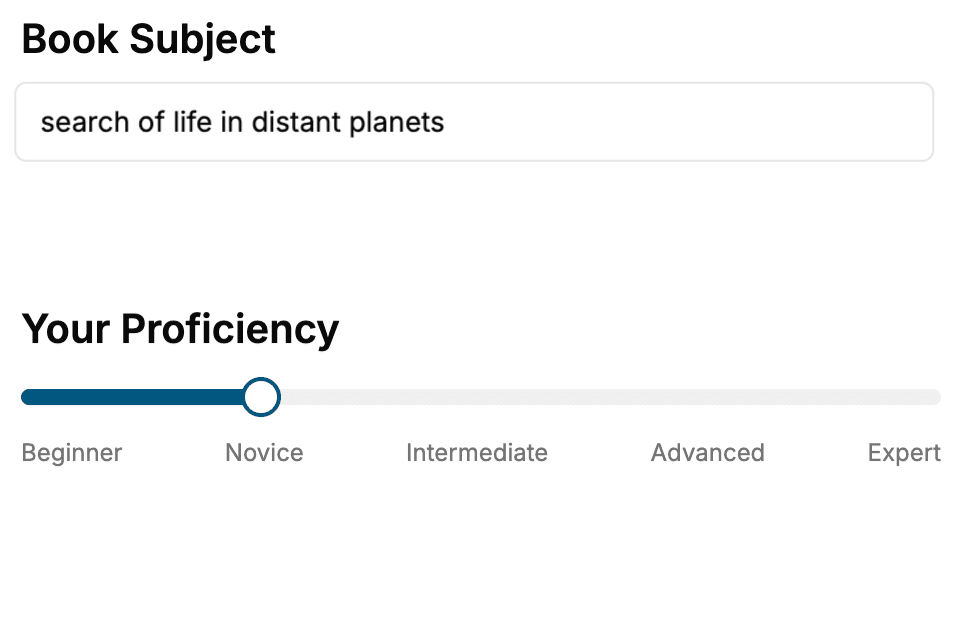
Select the focus of your Philosophy book and share your background
- 2. Personalize your book
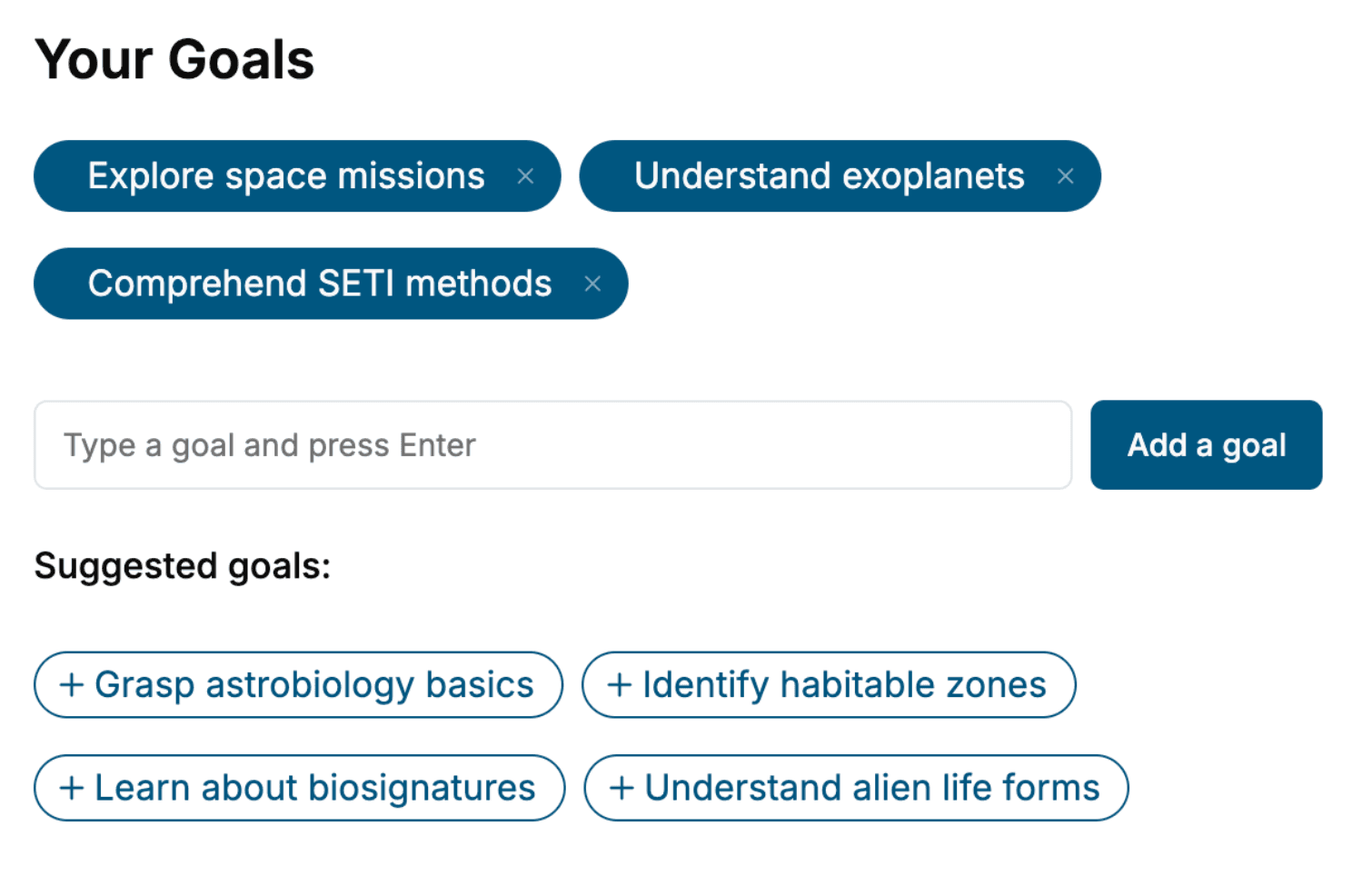
Specify your goals and choose sub-topics to include
- 3. Get your tailored book
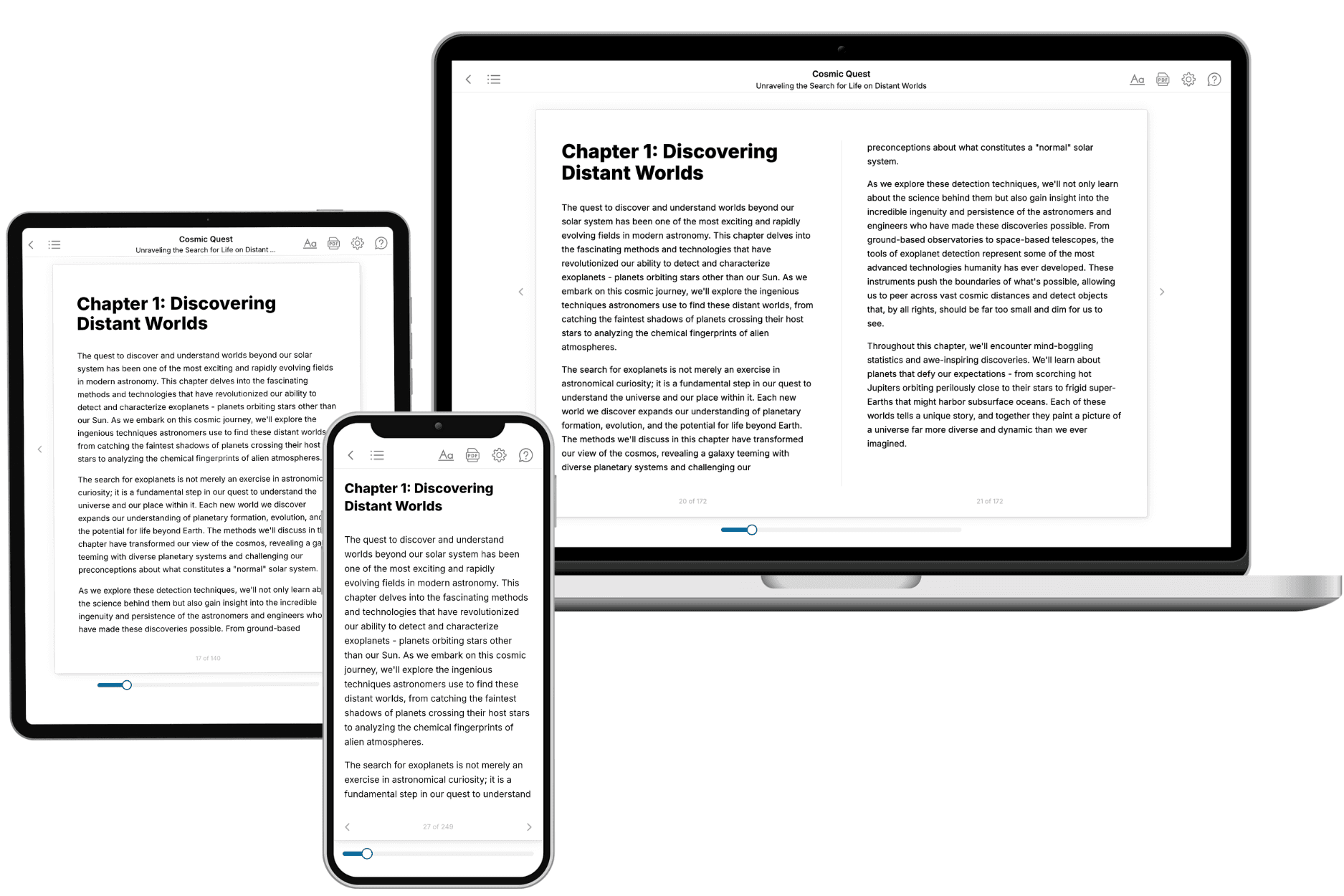
Your book is ready in 10 minutes. Read it online, download as EPUB or PDF, or send to Kindle.
Frequently asked questions
- What is TailoredRead?
TailoredRead creates complete, full-length nonfiction ebooks, written specifically for you. Tell us what you want to learn and why, and TailoredRead writes you a complete ebook on it, with charts, tables, and diagrams throughout. Read it online, on Kindle, or on any e-reader, or download it as a PDF or EPUB. Every book is written fresh the day you order it.
- How is the book tailored to me?
Before anything is written, you answer a few short questions about your goals, your background, and the topics you care about. Your book is then planned around your answers: written at your level, focused on your goals, and covering the topics you chose, instead of the one-size-fits-all book a store sells everyone.
- Will it read like generic AI content?
No. Your book isn't a chat transcript: it's planned chapter by chapter before a single word is written, told in a clear book voice, and explains ideas visually with charts, tables, and diagrams. After writing, every book goes through an editorial pass that polishes chapters so the book reads consistent from start to finish. Judge for yourself: browse thousands of sample books on our Explore Books page.
- How accurate is the content?
Our AI first checks whether your subject needs live research. Niche and fast-moving subjects are researched before writing, and the book plan and chapters are grounded in what it finds. After writing, every book goes through a quality pass that checks its facts and consistency, and researched books list their sources in a Notes section at the back.
- How long is the book?
You choose the length: Comprehensive (250-300 pages), Detailed (150-200 pages), Essential (70-100 pages), or Short (30-50 pages).
- Does the book include visuals?
Yes. Every book includes charts, tables, and diagrams: timelines, checklists, step-by-step guides, decision trees, comparison tables, matrices, and bar charts. A typical book includes dozens of these visual elements.
- Can I read it on Kindle? What formats can I download?
Yes. Every book can be read in our online reader or downloaded as a PDF or EPUB. The EPUB can be opened with Kindle, Apple Books, Kobo, and any e-reader. The Commercial and Author licenses also include an editable Word (DOCX) and Markdown download.
- How much does it cost?
About the price of a regular ebook. The exact price depends on your book's length and complexity, from $2 for the shortest books to $35 for the most comprehensive, and it's shown when you review your book, before you commit to anything. Each book is a one-time purchase, yours to keep, no subscription. Licenses that let you share, teach, or publish your book range from $35.99 to $49.99.
- Can I preview the book before purchasing?
Before you pay, you'll see what your book will cover: the title, a detailed description, the estimated length, and the complete chapter-by-chapter table of contents, so you know what you're getting before you decide. The full text itself is written after you purchase.
- How long does it take to create a book?
About 10 minutes. You can start reading the opening chapters while the rest is still being written.