The Semantic Web Explained
How Meaning and Context Are Reshaping the Internet
Most people think the web is just a collection of documents and links.
222 pages10 chaptersNov 9, 2025Web Development
About this book
In reality, the next evolution of the internet is about teaching machines to understand meaning. The Semantic Web represents a fundamental shift in how data is organized, shared, and understood across digital systems. This book cuts through the technical jargon to explain how semantic technologies work and why they matter for your organization and career. You'll discover how ontologies, linked data, and knowledge graphs are transforming everything from search engines to enterprise systems. Whether you're a developer, data professional, or business leader, this practical guide shows you how semantic concepts are already reshaping the tools you use and the decisions you make. Learn the core principles, explore real-world applications, and understand how to evaluate semantic solutions for your specific needs.
Table of contents
- IntroductionWhy Meaning Matters in the Digital Age, The Limitations of Today's Web, What You'll Learn in This Book, How to Use This GuideRead below
- Chapter 1: Understanding the Semantic WebFrom Documents to Meaning, Core Principles of Semantic Technology, Semantic vs. Syntactic: What's the Difference?
- Chapter 2: The Building Blocks: RDF and OntologiesRDF: The Foundation of Semantic Data, Triples and Graphs: Representing Knowledge, Ontologies: Creating Shared Understanding, OWL and Automated Reasoning
- Chapter 3: Vocabularies and StandardsControlled Vocabularies and Taxonomies, Common Semantic Vocabularies, Creating and Maintaining Your Own Vocabularies
- Chapter 4: Linked Data: Connecting InformationThe Four Principles of Linked Data, URIs: Universal Identifiers for Everything, Building the Web of Data, Real-World Linked Data Examples
- Chapter 5: Knowledge Graphs and ReasoningWhat Are Knowledge Graphs?, Building and Maintaining Knowledge Graphs, Inference and Automated Reasoning, Knowledge Graphs in Practice
- Chapter 6: Semantic Search and Natural LanguageBeyond Keyword Search, Understanding User Intent, Natural Language Processing and Semantics, How Semantic Search Engines Work
- Chapter 7: Data Formats and TechnologiesJSON-LD: Semantic Data in JSON, Microdata and Microformats, SPARQL: Querying Semantic Data, Other Semantic Data Formats
- Chapter 8: Implementing Semantic SolutionsPlanning Your Semantic Project, Data Modeling and Strategy, Tools and Platforms for Semantic Web, Integration Challenges and Solutions
- Chapter 9: Real-World ApplicationsEnterprise Data Integration, Healthcare and Life Sciences, E-Commerce and Recommendation Systems, Applications Across Other Industries
- Chapter 10: Challenges and Future DirectionsCurrent Challenges in Semantic Web, Scalability and Performance Considerations, Emerging Trends and Technologies, The Future of the Semantic Web
- ConclusionKey Takeaways, Your Next Steps
- Glossary
- Further Reading and Resources
Introduction
Every day, billions of people search the web, share information, and interact with digital systems that seem to understand what they need. When you ask your phone for nearby restaurants, it doesn't just match keywords—it understands you're looking for places to eat within a certain distance. When an online store recommends products, it's not randomly guessing—it's connecting patterns of behavior with product attributes and relationships. Behind these seemingly intelligent interactions lies a fundamental shift in how the web works: the evolution from a web of documents to a web of meaning.
The Semantic Web represents this transformation. It's not a separate internet or a replacement for what exists today. Instead, it's a layer of structure and meaning added to the data we already have, enabling machines to understand context, relationships, and intent. This shift has been happening gradually over the past two decades, often invisibly, powering the tools and services you use every day. Search engines now answer questions instead of just returning links. Enterprise systems integrate data from dozens of sources automatically. Healthcare providers connect patient information across different hospitals and systems. All of this is possible because of semantic technologies.
This book is designed for professionals and learners who want to understand how semantic technologies actually work and how to apply them in practical scenarios. You don't need a computer science degree or years of experience with complex technical systems. What you need is curiosity about how machines can be taught to understand meaning, and a willingness to explore concepts that bridge technology, language, and logic. Whether you're a developer looking to implement semantic solutions, a data professional seeking to improve information management, or a business leader evaluating new technologies, this guide will give you the knowledge and frameworks you need.
The promise of the Semantic Web isn't just theoretical—it's already delivering measurable value across industries. Organizations using knowledge graphs report significant improvements in data discovery and integration. Semantic search systems dramatically increase the relevance of search results. Healthcare systems using semantic standards can share patient data safely and accurately across institutions. These aren't future possibilities; they're current realities that are reshaping how organizations manage and leverage information. Understanding these technologies is no longer optional for professionals working with data, systems, or digital strategy.
Why Meaning Matters in the Digital Age
The volume of digital information doubles approximately every two years, creating an unprecedented challenge for organizations and individuals trying to find, understand, and use relevant data[1]. Traditional approaches to managing this information—filing systems, keyword searches, and manual categorization—simply cannot scale to meet this exponential growth. More fundamentally, these approaches treat data as isolated pieces of information rather than interconnected knowledge. A document about a person named "Paris" and a document about the city of Paris might both contain the same word, but they mean entirely different things. Humans understand this distinction instantly through context, but machines need explicit structure to make the same determination.
Meaning provides the context that transforms raw data into actionable knowledge. Consider a simple statement: The patient was prescribed aspirin.
To a human reader with medical knowledge, this sentence carries layers of meaning. Aspirin is a medication, specifically a nonsteroidal anti-inflammatory drug. It's prescribed for various conditions including pain relief, fever reduction, and cardiovascular protection. The patient is a person receiving medical care. A prescription implies a healthcare provider, a diagnosis, and a treatment plan. All of this contextual understanding happens automatically in your mind, but a traditional computer system sees only a string of characters with no inherent meaning.
Semantic technologies bridge this gap by making meaning explicit and machine-readable. Instead of storing the sentence as plain text, a semantic system represents it as structured relationships:
- Subject: Patient (a person receiving medical care)
- Action: Was prescribed (a medical intervention)
- Object: Aspirin (a specific medication with known properties)
- Context: Medical treatment relationship between patient and medication
The business value of meaning becomes clear when you consider real-world scenarios. A pharmaceutical company might have research data scattered across dozens of databases, documents, and systems. Without semantic structure, finding all information related to a specific drug compound requires manual searching through each system, hoping the right keywords were used consistently. With semantic technologies, the company can create a unified view where the drug compound is represented as a distinct entity with defined relationships to research studies, clinical trials, chemical properties, and regulatory approvals. Researchers can ask complex questions like Show me all clinical trials for compounds similar to this one that showed efficacy for cardiovascular conditions
and receive accurate answers drawn from multiple sources.
Meaning also enables systems to handle ambiguity and variation in how information is expressed. The same concept might be described differently across organizations, languages, or time periods. A customer
in one system might be called a client
in another, a buyer
in a third, and a purchaser
in a fourth. Semantic technologies use ontologies and controlled vocabularies to establish that these terms refer to the same underlying concept, allowing systems to integrate and query data regardless of the specific terminology used. This capability is particularly valuable in global organizations where information must flow across linguistic and cultural boundaries.
The shift toward meaning-centric systems reflects a broader evolution in how we think about information technology. Early computing focused on calculation and processing. The web era focused on connecting documents and enabling access to information. The semantic era focuses on understanding and reasoning about information. This progression mirrors human cognitive development: first we learn to manipulate symbols, then we learn to access stored knowledge, and finally we learn to understand relationships and draw inferences. Semantic technologies represent the maturation of digital systems toward more human-like understanding, not through artificial intelligence that mimics human thought, but through explicit structures that capture the relationships and context that create meaning.
For professionals working with data and information systems, understanding meaning is becoming a core competency. Data scientists need to structure data in ways that preserve semantic relationships. Software architects need to design systems that can integrate information from diverse sources based on meaning rather than just format. Business analysts need to model organizational knowledge in ways that machines can process and reason about. Product managers need to evaluate technologies based on their semantic capabilities. The ability to think about information in terms of meaning, relationships, and context is no longer a specialized skill—it's a fundamental requirement for working effectively with modern information systems.
The Limitations of Today's Web
The World Wide Web revolutionized information access, but it was designed primarily as a system for linking documents, not for representing knowledge. When Tim Berners-Lee created the web in 1989, his goal was to help researchers share and access documents across different computer systems. The fundamental building blocks—HTML for structure, HTTP for transfer, and URLs for addressing—were optimized for this document-centric model. This architecture has served us remarkably well, but it has inherent limitations that become increasingly problematic as our needs evolve beyond simple document retrieval.
The most fundamental limitation is that traditional web content is designed for human consumption, not machine understanding. When you visit a webpage about a product, you see a description, price, specifications, and reviews formatted for human reading. You understand that the number preceded by a dollar sign is the price, that the star rating represents customer satisfaction, and that the list of features describes product capabilities. A machine, however, sees only HTML tags and text strings. It cannot reliably distinguish the price from other numbers on the page, cannot understand that a five-star rating is better than a three-star rating, and cannot connect the product to related items or categories without explicit programming for each specific website's structure.
This limitation creates massive inefficiencies in data integration and reuse. Consider a common business scenario: a company wants to aggregate product information from multiple suppliers to create a unified catalog. Each supplier's website presents information differently:
- Supplier A lists dimensions as "10 x 5 x 3 inches"
- Supplier B uses "Dimensions: L:10in W:5in H:3in"
- Supplier C provides "Size: 10" × 5" × 3""
- Supplier D specifies "Length 10 inches, Width 5 inches, Height 3 inches"
Search engines face similar challenges when trying to understand web content. Traditional search relies primarily on keyword matching and link analysis. When you search for jaguar
, the search engine must guess whether you mean the animal, the car brand, or the operating system based on additional context clues and your search history. It cannot definitively know what you mean because the web pages themselves don't explicitly declare what type of entity they're describing. Modern search engines use sophisticated machine learning to improve these guesses, but they're still fundamentally working around the lack of explicit semantic information rather than leveraging structured meaning.
Another significant limitation is the difficulty of asking complex questions that span multiple sources. Imagine you want to find Italian restaurants within 2 miles that are open now, have outdoor seating, and serve gluten-free pasta.
This requires combining information about:
- Restaurant type and cuisine (Italian)
- Geographic location and distance calculation
- Current time and business hours
- Amenities (outdoor seating)
- Menu items and dietary accommodations (gluten-free pasta)
The document-centric web also struggles with data quality and consistency. When information is duplicated across multiple websites, there's no mechanism to ensure consistency or track which version is authoritative. If a company changes its address, that information must be manually updated on every website where it appears. There's no way to establish that all these mentions refer to the same entity, or to automatically propagate updates across sources. This leads to the common problem of finding conflicting information about the same subject across different websites, with no clear way to determine which is correct.
These limitations aren't failures of the web's design—they're natural consequences of its original purpose. The web was built to share documents among humans, and it does that brilliantly. But as our needs have evolved toward data integration, automated processing, and intelligent systems, the document-centric model shows its age. We're essentially trying to build a knowledge infrastructure on top of a document library. Semantic technologies address these limitations by adding a layer of explicit meaning and structure that enables machines to understand, integrate, and reason about information in ways the traditional web cannot support.
Understanding these limitations is crucial for appreciating why semantic technologies matter. They're not academic exercises or theoretical improvements—they're practical solutions to real problems that organizations face every day. The challenges of data integration, search relevance, information quality, and automated processing are costing businesses time, money, and opportunities. Semantic approaches offer a path forward by fundamentally changing how we represent and work with information on the web, moving from implicit meaning embedded in documents to explicit meaning that machines can process and reason about.
What You'll Learn in This Book
This book provides a comprehensive yet practical introduction to semantic technologies and their applications. You'll start with foundational concepts that explain what the Semantic Web is and why it matters, then progress through the technical building blocks that make it work, and finally explore real-world implementations and use cases. The goal is not to make you an expert in every semantic technology, but to give you a solid understanding of how these technologies work together and how to evaluate and apply them in your specific context. Each chapter builds on previous concepts while remaining accessible to readers without deep technical backgrounds.
The early chapters establish the conceptual foundation you need to understand semantic technologies. You'll learn how the Semantic Web differs from the traditional web, what it means for machines to understand meaning, and why explicit structure matters for data integration and reasoning. These chapters introduce core concepts like ontologies, vocabularies, and knowledge representation without assuming prior knowledge. You'll see concrete examples of how semantic approaches solve problems that traditional methods cannot, giving you a clear picture of the value proposition before diving into technical details.
The middle chapters explore the technical building blocks of semantic systems in depth. You'll learn about:
- RDF (Resource Description Framework): The fundamental data model for representing information as subject-predicate-object triples
- Ontologies and OWL: How to define classes, properties, and relationships that create shared understanding
- Vocabularies and standards: Common semantic vocabularies and how to create your own
- Linked Data: Principles for connecting information across the web using URIs and standard formats
- Knowledge graphs: How to build and maintain interconnected networks of information
- SPARQL: The query language for retrieving and manipulating semantic data
You'll also explore how semantic technologies intersect with other important areas of modern computing. The chapter on semantic search and natural language processing shows how understanding meaning improves information retrieval and user interaction. You'll see how semantic approaches complement machine learning and artificial intelligence, providing structure and context that make these technologies more effective. The discussion of data formats covers practical considerations for implementing semantic solutions, including JSON-LD for web developers and microdata for enhancing existing HTML content.
The later chapters focus on implementation and real-world applications. You'll learn a systematic approach to planning semantic projects, including how to assess whether semantic technologies are appropriate for your needs, how to model your domain, and how to select vocabularies and tools. The book provides detailed case studies from multiple industries:
These examples show how semantic technologies deliver measurable business value in diverse contexts.A healthcare organization using semantic standards to integrate patient data across hospital systems, improving care coordination and reducing medical errors. An e-commerce company implementing a knowledge graph to power personalized recommendations and improve search relevance. A pharmaceutical company using ontologies to integrate research data and accelerate drug discovery.
Throughout the book, you'll find practical guidance on common challenges and how to address them. Implementation chapters cover issues like scalability, performance optimization, data quality, and integration with existing systems. You'll learn strategies for managing the complexity of semantic projects, including how to start small and scale gradually, how to balance standardization with flexibility, and how to measure success. The book also addresses organizational challenges, such as getting stakeholder buy-in and building teams with the right mix of skills.
The final chapters look toward the future, exploring emerging trends and technologies that are shaping the next generation of semantic systems. You'll learn about the convergence of semantic technologies with artificial intelligence, the role of semantics in the Internet of Things, and how blockchain and distributed systems are creating new possibilities for decentralized knowledge management. These forward-looking discussions help you understand where the field is heading and how to position yourself and your organization for future developments.
By the end of this book, you'll be able to:
- Explain semantic concepts clearly to technical and non-technical audiences
- Evaluate whether semantic technologies are appropriate for specific problems
- Design basic ontologies and data models for your domain
- Understand and work with common semantic formats and standards
- Plan and execute semantic projects from conception through implementation
- Assess tools, platforms, and vendors offering semantic solutions
- Recognize opportunities to apply semantic approaches in your work
- Stay current with developments in semantic technologies and related fields
How to Use This Guide
This book is structured to support different reading approaches depending on your goals and background. If you're new to semantic technologies, reading straight through from beginning to end will give you a comprehensive foundation, with each chapter building naturally on previous concepts. If you're already familiar with some aspects of the Semantic Web, you can skip to chapters covering topics you want to explore more deeply. Each chapter is relatively self-contained, with cross-references to related concepts in other chapters when necessary. The table of contents and index will help you quickly locate information on specific topics.
For readers who learn best through examples, pay special attention to the case studies and practical scenarios throughout the book. These real-world examples show how abstract concepts translate into concrete implementations and business value. Many chapters include step-by-step walkthroughs of specific tasks, such as creating an ontology, writing SPARQL queries, or implementing JSON-LD markup. Working through these examples hands-on will deepen your understanding significantly. Consider setting up a simple test environment where you can experiment with the technologies and techniques described.
Technical readers should note that this book balances conceptual understanding with practical detail. It's not a comprehensive reference manual for every semantic technology—those already exist and are referenced in the Further Reading section. Instead, this book focuses on helping you understand how different technologies fit together and when to use each one. Code examples and technical specifications are included where they illuminate concepts, but the emphasis is on understanding principles and patterns rather than memorizing syntax. Once you understand the underlying concepts, you can easily reference detailed documentation for specific implementations.
Business and strategy-focused readers may want to concentrate on chapters that explore applications and implementation planning. Chapter 1 provides essential context about what semantic technologies are and why they matter. Chapters 8 and 9 focus on implementation strategies and real-world applications across industries. Chapter 10 discusses future directions and strategic considerations. You can skim the more technical chapters (2, 3, 4, 7) to get a general sense of the technologies without diving deep into specifications. The key is understanding enough about the technical capabilities to make informed decisions about when and how to apply semantic approaches.
Throughout the book, you'll encounter several types of highlighted content:
- Key terms are emphasized when first introduced, with clear definitions in context
- Important concepts are highlighted to draw attention to critical ideas
Technical terms and codeare formatted distinctly for clarity- Blockquotes present examples, case studies, or important statements that deserve special attention
- Footnotes provide citations and references to source material for further exploration
Consider keeping notes as you read, particularly about how concepts might apply to your specific work context. Ask yourself questions like: How could this technology solve problems we currently face? What would it take to implement this in our organization? What skills would we need to develop or hire? What are the potential risks and benefits? These reflections will help you move from passive reading to active learning and will make it easier to apply what you've learned when opportunities arise.
The Further Reading section at the end of the book provides curated resources for deeper exploration of specific topics. These include academic papers, technical specifications, tutorials, and community resources. The semantic web community is active and welcoming, with numerous online forums, working groups, and conferences where you can connect with practitioners and continue learning. Don't hesitate to engage with these communities as you develop your understanding—asking questions and sharing your experiences is one of the best ways to deepen your knowledge.
Finally, remember that semantic technologies are tools, not ends in themselves. The goal isn't to use semantic technologies everywhere, but to recognize situations where they provide significant advantages over alternatives. As you read, maintain a critical perspective: Where do these approaches add real value? Where might simpler solutions be more appropriate? What are the trade-offs and costs? The most successful implementations of semantic technologies come from thoughtful application to problems where they're genuinely the best fit, not from technology-driven enthusiasm without clear business justification. This book will help you develop the judgment to make those distinctions effectively.
Notes
Introduction
- 1. David Reinsel and others, The Digitization of the World: From Edge to Core, IDC White Paper, 2018
This is the end of the free sample. The full book has 10 chapters.
Want this book written for you?
Tell us your goals and background, and get your own version of this book, tailored by AI to you.


Benefits of AI-tailored books
- Read one book, not ten:
- all the Web Development knowledge you need, gathered into a single book.
- Save days of learning:
- tell us your goals, choose your topics, and the whole book is built around them.
- Learn effortlessly:
- Web Development book written for your specific background and expertise.
- Understand at a glance:
- includes charts, tables, timelines, checklists, decision trees, and more.
- Stay current:
- written the day you order it, not years ago.
- Trust what you read:
- every book is checked for accuracy, with real research when your subject needs it.
Create your unique book in 3 steps
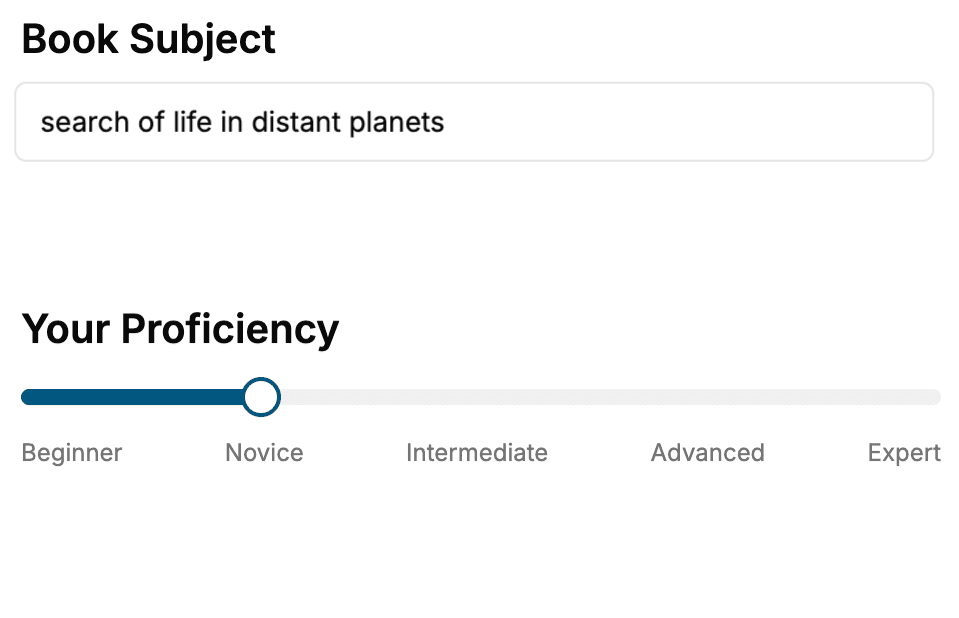
- 1. Select your focus
Select the focus of your Web Development book and share your background
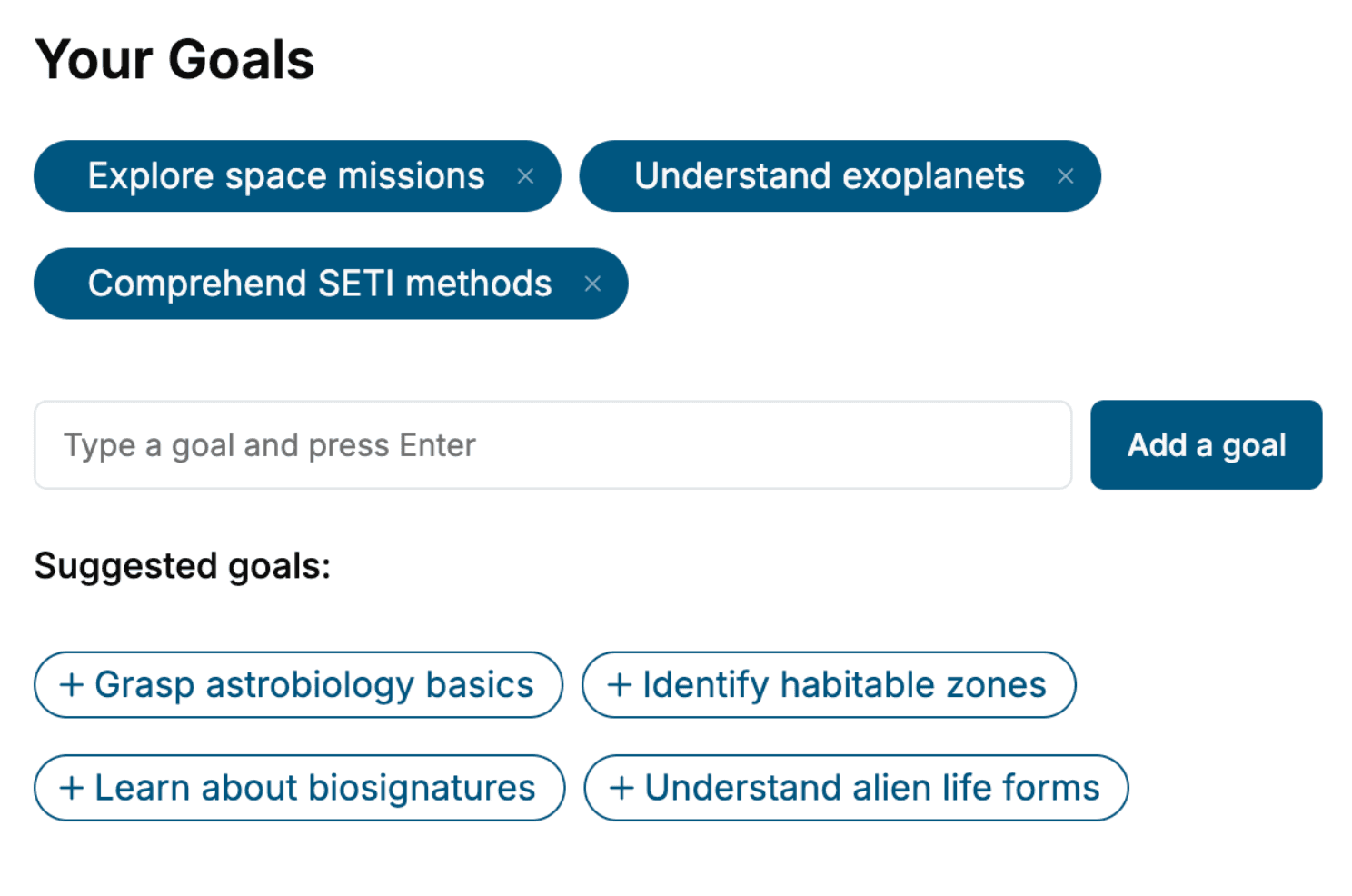
- 2. Personalize your book
Specify your goals and choose sub-topics to include
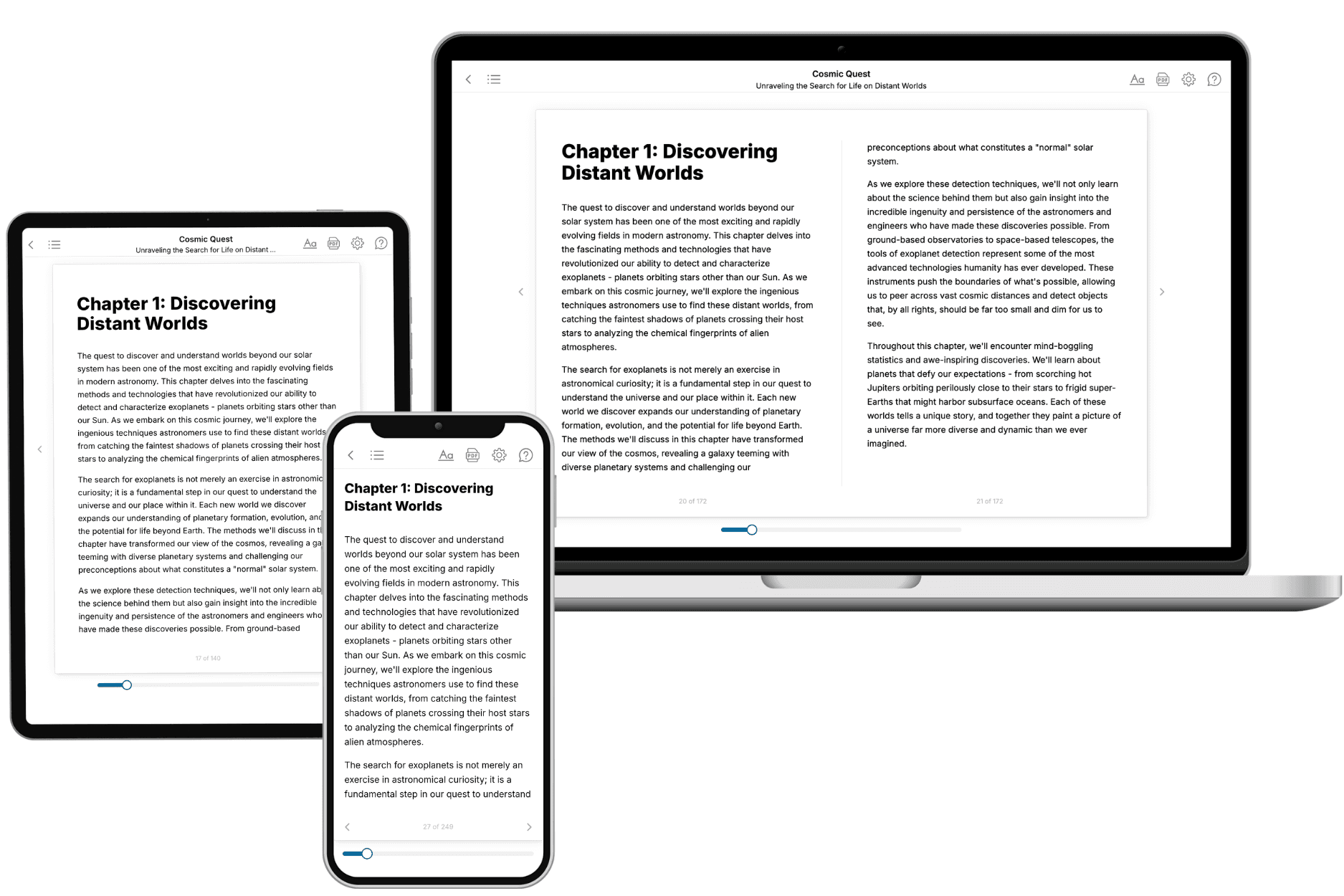
- 3. Get your tailored book
Your book is ready in 10 minutes. Read it online, download as EPUB or PDF, or send to Kindle.
Frequently asked questions
- What is TailoredRead?
TailoredRead creates complete, full-length nonfiction ebooks, written specifically for you. Tell us what you want to learn and why, and TailoredRead writes you a complete ebook on it, with charts, tables, and diagrams throughout. Read it online, on Kindle, or on any e-reader, or download it as a PDF or EPUB. Every book is written fresh the day you order it.
- How is the book tailored to me?
Before anything is written, you answer a few short questions about your goals, your background, and the topics you care about. Your book is then planned around your answers: written at your level, focused on your goals, and covering the topics you chose, instead of the one-size-fits-all book a store sells everyone.
- Will it read like generic AI content?
No. Your book isn't a chat transcript: it's planned chapter by chapter before a single word is written, told in a clear book voice, and explains ideas visually with charts, tables, and diagrams. After writing, every book goes through an editorial pass that polishes chapters so the book reads consistent from start to finish. Judge for yourself: browse thousands of sample books on our Explore Books page.
- How accurate is the content?
Our AI first checks whether your subject needs live research. Niche and fast-moving subjects are researched before writing, and the book plan and chapters are grounded in what it finds. After writing, every book goes through a quality pass that checks its facts and consistency, and researched books list their sources in a Notes section at the back.
- How long is the book?
You choose the length: Comprehensive (250-300 pages), Detailed (150-200 pages), Essential (70-100 pages), or Short (30-50 pages).
- Does the book include visuals?
Yes. Every book includes charts, tables, and diagrams: timelines, checklists, step-by-step guides, decision trees, comparison tables, matrices, and bar charts. A typical book includes dozens of these visual elements.
- Can I read it on Kindle? What formats can I download?
Yes. Every book can be read in our online reader or downloaded as a PDF or EPUB. The EPUB can be opened with Kindle, Apple Books, Kobo, and any e-reader. The Commercial and Author licenses also include an editable Word (DOCX) and Markdown download.
- How much does it cost?
About the price of a regular ebook. The exact price depends on your book's length and complexity, from $2 for the shortest books to $35 for the most comprehensive, and it's shown when you review your book, before you commit to anything. Each book is a one-time purchase, yours to keep, no subscription. Licenses that let you share, teach, or publish your book range from $35.99 to $49.99.
- Can I preview the book before purchasing?
Before you pay, you'll see what your book will cover: the title, a detailed description, the estimated length, and the complete chapter-by-chapter table of contents, so you know what you're getting before you decide. The full text itself is written after you purchase.
- How long does it take to create a book?
About 10 minutes. You can start reading the opening chapters while the rest is still being written.