About this book
This book walks you through the question of whether connected sensors and radio-frequency identification can genuinely help, and how to find out without overpromising. You begin by mapping the safety gaps in your own foodservice operation, then move through the core concepts of IoT monitoring and RFID traceability in plain terms. From there you learn how the FDA Food Code and state rules shape what a pilot must satisfy, and how the Food Traceability Rule's timeline through 2028 affects your planning. The later chapters turn to practical design: choosing a pilot scope, aligning with clinical nutrition teams, setting success metrics, building a cost-benefit model, selecting vendors, protecting data privacy, training staff, and drafting a governance framework. You also learn how to present findings to your board honestly, including the limits of current evidence. Written for leaders who value rigor, this book gives you a structured path from curiosity to a defensible pilot.
Table of contents
- IntroductionWhy Hospital Kitchens Deserve Closer Attention, What This Book Covers and What It Does Not, How to Use This Book as a LeaderRead below
- Chapter 1: Assessing Safety Gaps in Hospital FoodserviceMapping Current Temperature and Hygiene Controls, Where Monitoring Gaps Tend to Hide, Prioritizing Gaps by Patient Risk
- Chapter 2: IoT Sensors and What They Actually MeasureTemperature Sensors and Other Connected Devices, Setting Locally Defined Limits and Alerts, Calibration, Accuracy, and Data Reliability
- Chapter 3: RFID Traceability Basics for Food LotsWhat RFID Identifies and What It Cannot Tell You, Linking Tags to Food, Lots, and Delivery Events, Measuring How Fast Records Can Be Retrieved
- Chapter 4: The FDA Food Code and State RulesWhat the FDA Food Code Is and Is Not, How State and Local Jurisdictions Adopt the Code, Reviewing the 2026 Edition for Pilot Planning
- Chapter 5: The Food Traceability Rule and Compliance TimelineWhich Foods Fall Under the Food Traceability List, Critical Tracking Events and Key Data Elements, Planning Through the 2028 Enforcement Window
- Chapter 6: Reading the Evidence HonestlyWhat the Published Studies Do and Do Not Show, Why Outcome Claims Need Careful Scrutiny, Using Your Own Pilot to Generate Evidence
- Chapter 7: Designing a Hospital Food-Safety PilotDefining Scope, Units, and Sensor Placement, Aligning the Pilot with Clinical Nutrition Teams, Defining Operational Success Metrics Clearly
- Chapter 8: Costs, Benefits, and Vendor SelectionBuilding a Cost-Benefit Model for the Pilot, Scoping Vendor Selection Criteria, Weighing Investment Against Measurable Outcomes
- Chapter 9: Governance, Privacy, and Staff ReadinessIdentifying Key Stakeholders Across the Hospital, Protecting Data Privacy in Food Tracking, Training Staff to Work with New Sensors
- Chapter 10: Governance Frameworks and Reporting to the BoardDrafting a Pilot Governance Framework, Communicating Findings to the Board Honestly
- ConclusionTurning Planning into a Defensible Pilot
- Further Reading and Resources
- Glossary
Introduction
A tray arrives at a patient's bedside three times a day, carrying food that was cooked, held, and transported through a chain of steps most hospital leaders never see. Somewhere in that chain, a chicken breast sat at a temperature that either kept it safe or did not, and a label on a produce case either matched the lot in the walk-in cooler or did not. For most hospitals, the person checking those facts is a staff member with a probe thermometer and a clipboard, working on a schedule set years ago. That gap between how much rides on the outcome and how manual the checking still is forms the starting point for everything that follows in this book.
You are likely reading this because a vendor, a board member, or your own operations team has raised the idea of connected sensors or radio tags for the kitchen, and you need to decide whether that idea deserves real investment. That is a reasonable instinct. Hospital foodservice touches patients who are often immunocompromised, elderly, or recovering from surgery, people for whom a foodborne illness is not a minor inconvenience but a serious clinical setback. At the same time, you have likely sat through enough technology pitches to know that a dashboard full of green checkmarks does not automatically mean patients are safer. This book exists to help you tell the difference between a genuinely useful pilot and an expensive gadget layer.
The approach here is deliberately narrow and practical rather than promotional. Connected sensors and radio identification tags are genuinely useful tools for certain jobs, and genuinely useless for others, and the difference matters more than the technology itself. A sensor that reports a cold holding temperature every few minutes can catch a failing refrigeration unit hours before a manual check would. A tag that identifies a lot of lettuce cannot, by itself, tell you whether that lettuce is contaminated. Confusing what these tools do with what you wish they did is the single most common mistake hospitals make when adopting them, and it is a mistake this book is built to help you avoid at every stage of planning.
Nothing in the chapters ahead assumes you already know the vocabulary of connected food-safety systems or the regulatory scaffolding around them. Each concept, whether it is a key data element required for traceability or the way a state adopts a federal code, is introduced in plain language before it is put to practical use. The goal is not to turn you into an engineer or a food-safety inspector, but to give you enough fluency to ask sharp questions of vendors, consultants, and your own staff, and enough judgment to recognize when an answer is evasive or unsupported.
Why Hospital Kitchens Deserve Closer Attention
Hospital kitchens operate under a kind of pressure that most commercial foodservice never faces. A restaurant serving a healthy adult population has some margin for error built into the resilience of its customers. A hospital kitchen serves people recovering from surgery, undergoing chemotherapy, managing diabetes, or living with organ transplants, where even a mild case of food poisoning can trigger a cascade of complications. This is the high-risk patient population that makes hospital foodservice a different category of operation entirely, one where the acceptable margin for a missed temperature check or a mislabeled lot is effectively zero.
Despite that stakes profile, hospital kitchens often run on systems designed decades ago. Paper logs, handwritten temperature checks performed a few times a shift, and date labels applied by hand remain the norm in many facilities, not because staff are careless but because that is what the budget and the workflow have supported. A refrigeration unit can drift out of safe range overnight, between the evening check and the morning check, and nobody finds out until food has already been served or discarded out of caution. The lag between a failure occurring and a human noticing it is the single biggest vulnerability in a traditional monitoring setup.
Consider a specific scenario that plays out in facilities of every size. A walk-in cooler holding prepared items for the next day's tray line begins to fail at two in the morning, its compressor struggling against a worn seal. The scheduled temperature check happens at six in the morning, four hours later, when a staff member discovers the unit reading well above the safe cold holding temperature. By then, every item inside has been exposed long enough to be a genuine risk, and the kitchen must decide whether to discard a morning's worth of prepared food or gamble on its safety. A continuously reporting sensor could have flagged the drift within minutes rather than hours.
That scenario illustrates the appeal of connected monitoring without overselling it. The sensor in that story does not cook the food more safely or make the compressor more reliable. What it does is shrink the detection window, giving staff the chance to intervene before a four-hour gap becomes a four-hour loss. This is a modest, specific, and genuinely valuable improvement, and distinguishing modest improvements from sweeping claims about patient safety is a skill this entire book is built around.
Hospital leadership also faces a reporting burden that commercial kitchens do not. Boards, accreditation bodies, and sometimes state regulators expect documented evidence that food-safety controls are functioning, not just a verbal assurance that staff are doing their jobs. A connected system that produces a continuous, timestamped record can strengthen that documentation considerably, turning a stack of handwritten logs into something closer to an audit trail. That administrative value is real, even separate from any clinical benefit, and it deserves its own line in any honest accounting of what a pilot might deliver.
None of this means every hospital kitchen needs an overhaul immediately, or that the gap between current practice and connected monitoring is uniformly dangerous everywhere. Some facilities already run tight, well-staffed manual systems with frequent checks and strong escalation habits. The chapter on assessing safety gaps in hospital foodservice gives you a structured way to find out where your own operation actually stands, rather than assuming the worst or the best based on anecdote. Closer attention starts with an honest look at your own kitchen, not with adopting a trend because other hospitals are doing it.
What This Book Covers and What It Does Not
This book moves in a deliberate sequence, starting with the problem itself before it introduces any technology. The early chapters help you map where your current food-safety controls have blind spots and rank those gaps by how much risk they carry for vulnerable patients. Only after that groundwork does the book turn to explaining what connected sensors and radio identification tags actually do, in plain mechanical terms, separating the two technologies clearly because they answer different questions and are too often bundled together in vendor marketing as if they were one thing.
A substantial middle section addresses the regulatory and evidence landscape, because a pilot designed without that context is a pilot built on sand. You will learn how the FDA Food Code functions as a model that states and localities adopt and adapt rather than a nationwide mandate enforced directly, and why that distinction changes what a pilot must actually satisfy at your specific site. You will also work through the Food Traceability Rule, which foods it covers, and the compliance window that gives hospitals time to build sound records and processes rather than scrambling at the last moment.
A chapter is also devoted entirely to reading published research on connected food-safety monitoring with a critical eye, because this is where enthusiasm most often outruns evidence. Studies showing that a sensor detected a temperature deviation are not the same as studies showing that sensor reduced foodborne illness in patients, and conflating the two is a trap that can lead a hospital to overstate what a pilot has proven. That chapter gives you the tools to separate a study's actual finding from the broader claim built on top of it.
The back half of the book is where planning turns operational. You will work through designing a pilot with a defined scope and sensor placement aligned with clinical nutrition priorities, building a cost-benefit model that treats staffing and vendor costs honestly, and setting criteria for vendor selection that go beyond a glossy product demo. Chapters on stakeholder mapping, data privacy, and staff training address the human side of a pilot, because a system that staff resent or misunderstand will produce unreliable data no matter how good the hardware is.
The final substantive chapters cover drafting a pilot governance framework and presenting findings to a hospital board, including the uncomfortable parts: what the pilot did not prove, what remains uncertain, and what a reasonable next step looks like given that uncertainty. A board presentation built entirely on favorable numbers invites justified skepticism later, while one that states limits plainly tends to earn more lasting trust.
What this book does not do is hand you a single universal pilot design, a specific sensor placement map, or a fixed success threshold that applies to every hospital. No such universal template exists in the current evidence base, and any book claiming otherwise would be overselling exactly the kind of certainty this book argues against. It also does not provide installation manuals, vendor endorsements, or detailed technical specifications for any particular sensor or tag product, since those details change faster than a book can track and vary by facility.
Equally, this is not a book about IT security architecture, hospital-wide data systems, or general healthcare technology strategy, even though food-safety monitoring touches all three at the edges. The focus stays tightly on foodservice, with other hospital systems mentioned only where they intersect directly with a food-safety pilot's design or governance. If your interest is broader digital transformation in healthcare, this book will be useful as one piece of that puzzle, but it is not written to cover that wider territory.
Finally, this book does not promise a specific return on investment or a guaranteed improvement in patient outcomes, because the published evidence does not support that promise yet. What it offers instead is a disciplined method for finding out, in your own hospital, whether a pilot is worth running, what it should measure, and how to report what you learn with appropriate honesty about what remains unknown. That more modest promise is, deliberately, the one this book is prepared to keep.
How to Use This Book as a Leader
The chapters are sequenced to build on one another, but you do not need to read them in strict order if your situation calls for something different. A CEO facing a board question next month about a vendor proposal might jump directly to the chapters on cost-benefit modeling and vendor selection criteria, then circle back to the regulatory chapters once the immediate pressure has eased. A medical director more concerned with clinical alignment might start with the chapter connecting pilot design to clinical nutrition teams. Treat the book as a reference you can enter at the point your current decision requires, not only as a cover-to-cover narrative.
That said, resist the temptation to skip directly to the design and vendor chapters without first working through the gap assessment and the evidence chapters. A pilot built on an unclear picture of where your own risks actually sit, or on an uncritical reading of a vendor's cited study, tends to produce findings nobody fully trusts later. The sequencing in the early chapters is designed to slow you down just enough to avoid that outcome, even if your instinct is to move quickly toward a visible project.
As you move through the book, keep a specific question in front of you: what would this chapter's idea actually change about tomorrow's shift in your kitchen? A concept that cannot be translated into a concrete operational change, a specific metric, or a specific conversation with a specific stakeholder is not yet ready to leave the page. The later chapters on pilot design and success metrics are built to force that translation, but you can start applying that discipline from the very first chapter on gap assessment.
Several chapters include structured tools, such as checklists for stakeholder engagement, a table comparing regulatory layers, or a framework for weighing costs against measurable gains. These are meant to be used directly, adapted to your facility's specific terminology and org chart, rather than treated as decorative summaries. Photocopy them, project them in a planning meeting, or hand them to the team member who will own a particular workstream. A tool used once in a meeting and then forgotten delivers far less value than one built into a recurring process.
Bring a specific skepticism to every claim of clinical benefit you encounter, both inside this book and from any vendor or consultant you meet afterward. The chapter on reading evidence honestly gives you a concrete method for this, but the habit starts now: ask what was actually measured, over what population, and compared to what alternative. A sensor system can be entirely worth adopting for its operational and documentation benefits even if no study has shown it reduces foodborne illness, and recognizing that distinction will keep your planning grounded rather than oversold.
Finally, treat the governance and board-communication chapters near the end as destinations you are building toward from the very first page, not an afterthought bolted onto a finished pilot. The questions a board will eventually ask, about cost, about evidence, about what happens if the pilot shows nothing conclusive, are easier to answer when you have been collecting the right documentation from day one. Reading this book with that eventual conversation already in mind will shape which details you track and which shortcuts you decline to take.
This is the end of the free sample. The full book has 10 chapters.
Want this book written for you?
Tell us your goals and background, and get your own version of this book, tailored by AI to you.


Benefits of AI-tailored books
- Read one book, not ten:
- all the knowledge you need, gathered into a single book.
- Save days of learning:
- tell us your goals, choose your topics, and the whole book is built around them.
- Learn effortlessly:
- a book written for your specific background and expertise.
- Understand at a glance:
- includes charts, tables, timelines, checklists, decision trees, and more.
- Stay current:
- written the day you order it, not years ago.
- Trust what you read:
- every book is checked for accuracy, with real research when your subject needs it.
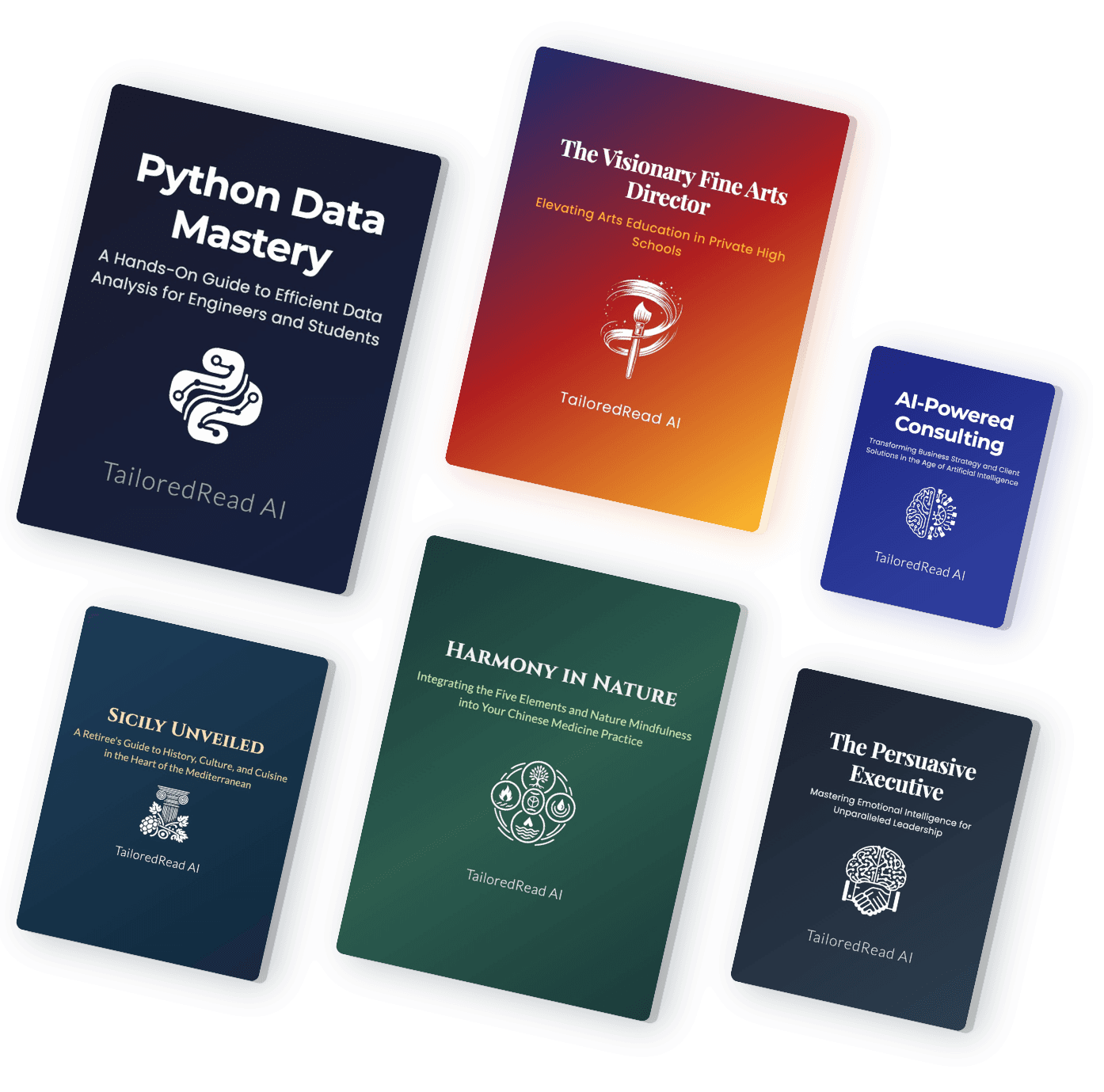
Create your unique book in 3 steps
- 1. Pick a subject
Select what you want to learn and share your background
- 2. Personalize your book
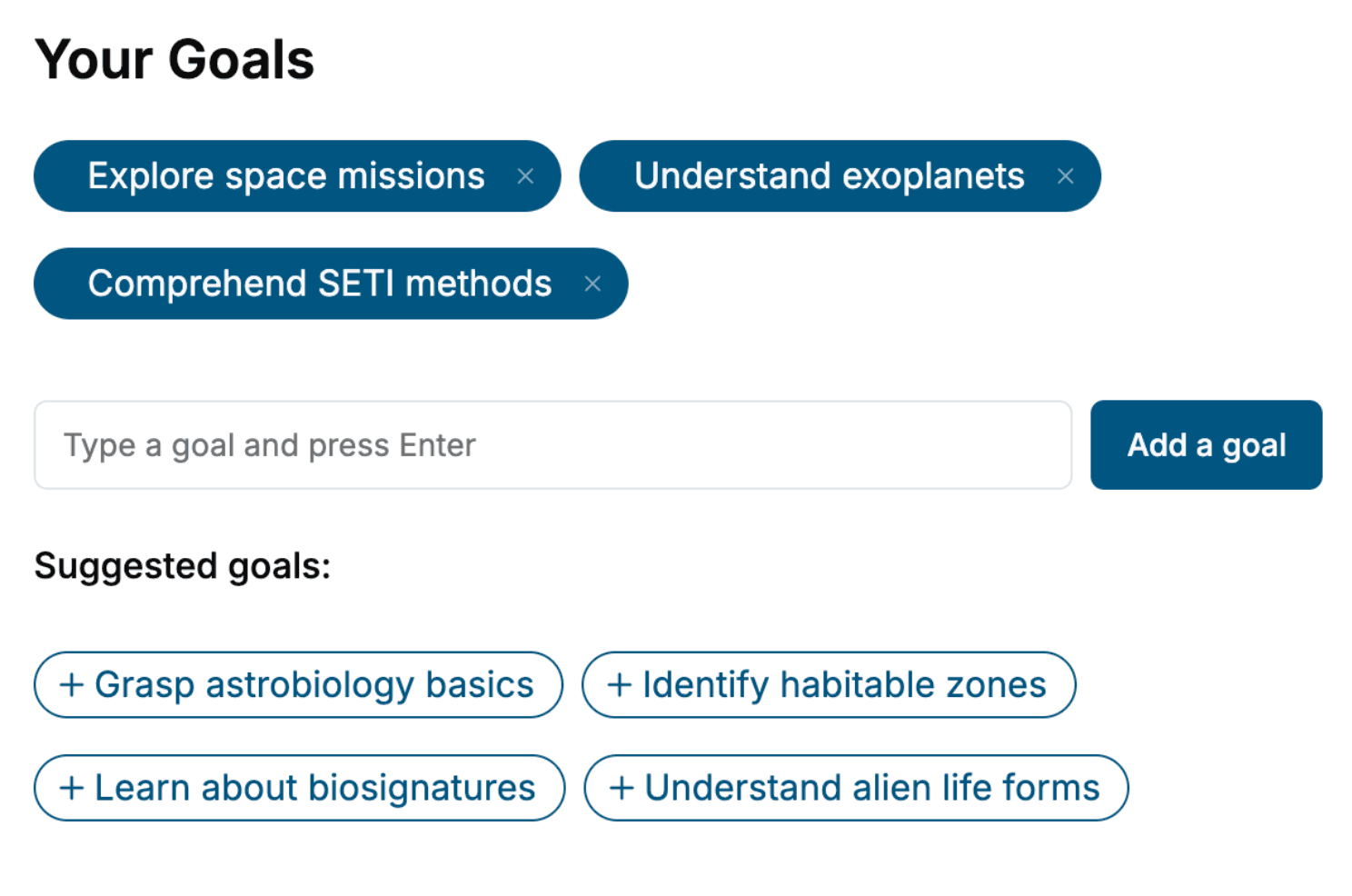
Specify your goals and choose sub-topics to include
- 3. Get your tailored book
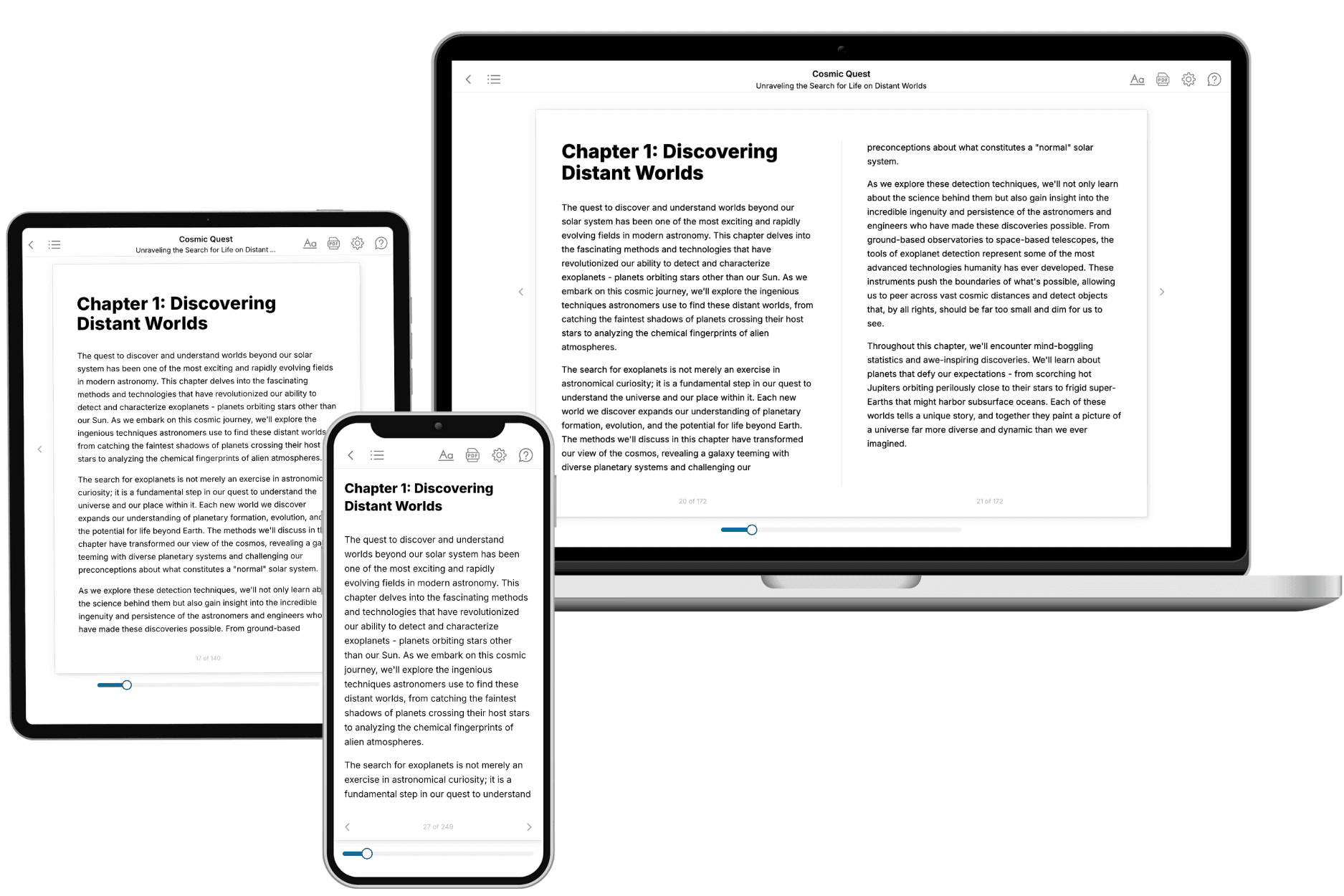
Your book is ready in 10 minutes. Read it online, download as EPUB or PDF, or send to Kindle.

Frequently asked questions
- What is TailoredRead?
TailoredRead creates complete, full-length nonfiction ebooks, written specifically for you. Tell us what you want to learn and why, and TailoredRead writes you a complete ebook on it, with charts, tables, and diagrams throughout. Read it online, on Kindle, or on any e-reader, or download it as a PDF or EPUB. Every book is written fresh the day you order it.
- How is the book tailored to me?
Before anything is written, you answer a few short questions about your goals, your background, and the topics you care about. Your book is then planned around your answers: written at your level, focused on your goals, and covering the topics you chose, instead of the one-size-fits-all book a store sells everyone.
- Will it read like generic AI content?
No. Your book isn't a chat transcript: it's planned chapter by chapter before a single word is written, told in a clear book voice, and explains ideas visually with charts, tables, and diagrams. After writing, every book goes through an editorial pass that polishes chapters so the book reads consistent from start to finish. Judge for yourself: browse thousands of sample books on our Explore Books page.
- How accurate is the content?
Our AI first checks whether your subject needs live research. Niche and fast-moving subjects are researched before writing, and the book plan and chapters are grounded in what it finds. After writing, every book goes through a quality pass that checks its facts and consistency, and researched books list their sources in a Notes section at the back.
- How long is the book?
You choose the length: Comprehensive (250-300 pages), Detailed (150-200 pages), Essential (70-100 pages), or Short (30-50 pages).
- Does the book include visuals?
Yes. Every book includes charts, tables, and diagrams: timelines, checklists, step-by-step guides, decision trees, comparison tables, matrices, and bar charts. A typical book includes dozens of these visual elements.
- Can I read it on Kindle? What formats can I download?
Yes. Every book can be read in our online reader or downloaded as a PDF or EPUB. The EPUB can be opened with Kindle, Apple Books, Kobo, and any e-reader. The Commercial and Author licenses also include an editable Word (DOCX) and Markdown download.
- How much does it cost?
About the price of a regular ebook. The exact price depends on your book's length and complexity, from $2 for the shortest books to $35 for the most comprehensive, and it's shown when you review your book, before you commit to anything. Each book is a one-time purchase, yours to keep, no subscription. Licenses that let you share, teach, or publish your book range from $35.99 to $49.99.
- Can I preview the book before purchasing?
Before you pay, you'll see what your book will cover: the title, a detailed description, the estimated length, and the complete chapter-by-chapter table of contents, so you know what you're getting before you decide. The full text itself is written after you purchase.
- How long does it take to create a book?
About 10 minutes. You can start reading the opening chapters while the rest is still being written.