The Sentence Blueprint
Master the Architecture of Clear, Powerful Writing
Many writers struggle with sentence construction, producing unclear or awkward prose that fails to convey their intended message.
191 pages9 chaptersMar 13, 2026Grammar
About this book
This book demystifies sentence structure by breaking it down into manageable, learnable components. You'll discover how sentences work at their core, why certain structures are more effective than others, and how to diagnose and fix common problems in your own writing. Through clear explanations, practical examples, and actionable exercises, you'll develop the ability to construct sentences that are not only grammatically correct but also compelling and persuasive. Whether you're writing emails, reports, essays, or creative content, mastering sentence structure will elevate your communication and help your ideas resonate with readers. This guide transforms grammar from an abstract concept into a practical skill you can apply immediately.
Table of contents
- IntroductionWhy Sentence Structure Matters, How to Use This Book, What You'll Learn and AchieveRead below
- Chapter 1: The Foundation: Understanding Sentence BasicsWhat Defines a Sentence, The Core Trinity: Subject, Verb, and Object, Independent Clauses as the Sentence's Heart
- Chapter 2: The Four Sentence Types: Building Your ArsenalSimple Sentences: Power in Clarity, Compound Sentences: Connecting Equal Ideas, Complex Sentences: Adding Depth and Nuance, Compound-Complex Sentences: Maximum Sophistication
- Chapter 3: Phrases and Clauses: The Building Blocks of SophisticationUnderstanding Phrases and Their Functions, Dependent Clauses: Adding Information and Context, Combining Phrases and Clauses Effectively
- Chapter 4: Common Sentence Errors: Diagnosis and RepairSentence Fragments: Incomplete Thoughts, Run-On Sentences and Comma Splices, Misplaced and Dangling Modifiers, Subject-Verb Agreement Issues
- Chapter 5: Parallel Structure: Creating Balance and RhythmThe Principle of Parallel Structure, Parallel Structure in Lists and Series, Parallel Structure in Comparisons and Contrasts
- Chapter 6: Sentence Variety: Engaging Your ReaderCreating Rhythm and Flow Through Variety, Mixing Short and Long Sentences Strategically, Varying Sentence Openings and Structures
- Chapter 7: Active vs. Passive Voice: Choosing the Right PerspectiveActive Voice: Direct and Engaging, Passive Voice: When and Why to Use It, Converting Between Active and Passive Voice
- Chapter 8: Punctuation and Sentence Structure: The Essential ConnectionCommas: Separating and Connecting Ideas, Semicolons and Colons: Advanced Connectors, Dashes and Parentheses: Adding Emphasis and Asides
- Chapter 9: Sentence Structure in Different ContextsSentence Structure in Professional and Business Writing, Sentence Structure in Academic Writing, Sentence Structure in Creative and Narrative Writing
- Conclusion: Your Path to MasteryKey Takeaways and Principles, Continuing Your Growth as a Writer
- Appendix: Quick Reference GuideSentence Structure Checklist, Common Errors Quick Reference, Practice Exercises and Answer Key
Introduction
Think about the last time you read something that stopped you cold. Maybe it was a single line in an article that made everything click. Maybe it was a paragraph in a report that was so clear and direct you wished you had written it yourself. Whatever it was, there's a good chance the writing worked because of something invisible: the structure underneath the words. Sentence structure is the skeleton of all good writing, and most people never think about it consciously until something goes wrong.
The problem is that most of us learned grammar in school as a set of rules to memorize and tests to pass. We learned what a noun was, circled verbs on worksheets, and moved on. Very few of us were taught how sentences actually work, how they create meaning, control pace, and shape the way a reader experiences an idea. That gap between knowing grammar rules and understanding sentence architecture is exactly where most writing problems live. Awkward phrasing, confusing sentences, and unclear ideas almost always trace back to structural issues, not vocabulary or intelligence.
This book exists to close that gap. It treats sentence structure not as a set of abstract rules but as a practical craft skill, something you can learn, practice, and apply immediately. Whether you're writing a professional email, a college essay, a business report, or a short story, the principles here will help you write with more clarity, confidence, and impact. The goal isn't to make your writing sound academic or overly formal. The goal is to give you full control over what your sentences do and how they land on the page.
Every chapter in this book builds on the last. You'll start with the fundamentals of what a sentence actually is, move through the four main sentence types, explore phrases and clauses, tackle common errors, and finish with advanced techniques like parallel structure, sentence variety, and voice. Along the way, you'll find concrete examples, practical exercises, and clear explanations that make each concept stick. By the end, you won't just understand sentence structure. You'll be able to use it as a tool.
Why Sentence Structure Matters
Here's a simple truth that most writing guides skip over: readers judge your ideas by how you express them. A brilliant insight buried in a tangled, confusing sentence loses most of its power. A straightforward idea expressed in a clean, well-built sentence lands with authority. This isn't fair, but it's real. The structure of your sentences shapes how credible, intelligent, and trustworthy you appear to the people reading your work.
Research in communication and cognitive psychology consistently shows that readers process clear, well-structured sentences faster and retain the information longer.[1] When a sentence is poorly constructed, the reader's brain has to do extra work to decode the meaning. That extra effort creates friction, and friction kills engagement. In professional contexts, that friction can cost you a client, a grade, or a promotion. In personal writing, it can mean your message simply doesn't get through.
Consider these two versions of the same idea:
Version A: "The report, which was submitted by the team after several delays that were caused by a lack of resources and unclear direction from management, was finally completed."
Version B: "The team finally submitted the report. Delays had piled up due to limited resources and unclear direction from management."
Both versions contain the same information. But Version B is easier to read, faster to process, and more direct. The difference isn't vocabulary. It's structure. Version A buries the main action inside a tangle of clauses. Version B puts the action front and center and separates the explanation into its own sentence. That's the power of understanding how sentences work.
Sentence structure also controls the rhythm of your writing. Short sentences create urgency and emphasis. Longer sentences allow you to develop ideas, show relationships between concepts, and guide the reader through more complex thinking. When you understand how to mix these intentionally, your writing develops a natural flow that keeps readers engaged from one paragraph to the next. Without that control, writing can feel choppy, monotonous, or exhausting to read.
Beyond clarity and rhythm, sentence structure affects persuasion. Studies in rhetoric show that how an argument is framed at the sentence level influences how convincing it feels.[2] Parallel structure makes lists feel balanced and logical. Active voice makes claims feel confident and direct. Strategic sentence length creates emphasis at exactly the right moment. These aren't tricks. They're tools, and this book will teach you how to use them.
The bottom line is this: sentence structure is not a minor technical detail. It is the foundation of effective communication. Every professional writer, editor, and communication expert knows this. Now you will too.
How to Use This Book
This book is designed to be read in order, at least the first time through. Each chapter builds on concepts introduced in the previous one. If you jump straight to Chapter 5 on parallel structure without understanding clauses and sentence types, some of the explanations won't fully make sense. The architecture of this book mirrors the architecture of a sentence: the foundation comes first, and everything else builds on top of it.
That said, once you've read through the book once, it works equally well as a reference guide. Each chapter is self-contained enough that you can return to a specific section when you need a refresher. If you're editing a piece of writing and you notice something feels off, you can flip to the relevant chapter, review the concept, and apply the fix. The appendix at the back of the book includes a quick-reference checklist and a summary of common errors for exactly this purpose.
Here's a suggested approach for getting the most out of each chapter:
- Read the chapter fully before trying the examples. Get the big picture first, then go back and work through the specific examples in detail.
- Write your own examples. For every concept introduced, try writing two or three sentences of your own that demonstrate the principle. This is where real learning happens.
- Apply the concept to your own writing. Pull out something you've written recently, a work email, a paragraph from an essay, or even a text message, and look for places where the chapter's concept applies.
- Use the practice exercises in the appendix. These are designed to reinforce each chapter's key ideas with targeted practice.
You don't need to spend hours on each chapter. Even 20 to 30 minutes of focused reading and practice per chapter will produce noticeable results in your writing. Consistency matters more than intensity here. Reading one chapter a week and actively applying what you learn will do far more for your writing than rushing through the entire book in a single weekend.
Throughout the book, you'll notice that examples are central to every explanation. This is intentional. Abstract grammar rules are hard to remember and even harder to apply. But when you see a concept demonstrated in a real sentence, and then see what happens when that concept is violated, the lesson sticks. Pay close attention to the "before and after" examples. They show not just what the rule is, but why it matters in practice.
You'll also notice that this book doesn't treat grammar as a rigid set of commandments. Language is flexible, and good writers bend rules intentionally all the time. The goal here is to help you understand the rules well enough to know when breaking them serves your writing and when it just creates confusion. That kind of informed flexibility is the mark of a skilled writer.
Finally, be patient with yourself. Improving your sentence structure is a skill, and skills take time to develop. You won't rewrite every sentence perfectly after reading Chapter 1. But with each chapter, each example, and each practice session, your instincts will sharpen. Eventually, strong sentence structure will become second nature, something you do automatically rather than something you have to consciously think about.
What You'll Learn and Achieve
By the time you finish this book, you'll have a complete, practical understanding of how English sentences work at every level. More importantly, you'll be able to apply that understanding to your own writing in real time. Here's a clear picture of what each part of the book covers and what you'll be able to do as a result.
Chapters 1 and 2 cover the foundation. You'll learn what actually makes a sentence a sentence, not just the textbook definition, but the functional understanding of what a sentence needs to do. You'll master the four sentence types: simple, compound, complex, and compound-complex. Most writers use only one or two of these types by default. After these chapters, you'll have all four available to you and know when to use each one.
Chapter 3 dives into phrases and clauses, the building blocks that allow you to add detail, context, and nuance to your sentences without making them confusing. This is where many intermediate writers get stuck. They know how to write basic sentences but struggle to add complexity without losing clarity. This chapter solves that problem directly.
Chapter 4 is one of the most practically useful chapters in the book. It covers the four most common sentence-level errors:
- Sentence fragments (incomplete sentences that lack a subject, verb, or complete thought)
- Run-on sentences (two or more independent clauses joined incorrectly)
- Comma splices (a specific type of run-on that uses a comma where stronger punctuation is needed)
- Misplaced and dangling modifiers (descriptive phrases that end up attached to the wrong word)
You'll learn not just how to identify these errors but how to fix them quickly and confidently. This chapter alone will significantly improve the quality of your editing process.
Chapters 5 and 6 move into more advanced territory. Parallel structure, covered in Chapter 5, is one of the most underused tools in a writer's toolkit. When used well, it makes writing feel balanced, professional, and persuasive. Chapter 6 tackles sentence variety, teaching you how to mix sentence lengths and structures to create writing that has genuine rhythm and keeps readers engaged from start to finish.
Chapter 7 addresses one of the most debated topics in writing instruction: active versus passive voice. You'll get a clear, practical answer to when each one works best, along with specific techniques for converting between the two. This chapter cuts through the confusion and gives you a reliable framework for making the right choice in any situation.
Chapter 8 connects punctuation to sentence structure in a way that most grammar guides miss. Punctuation isn't just about following rules. It's a structural tool that shapes how sentences are read and understood. You'll learn how commas, semicolons, colons, and other marks interact with sentence architecture to create meaning and control pace.
Chapter 9 applies everything you've learned to three specific writing contexts: professional and business writing, academic writing, and creative writing. Each context has its own conventions and priorities, and this chapter shows you how to adapt your sentence-building skills accordingly. A well-structured sentence in a business email looks different from a well-structured sentence in a short story, and understanding that difference is what separates competent writers from truly skilled ones.
By the end of this book, here's what you'll be able to do with confidence:
- Identify the core components of any sentence and understand how they work together
- Choose the right sentence type for any writing situation
- Add phrases and clauses to build complexity without sacrificing clarity
- Spot and fix the most common sentence-level errors in your own writing
- Use parallel structure to make your writing feel balanced and professional
- Vary your sentence length and structure to create engaging, readable prose
- Choose between active and passive voice with intention and confidence
- Use punctuation as a structural tool, not just a rule to follow
- Adapt your sentence-building approach to professional, academic, and creative contexts
These aren't small improvements. Writers who develop a strong command of sentence structure consistently produce clearer, more persuasive, and more professional work across every context. Employers notice it. Teachers notice it. Readers notice it. And once you develop this skill, it stays with you. Unlike memorized grammar rules that fade over time, a genuine understanding of how sentences work becomes part of how you think about language.
The journey starts with a single question that most people have never seriously considered: what exactly is a sentence? The answer is more interesting, and more useful, than you might expect. Turn the page, and let's find out.
This is the end of the free sample. The full book has 9 chapters.
Want this book written for you?
Tell us your goals and background, and get your own version of this book, tailored by AI to you.


Benefits of AI-tailored books
- Read one book, not ten:
- all the Grammar knowledge you need, gathered into a single book.
- Save days of learning:
- tell us your goals, choose your topics, and the whole book is built around them.
- Learn effortlessly:
- Grammar book written for your specific background and expertise.
- Understand at a glance:
- includes charts, tables, timelines, checklists, decision trees, and more.
- Stay current:
- written the day you order it, not years ago.
- Trust what you read:
- every book is checked for accuracy, with real research when your subject needs it.
Create your unique book in 3 steps
- 1. Select your focus
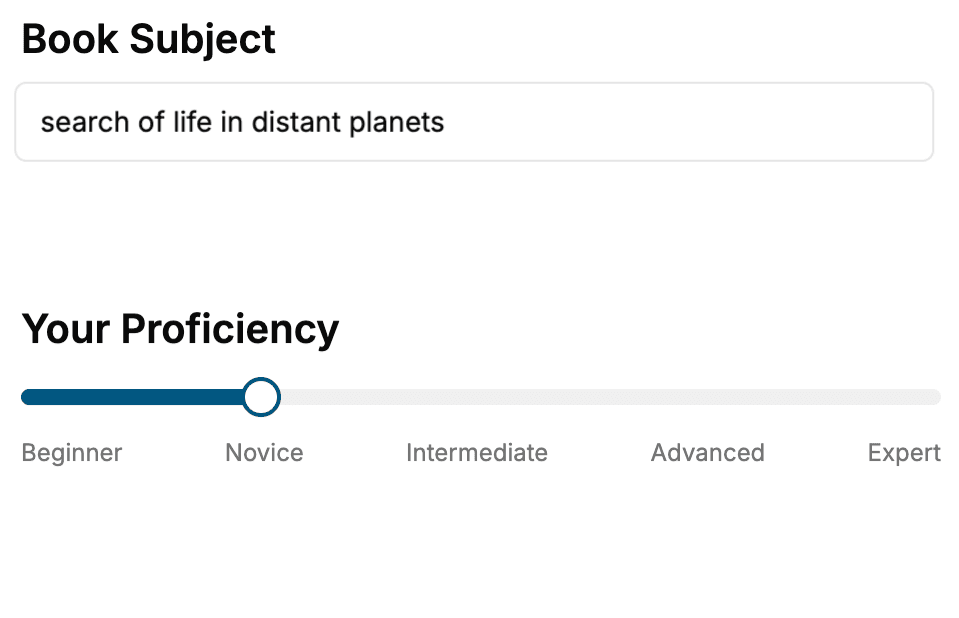
Select the focus of your Grammar book and share your background
- 2. Personalize your book
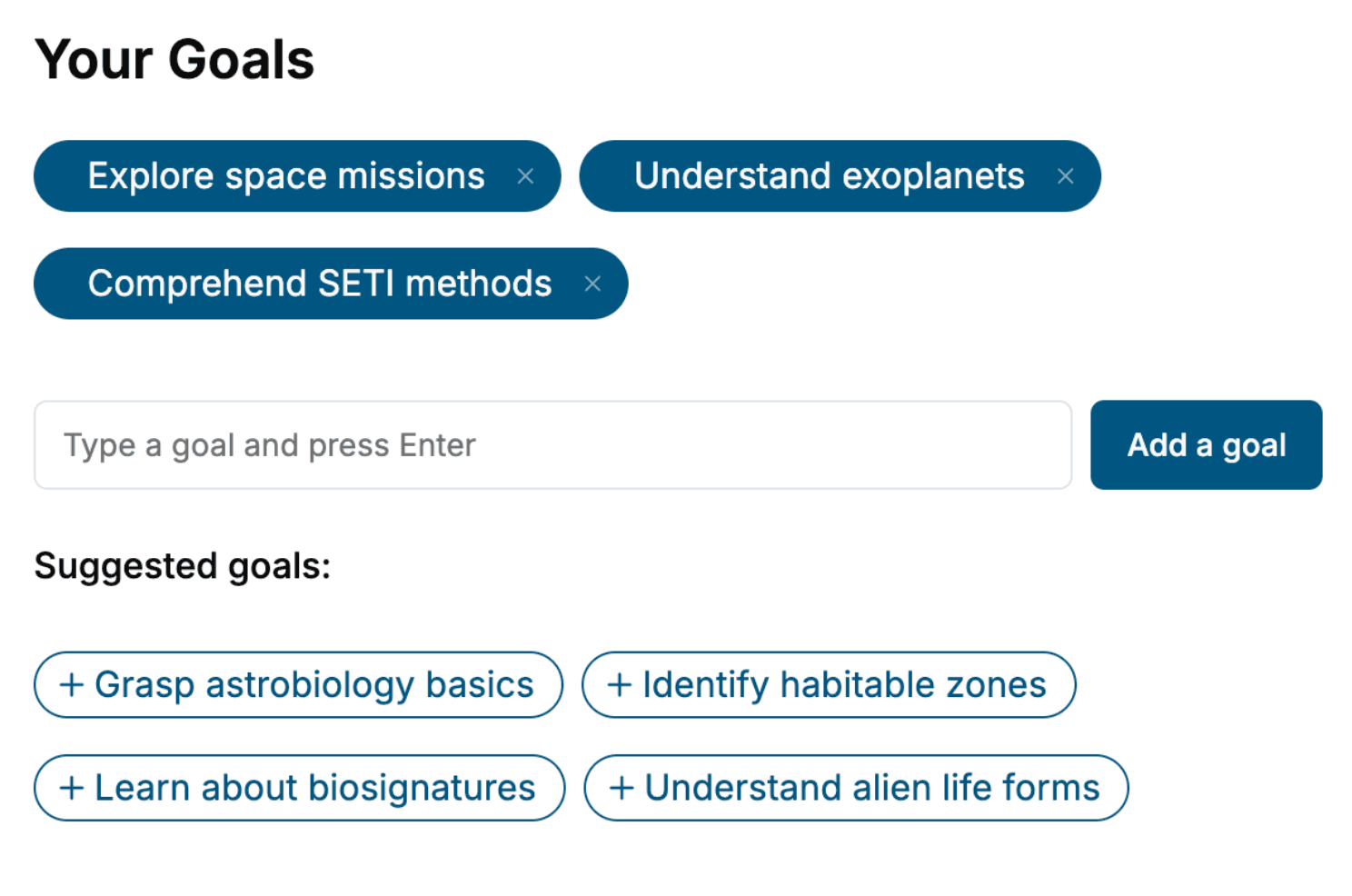
Specify your goals and choose sub-topics to include
- 3. Get your tailored book
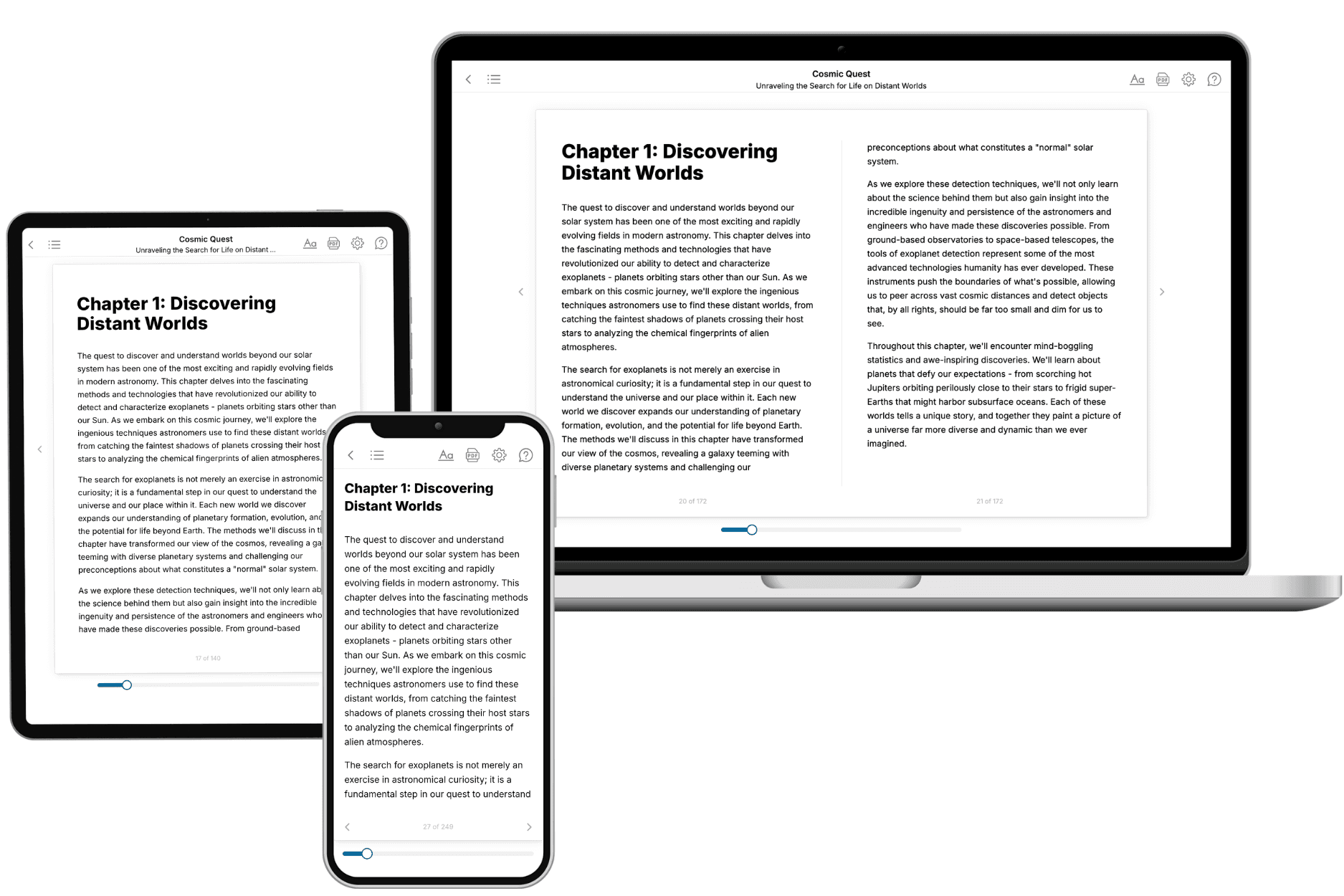
Your book is ready in 10 minutes. Read it online, download as EPUB or PDF, or send to Kindle.
Frequently asked questions
- What is TailoredRead?
TailoredRead creates complete, full-length nonfiction ebooks, written specifically for you. Tell us what you want to learn and why, and TailoredRead writes you a complete ebook on it, with charts, tables, and diagrams throughout. Read it online, on Kindle, or on any e-reader, or download it as a PDF or EPUB. Every book is written fresh the day you order it.
- How is the book tailored to me?
Before anything is written, you answer a few short questions about your goals, your background, and the topics you care about. Your book is then planned around your answers: written at your level, focused on your goals, and covering the topics you chose, instead of the one-size-fits-all book a store sells everyone.
- Will it read like generic AI content?
No. Your book isn't a chat transcript: it's planned chapter by chapter before a single word is written, told in a clear book voice, and explains ideas visually with charts, tables, and diagrams. After writing, every book goes through an editorial pass that polishes chapters so the book reads consistent from start to finish. Judge for yourself: browse thousands of sample books on our Explore Books page.
- How accurate is the content?
Our AI first checks whether your subject needs live research. Niche and fast-moving subjects are researched before writing, and the book plan and chapters are grounded in what it finds. After writing, every book goes through a quality pass that checks its facts and consistency, and researched books list their sources in a Notes section at the back.
- How long is the book?
You choose the length: Comprehensive (250-300 pages), Detailed (150-200 pages), Essential (70-100 pages), or Short (30-50 pages).
- Does the book include visuals?
Yes. Every book includes visual elements such as timelines, checklists, step-by-step guides, decision trees, comparison tables, and matrices, and many include bar charts. A typical book includes dozens of these visual elements.
- Can I read it on Kindle? What formats can I download?
Yes. Every book can be read in our online reader or downloaded as a PDF or EPUB. The EPUB can be opened with Kindle, Apple Books, Kobo, and any e-reader. The Commercial and Author licenses also include an editable Word (DOCX) and Markdown download.
- How much does it cost?
About the price of a regular ebook. The exact price depends on your book's length and complexity, from $2 for the shortest books to $35 for the most comprehensive, and it's shown when you review your book, before you commit to anything. Each book is a one-time purchase, yours to keep, no subscription. Licenses that let you share, teach, or publish your book range from $35.99 to $49.99.
- Can I preview the book before purchasing?
Before you pay, you'll see what your book will cover: the title, a detailed description, the estimated length, and the complete chapter-by-chapter table of contents, so you know what you're getting before you decide. The full text itself is written after you purchase.
- How long does it take to create a book?
About 10 minutes. You can start reading the opening chapters while the rest is still being written.