Sicily Unveiled
A Pharmacist's Guide to Culinary Delights, Ancient Wonders, and Hidden Treasures
Navigating the complexities of planning a truly immersive Sicilian experience can be overwhelming.
300 pages15 chaptersFeb 3, 2025Travel Guide
About this book
From deciphering local dialects to uncovering hidden culinary gems, the challenges of crafting the perfect Sicily itinerary often leave travelers feeling lost before they've even begun their journey. Sicily Unveiled is your passport to the heart and soul of this captivating Mediterranean island. This guide goes beyond the typical tourist traps, offering you an insider's perspective on Sicilian life, culture, and history. You'll discover how to effortlessly blend in at bustling markets, unearth the stories behind ancient ruins, and savor the nuances of locally-produced wines and cheeses. Tailored for the culturally curious traveler, this book equips you with the knowledge to appreciate Sicily's Norman-Arab architecture, decode the symbolism in Sicilian Baroque art, and understand the significance of traditional puppetry. You'll learn to navigate Palermo's vibrant street food scene like a local, capture breathtaking landscapes through your lens, and time your visit to coincide with authentic festivals that showcase the island's rich heritage. Whether you're drawn to the sun-drenched coastal villages, the majestic Greek ruins, or the bustling piazzas where history whispers from every corner, Sicily Unveiled ensures your journey is as enriching as it is unforgettable. Prepare to experience Sicily not just as a destination, but as a living, breathing entity that will captivate your senses and leave an indelible mark on your traveler's soul.
Table of contents
- IntroductionSicily: A Land of Contrasts and Cultures, How to Use This Guide, Planning Your Sicilian Adventure, Cultural Etiquette and Local CustomsRead below
- Chapter 1: The Historical Tapestry of SicilyAncient Civilizations: Greeks and Romans, The Arab-Norman Period, The Baroque Era and Beyond, Modern Sicily: Unification to Present Day
- Chapter 2: The Sicilian Landscape: A Photographer's ParadiseCoastal Beauty: Beaches and Fishing Villages, Volcanic Wonders: Mount Etna and the Aeolian Islands, Rural Charm: Countryside and Citrus Groves, Photography Tips for Capturing Sicily's Essence
- Chapter 3: A Culinary Journey Through SicilyPalermo's Street Food Scene, Signature Pasta Dishes and Their Origins, Seafood Delights of the Sicilian Coast, Sweet Treats: Sicilian Pastries and Desserts
- Chapter 4: The Essence of Sicily: Wine and Olive OilSicilian Wine Regions and Varietals, Marsala Wine Production and Tasting, The Olive Oil Tradition in Sicily, Food and Wine Pairings: A Sicilian Approach
- Chapter 5: Architectural Marvels: From Ancient to BaroqueGreek Temples: Agrigento and Selinunte, Norman-Arab Structures in Palermo, Baroque Towns: Noto, Ragusa, and Modica, Hidden Architectural Gems Off the Beaten Path
- Chapter 6: Sicily's Artistic HeritageThe Mosaics of Villa Romana del Casale and Monreale, Frescoes: Stories on Walls, Sculptures Through the Ages, Contemporary Sicilian Art Scene
- Chapter 7: Coastal Exploration and Island HoppingThe Charms of Taormina, The Aeolian Islands: Each a Unique Paradise, Syracuse and Ortygia: Where History Meets the Sea, Coastal Nature Reserves and Marine Protected Areas
- Chapter 8: Living Traditions: Festivals and FolkloreReligious Festivals and Processions, Puppet Theaters: Opera dei Pupi, Sicilian Folk Music and Dance, Seasonal Celebrations and Harvest Festivals
- Chapter 9: Market Experiences and Local ProducePalermo's Vibrant Markets: Ballarò and Vucciria, Catania's Famous Fish Market, Seasonal Produce and Their Uses in Sicilian Cuisine, Market Etiquette and Bargaining Tips
- Chapter 10: Artisan Crafts and Traditional SkillsSicilian Ceramics: Styles and Production Centers, Lace Making and Embroidery, Traditional Woodworking and Carving, Visiting Artisan Workshops and Studios
- Chapter 11: Natural Wonders and Outdoor AdventuresExploring Mount Etna: Hikes and Cable Car Rides, Beach Activities and Water Sports, Sicily's Nature Reserves and Parks, Wildflower Spotting and Botanical Gardens
- Chapter 12: Hidden Sicily: Off the Beaten PathLesser-Known Towns and Villages, Secret Beaches and Coves, Abandoned Places with Intriguing Histories, Unique Local Experiences and Homestays
- Chapter 13: The Sicilian Language and DialectsEssential Sicilian Phrases for Travelers, Regional Variations in Sicilian Dialects, The History and Evolution of Sicilian, Language and Culture: Sicilian Sayings and Proverbs
- Chapter 14: Sustainable Travel in SicilyEco-Friendly Accommodations and Agriturismo, Responsible Tourism Practices, Supporting Local Conservation Efforts, Sustainable Transportation Options
- Chapter 15: Practical Information for Your Sicilian JourneyGetting Around: Transportation Tips, Where to Stay: Accommodation Options, Safety Tips and Emergency Information, Packing Essentials for Sicily
- ConclusionFinal Thoughts on Experiencing Sicily, Suggestions for Further Exploration
- Glossary of Sicilian Terms
- Useful Resources and Websites
Introduction
Welcome to "Sicily Unveiled: A Pharmacist's Guide to Culinary Delights, Ancient Wonders, and Hidden Treasures." This comprehensive guide is designed to be your trusted companion as you embark on a journey through the captivating island of Sicily. As a well-educated pharmacist with a Doctor of Pharmacy degree and an experienced traveler, you are about to delve into a world where history, culture, and cuisine intertwine to create an unforgettable tapestry of experiences. This introduction will set the stage for your Sicilian adventure, providing you with an overview of the island's rich heritage, practical advice on how to use this guide effectively, essential trip planning insights, and valuable cultural etiquette tips to ensure your journey is as enriching as it is authentic.
Sicily, the largest island in the Mediterranean Sea, has been a crossroads of civilizations for millennia. Its strategic location has made it a coveted prize for numerous empires and cultures, each leaving an indelible mark on the island's identity. From the ancient Greeks and Romans to the Arabs, Normans, and Spanish, Sicily's history is a complex narrative of conquest, cultural exchange, and resilience. This historical legacy is evident in every aspect of Sicilian life - from its architectural wonders and artistic treasures to its diverse culinary traditions and unique linguistic heritage.
As you prepare to explore this enchanting island, it's important to approach your journey with an open mind and a willingness to immerse yourself in the local culture. Sicily is not just a destination; it's a living, breathing entity with its own rhythms, traditions, and way of life. This guide will help you navigate the complexities of Sicilian society, understand its customs, and appreciate the nuances that make this island truly special.
Throughout your travels, you'll discover that Sicily is a land of contrasts. Sun-drenched beaches give way to snow-capped mountains, bustling city markets coexist with tranquil countryside retreats, and ancient ruins stand alongside baroque palaces. Each region of the island offers its own unique flavor, dialect, and traditions, making Sicily feel like several distinct worlds contained within a single island.
As a pharmacist, your scientific background and attention to detail will serve you well as you explore Sicily's rich pharmacological history. The island has been a source of medicinal plants and herbs since ancient times, and you'll find traces of this legacy in local markets, traditional remedies, and even in the island's cuisine. Your professional expertise will allow you to appreciate the intricate connections between Sicily's natural bounty and its impact on health and wellness throughout history.
This introduction chapter will lay the foundation for your Sicilian adventure, providing you with the context and tools necessary to make the most of your journey. From understanding the island's complex history to navigating its cultural nuances, you'll be well-equipped to embark on a truly immersive experience. So, let's begin our exploration of Sicily - a land where every stone tells a story, every dish carries centuries of tradition, and every encounter offers a glimpse into the soul of this extraordinary island.
Sicily: A Land of Contrasts and Cultures
Sicily, the largest island in the Mediterranean Sea, is a land that defies simple categorization. Its unique geographical position at the crossroads of Europe and Africa has shaped its history, culture, and identity for thousands of years. As you embark on your journey through this captivating island, it's essential to understand the multifaceted nature of Sicily and the diverse influences that have contributed to its rich tapestry of life.
Geographically, Sicily is a study in contrasts. The island spans approximately 25,711 square kilometers (9,927 square miles), offering a remarkable variety of landscapes within a relatively compact area. Along its 1,000 kilometers of coastline, you'll find pristine beaches with crystal-clear waters, rugged cliffs plunging into the sea, and charming fishing villages that seem frozen in time. Inland, the terrain transforms dramatically, revealing rolling hills covered in olive groves and vineyards, dense forests teeming with wildlife, and towering mountains that dominate the skyline.
At the heart of Sicily's natural wonders stands Mount Etna, Europe's largest active volcano. Rising to a height of 3,329 meters (10,922 feet), Etna is not just a geological marvel but also a powerful symbol of Sicily's enduring spirit. The volcano's periodic eruptions have shaped the island's landscape and influenced its agriculture for millennia. The fertile volcanic soil surrounding Etna supports thriving vineyards, orchards, and farms, contributing to Sicily's reputation as a gastronomic paradise[1].
Historically, Sicily's strategic location has made it a coveted prize for numerous civilizations. The island has been ruled by the Greeks, Romans, Byzantines, Arabs, Normans, Spanish, and finally unified with Italy in the 19th century. Each of these cultures has left an indelible mark on Sicily's identity, creating a unique fusion that is evident in every aspect of life on the island. This historical legacy is particularly apparent in Sicily's architectural wonders, which range from ancient Greek temples and Roman amphitheaters to Norman cathedrals, Arab-influenced palaces, and baroque churches.
The cultural mosaic of Sicily is perhaps most vividly expressed through its cuisine. Sicilian gastronomy is a testament to the island's complex history, blending elements from various culinary traditions to create a unique and unforgettable dining experience. Greek influences are evident in the use of olive oil and certain types of cheese, while Arab rule introduced ingredients like citrus fruits, rice, and spices that are now integral to Sicilian cooking. The Spanish brought New World products like tomatoes and chocolate, which have become staples of the local cuisine. This culinary fusion has resulted in iconic dishes such as pasta alla Norma, arancini, and cannoli, each telling a story of cultural exchange and adaptation[2].
Linguistically, Sicily presents another layer of complexity. While Italian is the official language, the Sicilian dialect - or more accurately, language - is widely spoken throughout the island. Sicilian has its roots in Latin but has been heavily influenced by Greek, Arabic, Norman French, and Spanish over the centuries. This linguistic heritage is not merely a curiosity but a living part of Sicilian culture, reflected in literature, music, and everyday conversations. As you travel across the island, you'll notice subtle variations in dialect from one region to another, each offering insights into local history and traditions.
The people of Sicily are as diverse as the island itself. Sicilians are known for their warmth, hospitality, and strong sense of identity. Family ties and community bonds play a crucial role in Sicilian society, influencing everything from business practices to social interactions. This emphasis on personal relationships can be traced back to the island's tumultuous history, where family and community often served as a bulwark against external threats and uncertainties.
Religion and tradition continue to play significant roles in Sicilian life. The island is dotted with churches, cathedrals, and religious shrines, many of which are not just places of worship but also important cultural and historical landmarks. Religious festivals and processions are integral parts of the Sicilian calendar, offering visitors a chance to witness centuries-old traditions that blend Christian beliefs with pre-Christian customs.
Economically, Sicily presents a complex picture. While the island faces challenges such as high unemployment rates and economic disparities between urban and rural areas, it also boasts thriving sectors such as agriculture, tourism, and increasingly, technology and renewable energy. Sicily's agricultural products, including citrus fruits, olives, and grapes, are renowned worldwide. The island's wine industry, in particular, has gained international recognition in recent years, with Sicilian wines winning accolades for their quality and distinctiveness[3].
As you explore Sicily, you'll discover that the island's contrasts and cultural layers are not just relics of the past but living, evolving aspects of contemporary Sicilian life. Modern Sicily is grappling with the challenges of globalization, environmental conservation, and economic development while striving to preserve its unique heritage and identity. This dynamic interplay between tradition and modernity creates a fascinating backdrop for your journey, offering countless opportunities for discovery and reflection.
In the following chapters, we'll delve deeper into each aspect of Sicily's multifaceted character - from its historical treasures and culinary delights to its natural wonders and living traditions. By understanding the complex tapestry that makes up Sicily, you'll be better prepared to appreciate the nuances of your experiences on the island and to engage more meaningfully with its people, culture, and landscapes. As you embark on your Sicilian adventure, keep in mind that every interaction, every meal, and every vista is part of a larger story - one that has been unfolding for millennia and continues to evolve with each passing day.
How to Use This Guide
"Sicily Unveiled" is designed to be your comprehensive companion throughout your Sicilian journey. To make the most of this guide and ensure a truly enriching experience, it's important to understand how to navigate its contents effectively. This section will provide you with practical advice on how to use the guide to its fullest potential, allowing you to tailor your exploration of Sicily to your specific interests and travel style.
First and foremost, it's crucial to approach this guide as a flexible resource rather than a rigid itinerary. Sicily is an island that rewards spontaneity and serendipitous discoveries, so while the guide offers structured information, it's designed to empower you to create your own unique journey. Feel free to jump between chapters based on your interests or the regions you're exploring, rather than following a linear path through the book.
The guide is organized into thematic chapters, each focusing on a specific aspect of Sicilian culture, history, or geography. This structure allows you to delve deep into areas that particularly interest you. For example, if you're passionate about culinary experiences, you might want to pay special attention to chapters 3 and 4, which cover Sicilian cuisine, wine, and olive oil. However, don't hesitate to explore other chapters as well – you might find unexpected connections between different aspects of Sicilian life that enrich your overall experience.
Each chapter begins with an overview that sets the context for the topic at hand. This introduction is followed by more detailed subsections that explore specific aspects of the theme. As you read, you'll notice that the information is presented in a way that builds upon itself, providing both broad context and specific details. This layered approach allows you to engage with the material at different levels, depending on your prior knowledge and depth of interest.
Throughout the guide, you'll find practical tips, historical insights, and cultural notes interspersed with the main text. These are designed to provide you with valuable information that can enhance your travel experience. Pay particular attention to these callouts, as they often contain advice that can help you navigate local customs, avoid common pitfalls, or discover hidden gems that might not be obvious to the casual traveler.
One of the unique features of this guide is its emphasis on the pharmacological and scientific aspects of Sicilian culture and history. Given your background as a pharmacist, you'll find special sections that highlight Sicily's contributions to medicine, herbalism, and natural remedies. These insights are integrated throughout the guide, allowing you to draw connections between your professional knowledge and the rich traditions of the island.
The guide also includes numerous references to local terminology, particularly in relation to food, architecture, and cultural practices. A comprehensive glossary at the end of the book provides definitions and explanations for these terms. Familiarizing yourself with this vocabulary can greatly enhance your interactions with locals and deepen your understanding of Sicilian culture.
As you plan your daily activities, use the guide's detailed descriptions of sites, experiences, and regional characteristics to inform your choices. Each section provides information on the historical and cultural significance of various locations, as well as practical details such as opening hours, accessibility, and local customs. This information can help you prioritize your visits and make informed decisions about how to allocate your time.
The "Practical Information" chapter (Chapter 15) is an essential resource for logistical planning. Refer to this section for advice on transportation, accommodation, safety, and other practical matters. It's advisable to review this chapter before your trip and to keep it handy during your travels for quick reference.
Throughout your journey, don't hesitate to use the guide as a conversation starter with locals. Sicilians are generally proud of their heritage and often eager to share their knowledge and experiences with interested visitors. Showing that you've taken the time to learn about their culture can open doors to more authentic and meaningful interactions.
Remember that while this guide is comprehensive, it cannot cover every possible aspect of Sicily. Use it as a foundation for your explorations, but remain open to unexpected discoveries and personal recommendations from locals or fellow travelers. Some of the most memorable experiences often come from unplanned detours and spontaneous decisions.
Finally, consider using the guide not just during your trip, but also before and after. Before your journey, it can help you build anticipation and context for what you're about to experience. After your return, it can serve as a reference to help you reflect on your experiences and deepen your understanding of what you've seen and learned.
By using this guide as a flexible, interactive tool for discovery, you'll be well-equipped to uncover the many layers of Sicily's rich culture and history. Let it be your knowledgeable companion as you navigate the complexities and wonders of this extraordinary island, always remembering that the true joy of travel lies in personal discovery and the stories you'll create along the way.
Planning Your Sicilian Adventure
Planning a trip to Sicily requires careful consideration and preparation to ensure a smooth and enriching experience. This section will guide you through the essential steps of planning your Sicilian adventure, taking into account the island's unique characteristics and the diverse experiences it offers. By following these guidelines, you'll be well-prepared to make the most of your journey through this captivating Mediterranean island.
First and foremost, consider the timing of your visit. Sicily enjoys a Mediterranean climate with hot, dry summers and mild winters. The peak tourist season runs from June to August, when temperatures are at their highest and crowds are at their largest. While this period offers ideal beach weather, it can also mean higher prices and more crowded attractions. For a more balanced experience, consider visiting during the shoulder seasons of April to May or September to October. During these months, you'll enjoy pleasant weather, fewer crowds, and the opportunity to participate in various cultural festivals and harvest activities[4].
When deciding on the duration of your trip, keep in mind that Sicily is larger and more diverse than many visitors initially realize. To truly appreciate the island's varied landscapes, historical sites, and cultural offerings, plan for at least 10-14 days. This will allow you to explore major cities like Palermo and Catania, visit important archaeological sites such as the Valley of the Temples in Agrigento, and still have time to relax on beautiful beaches or hike in natural parks.
Creating an itinerary that balances different aspects of Sicilian life is crucial. While it's tempting to try and see everything, it's often more rewarding to focus on specific regions or themes. For example, you might choose to explore the baroque towns of the southeast, followed by a culinary tour of the western coast. Alternatively, you could structure your trip around historical periods, moving from Greek and Roman sites to Norman and baroque landmarks. Whatever approach you choose, be sure to allow for flexibility in your schedule to accommodate unexpected discoveries or recommendations from locals.
Transportation is a key consideration when planning your Sicilian adventure. While public transportation exists, it can be limited in rural areas. Renting a car offers the most flexibility for exploring the island, especially if you plan to visit smaller towns and countryside locations. However, be prepared for narrow roads in historic centers and mountainous areas. If you prefer not to drive, consider basing yourself in larger cities and taking guided tours or hiring a private driver for day trips. Trains connect major cities and can be a comfortable option for longer journeys, while buses serve many smaller towns and villages[5].
Accommodation choices in Sicily range from luxury resorts and boutique hotels to agriturismi (farm stays) and bed and breakfasts. Your choice of lodging can significantly impact your experience of Sicilian culture. Consider staying in a mix of accommodations throughout your trip to gain different perspectives on local life. For example, spending a few nights in a historic palazzo in Palermo can offer insights into the city's aristocratic past, while an agriturismo stay allows you to experience rural Sicilian hospitality and cuisine firsthand.
As you plan your activities, strike a balance between cultural experiences, historical exploration, and natural adventures. Sicily's rich history is evident in its numerous archaeological sites and museums, but don't overlook the importance of everyday cultural experiences. Plan to visit local markets, attend traditional festivals if your visit coincides with any, and allow time for leisurely meals to fully appreciate Sicilian cuisine and dining customs.
Given your background as a pharmacist, you might be particularly interested in exploring Sicily's contributions to medicine and natural remedies. Consider incorporating visits to botanical gardens, such as the Orto Botanico in Palermo, or planning excursions to areas known for their medicinal plants. The slopes of Mount Etna, for instance, are home to a variety of herbs used in traditional Sicilian medicine.
Language preparation can greatly enhance your travel experience. While many Sicilians in tourist areas speak some English, learning a few basic Italian phrases can go a long way in facilitating interactions and showing respect for local culture. Additionally, familiarizing yourself with some Sicilian words and expressions can help you appreciate the island's unique linguistic heritage.
When packing for your trip, consider the varied activities and environments you'll encounter. Comfortable walking shoes are essential for exploring historic sites and uneven terrain. Light, breathable clothing is ideal for hot summer days, but bring layers for cooler evenings, especially if you plan to visit mountainous areas. Don't forget to pack a hat, sunglasses, and sunscreen for protection against the strong Mediterranean sun.
Finally, as you prepare for your journey, take some time to read about Sicilian history and culture. This background knowledge will enrich your travel experience, allowing you to appreciate the context of the sites you visit and the traditions you encounter. Consider reading works by Sicilian authors such as Giuseppe Tomasi di Lampedusa or Leonardo Sciascia to gain insights into the Sicilian psyche and way of life.
Remember that while thorough planning is important, some of the most memorable travel experiences come from unexpected encounters and spontaneous decisions. Allow room in your itinerary for serendipitous discoveries and don't be afraid to deviate from your plans if an intriguing opportunity presents itself. Sicily is an island that rewards curiosity and openness, so approach your adventure with a spirit of flexibility and wonder.
By carefully considering these aspects of trip planning, you'll be well-prepared to embark on a Sicilian adventure that is both enriching and tailored to your interests. Your journey through Sicily promises to be a tapestry of historical discovery, cultural immersion, and sensory delights, all set against the backdrop of the island's stunning natural beauty.
Cultural Etiquette and Local Customs
Understanding and respecting Sicilian cultural etiquette and local customs is crucial for a rewarding and authentic travel experience. Sicily, with its rich history and strong traditions, has developed a unique set of social norms and practices that may differ from what you're accustomed to. This section will guide you through the essential aspects of Sicilian cultural etiquette, helping you navigate social interactions with confidence and respect.
First and foremost, it's important to understand the significance of family and community in Sicilian culture. Family ties are exceptionally strong, and this extends to a sense of community that permeates daily life. You'll often see multi-generational families spending time together, especially during evening passeggiata (strolls) in town squares. Respect for elders is paramount, so always greet older individuals first and offer your seat if standing on public transportation.
Greetings in Sicily are warm and expressive. When meeting someone for the first time, a handshake is appropriate. However, among friends and family, Sicilians often greet each other with kisses on both cheeks, starting with the left. This custom applies to both men and women, though men may simply pat each other on the back. Use formal titles such as "Signore" (Mr.), "Signora" (Mrs.), or "Signorina" (Miss) followed by the surname until invited to use first names.
The concept of "bella figura" (making a good impression) is important in Sicilian culture. This extends beyond personal appearance to behavior and social interactions. Dressing well, speaking politely, and showing good manners are all part of maintaining bella figura. When visiting churches or religious sites, dress modestly by covering shoulders and knees. In more formal settings or upscale restaurants, smart casual attire is appropriate.
Language plays a crucial role in Sicilian culture. While many Sicilians in tourist areas speak some English, making an effort to use basic Italian phrases is greatly appreciated. Simple greetings like "Buongiorno" (Good morning/day) or "Grazie" (Thank you) can go a long way in establishing rapport. Be aware that Sicilian dialect is widely spoken, especially in rural areas, and differs significantly from standard Italian. While you're not expected to understand or speak Sicilian, showing interest in the local language can be a great conversation starter[6].
Dining etiquette in Sicily reflects the importance of food in the culture. Meals are often social events, and it's common for them to last several hours, especially dinner. If invited to a Sicilian home for a meal, bring a small gift such as wine, pastries, or flowers (avoid chrysanthemums, which are associated with funerals). Wait for the host to begin eating before starting your meal. It's polite to try everything offered, as refusing food can be seen as impolite. Compliment the cook on the meal, as food preparation is a source of pride for many Sicilians.
In restaurants, service may seem slower compared to what you might be used to, as meals are meant to be leisurely experiences. It's not customary to tip in Sicily, as service is usually included in the bill. However, rounding up the bill or leaving a small amount for exceptional service is appreciated. When dining with Sicilians, don't be surprised if they insist on paying for the meal – this is a common gesture of hospitality.
Religion, particularly Catholicism, plays a significant role in Sicilian culture. Many towns and cities hold religious festivals and processions throughout the year. If you encounter one of these events, observe respectfully. When visiting churches, maintain a quiet demeanor and dress appropriately. It's customary to make a small donation when lighting candles in churches.
Sicilians generally have a relaxed attitude towards time, especially in social contexts. This "flexible" approach to punctuality is known as "ora siciliana" (Sicilian time). While it's best to be on time for business appointments or guided tours, don't be surprised if social gatherings start later than the stated time. Shops and businesses often close for a few hours in the afternoon for "riposo" (rest), similar to the Spanish siesta. Plan your day accordingly, especially in smaller towns where this practice is more common.
Gestures are an integral part of communication in Sicily. Sicilians often speak with their hands, using a variety of gestures to emphasize points or express emotions. While many of these gestures are similar to those used in other parts of Italy, some are unique to Sicily. Be aware that certain gestures considered innocuous in your home country may have different meanings in Sicily. For example, the "OK" sign (thumb and index finger forming a circle) can be considered vulgar in Sicily.
Photography etiquette is important to consider, especially when capturing images of people or religious events. Always ask permission before photographing individuals, particularly in rural areas or during religious ceremonies. Some churches and museums prohibit photography or require a permit, so always check before taking pictures.
Bargaining is not a common practice in most shops in Sicily, except in some markets or for large purchases like antiques. In most cases, prices are fixed, and attempting to bargain might be seen as disrespectful. However, when hiring services like taxis or guides in tourist areas, it's acceptable to negotiate the price before agreeing to the service.
Finally, it's worth noting that Sicilians take great pride in their island and its unique culture. They often appreciate visitors who show genuine interest in learning about local history, traditions, and customs. Don't hesitate to ask questions or engage in conversations about Sicilian culture – most locals will be happy to share their knowledge and experiences.
By being mindful of these cultural norms and customs, you'll be better equipped to navigate social situations in Sicily with grace and respect. Remember that cultural etiquette is not about rigid rules, but about showing consideration and openness to the local way of life. Approach your interactions with curiosity, respect, and a willingness to learn, and you'll find that Sicilians are generally warm, welcoming, and eager to share their rich cultural heritage with appreciative visitors.
Notes
Introduction
- 1. G. Barbera and S. Cullotta, "An inventory approach to the assessment of main traditional landscapes in Sicily (Central Mediterranean Basin)," Landscape Research, 2012
- 2. G. Sammartino, "The Mediterranean Diet," The Mediterranean Diet (). Academic Press, 2018
- 3. J. Robinson and J. Harding, The Oxford Companion to Wine, Oxford University Press, 2015
- 4. B. Amelung and D. Viner, "Mediterranean tourism," Journal of Sustainable Tourism, 2006
- 5. J. Gutiérrez and D. Miravet, "The determinants of tourist use of public transport at the destination," Sustainability, 2016
- 6. G. Ruffino, Profilo linguistico della Sicilia, Laterza, 2018
This is the end of the free sample. The full book has 15 chapters.
Want this book written for you?
Tell us your goals and background, and get your own version of this book, tailored by AI to you.


Benefits of AI-tailored books
- Read one book, not ten:
- all the Travel Guide knowledge you need, gathered into a single book.
- Save days of learning:
- tell us your goals, choose your topics, and the whole book is built around them.
- Learn effortlessly:
- Travel Guide book written for your specific background and expertise.
- Understand at a glance:
- includes charts, tables, timelines, checklists, decision trees, and more.
- Stay current:
- written the day you order it, not years ago.
- Trust what you read:
- every book is checked for accuracy, with real research when your subject needs it.
Create your unique book in 3 steps
- 1. Select your focus
Select the focus of your Travel Guide book and share your background
- 2. Personalize your book
Specify your goals and choose sub-topics to include
- 3. Get your tailored book
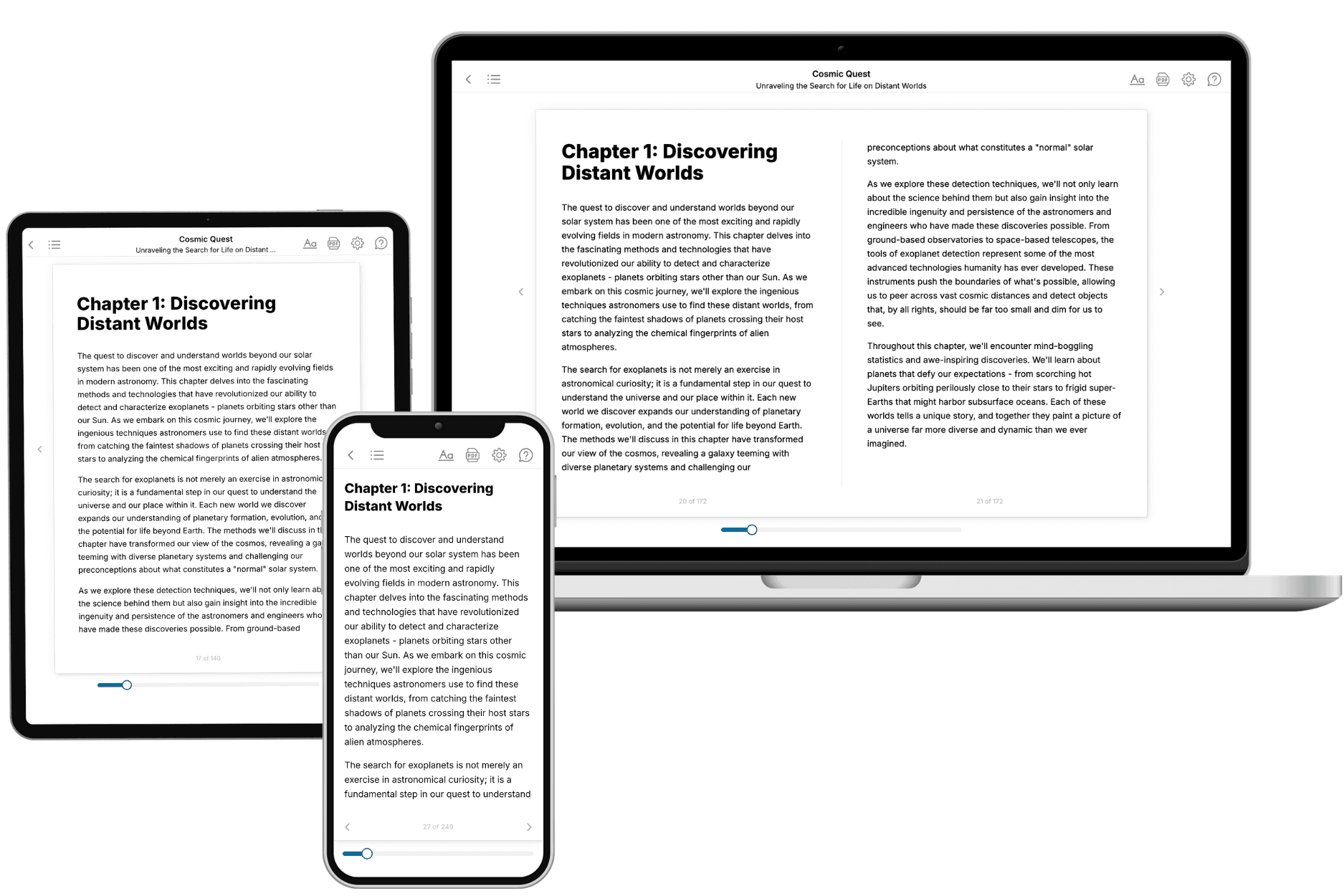
Your book is ready in 10 minutes. Read it online, download as EPUB or PDF, or send to Kindle.

Frequently asked questions
- What is TailoredRead?
TailoredRead creates complete, full-length nonfiction ebooks, written specifically for you. Tell us what you want to learn and why, and TailoredRead writes you a complete ebook on it, with charts, tables, and diagrams throughout. Read it online, on Kindle, or on any e-reader, or download it as a PDF or EPUB. Every book is written fresh the day you order it.
- How is the book tailored to me?
Before anything is written, you answer a few short questions about your goals, your background, and the topics you care about. Your book is then planned around your answers: written at your level, focused on your goals, and covering the topics you chose, instead of the one-size-fits-all book a store sells everyone.
- Will it read like generic AI content?
No. Your book isn't a chat transcript: it's planned chapter by chapter before a single word is written, told in a clear book voice, and explains ideas visually with charts, tables, and diagrams. After writing, every book goes through an editorial pass that polishes chapters so the book reads consistent from start to finish. Judge for yourself: browse thousands of sample books on our Explore Books page.
- How accurate is the content?
Our AI first checks whether your subject needs live research. Niche and fast-moving subjects are researched before writing, and the book plan and chapters are grounded in what it finds. After writing, every book goes through a quality pass that checks its facts and consistency, and researched books list their sources in a Notes section at the back.
- How long is the book?
You choose the length: Comprehensive (250-300 pages), Detailed (150-200 pages), Essential (70-100 pages), or Short (30-50 pages).
- Does the book include visuals?
Yes. Every book includes charts, tables, and diagrams: timelines, checklists, step-by-step guides, decision trees, comparison tables, matrices, and bar charts. A typical book includes dozens of these visual elements.
- Can I read it on Kindle? What formats can I download?
Yes. Every book can be read in our online reader or downloaded as a PDF or EPUB. The EPUB can be opened with Kindle, Apple Books, Kobo, and any e-reader. The Commercial and Author licenses also include an editable Word (DOCX) and Markdown download.
- How much does it cost?
About the price of a regular ebook. The exact price depends on your book's length and complexity, from $2 for the shortest books to $35 for the most comprehensive, and it's shown when you review your book, before you commit to anything. Each book is a one-time purchase, yours to keep, no subscription. Licenses that let you share, teach, or publish your book range from $35.99 to $49.99.
- Can I preview the book before purchasing?
Before you pay, you'll see what your book will cover: the title, a detailed description, the estimated length, and the complete chapter-by-chapter table of contents, so you know what you're getting before you decide. The full text itself is written after you purchase.
- How long does it take to create a book?
About 10 minutes. You can start reading the opening chapters while the rest is still being written.