The Sleep-Deprived Mind
How Fatigue Undermines Your Awareness, Decisions, and Problem-Solving Abilities
You'll discover exactly how sleep deprivation sabotages your ability to read situations accurately, make sound decisions, and solve problems effectively.
191 pages8 chaptersJun 21, 2026Sleep
About this book
This book reveals the specific cognitive mechanisms that fail when you're sleep-deprived—from attention and perception to memory and judgment—and explains why you often feel capable when you're actually performing at a deficit. You'll learn how fatigue creates predictable blind spots in your awareness, distorts your risk assessment, and undermines your problem-solving toolkit. More importantly, you'll gain practical strategies to protect your critical thinking abilities when sleep is unavoidable, including tactical napping, cognitive load management, and environmental design. Whether you're in high-stakes professions, managing complex responsibilities, or simply trying to perform at your best, understanding the sleep-cognition connection empowers you to make better choices about when to push forward and when to prioritize rest.
Table of contents
- IntroductionWhy Sleep Deprivation Matters More Than You Think, The Real Stakes: Awareness, Decisions, and Problem-Solving, How to Use This BookRead below
- Chapter 1: The Sleep-Cognition ConnectionWhat Happens During Sleep: The Cognitive Maintenance Process, Why Different Sleep Stages Matter for Different Cognitive Functions, Understanding Sleep Debt and Cumulative Effects
- Chapter 2: How Sleep Loss Impairs Situational AwarenessAttention Mechanisms: What Sleep Deprivation Breaks First, The Tunnel Vision Effect: Missing Critical Peripheral Information, Threat Detection Failures and False Alarms, Environmental Blindness: What You Stop Noticing
- Chapter 3: Decision-Making Under Sleep DeprivationHow Sleep Loss Distorts Your Judgment, Risk Assessment Errors: Overestimating and Underestimating Danger, The Emotional Brain Takes Over: Impulse Over Logic, The Illusion of Competence: Why You Feel Fine When You're Not
- Chapter 4: Problem-Solving and Creative Thinking When FatiguedWorking Memory Collapse: Holding Information Becomes Harder, Pattern Recognition Failure: Missing Connections and Solutions, Cognitive Flexibility Loss: Getting Stuck in Mental Ruts, Creative Thinking Decline: Why Novel Solutions Disappear
- Chapter 5: The Dose-Response Relationship: How Much Sleep Loss MattersMild Sleep Deprivation: The Subtle Impairments You Miss, Moderate Sleep Deprivation: When Performance Clearly Declines, Severe Sleep Deprivation: Cognitive Breakdown and Microsleeps, Why the Relationship Is Nonlinear: Small Losses, Big Impacts
- Chapter 6: Individual Differences and Sleep VulnerabilityGenetic Variation: Why Some People Are More Vulnerable, Age Factors: How Sleep Needs and Vulnerability Change, Personality Traits and Sleep Deprivation Susceptibility
- Chapter 7: Tactical Strategies for Protecting CognitionStrategic Napping: Timing, Duration, and Effectiveness, Caffeine Optimization: Timing and Dosing for Maximum Benefit, Cognitive Load Management: Simplifying When You're Tired, Environmental Design: Using Your Surroundings to Stay Alert
- Chapter 8: Recovery and Restoration: Getting Back to BaselineRecovery Timeline: How Long Cognitive Deficits Persist, Sleep Rebound: Can You Catch Up on Weekends?, Long-Term Consequences of Chronic Sleep Deprivation
- ConclusionKey Takeaways: What You Now Know, Moving Forward: Applying This Knowledge
- Glossary
- Further Reading and Resources
Introduction
There is a version of you that shows up to work after six hours of sleep, pours a large coffee, and genuinely believes everything is fine. That version of you makes decisions, reads situations, solves problems, and interacts with colleagues. It feels alert enough. It feels capable. The trouble is, that version of you is operating with a measurably impaired brain, and it has almost no way of knowing it. This gap between how you feel and how you actually perform is one of the most dangerous and least discussed consequences of sleep deprivation.
Sleep science has advanced dramatically over the past two decades. Researchers now understand, in remarkable detail, what happens inside the brain during sleep and what goes wrong when sleep is cut short. The findings are striking. Sleep deprivation does not simply make you tired. It systematically dismantles the cognitive systems you rely on most: your ability to notice what is happening around you, your capacity to make sound judgments, and your skill at working through complex problems. These are not vague, general impairments. They are specific, measurable, and predictable failures that follow a consistent pattern.
This book is built around that pattern. Rather than offering a broad overview of sleep health, it focuses tightly on three cognitive domains that suffer most visibly and most consequentially under sleep deprivation: situational awareness, decision-making, and problem-solving. These three functions are deeply interconnected. Situational awareness feeds the information your decisions depend on. Decision-making draws on the problem-solving tools your brain assembles. When sleep deprivation degrades all three simultaneously, the result is a kind of compounding failure that is far worse than any single impairment alone.
Whether you work in a high-stakes profession, manage complex responsibilities at home or at work, or simply want to perform at your best on a consistent basis, understanding this connection is genuinely useful. The goal here is not to make you anxious about every night of poor sleep. It is to give you an accurate, evidence-based picture of what sleep deprivation actually does to your thinking, so you can make smarter choices about when to push forward, when to pause, and how to protect your cognitive performance when rest is not immediately available.
Why Sleep Deprivation Matters More Than You Think
Most people understand, at least in the abstract, that sleep is important. What they tend to underestimate is the scale and specificity of the damage that insufficient sleep causes. This is not a minor inconvenience. Sleep deprivation is one of the most pervasive and underacknowledged performance hazards in modern life, and its effects reach far beyond feeling groggy in the morning.
Consider the numbers. The Centers for Disease Control and Prevention estimates that more than one in three American adults regularly sleep less than the recommended seven hours per night.[1] That is not a small minority. It is a substantial portion of the workforce, the driving population, the medical community, and the people making consequential decisions every day. When you factor in shift workers, new parents, students, and anyone managing chronic stress, the picture becomes even more concerning.
The cognitive costs of this widespread sleep loss are enormous. Research from Harvard Medical School estimates that sleep deprivation costs U.S. employers approximately $411 billion per year in lost productivity.[2] But productivity losses are only part of the story. Sleep-deprived individuals are also more likely to make errors in judgment, miss critical information in their environment, and struggle to adapt when situations change unexpectedly. In high-stakes contexts, these failures can be catastrophic.
Some of the most well-documented disasters in modern history have been linked, at least in part, to decisions made by sleep-deprived individuals. The Challenger space shuttle disaster, the Chernobyl nuclear accident, and the Exxon Valdez oil spill all involved critical decisions made in the early morning hours by people who had been awake for extended periods.[3] These are extreme examples, but they illustrate a principle that applies at every level: when the brain is deprived of sleep, its ability to manage complex, high-stakes situations degrades in ways that are both predictable and preventable.
What makes sleep deprivation particularly insidious is the way it distorts self-assessment. Studies consistently show that people who are sleep-deprived significantly overestimate their own alertness and performance quality.[4] The very cognitive systems you would use to evaluate your own performance are among the first to be impaired. This creates a feedback loop where you feel capable, act on that feeling, and make worse decisions as a result, all without realizing what is happening.
This is not about willpower or mental toughness. Sleep deprivation is a physiological state with neurological consequences. Telling yourself to focus harder or push through does not restore the brain systems that sleep deprivation has compromised. Understanding this distinction is the first step toward managing it intelligently. The goal is not to eliminate all sleep-deprived situations from your life. That is not realistic. The goal is to understand what is happening in your brain when you are running on insufficient sleep, so you can respond to it wisely rather than blindly.
There is also a cultural dimension worth naming directly. In many professional environments, sleeping less is quietly treated as a badge of dedication. Long hours and early mornings are worn as signals of commitment. This culture is not just misguided; it is actively counterproductive. A workforce that is chronically sleep-deprived is a workforce that is making worse decisions, missing more information, and solving problems less effectively, regardless of how many hours those people are physically present. Changing this requires understanding the actual cognitive costs, which is exactly what this book is designed to provide.
A note on terminology: Throughout this book, sleep deprivation refers to any condition in which a person receives less sleep than their individual biological need, whether through a single night of poor sleep or through accumulated shortfalls over multiple nights. Chronic sleep restriction refers specifically to the pattern of consistently sleeping less than needed over an extended period. Both conditions impair cognition, but they do so through slightly different mechanisms, which later chapters will explore in detail.
Understanding why sleep deprivation matters is not just an academic exercise. It is a practical foundation for every strategy and insight that follows in this book. Once you see clearly what is at stake, the case for protecting your sleep, and for managing its absence intelligently, becomes much harder to dismiss.
The Real Stakes: Awareness, Decisions, and Problem-Solving
Not all cognitive functions are equally vulnerable to sleep deprivation. Some abilities, like basic motor skills or the capacity to recall well-practiced information, hold up reasonably well under mild sleep loss. Others collapse quickly and dramatically. The three domains this book focuses on, situational awareness, decision-making, and problem-solving, fall squarely in the second category. They are among the most sleep-sensitive cognitive functions the brain performs.
Situational awareness is your ability to perceive what is happening in your environment, understand what it means, and anticipate what is likely to happen next. It is the cognitive foundation of safe driving, effective leadership, skilled clinical practice, and competent performance in almost any complex role. Sleep deprivation attacks situational awareness through multiple pathways simultaneously. It narrows your attentional focus, slows your processing of incoming information, and impairs your ability to integrate what you are seeing with what you already know. The result is a kind of perceptual tunnel vision where you notice less, understand less, and anticipate less than you normally would.
Consider a concrete example. A nurse working a double shift in a busy emergency department is managing multiple patients simultaneously. Under normal conditions, she tracks subtle changes in patient status, notices when a colleague looks overwhelmed, and anticipates which situations are likely to escalate. After eighteen hours without sleep, her attentional resources are depleted. She focuses on the most obvious, immediate demands and misses the quieter signals at the periphery of her awareness. This is not a failure of skill or dedication. It is a predictable consequence of how sleep deprivation reshapes the brain's attentional systems.
Decision-making is where the stakes become most visible. Every day, you make hundreds of decisions, ranging from trivial to consequential. Sleep deprivation degrades the quality of these decisions in ways that are both subtle and significant. It impairs your ability to weigh risks accurately, increases your tendency toward impulsive choices, and reduces your capacity to consider long-term consequences. Research from the University of Pennsylvania found that even modest sleep restriction, just six hours per night for two weeks, produced decision-making impairments equivalent to two full nights of total sleep deprivation.[5]
What makes this particularly relevant is that decision-making quality is hard to observe from the inside. When you are sleep-deprived, your decisions feel just as considered and reasonable as they do when you are well-rested. The subjective experience of deciding does not change much. The quality of the output does. This disconnect is one of the central themes of this book, and it has practical implications for how you structure your most important decisions relative to your sleep schedule.
Problem-solving is the third domain, and in some ways the most complex. Effective problem-solving requires holding multiple pieces of information in mind simultaneously, recognizing patterns across those pieces, generating novel approaches when standard ones fail, and evaluating potential solutions against a set of criteria. Sleep deprivation impairs every one of these component processes. Working memory capacity shrinks. Pattern recognition slows and becomes less accurate. Cognitive flexibility, the ability to shift between different approaches, declines sharply. And creative thinking, which depends on the brain making unexpected connections between stored information, becomes significantly harder.
These three domains are not independent. They form a cognitive chain. Your situational awareness provides the raw material for your decisions. Your problem-solving ability shapes the options you can generate and evaluate. When sleep deprivation degrades all three simultaneously, the compounding effect is severe. You are working with less accurate information, processing it through a compromised judgment system, and drawing on a reduced toolkit of solutions. The result is a version of yourself that is genuinely less capable, even if it does not feel that way from the inside.
The stakes vary by context, of course. A sleep-deprived decision about what to have for lunch carries different consequences than a sleep-deprived decision about a medical procedure, a financial investment, or a safety-critical operation. But the underlying cognitive mechanisms are the same regardless of context. Understanding them gives you a framework for identifying when the stakes are high enough to warrant extra caution, and when the specific impairments of sleep deprivation are most likely to cause real harm.
It is also worth noting what this book does not claim. Sleep deprivation does not make you incompetent across the board. Many tasks, especially routine, well-practiced ones, can be performed adequately even under significant sleep loss. The specific vulnerability is to the higher-order cognitive functions: the ones that require flexible attention, nuanced judgment, and creative synthesis. These are precisely the functions that matter most in complex, unpredictable, high-stakes situations. That is why understanding their vulnerability is so important.
How to Use This Book
This book is organized to build understanding progressively, but it is also designed so that individual chapters can stand alone if you need to focus on a specific area. The early chapters establish the scientific foundation. The middle chapters examine the specific cognitive domains in depth. The later chapters shift toward practical strategies and recovery. Here is a brief map of what you will find and how to navigate it most effectively.
Chapter 1 covers the sleep-cognition connection at a foundational level. It explains what the brain actually does during sleep, why different sleep stages serve different cognitive functions, and how sleep debt accumulates over time. If you already have a solid grounding in sleep science, you can move through this chapter quickly. If the science is newer to you, it provides the conceptual vocabulary that the rest of the book builds on.
Chapters 2, 3, and 4 form the analytical core of the book. Each chapter takes one of the three primary cognitive domains and examines in detail how sleep deprivation impairs it. Chapter 2 covers situational awareness, including attention mechanisms, the tunnel vision effect, and threat detection failures. Chapter 3 examines decision-making, with particular attention to risk assessment errors and the illusion of competence. Chapter 4 addresses problem-solving, covering working memory, pattern recognition, cognitive flexibility, and creative thinking. These chapters are rich in research findings and concrete examples. They are designed to give you a precise, specific understanding of what goes wrong and why.
Chapter 5 addresses the dose-response relationship between sleep loss and cognitive impairment. One of the most important findings in sleep research is that this relationship is nonlinear. Small amounts of sleep loss cause disproportionately large impairments, and the effects compound over multiple nights in ways that are not intuitive. This chapter gives you a clear picture of how much sleep loss matters at different levels, from mild restriction to severe deprivation.
Chapter 6 explores individual differences. Not everyone responds to sleep deprivation in the same way. Genetic variation, age, and certain personality traits all influence how vulnerable a given person is to cognitive impairment under sleep loss. This chapter helps you understand where you might fall on that spectrum and what it means for how you manage your own sleep and performance.
Chapters 7 and 8 shift from analysis to action. Chapter 7 covers tactical strategies for protecting cognitive performance when sleep is unavoidable, including strategic napping, caffeine optimization, cognitive load management, and environmental design. Chapter 8 addresses recovery, including how long cognitive deficits actually persist after sleep deprivation, whether weekend sleep can compensate for weekday shortfalls, and the long-term consequences of chronic sleep restriction.
Here are a few practical suggestions for getting the most out of this material:
- If you are in a high-stakes profession (medicine, aviation, emergency services, military, law enforcement), pay particular attention to Chapters 2, 3, and 7. The situational awareness and decision-making chapters will be directly relevant to your work, and the tactical strategies chapter offers tools you can apply immediately.
- If you are managing chronic sleep restriction due to work demands, caregiving, or other life circumstances, Chapter 5 and Chapter 8 are especially important. Understanding the cumulative effects and the realistic timeline for recovery will help you make more informed choices about how to manage your schedule.
- If you are primarily interested in the science, Chapters 1 through 6 provide a thorough, evidence-based account of the sleep-cognition relationship. Each chapter includes references to the primary research so you can explore further.
- If you want practical tools quickly, you can start with Chapter 7 and then work backward through the analytical chapters to understand the reasoning behind each strategy.
Throughout the book, you will find specific examples drawn from research studies, real-world scenarios, and professional contexts. These are included deliberately. Abstract principles about cognitive impairment are easy to acknowledge and easy to dismiss. Concrete examples make the mechanisms visible and the stakes tangible. When you can see exactly how a sleep-deprived air traffic controller misses a critical radio call, or how a sleep-restricted executive systematically overestimates the upside of a risky investment, the science stops being theoretical and starts being personally relevant.
You will also find, at the end of each major chapter, a brief summary of key points and a set of practical takeaways. These are designed to help you consolidate what you have learned and identify the most actionable insights. If you are reading quickly or returning to the book as a reference, these summaries provide an efficient way to locate the information most relevant to your current situation.
One final note on tone and intent. This book does not advocate for perfectionism about sleep. The goal is not to make you feel guilty every time you stay up late or to suggest that any deviation from eight hours is a crisis. Real life involves trade-offs, and sometimes sleep is genuinely the thing that gets sacrificed. What this book offers is clarity: a clear-eyed account of what those trade-offs actually cost, cognitively speaking, so that you can make them consciously rather than accidentally. Knowledge does not eliminate difficult choices, but it does make them more honest. That is the spirit in which everything that follows is written.
The most important shift this book asks you to make is not behavioral. It is perceptual. Before you can change how you manage sleep, you need to see accurately what sleep deprivation is actually doing to your thinking. Once you see it clearly, the rest follows naturally.
Notes
Introduction
- 1. Centers for Disease Control and Prevention, 1 in 3 adults don't get enough sleep, CDC Newsroom, 2016
- 2. Rand Corporation, Why Sleep Matters: Quantifying the Economic Costs of Insufficient Sleep, RAND Europe, 2016
- 3. M. M. Mitler and others, "Catastrophes, sleep, and public policy," Sleep, 1988
- 4. Van Dongen and others, "The cumulative cost of additional wakefulness," Sleep, 2003
- 5. Van Dongen and others, "The cumulative cost of additional wakefulness," Sleep, 2003
This is the end of the free sample. The full book has 8 chapters.
Want this book written for you?
Tell us your goals and background, and get your own version of this book, tailored by AI to you.


Benefits of AI-tailored books
- Read one book, not ten:
- all the Sleep knowledge you need, gathered into a single book.
- Save days of learning:
- tell us your goals, choose your topics, and the whole book is built around them.
- Learn effortlessly:
- Sleep book written for your specific background and expertise.
- Understand at a glance:
- includes charts, tables, timelines, checklists, decision trees, and more.
- Stay current:
- written the day you order it, not years ago.
- Trust what you read:
- every book is checked for accuracy, with real research when your subject needs it.
Create your unique book in 3 steps
- 1. Select your focus
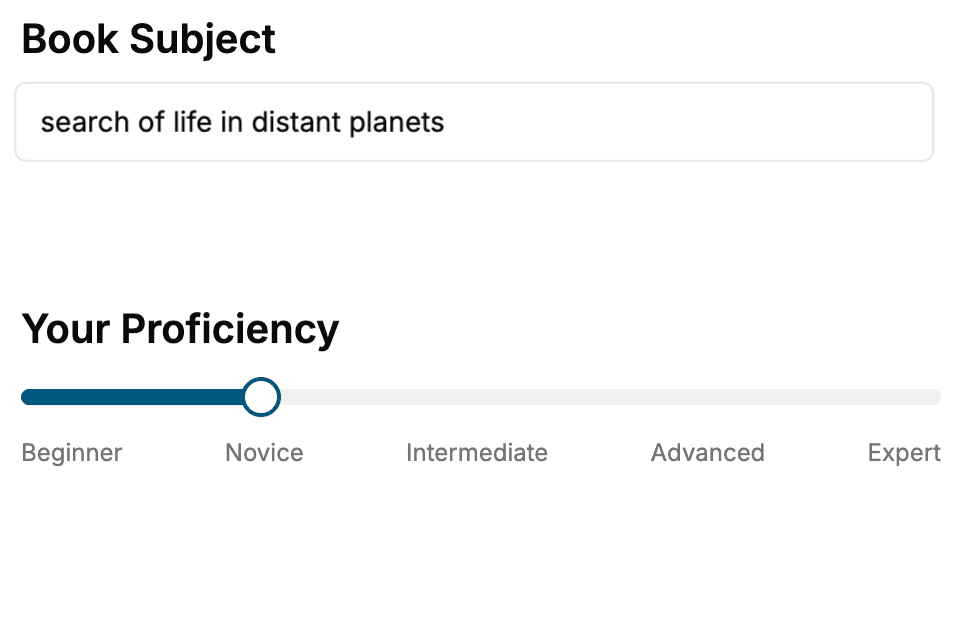
Select the focus of your Sleep book and share your background
- 2. Personalize your book
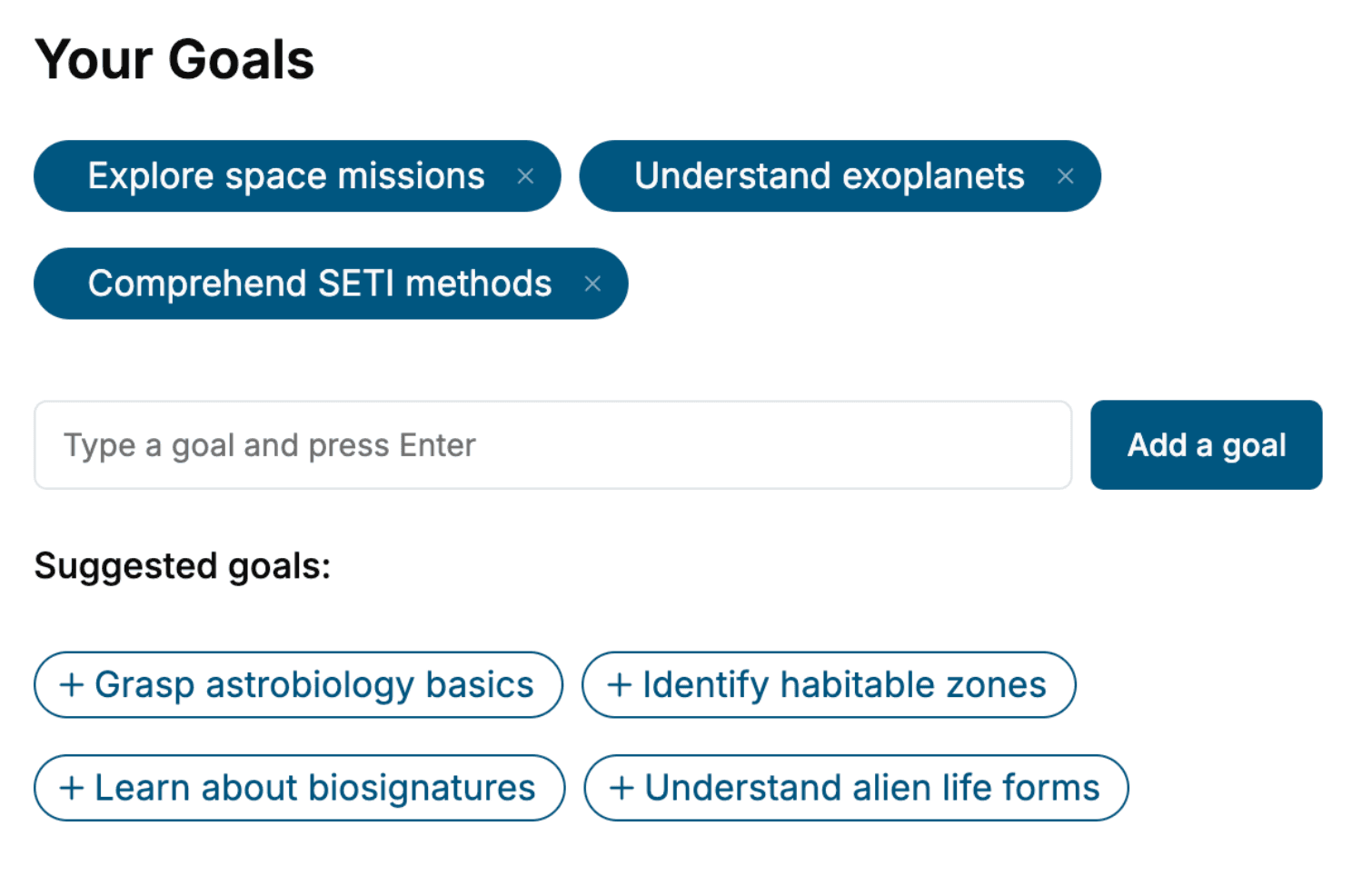
Specify your goals and choose sub-topics to include
- 3. Get your tailored book
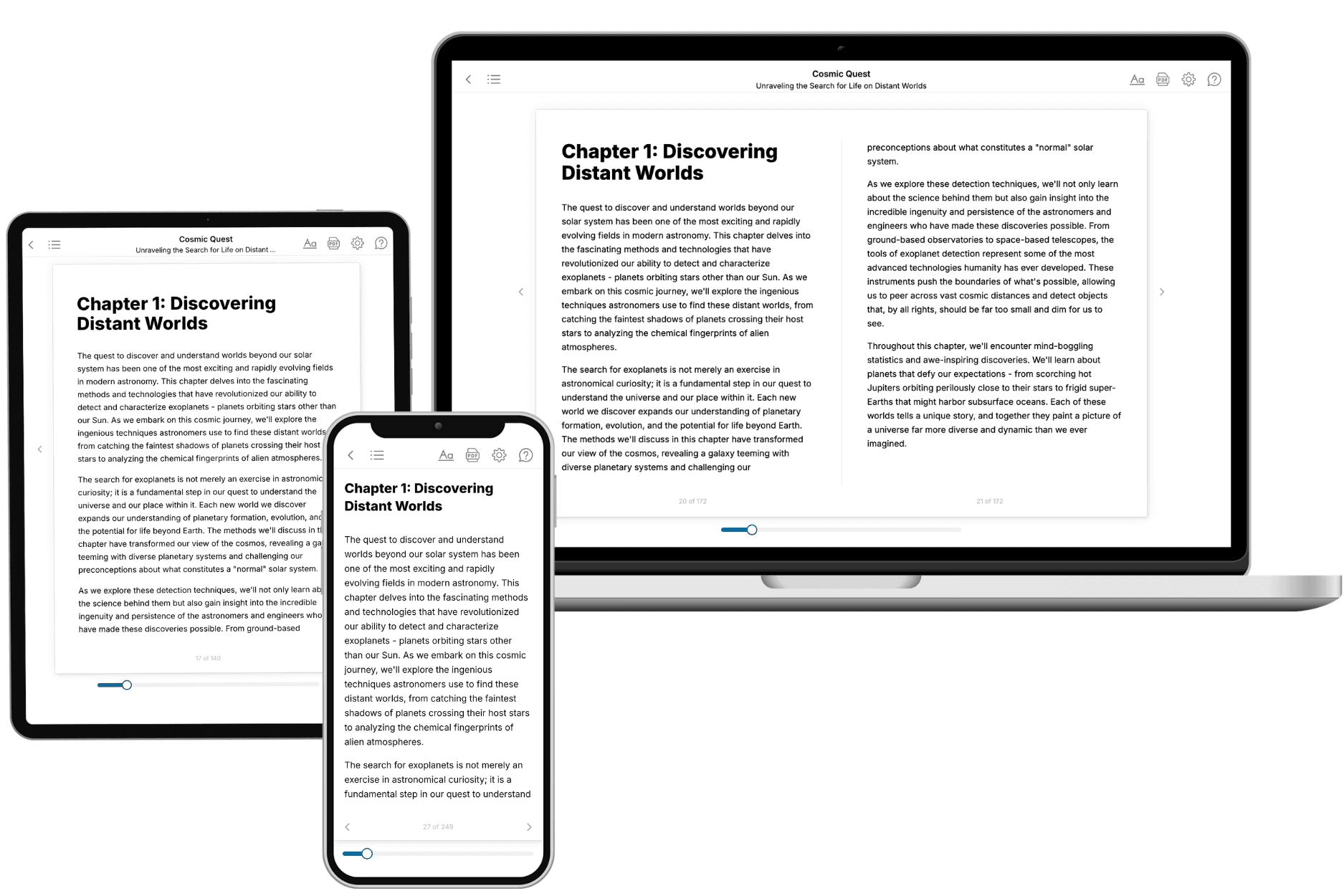
Your book is ready in 10 minutes. Read it online, download as EPUB or PDF, or send to Kindle.
Frequently asked questions
- What is TailoredRead?
TailoredRead creates complete, full-length nonfiction ebooks, written specifically for you. Tell us what you want to learn and why, and TailoredRead writes you a complete ebook on it, with charts, tables, and diagrams throughout. Read it online, on Kindle, or on any e-reader, or download it as a PDF or EPUB. Every book is written fresh the day you order it.
- How is the book tailored to me?
Before anything is written, you answer a few short questions about your goals, your background, and the topics you care about. Your book is then planned around your answers: written at your level, focused on your goals, and covering the topics you chose, instead of the one-size-fits-all book a store sells everyone.
- Will it read like generic AI content?
No. Your book isn't a chat transcript: it's planned chapter by chapter before a single word is written, told in a clear book voice, and explains ideas visually with charts, tables, and diagrams. After writing, every book goes through an editorial pass that polishes chapters so the book reads consistent from start to finish. Judge for yourself: browse thousands of sample books on our Explore Books page.
- How accurate is the content?
Our AI first checks whether your subject needs live research. Niche and fast-moving subjects are researched before writing, and the book plan and chapters are grounded in what it finds. After writing, every book goes through a quality pass that checks its facts and consistency, and researched books list their sources in a Notes section at the back.
- How long is the book?
You choose the length: Comprehensive (250-300 pages), Detailed (150-200 pages), Essential (70-100 pages), or Short (30-50 pages).
- Does the book include visuals?
Yes. Every book includes charts, tables, and diagrams: timelines, checklists, step-by-step guides, decision trees, comparison tables, matrices, and bar charts. A typical book includes dozens of these visual elements.
- Can I read it on Kindle? What formats can I download?
Yes. Every book can be read in our online reader or downloaded as a PDF or EPUB. The EPUB can be opened with Kindle, Apple Books, Kobo, and any e-reader. The Commercial and Author licenses also include an editable Word (DOCX) and Markdown download.
- How much does it cost?
About the price of a regular ebook. The exact price depends on your book's length and complexity, from $2 for the shortest books to $35 for the most comprehensive, and it's shown when you review your book, before you commit to anything. Each book is a one-time purchase, yours to keep, no subscription. Licenses that let you share, teach, or publish your book range from $35.99 to $49.99.
- Can I preview the book before purchasing?
Before you pay, you'll see what your book will cover: the title, a detailed description, the estimated length, and the complete chapter-by-chapter table of contents, so you know what you're getting before you decide. The full text itself is written after you purchase.
- How long does it take to create a book?
About 10 minutes. You can start reading the opening chapters while the rest is still being written.