Slip Into Style
Mastering the Art of Slip Stitch Knitting
Frustrated by the limitations of your current knitting repertoire?
269 pages13 chaptersJan 28, 2025Knitting
About this book
Slip stitch knitting is the key to unlocking a world of intricate patterns and textures that will elevate your projects from ordinary to extraordinary. This comprehensive guide demystifies the art of slip stitch knitting, breaking down complex techniques into easy-to-follow steps. You'll discover how to create stunning colorwork, add depth and texture to your knits, and design eye-catching patterns – all while using just one color per row. From cozy accessories to show-stopping garments, you'll learn to infuse your creations with professional-level sophistication. Whether you're looking to add a subtle touch of elegance or make a bold statement with your knitting, this book will equip you with the skills and inspiration to transform your craft. Get ready to slip into a new realm of knitting possibilities and watch your projects come alive with texture and dimension.
Table of contents
- IntroductionWhat is Slip Stitch Knitting?, Benefits of Slip Stitch Techniques, Book Overview and How to Use It, Materials Needed for Slip Stitch KnittingRead below
- Chapter 1: Foundations of Slip Stitch KnittingBasic Slip Stitch Technique, Slipping Knitwise vs. Purlwise, Yarn Position in Slip Stitches, Reading Slip Stitch Charts and Patterns
- Chapter 2: Simple Slip Stitch PatternsMoss Stitch Variation, Linen Stitch, Woven Stitch, Honeycomb Stitch
- Chapter 3: Colorwork with Slip StitchesIntroduction to Mosaic Knitting, Two-Color Slip Stitch Patterns, Multi-Color Slip Stitch Patterns, Color Selection for Slip Stitch Projects
- Chapter 4: Textural Techniques in Slip Stitch KnittingCreating Raised Patterns, Working with Elongated Stitches, Slip Stitch Cables, Bobbles and Nubs in Slip Stitch Knitting
- Chapter 5: Advanced Slip Stitch PatternsTuck Stitches, Slip Stitch Brioche Variation, Slip Stitch Lace, Complex Colorwork Patterns
- Chapter 6: Design Principles for Slip Stitch KnittingCreating Your Own Slip Stitch Patterns, Understanding Stitch Placement, Working with Repeats and Symmetry, Combining Slip Stitch with Other Techniques
- Chapter 7: Mastering Tension and Gauge in Slip Stitch KnittingThe Importance of Proper Tension, Gauge Swatching for Slip Stitch Patterns, Adjusting Tension in Different Patterns, Blocking Techniques for Slip Stitch Projects
- Chapter 8: Yarn Selection for Slip Stitch KnittingChoosing the Right Fiber Types, Impact of Yarn Weight on Slip Stitch Patterns, Effective Color Combinations, Texture Considerations in Yarn Selection
- Chapter 9: Tools and Accessories for Slip Stitch KnittingChoosing the Right Needle Types, Using Stitch Markers Effectively, Row Counters and Pattern Tracking, Essential Blocking Tools
- Chapter 10: Troubleshooting Common Slip Stitch IssuesFixing Uneven Tension, Identifying and Correcting Pattern Mistakes, Managing Color Dominance, Addressing Gauge Problems
- Chapter 11: Slip Stitch Projects: AccessoriesTextured Slip Stitch Scarf Pattern, Mosaic Knit Hat Pattern, Slip Stitch Mittens Pattern, Colorwork Cowl Pattern
- Chapter 12: Slip Stitch Projects: Home DecorTextured Cushion Cover Pattern, Slip Stitch Table Runner Pattern, Mosaic Throw Blanket Pattern, Decorative Wall Hanging Pattern
- Chapter 13: Slip Stitch Projects: GarmentsSlip Stitch Vest Pattern, Textured Yoke Sweater Pattern, Mosaic Cardigan Pattern, Slip Stitch Shawl Pattern
- ConclusionReflecting on Your Skill Progression, Ideas for Future Exploration
- Glossary
- ResourcesRecommended Yarn Suppliers, Online Knitting Communities
Introduction
Welcome to the captivating world of slip stitch knitting! As you embark on this journey to expand your knitting skills, you're about to discover a technique that will transform your projects from ordinary to extraordinary. Slip stitch knitting is a versatile and rewarding method that allows you to create intricate patterns, add depth and texture to your work, and even produce stunning colorwork effects using just one color per row. This introduction will lay the foundation for your exploration of slip stitch knitting, providing you with a comprehensive overview of what to expect in the chapters ahead.
Throughout this book, you'll find that slip stitch knitting is not just a technique, but a gateway to endless creative possibilities. Whether you're looking to add subtle elegance to a simple scarf or create a show-stopping garment with complex patterns, the skills you'll learn here will equip you to tackle a wide range of projects with confidence. As an intermediate knitter, you already possess a solid foundation in basic techniques. Now, it's time to build upon that knowledge and take your craft to new heights.
In the following chapters, we'll delve deep into the intricacies of slip stitch knitting, exploring everything from fundamental techniques to advanced patterns. You'll learn how to manipulate stitches to create texture, work with multiple colors, and even design your own unique patterns. Along the way, you'll discover how slip stitch knitting can alter the properties of your fabric, allowing you to create pieces with improved durability, interesting drape, and eye-catching visual appeal.
What is Slip Stitch Knitting?
Slip stitch knitting is a technique that involves selectively slipping stitches from one needle to the other without working them. This simple act of slipping stitches, when done in specific patterns, can create a wide array of textures, patterns, and even colorwork effects. The beauty of slip stitch knitting lies in its ability to produce complex-looking fabrics using relatively simple methods.
At its core, slip stitch knitting is based on a straightforward principle: some stitches are worked as normal (knit or purl), while others are slipped without being worked. This selective working of stitches allows you to create elongated stitches, textured patterns, and even mimic the appearance of stranded colorwork without the complexity of managing multiple yarns in a single row.
One of the most appealing aspects of slip stitch knitting is its versatility. It can be used to create subtle textures in solid-colored fabrics, bold geometric patterns in multi-colored pieces, or even intricate lace-like effects. The technique is applicable to a wide range of projects, from small accessories like hats and mittens to larger items like sweaters and blankets.
Slip stitch knitting also offers practical benefits beyond aesthetics. The technique can create denser, more durable fabrics, making it ideal for items that need to withstand wear and tear. Additionally, slip stitch patterns often have a natural elasticity, which can be particularly useful in garments that require a snug fit.
As you progress through this book, you'll discover that slip stitch knitting is not a single technique, but rather a family of related methods. These include mosaic knitting, which creates colorwork patterns by slipping stitches over multiple rows; tuck stitches, which create textured patterns by working into slipped stitches from previous rows; and various textural techniques that use slipped stitches to create raised patterns, cables, and other three-dimensional effects.
One of the most exciting aspects of slip stitch knitting is its accessibility. While the results can look incredibly complex, many slip stitch patterns are surprisingly easy to execute. This makes it an excellent technique for intermediate knitters looking to expand their skills without becoming overwhelmed by overly complicated methods.
As you begin to explore slip stitch knitting, you'll find that it offers a perfect balance of challenge and reward. The technique requires attention to detail and careful stitch placement, but the results are often immediately visible and highly satisfying. With practice, you'll develop an intuitive understanding of how slipped stitches interact with worked stitches, allowing you to predict how different patterns will behave and even design your own unique slip stitch fabrics.
Throughout this book, we'll explore slip stitch knitting from multiple angles. You'll learn about the mechanics of slipping stitches, discover how to read and interpret slip stitch patterns, and gain insight into the design principles that underlie effective slip stitch fabrics. By the end of your journey, you'll have a comprehensive understanding of this versatile technique and the skills to apply it creatively in your own projects.
Remember, like any knitting technique, mastering slip stitch knitting takes practice and patience. Don't be discouraged if your first attempts don't turn out exactly as you envisioned. Each project you undertake will help you refine your skills and deepen your understanding of the technique. Embrace the learning process, and soon you'll find yourself creating stunning slip stitch fabrics with ease and confidence.
Benefits of Slip Stitch Techniques
Slip stitch knitting offers a multitude of benefits that make it an invaluable addition to any knitter's repertoire. As you delve into this technique, you'll discover that it not only enhances the visual appeal of your projects but also provides practical advantages that can improve the overall quality and versatility of your knitted items. Let's explore some of the key benefits that make slip stitch knitting such a valuable skill to master.
One of the most significant advantages of slip stitch knitting is its ability to create intricate patterns and textures using relatively simple techniques. Unlike complex colorwork methods that require managing multiple strands of yarn simultaneously, slip stitch patterns often use only one color per row. This simplicity in execution belies the complexity of the resulting fabric, allowing you to create stunning visual effects with ease. For example, mosaic knitting, a popular form of slip stitch knitting, can produce patterns that rival the intricacy of Fair Isle knitting, but with significantly less complexity in the knitting process[1].
Another key benefit of slip stitch knitting is its versatility in fabric creation. By manipulating the placement and frequency of slipped stitches, you can dramatically alter the properties of your knitted fabric. For instance, slip stitch patterns can create denser, more compact fabrics that are excellent for items requiring durability, such as bags or heavy-wear garments. Conversely, certain slip stitch techniques can produce lighter, more open fabrics with interesting drape characteristics, perfect for shawls or flowing garments. This ability to fine-tune fabric properties makes slip stitch knitting an incredibly powerful tool in your knitting arsenal.
Slip stitch knitting also offers significant advantages when it comes to color work. The technique allows you to create the illusion of complex color patterns while only working with one color at a time. This not only simplifies the knitting process but also results in a fabric that is less bulky than traditional stranded colorwork. Additionally, slip stitch colorwork often has a more defined, graphic quality that can be particularly striking in geometric designs. This makes slip stitch knitting an excellent choice for bold, modern patterns that make a strong visual statement.
From a practical standpoint, slip stitch knitting can be a more efficient technique compared to other methods of creating textured or patterned fabrics. Because some stitches are slipped rather than worked, you can often cover more ground in less time. This can be particularly beneficial when working on larger projects like blankets or oversized garments. Moreover, many slip stitch patterns are relatively easy to memorize, allowing you to work more quickly and with less constant reference to a pattern once you've internalized the stitch sequence.
Another notable benefit of slip stitch knitting is its potential for customization and design. As you become more familiar with the technique, you'll find that it offers a wide range of possibilities for creating unique patterns and textures. By experimenting with different combinations of slipped and worked stitches, you can develop your own signature designs. This aspect of slip stitch knitting can be particularly rewarding for knitters who enjoy pushing the boundaries of their craft and expressing their creativity through their work.
Slip stitch knitting also has the advantage of creating fabrics with interesting structural properties. Many slip stitch patterns naturally create a fabric with some degree of elasticity, which can be beneficial in garments that require a close fit. Additionally, certain slip stitch techniques can create three-dimensional textures that add depth and interest to your knitted items. These structural benefits can enhance both the aesthetics and functionality of your projects.
For those interested in sustainable crafting, slip stitch knitting offers some eco-friendly benefits. Because the technique often creates denser fabrics, items made with slip stitch patterns may be more durable and long-lasting than those made with simpler stitch patterns. This longevity can reduce the need for frequent replacements, making slip stitch knitted items a more sustainable choice. Additionally, the ability to create complex-looking fabrics with a single color can reduce yarn waste, as you're less likely to have small, unused quantities of multiple colors left over from a project.
Lastly, mastering slip stitch techniques can significantly boost your confidence as a knitter. As you learn to manipulate stitches in new ways and see the striking results of your efforts, you'll gain a deeper understanding of knitting mechanics and fabric construction. This knowledge can empower you to tackle more ambitious projects and even venture into pattern design. The sense of accomplishment that comes from creating a beautiful slip stitch fabric can be incredibly motivating, encouraging you to continue exploring and expanding your knitting skills.
As you progress through this book and begin incorporating slip stitch techniques into your knitting projects, you'll undoubtedly discover even more benefits specific to your style and preferences. The versatility and creative potential of slip stitch knitting make it a technique that can grow and evolve with you, continually offering new challenges and rewards as you develop your skills.
Book Overview and How to Use It
"Slip Into Style: Mastering the Art of Slip Stitch Knitting" is designed to be your comprehensive guide to this versatile and exciting knitting technique. This book is structured to take you on a journey from the basics of slip stitch knitting through to advanced techniques and project applications. Whether you're looking to add a new dimension to your knitting or seeking to master complex slip stitch patterns, this book will provide you with the knowledge and skills you need to succeed.
The book is divided into several key sections, each building upon the last to create a comprehensive learning experience. We begin with the foundations of slip stitch knitting, covering the basic techniques and principles that underpin this method. From there, we progress through simple patterns, colorwork techniques, textural applications, and advanced patterns. Each chapter is designed to introduce new concepts while reinforcing what you've already learned, ensuring a solid understanding of slip stitch knitting at every stage.
To get the most out of this book, it's recommended that you work through the chapters in order, especially if you're new to slip stitch knitting. Each chapter builds on the skills and knowledge presented in previous sections, creating a logical progression that will help you develop your abilities step by step. However, if you're already familiar with some aspects of slip stitch knitting, feel free to jump to the sections that interest you most or that address specific techniques you want to learn.
Throughout the book, you'll find a variety of features designed to enhance your learning experience:
- Detailed explanations of techniques, accompanied by clear, step-by-step instructions
- High-quality photographs and illustrations demonstrating key concepts and stitch patterns
- Tips and tricks from experienced knitters to help you avoid common pitfalls and improve your results
- Practice exercises to help you reinforce new skills before moving on to more complex techniques
- Project patterns that allow you to apply what you've learned in practical, beautiful ways
One of the key features of this book is its emphasis on practical application. While we cover the theory and mechanics of slip stitch knitting in depth, we also provide numerous opportunities for you to put your new skills into practice. Each chapter includes exercises and small projects that allow you to experiment with the techniques you've learned. These hands-on elements are crucial for developing your skills and gaining confidence in your abilities.
As you work through the book, don't hesitate to experiment and explore beyond the provided patterns and exercises. Slip stitch knitting is a highly creative technique, and some of the most exciting discoveries come from pushing boundaries and trying new combinations. Use the patterns and projects in this book as a starting point, but feel free to modify and adapt them to suit your personal style and preferences.
It's important to note that mastering slip stitch knitting, like any skill, takes time and practice. Don't be discouraged if your first attempts don't turn out exactly as you envisioned. Each project you complete, even if it's not perfect, is a valuable learning experience. Keep a positive attitude, and remember that every stitch you knit is improving your skills.
To make the most of your learning experience, consider the following tips:
- Keep a knitting journal to track your progress, note any challenges you encounter, and record modifications you make to patterns
- Take time to swatch and experiment with different yarns and needle sizes to see how they affect your slip stitch patterns
- Join online knitting communities or local knitting groups to share your experiences and learn from others
- Don't rush through the book – take the time to fully understand and practice each technique before moving on
- Revisit earlier chapters and projects as you advance – you may find new insights as your skills improve
Remember, this book is not just a collection of patterns, but a comprehensive resource designed to help you develop a deep understanding of slip stitch knitting. As you progress, you'll find that the skills you learn here will enhance all aspects of your knitting, even beyond slip stitch techniques. The attention to detail, understanding of fabric structure, and creative problem-solving skills you develop will make you a more confident and versatile knitter overall.
Finally, don't forget to enjoy the process! Knitting should be a pleasurable and rewarding activity. As you explore the world of slip stitch knitting, take pride in your accomplishments, no matter how small. Each new technique mastered and each project completed is a testament to your growing skills and creativity. Embrace the journey, and soon you'll be creating beautiful, complex fabrics with ease and confidence.
Materials Needed for Slip Stitch Knitting
Before diving into the exciting world of slip stitch knitting, it's essential to gather the right materials. While slip stitch knitting doesn't require a vast array of specialized tools, having the appropriate supplies will greatly enhance your experience and the quality of your finished projects. This section will guide you through the essential materials needed for slip stitch knitting, as well as some optional items that can be helpful as you advance in your skills.
The most fundamental materials for slip stitch knitting are, of course, yarn and knitting needles. However, the specific types of yarn and needles you choose can significantly impact your slip stitch projects. Let's start with yarn selection:
- Yarn: For beginners, it's recommended to start with a medium-weight yarn (worsted or aran) in a light solid color. This weight of yarn is easy to work with and allows you to clearly see your stitch formation. As you progress, you can experiment with different weights and textures. When working on colorwork slip stitch patterns, choose yarns with good stitch definition and avoid very fuzzy or textured yarns that might obscure the pattern.
- Yarn Fibers: While you can use any fiber for slip stitch knitting, some work better than others. Wool and wool blends are excellent choices as they have natural elasticity and block well. Cotton can work for slip stitch patterns but may not have as much give. As you advance, you might want to try luxury fibers like alpaca or silk blends for special projects.
Next, let's consider the knitting needles you'll need:
- Needle Types: Straight needles, circular needles, and double-pointed needles can all be used for slip stitch knitting, depending on your project. Circular needles are particularly versatile as they can be used for both flat and circular knitting.
- Needle Material: Metal, wood, and plastic needles all work for slip stitch knitting. Choose a material that feels comfortable in your hands and allows your stitches to slide easily. Some knitters find that slippery metal needles work well for intricate slip stitch patterns.
- Needle Size: The size of your needles will depend on your yarn weight and the desired fabric density. For slip stitch patterns, you might sometimes use a larger needle size than you would for standard stockinette stitch to accommodate the denser fabric created by slipped stitches.
In addition to yarn and needles, there are several other tools that are essential or highly beneficial for slip stitch knitting:
- Stitch Markers: These are crucial for keeping track of pattern repeats in slip stitch knitting. Choose markers that are easy to slip from one needle to the other.
- Tapestry Needle: A blunt-tipped needle for weaving in ends and seaming your finished project.
- Scissors: A small, sharp pair for cutting yarn.
- Row Counter: This can be particularly helpful for keeping track of complex slip stitch patterns.
- Notebook and Pen: For taking notes, tracking your progress, and making modifications to patterns.
As you advance in your slip stitch knitting journey, you might find the following additional tools helpful:
- Cable Needle: While not always necessary for slip stitch knitting, a cable needle can be useful for certain textured patterns.
- Blocking Tools: A blocking mat, pins, and wool wash can help you achieve a professional finish on your projects.
- Stitch Holders: These can be useful when working on larger projects with complex slip stitch patterns.
- Magnifying Glass or Craft Light: These can be helpful for seeing intricate stitch patterns clearly, especially when working with darker yarns.
When selecting materials for your slip stitch projects, consider the following factors:
- Project Type: The yarn and needle size you choose will depend on whether you're making a garment, accessory, or home decor item.
- Desired Fabric Properties: Slip stitch patterns can create denser fabrics, so you might need to adjust your yarn weight or needle size to achieve the desired drape and texture.
- Color Choices: For colorwork slip stitch patterns, select yarns with good contrast to make your patterns pop.
- Durability: If you're making items that will see heavy wear, choose yarns that are known for their durability and resistance to pilling.
Remember, while having the right materials is important, don't feel that you need to invest in expensive supplies right away. As you progress in your slip stitch knitting journey, you'll develop preferences for certain types of yarn and tools. Start with good-quality but affordable materials, and upgrade as you become more experienced and discover what works best for you.
Lastly, organization is key when working with slip stitch patterns, especially those involving multiple colors or complex repeats. Consider investing in a project bag or small container to keep all your materials together. This will help you stay organized and make it easier to pick up your project whenever you have a spare moment to knit.
With these materials at hand, you'll be well-equipped to begin your exploration of slip stitch knitting. As you work through the techniques and projects in this book, you may find that you want to expand your collection of tools and materials. Remember, the most important factors are comfort and functionality – choose materials that feel good to work with and that help you achieve the results you desire in your knitting.
Notes
Introduction
- 1. Marchant, Alice. Mosaic Knitting. Interweave Press, 2020
This is the end of the free sample. The full book has 13 chapters.
Want this book written for you?
Tell us your goals and background, and get your own version of this book, tailored by AI to you.


Benefits of AI-tailored books
- Read one book, not ten:
- all the Knitting knowledge you need, gathered into a single book.
- Save days of learning:
- tell us your goals, choose your topics, and the whole book is built around them.
- Learn effortlessly:
- Knitting book written for your specific background and expertise.
- Understand at a glance:
- includes charts, tables, timelines, checklists, decision trees, and more.
- Stay current:
- written the day you order it, not years ago.
- Trust what you read:
- every book is checked for accuracy, with real research when your subject needs it.
Create your unique book in 3 steps
- 1. Select your focus
Select the focus of your Knitting book and share your background
- 2. Personalize your book
Specify your goals and choose sub-topics to include
- 3. Get your tailored book
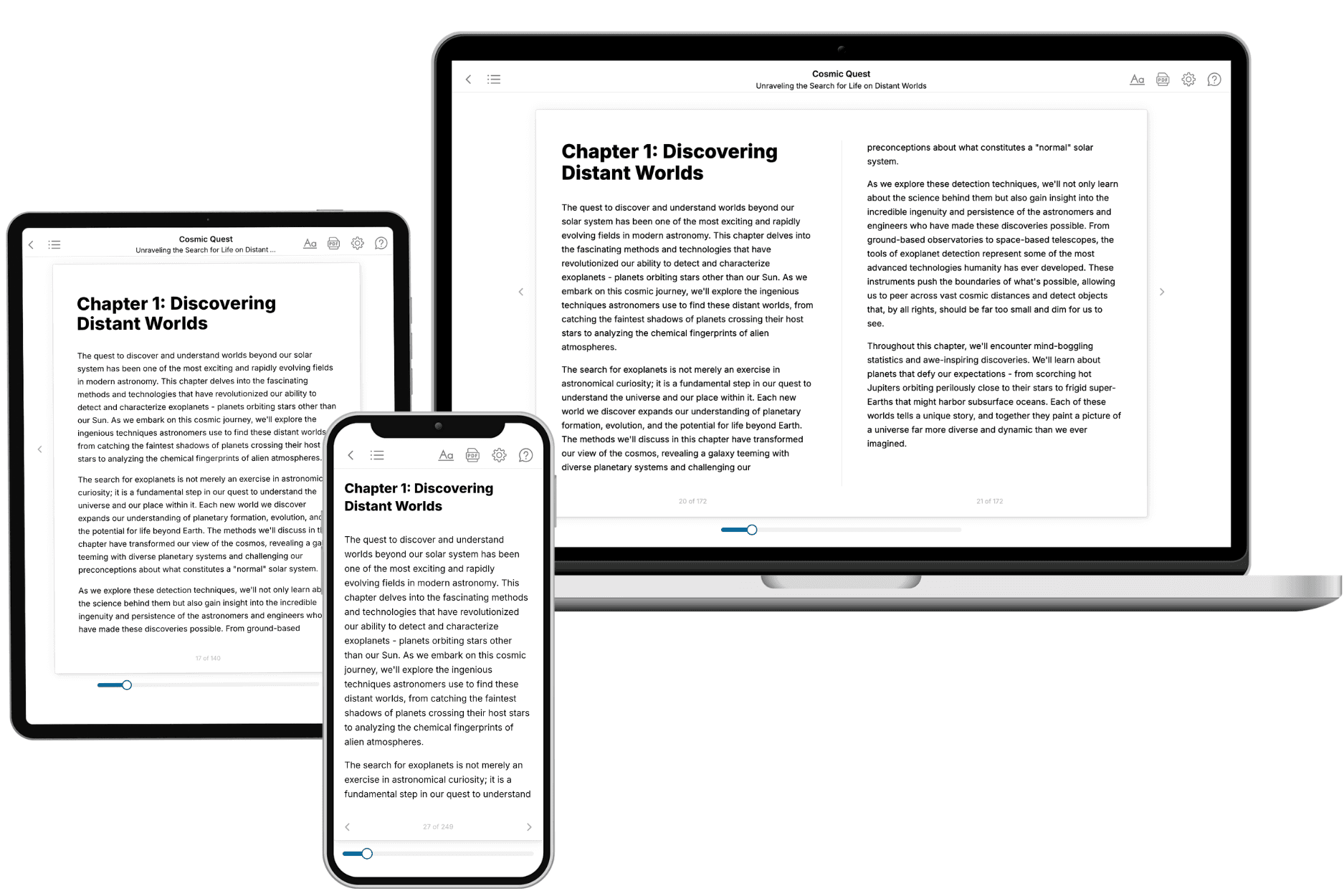
Your book is ready in 10 minutes. Read it online, download as EPUB or PDF, or send to Kindle.

Frequently asked questions
- What is TailoredRead?
TailoredRead creates complete, full-length nonfiction ebooks, written specifically for you. Tell us what you want to learn and why, and TailoredRead writes you a complete ebook on it, with charts, tables, and diagrams throughout. Read it online, on Kindle, or on any e-reader, or download it as a PDF or EPUB. Every book is written fresh the day you order it.
- How is the book tailored to me?
Before anything is written, you answer a few short questions about your goals, your background, and the topics you care about. Your book is then planned around your answers: written at your level, focused on your goals, and covering the topics you chose, instead of the one-size-fits-all book a store sells everyone.
- Will it read like generic AI content?
No. Your book isn't a chat transcript: it's planned chapter by chapter before a single word is written, told in a clear book voice, and explains ideas visually with charts, tables, and diagrams. After writing, every book goes through an editorial pass that polishes chapters so the book reads consistent from start to finish. Judge for yourself: browse thousands of sample books on our Explore Books page.
- How accurate is the content?
Our AI first checks whether your subject needs live research. Niche and fast-moving subjects are researched before writing, and the book plan and chapters are grounded in what it finds. After writing, every book goes through a quality pass that checks its facts and consistency, and researched books list their sources in a Notes section at the back.
- How long is the book?
You choose the length: Comprehensive (250-300 pages), Detailed (150-200 pages), Essential (70-100 pages), or Short (30-50 pages).
- Does the book include visuals?
Yes. Every book includes charts, tables, and diagrams: timelines, checklists, step-by-step guides, decision trees, comparison tables, matrices, and bar charts. A typical book includes dozens of these visual elements.
- Can I read it on Kindle? What formats can I download?
Yes. Every book can be read in our online reader or downloaded as a PDF or EPUB. The EPUB can be opened with Kindle, Apple Books, Kobo, and any e-reader. The Commercial and Author licenses also include an editable Word (DOCX) and Markdown download.
- How much does it cost?
About the price of a regular ebook. The exact price depends on your book's length and complexity, from $2 for the shortest books to $35 for the most comprehensive, and it's shown when you review your book, before you commit to anything. Each book is a one-time purchase, yours to keep, no subscription. Licenses that let you share, teach, or publish your book range from $35.99 to $49.99.
- Can I preview the book before purchasing?
Before you pay, you'll see what your book will cover: the title, a detailed description, the estimated length, and the complete chapter-by-chapter table of contents, so you know what you're getting before you decide. The full text itself is written after you purchase.
- How long does it take to create a book?
About 10 minutes. You can start reading the opening chapters while the rest is still being written.