Sociology Fundamentals Kit
A Comprehensive Guide to Understanding Society, Culture, and Human Interaction
You'll gain a comprehensive understanding of how society shapes human behavior and how individuals, in turn, shape the social world around them.
253 pages12 chaptersOct 18, 2025Sociology
About this book
This book provides a clear pathway through the essential concepts, theories, and frameworks that define sociology as a discipline. You'll explore the fundamental building blocks of social life—from cultural norms and institutions to stratification systems and collective movements—while developing the analytical skills to examine social phenomena with depth and clarity. Through accessible explanations and practical applications, you'll master core theoretical perspectives including functionalism, conflict theory, and symbolic interactionism. You'll discover how socialization processes form identities, how social networks influence behavior, and how power structures create and maintain inequality. Each concept builds naturally upon the previous one, creating a cohesive framework for understanding everything from intimate peer group dynamics to large-scale social transformations. Whether you're seeking intellectual enrichment, preparing for further study, or simply curious about the forces that shape human societies, this book equips you with the foundational knowledge and critical thinking tools to analyze the social world with confidence and insight.
Table of contents
- IntroductionWhat Is Sociology?, The Sociological Imagination, Why Study Sociology Today?Read below
- Chapter 1: Foundations of Sociological ThinkingThe Origins of Sociology as a Discipline, Key Questions Sociologists Ask, Levels of Analysis: Micro, Meso, and Macro, Developing Critical Thinking Skills
- Chapter 2: Major Theoretical PerspectivesThe Functionalist Perspective, Conflict Theory and Power Dynamics, Symbolic Interactionism and Meaning-Making, Comparing and Applying Theoretical Frameworks
- Chapter 3: Sociological Research MethodsThe Scientific Approach to Social Research, Quantitative Methods: Surveys and Statistics, Qualitative Methods: Interviews and Observation, Ethics in Social Research
- Chapter 4: Culture and SocietyDefining Culture: Values, Beliefs, and Norms, Cultural Diversity and Subcultures, Cultural Transmission Across Generations, Cultural Change and Globalization
- Chapter 5: Socialization and Identity FormationThe Socialization Process Throughout Life, Agents of Socialization: Family, Peers, Media, and Education, Identity Formation Theory and Self-Concept, Role Theory and Social Expectations
- Chapter 6: Social Interaction and Group DynamicsPatterns of Social Interaction, Peer Group Dynamics and Influence, Social Network Analysis and Connections, Collective Behavior and Crowds
- Chapter 7: Social InstitutionsUnderstanding Social Institutions, The Family as a Social Institution, Education and Knowledge Transmission, Religious Institution Roles in Society
- Chapter 8: Social Stratification and InequalityUnderstanding Social Stratification Systems, Class and Economic Inequality, Mechanisms That Perpetuate Inequality, Social Mobility and Opportunity Structures
- Chapter 9: Race, Ethnicity, and GenderRace and Ethnicity as Social Constructs, Racial and Ethnic Inequality Patterns, Gender as a Social Category, Intersectionality and Multiple Identities
- Chapter 10: Deviance and Social ControlDeviance Theory and Social Boundaries, Social Norm Development and Enforcement, Social Control Methods and Mechanisms
- Chapter 11: Communities and Social OrganizationCommunity Structure and Organization, Urban and Rural Community Studies, Social Psychology Links to Community Life
- Chapter 12: Social Change and Social MovementsSocial Change Drivers and Patterns, Social Movement Dynamics and Organization, Technology and Social Transformation, Contemporary Trends and Future Directions
- ConclusionIntegrating Sociological Knowledge, Applying Sociology to Everyday Life, Your Continuing Sociological Journey
- Glossary
- Further Reading
Introduction
Every day, you navigate a complex web of social relationships, cultural expectations, and institutional structures that shape your choices, beliefs, and experiences. From the moment you wake up and check your phone to the conversations you have with family members or strangers, you're participating in patterns of social life that extend far beyond your individual awareness. Sociology offers you a powerful lens to examine these patterns, revealing the hidden structures and processes that connect personal experiences to broader social forces. This book invites you to explore how society works, why people behave the way they do, and how social arrangements create both opportunities and constraints for different groups.
Understanding sociology means developing a new way of seeing the world around you. Rather than accepting social arrangements as natural or inevitable, you'll learn to question why things are organized the way they are and whose interests these arrangements serve. You'll discover that many aspects of life you might consider purely personal—your career path, your relationships, even your sense of self—are profoundly shaped by social forces like class position, cultural values, and institutional practices. This perspective doesn't diminish individual agency or responsibility, but it does reveal the social context within which all human action takes place. Sociology equips you with conceptual tools to analyze everything from intimate conversations to global transformations.
This introduction establishes the foundation for your sociological journey by addressing three essential questions. First, you'll explore what sociology actually is as a discipline and how it differs from common sense or other ways of understanding human behavior. Second, you'll encounter the concept of the sociological imagination, a transformative way of thinking that connects personal troubles to public issues. Finally, you'll consider why studying sociology matters today, particularly in a world characterized by rapid social change, increasing diversity, and complex global interconnections. These foundational concepts will prepare you to engage with the theoretical perspectives, research methods, and substantive topics that follow in subsequent chapters.
What Is Sociology?
Sociology is the systematic study of human society, social relationships, and the institutions that organize collective life. Unlike psychology, which focuses primarily on individual mental processes and behavior, sociology examines how groups, organizations, and entire societies function and change over time. Sociologists investigate patterns of social interaction, the structure of social institutions like family and education, and the cultural beliefs that guide human behavior. The discipline emerged in the nineteenth century as scholars sought to understand the dramatic transformations brought about by industrialization, urbanization, and political revolutions. Today, sociology continues to provide essential insights into how societies maintain order, distribute resources, and adapt to new challenges.
At its core, sociology rests on a fundamental premise: human behavior cannot be fully understood by examining individuals in isolation. Instead, you must consider the social context—the networks of relationships, cultural meanings, and institutional arrangements—that shapes what people think, feel, and do. For example, your decision about what to eat for breakfast might seem like a purely personal choice, but it's influenced by cultural norms about appropriate morning foods, economic factors that determine what you can afford, family traditions passed down through generations, and even advertising messages that shape your preferences. Sociology reveals these hidden influences, demonstrating that even seemingly private decisions are embedded in social structures.
Sociologists distinguish between several key concepts that form the building blocks of social analysis:
- Social structure refers to the relatively stable patterns of relationships, roles, and institutions that organize society
- Social institutions are established systems like family, education, religion, and government that meet fundamental societal needs
- Culture encompasses the shared values, beliefs, norms, and material objects that characterize a group or society
- Socialization is the lifelong process through which individuals learn cultural norms and develop their sense of self
- Social stratification describes how societies organize inequality based on factors like class, race, and gender
The discipline employs both quantitative and qualitative research methods to investigate social phenomena systematically. Quantitative approaches use numerical data, surveys, and statistical analysis to identify patterns across large populations. For instance, a sociologist might analyze census data to track changes in family structure over decades, revealing trends like declining marriage rates or increasing single-parent households. Qualitative methods, by contrast, involve in-depth interviews, participant observation, and textual analysis to understand the meanings people attach to their experiences. A researcher might spend months observing interactions in a workplace to understand how informal hierarchies develop or how employees resist management control.
Sociology differs from common sense in several crucial ways. While everyday observations might lead you to conclude that people are poor because they don't work hard enough, sociological research reveals how structural factors like educational access, discrimination, and economic restructuring create and maintain poverty across generations. Common sense often relies on stereotypes and limited personal experience, whereas sociology demands systematic evidence and critical examination of assumptions. Consider the widespread belief that crime rates are constantly rising—a notion contradicted by decades of data showing significant declines in many types of crime since the 1990s[1]. Sociology challenges you to move beyond intuition and anecdote toward evidence-based understanding.
The scope of sociology is remarkably broad, encompassing topics from intimate relationships to global social movements. Sociologists study how romantic partners negotiate household responsibilities, how schools reproduce social inequality, how religious communities provide meaning and belonging, and how social movements challenge existing power structures. Some sociologists focus on specific institutions like healthcare or criminal justice systems, while others examine cross-cutting themes like identity formation or social change. This diversity reflects the discipline's commitment to understanding all aspects of social life, from the micro-level interactions between individuals to the macro-level structures that organize entire societies.
One distinguishing feature of sociology is its emphasis on the social construction of reality. This concept, developed by sociologists Peter Berger and Thomas Luckmann, suggests that much of what we take for granted as natural or inevitable is actually created through human interaction and maintained through social institutions[2]. Consider gender: while biological sex differences exist, the meanings attached to masculinity and femininity—the behaviors considered appropriate, the occupations deemed suitable, the personality traits valued—vary dramatically across cultures and historical periods. Sociology reveals how these meanings are produced, transmitted, and sometimes challenged through social processes.
Sociology also maintains a critical stance toward existing social arrangements, asking not just how society functions but also who benefits from current structures and whose interests are marginalized. This critical perspective doesn't mean sociologists are inherently political or biased, but rather that they recognize all social arrangements involve choices about how to distribute resources, opportunities, and power. By examining these choices and their consequences, sociology can illuminate alternatives and possibilities for social organization. For example, comparing healthcare systems across different countries reveals that the way societies organize medical care reflects political decisions and cultural values, not inevitable natural arrangements.
Understanding sociology requires recognizing that social life operates at multiple levels simultaneously. Your individual biography unfolds within specific historical circumstances, cultural contexts, and institutional settings that you didn't choose but that profoundly shape your life trajectory. A person born in 1950 experienced different educational opportunities, career paths, and family structures than someone born in 2000, not because of individual differences but because of historical transformations in social organization. Sociology helps you see these connections between biography and history, between personal experience and social structure, between individual agency and collective constraints.
Consider how the experience of aging differs across societies. In some cultures, older adults are revered as sources of wisdom and maintain central roles in family decision-making. In others, aging is associated with decline and marginalization, with older people often isolated in specialized institutions. These differences don't reflect biological facts about aging but rather cultural values and social structures that assign different meanings and roles to older adults. Sociology reveals how even universal human experiences like aging are shaped by social context.
The discipline continues to evolve as new social phenomena emerge and established theories are refined or challenged. Contemporary sociologists investigate topics that earlier generations couldn't have imagined, from social media's impact on identity formation to the sociology of climate change. Yet the fundamental questions remain constant: How do societies maintain order and cohesion? How is inequality produced and maintained? How do individuals and groups create meaning and navigate social structures? How do societies change over time? These enduring questions ensure sociology's continued relevance for understanding the social world.
The Sociological Imagination
The sociological imagination, a concept introduced by C. Wright Mills in 1959, represents perhaps the most important intellectual tool sociology offers. Mills defined it as the ability to see the relationship between personal troubles and public issues, between individual biography and historical forces, between the self and the world[3]. This way of thinking transforms how you understand your own life and the lives of others by revealing the social forces that shape personal experiences. Rather than viewing unemployment, divorce, or educational failure as purely individual problems resulting from personal inadequacy, the sociological imagination encourages you to examine the social structures and historical circumstances that create these experiences for many people simultaneously.
Developing the sociological imagination means learning to distinguish between personal troubles and public issues. A personal trouble occurs within an individual's immediate relationships and biography—it's a private matter that affects a limited number of people. A public issue, by contrast, transcends individual circumstances and reflects problems in social structure or historical change that affect large numbers of people. When one person in a city of 100,000 is unemployed, that's a personal trouble requiring individual solutions like job training or relocation. When 15,000 people in that same city are unemployed, that's a public issue requiring analysis of economic structures, labor markets, and policy decisions. The sociological imagination helps you recognize when personal troubles are actually symptoms of broader public issues.
This distinction has profound implications for how you understand and respond to social problems. Consider the example of student debt in the United States. An individual struggling to repay educational loans might feel personal shame or inadequacy, viewing their situation as a result of poor financial planning or bad choices. The sociological imagination reframes this experience by revealing the structural factors at work:
- Rising tuition costs that have outpaced inflation for decades
- Declining public funding for higher education that shifts costs to individuals
- Labor market changes that increasingly require college credentials for middle-class employment
- Stagnant wages that make debt repayment more difficult
- Policy decisions about student loan programs and bankruptcy protections
By connecting personal experience to these broader patterns, the sociological imagination doesn't absolve individuals of responsibility but does reveal that personal troubles often reflect public issues requiring collective solutions. A person with student debt still must make individual decisions about repayment, but recognizing the structural dimensions of the problem opens possibilities for collective action, policy reform, and social change. This perspective is empowering rather than deterministic—it shows that social structures are human creations that can be challenged and transformed.
The sociological imagination also requires historical awareness, recognizing that the social world you inhabit is the product of past decisions, conflicts, and transformations. Your current opportunities and constraints reflect historical processes you didn't create but nonetheless inherit. For example, patterns of residential segregation in many American cities today directly result from twentieth-century policies like redlining, restrictive covenants, and discriminatory lending practices that systematically excluded certain groups from homeownership in desirable neighborhoods[4]. Understanding this history transforms how you interpret contemporary neighborhood patterns, revealing them not as natural outcomes of individual preferences but as consequences of deliberate policy choices.
Applying the sociological imagination involves asking specific questions about any social phenomenon you encounter. When you observe a pattern or experience a situation, consider:
- What historical forces and past decisions created the current situation?
- What social structures and institutions shape this experience?
- Who benefits from current arrangements and whose interests are marginalized?
- How do cultural beliefs and values influence how people interpret this situation?
- What alternatives exist or have existed in other times and places?
- How might this personal experience reflect broader social patterns?
These questions move you beyond surface appearances to examine underlying social dynamics. Take the example of work-life balance challenges that many people face. On the surface, this might appear as a personal time management problem requiring individual solutions like better organization or prioritization. The sociological imagination reveals deeper structural issues: workplace cultures that reward long hours, inadequate family leave policies, gender expectations about caregiving responsibilities, economic pressures that require multiple incomes, and technological changes that blur boundaries between work and home. Recognizing these structural dimensions doesn't make the personal challenge disappear, but it does suggest that meaningful solutions require changes in workplace policies, cultural norms, and institutional practices, not just individual adjustment.
The sociological imagination also cultivates empathy and understanding by revealing how social position shapes experience and perspective. When you recognize that people's beliefs and behaviors reflect their location in social structures rather than inherent character flaws or virtues, you develop a more nuanced understanding of human diversity. Someone who holds political views you find objectionable isn't necessarily ignorant or malicious—their perspective may reflect their social class position, regional culture, occupational experiences, or generational cohort. This doesn't mean all perspectives are equally valid or that you must abandon your own values, but it does encourage you to understand how social location shapes worldviews.
Consider how the experience of healthcare differs based on social position. A wealthy person with comprehensive insurance experiences healthcare as a consumer service with abundant choices and minimal barriers. A low-income person without insurance experiences healthcare as a crisis-driven necessity accessed through emergency rooms and charity care, often with devastating financial consequences. A middle-class person with employer-provided insurance experiences healthcare as a bureaucratic maze of copays, deductibles, and network restrictions. These aren't just different individual experiences—they reflect how social stratification creates fundamentally different relationships to a crucial social institution.
Developing the sociological imagination is a gradual process that requires practice and reflection. You'll need to cultivate the habit of questioning what seems natural or inevitable, seeking patterns beneath individual cases, and connecting personal experiences to broader social forces. This doesn't mean abandoning your own perspective or experiences, but rather situating them within larger contexts. Your life story remains uniquely yours, but the sociological imagination reveals how that story unfolds within social structures and historical circumstances that shape its possibilities and constraints. This dual awareness—of both individual agency and social structure—represents the heart of sociological thinking.
The sociological imagination has practical applications beyond academic analysis. In your daily life, it can help you make more informed decisions by revealing hidden constraints and opportunities. In civic engagement, it can guide you toward effective strategies for social change by identifying structural leverage points rather than just individual behaviors. In relationships, it can foster understanding by revealing how social forces shape others' experiences and perspectives. Throughout this book, you'll develop and refine your sociological imagination as you encounter different theoretical perspectives, research findings, and substantive topics. Each chapter builds your capacity to see the connections between personal experience and social structure, between biography and history, between the individual and society.
Why Study Sociology Today?
Studying sociology in the contemporary world offers unique benefits for understanding the complex, rapidly changing social landscape you navigate daily. The twenty-first century presents unprecedented challenges and opportunities: globalization connects distant populations while creating new forms of inequality, digital technologies transform how people communicate and form identities, demographic shifts reshape communities and institutions, and social movements challenge established power structures. Sociology provides essential tools for making sense of these transformations, revealing the patterns and processes beneath surface chaos. Rather than feeling overwhelmed by social complexity, you can develop analytical frameworks that bring clarity and insight to contemporary social life.
One compelling reason to study sociology is its relevance to virtually every aspect of contemporary life. Whether you're trying to understand political polarization, workplace dynamics, family relationships, educational disparities, or community change, sociological concepts and research offer valuable insights. The discipline doesn't just describe social phenomena—it explains why patterns exist, how they're maintained, and how they might change. For example, sociology helps explain why social media platforms that promise connection often produce isolation and conflict, revealing how platform design, algorithmic curation, and network effects shape user behavior in ways individual users don't fully control or understand.
Sociology enhances your critical thinking abilities by teaching you to question assumptions, evaluate evidence, and consider alternative explanations. In an era of information overload and competing claims about social reality, these skills are invaluable. You'll learn to distinguish between correlation and causation, to recognize how sampling and methodology affect research findings, and to identify hidden biases in arguments and data. These analytical tools apply far beyond academic contexts—they help you evaluate news reports, assess policy proposals, and make informed decisions in your personal and civic life. Sociology cultivates intellectual independence by giving you frameworks for forming your own evidence-based conclusions rather than simply accepting received wisdom.
The discipline also offers practical benefits for understanding and navigating social institutions. Whether you're interacting with healthcare systems, educational institutions, workplaces, or government agencies, sociology reveals how these organizations function, whose interests they serve, and how to work within or challenge them effectively. For instance, understanding how bureaucracies operate—their emphasis on formal rules, hierarchical authority, and standardized procedures—helps you navigate these systems more successfully. Recognizing how informal networks and cultural capital influence outcomes in educational settings can help you or others access opportunities that might otherwise remain hidden. Sociology provides a kind of social literacy that enhances your effectiveness in institutional contexts.
Studying sociology is particularly valuable for developing cultural competence in an increasingly diverse society. As you encounter people from different backgrounds, generations, regions, and social positions, sociological knowledge helps you understand how social location shapes perspectives, values, and behaviors. This understanding doesn't require you to abandon your own values or identity, but it does cultivate the ability to see the world from multiple viewpoints. In professional contexts, this cultural competence is increasingly essential—employers value workers who can collaborate across differences, understand diverse customer bases, and navigate multicultural environments. In personal life, it enriches relationships and expands your capacity for empathy and connection.
The discipline addresses urgent contemporary challenges that require sociological analysis for effective responses:
- Inequality and social justice: Understanding how stratification systems create and maintain disparities in wealth, health, education, and opportunity
- Social cohesion and polarization: Examining what holds diverse societies together and what drives them apart
- Technological transformation: Analyzing how digital technologies reshape work, relationships, identity, and social organization
- Environmental challenges: Investigating the social dimensions of climate change, including how societies respond to environmental threats and how environmental burdens are distributed unequally
- Demographic change: Understanding the implications of aging populations, migration patterns, and shifting family structures
- Globalization: Examining how increased interconnection affects local communities, national identities, and global inequality
Sociology also provides historical perspective that's essential for understanding contemporary issues. Many current debates—about immigration, inequality, family structure, or social values—echo earlier historical moments. Recognizing these patterns helps you avoid the trap of thinking every challenge is unprecedented or that simple solutions exist for complex problems. For example, concerns about technology destroying social connection appeared with the telegraph, telephone, radio, and television before emerging again with the internet and smartphones. Historical perspective doesn't mean nothing changes, but it does reveal recurring tensions and dynamics that help you interpret current transformations more accurately.
For those interested in civic engagement and social change, sociology offers crucial insights into how collective action works and what strategies prove effective. The discipline examines how social movements emerge, mobilize resources, frame issues, and achieve (or fail to achieve) their goals. Understanding these dynamics can make your own activism more strategic and effective. Sociology reveals that successful social change rarely results from individual heroism or spontaneous uprising—it typically requires sustained organization, strategic framing, coalition building, and exploitation of political opportunities. This knowledge can guide more effective engagement with the social issues you care about.
Consider the civil rights movement of the 1950s and 1960s. Popular memory often focuses on individual leaders and dramatic moments like the March on Washington. Sociological analysis reveals the extensive organizational infrastructure that made these visible events possible: networks of churches and civic organizations, training programs in nonviolent resistance, strategic decisions about which battles to fight and when, careful attention to media framing, and coalition building across different groups. Understanding these organizational and strategic dimensions provides lessons for contemporary movements seeking social change.
Studying sociology can also be personally enriching and intellectually satisfying. The discipline addresses fundamental questions about human existence: How do we create meaning and purpose? What holds communities together? How do we balance individual freedom with collective needs? Why do societies change over time? These questions have occupied thinkers throughout human history, and sociology offers systematic, evidence-based approaches to exploring them. Engaging with these questions can deepen your understanding of your own life, your relationships, and your place in the broader social world. Many people find that sociology transforms how they see everyday experiences, revealing layers of meaning and connection they hadn't previously recognized.
The discipline's emphasis on evidence and systematic analysis provides an antidote to the oversimplification and polarization that characterize much contemporary discourse. Sociology insists on complexity, recognizing that social phenomena typically have multiple causes, unintended consequences, and trade-offs rather than simple solutions. This nuanced perspective can be intellectually challenging—it's often easier to embrace simple explanations that confirm existing beliefs. But developing comfort with complexity and ambiguity is essential for understanding social reality accurately. Sociology teaches you to hold multiple perspectives simultaneously, to recognize that different theoretical frameworks illuminate different aspects of social life, and to accept that some questions don't have definitive answers.
Finally, studying sociology contributes to your development as an informed, engaged citizen in a democratic society. Democracy requires citizens who can think critically about social issues, understand diverse perspectives, evaluate evidence, and participate constructively in collective decision-making. Sociology cultivates these capacities by revealing how social structures shape individual opportunities and outcomes, how power operates in various contexts, and how collective action can address public issues. This knowledge doesn't dictate particular political positions—sociologists hold diverse political views—but it does provide analytical tools for engaging with social and political questions more thoughtfully and effectively. In an era of complex social challenges, this kind of informed citizenship is more important than ever.
Notes
Introduction
- 1. Federal Bureau of Investigation, Crime in the United States, 2019, U.S. Department of Justice, 2020
- 2. P. L. Berger and T. Luckmann, The Social Construction of Reality, Anchor Books, 1966
- 3. C. W. Mills, The Sociological Imagination, Oxford University Press, 1959
- 4. R. Rothstein, The Color of Law, Liveright Publishing, 2017
This is the end of the free sample. The full book has 12 chapters.
Want this book written for you?
Tell us your goals and background, and get your own version of this book, tailored by AI to you.


Benefits of AI-tailored books
- Read one book, not ten:
- all the Sociology knowledge you need, gathered into a single book.
- Save days of learning:
- tell us your goals, choose your topics, and the whole book is built around them.
- Learn effortlessly:
- Sociology book written for your specific background and expertise.
- Understand at a glance:
- includes charts, tables, timelines, checklists, decision trees, and more.
- Stay current:
- written the day you order it, not years ago.
- Trust what you read:
- every book is checked for accuracy, with real research when your subject needs it.
Create your unique book in 3 steps
- 1. Select your focus
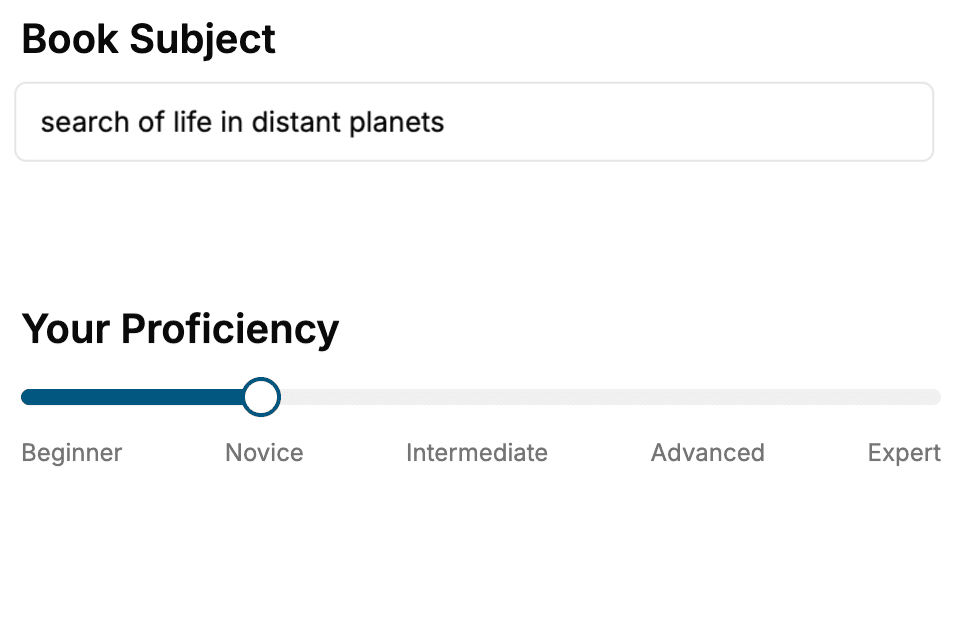
Select the focus of your Sociology book and share your background
- 2. Personalize your book
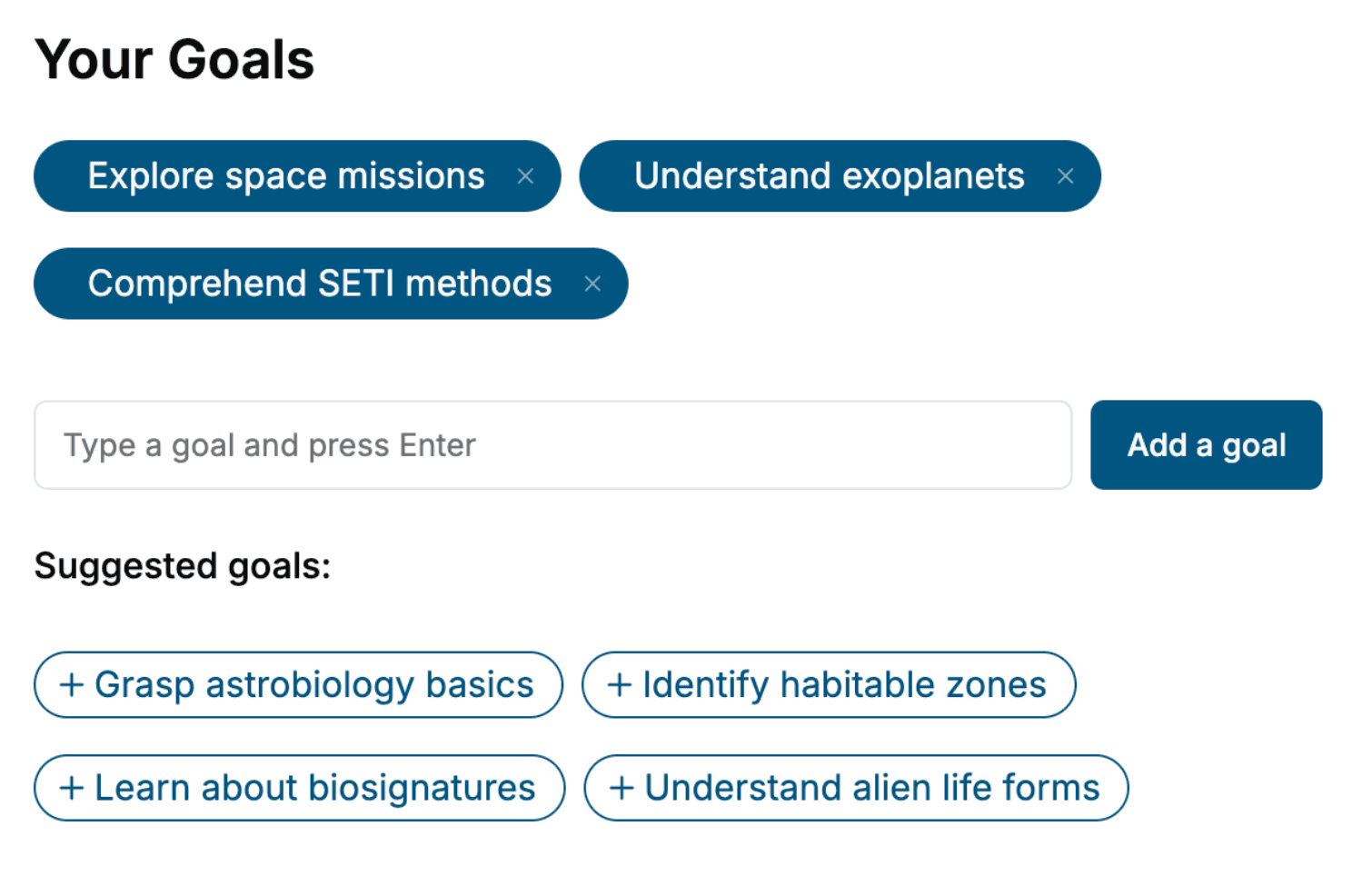
Specify your goals and choose sub-topics to include
- 3. Get your tailored book
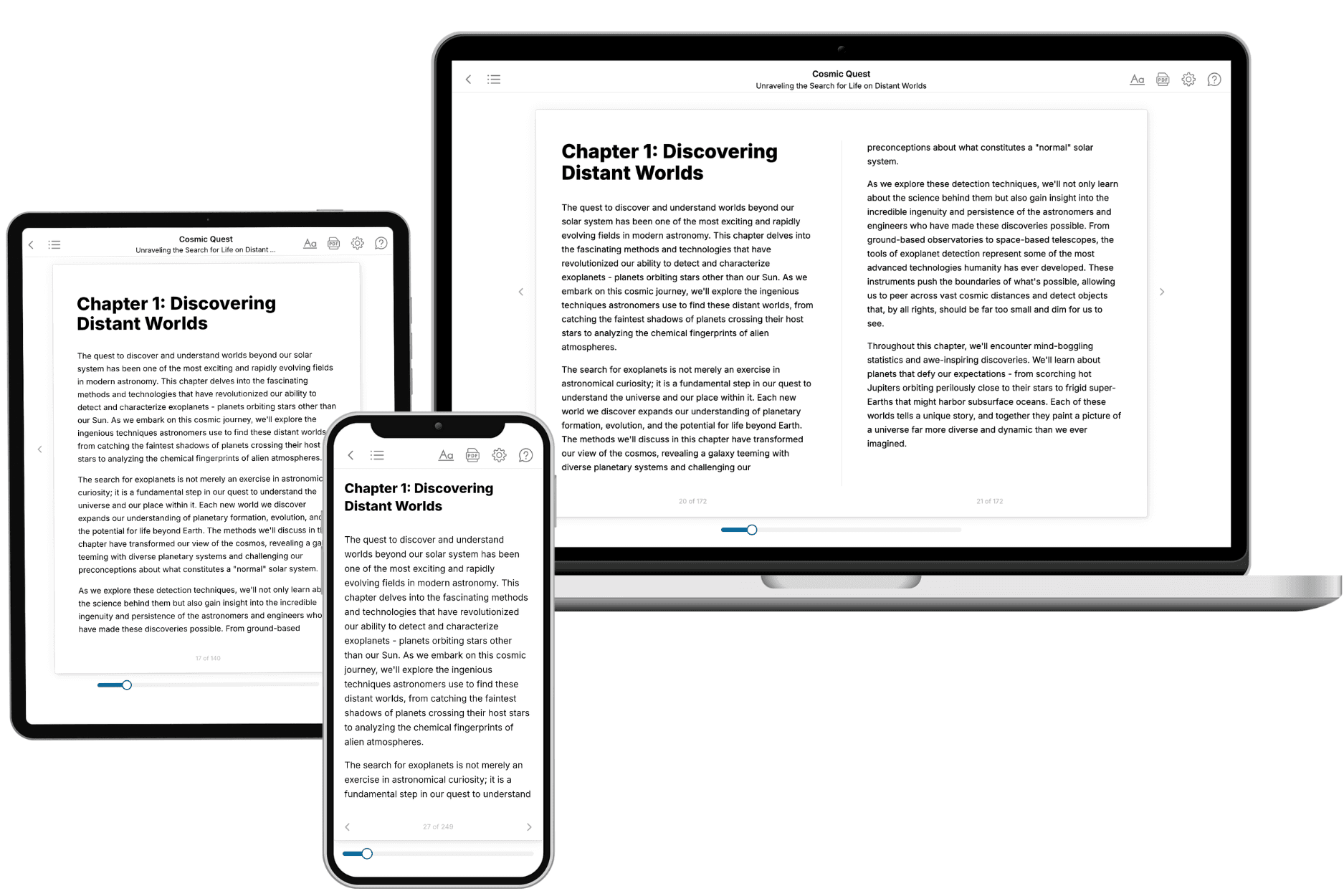
Your book is ready in 10 minutes. Read it online, download as EPUB or PDF, or send to Kindle.
Frequently asked questions
- What is TailoredRead?
TailoredRead creates complete, full-length nonfiction ebooks, written specifically for you. Tell us what you want to learn and why, and TailoredRead writes you a complete ebook on it, with charts, tables, and diagrams throughout. Read it online, on Kindle, or on any e-reader, or download it as a PDF or EPUB. Every book is written fresh the day you order it.
- How is the book tailored to me?
Before anything is written, you answer a few short questions about your goals, your background, and the topics you care about. Your book is then planned around your answers: written at your level, focused on your goals, and covering the topics you chose, instead of the one-size-fits-all book a store sells everyone.
- Will it read like generic AI content?
No. Your book isn't a chat transcript: it's planned chapter by chapter before a single word is written, told in a clear book voice, and explains ideas visually with charts, tables, and diagrams. After writing, every book goes through an editorial pass that polishes chapters so the book reads consistent from start to finish. Judge for yourself: browse thousands of sample books on our Explore Books page.
- How accurate is the content?
Our AI first checks whether your subject needs live research. Niche and fast-moving subjects are researched before writing, and the book plan and chapters are grounded in what it finds. After writing, every book goes through a quality pass that checks its facts and consistency, and researched books list their sources in a Notes section at the back.
- How long is the book?
You choose the length: Comprehensive (250-300 pages), Detailed (150-200 pages), Essential (70-100 pages), or Short (30-50 pages).
- Does the book include visuals?
Yes. Every book includes charts, tables, and diagrams: timelines, checklists, step-by-step guides, decision trees, comparison tables, matrices, and bar charts. A typical book includes dozens of these visual elements.
- Can I read it on Kindle? What formats can I download?
Yes. Every book can be read in our online reader or downloaded as a PDF or EPUB. The EPUB can be opened with Kindle, Apple Books, Kobo, and any e-reader. The Commercial and Author licenses also include an editable Word (DOCX) and Markdown download.
- How much does it cost?
About the price of a regular ebook. The exact price depends on your book's length and complexity, from $2 for the shortest books to $35 for the most comprehensive, and it's shown when you review your book, before you commit to anything. Each book is a one-time purchase, yours to keep, no subscription. Licenses that let you share, teach, or publish your book range from $35.99 to $49.99.
- Can I preview the book before purchasing?
Before you pay, you'll see what your book will cover: the title, a detailed description, the estimated length, and the complete chapter-by-chapter table of contents, so you know what you're getting before you decide. The full text itself is written after you purchase.
- How long does it take to create a book?
About 10 minutes. You can start reading the opening chapters while the rest is still being written.