Socrates: The Gadfly of Athens
Unveiling the Life and Legacy of the Father of Western Philosophy
Picture yourself strolling through the agora of ancient Athens, engaging in thought-provoking dialogues that challenge your beliefs and expand your understanding of the world.
269 pages13 chaptersFeb 20, 2025Philosophy
About this book
This is the realm of Socrates, the enigmatic philosopher whose ideas continue to shape our thinking today. "Socrates: The Gadfly of Athens" takes you on an illuminating journey through the life and mind of one of history's most influential thinkers. You'll discover how Socrates' unique approach to questioning and his unwavering pursuit of truth laid the foundation for Western philosophy. As you delve into the pages of this book, you'll gain insights into Socrates' method of inquiry, his ethical teachings, and his profound impact on his contemporaries and future generations of philosophers. You'll explore the historical and cultural context of ancient Athens, understanding how it shaped Socrates' worldview and why his ideas were both revered and feared. This comprehensive biography not only recounts the events of Socrates' life but also examines the enduring relevance of his philosophical concepts in our modern world. By the end of this intellectual odyssey, you'll have a deeper appreciation for critical thinking, ethical reasoning, and the pursuit of wisdom – timeless skills that can enrich your personal and professional life.
Table of contents
- IntroductionThe Enduring Relevance of Socrates, Overview of the Book's Journey, Why Socrates Matters TodayRead below
- Chapter 1: The Athens of SocratesThe Golden Age of Athens, Political Landscape of 5th Century BCE, Cultural and Intellectual Milieu, Socrates' Place in Athenian Society
- Chapter 2: The Early Life of SocratesBirth and Family Background, Education and Early Influences, Military Service and Civic Duty, The Philosophical Awakening
- Chapter 3: The Socratic MethodElenchus: The Art of Questioning, Socratic Irony and Feigned Ignorance, Maieutics: Bringing Ideas to Birth, The Method in Practice
- Chapter 4: Core Philosophical IdeasVirtue Ethics and the Good Life, Knowledge and the Limits of Human Understanding, The Care of the Soul, Justice and the Role of Law
- Chapter 5: Socrates and His ContemporariesThe Sophists: Intellectual Rivals, Influence on Athenian Youth, The Relationship with Plato, Other Notable Disciples and Friends
- Chapter 6: The Trial of SocratesThe Charges Against Socrates, Political and Social Context of the Trial, Socrates' Defense Speech, The Verdict and Sentence
- Chapter 7: The Death and Immediate LegacySocrates' Last Days in Prison, The Death Scene and Its Symbolism, Reactions of Disciples and Athenians, Early Impact on Greek Philosophy
- Chapter 8: Socratic Dialogues and Their SignificancePlato's Early Dialogues, Xenophon's Accounts of Socrates, The Socratic Dialogue as a Literary Form, Historical Accuracy vs. Philosophical Representation
- Chapter 9: Socratic Schools of ThoughtThe Cynics and Antisthenes, The Cyrenaics and Aristippus, The Megarians and Euclides, Plato's Academy and Aristotle's Lyceum
- Chapter 10: Socrates' Influence on Western PhilosophyImpact on Hellenistic Philosophy, Socratic Thought in Roman Philosophy, Socrates and Christian Philosophy, From Renaissance to Enlightenment
- Chapter 11: Socrates in the Modern WorldSocratic Method in Education and Pedagogy, Socratic Approach in Psychology and Psychotherapy, Socratic Ethics in Modern Moral Philosophy, Socratic Ideals in Political Thought
- Chapter 12: Socrates in Popular CultureSocrates in Literature and Art, Representations in Film and Media, Socrates in the Digital Age: Internet Memes and References, Modern Socratic Dialogues: Philosophical Cafés and Discussion Groups
- Chapter 13: Applying Socratic Wisdom TodayCultivating Critical Thinking Skills, Ethical Decision-Making in Complex Times, The Value of Self-Examination and Reflection, Socratic Citizenship in the 21st Century
- ConclusionThe Enduring Legacy of Socrates, Socratic Thought and the Future of Philosophy
- Glossary of Key Terms
- Suggestions for Further Reading
Introduction
In the bustling streets of ancient Athens, amidst the clamor of commerce and the heated debates of politicians, there walked a man whose impact on human thought would reverberate through millennia. Socrates, often hailed as the father of Western philosophy, was not a typical sage of his time. He wrote no books, founded no school, and claimed to know nothing with certainty. Yet, his method of relentless questioning and his unwavering commitment to the pursuit of wisdom have left an indelible mark on the landscape of human knowledge and inquiry.
As you embark on this intellectual journey through the life and ideas of Socrates, you are stepping into a world that is both distant and remarkably familiar. The questions that Socrates grappled with – What is justice? How should we live? What can we truly know? – are as relevant today as they were in the 5th century BCE. His approach to these questions, characterized by rigorous examination and a willingness to challenge conventional wisdom, continues to inspire thinkers, educators, and seekers of truth across the globe.
This book aims to provide you with a comprehensive understanding of Socrates, not just as a historical figure, but as a living, breathing philosopher whose ideas continue to challenge and enlighten us. Through these pages, you will explore the context of Socrates' life in ancient Athens, delve into his revolutionary method of inquiry, examine his core philosophical ideas, and trace his enduring influence on Western thought and culture. By the end of this journey, you will not only have gained knowledge about Socrates but will also have developed a deeper appreciation for the art of critical thinking and the pursuit of wisdom.
The Enduring Relevance of Socrates
In an age of information overload, where opinions are often mistaken for facts and where the loudest voices frequently drown out reasoned discourse, the figure of Socrates emerges as a beacon of intellectual integrity and critical inquiry. His relevance in our modern world extends far beyond the realm of academic philosophy. The Socratic approach to questioning assumptions, seeking clarity, and pursuing truth offers a powerful antidote to the superficiality and polarization that often characterize contemporary debates.
Consider, for instance, the Socratic method's application in education. In classrooms around the world, teachers inspired by Socrates engage students not through rote learning, but by encouraging them to question, analyze, and think for themselves. This approach fosters critical thinking skills that are essential in navigating the complexities of the modern world. A study by the Stanford Graduate School of Education found that students taught using Socratic methods demonstrated significantly improved critical thinking skills compared to those in traditional lecture-based classes[1].
In the realm of law and governance, Socratic questioning continues to play a crucial role. Law schools use the Socratic method to train future lawyers in the art of rigorous analysis and argumentation. In courtrooms, attorneys employ Socratic-style questioning to examine witnesses and build their cases. Even in the highest echelons of government, the spirit of Socratic inquiry can be seen in parliamentary debates and policy discussions, where ideas are (ideally) scrutinized and refined through rigorous questioning.
The relevance of Socrates extends to the business world as well. Many companies now incorporate Socratic-style questioning into their decision-making processes and leadership training programs. This approach helps in challenging assumptions, identifying potential pitfalls, and fostering innovation. A Harvard Business Review study highlighted how Socratic questioning can lead to better problem-solving and decision-making in corporate environments[2].
In the field of mental health, Socratic questioning forms the backbone of cognitive-behavioral therapy (CBT), one of the most widely used and effective forms of psychotherapy. By encouraging clients to examine and challenge their thought patterns, CBT helps individuals overcome a range of mental health issues, from depression and anxiety to addiction and eating disorders. The effectiveness of this Socratic-inspired approach has been validated by numerous clinical studies[3].
Perhaps most importantly, Socrates' emphasis on self-examination and the pursuit of virtue remains profoundly relevant in our personal lives. In an era where external validation through social media likes and followers often takes precedence, Socrates' call to "know thyself" and to prioritize the cultivation of one's character over the accumulation of wealth or status offers a much-needed corrective. His teachings encourage us to reflect on our values, question our assumptions, and strive for personal growth and ethical living.
The enduring relevance of Socrates is not just about the application of his methods or the content of his philosophy. It's about the spirit of inquiry he embodied – a relentless pursuit of truth, a willingness to question even one's most cherished beliefs, and a commitment to intellectual humility. In a world grappling with complex challenges – from climate change to artificial intelligence, from economic inequality to global pandemics – this Socratic spirit of critical inquiry and ethical reflection is more crucial than ever.
As you delve deeper into the life and ideas of Socrates throughout this book, you will discover that his relevance extends far beyond his historical context. His approach to questioning, learning, and living offers timeless wisdom that can enrich your understanding of yourself, others, and the world around you. The journey you are about to embark on is not just an exploration of an ancient philosopher, but a gateway to developing critical thinking skills, ethical reasoning, and a deeper appreciation for the pursuit of wisdom in your own life.
Overview of the Book's Journey
As you embark on this intellectual odyssey through the life, teachings, and legacy of Socrates, it's important to have a clear roadmap of the journey ahead. This book is structured to provide you with a comprehensive understanding of Socrates, not just as a historical figure, but as a thinker whose ideas continue to shape our world. Each chapter is designed to build upon the previous ones, gradually deepening your understanding and appreciation of Socratic philosophy and its enduring impact.
The journey begins with an exploration of the historical and cultural context that shaped Socrates and his ideas. Chapter 1, "The Athens of Socrates," will transport you to the vibrant world of 5th century BCE Athens. You'll discover how the political landscape, cultural milieu, and intellectual ferment of the time created the perfect conditions for Socrates' revolutionary approach to philosophy. This chapter will help you understand why Socrates emerged as such a significant figure and why his ideas were both celebrated and controversial in his own time.
From there, we'll delve into Socrates' personal history in Chapter 2, "The Early Life of Socrates." This chapter will provide insights into Socrates' background, education, and the experiences that shaped his philosophical outlook. You'll learn about his military service, his family life, and the pivotal moments that led him to dedicate his life to philosophy. This biographical context is crucial for understanding the man behind the ideas and the personal convictions that drove his relentless pursuit of wisdom.
Chapters 3 and 4 form the heart of our exploration of Socratic philosophy. In "The Socratic Method," you'll gain a deep understanding of Socrates' revolutionary approach to inquiry and learning. You'll discover the intricacies of elenchus (Socratic questioning), the role of irony in Socrates' teachings, and how the Socratic method continues to be applied in various fields today. Following this, "Core Philosophical Ideas" will introduce you to the key concepts in Socratic thought, including his views on ethics, knowledge, the soul, and justice. These chapters will equip you with a solid foundation in Socratic philosophy, preparing you for the more complex discussions that follow.
The next section of the book explores Socrates' relationships and influence in his own time. Chapter 5, "Socrates and His Contemporaries," examines his interactions with other thinkers of his era, his influence on Athenian youth, and his complex relationship with figures like Plato. This leads naturally into Chapters 6 and 7, which focus on the dramatic events of Socrates' trial, imprisonment, and death. These chapters not only recount historical events but also delve into the philosophical implications of Socrates' response to his accusers and his unwavering commitment to his principles, even in the face of death.
The latter part of the book traces the far-reaching impact of Socrates' life and ideas. Chapter 8 examines the Socratic dialogues, primarily those written by Plato, which have been instrumental in preserving and disseminating Socratic thought. Chapter 9 explores the various philosophical schools that emerged in the wake of Socrates' death, each claiming to be the true inheritors of his legacy. Chapters 10 and 11 then take a broader view, examining Socrates' influence on Western philosophy as a whole and his relevance in the modern world, from education and psychology to ethics and political thought.
In Chapter 12, we'll take a lighter but no less insightful look at Socrates' place in popular culture, exploring how this ancient philosopher has been portrayed in literature, art, film, and even internet memes. This chapter illustrates the enduring fascination with Socrates and how his ideas have permeated various aspects of contemporary culture.
The book concludes with Chapter 13, "Applying Socratic Wisdom Today," which brings the journey full circle by showing how Socratic ideas and methods can be practically applied in your own life. This chapter offers guidance on cultivating critical thinking skills, approaching ethical decision-making, and embracing the value of self-examination and reflection.
Throughout this journey, you'll encounter not just abstract ideas, but practical examples, historical anecdotes, and contemporary applications that bring Socratic philosophy to life. You'll be encouraged to engage with the material actively, questioning assumptions, considering alternative viewpoints, and reflecting on how Socratic ideas relate to your own experiences and beliefs.
By the end of this book, you will have gained not just knowledge about Socrates and his philosophy, but also valuable tools for critical thinking, ethical reasoning, and self-reflection. The goal is not merely to inform, but to inspire – to kindle in you the same passion for wisdom and truth that drove Socrates to question, to challenge, and to seek understanding throughout his life.
As we embark on this intellectual adventure together, remember the words often attributed to Socrates: "The unexamined life is not worth living." This book is an invitation to examine not just the life and ideas of Socrates, but also your own assumptions, beliefs, and ways of thinking. It's an opportunity to engage with one of history's greatest minds and, in doing so, to expand and enrich your own.
Why Socrates Matters Today
In an era characterized by rapid technological advancement, information overload, and complex global challenges, the question naturally arises: Why should we, in the 21st century, concern ourselves with the ideas of a philosopher who lived over two millennia ago? The answer lies in the timeless nature of Socrates' approach to knowledge, ethics, and the human condition. Far from being a relic of ancient history, Socratic thought offers valuable insights and tools for navigating the complexities of modern life.
First and foremost, Socrates matters today because he championed critical thinking in an age of dogma and unquestioned traditions. In our current era, where misinformation spreads rapidly through social media and where complex issues are often reduced to simplistic soundbites, Socrates' emphasis on rigorous questioning and logical analysis is more relevant than ever. His method encourages us to challenge our assumptions, seek evidence for our beliefs, and engage in thoughtful dialogue rather than mere debate. In a study published in the journal "Thinking Skills and Creativity," researchers found that students who were taught using Socratic questioning techniques showed significant improvements in critical thinking skills compared to those taught with traditional methods[4].
Secondly, Socrates' emphasis on self-examination and the pursuit of virtue offers a powerful antidote to the materialism and superficiality that often characterize modern society. In a world where success is frequently measured by wealth, status, or social media followers, Socrates reminds us of the importance of cultivating our character and living an ethical life. His famous dictum "Know thyself" encourages us to engage in honest self-reflection, to understand our values and motivations, and to strive for personal growth. This introspective approach has found resonance in modern psychology, particularly in the field of positive psychology, which emphasizes the importance of self-awareness and character strengths in achieving well-being and fulfillment[5].
Furthermore, Socrates' approach to knowledge – his famous claim to know that he knows nothing – offers a valuable lesson in intellectual humility. In an age where polarized opinions and ideological echo chambers are increasingly common, Socrates' willingness to question his own beliefs and remain open to new ideas is refreshingly relevant. This Socratic humility can serve as a model for approaching complex issues with an open mind, fostering more productive dialogues across different perspectives. Research in cognitive psychology has shown that intellectual humility is associated with better decision-making, more effective learning, and improved interpersonal relationships[6].
Socrates' commitment to questioning authority and standing up for his principles, even in the face of severe consequences, serves as an inspiring example of moral courage. In a world where whistleblowers face persecution and where speaking truth to power can come at great personal cost, Socrates' unwavering dedication to his beliefs offers a powerful model of ethical integrity. His trial and execution, far from silencing his ideas, have become a symbol of the importance of free thought and the dangers of suppressing dissent. This aspect of Socrates' legacy continues to inspire activists, journalists, and citizens who challenge unjust systems and fight for their principles.
In the realm of education, Socratic methods continue to play a crucial role in fostering active learning and critical thinking. The Socratic approach, which emphasizes questioning and dialogue over passive reception of information, aligns well with modern pedagogical theories that stress the importance of student engagement and inquiry-based learning. From law schools to elementary classrooms, Socratic-inspired teaching methods are used to develop students' analytical skills, encourage deeper understanding of complex topics, and foster a love of learning.
Socrates' ideas also have significant implications for our understanding of democracy and civic engagement. His emphasis on the importance of an informed and critically thinking citizenry resonates strongly in our current political climate. In an age of populism and political polarization, Socrates' approach encourages us to question our leaders, examine political rhetoric critically, and actively participate in the democratic process. His vision of citizenship as an active, reflective practice rather than a passive status is particularly relevant as we grapple with complex global challenges that require informed and engaged citizens.
Moreover, Socrates' ethical philosophy, with its emphasis on the pursuit of virtue and the good life, offers valuable insights for addressing contemporary moral dilemmas. From bioethical issues raised by advances in medical technology to the ethical implications of artificial intelligence, Socratic methods of ethical reasoning provide a framework for navigating complex moral terrain. The Socratic approach encourages us to examine our moral intuitions critically, consider multiple perspectives, and strive for consistency in our ethical reasoning.
Finally, in an era of increasing specialization and fragmentation of knowledge, Socrates' holistic approach to wisdom serves as a reminder of the interconnectedness of different fields of knowledge. His wide-ranging inquiries, which touched on everything from politics and ethics to metaphysics and epistemology, encourage us to think across disciplinary boundaries and seek connections between different areas of study. This interdisciplinary approach is increasingly recognized as crucial for addressing complex global challenges that defy simple categorization.
In conclusion, Socrates matters today not because he provided all the answers, but because he taught us how to ask the right questions. His methods of inquiry, his ethical principles, and his unwavering commitment to the pursuit of wisdom offer timeless tools for navigating the complexities of the modern world. By engaging with Socratic thought, we can develop our critical thinking skills, deepen our self-understanding, approach complex issues with humility and openness, and strive to live more examined and ethically grounded lives. In a world of rapid change and information overload, the Socratic approach provides a steady anchor, reminding us of the enduring importance of questioning, reflection, and the pursuit of wisdom.
Notes
Introduction
- 1. P. K. Murphy and others, "Promoting Critical-Analytic Thinking in Children and Adolescents at Home and in School," Educational Psychology Review, 2014
- 2. F. Gino and B. Staats, "Why Organizations Don't Learn," Harvard Business Review, 2015
- 3. S. G. Hofmann and others, "The Efficacy of Cognitive Behavioral Therapy," Cognitive Therapy and Research, 2012
- 4. Y. T. C. Yang and others, "Using Socratic Questioning to Promote Critical Thinking Skills Through Asynchronous Discussion Forums in Distance Learning Environments," The American Journal of Distance Education, 2005
- 5. C. Peterson and M. E. P. Seligman, Character Strengths and Virtues, Oxford University Press, 2004
- 6. M. R. Leary and others, "Cognitive and Interpersonal Features of Intellectual Humility," Personality and Social Psychology Bulletin, 2017
This is the end of the free sample. The full book has 13 chapters.
Want this book written for you?
Tell us your goals and background, and get your own version of this book, tailored by AI to you.


Benefits of AI-tailored books
- Read one book, not ten:
- all the Philosophy knowledge you need, gathered into a single book.
- Save days of learning:
- tell us your goals, choose your topics, and the whole book is built around them.
- Learn effortlessly:
- Philosophy book written for your specific background and expertise.
- Understand at a glance:
- includes charts, tables, timelines, checklists, decision trees, and more.
- Stay current:
- written the day you order it, not years ago.
- Trust what you read:
- every book is checked for accuracy, with real research when your subject needs it.
Create your unique book in 3 steps
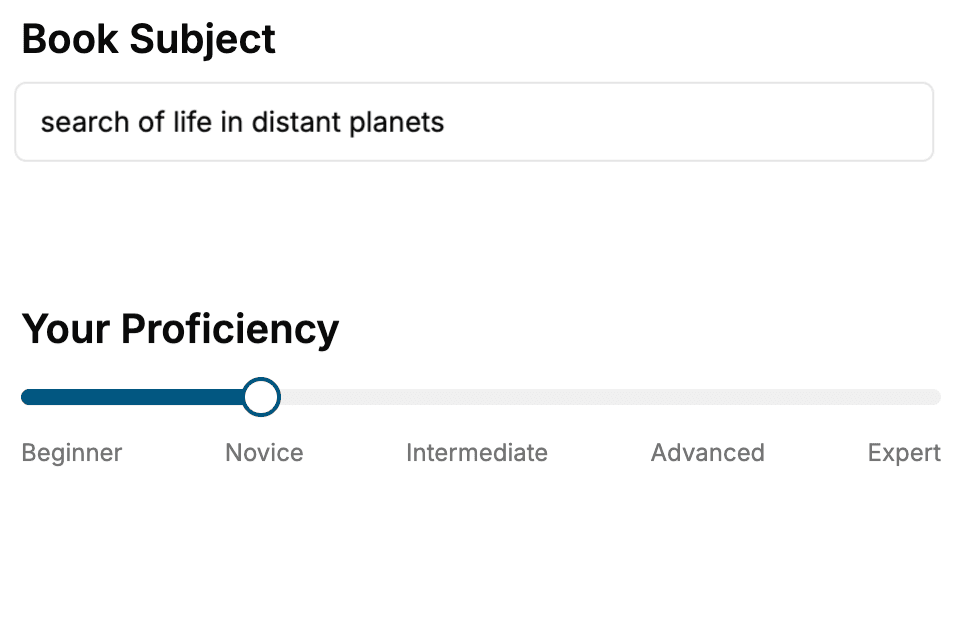
- 1. Select your focus
Select the focus of your Philosophy book and share your background
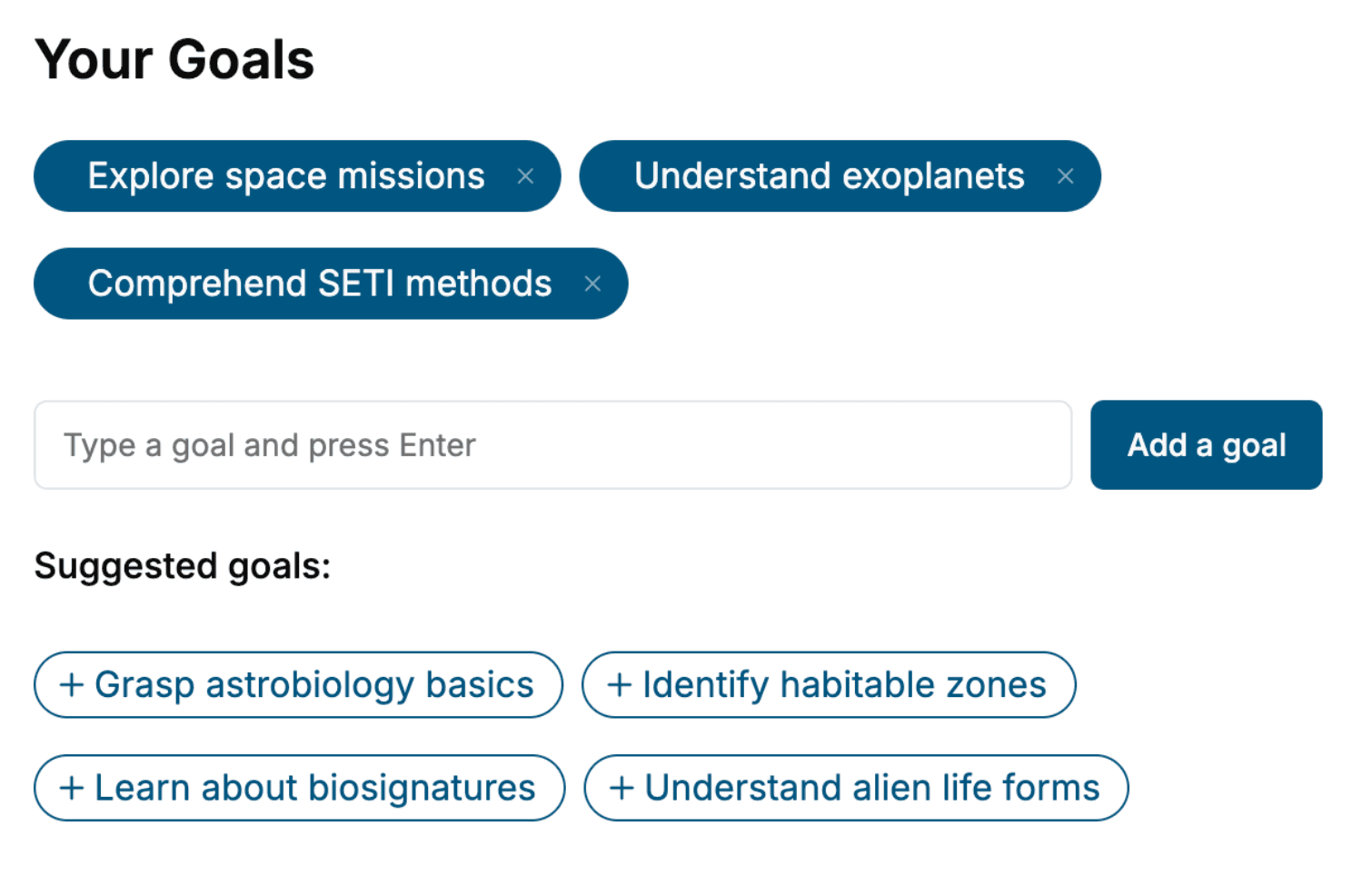
- 2. Personalize your book
Specify your goals and choose sub-topics to include
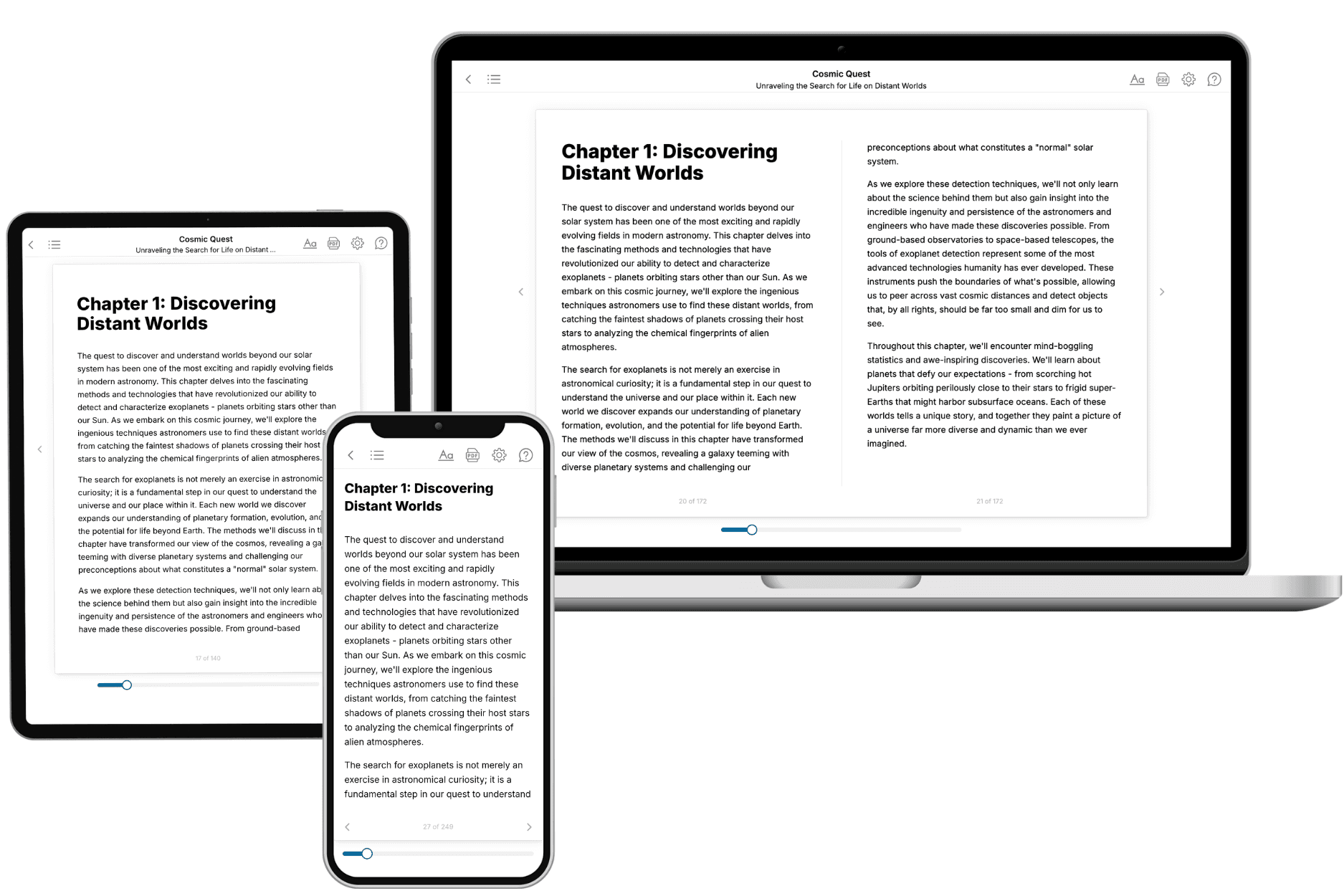
- 3. Get your tailored book
Your book is ready in 10 minutes. Read it online, download as EPUB or PDF, or send to Kindle.
Frequently asked questions
- What is TailoredRead?
TailoredRead creates complete, full-length nonfiction ebooks, written specifically for you. Tell us what you want to learn and why, and TailoredRead writes you a complete ebook on it, with charts, tables, and diagrams throughout. Read it online, on Kindle, or on any e-reader, or download it as a PDF or EPUB. Every book is written fresh the day you order it.
- How is the book tailored to me?
Before anything is written, you answer a few short questions about your goals, your background, and the topics you care about. Your book is then planned around your answers: written at your level, focused on your goals, and covering the topics you chose, instead of the one-size-fits-all book a store sells everyone.
- Will it read like generic AI content?
No. Your book isn't a chat transcript: it's planned chapter by chapter before a single word is written, told in a clear book voice, and explains ideas visually with charts, tables, and diagrams. After writing, every book goes through an editorial pass that polishes chapters so the book reads consistent from start to finish. Judge for yourself: browse thousands of sample books on our Explore Books page.
- How accurate is the content?
Our AI first checks whether your subject needs live research. Niche and fast-moving subjects are researched before writing, and the book plan and chapters are grounded in what it finds. After writing, every book goes through a quality pass that checks its facts and consistency, and researched books list their sources in a Notes section at the back.
- How long is the book?
You choose the length: Comprehensive (250-300 pages), Detailed (150-200 pages), Essential (70-100 pages), or Short (30-50 pages).
- Does the book include visuals?
Yes. Every book includes charts, tables, and diagrams: timelines, checklists, step-by-step guides, decision trees, comparison tables, matrices, and bar charts. A typical book includes dozens of these visual elements.
- Can I read it on Kindle? What formats can I download?
Yes. Every book can be read in our online reader or downloaded as a PDF or EPUB. The EPUB can be opened with Kindle, Apple Books, Kobo, and any e-reader. The Commercial and Author licenses also include an editable Word (DOCX) and Markdown download.
- How much does it cost?
About the price of a regular ebook. The exact price depends on your book's length and complexity, from $2 for the shortest books to $35 for the most comprehensive, and it's shown when you review your book, before you commit to anything. Each book is a one-time purchase, yours to keep, no subscription. Licenses that let you share, teach, or publish your book range from $35.99 to $49.99.
- Can I preview the book before purchasing?
Before you pay, you'll see what your book will cover: the title, a detailed description, the estimated length, and the complete chapter-by-chapter table of contents, so you know what you're getting before you decide. The full text itself is written after you purchase.
- How long does it take to create a book?
About 10 minutes. You can start reading the opening chapters while the rest is still being written.