Software Architecture Essentials
Design Scalable Systems with Proven Patterns and Principles
Build systems that stand the test of time.
207 pages9 chaptersApr 7, 2026Software Architecture
About this book
This comprehensive guide equips you with the knowledge to design software architectures that are scalable, maintainable, and aligned with your business goals. You'll explore fundamental architectural principles, discover proven design patterns, and learn how to evaluate trade-offs when making critical system decisions. From understanding layered and microservices architectures to mastering domain-driven design and quality attributes, this book provides practical frameworks you can apply immediately. Whether you're designing a new system from scratch or refactoring an existing one, you'll gain the analytical tools and strategic thinking skills needed to make informed architectural choices. Real-world examples and case studies illustrate how successful organizations apply these principles. By the end, you'll have a clear mental model for approaching architectural challenges and the confidence to design systems that grow with your needs.
Table of contents
- IntroductionWhy Architecture Matters, What You'll Learn in This Book, How to Use This GuideRead below
- Chapter 1: Foundations of Software ArchitectureDefining Software Architecture, The Role and Responsibilities of an Architect, Architecture vs. Design: Understanding the Difference
- Chapter 2: Core Architectural PrinciplesSeparation of Concerns, Modularity and Cohesion, Coupling and Decoupling, Abstraction and Layering
- Chapter 3: Quality Attributes and Non-Functional RequirementsDefining Quality Attributes, Performance and Scalability, Reliability and Availability, Security and Maintainability
- Chapter 4: Architectural Styles and PatternsLayered Architecture, Microservices Architecture, Event-Driven Architecture, Other Architectural Styles: CQRS, Serverless, and More
- Chapter 5: Essential Design PatternsCreational Patterns, Structural Patterns, Behavioral Patterns
- Chapter 6: Domain-Driven DesignDDD Fundamentals and Bounded Contexts, Entities, Value Objects, and Aggregates, Implementing DDD in Your Architecture
- Chapter 7: Data Architecture and PersistenceDatabase Design Principles, SQL vs. NoSQL: Choosing the Right Approach, Data Consistency and Transactions
- Chapter 8: Integration and Communication PatternsSynchronous vs. Asynchronous Communication, Message Queues and Event Streaming, API Design and Versioning
- Chapter 9: Making Architectural DecisionsA Framework for Architectural Decisions, Evaluating Trade-Offs, Documenting and Communicating Decisions
- ConclusionKey Takeaways, Your Next Steps
- Glossary
- Further Reading and Resources
Introduction
Every software system you have ever used was shaped by decisions made long before a single line of code was written. The choice of how to organize components, how data flows between them, and how the system responds to failure are not implementation details. They are architectural decisions, and they determine whether a system thrives or collapses under the weight of its own growth. Software architecture is the discipline of making those decisions deliberately, with a clear understanding of what you are trading away and what you are gaining in return.
Most developers encounter architecture gradually. You start by writing functions, then classes, then modules. At some point, the codebase grows large enough that adding a feature in one place breaks something in another. Deployments become risky. Onboarding new team members takes weeks instead of days. The system that once felt clean and manageable starts to feel like a maze. That moment, frustrating as it is, is often when the value of architectural thinking becomes undeniable. Good architecture does not prevent complexity from existing. It gives complexity a structure that humans can reason about and work within.
This book is written for developers who are ready to think beyond individual features and start thinking about systems as a whole. You already know how to write code. You understand data structures, algorithms, and at least one programming language well enough to build working software. What this book offers is a layer above that: the principles, patterns, and decision-making frameworks that help you design systems that are not just functional today, but maintainable, scalable, and resilient over time. The goal is not to make architecture feel abstract or academic. It is to make it feel practical, approachable, and immediately useful in your day-to-day work.
Architecture is not a role reserved for senior engineers with decades of experience. It is a way of thinking that any developer can learn and apply. The earlier you develop this thinking, the better the systems you will build and the more effectively you will contribute to the teams around you. Whether you are designing a new service from scratch, refactoring a legacy monolith, or trying to understand why your current system is hard to change, the concepts in this book will give you a clearer lens for seeing the problem and a stronger toolkit for solving it.
Why Architecture Matters
Software architecture matters because the cost of a bad decision compounds over time. A poorly chosen data model might be manageable in the first six months of a project. By year two, it can be the reason every new feature takes three times longer to build than it should. Architectural problems do not announce themselves loudly at the start. They accumulate quietly, and by the time they become visible, they are expensive to fix. This is sometimes called technical debt, and architectural debt is among the most costly kind.
Consider a real-world scenario that plays out in many growing companies. A startup builds a web application as a single deployable unit, often called a monolith. In the early days, this is the right call. It is simple, fast to develop, and easy to reason about. As the company grows, the team expands, and different parts of the system need to scale independently. The checkout service needs more resources during peak shopping hours, but the user profile service does not. In a monolith with no clear internal boundaries, scaling one part means scaling everything. The architecture that was perfect at ten engineers becomes a bottleneck at fifty.
This is not a story about monoliths being bad. It is a story about fit. The right architecture for a two-person startup is almost never the right architecture for a two-hundred-person engineering organization. Architecture matters because it determines how well your system fits its context, and that context changes. A good architect does not just design for today. They design systems that can evolve as requirements, team size, and scale shift over time.
Architecture also matters for the people building the system, not just the system itself. Clear architectural boundaries make it easier for teams to work in parallel without stepping on each other. Well-defined interfaces between components reduce the cognitive load of understanding the whole system at once. When a new developer joins a team, a well-architected system lets them understand their piece without needing to hold the entire codebase in their head. This is not a luxury. It is a productivity multiplier that compounds as teams grow.
Research supports this intuition. A study by the Consortium for IT Software Quality found that poor software quality costs US organizations approximately $2.08 trillion annually, with a significant portion attributable to architectural and structural issues in codebases.[1] These are not abstract numbers. They represent delayed releases, failed projects, and engineering hours spent fighting the system instead of improving it. Good architecture is not just a technical concern. It is a business concern.
Beyond cost, architecture shapes the experience of building software. Systems with clear structure are more enjoyable to work in. Developers can make changes with confidence because they understand the boundaries and can predict the impact of their decisions. Testing is easier when components are well-separated. Debugging is faster when the system's behavior is predictable. Architecture, at its best, creates an environment where good engineering practices are the path of least resistance rather than an uphill battle.
Finally, architecture matters because it encodes assumptions about the future. Every architectural decision reflects a belief about how the system will grow, how it will be used, and what will change. Making those assumptions explicit, rather than leaving them buried in code, is one of the most valuable things an architect can do. When assumptions are visible, they can be challenged, updated, and replaced as the world changes. When they are hidden, they become constraints that nobody remembers choosing.
What You'll Learn in This Book
This book covers the full landscape of software architecture, from foundational concepts to practical decision-making frameworks. It is organized to build your understanding progressively, starting with the vocabulary and mental models you need, then moving into specific patterns, principles, and techniques. By the end, you will have a coherent framework for approaching architectural challenges in your own work.
The first part of the book establishes the foundations. You will learn what software architecture actually is, how it differs from software design, and what the role of an architect looks like in practice. These distinctions matter because they shape how you think about your own responsibilities and how you communicate with others on your team. Many developers have strong instincts about design but have never had a clear framework for thinking about architecture. These early chapters provide that framework.
From there, the book moves into core architectural principles. These are the ideas that underpin almost every good architectural decision, regardless of the specific technology or pattern involved. You will explore concepts like:
- Separation of concerns, which keeps different responsibilities from tangling together
- Modularity and cohesion, which determine how well components hold together internally
- Coupling and decoupling, which govern how much components depend on each other
- Abstraction and layering, which manage complexity by hiding detail behind clean interfaces
These principles are not rules to memorize. They are lenses for evaluating design choices, and you will see them applied throughout the rest of the book.
Quality attributes get their own dedicated chapter because they are too often treated as an afterthought. Performance, scalability, reliability, availability, security, and maintainability are not features you add at the end of a project. They are properties you design into a system from the beginning. You will learn how to identify the quality attributes that matter most for a given system and how to make architectural choices that support them. This includes concrete techniques for improving each attribute, along with the trade-offs those techniques introduce.
A large portion of the book is devoted to architectural styles and patterns. You will get a thorough treatment of the most widely used approaches, including:
- Layered architecture, the classic approach that organizes systems into horizontal tiers
- Microservices architecture, which decomposes systems into small, independently deployable services
- Event-driven architecture, which uses events to decouple producers and consumers of information
- CQRS and serverless, which address specific scalability and operational challenges
For each style, you will learn not just how it works, but when to use it, when to avoid it, and what trade-offs it introduces. No single architectural style is universally correct, and this book will help you develop the judgment to choose the right one for your context.
Design patterns, domain-driven design, data architecture, and integration patterns each receive dedicated chapters. These topics are deeply interconnected, and the book draws explicit connections between them. For example, understanding domain-driven design will make your microservices boundaries cleaner. Understanding data consistency trade-offs will inform your choice between synchronous and asynchronous communication. The goal is not just to teach individual topics but to help you see how they fit together into a coherent whole.
The final chapter on making architectural decisions ties everything together. Architecture is ultimately a decision-making discipline, and good decisions require a structured process. You will learn a practical framework for evaluating options, documenting your reasoning, and communicating decisions to your team. This is the skill that separates architects who design good systems from those who design great ones: not just knowing the patterns, but knowing how to choose between them and how to bring others along in that process.
Throughout the book, real-world examples and case studies illustrate how these concepts play out in practice. You will see how companies like Netflix, Amazon, and others have applied architectural principles to solve genuine engineering challenges at scale. These examples are not presented as templates to copy. They are presented as evidence that these ideas work, and as illustrations of the thinking process behind good architectural decisions.
How to Use This Guide
This book is designed to be read from beginning to end, but it is also structured so that individual chapters stand on their own as references. If you are new to architectural thinking, reading sequentially will give you the strongest foundation. Each chapter builds on the vocabulary and concepts introduced in earlier ones, and the progression from principles to patterns to decision-making is intentional. If you already have some architectural experience, you may find it useful to jump directly to the chapters most relevant to your current challenges and refer back to earlier sections as needed.
As you read, try to connect each concept to a system you have worked on or are currently building. Architecture is easiest to understand in context. When a chapter introduces a principle like loose coupling, ask yourself where your current system violates that principle and what the consequences have been. When a chapter describes a pattern like event-driven architecture, think about whether any of the problems it solves are problems you have encountered. This kind of active reading will make the material stick far better than passive consumption.
Each chapter includes practical examples and, where appropriate, concrete steps you can take immediately. Do not skip these. The examples are not decorative. They are the mechanism by which abstract principles become usable skills. If an example describes a scenario that does not match your technology stack, look past the specific tools and focus on the underlying structure. The principles apply across languages, frameworks, and platforms.
Here is a suggested approach depending on your current situation:
- If you are designing a new system: Start with Chapters 1 through 3 to establish your principles, then read Chapter 4 to choose an architectural style, and use Chapter 9 to structure your decision-making process.
- If you are working on an existing system: Chapter 2 on core principles will help you identify where the current design is struggling. Chapter 6 on domain-driven design is particularly useful for understanding how to restructure a system around its business domain.
- If you are preparing for a technical leadership role: Pay special attention to Chapter 9 on making and communicating architectural decisions. The ability to articulate trade-offs clearly is one of the most valuable skills an architect can have.
- If you are studying for system design interviews: Chapters 3, 4, 7, and 8 cover the topics most commonly explored in those conversations, including quality attributes, architectural styles, data design, and communication patterns.
The glossary at the back of the book defines key terms used throughout. If you encounter a term that feels unfamiliar, check there first. Architecture has its own vocabulary, and precision in language matters. When architects use terms like bounded context, idempotency, or eventual consistency, they are pointing at specific, well-defined concepts. Understanding the vocabulary is part of developing architectural fluency.
The further reading section at the end of the book points to resources that go deeper on specific topics. This book is comprehensive, but no single volume can cover everything. If a particular chapter sparks your curiosity, the further reading list will point you toward the books, papers, and resources that practitioners in that area consider essential. Some of the most influential works in software architecture, including Martin Fowler's Patterns of Enterprise Application Architecture and Eric Evans's Domain-Driven Design, are referenced throughout and listed there for easy access.[2]
One important note about mindset: architecture involves trade-offs, and this book will not tell you there is always one right answer. What it will do is give you the tools to evaluate options clearly and make decisions you can defend and revisit. The best architects are not the ones who always choose correctly on the first try. They are the ones who make their reasoning visible, learn from outcomes, and adjust as they go. Approach this material with that same spirit of inquiry, and you will get far more out of it than a set of rules to follow.
Software architecture is one of the most intellectually rewarding areas of software engineering. It sits at the intersection of technical depth and strategic thinking, of individual craft and team collaboration. The decisions you make as an architect shape not just the systems you build, but the experience of everyone who builds and uses them. That is a significant responsibility, and it is also a remarkable opportunity. This book is your starting point for taking that opportunity seriously.
Notes
Introduction
- 1. Consortium for IT Software Quality (CISQ). 'The Cost of Poor Software Quality in the US: A 2022 Report.' CISQ, 2022.
- 2. Fowler, "Martin. 'Patterns of Enterprise Application Architecture.' Addison-Wesley, 2002. Evans," Eric. 'Domain-Driven Design: Tackling Complexity in the Heart of Software.' Addison-Wesley, 2003
This is the end of the free sample. The full book has 9 chapters.
Want this book written for you?
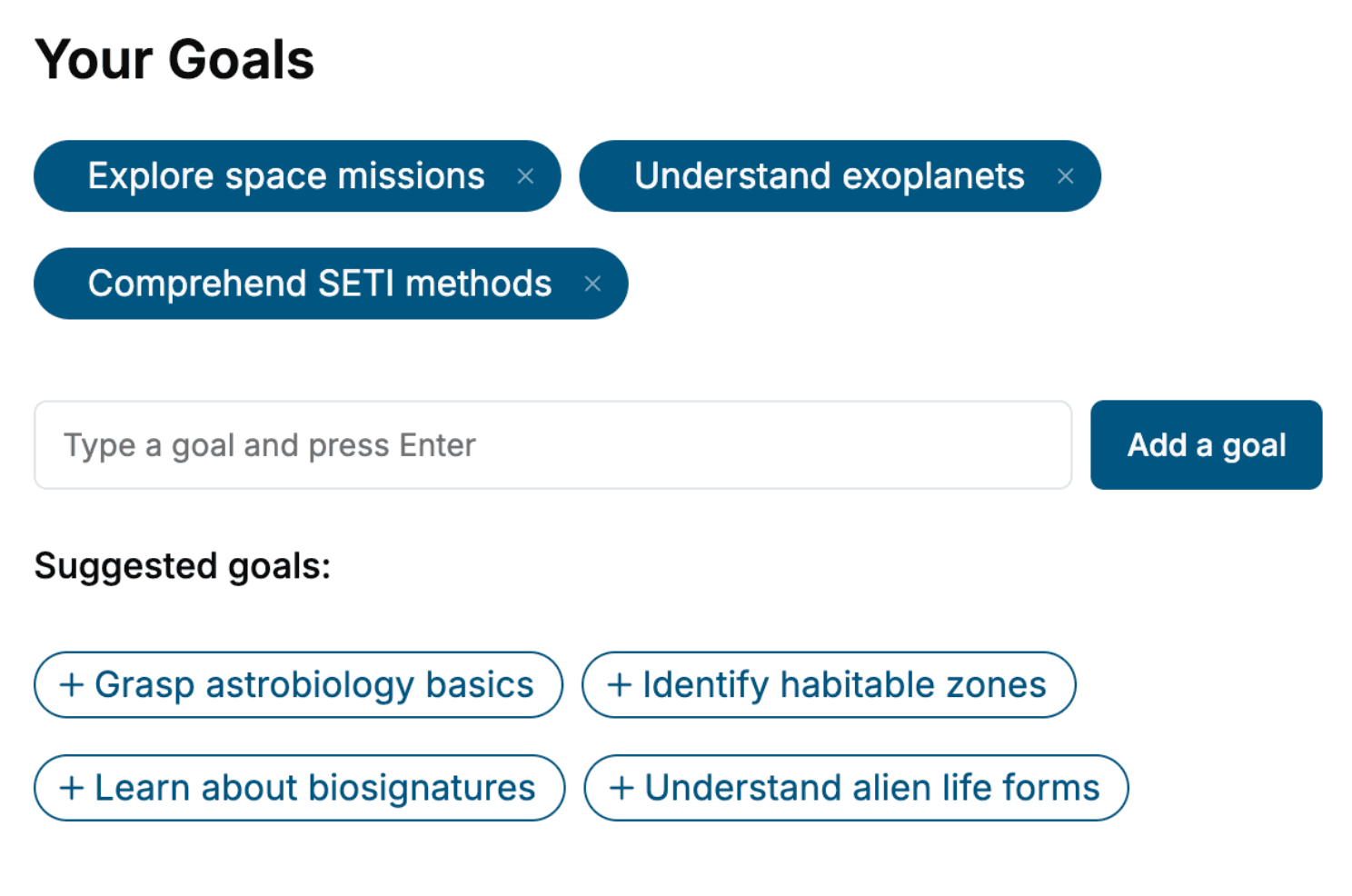
Tell us your goals and background, and get your own version of this book, tailored by AI to you.


Benefits of AI-tailored books
- Read one book, not ten:
- all the Software Architecture knowledge you need, gathered into a single book.
- Save days of learning:
- tell us your goals, choose your topics, and the whole book is built around them.
- Learn effortlessly:
- Software Architecture book written for your specific background and expertise.
- Understand at a glance:
- includes charts, tables, timelines, checklists, decision trees, and more.
- Stay current:
- written the day you order it, not years ago.
- Trust what you read:
- every book is checked for accuracy, with real research when your subject needs it.
Create your unique book in 3 steps
- 1. Select your focus
Select the focus of your Software Architecture book and share your background
- 2. Personalize your book
Specify your goals and choose sub-topics to include
- 3. Get your tailored book
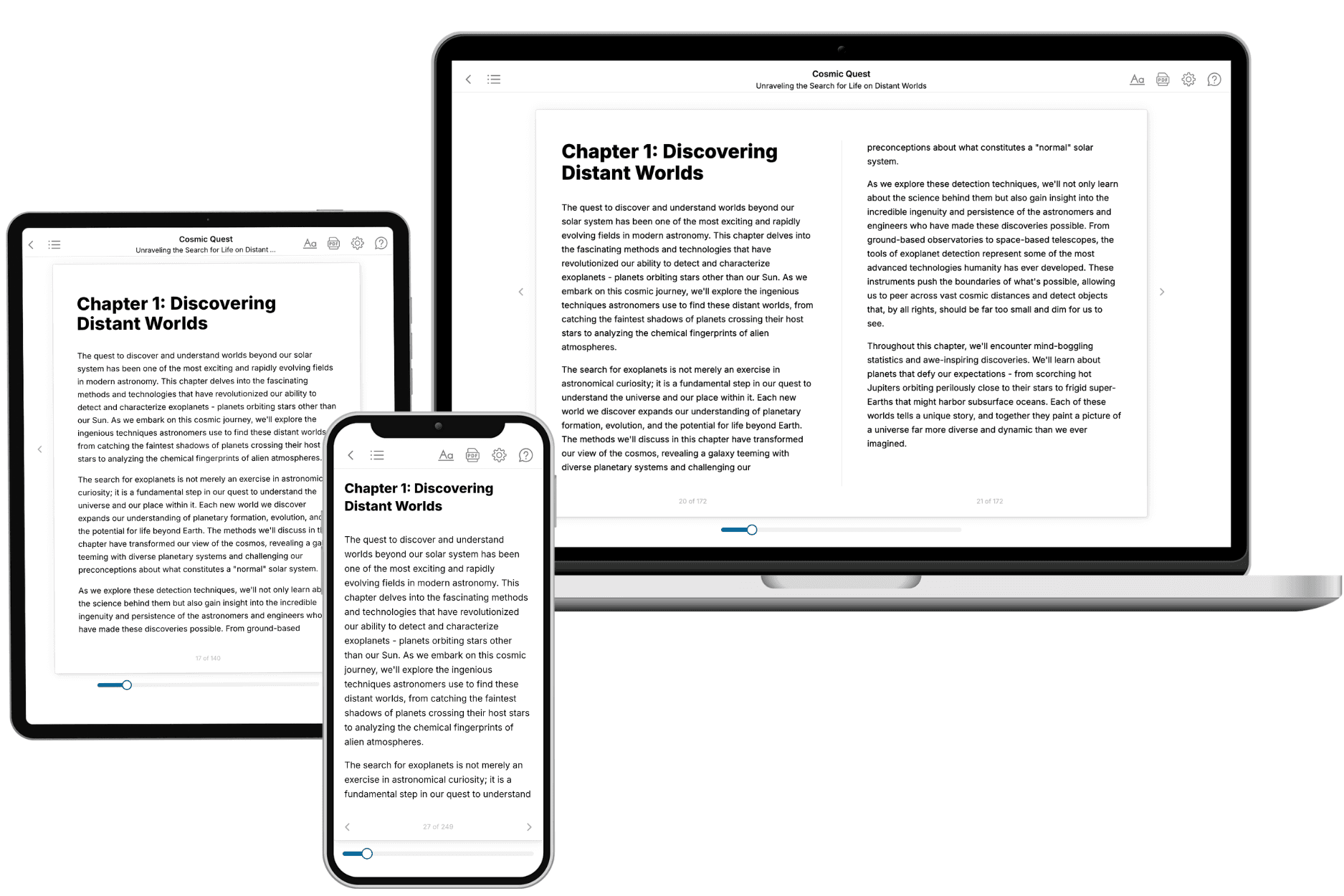
Your book is ready in 10 minutes. Read it online, download as EPUB or PDF, or send to Kindle.

Frequently asked questions
- What is TailoredRead?
TailoredRead creates complete, full-length nonfiction ebooks, written specifically for you. Tell us what you want to learn and why, and TailoredRead writes you a complete ebook on it, with charts, tables, and diagrams throughout. Read it online, on Kindle, or on any e-reader, or download it as a PDF or EPUB. Every book is written fresh the day you order it.
- How is the book tailored to me?
Before anything is written, you answer a few short questions about your goals, your background, and the topics you care about. Your book is then planned around your answers: written at your level, focused on your goals, and covering the topics you chose, instead of the one-size-fits-all book a store sells everyone.
- Will it read like generic AI content?
No. Your book isn't a chat transcript: it's planned chapter by chapter before a single word is written, told in a clear book voice, and explains ideas visually with charts, tables, and diagrams. After writing, every book goes through an editorial pass that polishes chapters so the book reads consistent from start to finish. Judge for yourself: browse thousands of sample books on our Explore Books page.
- How accurate is the content?
Our AI first checks whether your subject needs live research. Niche and fast-moving subjects are researched before writing, and the book plan and chapters are grounded in what it finds. After writing, every book goes through a quality pass that checks its facts and consistency, and researched books list their sources in a Notes section at the back.
- How long is the book?
You choose the length: Comprehensive (250-300 pages), Detailed (150-200 pages), Essential (70-100 pages), or Short (30-50 pages).
- Does the book include visuals?
Yes. Every book includes charts, tables, and diagrams: timelines, checklists, step-by-step guides, decision trees, comparison tables, matrices, and bar charts. A typical book includes dozens of these visual elements.
- Can I read it on Kindle? What formats can I download?
Yes. Every book can be read in our online reader or downloaded as a PDF or EPUB. The EPUB can be opened with Kindle, Apple Books, Kobo, and any e-reader. The Commercial and Author licenses also include an editable Word (DOCX) and Markdown download.
- How much does it cost?
About the price of a regular ebook. The exact price depends on your book's length and complexity, from $2 for the shortest books to $35 for the most comprehensive, and it's shown when you review your book, before you commit to anything. Each book is a one-time purchase, yours to keep, no subscription. Licenses that let you share, teach, or publish your book range from $35.99 to $49.99.
- Can I preview the book before purchasing?
Before you pay, you'll see what your book will cover: the title, a detailed description, the estimated length, and the complete chapter-by-chapter table of contents, so you know what you're getting before you decide. The full text itself is written after you purchase.
- How long does it take to create a book?
About 10 minutes. You can start reading the opening chapters while the rest is still being written.