From Soil to Table
Master Organic Farming Techniques to Grow Your Own Fresh, Healthy Food
Imagine stepping into your garden and harvesting vegetables bursting with flavor and nutrition—food you grew yourself without synthetic chemicals or artificial inputs.
207 pages11 chaptersApr 22, 2026Organic Farming
About this book
This book shows you exactly how to make that vision real. Whether you have a sprawling backyard or a modest patio, you'll discover proven organic farming techniques that work with nature rather than against it. Learn how to build rich, living soil that naturally supports plant growth, implement pest management strategies that protect your crops without toxins, and plan your garden for maximum productivity across seasons. From understanding crop rotation to mastering composting, from selecting the right varieties to preserving your harvest, this guide provides the practical knowledge and step-by-step instructions you need. You'll gain confidence in growing your own food, reduce your family's dependence on industrial agriculture, and enjoy the profound satisfaction of cooking with ingredients you've nurtured from seed to harvest.
Table of contents
- IntroductionWhy Organic Farming Matters Now, What You'll Learn in This Book, The Organic Farming MindsetRead below
- Chapter 1: Understanding Organic Farming FundamentalsCore Principles of Organic Farming, How Organic Differs from Conventional Gardening, Health, Environmental, and Taste Benefits
- Chapter 2: Building Living SoilUnderstanding Soil Structure and Components, Testing Your Soil and Reading Results, Organic Amendments and Soil Improvement, Nurturing Beneficial Microorganisms
- Chapter 3: Composting: Creating Black GoldComposting Methods and Systems, What to Compost and What to Avoid, Managing Your Compost Pile
- Chapter 4: Planning Your Organic GardenChoosing the Right Location, Designing Your Garden Layout, Planning What to Grow and When, Maximizing Yields in Small Spaces
- Chapter 5: Crop Rotation and Succession PlantingWhy Crop Rotation Matters, Creating a Rotation Schedule, Continuous Harvests Through Succession Planting
- Chapter 6: Companion Planting and BiodiversityCompanion Planting Principles, Proven Plant Combinations, Building a Diverse Ecosystem
- Chapter 7: Natural Pest and Disease ManagementIdentifying Common Pests and Diseases, Prevention as Your First Defense, Organic Pest Control Methods, Attracting and Supporting Beneficial Insects
- Chapter 8: Water Management and IrrigationUnderstanding Plant Water Requirements, Irrigation Methods and Systems, Conserving Water in Your Garden
- Chapter 9: Seasonal Growing and Harvest TimingCreating Your Seasonal Growing Calendar, Understanding Frost Dates and Growing Seasons, Harvesting at Peak Ripeness
- Chapter 10: Preserving Your HarvestCanning, Freezing, and Drying Techniques, Food Safety in Home Preservation, Proper Storage for Maximum Freshness
- Chapter 11: From Garden to KitchenCooking with Your Homegrown Vegetables, Seasonal Eating and Recipe Planning, Maximizing Nutrition in Your Meals
- ConclusionYour Organic Farming Journey Ahead
Introduction
There is something quietly powerful about pulling a carrot from the ground, brushing off the soil, and knowing exactly what went into growing it. No synthetic chemicals, no mystery ingredients, no weeks spent in a refrigerated truck. Just a seed, some healthy soil, water, sunlight, and your own effort. That experience, simple as it sounds, is what this book is about. It is about reclaiming a connection to food that most people have lost, and doing it in a way that is practical, sustainable, and genuinely rewarding.
Organic farming has a reputation for being complicated, expensive, or reserved for people with acres of land and years of experience. That reputation is largely undeserved. The core principles behind organic growing are not complicated. They are rooted in observation, patience, and working with natural systems rather than overriding them. Whether you have a backyard, a few raised beds, or even a sunny patio with containers, the techniques in this book apply to your situation. The scale changes, but the fundamentals stay the same.
This book was written for people who already have some gardening experience and want to take the next step. You know how to plant seeds and water a bed. Now you want to understand why certain approaches work, how to build a garden that sustains itself season after season, and how to grow food that is genuinely nutritious and flavorful. That is exactly what the chapters ahead will walk you through, from building living soil to preserving your harvest and cooking with what you grow.
The journey from soil to table is not a straight line. There will be seasons where pests get the better of you, where a crop fails, or where the compost pile smells wrong for a week. Those moments are not failures. They are part of learning to read your garden, and that skill, more than any single technique, is what separates a confident organic grower from someone who gives up after one bad season. This book will help you build that skill, one chapter at a time.
Why Organic Farming Matters Now
The food system most people rely on today was built for efficiency and scale, not for nutrition or environmental health. Industrial agriculture produces enormous quantities of food, but it does so by relying heavily on synthetic fertilizers, pesticides, and herbicides that degrade soil over time, contaminate waterways, and reduce the biodiversity that healthy ecosystems depend on. The results show up in the data. A landmark study published in the Journal of the American College of Nutrition found measurable declines in the nutrient content of 43 common vegetables and fruits between 1950 and 1999, with some crops showing drops of 20 to 38 percent in key minerals like calcium, iron, and vitamin C.[1] Researchers attribute much of this decline to soil depletion caused by intensive farming practices.
Beyond nutrition, the environmental stakes are significant. Conventional agriculture accounts for roughly 10 percent of greenhouse gas emissions in the United States, and synthetic nitrogen fertilizers are a major contributor to nitrous oxide emissions, a greenhouse gas roughly 300 times more potent than carbon dioxide over a 100-year period.[2] Pesticide runoff contaminates rivers and groundwater, and the widespread use of herbicides has contributed to the collapse of pollinator populations that food crops depend on. These are not abstract problems. They affect the quality and availability of food for everyone.
Organic farming offers a different model. By building soil health through composting and organic matter, avoiding synthetic inputs, and encouraging biodiversity, organic growers create systems that improve over time rather than degrade. Research from the Rodale Institute's Farming Systems Trial, one of the longest-running comparisons of organic and conventional agriculture, found that after an initial transition period, organic systems matched conventional yields while building soil carbon, reducing energy use by 45 percent, and eliminating synthetic chemical inputs entirely.[3] The evidence is clear that organic methods are not just idealistic. They are effective.
For home growers, the motivation is often more personal than political. Growing your own food means you control what goes on it and into it. You can harvest at peak ripeness, which is when flavor and nutrition are at their highest, rather than picking early for transport. A tomato grown in your backyard and eaten the same day is a fundamentally different food from one picked green in Mexico and ripened with ethylene gas in a warehouse. That difference is real, and once you taste it, it is hard to go back.
There is also a mental health dimension worth acknowledging. Studies consistently show that time spent gardening reduces cortisol levels, improves mood, and provides a sense of purpose and accomplishment.[4] Growing food connects you to natural cycles in a way that most modern activities do not. You notice the seasons, the weather, the behavior of insects, and the slow transformation of a seed into something you can eat. That kind of attention is increasingly rare, and it turns out to be genuinely good for you.
The timing for making this shift has never been better. Organic seeds, amendments, and tools are widely available. Online communities of organic growers share knowledge freely. And the growing interest in food sovereignty, local food systems, and sustainable living means you are joining a movement with real momentum. Starting your organic garden now is not just a personal choice. It is a small but meaningful contribution to a larger shift in how food is grown and valued.
Organic farming also makes economic sense at the household level. The average American family spends over $5,000 per year on groceries.[5] Even a modest garden producing tomatoes, greens, herbs, and beans can offset hundreds of dollars in annual food costs, especially when you factor in preservation techniques like canning and freezing that extend your harvest through the winter months. The upfront investment in soil building and infrastructure pays dividends for years.
What You'll Learn in This Book
This book is organized to take you through the full cycle of organic food production, from understanding the ground beneath your feet to cooking the food you harvest. Each chapter builds on the previous one, so reading in order will give you the most complete picture. That said, if you already have a solid foundation in soil science or composting, you can jump to the chapters most relevant to where you are right now.
Here is a quick map of what each section covers:
- Chapters 1 through 3 cover the foundations: what organic farming actually means, how soil works, and how to build fertility through composting. These chapters are the most important in the book. Everything else depends on healthy soil.
- Chapters 4 through 6 focus on planning and design. You will learn how to lay out your garden, choose what to grow, rotate crops to prevent disease, and use companion planting to reduce pest pressure naturally.
- Chapters 7 and 8 address two of the most common challenges organic growers face: managing pests and diseases without synthetic chemicals, and using water efficiently. Both chapters are heavy on practical, actionable strategies.
- Chapters 9 through 11 take you through the harvest and beyond. You will learn how to time your harvests for peak quality, preserve what you grow, and cook with fresh, seasonal ingredients in ways that maximize both flavor and nutrition.
Throughout the book, you will find specific techniques, frameworks, and examples drawn from real growing situations. The goal is not to give you a rigid set of rules to follow. It is to give you enough understanding that you can make good decisions in your own garden, with your own soil, climate, and growing conditions. Every garden is different, and the best organic growers are the ones who learn to observe and adapt rather than follow instructions blindly.
You will also find that many of the techniques in this book reinforce each other. Composting improves soil health, which supports stronger plants, which are more resistant to pests, which reduces the need for intervention. Companion planting attracts beneficial insects, which control pest populations, which reduces crop damage, which improves yields. These feedback loops are what make organic systems so resilient once they are established. The early chapters lay the groundwork for those loops to develop.
Practical tools appear throughout the book to help you apply what you learn. These include:
- Step-by-step processes for building compost, testing soil, and setting up irrigation
- Planting calendars and rotation schedules you can adapt to your climate
- Companion planting charts showing which plants help each other and which to keep apart
- Pest identification guides with organic treatment options for each common problem
- Preservation guides for canning, freezing, and drying your harvest
One thing this book will not do is pretend that organic farming is effortless. It takes work, especially in the first year or two while you are building soil health and learning your garden's particular rhythms. But the work is satisfying in a way that few other activities are, and the results, both in terms of food quality and the health of your growing space, compound over time. By the third or fourth season, many organic growers find that their gardens require significantly less intervention because the system has become self-regulating.
By the time you finish this book, you should be able to assess your soil and know what it needs, build and manage a compost system, plan a full season of crops with rotation and succession in mind, handle common pests and diseases without synthetic chemicals, and preserve your harvest to eat well through the winter. Those are not small skills. They represent a genuine shift in how you relate to food and to the land you grow it on.
The Organic Farming Mindset
Before getting into techniques and schedules, it is worth spending a moment on mindset. The way you think about your garden will shape every decision you make in it, and the organic approach requires a fundamentally different mental model than conventional gardening. Conventional growing tends to treat problems as things to be eliminated quickly, usually with a product. Organic growing treats problems as signals, information about what the system needs to come back into balance.
This shift in perspective is not just philosophical. It has practical consequences. When you see aphids on your tomatoes, the conventional response is to reach for a spray. The organic response is to ask why the aphids are there in the first place. Are the plants stressed from inconsistent watering? Is the soil lacking in certain nutrients that would otherwise support stronger plant defenses? Are there enough beneficial insects in the garden to keep aphid populations in check? Answering those questions leads to solutions that address root causes rather than symptoms, and those solutions tend to last.
Observation is the core skill of organic farming. The growers who get the best results are not necessarily the ones who know the most techniques. They are the ones who spend time in their gardens, notice small changes early, and respond thoughtfully. A yellowing leaf, a change in the texture of the soil, an unusual insect on a stem, these are all pieces of information. Learning to read them takes time, but it is the most valuable thing you can develop as a grower.
The best fertilizer is the gardener's shadow. Frequent, attentive presence in your garden will do more for your yields than any single product or technique.
Patience is the other essential quality. Organic systems take time to establish. Building soil biology, attracting a stable population of beneficial insects, and developing the kind of rich, crumbly soil that grows exceptional vegetables does not happen in one season. Many new organic growers get discouraged in year one because their results do not match what they expected. What they are actually doing in that first year is laying the foundation for everything that follows. The second and third seasons are usually dramatically better, and by year four or five, a well-managed organic garden can be extraordinarily productive.
It also helps to let go of the idea of perfection. Organic gardens are not sterile environments. They are ecosystems, and ecosystems are messy. There will be some pest damage on some crops in some years. There will be a bed that does not perform as well as you hoped. There will be a compost pile that takes longer than expected to break down. None of these things mean you are doing it wrong. They are normal parts of working with living systems, and each one teaches you something useful.
Starting small is genuinely good advice, not just a cliché. If you are new to organic methods, beginning with two or three raised beds rather than converting your entire yard at once gives you the space to learn without being overwhelmed. A 4-by-8-foot raised bed filled with good compost-amended soil can produce a remarkable amount of food. Tomatoes, peppers, lettuce, herbs, beans, and more can all come from a space that size if it is managed well. Master that scale first, then expand when you feel confident.
Community matters more than most people expect. Finding other organic growers in your area, whether through a local garden club, a community garden, or an online forum, gives you access to local knowledge that no book can fully provide. Someone who has been growing organically in your specific climate and soil type for ten years knows things about local pest cycles, frost timing, and variety performance that are genuinely invaluable. Seek those people out. Most experienced growers are generous with their knowledge and happy to help someone who is just getting started.
Finally, connect the work in your garden to the food on your table as directly and often as possible. Cook with what you grow. Taste the difference between a store-bought tomato and one you harvested an hour ago. Share your harvest with neighbors and friends. That connection, between the effort you put into the soil and the food you eat, is what makes organic farming more than just a hobby. It becomes a practice, a way of living that changes how you think about food, health, and your relationship to the natural world. That is the real reward, and it starts the moment you put your hands in the soil.
Notes
Introduction
- 1. D. R. Davis and others, "Changes in USDA Food Composition Data for 43 Garden Crops, 1950 to 1999," Journal of the American College of Nutrition, 2004
- 2. U.S. Environmental Protection Agency, Sources of Greenhouse Gas Emissions, EPA.gov, 2023
- 3. Rodale Institute, The Farming Systems Trial: Celebrating 30 Years, Rodale Institute, 2011
- 4. Van Den Berg and others, "Gardening Promotes Neuroendocrine and Affective Restoration from Stress," Journal of Health Psychology, 2011
- 5. U.S. Bureau of Labor Statistics, Consumer Expenditure Survey, BLS.gov, 2022
This is the end of the free sample. The full book has 11 chapters.
Want this book written for you?
Tell us your goals and background, and get your own version of this book, tailored by AI to you.


Benefits of AI-tailored books
- Read one book, not ten:
- all the Organic Farming knowledge you need, gathered into a single book.
- Save days of learning:
- tell us your goals, choose your topics, and the whole book is built around them.
- Learn effortlessly:
- Organic Farming book written for your specific background and expertise.
- Understand at a glance:
- includes charts, tables, timelines, checklists, decision trees, and more.
- Stay current:
- written the day you order it, not years ago.
- Trust what you read:
- every book is checked for accuracy, with real research when your subject needs it.
Create your unique book in 3 steps
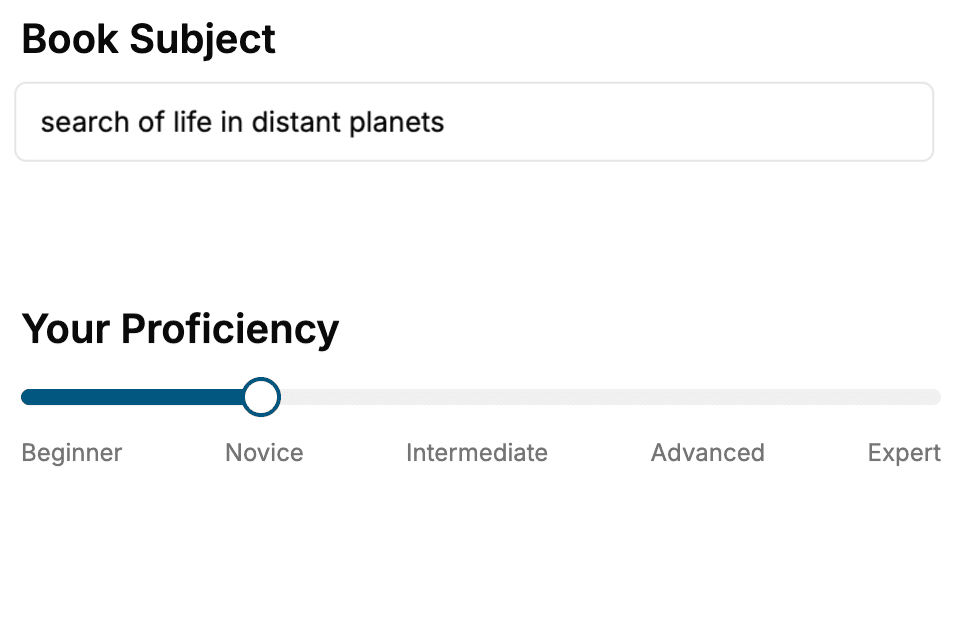
- 1. Select your focus
Select the focus of your Organic Farming book and share your background
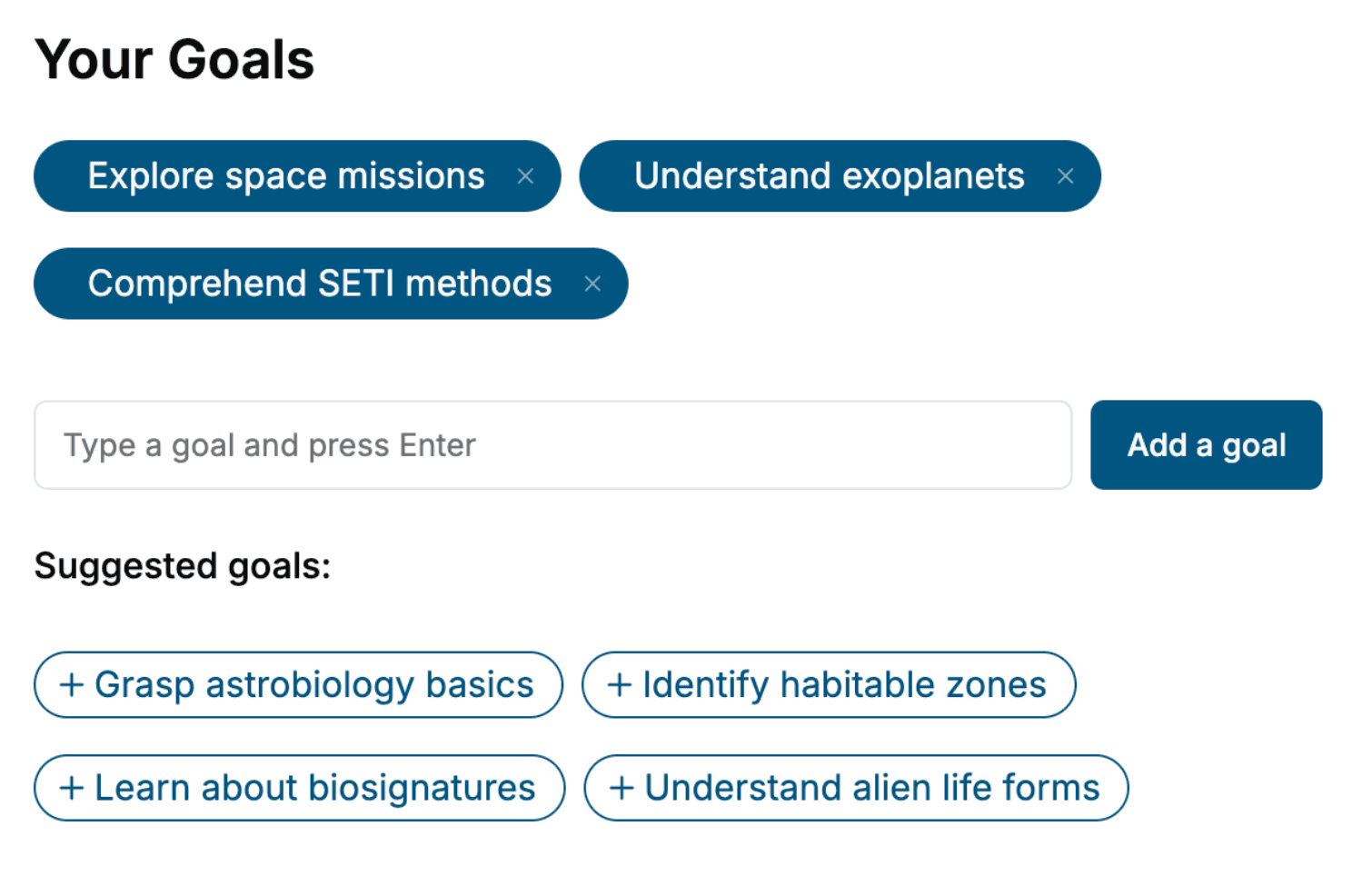
- 2. Personalize your book
Specify your goals and choose sub-topics to include
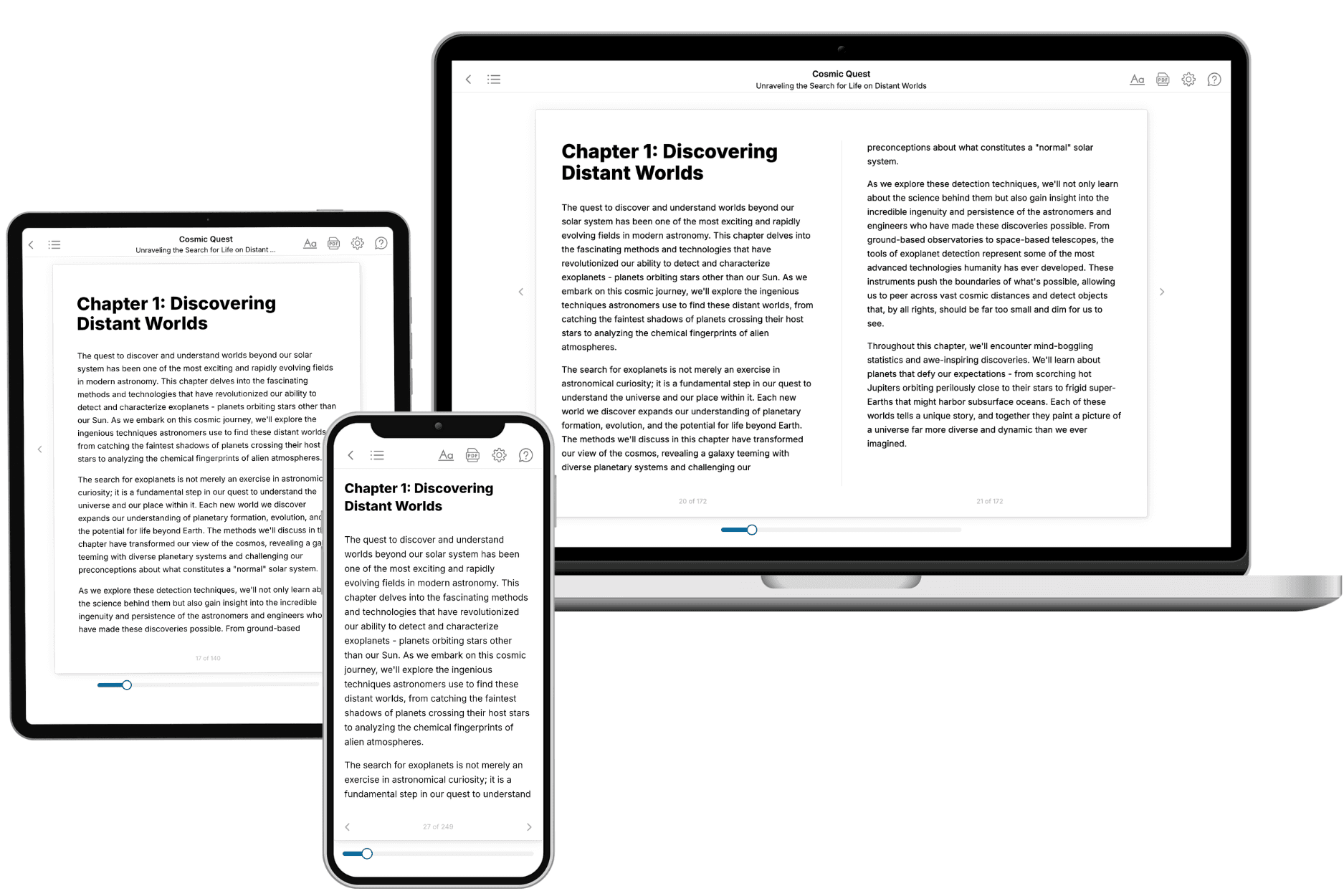
- 3. Get your tailored book
Your book is ready in 10 minutes. Read it online, download as EPUB or PDF, or send to Kindle.
Frequently asked questions
- What is TailoredRead?
TailoredRead creates complete, full-length nonfiction ebooks, written specifically for you. Tell us what you want to learn and why, and TailoredRead writes you a complete ebook on it, with charts, tables, and diagrams throughout. Read it online, on Kindle, or on any e-reader, or download it as a PDF or EPUB. Every book is written fresh the day you order it.
- How is the book tailored to me?
Before anything is written, you answer a few short questions about your goals, your background, and the topics you care about. Your book is then planned around your answers: written at your level, focused on your goals, and covering the topics you chose, instead of the one-size-fits-all book a store sells everyone.
- Will it read like generic AI content?
No. Your book isn't a chat transcript: it's planned chapter by chapter before a single word is written, told in a clear book voice, and explains ideas visually with charts, tables, and diagrams. After writing, every book goes through an editorial pass that polishes chapters so the book reads consistent from start to finish. Judge for yourself: browse thousands of sample books on our Explore Books page.
- How accurate is the content?
Our AI first checks whether your subject needs live research. Niche and fast-moving subjects are researched before writing, and the book plan and chapters are grounded in what it finds. After writing, every book goes through a quality pass that checks its facts and consistency, and researched books list their sources in a Notes section at the back.
- How long is the book?
You choose the length: Comprehensive (250-300 pages), Detailed (150-200 pages), Essential (70-100 pages), or Short (30-50 pages).
- Does the book include visuals?
Yes. Every book includes charts, tables, and diagrams: timelines, checklists, step-by-step guides, decision trees, comparison tables, matrices, and bar charts. A typical book includes dozens of these visual elements.
- Can I read it on Kindle? What formats can I download?
Yes. Every book can be read in our online reader or downloaded as a PDF or EPUB. The EPUB can be opened with Kindle, Apple Books, Kobo, and any e-reader. The Commercial and Author licenses also include an editable Word (DOCX) and Markdown download.
- How much does it cost?
About the price of a regular ebook. The exact price depends on your book's length and complexity, from $2 for the shortest books to $35 for the most comprehensive, and it's shown when you review your book, before you commit to anything. Each book is a one-time purchase, yours to keep, no subscription. Licenses that let you share, teach, or publish your book range from $35.99 to $49.99.
- Can I preview the book before purchasing?
Before you pay, you'll see what your book will cover: the title, a detailed description, the estimated length, and the complete chapter-by-chapter table of contents, so you know what you're getting before you decide. The full text itself is written after you purchase.
- How long does it take to create a book?
About 10 minutes. You can start reading the opening chapters while the rest is still being written.