The Sound of Language
A Practical Guide to Mastering Phonetics
Master the intricacies of speech sounds and elevate your understanding of language with "The Sound of Language: A Practical Guide to Mastering Phonetics." This comprehensive guide takes you on an exploration of the fascinating world of phonetics, providing you with the tools to analyze and describe the sounds of human speech with precision and confidence.
269 pages13 chaptersEnglishJan 1, 2025Phonetics
About this book
Delve into the core principles of articulatory, acoustic, and auditory phonetics, and discover how these elements come together to form the building blocks of spoken language. Through clear explanations, practical exercises, and real-world examples, you'll develop a keen ear for phonetic nuances and gain insights into the sound systems of various languages. Whether you're a language student, educator, or simply curious about the mechanics of speech, this book offers a solid foundation in phonetic theory and practice. By the end, you'll have the skills to transcribe speech using the International Phonetic Alphabet, analyze pronunciation patterns, and apply your knowledge to language learning, teaching, or research.
Table of contents
- IntroductionWhat is Phonetics?, The Importance of Phonetics in Language Study, Overview of the Book, How to Use This BookRead below
- Chapter 1: Foundations of PhoneticsThe Three Branches of Phonetics, The Speech Chain, Phonemes and Allophones, Minimal Pairs and Distinctive Features
- Chapter 2: The International Phonetic AlphabetHistory and Purpose of the IPA, IPA Symbols and Their Meanings, Diacritics and Suprasegmentals in IPA, Transcription Practice
- Chapter 3: Articulatory PhoneticsSpeech Organs and Their Functions, Consonant Production, Vowel Production, Coarticulation and Connected Speech
- Chapter 4: Consonants in DetailPlosives and Affricates, Fricatives and Sibilants, Nasals and Approximants, Laterals and Trills
- Chapter 5: Vowels in DetailThe Vowel Quadrilateral, Monophthongs, Diphthongs and Triphthongs, Vowel Reduction and Schwa
- Chapter 6: Acoustic PhoneticsSound Waves and Their Properties, Reading Spectrograms, Formants and Resonance, Acoustic Analysis Tools
- Chapter 7: Auditory PhoneticsAnatomy of the Ear, The Process of Hearing, Pitch and Frequency Perception, Loudness and Intensity Perception
- Chapter 8: Suprasegmental FeaturesStress and Accent, Intonation Patterns, Rhythm and Timing, Tone and Pitch Accent
- Chapter 9: Phonotactics and Syllable StructureSyllable Structure Across Languages, Sonority and Phonotactic Constraints, Consonant Clusters, Resyllabification and Liaison
- Chapter 10: Phonetic VariationDialectal and Regional Variation, Sociolinguistic Factors in Pronunciation, Historical Sound Changes, Individual Variation and Idiolects
- Chapter 11: Advanced Transcription TechniquesNarrow vs. Broad Transcription, Transcribing Connected Speech, Transcribing Different Accents, Prosodic Transcription
- Chapter 12: Cross-Linguistic PhoneticsSound Inventories Across Languages, Exotic Sounds and Articulations, Tonal Languages, Click Languages
- Chapter 13: Applications of PhoneticsPhonetics in Language Teaching, Speech Recognition and Synthesis, Forensic Phonetics, Clinical Applications of Phonetics
- ConclusionThe Future of Phonetics, Continuing Your Study of Phonetics
- Glossary
- Further Reading
Introduction
Welcome to the fascinating world of phonetics, the scientific study of speech sounds. As you embark on this journey through "The Sound of Language: A Practical Guide to Mastering Phonetics," you are about to discover the intricate mechanisms that underlie human speech and the remarkable diversity of sounds used in languages across the globe. This introduction will lay the foundation for your exploration, providing you with a clear understanding of what phonetics is, why it matters, and how this book will guide you through its many facets.
Phonetics is a discipline that bridges the gap between linguistics, physics, and physiology. It offers a unique perspective on language, focusing on the physical properties of speech sounds, how they are produced by the human vocal apparatus, and how they are perceived by the human ear. By studying phonetics, you will gain insights into the building blocks of spoken language, which will enhance your understanding of communication, language learning, and even the evolution of languages themselves.
Throughout this book, you will encounter a wealth of information, from the basics of sound production to the nuances of acoustic analysis. You will learn to use the International Phonetic Alphabet (IPA), a powerful tool for transcribing speech sounds with precision. You will also explore the various branches of phonetics, including articulatory, acoustic, and auditory phonetics, each offering a unique perspective on the nature of speech sounds.
Whether you are a student of linguistics, a language teacher, a speech therapist, or simply someone fascinated by the mechanics of human speech, this book is designed to provide you with a comprehensive and accessible introduction to the field of phonetics. By the time you reach the final pages, you will have developed a keen ear for phonetic distinctions, a deep understanding of speech production, and the ability to analyze and describe speech sounds with confidence.
Let's begin our exploration of the sound of language, starting with a closer look at what phonetics is and why it is such a crucial field of study in the realm of language and communication.
What is Phonetics?
Phonetics is the scientific study of the sounds of human speech. It is a branch of linguistics that focuses on the physical properties of speech sounds, how they are produced, transmitted, and perceived. Unlike other areas of linguistics that deal with the abstract structures of language, such as syntax or semantics, phonetics is concerned with the concrete, measurable aspects of speech. This field provides us with the tools to describe, analyze, and transcribe the sounds of any language with precision and objectivity.
At its core, phonetics is about understanding the mechanics of human speech. It explores how we use our vocal organs to create different sounds, how these sounds travel through the air as acoustic waves, and how our ears and brains process these sounds to extract meaning. This comprehensive approach to speech sounds is what makes phonetics such a fascinating and multifaceted discipline.
Phonetics can be divided into three main branches, each focusing on a different aspect of speech sounds:
- Articulatory Phonetics: This branch studies how speech sounds are produced by the human vocal apparatus. It examines the movements and positions of the lips, tongue, vocal cords, and other speech organs involved in creating different sounds. Articulatory phonetics provides us with a detailed understanding of the physiological processes that occur when we speak.
- Acoustic Phonetics: This area focuses on the physical properties of speech sounds as they travel through the air. It involves the study of sound waves, including their frequency, amplitude, and other characteristics. Acoustic phonetics often utilizes specialized equipment and software to analyze and visualize speech sounds.
- Auditory Phonetics: This branch examines how speech sounds are perceived and processed by the human ear and brain. It explores how we distinguish between different sounds, how we perceive pitch and loudness, and how our brains interpret these acoustic signals as meaningful language.
These three branches of phonetics are interconnected and complementary. Together, they provide a comprehensive understanding of speech sounds from production to perception. As you progress through this book, you will delve into each of these areas, gaining a well-rounded understanding of phonetics as a whole.
One of the key tools in phonetics is the International Phonetic Alphabet (IPA). Developed by the International Phonetic Association, the IPA is a standardized system of symbols used to represent the sounds of all human languages. Each symbol in the IPA corresponds to a specific sound, allowing linguists and language learners to transcribe speech with a high degree of accuracy. The IPA is an invaluable resource in phonetics, enabling precise communication about speech sounds across languages and dialects.
Phonetics is not just an academic pursuit; it has numerous practical applications. For instance, it plays a crucial role in language teaching and learning. Understanding the phonetic structure of a language can help learners improve their pronunciation and comprehension. In speech therapy, phonetic knowledge is essential for diagnosing and treating speech disorders. Phonetics also contributes to the development of speech recognition and synthesis technologies, which are becoming increasingly prevalent in our daily lives.
Moreover, phonetics is fundamental to our understanding of language change and variation. By studying the phonetic characteristics of different dialects and tracking changes in pronunciation over time, linguists can gain insights into the processes of language evolution and the factors that influence linguistic diversity.
As you embark on your journey through this book, you will discover that phonetics is a field that combines scientific rigor with the artistry of human communication. It offers a unique lens through which to view language, revealing the intricate mechanisms that allow us to produce and perceive the vast array of sounds used in human speech. Whether you're analyzing the subtle differences between vowel sounds, exploring the acoustic properties of consonants, or learning to transcribe speech using the IPA, phonetics will provide you with a deeper appreciation for the complexity and beauty of spoken language.
In the following chapters, we will explore each aspect of phonetics in detail, equipping you with the knowledge and skills to analyze and describe speech sounds with confidence. As we progress, you will find that phonetics is not just about understanding individual sounds, but about comprehending the entire system of speech production and perception that underlies human communication. This holistic understanding will enhance your ability to work with languages, whether as a linguist, language teacher, speech therapist, or simply as an enthusiast of human communication.
The Importance of Phonetics in Language Study
Phonetics plays a crucial role in the broader field of language study, serving as a fundamental pillar that supports and enhances our understanding of human communication. Its importance extends far beyond the realm of linguistics, influencing areas such as language education, speech therapy, technology development, and even cultural studies. In this section, we will explore the various reasons why phonetics is an essential component of language study and how it contributes to our overall comprehension of human speech and communication.
First and foremost, phonetics provides the foundation for understanding the sound systems of languages. Every language has its unique inventory of sounds, and phonetics gives us the tools to describe and analyze these sounds systematically. This is particularly important in comparative linguistics, where researchers study the relationships between different languages. By understanding the phonetic characteristics of various languages, linguists can trace language families, identify historical connections, and even reconstruct proto-languages. For instance, the comparative method in historical linguistics heavily relies on phonetic analysis to establish sound correspondences between related languages, allowing us to understand how languages evolve over time[1].
In language teaching and learning, phonetics plays an indispensable role. For language learners, a solid grasp of phonetics can significantly improve pronunciation and listening comprehension. Understanding the articulatory processes involved in producing unfamiliar sounds can help learners overcome pronunciation difficulties and reduce their accent. For example, English learners whose native languages don't have the 'th' sound (/θ/ and /ð/) often struggle with these phonemes. Knowledge of articulatory phonetics can guide them in positioning their tongue correctly to produce these sounds accurately. Similarly, awareness of the phonetic features of a language can enhance listening skills, allowing learners to better distinguish between similar sounds in the target language.
For language teachers, phonetic knowledge is invaluable in diagnosing and correcting pronunciation errors. It enables them to provide precise instructions on how to articulate sounds, explain the differences between similar sounds, and design effective pronunciation exercises. Moreover, understanding the phonetic structure of both the learners' native language and the target language allows teachers to anticipate and address potential areas of difficulty. This knowledge-based approach to pronunciation teaching is far more effective than relying solely on imitation and repetition[2].
In the field of speech and language therapy, phonetics is an essential tool for assessment and treatment. Speech-language pathologists use their knowledge of phonetics to identify and describe speech disorders accurately. They analyze the phonetic characteristics of a client's speech to determine the nature and extent of the problem. For instance, in treating articulation disorders, therapists use phonetic transcription to document a client's speech patterns and track progress over time. Understanding the articulatory and acoustic properties of speech sounds also guides therapists in developing effective intervention strategies.
Phonetics also plays a crucial role in the development of speech technology. Speech recognition systems, text-to-speech synthesizers, and voice assistants all rely on phonetic principles. For example, automatic speech recognition systems use acoustic phonetics to analyze incoming speech signals and match them to phonetic models. Text-to-speech systems, on the other hand, use knowledge of articulatory and acoustic phonetics to generate natural-sounding speech from written text. As these technologies continue to advance, a deep understanding of phonetics becomes increasingly important for developers and researchers in this field.
In sociolinguistics, phonetics provides valuable insights into language variation and change. Phonetic analysis allows researchers to document and study dialectal differences, which often manifest in subtle variations in pronunciation. This contributes to our understanding of how social factors influence language use and how languages evolve over time. For instance, the study of sound changes in progress, such as the Northern Cities Vowel Shift in American English, relies heavily on detailed phonetic analysis[3].
Phonetics also has applications in forensic linguistics. Forensic phoneticians use their expertise to analyze voice recordings for legal purposes, such as speaker identification or authentication of audio evidence. This involves detailed acoustic analysis and comparison of speech samples, requiring a thorough understanding of phonetic principles and techniques.
In the realm of cognitive science and psycholinguistics, phonetics contributes to our understanding of speech perception and production. Research in these fields often involves phonetic analysis to investigate how the brain processes speech sounds, how we distinguish between different phonemes, and how we produce speech. This research has implications for understanding language acquisition, speech disorders, and the cognitive processes underlying language use.
Furthermore, phonetics is essential for the documentation and preservation of endangered languages. As many of the world's languages face the threat of extinction, linguists are working to record and describe these languages before they disappear. Phonetic documentation is a crucial part of this process, ensuring that the sound systems of these languages are accurately preserved for future study and potential revitalization efforts.
Lastly, phonetics enhances our appreciation of the artistry in language. It allows us to understand the subtle nuances in poetry, the rhythmic patterns in prose, and the sound symbolism used in literature. For performers, such as actors and singers, phonetic knowledge can aid in mastering different accents or improving diction.
In conclusion, the importance of phonetics in language study cannot be overstated. It provides the foundation for understanding the sound systems of languages, enhances language teaching and learning, supports speech therapy, drives technological innovation, and contributes to our understanding of language variation and change. As you delve deeper into the study of phonetics, you will discover how this field opens up new perspectives on language and communication, enriching your understanding of the complex and fascinating world of human speech.
Overview of the Book
"The Sound of Language: A Practical Guide to Mastering Phonetics" is designed to provide you with a comprehensive and accessible introduction to the field of phonetics. This book is structured to guide you through the various aspects of phonetics in a logical and progressive manner, building your knowledge and skills as you advance through each chapter. Whether you're a student of linguistics, a language teacher, or simply someone fascinated by the mechanics of speech, this book will equip you with the tools and understanding to analyze and describe speech sounds with confidence.
The book is divided into thirteen main chapters, each focusing on a specific aspect of phonetics. Here's an overview of what you can expect to learn:
- Foundations of Phonetics: This chapter introduces you to the basic concepts and terminology of phonetics. You'll learn about the three main branches of phonetics - articulatory, acoustic, and auditory - and how they interrelate. The chapter also covers fundamental concepts such as phonemes, allophones, and minimal pairs, which are essential for understanding how speech sounds function in language.
- The International Phonetic Alphabet (IPA): Here, you'll be introduced to the IPA, a crucial tool for phonetic transcription. You'll learn the history and purpose of the IPA, how to read and use IPA symbols, and practice transcribing words and phrases from various languages.
- Articulatory Phonetics: This chapter delves into how speech sounds are produced. You'll learn about the anatomy of the vocal tract, the classification of consonants and vowels based on their articulation, and the concept of coarticulation in connected speech.
- Consonants in Detail: Building on the previous chapter, this section provides an in-depth look at consonant sounds. You'll explore the various types of consonants, including plosives, fricatives, nasals, and approximants, learning how each is produced and how they vary across languages.
- Vowels in Detail: This chapter focuses on vowel sounds, introducing you to the vowel quadrilateral, monophthongs, diphthongs, and the concept of vowel reduction. You'll gain a deeper understanding of how vowels are classified and described in phonetic terms.
- Acoustic Phonetics: Here, you'll learn about the physical properties of speech sounds. The chapter covers topics such as sound waves, spectrogram reading, formants, and the use of acoustic analysis tools in phonetic research.
- Auditory Phonetics: This chapter explores how speech sounds are perceived and processed by the human ear and brain. You'll learn about the anatomy of the ear, the process of hearing, and how we perceive different aspects of speech sounds such as pitch and loudness.
- Suprasegmental Features: Moving beyond individual sounds, this chapter introduces you to the prosodic aspects of speech, including stress, intonation, rhythm, and tone. You'll learn how these features contribute to the overall sound pattern of languages.
- Phonotactics and Syllable Structure: This chapter explores how sounds combine to form syllables and words in different languages. You'll learn about syllable structure, sonority, consonant clusters, and how these aspects vary across languages.
- Phonetic Variation: Here, you'll discover how pronunciation can vary based on factors such as dialect, social context, and individual differences. The chapter also touches on historical sound changes and how they shape modern languages.
- Advanced Transcription Techniques: Building on your earlier introduction to the IPA, this chapter covers more advanced transcription skills, including narrow transcription, transcribing connected speech and different accents, and prosodic transcription.
- Cross-Linguistic Phonetics: This chapter broadens your perspective by exploring phonetic diversity across the world's languages. You'll learn about unique sound inventories, exotic articulations, and phonetic features of tonal and click languages.
- Applications of Phonetics: The final chapter demonstrates the practical applications of phonetics in various fields, including language teaching, speech technology, forensic phonetics, and clinical settings.
Throughout the book, you'll find numerous examples, exercises, and practical activities to reinforce your learning. These include transcription practice, acoustic analysis tasks, and comparative exercises involving multiple languages. The book also includes diagrams, spectrograms, and other visual aids to help illustrate key concepts.
Each chapter builds upon the knowledge gained in previous sections, gradually increasing in complexity as you progress through the book. However, the material is presented in a clear, accessible manner, with technical terms explained thoroughly and complex concepts broken down into manageable parts.
In addition to the main chapters, the book includes several supplementary sections:
- Introduction: This section (which you're currently reading) provides an overview of phonetics and its importance, as well as guidance on how to use the book effectively.
- Conclusion: This section summarizes the key points covered in the book and discusses future directions in phonetic research.
- Glossary: A comprehensive list of phonetic terms and their definitions, serving as a quick reference guide.
- Further Reading: Suggestions for additional resources to deepen your understanding of specific topics in phonetics.
By the time you complete this book, you will have gained a solid foundation in phonetics. You'll be able to describe and transcribe speech sounds accurately, analyze acoustic properties of speech, understand the physiological processes involved in speech production, and appreciate the diversity of sounds used in the world's languages. Moreover, you'll be equipped to apply this knowledge in practical settings, whether for language learning, teaching, research, or technology development.
Remember, mastering phonetics is a journey that extends beyond the pages of this book. The field is vast and continually evolving, with new research and technologies constantly emerging. This book aims to provide you with a strong starting point and the tools to continue exploring the fascinating world of speech sounds long after you've turned the last page.
How to Use This Book
"The Sound of Language: A Practical Guide to Mastering Phonetics" is designed to be a comprehensive resource for anyone looking to develop a solid understanding of phonetics. To get the most out of this book, it's important to approach it in a way that maximizes your learning and retention. This section will provide you with strategies and tips on how to use this book effectively, whether you're a student, a language professional, or an enthusiast of speech and language.
First and foremost, it's recommended that you read the chapters in order. The book is structured to build your knowledge progressively, with each chapter building upon concepts introduced in previous sections. However, if you already have some background in phonetics, you may choose to focus on specific chapters that align with your interests or areas where you need to strengthen your knowledge.
As you work through each chapter, keep the following strategies in mind to enhance your learning experience:
- Active Reading: Don't just passively read the text. Engage with the material actively. Take notes, highlight key points, and jot down questions as they arise. This active engagement will help you process and retain the information more effectively.
- Practice Exercises: Each chapter includes various exercises and activities. Don't skip these! They are designed to reinforce your understanding and provide practical application of the concepts you've learned. Try to complete these exercises before moving on to the next section.
- Use the IPA Chart: Keep a copy of the International Phonetic Alphabet chart handy as you read. Refer to it frequently, especially when encountering new symbols or sounds. Practice producing the sounds yourself as you learn about them.
- Listen to Examples: Whenever possible, listen to audio examples of the sounds being discussed. This book comes with accompanying audio resources that you can access online. Make use of these to train your ear and improve your ability to recognize and distinguish different speech sounds.
- Apply to Real Languages: As you learn about different phonetic concepts, try to think of examples from languages you know or are learning. This will help make the abstract concepts more concrete and relevant to your personal experience.
- Utilize Technology: Make use of phonetic analysis software when working through the acoustic phonetics sections. Many free tools are available online that allow you to record and analyze speech. Experimenting with these tools can greatly enhance your understanding of acoustic properties of speech.
- Group Study: If possible, form a study group with others who are also learning phonetics. Discussing concepts, practicing transcription together, and explaining ideas to each other can significantly boost your understanding and retention.
- Regular Review: Don't wait until you've finished the entire book to review earlier chapters. Regularly revisit previous sections to reinforce your understanding and see how new concepts connect to what you've already learned.
- Practical Application: Look for opportunities to apply what you're learning in real-world contexts. If you're learning a new language, use your phonetic knowledge to improve your pronunciation. If you're a teacher, incorporate phonetic concepts into your lessons.
- Explore Further: Use the "Further Reading" suggestions at the end of each chapter to delve deeper into topics that particularly interest you. Phonetics is a vast field, and this book is just the beginning of what you can learn.
Remember that learning phonetics involves developing both theoretical knowledge and practical skills. While reading and understanding the concepts is important, it's equally crucial to practice the skills of phonetic transcription, sound production, and acoustic analysis. Don't be discouraged if some concepts or skills take time to master – phonetics can be challenging, but with consistent practice, you'll see improvement.
Here are some additional tips for specific components of the book:
- Diagrams and Figures: Pay close attention to the visual aids provided throughout the book. These are designed to illustrate complex concepts and can often convey information more efficiently than text alone. Study these carefully and refer back to them as needed.
- Transcription Exercises: When working on transcription exercises, start by attempting them on your own. Then, check your work against the provided answers. If there are discrepancies, try to understand why. Remember, in some cases, there might be more than one acceptable transcription, depending on the level of detail (broad vs. narrow transcription).
- Acoustic Analysis: The chapters on acoustic phonetics may be particularly challenging if you're new to this area. Take your time with these sections, and don't hesitate to revisit them multiple times. Practice reading spectrograms regularly to develop this skill.
- Cross-Linguistic Examples: Even if you're primarily interested in one particular language, pay attention to the examples from other languages. Understanding the diversity of speech sounds across languages will deepen your overall grasp of phonetics.
- Glossary: Make frequent use of the glossary, especially when you encounter unfamiliar terms. Building a strong phonetic vocabulary is crucial for discussing and analyzing speech sounds accurately.
Finally, remember that learning phonetics is not just an academic exercise – it's about developing a keen ear and a nuanced understanding of the sounds of human speech. As you progress through the book, try to become more aware of the speech sounds you encounter in your daily life. Listen carefully to different accents, try to identify the phonetic features of unfamiliar languages you hear, and pay attention to your own speech production.
By approaching this book with dedication, curiosity, and consistent practice, you'll develop a solid foundation in phonetics that will serve you well, whether your interest is academic, professional, or personal. Enjoy your journey into the fascinating world of speech sounds!
This is the end of the free sample. The full book has 13 chapters.
Want this book written for you?
Tell us your goals and background, and get your own version of this book, tailored by AI to you.


Benefits of AI-tailored books
- Read one book, not ten:
- all the Phonetics knowledge you need, gathered into a single book.
- Save days of learning:
- tell us your goals, choose your topics, and the whole book is built around them.
- Learn effortlessly:
- Phonetics book written for your specific background and expertise.
- Understand at a glance:
- includes charts, tables, timelines, checklists, decision trees, and more.
- Stay current:
- written the day you order it, not years ago.
- Trust what you read:
- every book is checked for accuracy, with real research when your subject needs it.
Create your unique book in 3 steps
- 1. Select your focus
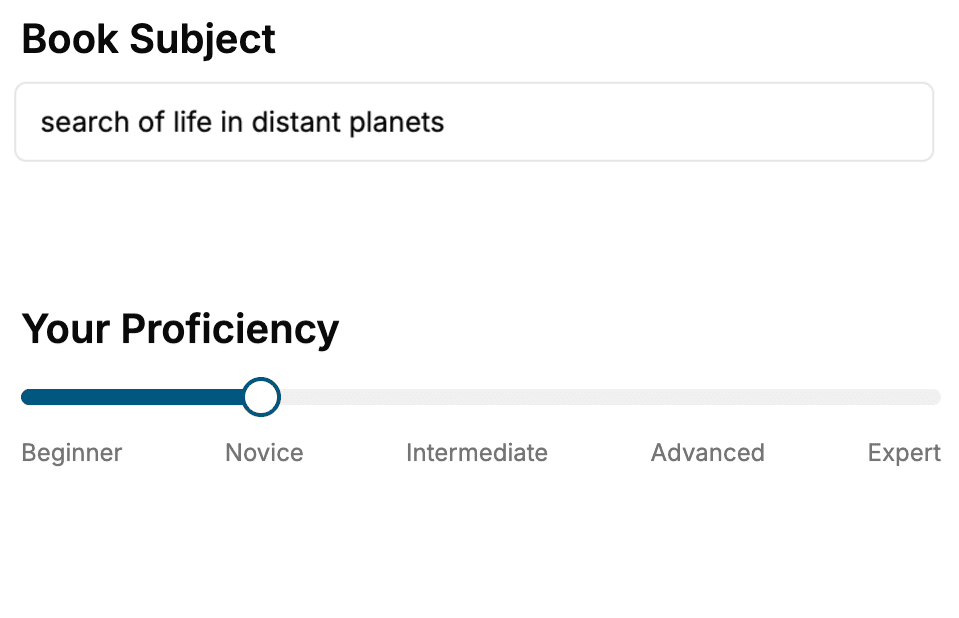
Select the focus of your Phonetics book and share your background
- 2. Personalize your book
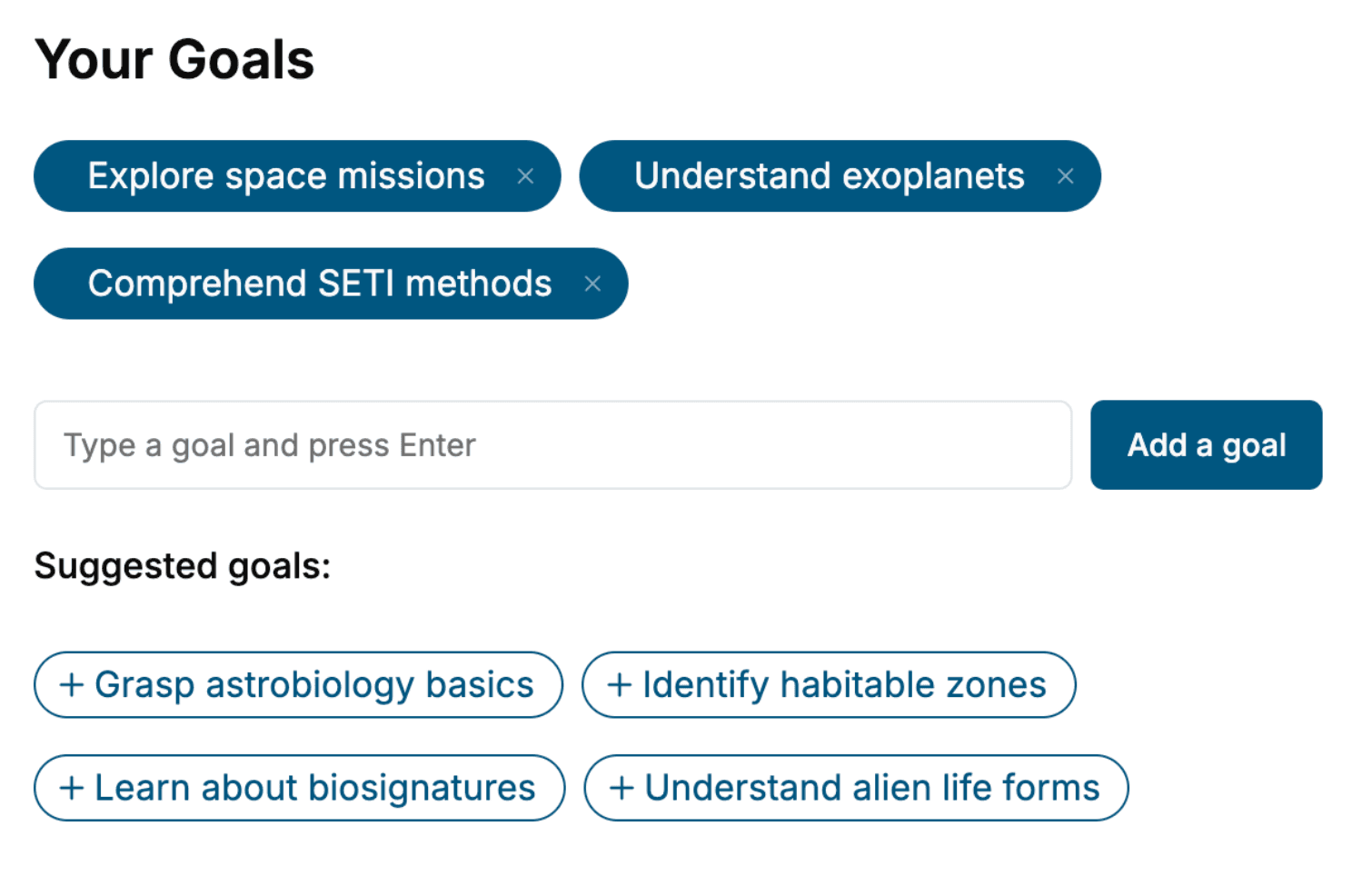
Specify your goals and choose sub-topics to include
- 3. Get your tailored book
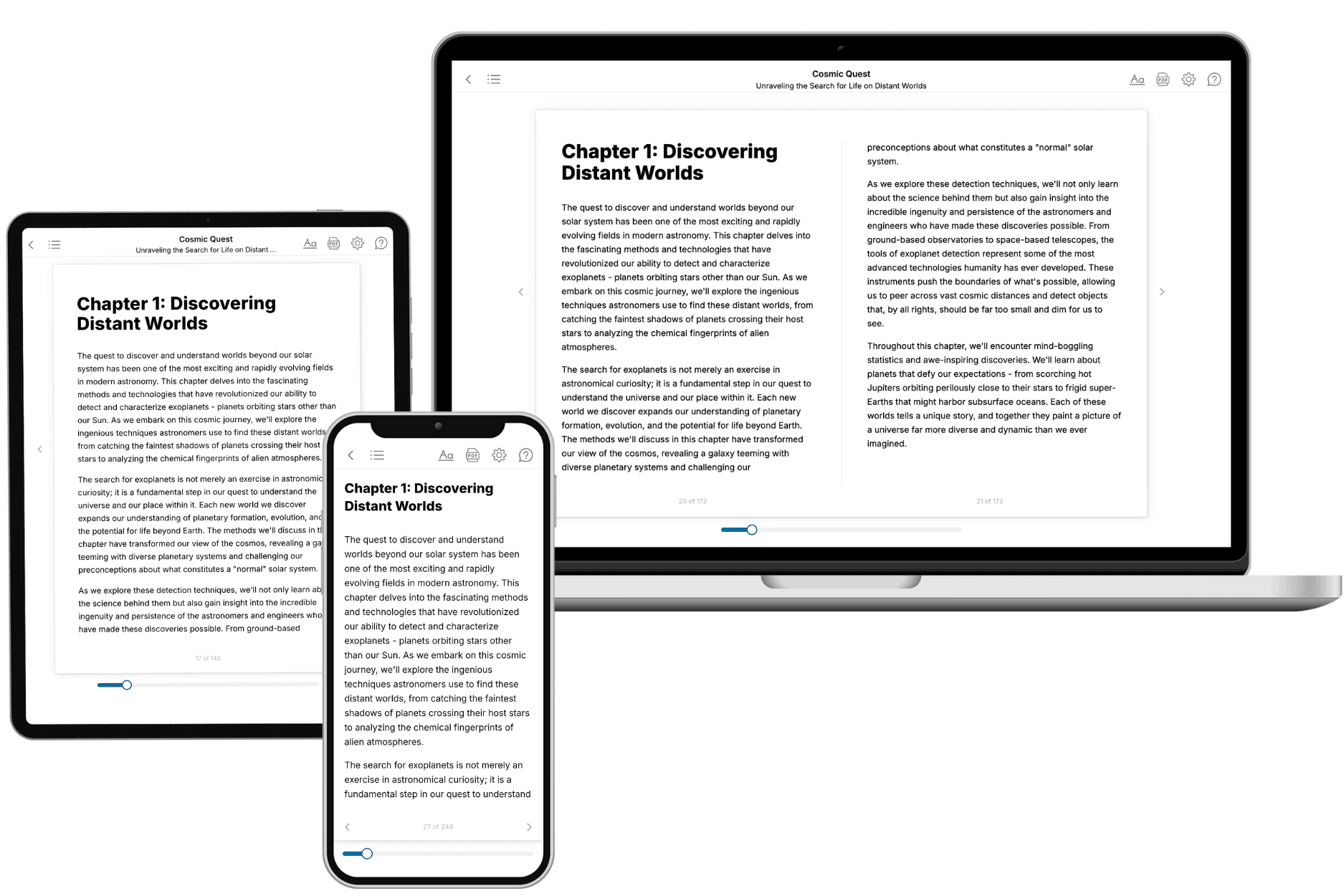
Your book is ready in 10 minutes. Read it online, download as EPUB or PDF, or send to Kindle.
Frequently asked questions
- What is TailoredRead?
TailoredRead creates complete, full-length nonfiction ebooks, written specifically for you. Tell us what you want to learn and why, and TailoredRead writes you a complete ebook on it, with charts, tables, and diagrams throughout. Read it online, on Kindle, or on any e-reader, or download it as a PDF or EPUB. Every book is written fresh the day you order it.
- How is the book tailored to me?
Before anything is written, you answer a few short questions about your goals, your background, and the topics you care about. Your book is then planned around your answers: written at your level, focused on your goals, and covering the topics you chose, instead of the one-size-fits-all book a store sells everyone.
- Will it read like generic AI content?
No. Your book isn't a chat transcript: it's planned chapter by chapter before a single word is written, told in a clear book voice, and explains ideas visually with charts, tables, and diagrams. After writing, every book goes through an editorial pass that polishes chapters so the book reads consistent from start to finish. Judge for yourself: browse thousands of sample books on our Explore Books page.
- How accurate is the content?
Our AI first checks whether your subject needs live research. Niche and fast-moving subjects are researched before writing, and the book plan and chapters are grounded in what it finds. After writing, every book goes through a quality pass that checks its facts and consistency, and researched books list their sources in a Notes section at the back.
- How long is the book?
You choose the length: Comprehensive (250-300 pages), Detailed (150-200 pages), Essential (70-100 pages), or Short (30-50 pages).
- Does the book include visuals?
Yes. Every book includes charts, tables, and diagrams: timelines, checklists, step-by-step guides, decision trees, comparison tables, matrices, and bar charts. A typical book includes dozens of these visual elements.
- Can I read it on Kindle? What formats can I download?
Yes. Every book can be read in our online reader or downloaded as a PDF or EPUB. The EPUB can be opened with Kindle, Apple Books, Kobo, and any e-reader. The Commercial and Author licenses also include an editable Word (DOCX) and Markdown download.
- How much does it cost?
About the price of a regular ebook. The exact price depends on your book's length and complexity, from $2 for the shortest books to $35 for the most comprehensive, and it's shown when you review your book, before you commit to anything. Each book is a one-time purchase, yours to keep, no subscription. Licenses that let you share, teach, or publish your book range from $35.99 to $49.99.
- Can I preview the book before purchasing?
Before you pay, you'll see what your book will cover: the title, a detailed description, the estimated length, and the complete chapter-by-chapter table of contents, so you know what you're getting before you decide. The full text itself is written after you purchase.
- How long does it take to create a book?
About 10 minutes. You can start reading the opening chapters while the rest is still being written.