Speak with Clarity
Master English Pronunciation and Accent Patterns for Confident Communication
Clear, confident English pronunciation is within your reach.
238 pages12 chaptersOct 22, 2025Learning English
About this book
Whether you're preparing for an important presentation, seeking to advance your career, or simply want to be better understood in everyday conversations, this comprehensive guide provides the knowledge and practical techniques you need to refine your spoken English. You'll discover how English sounds are actually produced, why certain words are pronounced the way they are, and how to systematically improve the clarity of your speech. Through detailed explanations of phonetic principles, stress patterns, and intonation, you'll gain insight into the mechanics of English pronunciation that dictionaries alone cannot provide. This book goes beyond simple pronunciation guides by helping you understand the relationship between spelling and sound, recognize common interference patterns from other languages, and develop strategies for self-correction. You'll learn to use the International Phonetic Alphabet as a powerful tool, master the rhythm and melody of English speech, and build sustainable practice habits that lead to lasting improvement. Your path to clearer, more confident communication starts here.
Table of contents
- IntroductionWhy Clarity Matters More Than Perfection, Understanding Your Pronunciation Journey, How This Book WorksRead below
- Chapter 1: The Phonetic Foundations of EnglishThe English Sound System Overview, Introduction to the International Phonetic Alphabet, Phonemes and Allophones: The Building Blocks, Reading Dictionary Pronunciation Guides
- Chapter 2: Mastering English Vowel SoundsShort Vowels, Long Vowels, and Diphthongs, The Mechanics of Vowel Production, Common Vowel Challenges and Solutions, The Schwa: English's Most Common Sound
- Chapter 3: Consonant Clarity and PrecisionConsonant Categories and Articulation Points, Voiced and Voiceless Consonant Pairs, Challenging Consonants for Non-Native Speakers, Consonant Clusters and Blends
- Chapter 4: Word Stress and Syllable PatternsUnderstanding English Stress Rules, How Stress Changes Meaning, Stress Patterns in Multisyllabic Words, Compound Words and Phrase Stress
- Chapter 5: Rhythm and Intonation in Connected SpeechThe Rhythm of English: Stress-Timed Language, Intonation Patterns and Their Meanings, Sentence Stress and Emphasis, Linking, Reduction, and Natural Flow
- Chapter 6: The Spelling-Sound RelationshipCommon Spelling Patterns and Their Pronunciations, Silent Letters and Irregular Spellings, Homophones, Homographs, and Minimal Pairs
- Chapter 7: Understanding English Accent VariationsMajor English Accents: American, British, and Beyond, Key Features That Distinguish Accents, Choosing Your Pronunciation Model, Building Comprehension Across Accents
- Chapter 8: Identifying and Overcoming Interference PatternsHow Your First Language Influences English Pronunciation, Common Sound Transfer Issues, Self-Diagnosis: Identifying Your Patterns
- Chapter 9: Developing Active Listening SkillsThe Connection Between Listening and Pronunciation, Building Phonemic Awareness, Effective Listening Practice Strategies, Sound Discrimination Exercises
- Chapter 10: Effective Practice Techniques and StrategiesPrinciples of Effective Pronunciation Practice, Self-Recording and Analysis, Shadowing and Mimicry Techniques, Getting and Using Feedback for Improvement
- Chapter 11: Practical Application in Real CommunicationApplying Pronunciation in Conversations, Pronunciation for Presentations and Public Speaking, Professional Communication Contexts
- Chapter 12: Long-Term Maintenance and Continuous ImprovementBuilding Sustainable Practice Habits, Tracking Your Progress, Resources and Tools for Ongoing Learning
- ConclusionKey Takeaways for Clear Communication, Your Next Steps Forward
- AppendixComplete IPA Chart for English, Practice Word Lists by Sound, Minimal Pairs Reference Guide
Introduction
Communication shapes every aspect of your life, from professional opportunities to personal relationships. When you speak English, the clarity of your pronunciation directly influences how well others understand you, how confident you feel, and how effectively you can express your ideas. Yet pronunciation remains one of the most challenging aspects of language learning, often neglected in favor of vocabulary and grammar. This book addresses that gap by providing you with systematic, practical guidance for developing clear, confident English speech that serves your communication goals.
The journey to clearer pronunciation is not about erasing your identity or sounding exactly like someone born into English. It's about gaining control over the sounds, patterns, and rhythms of English so that your message comes through without unnecessary barriers. Many intermediate English speakers find themselves in a frustrating position: they have strong vocabulary and grammar skills, yet they're frequently asked to repeat themselves or feel misunderstood in important conversations. This disconnect between language knowledge and spoken clarity creates real limitations in both professional advancement and social connection.
This book takes a different approach from traditional pronunciation guides. Rather than simply listing sounds and providing isolated practice words, you'll develop a deep understanding of how English pronunciation actually works. You'll learn to use the International Phonetic Alphabet as a practical tool, understand the relationship between spelling and sound, recognize the patterns that create natural English rhythm, and identify the specific interference patterns from your first language that affect your English speech. Most importantly, you'll discover actionable strategies for systematic improvement that you can apply immediately and sustain over time.
Throughout these pages, you'll find that pronunciation improvement is both a science and a skill. The science involves understanding phonetic principles, articulation mechanics, and sound patterns. The skill develops through focused, consistent practice with awareness and feedback. By combining knowledge with practice, you'll make faster progress than through exposure alone. Whether your goal is to excel in professional presentations, communicate more effectively with colleagues, feel more confident in social situations, or simply be understood the first time you speak, this book provides the foundation you need.
Why Clarity Matters More Than Perfection
The goal of pronunciation work is not perfection—it's intelligibility. Intelligibility means that listeners can understand you without strain or confusion, that your message comes through clearly, and that pronunciation doesn't create barriers to communication. This distinction is crucial because the pursuit of perfect, native-like pronunciation often leads to frustration and discouragement. Many highly successful English speakers maintain noticeable accents while communicating with complete clarity and confidence. The difference lies in which aspects of pronunciation they've mastered and which variations remain.
Research in applied linguistics consistently shows that certain pronunciation features have much greater impact on intelligibility than others. For example, correct word stress patterns, clear vowel distinctions in stressed syllables, and appropriate intonation contribute far more to comprehensibility than achieving perfect consonant sounds in every position. A speaker who says project
with stress on the wrong syllable (pro-JECT instead of PRO-ject when using it as a noun) creates more confusion than someone who pronounces the /r/ sound with a slight accent. Understanding these priorities helps you focus your practice time on what matters most.
Consider two scenarios that illustrate this principle in action:
- Speaker A has nearly perfect individual sounds but speaks with flat intonation, unclear word stress, and no rhythm variation. Listeners find this speaker difficult to follow and often miss the intended meaning.
- Speaker B has a noticeable accent in certain consonants and vowels but uses clear stress patterns, natural rhythm, and appropriate intonation. Listeners understand this speaker easily and focus on the message rather than the accent.
The emphasis on clarity over perfection also addresses a common psychological barrier: the fear of sounding different or making mistakes. Many intermediate speakers avoid speaking opportunities because they feel self-conscious about their accent. This avoidance actually slows progress because pronunciation improves primarily through speaking practice with feedback. When you shift your goal from sounding native
to communicating clearly,
you remove unnecessary pressure and create space for genuine improvement. Your accent is part of your linguistic identity—the goal is to refine it, not eliminate it.
Clarity matters in concrete, practical ways. In professional settings, clear pronunciation affects how others perceive your competence and credibility, regardless of your actual expertise. Studies have shown that pronunciation difficulties can create bias in hiring decisions, performance evaluations, and leadership opportunities. While this bias is unfair, improving your pronunciation clarity gives you more control over how your professional contributions are received. Similarly, in academic environments, clear pronunciation helps you participate more fully in discussions, present your research effectively, and build collegial relationships.
Beyond professional contexts, pronunciation clarity affects your daily quality of life. Simple transactions become easier when you don't need to repeat yourself multiple times. Social conversations flow more naturally when you can express humor, nuance, and emotion through appropriate intonation and stress. Phone calls and video meetings become less stressful when you're confident that your words will be understood. These everyday improvements accumulate into a significantly enhanced experience of living and working in English.
The path to clarity is also more achievable than the path to perfection. While native-like pronunciation in every detail might take decades of immersion, significant improvements in intelligibility can occur within months of focused practice. This book provides you with the knowledge to identify which aspects of your pronunciation most need attention and the techniques to address them systematically. You'll learn to self-monitor, self-correct, and continue improving independently long after you finish reading.
Finally, pursuing clarity rather than perfection allows you to appreciate the diversity of English itself. English is spoken as a first language by hundreds of millions of people across multiple continents, each with distinct pronunciation patterns. It's also spoken as an additional language by over a billion people worldwide. There is no single correct
English pronunciation—there are many legitimate varieties. Your goal is to develop clear, comprehensible speech within the variety you choose to model, whether that's American English, British English, or another established variety. This perspective frees you from impossible standards and grounds your practice in realistic, attainable goals.
Understanding Your Pronunciation Journey
Your pronunciation journey is unique because it's shaped by your first language, your learning history, your current English environment, and your specific communication needs. Understanding these factors helps you approach pronunciation improvement strategically rather than randomly. Two learners might need completely different practice priorities even though they're both intermediate English speakers. One might struggle primarily with vowel distinctions while the other faces challenges with consonant clusters. One might have excellent individual sounds but unclear word stress, while another has the opposite pattern.
Your first language creates the foundation for how you perceive and produce sounds. Every language uses a different set of sounds, and your brain has been trained since infancy to recognize and produce the sounds of your native language. When you learn English, your brain initially tries to map English sounds onto the closest equivalents in your first language. This process, called phonological transfer, explains why speakers of different languages have characteristic pronunciation patterns in English. For example, Spanish speakers often struggle with vowel distinctions that don't exist in Spanish, while Mandarin speakers may find English consonant clusters challenging because Mandarin syllable structure is simpler.
These transfer patterns are not deficits—they're natural consequences of how language learning works. However, identifying your specific transfer patterns allows you to target your practice effectively. Throughout this book, you'll learn to recognize which English sounds and patterns differ most significantly from your first language and develop strategies to address these specific challenges. This targeted approach produces faster results than generic pronunciation practice because you're working on what actually needs attention rather than practicing sounds you already produce clearly.
Your learning history also influences your current pronunciation. If you learned English primarily through reading and writing, you may have developed pronunciation habits based on spelling rather than sound. English spelling is notoriously inconsistent, so spelling-based pronunciation often leads to errors. For example, you might pronounce the -ed ending as a separate syllable in all past tense verbs, when in fact it's pronounced three different ways depending on the final sound of the verb stem. If you learned primarily through listening without explicit pronunciation instruction, you might have good overall rhythm and intonation but lack awareness of specific sound distinctions.
Consider how your learning environment has shaped your pronunciation:
- Did you learn English primarily in a classroom with non-native teachers, or through immersion with native speakers?
- Have you had explicit pronunciation instruction, or has pronunciation been incidental to other language learning?
- Do you regularly interact with native English speakers, or primarily with other non-native speakers?
- Have you received feedback on your pronunciation, and if so, what kind?
Your current English environment affects both your motivation for pronunciation improvement and your opportunities for practice. Someone working in an English-speaking country with daily native speaker interaction has different needs and resources than someone using English primarily for international business communication with other non-native speakers. Neither situation is better or worse—they simply require different approaches. If you're surrounded by English, you need strategies for noticing and incorporating the pronunciation patterns you hear. If you have limited English exposure, you need to create structured practice opportunities and reliable models to follow.
Your specific communication needs should guide your pronunciation priorities. A software developer who primarily communicates through video calls about technical topics needs different pronunciation skills than a teacher who delivers live presentations to diverse audiences. Someone preparing for a specific event, like a conference presentation or job interview, can focus intensively on the pronunciation demands of that context. Someone seeking general improvement can take a broader, more gradual approach. This book provides frameworks for both targeted and comprehensive pronunciation development.
Understanding your pronunciation journey also means recognizing that improvement is not linear. You'll experience periods of rapid progress followed by plateaus where improvement seems to stall. You'll find some sounds easy to master while others remain challenging despite extensive practice. You might improve significantly in controlled practice but struggle to maintain those improvements in spontaneous conversation. All of these patterns are normal. Pronunciation is a motor skill, similar to playing a musical instrument or a sport, and motor skill development follows predictable patterns of gradual improvement punctuated by breakthroughs.
The journey also involves developing self-awareness about your own speech. Many pronunciation errors persist not because you can't produce the correct sound, but because you don't notice when you're producing it incorrectly. Developing the ability to monitor your own pronunciation, recognize errors, and self-correct is just as important as learning the correct articulation of sounds. This book will help you develop this metacognitive awareness through specific listening and self-recording exercises.
Finally, your pronunciation journey is ongoing. Even native speakers continue to adjust their pronunciation throughout their lives as they move between regions, enter new professional fields, or simply age. Viewing pronunciation as a continuous process of refinement rather than a fixed destination to reach removes pressure and allows you to appreciate incremental improvements. Each step forward in clarity enhances your communication effectiveness, even if you haven't yet reached your ultimate goal.
How This Book Works
This book is structured to build your pronunciation knowledge and skills systematically, moving from foundational concepts to practical application. Each chapter addresses a specific aspect of English pronunciation, providing both theoretical understanding and concrete practice strategies. You can work through the book sequentially for comprehensive development, or focus on specific chapters that address your most pressing needs. However, certain foundational concepts—particularly the International Phonetic Alphabet introduced in Chapter 1—will enhance your understanding of all subsequent chapters.
The book follows a logical progression through three main phases:
- Foundation (Chapters 1-3): You'll learn the phonetic foundations of English, including the sound system, the IPA, and detailed coverage of vowels and consonants. This foundation gives you the vocabulary and concepts needed to understand and discuss pronunciation precisely.
- Patterns (Chapters 4-6): You'll explore the patterns that create natural English speech, including word stress, rhythm, intonation, and the relationship between spelling and sound. These chapters address the suprasegmental features that often have the greatest impact on intelligibility.
- Application (Chapters 7-12): You'll learn about accent variations, identify your specific interference patterns, develop listening skills, master practice techniques, and apply your pronunciation skills in real communication contexts. These chapters help you translate knowledge into practical improvement.
Each chapter includes multiple types of content designed to support different aspects of learning. Explanatory sections provide clear descriptions of pronunciation concepts, often with visual descriptions of how sounds are produced. Examples illustrate concepts with specific words and phrases, helping you connect abstract principles to concrete instances. Practice strategies offer actionable techniques you can implement immediately. Common challenges sections address typical difficulties and provide solutions. This varied approach ensures you're not just reading about pronunciation but actively engaging with it.
The book makes extensive use of the International Phonetic Alphabet (IPA) to represent pronunciation precisely. While IPA symbols might seem intimidating at first, they're actually liberating. English spelling is so irregular that written words often provide misleading pronunciation information. The IPA gives you an unambiguous way to represent exactly how a word is pronounced. Once you learn the IPA symbols for English sounds—there are about 44 of them—you can accurately transcribe and practice any English word. Chapter 1 introduces the IPA systematically, and subsequent chapters reinforce your familiarity with it through consistent use.
Throughout the book, you'll find specific examples formatted for clarity:
These examples help you see how pronunciation principles work in practice.Example: The word record is pronounced differently depending on whether it's used as a noun or a verb. As a noun, the stress falls on the first syllable:
/ˈrɛkɚd/(RE-cord). As a verb, the stress falls on the second syllable:/rɪˈkɔrd/(re-CORD). This stress difference changes the vowel quality in both syllables and is essential for clear communication.
The book also emphasizes the connection between understanding and practice. Understanding how a sound is produced or why a stress pattern exists helps you practice more effectively. However, understanding alone doesn't change your pronunciation—you must also engage in focused, repetitive practice. Each chapter provides specific practice activities you can do independently. These activities range from simple sound repetition to complex tasks like recording and analyzing your own speech. The practice strategies are designed to be sustainable—you can continue using them long after finishing the book.
A key feature of this approach is the emphasis on self-directed learning. While working with a pronunciation coach or taking a class can be valuable, most pronunciation improvement happens through independent practice. This book equips you with the knowledge and techniques to be your own coach. You'll learn to identify your errors, understand their causes, select appropriate practice activities, monitor your progress, and adjust your approach as needed. This self-sufficiency is essential for long-term improvement because pronunciation development requires consistent practice over months and years.
The book addresses common misconceptions about pronunciation learning that often hinder progress. For example, many learners believe that simply listening to English will automatically improve their pronunciation. While listening is important, it's not sufficient—you need focused attention on specific features and deliberate practice. Similarly, many learners think they need to practice everything equally, when in fact targeted practice on your specific challenges produces faster results. By addressing these misconceptions directly, the book helps you avoid ineffective approaches and focus on what actually works.
You'll also find guidance on using technology and resources effectively. Modern tools like recording apps, pronunciation dictionaries, speech recognition software, and online resources can significantly enhance your practice. However, these tools are most effective when used strategically rather than randomly. The book provides specific recommendations for how to incorporate various tools into your practice routine, what to look for in pronunciation resources, and how to evaluate whether a resource is helping you improve.
The final chapters focus on practical application and maintenance. Pronunciation improvement is not just about producing sounds correctly in isolation—it's about using clear pronunciation in real communication while focusing on your message rather than your speech mechanics. You'll learn strategies for applying your pronunciation skills in conversations, presentations, and professional contexts. You'll also develop sustainable habits for maintaining and continuing to improve your pronunciation over time. The goal is not just short-term improvement but lasting change that becomes automatic.
As you work through this book, remember that pronunciation improvement is a gradual process that requires patience and persistence. You won't master everything immediately, and that's perfectly normal. Focus on understanding the concepts, identifying your specific needs, and establishing consistent practice habits. Small improvements accumulate into significant change over time. Your investment in developing clearer pronunciation will pay dividends in every English conversation you have, every presentation you deliver, and every professional opportunity you pursue. The journey to clearer, more confident communication begins now.
This is the end of the free sample. The full book has 12 chapters.
Want this book written for you?
Tell us your goals and background, and get your own version of this book, tailored by AI to you.


Benefits of AI-tailored books
- Read one book, not ten:
- all the Learning English knowledge you need, gathered into a single book.
- Save days of learning:
- tell us your goals, choose your topics, and the whole book is built around them.
- Learn effortlessly:
- Learning English book written for your specific background and expertise.
- Understand at a glance:
- includes charts, tables, timelines, checklists, decision trees, and more.
- Stay current:
- written the day you order it, not years ago.
- Trust what you read:
- every book is checked for accuracy, with real research when your subject needs it.
Create your unique book in 3 steps
- 1. Select your focus
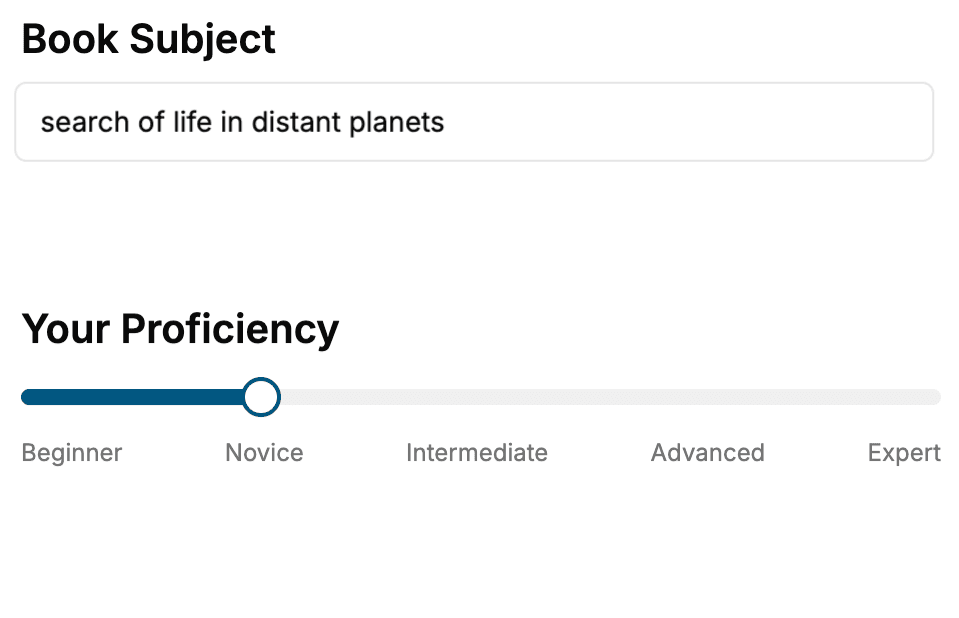
Select the focus of your Learning English book and share your background
- 2. Personalize your book
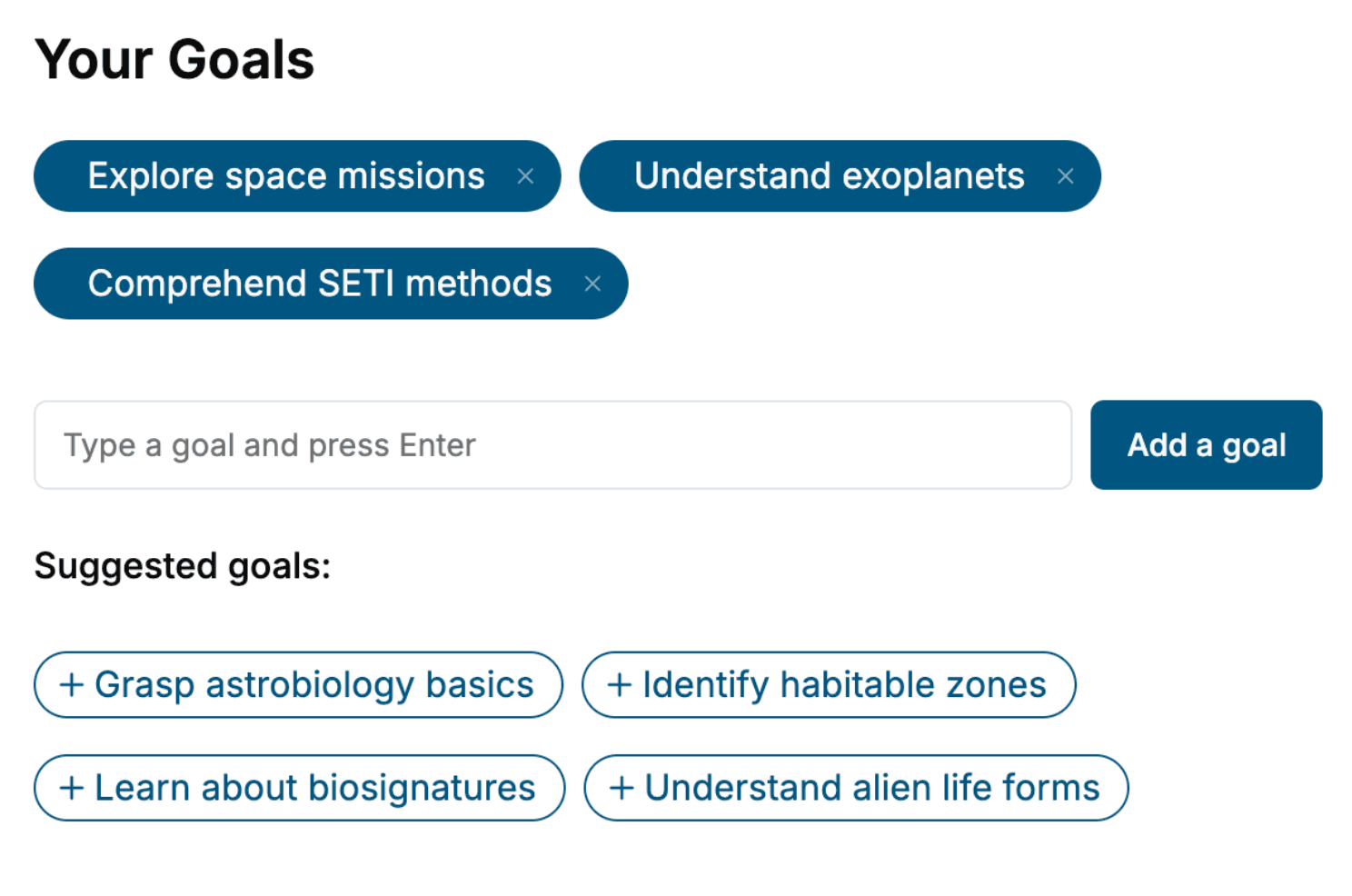
Specify your goals and choose sub-topics to include
- 3. Get your tailored book
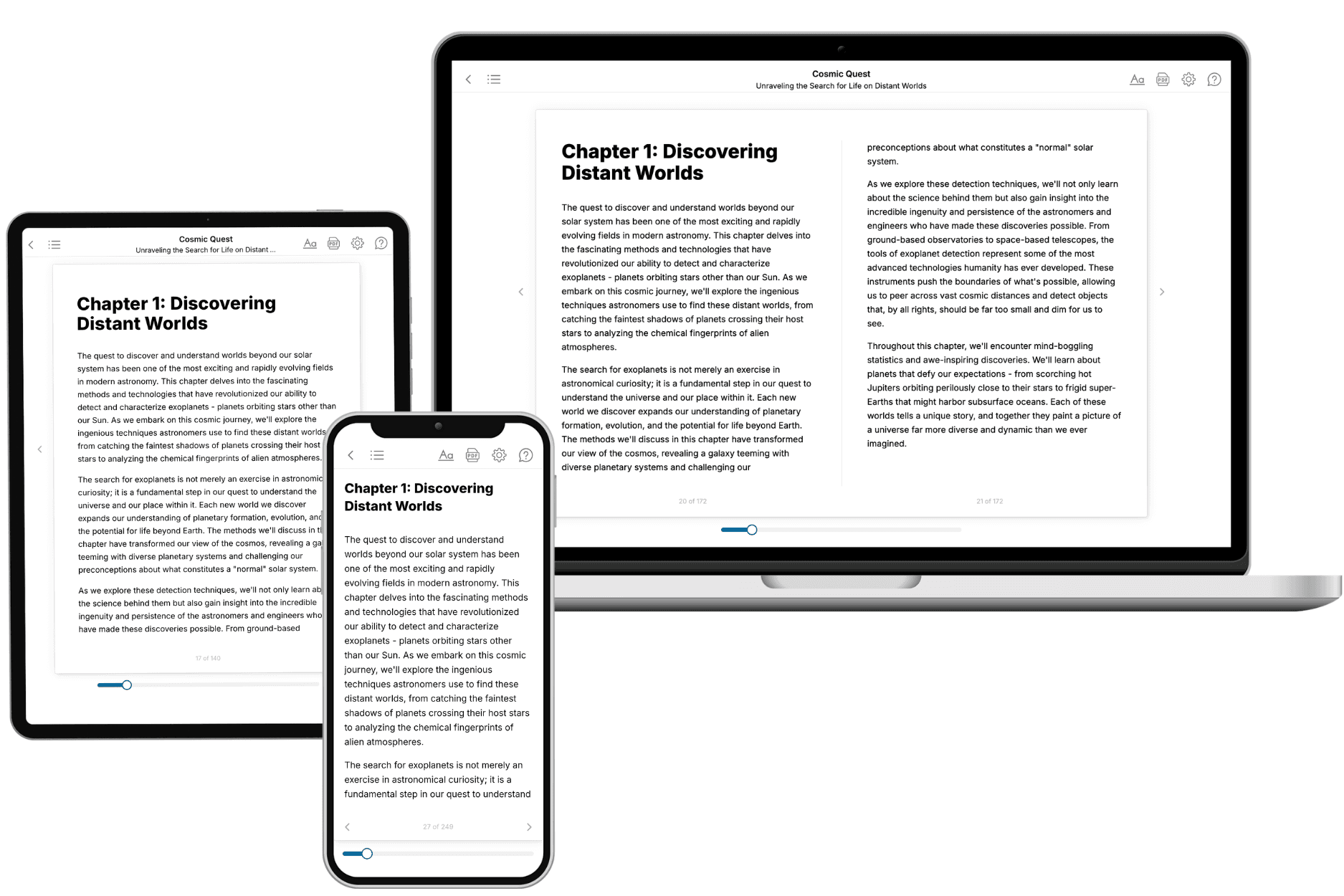
Your book is ready in 10 minutes. Read it online, download as EPUB or PDF, or send to Kindle.
Frequently asked questions
- What is TailoredRead?
TailoredRead creates complete, full-length nonfiction ebooks, written specifically for you. Tell us what you want to learn and why, and TailoredRead writes you a complete ebook on it, with charts, tables, and diagrams throughout. Read it online, on Kindle, or on any e-reader, or download it as a PDF or EPUB. Every book is written fresh the day you order it.
- How is the book tailored to me?
Before anything is written, you answer a few short questions about your goals, your background, and the topics you care about. Your book is then planned around your answers: written at your level, focused on your goals, and covering the topics you chose, instead of the one-size-fits-all book a store sells everyone.
- Will it read like generic AI content?
No. Your book isn't a chat transcript: it's planned chapter by chapter before a single word is written, told in a clear book voice, and explains ideas visually with charts, tables, and diagrams. After writing, every book goes through an editorial pass that polishes chapters so the book reads consistent from start to finish. Judge for yourself: browse thousands of sample books on our Explore Books page.
- How accurate is the content?
Our AI first checks whether your subject needs live research. Niche and fast-moving subjects are researched before writing, and the book plan and chapters are grounded in what it finds. After writing, every book goes through a quality pass that checks its facts and consistency, and researched books list their sources in a Notes section at the back.
- How long is the book?
You choose the length: Comprehensive (250-300 pages), Detailed (150-200 pages), Essential (70-100 pages), or Short (30-50 pages).
- Does the book include visuals?
Yes. Every book includes visual elements such as timelines, checklists, step-by-step guides, decision trees, comparison tables, and matrices, and many include bar charts. A typical book includes dozens of these visual elements.
- Can I read it on Kindle? What formats can I download?
Yes. Every book can be read in our online reader or downloaded as a PDF or EPUB. The EPUB can be opened with Kindle, Apple Books, Kobo, and any e-reader. The Commercial and Author licenses also include an editable Word (DOCX) and Markdown download.
- How much does it cost?
About the price of a regular ebook. The exact price depends on your book's length and complexity, from $2 for the shortest books to $35 for the most comprehensive, and it's shown when you review your book, before you commit to anything. Each book is a one-time purchase, yours to keep, no subscription. Licenses that let you share, teach, or publish your book range from $35.99 to $49.99.
- Can I preview the book before purchasing?
Before you pay, you'll see what your book will cover: the title, a detailed description, the estimated length, and the complete chapter-by-chapter table of contents, so you know what you're getting before you decide. The full text itself is written after you purchase.
- How long does it take to create a book?
About 10 minutes. You can start reading the opening chapters while the rest is still being written.