Stage Lighting Essentials
A Beginner's Guide to Mastering Light, Color, and Effects for Theater Productions
You're about to discover how light transforms a stage from ordinary to extraordinary.
238 pages11 chaptersMay 4, 2026Stage Lighting
About this book
This guide takes you from complete beginner to confident lighting operator, covering everything you need to know to create professional-quality lighting for school plays, musicals, and performances. You'll learn the language of lighting—from color temperature to beam control—and understand how to use different fixtures to achieve specific effects. Through practical, hands-on instruction, you'll master safety protocols, set up three-point lighting systems, mix colors effectively, and troubleshoot problems that arise during productions. You'll explore how dramatic shadows and mood lighting enhance storytelling, and you'll develop the skills to design lighting cues that sync perfectly with action on stage. Whether you're interested in technical theater as a hobby or considering it as a career path, this book provides the foundation you need to light up any stage with confidence and creativity.
Table of contents
- IntroductionWhy Stage Lighting Matters, What You'll Learn in This Book, How to Use This GuideRead below
- Chapter 1: Lighting FundamentalsEssential Lighting Terminology, Understanding Light Properties and Behavior, Core Lighting Design Principles
- Chapter 2: Color Theory and TemperatureColor Temperature Basics, RGB Color Mixing Fundamentals, Mood Lighting and Color Psychology
- Chapter 3: Safety and Equipment OperationElectrical Safety for Theater, Safe Equipment Operation Practices, Theater Lighting Rigging Safety
- Chapter 4: Understanding Lighting FixturesFresnel Spotlight Basics, Par Can Light Fixtures, LED Fixture Technology and Advantages
- Chapter 5: Setting Up Your Lighting SystemThree-Point Lighting Setup, Backlight and Sidelight Positioning, Wash Lighting Techniques
- Chapter 6: Controlling Light and IntensitySpotlight Beam Control Techniques, Intensity and Dimming Control, Gobo Projection Techniques
- Chapter 7: Creating Dramatic EffectsDramatic Shadow Techniques, Special Effects Lighting Methods, Musical Theater Lighting Styles
- Chapter 8: Operating Lighting SystemsLighting Console Operation Basics, Cue Timing and Sequencing, Troubleshooting Common Light Failures
- Chapter 9: Professional Lighting DesignLighting Design Documentation, Professional Theater Lighting Standards, Lighting for School Productions
- Chapter 10: Budgeting and Energy EfficiencyLighting Budget Planning, Energy-Efficient LED Upgrades, Cost-Effective Lighting Solutions
- Chapter 11: Your Lighting Career JourneyStage Lighting Career Paths, Building Your Technical Theater Skills, Next Steps in Your Lighting Journey
- ConclusionKey Takeaways, Continuing Your Learning
- Glossary of Lighting Terms
- Further Reading and Resources
Introduction
Think about the last time you watched a live performance and felt genuinely moved. Maybe it was a tense dramatic scene where a single spotlight cut through darkness to reveal an actor's face. Maybe it was a musical number where the stage exploded with color and energy. Whatever the moment, there's a good chance that lighting played a bigger role in how you felt than you ever realized. Light is the invisible hand behind every powerful stage moment, shaping what you see, what you feel, and what you remember long after the curtain falls.
Stage lighting is one of the most creative and technically rewarding roles in theater. It sits right at the intersection of art and engineering. You get to think like a designer, asking questions about mood, story, and emotion. At the same time, you work with real equipment, real electrical systems, and real technical challenges that require careful, methodical thinking. That combination makes it endlessly interesting, and it means the skills you build here will serve you in many areas of life, not just theater.
This guide was written specifically for beginners. Whether you've just joined your school's tech crew, you're curious about what happens in the lighting booth, or you've been handed a lighting board with zero training and a show opening in two weeks, this book meets you exactly where you are. No prior experience is assumed. Every concept is explained from the ground up, with plain language and practical examples drawn from real school production scenarios. By the time you finish, you'll have the knowledge and confidence to design, operate, and troubleshoot lighting for any school performance.
The journey from beginner to confident lighting operator doesn't happen overnight, but it also doesn't require years of formal training to get started. What it requires is curiosity, a willingness to learn by doing, and a solid foundation of core knowledge. That foundation is exactly what this book provides. Each chapter builds on the last, taking you from basic concepts all the way through professional design practices, so you always know where you are and where you're headed.
Why Stage Lighting Matters
Lighting does far more than simply make actors visible. It tells the audience where to look, what time of day it is, what the weather feels like, and most importantly, how to feel about what they're watching. A scene lit with warm amber tones feels completely different from the same scene lit with cold blue light, even if every other element stays the same. That's the power of lighting design: it shapes emotional reality without saying a single word.
Consider a simple example. Imagine a scene where two characters are having an argument. If the stage is flooded with bright, even white light, the scene reads as straightforward and exposed. Now imagine the same argument lit with deep shadows, a single harsh overhead light, and a faint red wash on the background. Suddenly the scene feels dangerous, unstable, and emotionally charged. The words haven't changed. The acting hasn't changed. But the lighting has completely transformed the audience's experience of the moment.
Lighting also serves a very practical function: it focuses attention. A stage can be a large, busy space with sets, props, and multiple actors. Without lighting to guide the eye, audiences can feel overwhelmed or miss important action. A well-placed spotlight draws the eye exactly where the director wants it. A dimmed background makes the foreground pop. These techniques are so effective that audiences follow them instinctively, often without ever noticing the lighting at all. That invisibility, when lighting works perfectly, is actually the goal.
Beyond storytelling, lighting affects the physical experience of performers. Actors rely on lighting to understand where they should stand, how to project their energy, and when transitions are happening. A lighting cue can signal the start of a scene, the passage of time, or a shift in location. When lighting and performance are in sync, the whole production feels seamless and professional. When they're out of sync, even a strong performance can feel disjointed and confusing to an audience.
Research in theater and performance studies consistently shows that audiences rate productions higher when technical elements, including lighting, are well-executed.[1] This isn't just about aesthetics. It's about the audience's ability to trust the world being created on stage. When lighting is thoughtful and intentional, it builds that trust. When it's inconsistent or poorly planned, it breaks the spell and reminds the audience they're sitting in a school auditorium watching a play.
For you as a lighting operator or designer, understanding why lighting matters gives every technical decision a purpose. You're not just turning lights on and off. You're actively contributing to the story being told. That's a meaningful creative role, and it's one that deserves to be taken seriously from the very beginning of your training.
A quick example to keep in mind: During a production of Romeo and Juliet, the balcony scene is traditionally lit with a soft, moonlit blue-white wash from above, combined with warm amber footlights to make the actors' faces glow. This combination creates the feeling of a romantic night without a single piece of dialogue mentioning the lighting. The audience simply feels it. That's lighting design working at its best.
The skills you develop in stage lighting also translate directly into other fields. Film and television production, architectural lighting, live event production, and even photography all draw on the same core principles you'll learn here. Understanding how light behaves, how color affects mood, and how to control intensity and direction gives you a versatile creative toolkit that extends well beyond the school stage.
What You'll Learn in This Book
This book covers everything a beginner needs to go from zero experience to confidently running lights for a school production. The content is organized to build your knowledge progressively, starting with foundational concepts and moving toward more advanced design and operational skills. Here's a clear picture of what each part of the journey covers.
The first section of the book focuses on fundamentals and theory. You'll learn the essential vocabulary of stage lighting, because being able to name and describe what you're working with is the first step toward mastering it. You'll also explore how light actually behaves physically, including how it spreads, reflects, and interacts with surfaces and color. These aren't abstract concepts. They directly affect every decision you make when setting up a lighting rig.
From there, the book moves into color theory and color temperature. This is one of the most exciting areas of lighting design, and it's also one of the most misunderstood by beginners. You'll learn the difference between warm and cool light, how to mix colors using RGB LED fixtures, and how specific colors trigger specific emotional responses in audiences. Understanding color gives you one of the most powerful tools in your design toolkit.
Safety is covered early and thoroughly, because it's non-negotiable in any theater environment. You'll learn electrical safety basics, how to handle and operate equipment without putting yourself or others at risk, and the fundamentals of rigging, which is how lighting fixtures are hung and secured above the stage. These aren't just rules to memorize. They're practices that protect real people in real situations.
The middle section of the book dives into equipment and setup. You'll get to know the most common types of lighting fixtures used in school theaters, including Fresnels, Par cans, and LED lights. You'll learn how each one works, what it's best suited for, and how to set it up correctly. You'll also master three-point lighting, the foundational technique for illuminating actors, and explore more advanced positioning strategies like backlighting and sidelighting.
The later chapters focus on design, operation, and professional practice. You'll learn how to operate a lighting console, how to program and time lighting cues, and how to troubleshoot problems when things go wrong during a show. You'll also learn how to document your designs professionally, plan a lighting budget, and think about energy efficiency. Finally, the book closes with a look at career paths in technical theater, so you can see where these skills might take you.
Here's a summary of the key skills you'll develop:
- Use correct lighting terminology to communicate with directors, stage managers, and crew members
- Understand and apply color temperature and RGB color mixing in real productions
- Follow electrical and rigging safety protocols every time you work with equipment
- Set up and operate Fresnel spotlights, Par cans, and LED fixtures
- Apply three-point lighting and advanced positioning techniques to illuminate actors effectively
- Create dramatic shadow effects and special lighting moments that enhance storytelling
- Program and execute lighting cues on a console with proper timing
- Troubleshoot common equipment failures quickly and calmly during productions
- Write professional lighting documentation including cue sheets and light plots
- Plan a realistic lighting budget and make smart decisions about equipment
Each of these skills is introduced with clear explanations, reinforced with practical examples, and connected to real situations you'll encounter in school productions. The goal isn't just to give you information. It's to give you the ability to act on that information confidently when it matters most.
One thing worth noting: this book doesn't assume you have access to expensive or professional-grade equipment. Many of the techniques and principles covered here work just as well with a modest school lighting rig as they do with a fully equipped professional theater. The fundamentals are universal. Good lighting design is about knowledge and intention, not just gear.
How to Use This Guide
This guide is designed to be read from beginning to end, especially if you're completely new to stage lighting. Each chapter builds on concepts introduced in earlier chapters, so jumping ahead can sometimes leave gaps in your understanding. That said, once you've read through the book once, it works equally well as a reference you can return to when you need a refresher on a specific topic before a production.
As you read, try to connect every concept to something physical and real. If your school has a lighting rig, spend time in the theater while you read. Look at the fixtures hanging above the stage. Notice how the light falls on the floor. Try adjusting a dimmer and watch what happens to the quality of the light, not just the brightness. The more you connect the words on the page to actual equipment and real light, the faster your understanding will develop.
Each chapter includes practical examples drawn from common school production scenarios. These examples are there to make abstract concepts concrete. When you read about three-point lighting, for instance, you'll see it described in the context of lighting a single actor during a dramatic monologue. When you read about color temperature, you'll see it applied to a specific scene type. Pay attention to these examples. They're not just illustrations. They're models you can adapt and apply directly to your own work.
Here are some practical suggestions for getting the most out of this guide:
- Take notes as you read. Write down terms, techniques, and ideas that stand out. Your own notes, in your own words, are far more useful than highlighted text.
- Try things out immediately. Whenever possible, apply what you've just read before moving on to the next chapter. Even a simple exercise, like adjusting a single fixture and observing the result, builds real understanding.
- Use the glossary. A full glossary of lighting terms is included at the back of the book. When you encounter an unfamiliar term, look it up. Building your vocabulary is one of the fastest ways to accelerate your learning.
- Work with others. If you're part of a tech crew, read and discuss the material together. Teaching a concept to someone else is one of the most effective ways to solidify your own understanding.
- Return to chapters before productions. Before each show you work on, revisit the chapters most relevant to that production. A quick review of cue timing before a complex musical, for example, can make a real difference in your performance.
It's also worth being honest with yourself about the learning curve. Some concepts in this book, particularly around electrical systems, console programming, and color theory, will take time to fully absorb. That's completely normal. Don't rush past something you don't understand. Slow down, re-read, and if possible, find a way to see the concept in action. Understanding comes in layers, and each time you return to a topic with more experience, it will make more sense.
The safety chapters deserve special attention. It might be tempting to skim through safety content to get to the more exciting material about effects and design. Resist that temptation. Theater lighting involves real electrical hazards and heavy equipment suspended above people's heads. The safety practices in this book aren't bureaucratic formalities. They exist because people have been seriously hurt when those practices were ignored. Read the safety chapters carefully, and treat every safety guideline as a non-negotiable part of your practice from day one.
Finally, approach this guide with a sense of curiosity and creativity. Stage lighting is a craft, and like any craft, it rewards people who bring genuine enthusiasm to it. The technical knowledge in this book is the foundation, but what you build on that foundation is entirely up to you. Every production is a new creative problem to solve, a new story to help tell, and a new opportunity to grow as a designer and operator. That's what makes this work so rewarding, and it's what makes the time you invest in learning it so worthwhile.
A note on terminology: Throughout this book, the terms lighting operator and lighting designer are both used. In school productions, these roles are often filled by the same person. A lighting operator runs the console during a show. A lighting designer creates the overall plan for how the show will be lit. As you develop your skills, you'll likely do both. The distinction matters mainly when you're working with a larger team where responsibilities are divided.
Stage lighting is one of those skills where the more you know, the more you realize there is to learn. That's not discouraging. It's exciting. It means there's always something new to discover, always a technique to refine, always a more interesting way to solve a creative problem. This book gives you the foundation. What you do with it is the beginning of your own story in theater.
Notes
Introduction
- 1. Linda Essig, Lighting and the Design Idea, Harcourt Brace College Publishers, 1997
This is the end of the free sample. The full book has 11 chapters.
Want this book written for you?
Tell us your goals and background, and get your own version of this book, tailored by AI to you.


Benefits of AI-tailored books
- Read one book, not ten:
- all the Stage Lighting knowledge you need, gathered into a single book.
- Save days of learning:
- tell us your goals, choose your topics, and the whole book is built around them.
- Learn effortlessly:
- Stage Lighting book written for your specific background and expertise.
- Understand at a glance:
- includes charts, tables, timelines, checklists, decision trees, and more.
- Stay current:
- written the day you order it, not years ago.
- Trust what you read:
- every book is checked for accuracy, with real research when your subject needs it.
Create your unique book in 3 steps
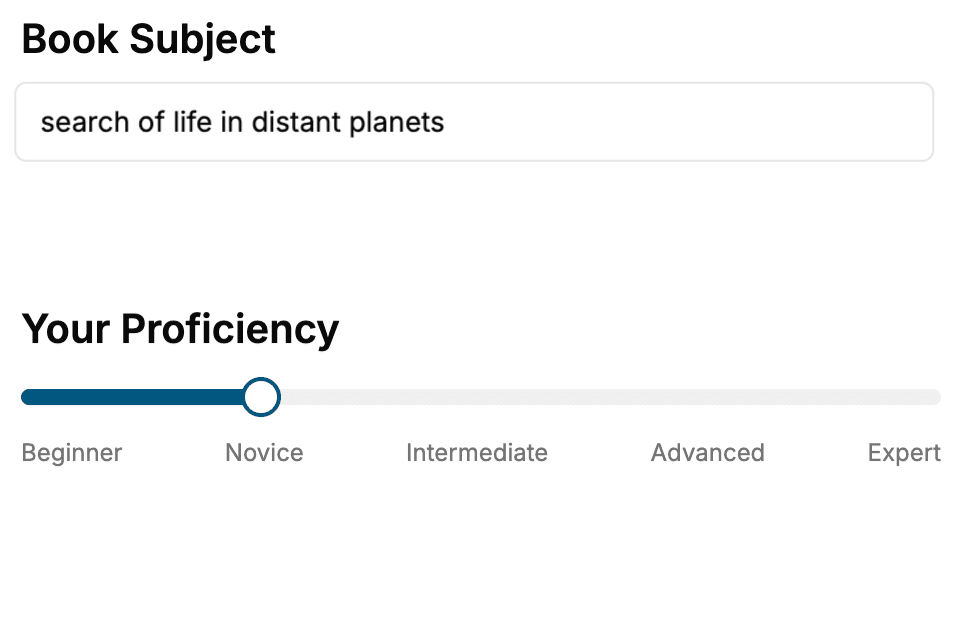
- 1. Select your focus
Select the focus of your Stage Lighting book and share your background
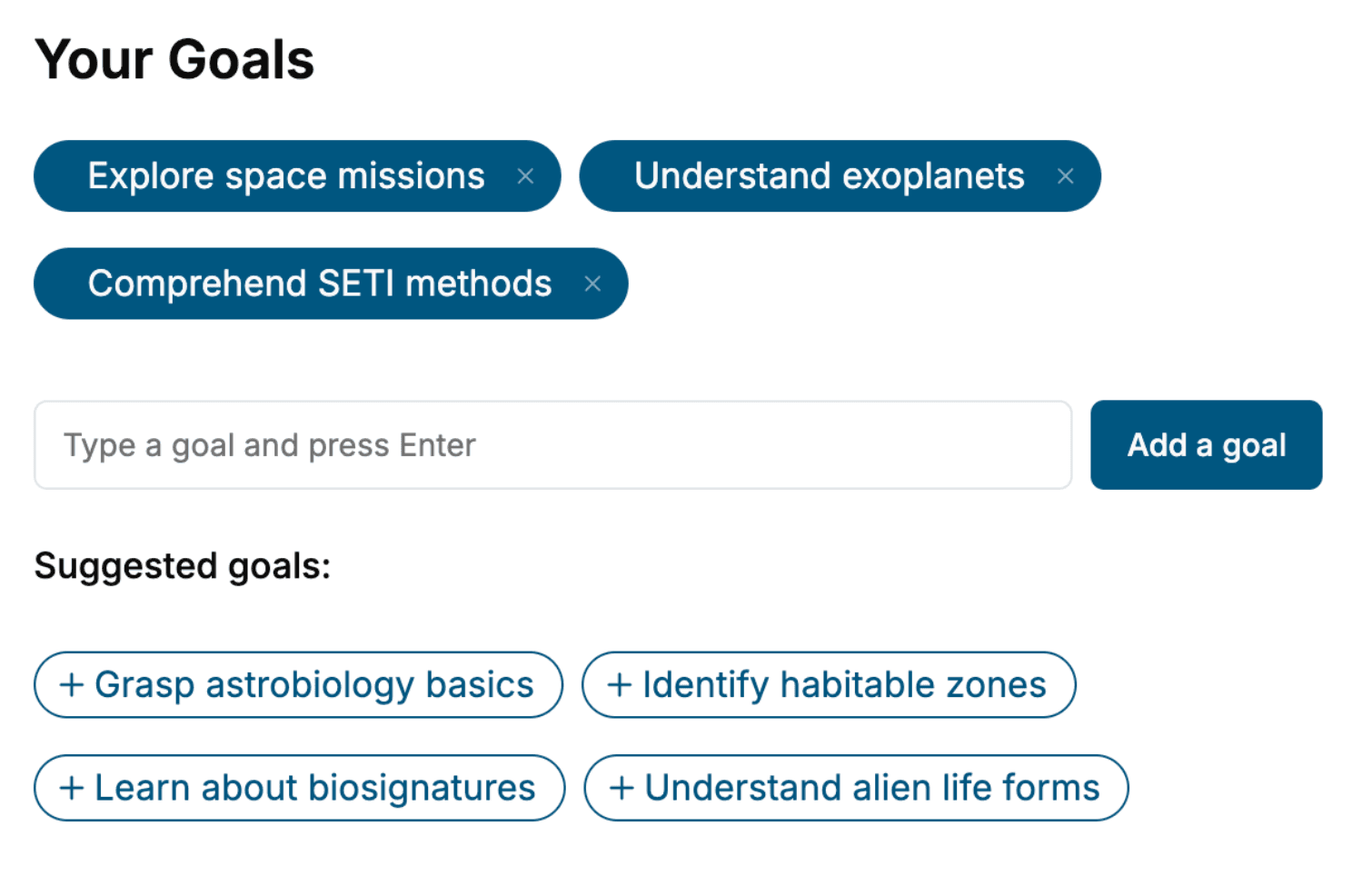
- 2. Personalize your book
Specify your goals and choose sub-topics to include
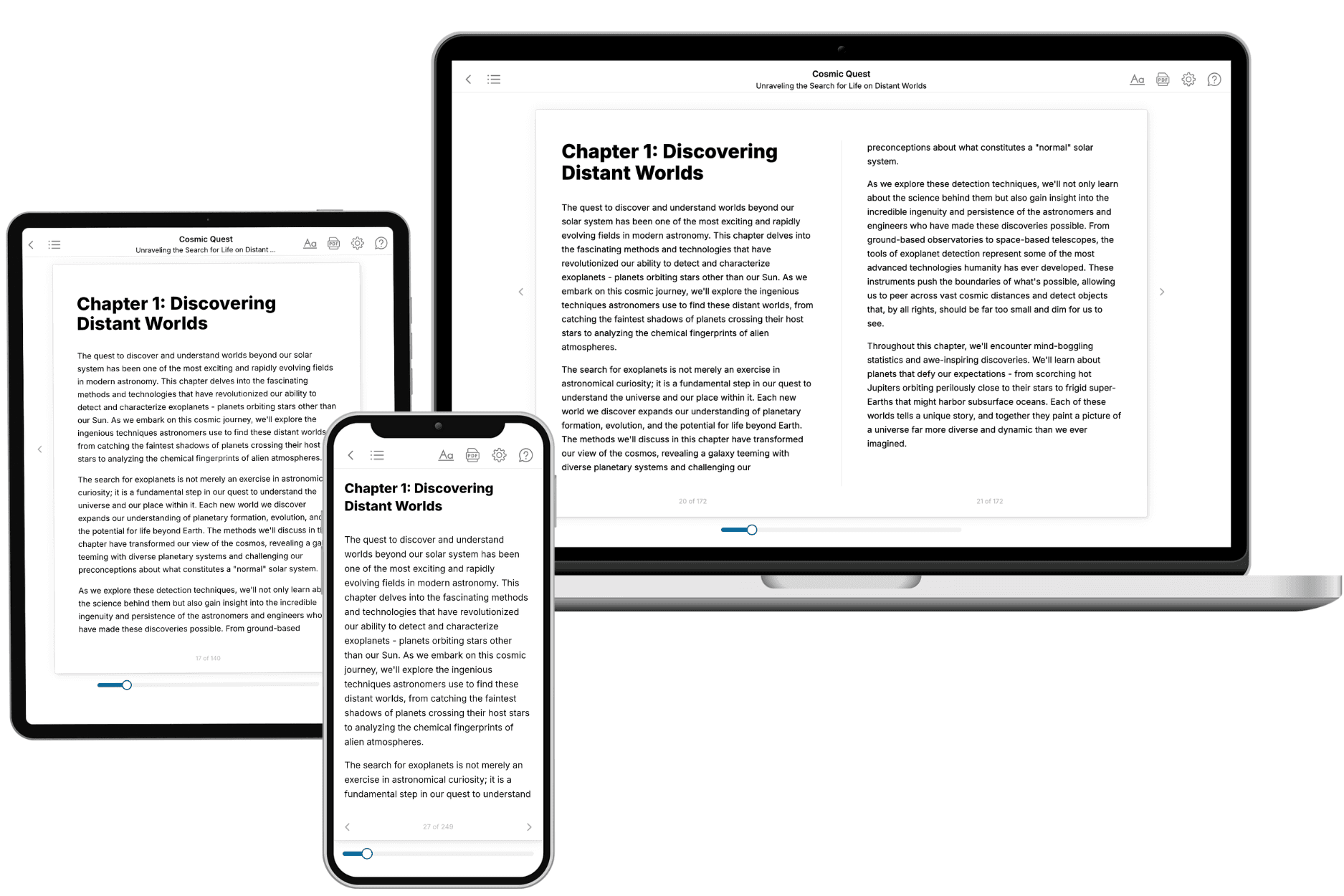
- 3. Get your tailored book
Your book is ready in 10 minutes. Read it online, download as EPUB or PDF, or send to Kindle.
Frequently asked questions
- What is TailoredRead?
TailoredRead creates complete, full-length nonfiction ebooks, written specifically for you. Tell us what you want to learn and why, and TailoredRead writes you a complete ebook on it, with charts, tables, and diagrams throughout. Read it online, on Kindle, or on any e-reader, or download it as a PDF or EPUB. Every book is written fresh the day you order it.
- How is the book tailored to me?
Before anything is written, you answer a few short questions about your goals, your background, and the topics you care about. Your book is then planned around your answers: written at your level, focused on your goals, and covering the topics you chose, instead of the one-size-fits-all book a store sells everyone.
- Will it read like generic AI content?
No. Your book isn't a chat transcript: it's planned chapter by chapter before a single word is written, told in a clear book voice, and explains ideas visually with charts, tables, and diagrams. After writing, every book goes through an editorial pass that polishes chapters so the book reads consistent from start to finish. Judge for yourself: browse thousands of sample books on our Explore Books page.
- How accurate is the content?
Our AI first checks whether your subject needs live research. Niche and fast-moving subjects are researched before writing, and the book plan and chapters are grounded in what it finds. After writing, every book goes through a quality pass that checks its facts and consistency, and researched books list their sources in a Notes section at the back.
- How long is the book?
You choose the length: Comprehensive (250-300 pages), Detailed (150-200 pages), Essential (70-100 pages), or Short (30-50 pages).
- Does the book include visuals?
Yes. Every book includes charts, tables, and diagrams: timelines, checklists, step-by-step guides, decision trees, comparison tables, matrices, and bar charts. A typical book includes dozens of these visual elements.
- Can I read it on Kindle? What formats can I download?
Yes. Every book can be read in our online reader or downloaded as a PDF or EPUB. The EPUB can be opened with Kindle, Apple Books, Kobo, and any e-reader. The Commercial and Author licenses also include an editable Word (DOCX) and Markdown download.
- How much does it cost?
About the price of a regular ebook. The exact price depends on your book's length and complexity, from $2 for the shortest books to $35 for the most comprehensive, and it's shown when you review your book, before you commit to anything. Each book is a one-time purchase, yours to keep, no subscription. Licenses that let you share, teach, or publish your book range from $35.99 to $49.99.
- Can I preview the book before purchasing?
Before you pay, you'll see what your book will cover: the title, a detailed description, the estimated length, and the complete chapter-by-chapter table of contents, so you know what you're getting before you decide. The full text itself is written after you purchase.
- How long does it take to create a book?
About 10 minutes. You can start reading the opening chapters while the rest is still being written.