Stencil Mastery Blueprint
From Beginner to Expert: Unlock Your Creative Potential with Cutting-Edge Techniques
Struggling to bring your creative visions to life through stenciling?
300 pages15 chaptersJul 6, 2025Crafts
About this book
"Stencil Mastery Blueprint" is your comprehensive guide to conquering the art of stenciling from the ground up. This book takes you on a transformative journey from understanding basic techniques to mastering advanced applications. You'll learn to create stunning designs, select the right materials, and apply stencils with precision across various surfaces. Discover the secrets of color theory, pattern design, and how to use cutting-edge tools like Cricut machines to elevate your craft. Whether you're decorating your home or starting a new hobby, this book equips you with the skills to turn any surface into a canvas for your imagination. By the final page, you'll have the confidence to tackle any stencil project and the expertise to create designs that truly stand out.
Table of contents
- IntroductionThe Art of Stenciling: A Creative Journey, What You'll Learn: Book Overview, Getting Started: Essential Tools and Materials, Developing the Right Mindset for Stencil MasteryRead below
- Chapter 1: Stencil FoundationsWhat is a Stencil?, A Brief History of Stenciling, Types of Stencils, Common Applications and Uses
- Chapter 2: Essential Materials and ToolsStencil Materials: From Paper to Mylar, Paints, Inks, and Other Mediums, Brushes, Sponges, and Applicators, Cutting Tools and Techniques, Setting Up Your Workspace
- Chapter 3: Design Basics for StencilsElements and Principles of Design, Stencil Composition and Layout, Understanding Negative Space, Stencil Lettering and Typography
- Chapter 4: Color Theory for Stencil ArtistsThe Color Wheel and Color Relationships, Choosing Effective Color Schemes, Color Mixing and Blending Techniques, Color Psychology in Design
- Chapter 5: Creating Your Own StencilsThe Stencil Design Process, Hand-Cutting Techniques, Digital Design for Stencils, Introduction to Cricut Design Space, Creating Custom Mylar Stencils
- Chapter 6: Surface Preparation and SelectionUnderstanding Different Surface Types, Cleaning and Priming Surfaces, Ensuring Proper Stencil Adhesion, Working with Textured Surfaces
- Chapter 7: Basic Stenciling TechniquesProper Stencil Placement and Securing, Achieving the Right Paint Consistency, Brushing and Stippling Techniques, Using Rollers and Sponges, Creating Clean, Crisp Edges
- Chapter 8: Advanced Stenciling TechniquesLayering Multiple Stencils, Stencil Registration for Precise Alignment, Blending and Shading Effects, Distressing and Weathering Techniques, Reverse Stenciling and Negative Space
- Chapter 9: Pattern Design and Repeat PatternsUnderstanding Pattern Basics, Repeat Pattern Math and Planning, Creating Geometric Patterns, Designing Organic and Floral Patterns, Achieving Seamless Repeats
- Chapter 10: Fabric Stenciling TechniquesPreparing Fabrics for Stenciling, Choosing the Right Fabric Paints, Application Techniques for Fabrics, Heat Setting and Care Instructions
- Chapter 11: Mastering Cricut for Stencil MakingSetting Up Your Cricut for Stencil Cutting, Advanced Cricut Design Space Techniques, Optimizing Material Settings for Stencils, Creating Complex, Multi-Layer Designs, Troubleshooting Common Cricut Issues
- Chapter 12: Special Effects and EmbellishmentsWorking with Metallic and Glitter Paints, Embossing and Texture Effects, Creating Ombre and Gradient Effects, 3D Stenciling Techniques
- Chapter 13: Creative Stencil ProjectsStenciled Wall Art and Murals, Furniture Upcycling with Stencils, Home Decor Accessories, Personalized Gift Ideas, Seasonal and Holiday Projects
- Chapter 14: Troubleshooting Common Stenciling IssuesPreventing and Fixing Paint Bleed, Dealing with Uneven Coverage, Addressing Stencil Lifting and Shifting, Correcting Paint Texture Problems
- Chapter 15: Stencil Care and MaintenanceProper Cleaning and Storage Techniques, Extending the Lifespan of Your Stencils, Repairing Damaged Stencils, Organizing Your Stencil Collection
- Conclusion
- Glossary of Stenciling Terms
- Resources and Further Reading
Introduction
Welcome to the world of stenciling, a versatile and rewarding art form that has captivated artists, designers, and hobbyists for centuries. As you embark on this creative journey, you're about to discover the transformative power of stencils and how they can elevate your artistic expression to new heights. Whether you're looking to add a personal touch to your home decor, create unique gifts, or explore a new medium for your artistic endeavors, stenciling offers a world of possibilities limited only by your imagination.
In this comprehensive guide, we'll take you from the basics of stenciling to advanced techniques that will help you master this craft. You'll learn not just the 'what' and 'how' of stenciling, but also the 'why' behind each technique, empowering you to make informed decisions in your creative process. By the time you finish this book, you'll have the knowledge and confidence to tackle any stencil project, from simple designs to complex, multi-layered masterpieces.
Stenciling is more than just applying paint through a cut-out pattern; it's an art form that combines elements of design, color theory, and craftsmanship. It allows you to reproduce intricate designs with precision and consistency, making it an invaluable tool for both personal and professional projects. Whether you're working on fabric, walls, furniture, or even creating fine art pieces, the principles and techniques you'll learn in this book will serve as a solid foundation for your stenciling journey.
As we delve into the world of stenciling, remember that like any skill, mastery comes with practice and patience. Don't be discouraged if your first attempts don't match your vision perfectly. Each project is an opportunity to learn and improve, and soon you'll find yourself creating designs that exceed your initial expectations. Let's begin this exciting journey into the art of stenciling, where precision meets creativity, and where your unique vision can come to life in ways you might never have imagined.
The Art of Stenciling: A Creative Journey
Stenciling is an art form that bridges the gap between precision and creativity, offering a unique blend of structure and artistic freedom. At its core, stenciling involves creating a template with cut-out designs through which paint or ink is applied to produce an image on the underlying surface. This seemingly simple concept opens up a world of creative possibilities, allowing artists to reproduce complex designs with consistency while also providing room for individual expression and experimentation.
The history of stenciling dates back thousands of years, with evidence of its use found in ancient cave paintings and Egyptian tombs. Throughout history, stencils have been used for various purposes, from decorating textiles and walls to mass-producing printed materials before the advent of modern printing techniques. Today, stenciling has evolved into a versatile art form embraced by hobbyists, professional artists, and designers alike, finding applications in home decor, fashion, fine art, and even industrial settings.
One of the most appealing aspects of stenciling is its accessibility. Unlike some art forms that require years of training to master, stenciling allows beginners to create impressive results relatively quickly. This immediate gratification can be incredibly motivating, encouraging you to explore more complex techniques and designs as your skills grow. However, don't be fooled by its apparent simplicity; stenciling offers depths of complexity that can challenge even the most experienced artists, providing a continuous path for growth and improvement.
As you embark on your stenciling journey, you'll discover that this art form is about more than just reproducing patterns. It's about understanding how design elements interact, how colors blend and contrast, and how different materials and surfaces affect the final outcome. You'll learn to see the world through the lens of a stencil artist, breaking down complex images into layers and shapes, and understanding how negative space can be just as important as the painted areas in creating a compelling design.
Stenciling also offers a unique perspective on the creative process. Unlike freehand painting or drawing, where every stroke is directly controlled by the artist, stenciling introduces an element of reveal. There's a moment of anticipation as you lift the stencil to see the final result, which can be both exciting and nerve-wracking. This process teaches valuable lessons about planning, precision, and the balance between control and letting go – skills that are applicable far beyond the realm of art.
Moreover, stenciling is an art form that encourages experimentation. While there are established techniques and best practices, there's always room for innovation. You might discover a new way to blend colors, a unique method of layering stencils, or an unexpected material that creates interesting textures. This spirit of experimentation keeps the art form fresh and evolving, ensuring that there's always something new to learn and explore.
As you progress in your stenciling journey, you'll find that it's not just about creating beautiful designs; it's also about problem-solving and adapting to challenges. Each surface, whether it's a textured wall, a piece of fabric, or a curved object, presents its own set of challenges. Learning to overcome these obstacles will not only improve your stenciling skills but also enhance your overall creativity and resourcefulness.
Stenciling also offers a unique way to personalize your environment. In a world of mass-produced items, creating custom stenciled pieces allows you to infuse your living space, wardrobe, or gifts with your personal style. This ability to transform ordinary objects into unique, personalized items is one of the most rewarding aspects of stenciling, giving you the power to create a world that truly reflects your aesthetic vision.
As we delve deeper into the techniques and principles of stenciling in the following chapters, keep in mind that this is more than just a craft – it's a journey of creative discovery. Each project you undertake will teach you something new, not just about stenciling, but about color, design, and your own creative process. Embrace the learning curve, celebrate your successes, and learn from the challenges. Remember, every master stencil artist started as a beginner, and with patience, practice, and the guidance provided in this book, you'll be well on your way to creating stunning stencil art that reflects your unique vision and style.
What You'll Learn: Book Overview
This comprehensive guide is designed to take you on a journey from stenciling novice to confident creator. Throughout the chapters that follow, you'll gain a deep understanding of the art and science of stenciling, equipping you with the knowledge and skills to tackle a wide range of projects with confidence and creativity. Let's take a closer look at what you can expect to learn from this book.
We'll begin by laying a solid foundation in the basics of stenciling. You'll learn about the different types of stencils, from simple single-layer designs to complex multi-layer creations. We'll explore the history of stenciling, giving you context for the techniques you'll be learning and inspiring you with the rich tradition of this art form. Understanding the fundamentals is crucial, as it will inform every aspect of your stenciling journey, from design to execution.
Next, we'll dive into the world of materials and tools. You'll discover the vast array of stencil materials available, from traditional paper and plastic to modern mylar and vinyl. We'll discuss the pros and cons of each, helping you choose the right material for your specific project. You'll also learn about the various paints, inks, and other mediums used in stenciling, as well as the brushes, sponges, and applicators that will help you achieve different effects. Understanding your tools is key to achieving professional-looking results, and this section will ensure you're well-equipped for success.
Design is a crucial aspect of stenciling, and we'll dedicate significant attention to this topic. You'll learn about the elements and principles of design as they apply to stencil art, including composition, balance, and the effective use of negative space. We'll explore typography in stenciling, teaching you how to create striking lettering effects. Color theory will also be covered in depth, giving you the knowledge to create harmonious color schemes and eye-catching contrasts in your work.
One of the most exciting aspects of stenciling is creating your own custom designs, and we'll guide you through this process step by step. You'll learn both traditional hand-cutting techniques and modern digital design methods, including how to use popular tools like Cricut Design Space. This section will empower you to bring your unique visions to life, creating stencils that are truly one-of-a-kind.
Surface preparation is often overlooked but is crucial for achieving professional results. We'll cover how to prepare various surfaces for stenciling, from walls and furniture to fabric and glass. You'll learn about proper cleaning and priming techniques, as well as how to ensure good stencil adhesion on different materials. This knowledge will help you avoid common pitfalls and ensure your designs look their best on any surface.
The heart of this book lies in the detailed exploration of stenciling techniques, both basic and advanced. You'll start with fundamental skills like proper stencil placement, achieving the right paint consistency, and basic brushing and stippling techniques. As your skills progress, we'll introduce more advanced methods such as layering multiple stencils, achieving precise registration for complex designs, and creating special effects like blending, shading, and distressing. These techniques will give you the tools to create everything from simple, elegant designs to intricate, multi-layered masterpieces.
Pattern design is another crucial skill for stencil artists, and we'll dedicate a full chapter to this topic. You'll learn how to create both geometric and organic patterns, understand the mathematics behind repeat patterns, and master the art of creating seamless repeats. This knowledge will allow you to create professional-looking wallpaper effects, fabric designs, and large-scale murals with ease.
For those interested in fabric stenciling, we've included a dedicated chapter covering the specific techniques and materials needed for this application. You'll learn about fabric preparation, choosing the right paints, and how to heat-set your designs for durability. Whether you're looking to create custom t-shirts, decorative pillows, or large-scale fabric art, this section will give you the skills you need.
In recognition of the growing popularity of digital cutting machines in stencil making, we've included an in-depth chapter on mastering the Cricut for stencil creation. You'll learn advanced Design Space techniques, how to optimize your machine settings for different stencil materials, and troubleshooting tips for common issues. This section will help you harness the full potential of digital cutting technology in your stencil art.
To help you take your stenciling to the next level, we'll explore a variety of special effects and embellishments. You'll learn how to work with metallic and glitter paints, create embossed and textured effects, and master techniques like ombre and gradient stenciling. These advanced skills will allow you to add depth, dimension, and visual interest to your stencil designs.
Throughout the book, you'll find a wealth of project ideas to inspire your creativity and put your new skills into practice. From wall art and furniture upcycling to personalized gifts and seasonal decor, these projects will help you apply your stenciling knowledge in practical, beautiful ways.
We'll also address common stenciling issues and how to troubleshoot them. You'll learn how to prevent and fix problems like paint bleed, uneven coverage, and stencil lifting. This troubleshooting guide will help you overcome obstacles and achieve consistent, professional results in your work.
Finally, we'll cover the important topics of stencil care and maintenance. You'll learn how to clean and store your stencils properly, extend their lifespan, and even repair damaged stencils. These skills will help you build and maintain a valuable stencil collection over time.
By the end of this book, you'll have a comprehensive understanding of stenciling techniques, design principles, and practical applications. You'll be equipped with the knowledge and skills to tackle a wide range of stenciling projects with confidence, creativity, and professional-level results. Whether you're looking to enhance your home decor, start a crafting business, or explore a new medium for artistic expression, this guide will serve as your roadmap to stenciling success.
Getting Started: Essential Tools and Materials
Before diving into the world of stenciling, it's crucial to familiarize yourself with the essential tools and materials that will form the foundation of your craft. Having the right equipment at your disposal will not only make your stenciling journey more enjoyable but also significantly improve the quality of your results. In this section, we'll explore the must-have items for any aspiring stencil artist, as well as some optional tools that can enhance your capabilities as you progress.
Let's start with the most fundamental item: the stencil itself. Stencils come in a variety of materials, each with its own strengths and ideal applications. For beginners, plastic stencils are an excellent choice due to their durability and ease of use. These can be purchased ready-made or cut from sheets of mylar or acetate. As you advance, you might explore more specialized materials like adhesive vinyl for intricate designs or metal for heavy-duty applications. It's worth investing in a range of stencil materials to experiment with different effects and find what works best for your projects.
Next, consider your painting tools. Stencil brushes are specifically designed for this craft, featuring short, stiff bristles that allow for a stippling technique that minimizes paint seepage under the stencil. Foam rollers are another popular choice, offering quick and even coverage for larger areas. Don't overlook the humble sponge, either – natural or synthetic sponges can create interesting textures and effects in your stenciled designs. As you explore different techniques, you might also want to experiment with spray paint, airbrushes, or even textured rollers for unique finishes.
The choice of paint or medium is crucial to the success of your stencil project. Acrylic paint is versatile and works well on many surfaces, making it a go-to choice for many stencil artists. For fabric projects, specialized fabric paints or inks are essential to ensure your design remains vibrant and durable after washing. When working on walls, consider using latex paint for better coverage and longevity. As you advance in your stenciling journey, you might explore other mediums like chalk paint for a matte finish, metallic paints for added shine, or even textured mediums for dimensional effects.
Proper surface preparation is key to achieving professional results, so don't overlook the importance of prep materials. Depending on your project, you might need sandpaper, primer, or cleaning solutions to ensure your surface is ready for stenciling. Painter's tape is another essential item, useful for securing your stencil in place and creating clean edges around your work area. For fabric projects, consider investing in a fabric stabilizer to prevent shifting and ensure crisp lines in your design.
When it comes to creating your own stencils, a few additional tools become necessary. A sharp craft knife or precision cutting tool is essential for hand-cutting stencils. A self-healing cutting mat will protect your work surface and extend the life of your blades. If you plan to create digital designs, a computer with design software becomes an important tool. For those ready to take their stencil-making to the next level, a digital cutting machine like a Cricut can be a game-changer, allowing for precise, complex designs that would be challenging to cut by hand.
Don't forget about safety and cleanliness. Disposable gloves will keep your hands clean and protected from paints and solvents. A respirator mask is important when working with spray paints or in poorly ventilated areas. Drop cloths or old newspapers will protect your work area from spills and overspray. Having a dedicated work space, if possible, can help you stay organized and make clean-up easier.
As you progress in your stenciling journey, you might find yourself drawn to more specialized tools. A light box can be helpful for tracing designs onto stencil material. A heat gun can be useful for quickly drying paint between layers or for creating special effects. Stencil adhesive can help prevent paint bleed on tricky surfaces. While not essential for beginners, these tools can expand your capabilities and open up new creative possibilities as you advance.
Remember, while having the right tools is important, it's not necessary to invest in everything at once. Start with the basics and gradually build your toolkit as you gain experience and tackle more complex projects. Many stencil artists find that improvisation and experimentation with unconventional tools can lead to exciting discoveries and unique effects. The most important tools are your creativity and willingness to learn – with these, you can create stunning stencil art even with a minimal set of supplies.
As we move forward in this book, we'll explore how to use these tools and materials effectively, providing tips and techniques to help you get the most out of your stenciling equipment. Whether you're working with a basic set of supplies or a fully stocked studio, understanding how to leverage your tools will be key to achieving the results you envision. So gather your supplies, set up your workspace, and prepare to embark on an exciting journey into the world of stencil artistry.
Developing the Right Mindset for Stencil Mastery
As you embark on your journey to stencil mastery, it's important to recognize that success in this art form isn't just about techniques and tools – it's also about cultivating the right mindset. The way you approach your stenciling practice can significantly impact your progress, creativity, and overall enjoyment of the craft. In this section, we'll explore the key mental attitudes and approaches that can help you thrive as a stencil artist.
First and foremost, embrace a growth mindset. Understand that stenciling, like any skill, improves with practice and persistence. Your first attempts may not be perfect, and that's okay. Each project is an opportunity to learn and grow. Instead of getting discouraged by mistakes, view them as valuable lessons that will inform your future work. Remember, even the most accomplished stencil artists were once beginners, and they reached their level of expertise through continuous learning and practice.
Patience is a virtue that will serve you well in stenciling. Many stencil projects require multiple steps, layers, or drying times. Rushing through these processes can lead to smudges, bleeding, or other imperfections that can be frustrating to fix. Cultivate the patience to follow each step carefully, allow proper drying time, and resist the urge to peek under your stencil before the paint is set. This patience will pay off in cleaner lines, crisper details, and overall better results in your work.
Attention to detail is crucial in stenciling. From the initial design phase to the final touches, being meticulous can make the difference between a good stencil project and a great one. Train yourself to notice small details like the spacing between elements, the consistency of your paint application, and the cleanliness of your edges. This keen eye for detail will elevate the quality of your work and help you troubleshoot issues more effectively.
Creativity and experimentation are at the heart of stencil artistry. While it's important to learn and follow established techniques, don't be afraid to push boundaries and try new things. Experiment with different color combinations, layering techniques, or unconventional materials. Some of the most interesting stencil effects come from happy accidents or bold experiments. Cultivate a sense of playfulness and curiosity in your practice – this mindset can lead to unique styles and innovative techniques that set your work apart.
Developing a problem-solving attitude is essential for overcoming the challenges you'll inevitably face in stenciling. Whether it's figuring out how to stencil on a curved surface, dealing with paint that's too thin or thick, or adapting a design to fit a specific space, stenciling often requires creative solutions. Approach these challenges with a positive, can-do attitude. Each problem you solve adds to your skill set and makes you a more versatile artist.
Perfectionism can be both a blessing and a curse in stenciling. While striving for excellence is admirable, it's important to balance this with realism and self-compassion. Understand that small imperfections are often only noticeable to you, and that the overall impact of your work is more important than absolute perfection in every detail. Learn to appreciate the unique character that slight variations can add to your work, especially in hand-crafted pieces.
Openness to feedback and continuous learning is crucial for growth as a stencil artist. Seek out constructive criticism from fellow artists or mentors, and be open to their suggestions. Join stenciling communities, either online or in person, where you can share your work, learn from others, and stay inspired. Remember that even as you gain expertise, there's always something new to learn in the ever-evolving world of stencil art.
Persistence is key in mastering any art form, and stenciling is no exception. There may be times when a project doesn't turn out as you hoped, or when you feel stuck in your progress. In these moments, it's important to persevere. Keep practicing, keep creating, and keep pushing yourself to try new things. Every piece you create, whether it's a success or a learning experience, contributes to your growth as an artist.
Mindfulness and presence can greatly enhance your stenciling practice. When working on a project, try to be fully present in the moment. Pay attention to the feel of the brush in your hand, the sound of the paint being applied, the gradual reveal of your design as you work. This mindful approach can not only improve the quality of your work but also make the process more enjoyable and meditative.
Lastly, maintain a sense of joy and passion for your craft. Remember why you were drawn to stenciling in the first place – whether it's the satisfaction of creating something beautiful, the meditative aspect of the process, or the joy of personalizing your space. Let this passion fuel your practice and guide you through the challenges and triumphs of your stenciling journey.
By cultivating these mental attitudes – growth mindset, patience, attention to detail, creativity, problem-solving, balanced perfectionism, openness to learning, persistence, mindfulness, and passion – you'll be well-equipped to tackle the technical aspects of stenciling that we'll explore in the coming chapters. Remember, mastering stenciling is as much about developing your mindset as it is about honing your technical skills. With the right attitude and approach, you'll find yourself not just creating beautiful stencil art, but truly thriving in your practice.
This is the end of the free sample. The full book has 15 chapters.
Want this book written for you?
Tell us your goals and background, and get your own version of this book, tailored by AI to you.


Benefits of AI-tailored books
- Read one book, not ten:
- all the Crafts knowledge you need, gathered into a single book.
- Save days of learning:
- tell us your goals, choose your topics, and the whole book is built around them.
- Learn effortlessly:
- Crafts book written for your specific background and expertise.
- Understand at a glance:
- includes charts, tables, timelines, checklists, decision trees, and more.
- Stay current:
- written the day you order it, not years ago.
- Trust what you read:
- every book is checked for accuracy, with real research when your subject needs it.
Create your unique book in 3 steps
- 1. Select your focus
Select the focus of your Crafts book and share your background
- 2. Personalize your book
Specify your goals and choose sub-topics to include
- 3. Get your tailored book
Your book is ready in 10 minutes. Read it online, download as EPUB or PDF, or send to Kindle.


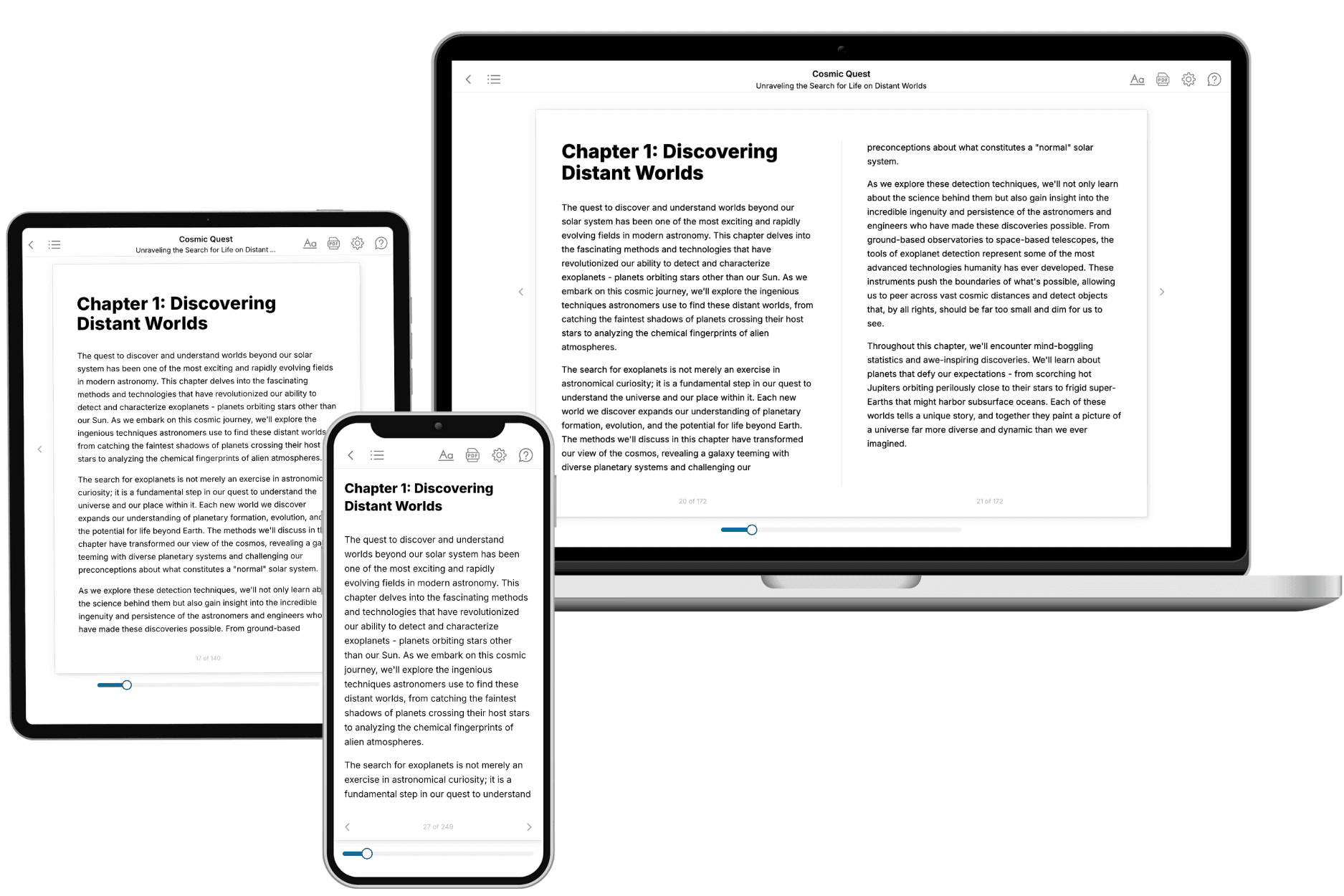
Frequently asked questions
- What is TailoredRead?
TailoredRead creates complete, full-length nonfiction ebooks, written specifically for you. Tell us what you want to learn and why, and TailoredRead writes you a complete ebook on it, with charts, tables, and diagrams throughout. Read it online, on Kindle, or on any e-reader, or download it as a PDF or EPUB. Every book is written fresh the day you order it.
- How is the book tailored to me?
Before anything is written, you answer a few short questions about your goals, your background, and the topics you care about. Your book is then planned around your answers: written at your level, focused on your goals, and covering the topics you chose, instead of the one-size-fits-all book a store sells everyone.
- Will it read like generic AI content?
No. Your book isn't a chat transcript: it's planned chapter by chapter before a single word is written, told in a clear book voice, and explains ideas visually with charts, tables, and diagrams. After writing, every book goes through an editorial pass that polishes chapters so the book reads consistent from start to finish. Judge for yourself: browse thousands of sample books on our Explore Books page.
- How accurate is the content?
Our AI first checks whether your subject needs live research. Niche and fast-moving subjects are researched before writing, and the book plan and chapters are grounded in what it finds. After writing, every book goes through a quality pass that checks its facts and consistency, and researched books list their sources in a Notes section at the back.
- How long is the book?
You choose the length: Comprehensive (250-300 pages), Detailed (150-200 pages), Essential (70-100 pages), or Short (30-50 pages).
- Does the book include visuals?
Yes. Every book includes charts, tables, and diagrams: timelines, checklists, step-by-step guides, decision trees, comparison tables, matrices, and bar charts. A typical book includes dozens of these visual elements.
- Can I read it on Kindle? What formats can I download?
Yes. Every book can be read in our online reader or downloaded as a PDF or EPUB. The EPUB can be opened with Kindle, Apple Books, Kobo, and any e-reader. The Commercial and Author licenses also include an editable Word (DOCX) and Markdown download.
- How much does it cost?
About the price of a regular ebook. The exact price depends on your book's length and complexity, from $2 for the shortest books to $35 for the most comprehensive, and it's shown when you review your book, before you commit to anything. Each book is a one-time purchase, yours to keep, no subscription. Licenses that let you share, teach, or publish your book range from $35.99 to $49.99.
- Can I preview the book before purchasing?
Before you pay, you'll see what your book will cover: the title, a detailed description, the estimated length, and the complete chapter-by-chapter table of contents, so you know what you're getting before you decide. The full text itself is written after you purchase.
- How long does it take to create a book?
About 10 minutes. You can start reading the opening chapters while the rest is still being written.