Stone Sentinels
Unveiling the Mysteries of Malta's Megalithic Temples
Discover how Malta's ancient temple builders engineered monuments that rival the pyramids in sophistication—without wheels, metal tools, or written records.
222 pages10 chaptersApr 3, 2026Archaeology
About this book
This comprehensive exploration combines cutting-edge archaeological science with architectural analysis to reveal how Neolithic communities created some of humanity's oldest monumental structures. You'll master the scientific methods that date these temples with precision, understand the astronomical alignments that guided their construction, and explore the ritual functions that made them sacred centers. Through detailed examination of stone tool evolution, quarrying techniques, and comparative analysis with European megaliths, you'll gain insight into how prehistoric Mediterranean societies organized labor, accumulated knowledge, and expressed spiritual meaning through stone. Whether you're preparing for cultural travel or deepening your understanding of human achievement, this book provides the evidence-based framework to appreciate Malta's temples as sophisticated expressions of Neolithic engineering, astronomy, and belief systems.
Table of contents
- IntroductionWhy Malta's Temples Matter to Modern Understanding, Scope and Approach of This Book, How to Use This Book for Maximum InsightRead below
- Chapter 1: The Neolithic Mediterranean WorldChronology and Cultural Periods, Neolithic Settlement Patterns and Population Dynamics, Mediterranean Seafaring Routes and Trade Networks
- Chapter 2: Dating the Temples: Scientific Methods and AccuracyRadiocarbon Dating: Principles and Limitations, Stratigraphic Excavation and Chronological Sequencing, Integrating Multiple Dating Methods for Precision
- Chapter 3: Stone Tool Evolution and Quarrying TechnologyPaleolithic Tool Progression and Early Innovation, Stone Tool Typology and Functional Analysis, Megalithic Quarrying Techniques and Stone Extraction
- Chapter 4: Engineering the Monuments: Construction MethodsDolmen Construction Engineering and Load Distribution, Corbelling Vault Architecture and Structural Innovation, Labor Organization and Construction Logistics
- Chapter 5: Astronomical Alignments and Sacred GeometryArchaeoastronomy Principles and Methodology, Astronomical Alignment Methods in Temple Design, Sacred Geometry and Geometric Proportions
- Chapter 6: Temple Ritual Functions and Spiritual PurposesTemple Ritual Function Theory and Evidence, Temple Acoustics Properties and Ceremonial Sound, Symbolic Meaning and Spiral Motif Interpretations
- Chapter 7: Comparative Megalithic Structures Across EuropeComparative European Megaliths and Regional Variations, Menhir Placement Strategies and Landscape Integration, Minoan-Maltese Cultural Links and Mediterranean Influence
- Chapter 8: Archaeological Documentation and AnalysisArtifact Documentation Standards and Best Practices, Photogrammetry Site Recording and Digital Preservation, Stone Weathering Analysis and Temporal Assessment
- Chapter 9: Lithic Technology and Prehistoric MetallurgyLithic Technology Evolution and Innovation Patterns, Prehistoric Metallurgy Origins and Early Metal Use, Transition from Stone to Metal: Technological Implications
- Chapter 10: Migration, Trade, and Cultural ExchangeNeolithic Migration Patterns and Population Movement, Mediterranean Trade Routes and Economic Networks, Cultural Diffusion and Knowledge Transfer Mechanisms
- ConclusionSynthesizing Evidence: What Malta's Temples Reveal, Future Research Directions and Unanswered Questions
- Glossary
- Further Reading and Resources
Introduction
On a small island in the middle of the Mediterranean Sea, something extraordinary happened roughly 5,500 years ago. Communities of Neolithic farmers and fishers, without metal tools, without the wheel, and without any written system for recording plans or measurements, built stone temples so massive and so precisely arranged that they still stand today. These are Malta's megalithic temples, and they represent one of the most remarkable architectural achievements in all of human prehistory. They predate the Egyptian pyramids by more than a thousand years, yet they demonstrate a level of engineering sophistication that continues to challenge and inspire researchers across multiple disciplines.
What makes Malta's temples genuinely extraordinary is not just their age or their size. It is the combination of factors that converge in one small place: deliberate astronomical alignments, complex ritual spaces, sophisticated quarrying and construction logistics, and a rich symbolic vocabulary carved into stone. These are not accidental accumulations of rock. They are intentional, carefully planned monuments that encode knowledge about the sky, the seasons, and the spiritual world of the people who built them. Understanding them requires drawing on archaeology, engineering, astronomy, geology, and anthropology simultaneously.
This book approaches Malta's temples the way a skilled diagnostician approaches a complex case: by gathering evidence from multiple sources, applying rigorous analytical frameworks, and resisting the temptation to settle on a single explanation when the data supports a more nuanced picture. The goal is not to romanticize the past or to project modern assumptions onto ancient builders. The goal is to understand, as precisely as the evidence allows, what these people knew, how they worked, and what they were trying to achieve. That kind of understanding requires both intellectual humility and analytical rigor, and this book aims to model both throughout.
Whether you are preparing for a visit to the Ħaġar Qim complex on Malta's southern coast, deepening your knowledge of prehistoric Mediterranean civilizations, or simply following the evidence wherever it leads, this book is designed to give you the conceptual tools and factual grounding to engage with Malta's temples at the highest level. The chapters that follow move from broad historical context through specific technical analysis, building toward a comprehensive picture of what these stone sentinels can tell us about the people who raised them and the world they inhabited.
Why Malta's Temples Matter to Modern Understanding
Malta's megalithic temples occupy a unique position in the global record of human achievement. The oldest of them, at Ġgantija on the island of Gozo, date to approximately 3600 BCE, placing their construction firmly in the Neolithic period and well before the rise of the great Bronze Age civilizations of Egypt and Mesopotamia.[1] This chronological priority matters enormously. It means that the organizational capacity, the engineering knowledge, and the symbolic sophistication visible in these structures emerged independently of the better-known ancient civilizations, offering a separate data point in the story of how human societies develop complexity.
The temples challenge a persistent assumption in popular accounts of prehistory: that monumental architecture requires a state-level society with centralized political authority, a professional class of architects, and a large coerced labor force. Malta's Neolithic population was relatively small, estimated at perhaps a few thousand individuals across the archipelago at the height of temple construction.[2] Yet these communities managed to quarry, transport, and erect stones weighing several tons, orient their structures with astronomical precision, and maintain a building tradition that lasted for roughly a thousand years. That achievement demands explanation, and the explanation turns out to be more interesting than simple appeals to lost technology or outside intervention.
From a scientific methodology standpoint, Malta's temples are also significant because they have been the subject of sustained, rigorous archaeological investigation for over a century. The work of researchers like Themistocles Zammit in the early twentieth century established foundational stratigraphic records, while more recent projects have applied radiocarbon dating, photogrammetry, and archaeoastronomical analysis to refine and expand that foundation.[3] This layered research history means that Malta offers not just an archaeological site but a case study in how scientific understanding of the past develops and improves over time.
The temples also matter because they are fragile. Exposure to the elements, tourist foot traffic, and the slow chemistry of salt air and biological growth are all actively degrading these structures. Several of the most important carved surfaces have already been moved indoors and replaced with replicas at the original sites. Understanding what is at stake, both scientifically and culturally, requires appreciating just how much information is still locked in these stones and how much has already been lost. The urgency of ongoing documentation and conservation work is inseparable from the intellectual story this book tells.
There is also a broader humanistic argument for why Malta's temples matter. They are evidence that the capacity for abstract thought, symbolic expression, and large-scale cooperative endeavor is not a recent development in human history. The people who built Ħaġar Qim and Mnajdra were not primitive in any meaningful sense of that word. They were sophisticated observers of the natural world, skilled craftspeople, and members of communities capable of sustaining complex social and spiritual projects across generations. Recognizing that sophistication is not just an academic exercise. It reshapes how we understand the deep roots of human culture.
Finally, Malta's temples matter because they remain genuinely mysterious in important ways. Despite more than a century of excavation and analysis, fundamental questions remain open. Why did the temple-building tradition end so abruptly around 2500 BCE? What happened to the population that built these structures? How exactly were the largest stones moved and raised? These open questions are not signs of failure in the research program. They are invitations to continued inquiry, and they make Malta one of the most intellectually alive archaeological landscapes in the world.
The Maltese temples are not merely old. They are evidence of a cognitive and organizational capacity that existed in human communities long before the civilizations we typically celebrate as the origins of complexity. They force a recalibration of what we think we know about the pace and pattern of human development.
For anyone trained in evidence-based analysis, Malta offers something rare: a case where the physical evidence is abundant, the scientific methods are well-developed, and the interpretive questions are genuinely difficult. That combination makes it an ideal subject for the kind of deep, rigorous engagement this book is designed to support.
Scope and Approach of This Book
This book covers Malta's megalithic temples from multiple analytical angles, moving from broad historical context to specific technical detail and back out to comparative and synthetic perspectives. The scope is deliberately wide because the temples themselves demand it. No single discipline can account for what these structures are and what they mean. Archaeology, engineering, astronomy, geology, anthropology, and art history all have essential contributions to make, and this book draws on all of them.
The approach throughout is evidence-based and analytical. Claims are grounded in published research, and where the evidence is ambiguous or contested, that ambiguity is acknowledged rather than papered over. This is not a book that offers confident answers to questions that remain genuinely open. It is a book that models the kind of careful, multi-source reasoning that good archaeological interpretation requires. For readers accustomed to working with complex, incomplete data sets in professional contexts, this approach should feel familiar and intellectually satisfying.
The book is organized to build understanding progressively. The early chapters establish the historical and cultural context of Neolithic Malta, covering the broader Mediterranean world, settlement patterns, and the trade networks that connected island communities to the wider prehistoric world. These chapters provide the framework within which the temples make sense as human achievements rather than isolated curiosities.
The middle chapters move into technical territory, covering the scientific methods used to date the temples, the evolution of stone tool technology, the engineering principles behind megalithic construction, and the astronomical alignments embedded in temple design. These chapters are detailed and specific because the subject demands specificity. Vague gestures toward "ancient wisdom" or "lost knowledge" are not useful. What is useful is understanding, for example, exactly how a corbelled vault distributes load, or precisely what the winter solstice sunrise alignment at Mnajdra tells us about Neolithic astronomical knowledge.
The later chapters broaden the perspective again, examining ritual functions, symbolic systems, comparative European megaliths, and the networks of cultural exchange that connected Malta to the wider Mediterranean world. These chapters synthesize the technical material from earlier sections and place it in a richer human context. The conclusion draws the threads together and points toward the research questions that will shape the next generation of scholarship on Malta's temples.
Throughout the book, specific examples and concrete details take priority over generalization. Where a concept can be illustrated with a particular temple, a specific stone, or a documented excavation finding, that illustration is provided. This approach reflects a conviction that the most durable understanding comes from engagement with particulars, not from abstract summaries. The temples are specific places, built by specific people, using specific techniques, and they deserve to be understood in that specificity.
The book also maintains a clear distinction between what the evidence supports, what it suggests, and what remains speculative. These are different epistemic categories, and conflating them is one of the most common errors in popular accounts of prehistoric archaeology. When a claim is well-supported by multiple independent lines of evidence, that is stated clearly. When an interpretation is plausible but not proven, that is stated equally clearly. This discipline is not pedantry. It is respect for the complexity of the past and for the intelligence of the reader.
One important note on terminology: the word "megalithic" literally means "large stone," and it is used throughout this book to describe structures built from large, minimally processed stone blocks. The term does not imply a single culture or a unified building tradition. Megalithic structures appear across Europe and the Mediterranean in various forms and periods, and the similarities and differences between them are themselves a significant subject of analysis. Malta's temples are megalithic, but they are also distinctively Maltese, and that distinctiveness is as important as the broader pattern.
How to Use This Book for Maximum Insight
This book is designed to work on multiple levels simultaneously. It can be read straight through as a comprehensive introduction to Malta's megalithic temples, building from historical context through technical analysis to synthetic interpretation. It can also be used as a reference, with individual chapters consulted for specific topics as questions arise during travel, research, or further reading. Both approaches are valid, and the book's structure supports both.
If you are preparing for a visit to Malta's temple sites, the most immediately practical chapters are those covering construction methods (Chapter 4), astronomical alignments (Chapter 5), and ritual functions (Chapter 6). These chapters will give you the conceptual vocabulary to look at a temple and understand what you are seeing, rather than simply registering that it is old and impressive. Knowing, for example, that the trefoil apse plan of Ħaġar Qim is not arbitrary but reflects a deliberate spatial logic tied to ritual movement and sight lines will transform your experience of standing inside it.
For readers whose primary interest is the scientific methodology of archaeology, Chapters 2 and 8 are the most directly relevant. Chapter 2 covers radiocarbon dating, stratigraphic excavation, and the integration of multiple dating methods in detail. Chapter 8 addresses artifact documentation, photogrammetry, and weathering analysis. Together, these chapters provide a thorough grounding in how archaeologists actually know what they claim to know about Malta's temples, which is a question worth taking seriously.
The following framework can help you get the most from each chapter as you read:
- Before reading each chapter: Identify one or two specific questions you want the chapter to answer. This active orientation significantly improves retention and critical engagement.
- While reading: Note where the evidence is strong and where it is more interpretive. The distinction matters and is worth tracking explicitly.
- After reading: Consider how the chapter's content connects to what you already know from other fields. The engineering principles in Chapter 4, for example, connect directly to structural mechanics concepts that appear in many other contexts.
- For site visits: Bring specific questions generated by your reading. The best site visits are driven by genuine curiosity about specific features, not by a general desire to absorb atmosphere.
The footnotes throughout the book serve two purposes. First, they provide sources for specific claims, allowing you to trace the evidence back to primary and secondary literature if you want to go deeper on any particular point. Second, they flag areas of ongoing scholarly debate, where the footnoted sources represent different positions in a live conversation rather than settled consensus. Paying attention to the footnotes will give you a more accurate picture of the state of knowledge in this field than the main text alone can provide.
The glossary at the back of the book defines technical terms from archaeology, geology, astronomy, and engineering as they are used in this specific context. Many of these terms have precise meanings in their home disciplines that differ subtly from their everyday usage, and those distinctions matter for accurate understanding. If a term in the main text is unfamiliar, the glossary is the first place to look before consulting outside sources, since the glossary definitions are calibrated to the specific way terms are used in this book.
The Further Reading section at the end of the book is organized by chapter topic and distinguishes between accessible introductory texts, more technical academic sources, and online resources including databases and digital archives. This tiered structure is designed to support readers at different stages of engagement with the material. If a particular chapter sparks a deeper interest, the Further Reading section provides a clear path forward into the primary literature.
It is also worth saying something about what this book is not. It is not a travel guide in the conventional sense, though it will substantially enrich any visit to Malta's temple sites. It is not a comprehensive history of Malta, though it provides essential historical context. It is not a polemic for any particular theory about who built the temples or why. And it is emphatically not a book that entertains fringe theories about extraterrestrial involvement or lost civilizations. The actual story of Malta's temples, grounded in evidence and rigorous analysis, is far more interesting than any of those alternatives.
The temples themselves are the best argument for taking them seriously on their own terms. They were built by human beings who understood their landscape, their sky, and their materials with a depth and precision that commands genuine respect. The goal of this book is to help you see that clearly, and to give you the analytical tools to keep seeing it long after you have finished reading. The stone sentinels of Malta have been waiting for that kind of attention for five and a half thousand years. They can afford to be patient, but the understanding they offer is worth pursuing without delay.
The most productive way to approach Malta's temples is the same way a skilled clinician approaches a complex patient: gather all available evidence, apply the best available analytical frameworks, hold competing interpretations in mind simultaneously, and remain genuinely open to revising your conclusions when new data emerges. That discipline, applied to the deep past, is what good archaeology looks like.
Each chapter in this book ends with a set of key takeaways that summarize the most important points and flag the most significant open questions. These summaries are not substitutes for reading the chapters in full, but they serve as useful anchors for review and as quick reference points when you want to recall a specific concept without rereading an entire section. Used together with the glossary and the Further Reading section, they make this book a resource you can return to repeatedly as your understanding of Malta's temples deepens over time.
This is the end of the free sample. The full book has 10 chapters.
Want this book written for you?
Tell us your goals and background, and get your own version of this book, tailored by AI to you.


Benefits of AI-tailored books
- Read one book, not ten:
- all the Archaeology knowledge you need, gathered into a single book.
- Save days of learning:
- tell us your goals, choose your topics, and the whole book is built around them.
- Learn effortlessly:
- Archaeology book written for your specific background and expertise.
- Understand at a glance:
- includes charts, tables, timelines, checklists, decision trees, and more.
- Stay current:
- written the day you order it, not years ago.
- Trust what you read:
- every book is checked for accuracy, with real research when your subject needs it.
Create your unique book in 3 steps
- 1. Select your focus
Select the focus of your Archaeology book and share your background
- 2. Personalize your book
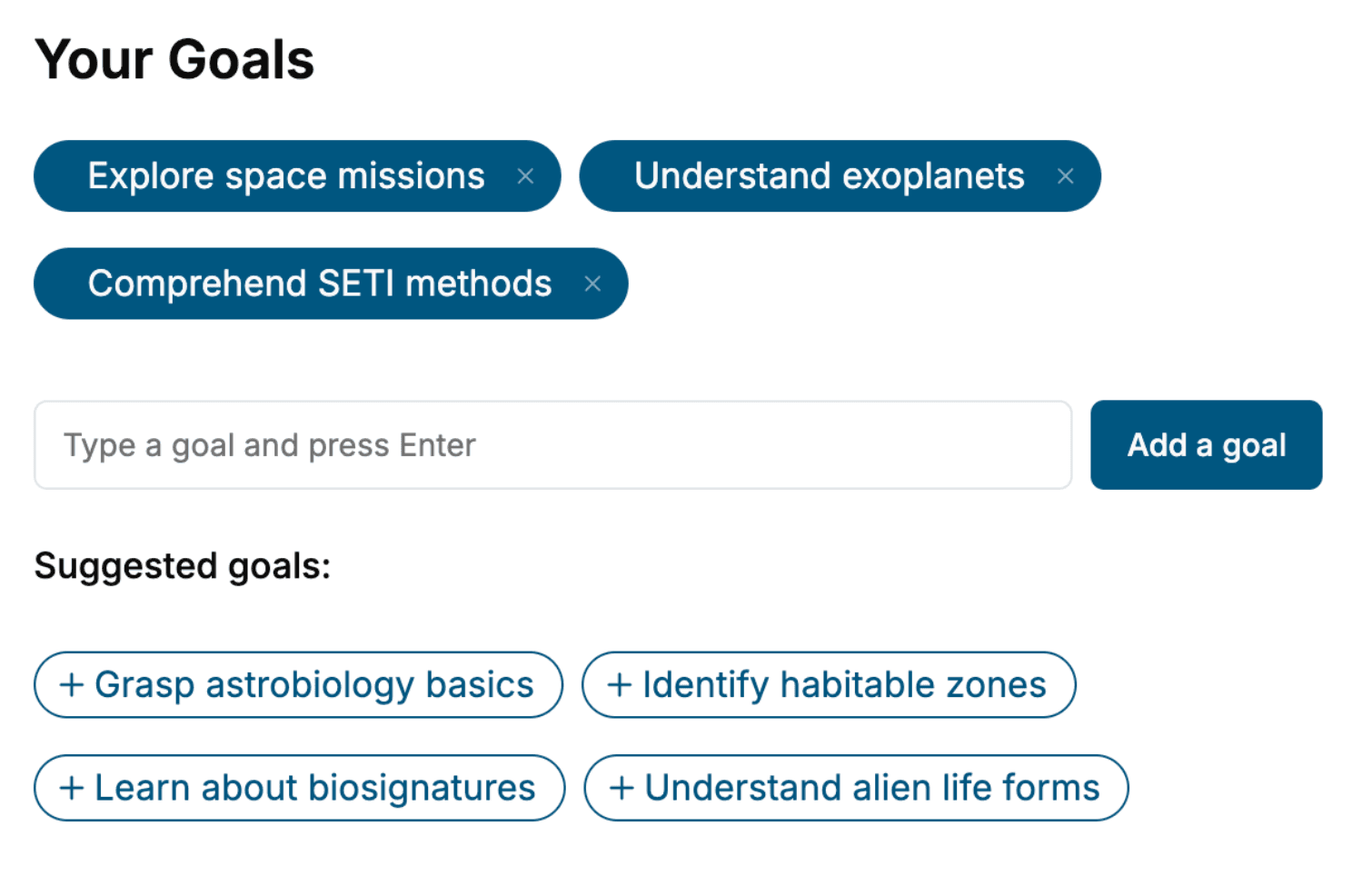
Specify your goals and choose sub-topics to include
- 3. Get your tailored book
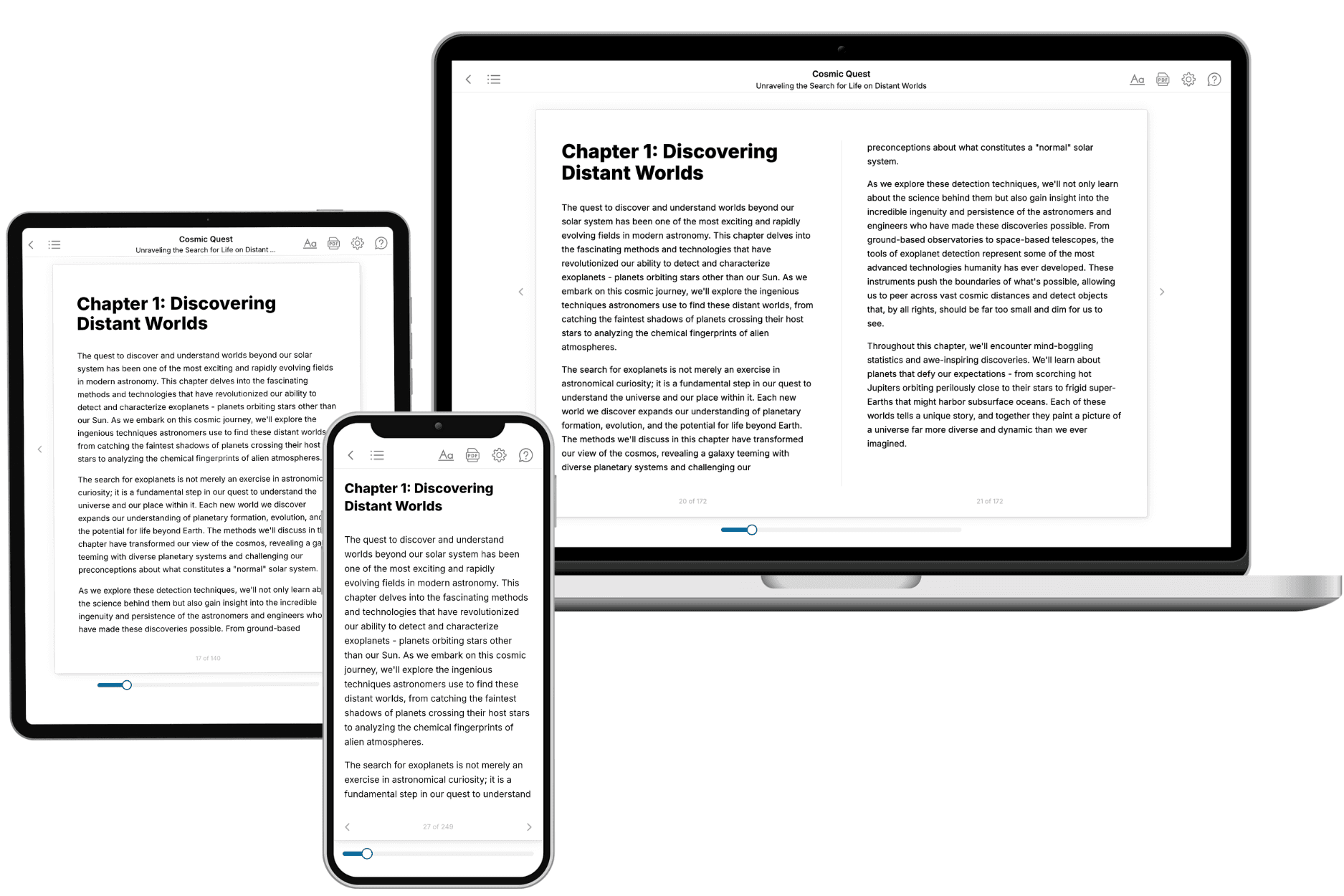
Your book is ready in 10 minutes. Read it online, download as EPUB or PDF, or send to Kindle.

Frequently asked questions
- What is TailoredRead?
TailoredRead creates complete, full-length nonfiction ebooks, written specifically for you. Tell us what you want to learn and why, and TailoredRead writes you a complete ebook on it, with charts, tables, and diagrams throughout. Read it online, on Kindle, or on any e-reader, or download it as a PDF or EPUB. Every book is written fresh the day you order it.
- How is the book tailored to me?
Before anything is written, you answer a few short questions about your goals, your background, and the topics you care about. Your book is then planned around your answers: written at your level, focused on your goals, and covering the topics you chose, instead of the one-size-fits-all book a store sells everyone.
- Will it read like generic AI content?
No. Your book isn't a chat transcript: it's planned chapter by chapter before a single word is written, told in a clear book voice, and explains ideas visually with charts, tables, and diagrams. After writing, every book goes through an editorial pass that polishes chapters so the book reads consistent from start to finish. Judge for yourself: browse thousands of sample books on our Explore Books page.
- How accurate is the content?
Our AI first checks whether your subject needs live research. Niche and fast-moving subjects are researched before writing, and the book plan and chapters are grounded in what it finds. After writing, every book goes through a quality pass that checks its facts and consistency, and researched books list their sources in a Notes section at the back.
- How long is the book?
You choose the length: Comprehensive (250-300 pages), Detailed (150-200 pages), Essential (70-100 pages), or Short (30-50 pages).
- Does the book include visuals?
Yes. Every book includes charts, tables, and diagrams: timelines, checklists, step-by-step guides, decision trees, comparison tables, matrices, and bar charts. A typical book includes dozens of these visual elements.
- Can I read it on Kindle? What formats can I download?
Yes. Every book can be read in our online reader or downloaded as a PDF or EPUB. The EPUB can be opened with Kindle, Apple Books, Kobo, and any e-reader. The Commercial and Author licenses also include an editable Word (DOCX) and Markdown download.
- How much does it cost?
About the price of a regular ebook. The exact price depends on your book's length and complexity, from $2 for the shortest books to $35 for the most comprehensive, and it's shown when you review your book, before you commit to anything. Each book is a one-time purchase, yours to keep, no subscription. Licenses that let you share, teach, or publish your book range from $35.99 to $49.99.
- Can I preview the book before purchasing?
Before you pay, you'll see what your book will cover: the title, a detailed description, the estimated length, and the complete chapter-by-chapter table of contents, so you know what you're getting before you decide. The full text itself is written after you purchase.
- How long does it take to create a book?
About 10 minutes. You can start reading the opening chapters while the rest is still being written.