The Stress Solution
Master Your Mind, Reclaim Your Life, and Build Lasting Resilience
Most people believe stress management means finding ways to relax or escape their problems.
207 pages10 chaptersFeb 19, 2026Stress Management
About this book
But that approach rarely works long-term. The real issue is that you're likely operating with an outdated stress response system designed for physical threats, not modern challenges like deadlines, emails, and uncertainty. This book cuts through the noise and gives you a clear, science-backed framework for understanding why you're stressed and what actually works to fix it. You'll discover how your nervous system operates, identify your personal stress patterns, and learn practical techniques you can implement immediately—from breathing exercises to boundary-setting strategies to sleep optimization. Whether you're overwhelmed by work, struggling with relationships, or simply tired of feeling anxious, you'll find actionable solutions that fit into your real life. This isn't about becoming a zen master or meditating for hours. It's about making strategic changes that compound over time, helping you perform better, think clearer, and feel calmer.
Table of contents
- IntroductionWhy Stress Management Matters More Than You Think, What You'll Learn in This Book, How to Use This Book for Maximum Impact, Your Stress Management Journey Starts HereRead below
- Chapter 1: Understanding Stress: The Science Behind Your ReactionsWhat Stress Really Is (And What It Isn't), Your Nervous System: The Control Center of Stress, The Fight-Flight-Freeze Response in Modern Life, How Chronic Stress Damages Your Health and Performance
- Chapter 2: Identifying Your Personal Stress PatternsConducting Your Personal Stress Audit, Recognizing Your Unique Stress Triggers, Reading Your Body's Stress Signals, Uncovering Hidden Patterns in Your Stress
- Chapter 3: The Breathing and Nervous System ResetHow Breathing Controls Your Nervous System, Essential Breathing Techniques for Immediate Calm, Building a Daily Breathing Practice
- Chapter 4: Movement, Exercise, and Physical Stress ReliefWhy Exercise Is Your Most Powerful Stress Tool, Different Types of Movement for Different Stress Levels, Creating a Sustainable Movement Routine, Building Body Awareness Through Mindful Movement
- Chapter 5: Sleep, Recovery, and Stress ResilienceThe Critical Link Between Sleep and Stress, Optimizing Your Sleep for Maximum Recovery, Rest Practices Beyond Sleep, Building Your Personal Recovery Protocol
- Chapter 6: Mindfulness and Mental ClarityMindfulness Fundamentals for Stress Reduction, Starting a Meditation Practice That Actually Sticks, Bringing Mindfulness Into Your Daily Life
- Chapter 7: Boundaries, Saying No, and Protecting Your EnergyWhy Boundaries Are Non-Negotiable for Stress Management, How to Set and Maintain Healthy Boundaries, The Art and Science of Saying No, Managing Your Energy Like a Valuable Resource
- Chapter 8: Relationships, Support Systems, and ConnectionHow Relationships Impact Your Stress Levels, Building and Leveraging Your Support Network, Communicating Effectively to Reduce Conflict and Stress
- Chapter 9: Cognitive Strategies and Thought PatternsHow Your Thoughts Create and Amplify Stress, Cognitive Tools for Reframing Stress, Mastering Your Internal Dialogue, Managing Worry and Catastrophic Thinking
- Chapter 10: Building Your Personal Stress Management SystemAssessing What Works Best for You, Creating Your Customized Stress Management Plan, Tracking Progress and Adjusting Your Approach, Sustaining Your Practices for Long-Term Success
- ConclusionYour Path Forward, Making the Commitment to Change
- Additional Resources and Tools
Introduction
There's a moment most people recognize. It's 10 PM on a Tuesday, your inbox still has 47 unread messages, your shoulders are somewhere near your ears, and you can't remember the last time you felt genuinely calm. You tell yourself you'll relax this weekend. But the weekend comes, and somehow the tension follows you there too. This isn't a personal failure. It's a pattern, and it's one that millions of people are living inside of right now without realizing there's a way out.
Stress has become so normalized in modern life that many people treat it like a badge of honor. Being busy, overwhelmed, and exhausted is often mistaken for being productive and important. But the research tells a very different story. Chronic stress is one of the most significant contributors to poor health, reduced performance, and diminished quality of life in the developed world. The American Institute of Stress estimates that 77% of people regularly experience physical symptoms caused by stress, and 73% report psychological symptoms.[1] These aren't small numbers. They represent a widespread crisis hiding in plain sight.
What makes this particularly frustrating is that most of the advice out there doesn't actually help. "Just relax." "Take a vacation." "Try yoga." These suggestions aren't wrong exactly, but they treat stress like a temporary inconvenience rather than a systemic issue rooted in how your nervous system, habits, environment, and thought patterns interact. This book takes a different approach. It gives you a clear, science-backed framework for understanding why you're stressed and, more importantly, what you can do about it in a way that actually lasts.
The goal here isn't to eliminate stress entirely. That's neither possible nor desirable. Some stress sharpens your focus, motivates action, and helps you rise to challenges. The goal is to build the capacity to handle stress with greater ease, recover from it faster, and stop letting it run your life in the background like a program you never chose to open. That capacity is called resilience, and it's something you can develop deliberately, starting today.
Why Stress Management Matters More Than You Think
Most people underestimate how deeply stress affects them. It's easy to notice the obvious signs: a tension headache before a big presentation, a sleepless night before a difficult conversation, or a short temper after a long week. But stress operates on much subtler levels too, shaping your decisions, your relationships, your physical health, and even your ability to think clearly. When you're chronically stressed, you're essentially running on a system that's been pushed past its optimal range for too long.
The physiological effects alone are striking. Prolonged stress elevates cortisol, your body's primary stress hormone, which over time suppresses immune function, disrupts sleep, impairs memory consolidation, and contributes to cardiovascular disease.[2] A study published in the journal Circulation found that work-related stress was associated with a 23% increased risk of heart attack.[3] These aren't abstract statistics. They represent real consequences playing out in real bodies.
Beyond the physical, stress has a profound impact on cognitive performance. When your stress response is activated, your brain prioritizes survival over complex thinking. The prefrontal cortex, which handles planning, decision-making, and emotional regulation, becomes less active. The amygdala, which processes threat and fear, becomes more dominant. This is why you make worse decisions when you're stressed, why you snap at people you care about, and why creative problem-solving feels impossible when you're overwhelmed. You're not less capable. Your brain is just operating in the wrong mode.
The professional costs are equally significant. Research from the American Psychological Association consistently shows that workplace stress reduces productivity, increases absenteeism, and contributes to burnout.[4] Burnout, which the World Health Organization now classifies as an occupational phenomenon, is characterized by exhaustion, cynicism, and reduced professional efficacy. It doesn't happen overnight. It's the result of sustained, unmanaged stress accumulating over months or years.
Relationships suffer too. When you're chronically stressed, your capacity for empathy, patience, and genuine connection shrinks. You become reactive rather than responsive. Small irritations feel enormous. You withdraw from the people who could actually support you, often at the exact moment you need them most. Stress doesn't just affect you in isolation. It ripples outward into every relationship and interaction in your life.
Here's the important counterpoint though: managing stress effectively produces equally powerful positive effects. People who develop strong stress management skills report better physical health, sharper cognitive performance, stronger relationships, and greater career satisfaction. They don't experience less stress necessarily, but they handle it differently. They recover faster. They maintain perspective. They make better choices under pressure. These outcomes aren't reserved for a lucky few. They're available to anyone willing to learn and practice the right skills.
The bottom line: Stress isn't just an uncomfortable feeling you push through. It's a physiological state that affects every system in your body and every dimension of your life. Managing it well isn't a luxury. It's one of the highest-leverage investments you can make in your health, performance, and happiness.
Understanding this is the first shift. Stress management isn't self-indulgence or weakness. It's a strategic, evidence-based practice that makes everything else in your life work better. The professionals who perform at the highest levels over long careers aren't the ones who work the hardest or push through the most pain. They're the ones who've learned to manage their internal state with skill and intention.
What You'll Learn in This Book
This book is organized around a simple but powerful idea: effective stress management requires working at multiple levels simultaneously. You need to understand the science, identify your personal patterns, build physical practices, develop mental tools, and design your environment and relationships intentionally. No single technique fixes everything. But when you combine the right approaches in the right sequence, the results compound quickly.
The book moves through ten chapters, each building on the last. Here's a clear picture of what each section covers and why it matters:
- Chapters 1 and 2 lay the foundation. You'll learn what stress actually is at a biological level, how your nervous system works, and why your body responds to a difficult email the same way it responds to a physical threat. Then you'll turn that knowledge inward and conduct a personal stress audit to identify your specific triggers, patterns, and early warning signals.
- Chapters 3 and 4 focus on the body. You'll learn how breathing directly controls your nervous system and get specific, proven techniques you can use in real time. Then you'll explore how movement and exercise function as powerful stress regulators, with practical guidance for building a sustainable routine regardless of your current fitness level.
- Chapter 5 tackles sleep and recovery, two of the most underestimated factors in stress resilience. You'll learn exactly how sleep deprivation amplifies stress, and you'll get a concrete protocol for optimizing your sleep and building recovery practices into your daily life.
- Chapter 6 introduces mindfulness and mental clarity. This isn't about becoming a meditator in the traditional sense. It's about developing the ability to observe your thoughts and feelings without being controlled by them, a skill with enormous practical value in high-pressure situations.
- Chapters 7 and 8 address the relational dimensions of stress. You'll learn how to set boundaries without guilt, say no without damaging relationships, manage your energy as a finite resource, and build the kind of support network that actually helps you handle stress better.
- Chapter 9 goes deep into cognitive strategies. Your thoughts are often the primary amplifier of stress, and this chapter gives you specific tools for reframing situations, managing worry, and changing the internal dialogue that keeps you stuck in stress cycles.
- Chapter 10 brings everything together. You'll build a personalized stress management system that fits your life, your personality, and your specific challenges, along with a framework for tracking progress and sustaining your practices over time.
Throughout the book, you'll find concrete examples, research-backed explanations, and practical exercises you can implement immediately. The emphasis is always on what works in real life, not just in theory. Every technique has been selected based on evidence and practicality, not because it sounds appealing or trendy.
One thing worth noting: this book doesn't promise overnight transformation. Real change in stress patterns takes time and consistent practice. What it does promise is a clear, honest roadmap. If you engage with the material seriously and apply the practices consistently, you will notice meaningful differences in how you feel, think, and perform. The timeline varies by person, but most people begin noticing shifts within two to four weeks of consistent practice.[5]
The book also acknowledges that stress exists on a spectrum. Some readers are dealing with moderate, manageable stress that's simply reducing their quality of life. Others are closer to burnout or experiencing anxiety that significantly interferes with daily functioning. The strategies here are designed to help across that spectrum, but they're not a substitute for professional mental health support when that's what's needed. If you're experiencing severe anxiety, depression, or trauma-related symptoms, please consider working with a qualified mental health professional alongside using this book.
What makes this approach different from most stress management resources is the integration of multiple evidence-based frameworks into a single coherent system. Rather than giving you a list of tips, this book gives you a way of thinking about stress that will serve you for the rest of your life. Once you understand the underlying mechanisms, you can adapt and apply the principles to any situation you encounter, whether it's a career change, a health challenge, a difficult relationship, or simply the relentless pace of modern life.
How to Use This Book for Maximum Impact
There's a right way and a wrong way to use a book like this. The wrong way is to read it cover to cover, nod along, feel inspired, and then return to your existing habits unchanged. That approach produces zero results, no matter how good the content is. The right way is to engage actively, apply what you learn as you go, and treat this as a working document rather than a passive reading experience.
Here are some specific recommendations for getting the most out of this material:
- Read sequentially on your first pass. The chapters are designed to build on each other. The science in Chapter 1 makes the techniques in Chapter 3 more effective because you understand why they work. The self-awareness developed in Chapter 2 makes the cognitive tools in Chapter 9 more targeted. Skipping around on your first read means missing important context.
- Do the exercises as you encounter them. Each chapter includes practical exercises and reflection prompts. Don't skip these. The exercises are where the real learning happens. Reading about breathing techniques is not the same as practicing them. Reading about stress triggers is not the same as mapping your own.
- Keep a dedicated notebook or digital document. You'll be doing a stress audit, identifying patterns, building a personal plan, and tracking progress. Having a single place to capture all of this makes the process much more effective and gives you a valuable reference to return to.
- Implement one or two practices at a time. Don't try to overhaul everything at once. That approach is itself stressful and rarely sustainable. Pick one or two techniques from each chapter, practice them consistently for a week or two, and then add more. Small, consistent changes compound into significant results.
- Return to chapters as needed. After your first read, this book works well as a reference. If you're going through a particularly stressful period at work, revisit Chapter 7 on boundaries and energy management. If you're struggling with anxious thoughts, go back to Chapter 9. The material stays relevant because stress is an ongoing part of life, not a problem you solve once.
It's also worth being honest with yourself about your starting point. Before you begin Chapter 1, take five minutes to answer these questions in your notebook:
- On a scale of 1 to 10, how stressed do you feel on an average day right now?
- What are the two or three biggest sources of stress in your life at this moment?
- What stress management strategies have you tried before, and what happened?
- What would your life look like if you managed stress significantly better than you do today?
These baseline answers give you a reference point. They also help you identify which chapters are most immediately relevant to your situation. Someone whose primary stress comes from work overload will want to pay particular attention to Chapters 7 and 10. Someone whose stress is driven by anxious thinking will find Chapters 6 and 9 especially valuable. Everyone benefits from Chapters 1 through 5, which address the foundational physical and biological dimensions of stress.
One more practical note: don't wait until you feel ready to start. There's no perfect moment to begin working on stress management. In fact, the feeling that you're too busy or too stressed to focus on this right now is itself a symptom of the problem. The practices in this book are designed to fit into real, busy lives. Most of the techniques take five to fifteen minutes. Some take less. The barrier to entry is low. The only requirement is a genuine decision to prioritize your well-being.
A practical starting point: After finishing this introduction, spend ten minutes with your notebook answering the baseline questions above. Then read Chapter 1 and try the first breathing exercise in Chapter 3 before the end of the week. That's it. You don't need to do everything at once. You just need to start.
Progress in stress management isn't always linear. Some weeks you'll feel like you're making real headway. Other weeks, life will throw something at you and you'll feel like you've gone backward. That's normal and expected. The goal isn't perfection. It's a gradual, consistent shift in your baseline, so that over time, you're operating from a calmer, more resourced place than you were before.
Your Stress Management Journey Starts Here
Every person who picks up this book arrives with a different story. Some are dealing with high-pressure careers that leave no room to breathe. Some are navigating difficult relationships or family responsibilities that feel relentless. Some have been managing stress reasonably well for years but sense that their current strategies aren't enough anymore. Some are simply exhausted and looking for a better way to live. Whatever brought you here, the fact that you're here matters.
Deciding to take stress seriously is not a small thing. It requires acknowledging that the way you've been operating isn't fully working, and that's uncomfortable for most people. There's a cultural narrative that says pushing harder, sleeping less, and tolerating more is the path to success. This book challenges that narrative directly. The evidence is clear: sustainable high performance requires sustainable stress management. The two are not in conflict. They're deeply connected.
It's also worth addressing a common concern upfront. Many people worry that working on stress management means becoming less driven, less ambitious, or less capable of handling pressure. The opposite is true. When you manage stress effectively, you think more clearly, make better decisions, maintain your energy over longer periods, and recover faster from setbacks. You don't become softer. You become more capable. The professionals who sustain excellence over decades are almost universally people who've learned to manage their internal state with skill.
Consider the example of elite athletes. At the highest levels of sport, physical talent is relatively evenly distributed. What separates the best from the rest is often mental and physiological resilience: the ability to perform under pressure, recover quickly between competitions, and maintain focus when everything is on the line. These athletes don't achieve this by ignoring stress. They achieve it by training their stress response systems as deliberately as they train their bodies. The same principles apply to every domain of life.
The journey ahead involves learning, practice, and honest self-reflection. It involves trying things that might feel unfamiliar or even uncomfortable at first. Breathing exercises can feel awkward. Setting boundaries can feel scary. Sitting quietly with your thoughts can feel impossible. These reactions are normal. They're signs that you're working on something real. The discomfort of growth is very different from the discomfort of chronic stress, and with practice, you'll learn to tell the difference.
There's also a cumulative quality to this work that's worth understanding from the start. The first time you try a breathing technique, you might feel a small shift. After two weeks of daily practice, that shift becomes more reliable and more pronounced. After two months, it becomes automatic. Your nervous system is genuinely trainable. The practices in this book work not because they're magic, but because they leverage the brain's capacity for change, a property neuroscientists call neuroplasticity.[6] Every time you practice a stress management technique, you're literally reshaping the neural pathways that govern your stress response.
This is genuinely exciting news. It means that no matter how long you've been operating in a high-stress mode, change is possible. Your patterns aren't permanent. Your nervous system isn't fixed. The habits and responses that feel automatic right now were learned over time, and they can be unlearned and replaced with more effective ones. That process takes time and consistency, but it's available to everyone.
As you move through this book, try to approach the material with curiosity rather than judgment. When you notice a stress pattern in yourself, don't use it as evidence that something is wrong with you. Use it as information. Every insight about how you respond to stress is a data point that helps you build a more effective strategy. The goal is self-awareness in service of change, not self-criticism in service of shame.
Finally, remember that stress management is not a destination. It's an ongoing practice. The world will keep generating challenges. Your nervous system will keep responding to them. The difference, after working through this material and applying it consistently, is that you'll have a much larger toolkit, a much deeper understanding of your own patterns, and a much greater capacity to navigate whatever comes your way. That's not a small thing. That's a fundamentally different relationship with your own life.
The journey starts now. Turn the page, and let's begin.
Notes
Introduction
- 1. American Institute of Stress, "Stress Statistics," 2022
- 2. B. S. McEwen, "Central effects of stress hormones in health and disease," European Journal of Pharmacology, 2008
- 3. M. Kivimäki and others, "Job strain as a risk factor for coronary heart disease," The Lancet, 2012
- 4. American Psychological Association, Work and Well-Being Survey, APA Center for Organizational Excellence, 2023
- 5. S. W. Lazar and others, "Meditation experience is associated with increased cortical thickness," NeuroReport, 2005
- 6. R. J. Davidson and B. S. McEwen, "Social influences on neuroplasticity," Nature Neuroscience, 2012
This is the end of the free sample. The full book has 10 chapters.
Want this book written for you?
Tell us your goals and background, and get your own version of this book, tailored by AI to you.


Benefits of AI-tailored books
- Read one book, not ten:
- all the Stress Management knowledge you need, gathered into a single book.
- Save days of learning:
- tell us your goals, choose your topics, and the whole book is built around them.
- Learn effortlessly:
- Stress Management book written for your specific background and expertise.
- Understand at a glance:
- includes charts, tables, timelines, checklists, decision trees, and more.
- Stay current:
- written the day you order it, not years ago.
- Trust what you read:
- every book is checked for accuracy, with real research when your subject needs it.
Create your unique book in 3 steps
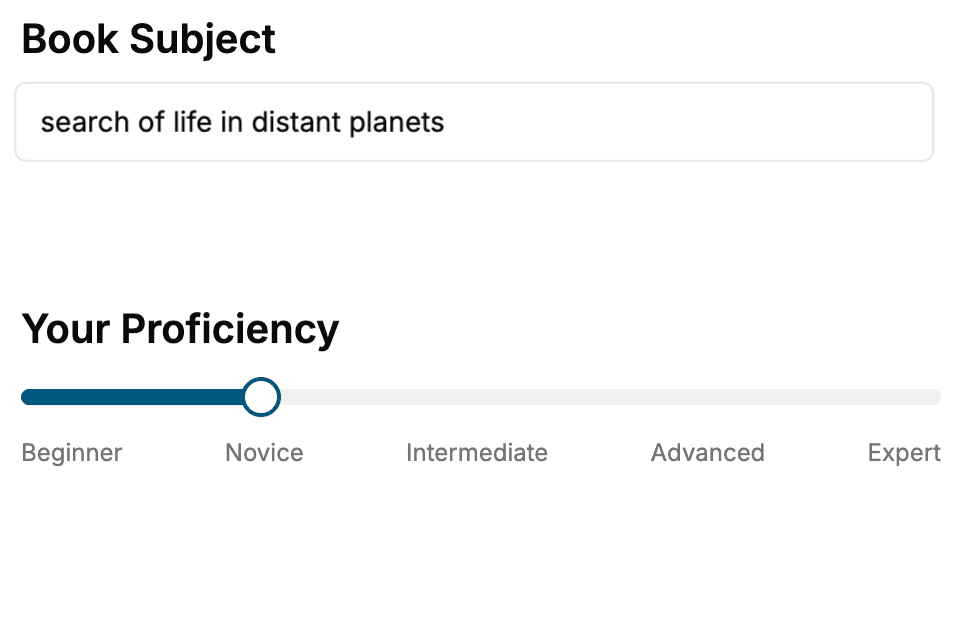
- 1. Select your focus
Select the focus of your Stress Management book and share your background
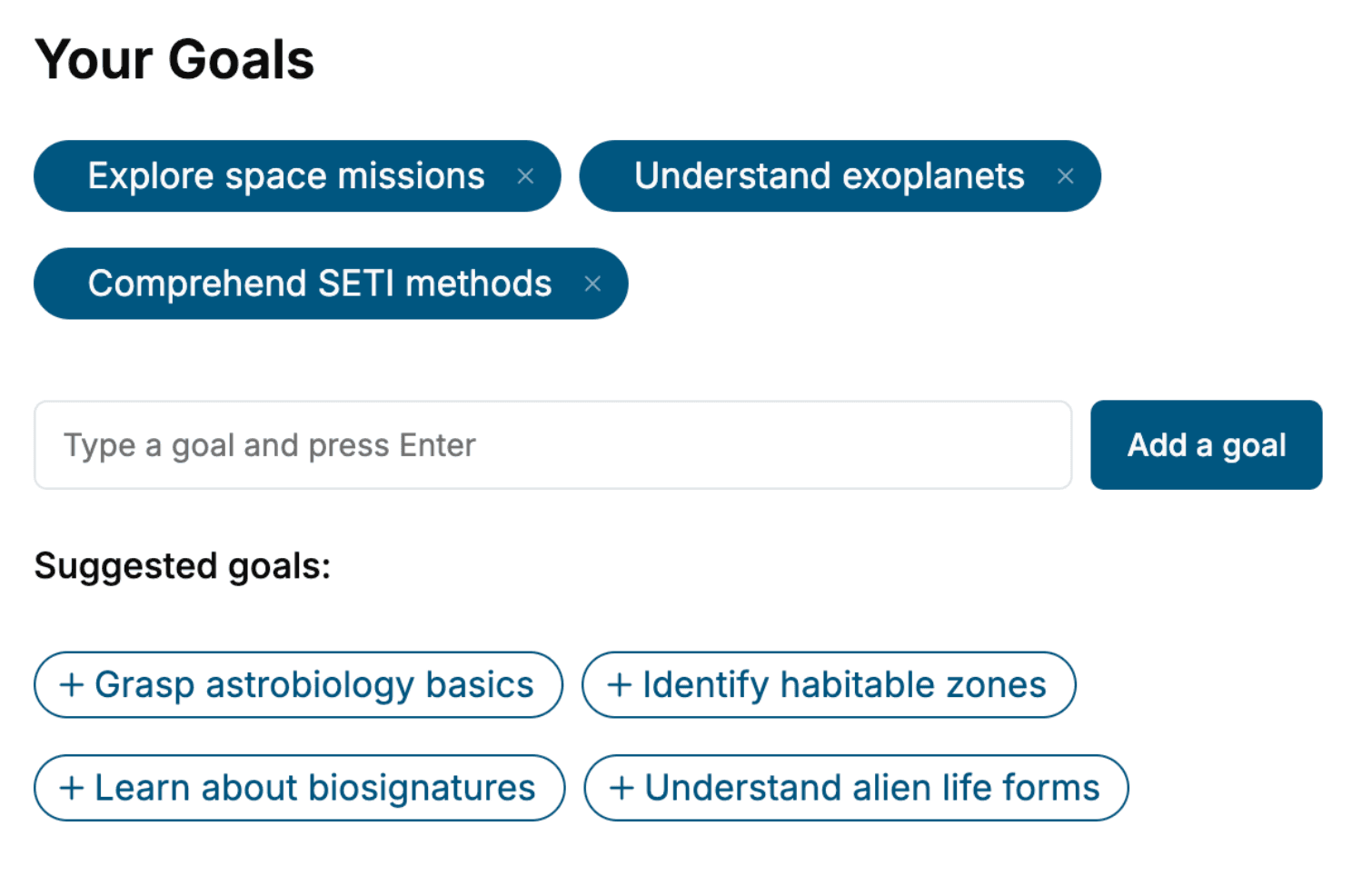
- 2. Personalize your book
Specify your goals and choose sub-topics to include
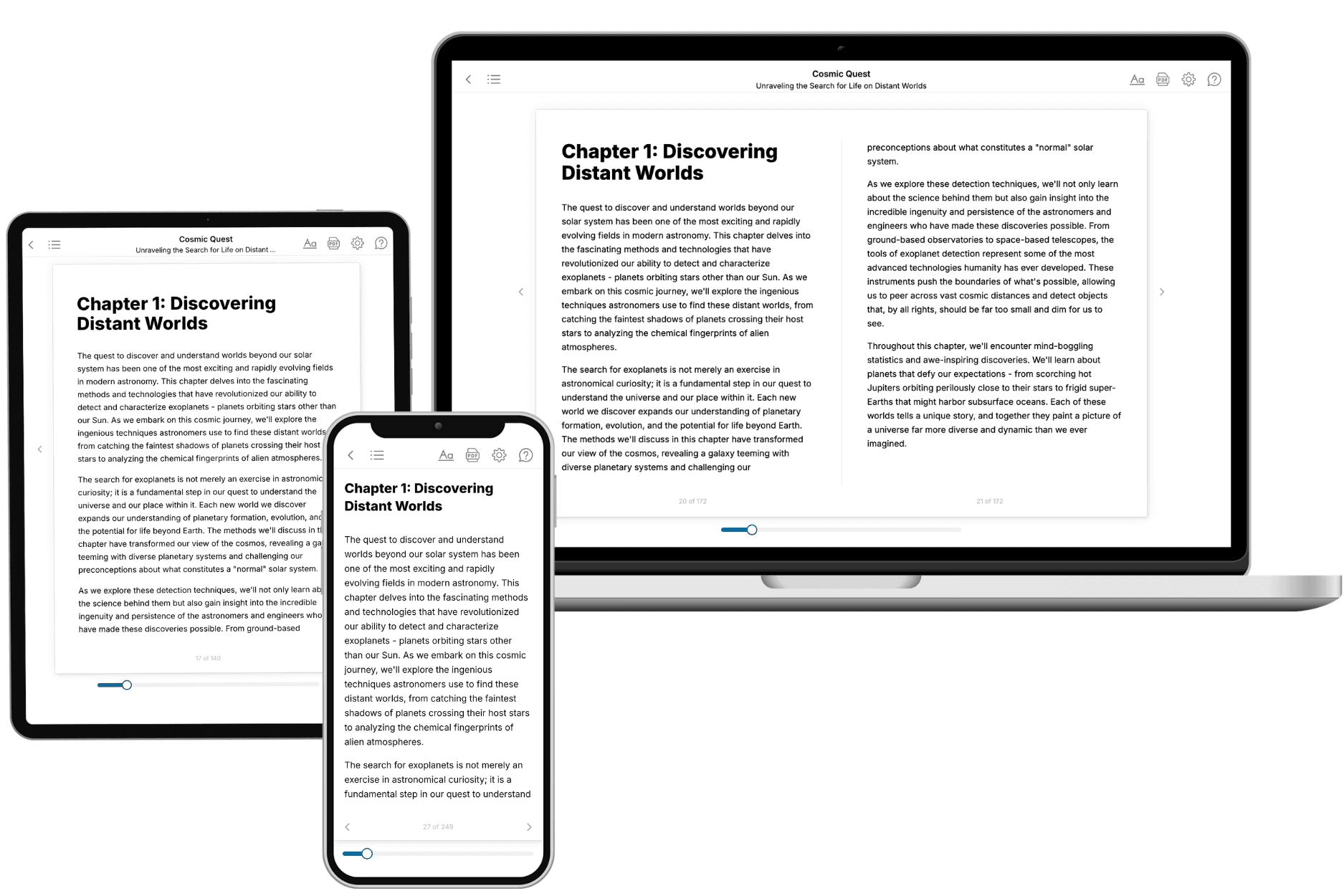
- 3. Get your tailored book
Your book is ready in 10 minutes. Read it online, download as EPUB or PDF, or send to Kindle.
Frequently asked questions
- What is TailoredRead?
TailoredRead creates complete, full-length nonfiction ebooks, written specifically for you. Tell us what you want to learn and why, and TailoredRead writes you a complete ebook on it, with charts, tables, and diagrams throughout. Read it online, on Kindle, or on any e-reader, or download it as a PDF or EPUB. Every book is written fresh the day you order it.
- How is the book tailored to me?
Before anything is written, you answer a few short questions about your goals, your background, and the topics you care about. Your book is then planned around your answers: written at your level, focused on your goals, and covering the topics you chose, instead of the one-size-fits-all book a store sells everyone.
- Will it read like generic AI content?
No. Your book isn't a chat transcript: it's planned chapter by chapter before a single word is written, told in a clear book voice, and explains ideas visually with charts, tables, and diagrams. After writing, every book goes through an editorial pass that polishes chapters so the book reads consistent from start to finish. Judge for yourself: browse thousands of sample books on our Explore Books page.
- How accurate is the content?
Our AI first checks whether your subject needs live research. Niche and fast-moving subjects are researched before writing, and the book plan and chapters are grounded in what it finds. After writing, every book goes through a quality pass that checks its facts and consistency, and researched books list their sources in a Notes section at the back.
- How long is the book?
You choose the length: Comprehensive (250-300 pages), Detailed (150-200 pages), Essential (70-100 pages), or Short (30-50 pages).
- Does the book include visuals?
Yes. Every book includes charts, tables, and diagrams: timelines, checklists, step-by-step guides, decision trees, comparison tables, matrices, and bar charts. A typical book includes dozens of these visual elements.
- Can I read it on Kindle? What formats can I download?
Yes. Every book can be read in our online reader or downloaded as a PDF or EPUB. The EPUB can be opened with Kindle, Apple Books, Kobo, and any e-reader. The Commercial and Author licenses also include an editable Word (DOCX) and Markdown download.
- How much does it cost?
About the price of a regular ebook. The exact price depends on your book's length and complexity, from $2 for the shortest books to $35 for the most comprehensive, and it's shown when you review your book, before you commit to anything. Each book is a one-time purchase, yours to keep, no subscription. Licenses that let you share, teach, or publish your book range from $35.99 to $49.99.
- Can I preview the book before purchasing?
Before you pay, you'll see what your book will cover: the title, a detailed description, the estimated length, and the complete chapter-by-chapter table of contents, so you know what you're getting before you decide. The full text itself is written after you purchase.
- How long does it take to create a book?
About 10 minutes. You can start reading the opening chapters while the rest is still being written.