The Synonym Mastery Guide
Build a Richer Vocabulary and Express Yourself with Precision
Stop settling for the same tired words in your writing and speech.
191 pages8 chaptersMay 17, 2026Writing
About this book
This guide teaches you how synonyms actually work—not as interchangeable replacements, but as precision tools with distinct personalities and purposes. You'll discover why "happy" and "delighted" aren't the same thing, learn to recognize the subtle differences that matter in real communication, and build a system for choosing exactly the right word every time. Through practical examples, side-by-side comparisons, and hands-on exercises, you'll develop the vocabulary awareness that separates ordinary writing from compelling communication. Whether you're crafting professional emails, creative writing, or everyday conversations, this book gives you the confidence to express yourself with clarity and impact.
Table of contents
- IntroductionWhy Synonyms Matter More Than You Think, How to Use This Book for Maximum Learning, What You'll Discover in These PagesRead below
- Module 1: Understanding Synonym FundamentalsDefining Synonyms: More Than Just Similar Words, Denotation vs. Connotation: The Hidden Differences, Why Perfect Synonyms Don't Exist, Recognizing Different Types of Synonyms
- Module 2: Exploring Connotation and Emotional ToneWhat Is Connotation and Why It Shapes Meaning, Identifying Positive, Negative, and Neutral Connotations, Mapping Words on the Intensity Spectrum, Using Connotation to Match Your Intended Message
- Module 3: Mastering Formality and RegisterUnderstanding Register: Formal, Informal, and Everything Between, Choosing Formal Synonyms for Professional Contexts, Selecting Informal Synonyms for Casual Communication, Avoiding Common Register Mistakes
- Module 4: Building Your Synonym AwarenessExploring Word Families and Etymology, Recognizing Patterns in Related Words, Creating Your Own Synonym Clusters, Building Active Vocabulary Through Practice
- Module 5: Common Synonym Mistakes and How to Avoid ThemIdentifying False Friends and Look-Alike Words, The Dangers of Blindly Using a Thesaurus, Recognizing Context-Based Synonym Errors, Learning from Real-World Synonym Mistakes
- Module 6: Practical Synonym Application in WritingUsing Synonyms to Eliminate Repetition, Enhancing Clarity Through Precise Word Choice, Creating Tone and Voice with Strategic Synonyms, Revision Techniques for Synonym Improvement
- Module 7: Synonym Mastery in Different ContextsMastering Synonyms in Professional Communication, Leveraging Synonyms in Creative Writing, Applying Synonyms in Academic Writing, Enhancing Everyday Conversation with Better Word Choices
- Module 8: Building Your Personal Synonym SystemCreating Your Personal Synonym Reference Guide, Developing a System for Tracking New Synonyms, Using Spaced Repetition to Lock in Learning, Maintaining and Expanding Your Synonym Knowledge
- ConclusionYour Ongoing Synonym Journey, Next Steps for Continued Growth
- Glossary of Key Terms
- Further Reading and Resources
Introduction
Words are the most powerful tools you will ever use. Every email you send, every conversation you have, every sentence you write depends on the words you choose. Yet most people work with a surprisingly small toolkit, reaching for the same familiar words again and again. The result is writing and speech that feels flat, repetitive, or imprecise. This guide exists to change that. It will show you how to move beyond your default vocabulary and start choosing words with real intention and confidence.
The idea behind this book is simple but often misunderstood: synonyms are not interchangeable. Most people treat them as if they are. They open a thesaurus, pick a word that looks similar, and move on. But that approach leads to some of the most common and damaging writing mistakes out there. The word slim and the word scrawny both describe a thin person, but one sounds like a compliment and the other sounds like a criticism. Choosing the wrong one can completely change how your message lands.
This guide takes a different approach. Instead of giving you long lists of words to memorize, it teaches you how to think about words. You will learn to notice the subtle differences between similar words, understand why those differences matter, and develop a reliable process for choosing the right word in any situation. That kind of vocabulary awareness is a skill, and like any skill, it gets stronger with practice. By the time you finish this book, you will have both the knowledge and the habits to use language with far greater precision.
By the end of this introduction, you will have:
- A clear understanding of why synonym choice matters in real communication
- A practical roadmap for how to use this book most effectively
- A preview of the key concepts and skills covered throughout the guide
- The motivation and context to start building stronger vocabulary habits right away
When to use this module: This introduction is the right place to start if you are new to the book or if you want to understand the overall approach before diving into specific chapters. It is also worth revisiting if you ever feel uncertain about the purpose behind a particular lesson or technique. Think of it as your orientation guide, giving you the context and direction you need to get the most out of everything that follows.
Why Synonyms Matter More Than You Think
After this lesson, you will be able to:
- Explain why synonym choice has a real impact on how your message is received
- Identify at least two situations where the wrong synonym could cause confusion or misunderstanding
- Recognize the difference between passive vocabulary (words you recognize) and active vocabulary (words you use confidently)
Most people learn vocabulary by collecting words. They encounter a new word, look it up, and add it to a mental list. The problem is that knowing a word exists is very different from knowing how to use it well. Research in linguistics suggests that the average adult English speaker recognizes around 40,000 to 50,000 words but actively uses far fewer in everyday communication.[1] That gap between recognition and active use is exactly where synonym mastery lives.
Consider a practical example. Imagine you are writing a performance review for a colleague who works hard but sometimes misses deadlines. You want to describe their work style as determined. A quick thesaurus search might suggest stubborn, persistent, tenacious, or obstinate. All of these words relate to the idea of not giving up. But stubborn and obstinate carry a negative tone, suggesting someone who refuses to listen. Persistent and tenacious carry a positive tone, suggesting admirable commitment. Choosing the wrong word here could seriously damage a professional relationship.
The stakes are not always that high, of course. But synonym choice shapes every piece of communication you produce, even in small ways. The word you choose affects the emotional tone of your message, the level of formality, the clarity of your meaning, and the impression you leave on your reader or listener. Over time, consistently precise word choices build a reputation for clear, thoughtful communication. Consistently imprecise choices do the opposite.
There is also a creative dimension to this. Writers who understand synonyms deeply can do things with language that others simply cannot. They can control the pace and rhythm of a sentence by choosing a shorter or longer word. They can shift the emotional temperature of a paragraph by swapping one adjective for another. They can make a character sound educated or casual, warm or cold, confident or uncertain, all through word choice alone. These are not tricks reserved for professional authors. They are practical skills that anyone can develop.
One of the most important distinctions in vocabulary learning is the difference between passive vocabulary and active vocabulary. Passive vocabulary includes all the words you can recognize and understand when you read or hear them. Active vocabulary includes the words you actually reach for when you write or speak. Most people have a much larger passive vocabulary than active vocabulary. The goal of this book is to move more words from the passive column into the active column, specifically by helping you understand when and why to use them.
Here is a quick illustration of how synonym choice changes meaning in practice:
Scenario: You want to say that a meeting was long and unproductive.
Option A: "The meeting was lengthy." (neutral, factual)
Option B: "The meeting was drawn-out." (mildly negative, suggests frustration)
Option C: "The meeting was interminable." (strongly negative, suggests exhaustion or irritation)
Each word describes the same basic fact but sends a very different signal about how you feel about it.
Understanding why synonyms matter is the first step toward using them well. Once you see that every word carries its own personality, its own emotional weight, and its own contextual rules, you start to look at vocabulary differently. You stop asking "What is another word for X?" and start asking "What is the right word for what I actually mean?" That shift in thinking is what this entire book is designed to support.
Practice Tasks:
- Take a paragraph from something you wrote recently (an email, a message, a document). Underline five words and look up their synonyms. For each synonym, ask yourself: does this word mean exactly the same thing, or is there a subtle difference?
- Think of three situations in your life where word choice really matters (a job application, a difficult conversation, a presentation). Write down why precision matters in each case.
- Make a list of ten words you recognize but rarely use in your own writing. These are your passive vocabulary targets for this book.
Key Takeaways:
- Synonyms are not interchangeable. Each word carries its own tone, connotation, and contextual rules.
- The gap between passive vocabulary (words you recognize) and active vocabulary (words you use) is where synonym mastery happens.
- Word choice affects emotional tone, formality, clarity, and the impression you make on others.
- Asking "What is the right word?" is more powerful than asking "What is another word?"
- Synonym awareness is a learnable skill that improves with deliberate practice.
How to Use This Book for Maximum Learning
After this lesson, you will be able to:
- Describe the most effective approach for working through this guide
- Set up a simple personal system for tracking new vocabulary as you learn
- Identify which chapters are most relevant to your specific goals
- Understand how to use the practice tasks to build real, lasting skills
This book is designed to be read in order, at least the first time through. Each chapter builds on the concepts introduced before it. Chapter 1 lays the foundation by explaining what synonyms actually are and how they work. Later chapters build on that foundation to explore connotation, formality, common mistakes, and practical application. If you skip ahead, you may find that certain ideas feel unclear because they rely on earlier concepts. A single read-through from start to finish will give you the clearest picture of the whole system.
That said, this is also a reference book. Once you have read it through once, you can return to specific chapters whenever you need them. If you are working on a professional email and want guidance on formal word choices, Chapter 3 is your go-to. If you are revising a piece of creative writing and want to sharpen your word choices, Chapter 6 and Chapter 7 will be most useful. The table of contents is detailed enough to help you find exactly what you need quickly.
The practice tasks at the end of each lesson are not optional extras. They are the most important part of the book. Reading about synonyms will give you knowledge. Doing the exercises will give you skill. There is a significant difference between the two. Research on vocabulary acquisition consistently shows that active engagement with new words, through writing, speaking, and deliberate practice, leads to far better retention than passive reading alone.[2] Do the tasks. Even the simple ones. Especially the simple ones.
Here is a recommended approach for getting the most out of each lesson:
- Read the lesson once without stopping to take notes. Get the big picture first.
- Read it again and highlight or write down any words, examples, or concepts that stand out.
- Do the practice tasks before moving on to the next lesson. Do not skip this step.
- Add new words to your personal vocabulary log (more on this below).
- Review your notes from the previous lesson before starting the next one. This reinforces learning.
One of the most valuable habits you can build while working through this book is keeping a vocabulary log. This does not need to be complicated. A simple notebook or a notes app on your phone will work perfectly. Every time you encounter a word that interests you, or a synonym pair that surprises you, write it down. Include the word, a brief definition, an example sentence, and one or two synonyms with notes on how they differ. This log becomes a personal reference tool that grows more useful over time.
Here is a simple template for a vocabulary log entry:
Word: Reluctant
Meaning: Unwilling or hesitant to do something
Example: "She was reluctant to share her opinion in the meeting."
Synonyms and differences:
- Hesitant: focuses on uncertainty or lack of confidence
- Unwilling: stronger, suggests active resistance
- Loath: formal, suggests strong aversion
Context note: "Reluctant" works in most registers; "loath" is better for formal writing.
It is also worth thinking about your specific goals before you start. Different readers will get different things from this book depending on what they need. If your main goal is to improve your professional writing, pay close attention to Chapters 3, 6, and 7. If you are a creative writer, Chapters 2, 6, and 7 will be especially valuable. If you are learning English as a second language and want to avoid common mistakes, Chapters 5 and 8 are essential. Knowing your goal helps you read with purpose and apply what you learn more effectively.
Finally, be patient with yourself. Vocabulary development is not a sprint. It is a long-term process that rewards consistency over intensity. Spending fifteen minutes a day with this book and your vocabulary log will produce better results than reading the whole thing in one sitting and never returning to it. Small, regular practice sessions are the foundation of lasting language growth. Set a realistic schedule, stick to it, and trust the process.
Practice Tasks:
- Set up your vocabulary log right now. Choose your format (notebook, app, or document) and create your first entry using the template above. Pick any word from this lesson to start with.
- Write down your top two or three goals for reading this book. Be specific. For example: "I want to stop repeating the word 'important' in my work emails" or "I want to write more vivid descriptions in my fiction."
- Based on your goals, identify the two or three chapters that seem most relevant to you. Note them down so you can give them extra attention when you get there.
- Schedule a regular reading time in your week. Even 15 to 20 minutes, three times a week, is enough to make real progress.
Key Takeaways:
- Read the book in order the first time, then use it as a reference guide afterward.
- The practice tasks are essential. Active engagement with words builds skill; passive reading alone does not.
- A vocabulary log is one of the most powerful tools you can use alongside this book.
- Knowing your specific goals helps you read with purpose and apply lessons more effectively.
- Consistent, regular practice over time produces better results than intensive one-time reading.
- Use the simple vocabulary log template to capture new words, synonyms, and context notes as you go.
What You'll Discover in These Pages
After this lesson, you will be able to:
- Summarize the key themes and skills covered throughout this guide
- Understand how the chapters connect to form a complete system for synonym mastery
- Feel confident and motivated to begin the learning journey ahead
This book covers eight chapters, each focused on a different dimension of synonym mastery. Together, they form a complete system that takes you from understanding the basics of how synonyms work all the way through to building your own personal vocabulary reference system. Each chapter is practical and grounded in real examples. There are no abstract theories here without concrete application. Every concept is illustrated with specific word comparisons, real-world scenarios, and actionable exercises.
Chapter 1 starts at the foundation. It defines what synonyms actually are (which turns out to be more nuanced than most people expect), introduces the critical distinction between denotation and connotation, and explains why truly perfect synonyms essentially do not exist. This chapter will change the way you think about vocabulary from the very first page. It also introduces a framework for categorizing different types of synonyms, which you will use throughout the rest of the book.
Chapter 2 goes deep on connotation and emotional tone. This is where you will learn to map words on a spectrum of intensity, from mild to strong, and understand how the emotional weight of a word shapes the message it sends. For example, the words surprised, astonished, and flabbergasted all describe a reaction to something unexpected, but they sit at very different points on the intensity scale. Knowing how to use that spectrum deliberately is one of the most powerful writing skills you can develop.
Chapter 3 tackles formality and register, which is the idea that different situations call for different levels of language. The word commence and the word start mean essentially the same thing, but one belongs in a formal speech and the other belongs in a casual conversation. Getting register wrong is one of the most common and noticeable vocabulary mistakes people make. This chapter gives you a clear framework for matching your word choices to your context every time.
Chapters 4 and 5 work together to build your vocabulary awareness and protect you from common mistakes. Chapter 4 explores word families and etymology, showing you how understanding the roots of words helps you recognize patterns and remember synonyms more easily. Chapter 5 is a practical guide to the most common synonym errors, including the dangers of over-relying on a thesaurus, the trap of false friends (words that look similar but mean different things), and the subtle context errors that even experienced writers make.
Chapters 6 and 7 are where everything comes together in practice. Chapter 6 focuses on applying synonym knowledge in your writing, covering techniques for eliminating repetition, enhancing clarity, creating tone and voice, and revising your work for stronger word choices. Chapter 7 takes those skills into specific real-world contexts:
- Professional communication (emails, reports, presentations)
- Creative writing (fiction, poetry, personal essays)
- Academic writing (essays, research papers, formal arguments)
- Everyday conversation (how better word choices improve spoken communication too)
Chapter 8 closes the book with a focus on building lasting habits. It walks you through creating a personal synonym reference guide, developing a system for tracking new words, using spaced repetition to lock in your learning, and maintaining your vocabulary growth over the long term. The goal of this chapter is to make sure that what you learn in this book does not fade after you close it. It gives you the tools to keep growing independently.
Throughout all eight chapters, you will find a consistent emphasis on real examples and side-by-side comparisons. Abstract explanations are always followed by concrete illustrations. For instance, when discussing the difference between angry and furious, the book does not just say "furious is stronger." It shows you exactly how that difference plays out in a sentence, in a paragraph, and in a specific communication context. That level of specificity is what makes the learning stick.
There is also a recurring theme woven through every chapter: the idea that good vocabulary is not about using impressive or unusual words. It is about using the right word. Sometimes the right word is simple and common. Sometimes it is precise and technical. The skill lies in knowing the difference and having enough options available to make a genuine choice. That is what synonym mastery really means, and it is exactly what this book will help you achieve.
Practice Tasks:
- Read through the chapter summaries above and write one sentence for each chapter describing what you most want to learn from it. This gives you a personal learning intention for each section.
- Think of a recent piece of writing where you felt your word choices were weak or repetitive. Keep it nearby as a working example. You will be able to apply lessons from this book to it directly as you progress.
- Write down one synonym pair that already confuses you or that you have used incorrectly in the past. Hold onto this example. By the time you finish Chapter 1, you should have a much clearer understanding of why those two words are different.
Key Takeaways:
- This book covers eight chapters that together form a complete system for synonym mastery, from fundamentals to long-term habit building.
- Every concept is grounded in real examples and side-by-side word comparisons, not abstract theory alone.
- Key themes include connotation, formality, word families, common mistakes, and practical application across different writing contexts.
- The goal is not to use impressive words but to use the right word for each specific situation.
- Chapter 8 ensures that your learning continues beyond the book through a personal vocabulary system and long-term habits.
- Approaching each chapter with a specific learning intention will help you get more out of every lesson.
This is the end of the free sample. The full book has 8 chapters.
Want this book written for you?
Tell us your goals and background, and get your own version of this book, tailored by AI to you.


Benefits of AI-tailored books
- Read one book, not ten:
- all the Writing knowledge you need, gathered into a single book.
- Save days of learning:
- tell us your goals, choose your topics, and the whole book is built around them.
- Learn effortlessly:
- Writing book written for your specific background and expertise.
- Understand at a glance:
- includes charts, tables, timelines, checklists, decision trees, and more.
- Stay current:
- written the day you order it, not years ago.
- Trust what you read:
- every book is checked for accuracy, with real research when your subject needs it.
Create your unique book in 3 steps
- 1. Select your focus
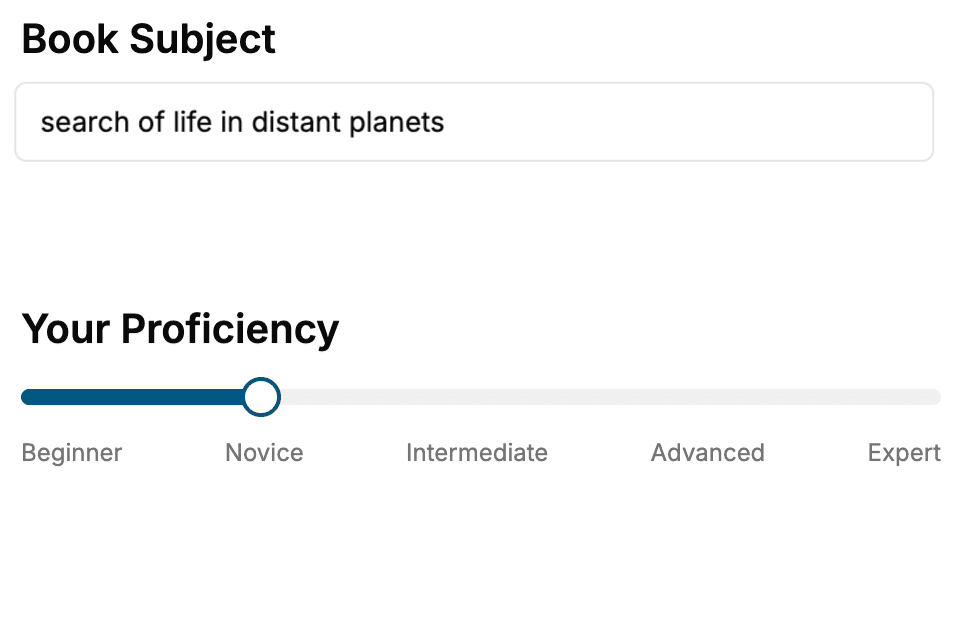
Select the focus of your Writing book and share your background
- 2. Personalize your book
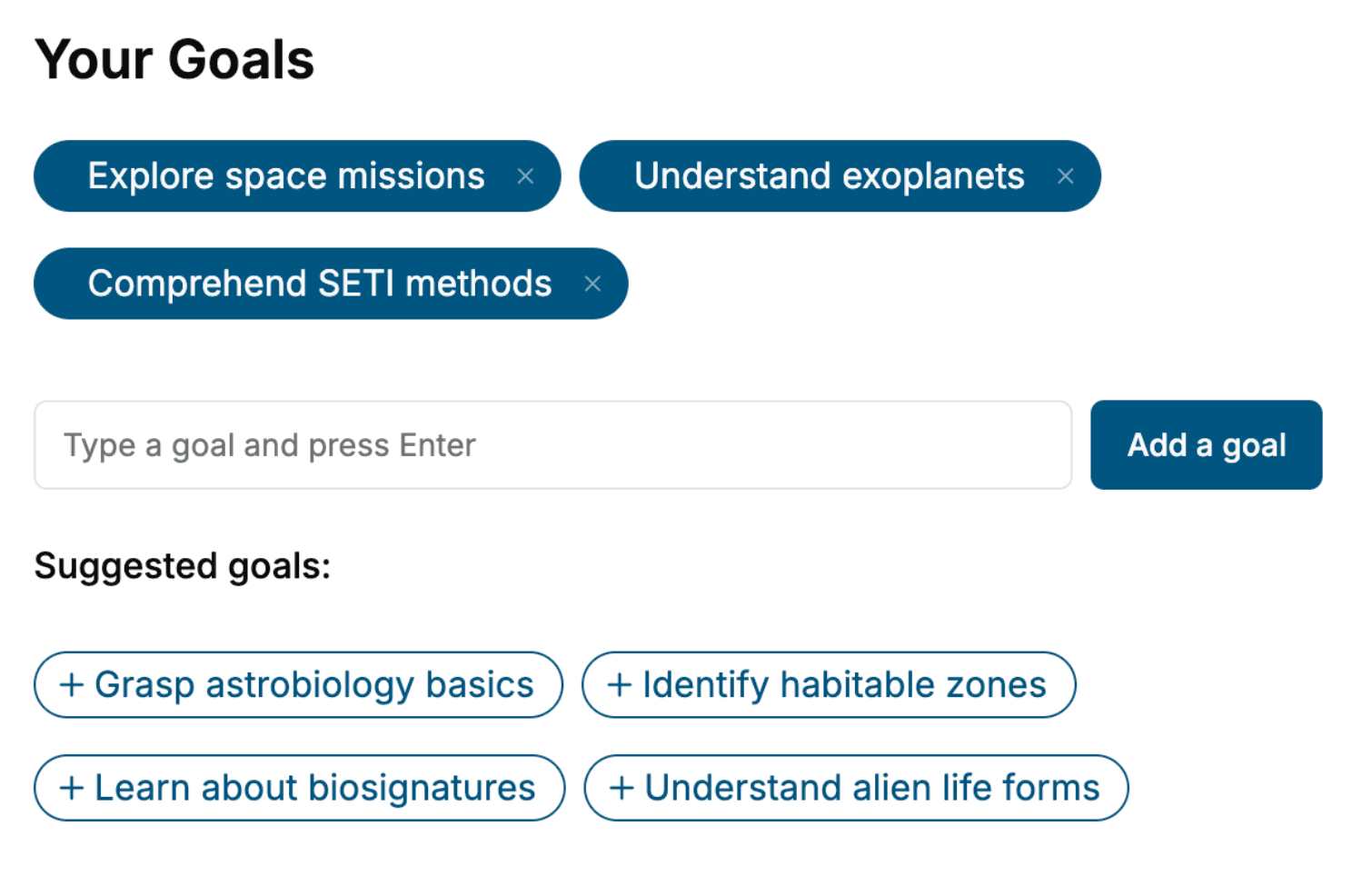
Specify your goals and choose sub-topics to include
- 3. Get your tailored book
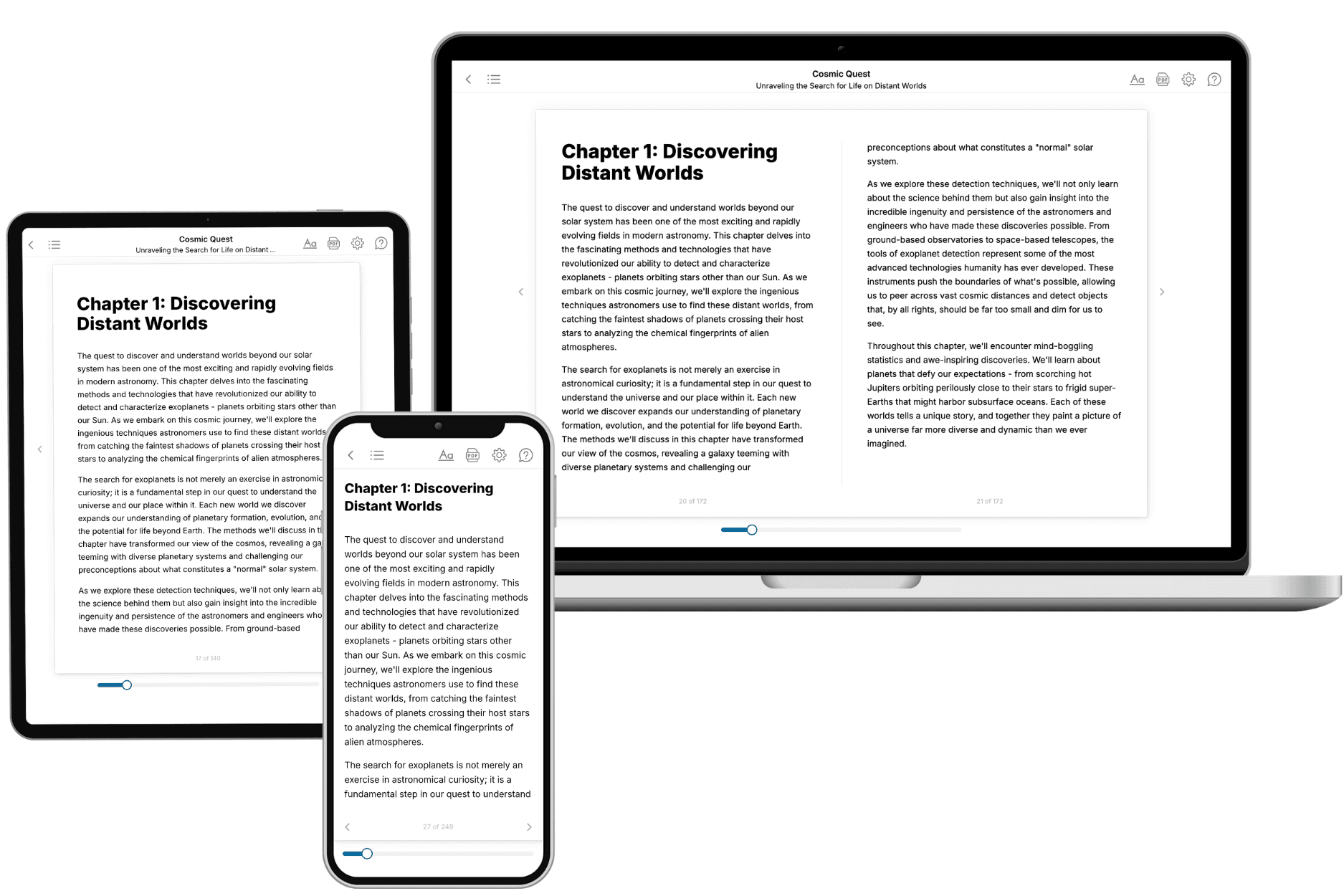
Your book is ready in 10 minutes. Read it online, download as EPUB or PDF, or send to Kindle.
Frequently asked questions
- What is TailoredRead?
TailoredRead creates complete, full-length nonfiction ebooks, written specifically for you. Tell us what you want to learn and why, and TailoredRead writes you a complete ebook on it, with charts, tables, and diagrams throughout. Read it online, on Kindle, or on any e-reader, or download it as a PDF or EPUB. Every book is written fresh the day you order it.
- How is the book tailored to me?
Before anything is written, you answer a few short questions about your goals, your background, and the topics you care about. Your book is then planned around your answers: written at your level, focused on your goals, and covering the topics you chose, instead of the one-size-fits-all book a store sells everyone.
- Will it read like generic AI content?
No. Your book isn't a chat transcript: it's planned chapter by chapter before a single word is written, told in a clear book voice, and explains ideas visually with charts, tables, and diagrams. After writing, every book goes through an editorial pass that polishes chapters so the book reads consistent from start to finish. Judge for yourself: browse thousands of sample books on our Explore Books page.
- How accurate is the content?
Our AI first checks whether your subject needs live research. Niche and fast-moving subjects are researched before writing, and the book plan and chapters are grounded in what it finds. After writing, every book goes through a quality pass that checks its facts and consistency, and researched books list their sources in a Notes section at the back.
- How long is the book?
You choose the length: Comprehensive (250-300 pages), Detailed (150-200 pages), Essential (70-100 pages), or Short (30-50 pages).
- Does the book include visuals?
Yes. Every book includes charts, tables, and diagrams: timelines, checklists, step-by-step guides, decision trees, comparison tables, matrices, and bar charts. A typical book includes dozens of these visual elements.
- Can I read it on Kindle? What formats can I download?
Yes. Every book can be read in our online reader or downloaded as a PDF or EPUB. The EPUB can be opened with Kindle, Apple Books, Kobo, and any e-reader. The Commercial and Author licenses also include an editable Word (DOCX) and Markdown download.
- How much does it cost?
About the price of a regular ebook. The exact price depends on your book's length and complexity, from $2 for the shortest books to $35 for the most comprehensive, and it's shown when you review your book, before you commit to anything. Each book is a one-time purchase, yours to keep, no subscription. Licenses that let you share, teach, or publish your book range from $35.99 to $49.99.
- Can I preview the book before purchasing?
Before you pay, you'll see what your book will cover: the title, a detailed description, the estimated length, and the complete chapter-by-chapter table of contents, so you know what you're getting before you decide. The full text itself is written after you purchase.
- How long does it take to create a book?
About 10 minutes. You can start reading the opening chapters while the rest is still being written.