Tribal Government Accounting Mastery
Advanced Procedures for Audit Excellence, Grant Compliance, and Financial Control
How can your tribal government establish accounting systems that simultaneously satisfy external auditors, grant funders, and internal stakeholders while honoring tribal sovereignty and governance structures?
207 pages10 chaptersEnglishMar 15, 2026AccountingCreated by Parker
About this book
This comprehensive guide provides Finance Directors with advanced procedures and frameworks specifically designed for tribal government accounting complexity. Drawing on best practices from tribal finance operations nationwide, you'll develop systematic audit procedures, implement grant reconciliation protocols that ensure compliance without sacrificing efficiency, and establish year-end closing procedures that produce accurate financial statements. Learn how to design financial dashboards that provide real-time visibility into tribal fund performance, create audit workpaper standards that support institutional continuity, and document tribal accounting policies that reflect your government's unique operational requirements. Whether you're strengthening existing systems or building from the ground up, this resource provides the practical frameworks, templates, and procedures you need to achieve audit excellence while maintaining the financial controls essential to tribal governance.
Table of contents
- IntroductionThe Unique Context of Tribal Government Accounting, Why Systematic Procedures Matter for Tribal Finance, How to Use This Guide for Maximum ImpactRead below
- Chapter 1: Audit Procedure Design FundamentalsDefining Clear Audit Objectives for Tribal Operations, Risk Assessment and Control Environment Evaluation, Documenting Audit Procedures and Testing Protocols
- Chapter 2: Audit Evidence Collection and Workpaper StandardsTypes of Audit Evidence and Sufficiency Standards, Organizing Workpapers for Efficiency and Continuity, Documentation Standards and Audit Trail Requirements
- Chapter 3: Tribal Fund Accounting and ReconciliationUnderstanding Tribal Fund Structures and Classifications, Systematic Fund Reconciliation Procedures, Variance Analysis and Fund Performance Monitoring
- Chapter 4: Grant Reconciliation and Compliance DocumentationEstablishing Grant Tracking and Allocation Systems, Grant Reconciliation Protocols and Procedures, Compliance Documentation and Funder Requirements
- Chapter 5: Tribal Accounting Policies and StandardsDeveloping a Comprehensive Accounting Policy Framework, Revenue Recognition and Accrual Policies, Policy Implementation and Compliance Monitoring
- Chapter 6: Year-End Closing Procedures and Financial StatementsDeveloping a Comprehensive Closing Timeline, Accrual Adjustments and Account Reconciliations, Closing Documentation and Financial Statement Preparation
- Chapter 7: Financial Dashboard Development and ReportingDesigning Dashboards for Tribal Financial Oversight, Selecting Key Performance Indicators and Metrics, Implementation and Stakeholder Communication
- Chapter 8: Internal Controls and Compliance FrameworksDesigning Controls Specific to Tribal Operations, Segregation of Duties and Authorization Procedures, Testing and Evaluating Control Effectiveness
- Chapter 9: Advanced Tribal Accounting ConsiderationsAccounting Implications of Tribal Sovereignty, Complex Transactions and Multi-Fund Accounting, Emerging Challenges and Evolving Standards
- Chapter 10: Implementation Strategy and Change ManagementAssessing Current Systems and Planning Improvements, Managing Change and Building Team Capability, Continuous Improvement and System Refinement
- ConclusionKey Takeaways for Tribal Finance Excellence, Your Path Forward
- Appendix: Templates and Reference MaterialsSample Audit Procedures and Checklists, Accounting Policy Templates, Workpaper Organization Examples, Financial Dashboard Templates
Introduction
Tribal government finance sits at a crossroads unlike any other area of public accounting. On one side, you have the full weight of federal grant compliance requirements, Generally Accepted Accounting Principles (GAAP), and Governmental Accounting Standards Board (GASB) pronouncements. On the other, you have the sovereign authority of a tribal nation, its unique governance structures, its community obligations, and funding streams that simply do not exist in any other government context. Navigating that crossroads with precision and confidence is what separates a tribal finance operation that merely survives audit season from one that consistently achieves excellence.
The stakes are high and very real. Tribal governments collectively manage billions of dollars in federal grants, gaming revenues, enterprise funds, and trust resources each year. A single audit finding can trigger repayment demands, jeopardize future funding, and damage the credibility of the finance office with tribal leadership and community members alike. Conversely, a well-run finance operation with strong internal controls, clean audit opinions, and transparent reporting builds institutional trust that supports every program the tribe delivers, from healthcare and education to housing and economic development.
This guide was built specifically for Finance Directors who already understand the fundamentals of governmental accounting and are ready to move into advanced, systematic practice. You will not find basic definitions of debits and credits here. What you will find are practical frameworks, documented procedures, and actionable templates designed for the specific complexity of tribal government operations. Each chapter addresses a distinct area of tribal finance management, and together they form a comprehensive system for achieving audit excellence, grant compliance, and financial control.
The procedures and frameworks presented throughout this guide draw on best practices observed across tribal finance operations nationwide, as well as established standards from the Government Finance Officers Association (GFOA), the Office of Management and Budget (OMB) Uniform Guidance, and GASB standards applicable to governmental entities. Where tribal-specific considerations diverge from standard governmental accounting practice, those distinctions are clearly identified and explained. The goal is not to replace your professional judgment but to give it a stronger, more systematic foundation.
The Unique Context of Tribal Government Accounting
Tribal governments occupy a distinct legal and financial position that has no true parallel in the broader landscape of governmental accounting. As sovereign nations, tribes exercise governmental authority over their lands and members, yet they also operate within a complex web of federal trust responsibilities, treaty obligations, and intergovernmental agreements. This dual reality shapes every aspect of tribal finance, from how revenues are classified to how expenditures are authorized and reported.
One of the most significant distinctions is the sheer diversity of revenue sources that a tribal government may manage simultaneously. Consider a mid-sized tribe operating a gaming enterprise, administering a dozen federal grants under programs like the Indian Health Service (IHS), the Bureau of Indian Affairs (BIA), and the Administration for Native Americans (ANA), managing trust land lease revenues, and operating a tribally owned utility. Each of these revenue streams carries different accounting treatment, different compliance requirements, and different reporting obligations. Managing them within a single, coherent accounting system requires a level of procedural sophistication that goes well beyond standard municipal finance.[1]
The fund accounting structure used by tribal governments reflects this complexity. A typical tribal government chart of accounts may include a General Fund, multiple Special Revenue Funds for individual grants, Enterprise Funds for gaming and other business-type activities, Capital Projects Funds, Debt Service Funds, and Permanent Funds for endowments or trust resources. Each fund is a self-balancing set of accounts, and transactions between funds require careful interfund accounting to avoid misstatement. Getting this structure right from the beginning is foundational to everything else in this guide.
Tribal sovereignty also introduces accounting considerations that have no equivalent in state or local government. Tribal governments are not subject to state taxation, and their enterprises may operate under different legal frameworks than comparable non-tribal businesses. Sovereign immunity affects how contracts are structured and how disputes are resolved, which in turn affects how contingent liabilities are evaluated and disclosed in financial statements. These are not abstract legal concepts; they have direct, practical implications for how financial statements are prepared and how auditors approach their work.
Federal trust responsibilities create another layer of complexity. The federal government holds land and certain financial assets in trust for tribal nations, and the accounting for those trust assets involves coordination with the Bureau of Indian Affairs and, in some cases, the Office of Special Trustee for American Indians. Reconciling tribal records with federal trust account statements is a recurring challenge for many tribal finance offices, and discrepancies can become significant audit findings if not addressed systematically.
The workforce context in tribal finance also deserves acknowledgment. Many tribal finance offices operate with lean staffing, high turnover, and limited access to specialized training compared to larger governmental entities. This makes documented procedures and institutional knowledge management even more critical. When a key staff member leaves, the procedures they carried in their head leave with them unless those procedures are written down, tested, and embedded in the organization's systems. Building that institutional resilience is a thread that runs through every chapter of this guide.
Example: The Multi-Fund Challenge in Practice. A tribal government in the Pacific Northwest administered 18 active federal grants simultaneously while also managing revenues from a tribally owned hotel and a fuel distribution enterprise. Their finance office had three full-time staff members. Without documented fund accounting procedures and a systematic grant tracking system, the annual audit regularly produced multiple findings related to expenditure allocation and grant closeout. After implementing the procedures described in this guide, the same three-person team completed their next audit cycle with zero findings. The difference was not more staff; it was better systems.
Understanding this context is not just background information. It is the lens through which every procedure in this guide should be read and applied. The frameworks here are designed for this specific environment, with its specific pressures, its specific legal landscape, and its specific accountability obligations to tribal members, federal funders, and future generations.
Why Systematic Procedures Matter for Tribal Finance
There is a meaningful difference between a finance office that handles its work competently and one that operates through documented, repeatable systems. The competent office relies heavily on the knowledge and judgment of its current staff. The systematic office builds that knowledge into its procedures so that quality does not depend on who happens to be in the room. For tribal governments, where the consequences of financial mismanagement extend to community services and federal relationships, the systematic approach is not optional; it is essential.
Audit readiness is perhaps the most visible benefit of systematic procedures. External auditors conducting a Single Audit under the requirements of OMB Uniform Guidance (2 CFR Part 200) are looking for evidence that controls exist, that they are documented, and that they are consistently applied.[2] When an auditor asks for documentation of your cash reconciliation process, the ideal response is not a verbal explanation from the controller. It is a written procedure, a completed reconciliation workpaper, and a supervisor sign-off that together demonstrate the control is real and functioning. Systematic procedures make that response possible every time, not just when the right person is available.
Grant compliance is another area where systems create measurable value. Federal grant programs carry specific requirements around allowable costs, matching funds, performance reporting, and record retention. These requirements vary by program and by funder, and they change over time as regulations are updated. A tribal government managing multiple grants without a systematic tracking and compliance documentation process is essentially relying on memory and goodwill to stay compliant. That is a fragile strategy. A documented grant management system, by contrast, creates a clear record of compliance decisions, expenditure allocations, and reporting submissions that can withstand scrutiny from any direction.
The financial reporting benefits of systematic procedures are equally significant. Tribal councils, program directors, and community members depend on accurate, timely financial information to make decisions. When the finance office operates through ad hoc processes, financial reports are often delayed, inconsistent, or difficult to interpret. Systematic closing procedures, standardized reporting formats, and documented reconciliation protocols produce financial statements that are both accurate and delivered on a predictable schedule. That reliability builds credibility with tribal leadership and supports better governance decisions.
Consider the cost of not having systems in place. A 2019 study of governmental audit findings across tribal and non-tribal entities found that the most common material weaknesses cited in tribal government audits related to inadequate documentation of internal controls, inconsistent application of accounting policies, and insufficient grant monitoring procedures.[3] These are not technical accounting failures. They are systems failures. They represent situations where the knowledge of how to do something correctly existed somewhere in the organization but was not captured in a form that could be consistently applied and verified.
Systematic procedures also support staff development and succession planning. When procedures are documented clearly, new staff members can be trained to a consistent standard. Experienced staff can focus on judgment-intensive work rather than re-explaining routine processes. And when turnover occurs, which it will, the institutional knowledge embedded in the procedures survives the departure. This is particularly important for tribal finance offices where specialized expertise in tribal accounting is difficult to recruit and retain.
There is also a sovereignty dimension to this conversation. Strong financial systems are an expression of tribal self-determination. When a tribal government can demonstrate rigorous financial management, it strengthens its position in negotiations with federal agencies, supports arguments for greater programmatic flexibility, and builds the credibility needed to take on more complex financial responsibilities over time. Conversely, repeated audit findings and compliance failures can invite increased federal oversight that constrains tribal autonomy. Building excellent financial systems is, in a very real sense, an act of governance.
The following table summarizes the key benefits of systematic procedures across the major areas of tribal finance management:
- Audit readiness: Documented controls and workpaper standards reduce audit preparation time and support clean audit opinions.
- Grant compliance: Systematic tracking and documentation ensures expenditures meet funder requirements and reduces disallowance risk.
- Financial reporting accuracy: Standardized closing and reconciliation procedures produce reliable financial statements on a consistent schedule.
- Staff continuity: Written procedures preserve institutional knowledge through personnel transitions.
- Leadership credibility: Transparent, well-documented financial management builds trust with tribal councils and community members.
- Sovereignty support: Strong financial governance strengthens the tribe's position in intergovernmental relationships.
How to Use This Guide for Maximum Impact
This guide is organized to move from foundational concepts to advanced application, but it is not designed to be read only from front to back. Each chapter addresses a distinct area of tribal finance management and can stand on its own as a reference resource. If your most pressing need right now is improving your grant reconciliation process, you can go directly to Chapter 4 and find actionable procedures without needing to read the preceding chapters first. That said, the chapters build on each other in meaningful ways, and reading the full guide will give you a more integrated understanding of how the different systems connect.
The guide is structured around ten core chapters, each covering a major area of tribal government accounting practice. Here is a brief overview of what each chapter covers and when it will be most useful:
- Chapter 1: Audit Procedure Design Fundamentals. Covers how to define audit objectives, conduct risk assessments, and document testing protocols specific to tribal operations. Most useful when preparing for an upcoming audit or redesigning your audit preparation process.
- Chapter 2: Audit Evidence Collection and Workpaper Standards. Addresses evidence sufficiency, workpaper organization, and documentation standards. Most useful when standardizing your workpaper files or training staff on audit documentation.
- Chapter 3: Tribal Fund Accounting and Reconciliation. Covers fund structures, reconciliation procedures, and variance analysis. Most useful when setting up or restructuring your chart of accounts and reconciliation workflows.
- Chapter 4: Grant Reconciliation and Compliance Documentation. Provides grant tracking systems, reconciliation protocols, and compliance documentation frameworks. Most useful during grant setup, ongoing administration, or closeout.
- Chapter 5: Tribal Accounting Policies and Standards. Covers policy framework development, revenue recognition, and compliance monitoring. Most useful when drafting or updating your accounting policy manual.
- Chapter 6: Year-End Closing Procedures and Financial Statements. Addresses closing timelines, accrual adjustments, and financial statement preparation. Most useful in the months leading up to fiscal year-end.
- Chapter 7: Financial Dashboard Development and Reporting. Covers dashboard design, key performance indicators, and stakeholder communication. Most useful when improving financial reporting to tribal leadership.
- Chapter 8: Internal Controls and Compliance Frameworks. Addresses control design, segregation of duties, and control testing. Most useful when evaluating or strengthening your internal control environment.
- Chapter 9: Advanced Tribal Accounting Considerations. Covers sovereignty implications, complex transactions, and emerging standards. Most useful for experienced practitioners dealing with non-routine accounting situations.
- Chapter 10: Implementation Strategy and Change Management. Provides frameworks for assessing current systems, managing change, and building continuous improvement processes. Most useful when planning a significant upgrade to your finance operations.
Throughout the guide, you will find several recurring features designed to make the content immediately applicable. Procedure frameworks provide step-by-step processes that can be adapted to your specific tribal context. Templates and checklists in the appendix give you starting-point documents that can be customized for your organization. Examples and scenarios illustrate how the concepts apply in real tribal finance situations. And implementation notes flag considerations specific to tribal government operations that differ from standard governmental accounting practice.
A word about adaptation: no guide can anticipate every variation in tribal government structure, funding mix, or operational context. The procedures and frameworks here are designed to be adapted, not adopted wholesale without modification. Your tribe's governance structure, the specific federal programs you administer, the size of your finance team, and the capabilities of your accounting software will all influence how you implement these frameworks. The goal is to give you a strong, well-tested starting point that you can shape to fit your specific situation.
As you work through the guide, consider keeping a running list of the specific gaps or weaknesses in your current systems that each chapter surfaces. By the time you reach Chapter 10 on implementation strategy, you will have a prioritized inventory of improvements to pursue. This approach transforms the guide from a reading exercise into a planning tool, which is exactly how it is intended to be used.
How to prioritize your starting point. If your tribe is facing an upcoming Single Audit, start with Chapters 1, 2, and 8. If you have recently received new federal grants or are experiencing grant compliance challenges, start with Chapters 4 and 5. If your tribal council has expressed concerns about financial transparency or reporting quality, start with Chapters 6 and 7. If you are building or rebuilding your finance function from the ground up, read the guide in order, beginning with Chapter 3 to establish your fund accounting foundation.
One final note on the scope of this guide: it addresses accounting and financial management procedures, not legal advice. Tribal sovereignty, treaty rights, and intergovernmental agreements involve complex legal questions that require consultation with qualified legal counsel familiar with federal Indian law. Where legal considerations intersect with accounting practice, this guide will flag those intersections and recommend appropriate professional consultation. The accounting frameworks here are designed to work within whatever legal structure your tribe has established, not to substitute for legal guidance on what that structure should be.
The work of building excellent tribal financial systems is demanding, but it is also deeply meaningful. Every clean audit opinion, every grant successfully closed out, every financial report that gives tribal leadership the information they need to make good decisions represents a concrete contribution to the tribe's capacity to serve its members and exercise its sovereignty. That is the work this guide is designed to support, and it begins on the next page.
Notes
Introduction
- 1. National Congress of American Indians, Tribal Nations and the United States: An Introduction, NCAI Policy Research Center, 2020
- 2. Office of Management and Budget, 2 CFR Part 200 - Uniform Administrative Requirements, Cost Principles, and Audit Requirements for Federal Awards, U.S. Government Publishing Office, 2020
- 3. Government Accountability Office, Tribal Governments: Observations on Grants Management Challenges and Federal Efforts to Address Them, GAO-19-514, 2019
This is the end of the free sample. The full book has 10 chapters.
Want this book written for you?
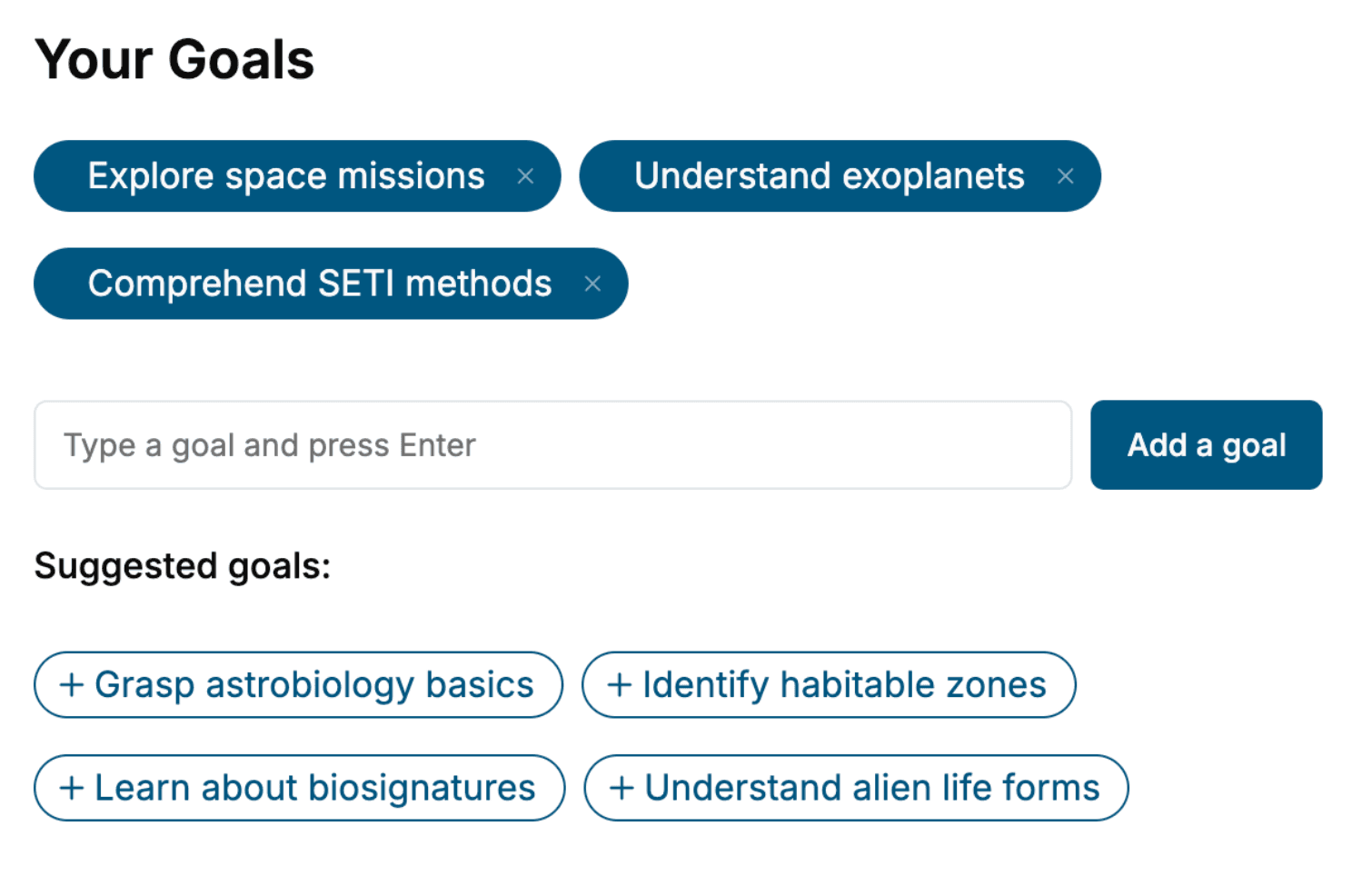
Tell us your goals and background, and get your own version of this book, tailored by AI to you.


Benefits of AI-tailored books
- Read one book, not ten:
- all the Accounting knowledge you need, gathered into a single book.
- Save days of learning:
- tell us your goals, choose your topics, and the whole book is built around them.
- Learn effortlessly:
- Accounting book written for your specific background and expertise.
- Understand at a glance:
- includes charts, tables, timelines, checklists, decision trees, and more.
- Stay current:
- written the day you order it, not years ago.
- Trust what you read:
- every book is checked for accuracy, with real research when your subject needs it.
Create your unique book in 3 steps
- 1. Select your focus
Select the focus of your Accounting book and share your background
- 2. Personalize your book
Specify your goals and choose sub-topics to include
- 3. Get your tailored book
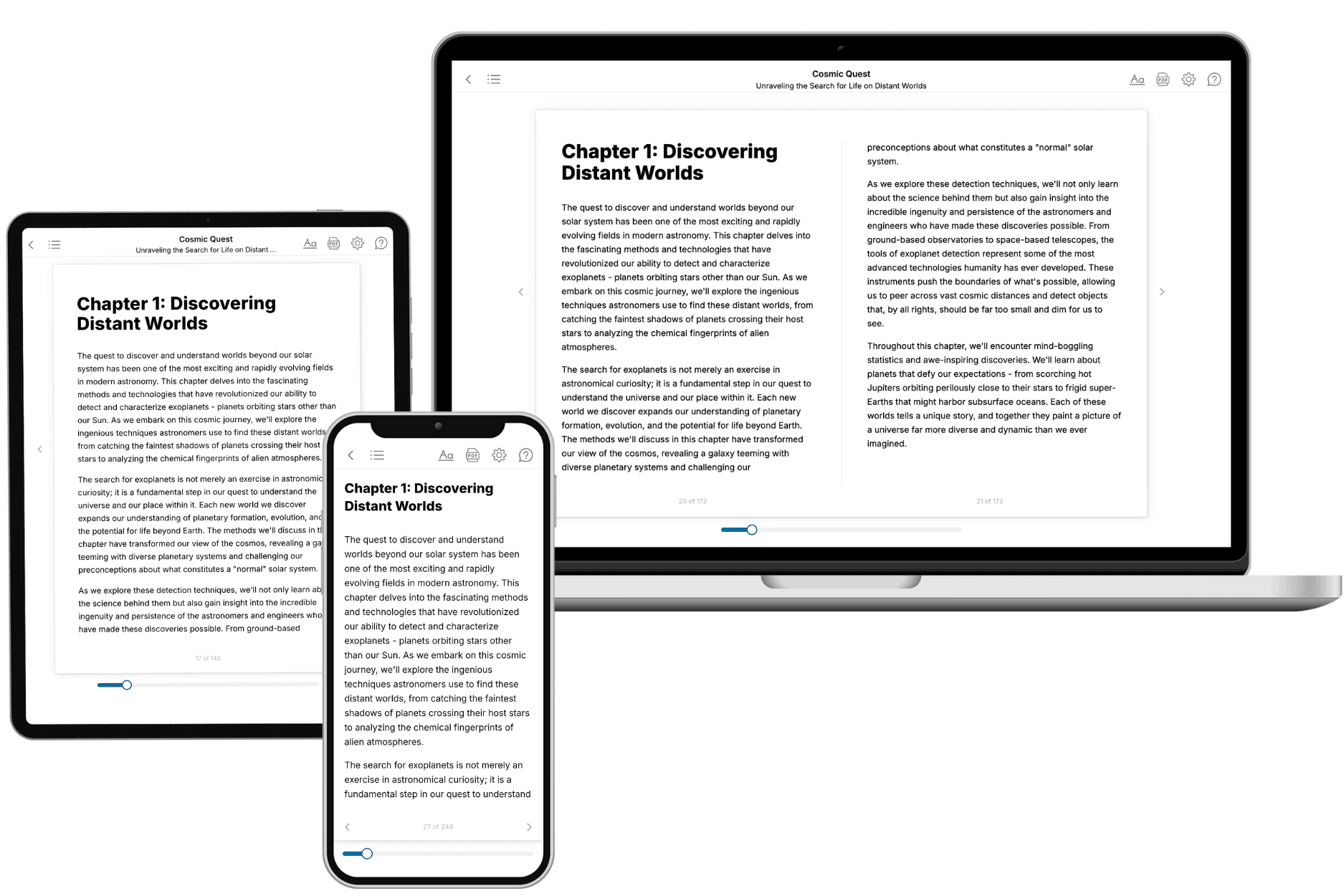
Your book is ready in 10 minutes. Read it online, download as EPUB or PDF, or send to Kindle.

Frequently asked questions
- What is TailoredRead?
TailoredRead creates complete, full-length nonfiction ebooks, written specifically for you. Tell us what you want to learn and why, and TailoredRead writes you a complete ebook on it, with charts, tables, and diagrams throughout. Read it online, on Kindle, or on any e-reader, or download it as a PDF or EPUB. Every book is written fresh the day you order it.
- How is the book tailored to me?
Before anything is written, you answer a few short questions about your goals, your background, and the topics you care about. Your book is then planned around your answers: written at your level, focused on your goals, and covering the topics you chose, instead of the one-size-fits-all book a store sells everyone.
- Will it read like generic AI content?
No. Your book isn't a chat transcript: it's planned chapter by chapter before a single word is written, told in a clear book voice, and explains ideas visually with charts, tables, and diagrams. After writing, every book goes through an editorial pass that polishes chapters so the book reads consistent from start to finish. Judge for yourself: browse thousands of sample books on our Explore Books page.
- How accurate is the content?
Our AI first checks whether your subject needs live research. Niche and fast-moving subjects are researched before writing, and the book plan and chapters are grounded in what it finds. After writing, every book goes through a quality pass that checks its facts and consistency, and researched books list their sources in a Notes section at the back.
- How long is the book?
You choose the length: Comprehensive (250-300 pages), Detailed (150-200 pages), Essential (70-100 pages), or Short (30-50 pages).
- Does the book include visuals?
Yes. Every book includes charts, tables, and diagrams: timelines, checklists, step-by-step guides, decision trees, comparison tables, matrices, and bar charts. A typical book includes dozens of these visual elements.
- Can I read it on Kindle? What formats can I download?
Yes. Every book can be read in our online reader or downloaded as a PDF or EPUB. The EPUB can be opened with Kindle, Apple Books, Kobo, and any e-reader. The Commercial and Author licenses also include an editable Word (DOCX) and Markdown download.
- How much does it cost?
About the price of a regular ebook. The exact price depends on your book's length and complexity, from $2 for the shortest books to $35 for the most comprehensive, and it's shown when you review your book, before you commit to anything. Each book is a one-time purchase, yours to keep, no subscription. Licenses that let you share, teach, or publish your book range from $35.99 to $49.99.
- Can I preview the book before purchasing?
Before you pay, you'll see what your book will cover: the title, a detailed description, the estimated length, and the complete chapter-by-chapter table of contents, so you know what you're getting before you decide. The full text itself is written after you purchase.
- How long does it take to create a book?
About 10 minutes. You can start reading the opening chapters while the rest is still being written.