The Turing Complete Mind
Understanding AI Algorithms Through the Lens of Computational Universality
What if the secret to understanding artificial intelligence isn't learning complex mathematics, but rather grasping a single elegant principle that explains how all computation works?
207 pages9 chaptersJul 13, 2026Turing Machines
About this book
This book reveals how Turing completeness—the concept that certain systems can compute anything that is computable—forms the theoretical backbone of every AI algorithm you encounter. Rather than treating AI as a black box, you'll discover how algorithms are systematic procedures grounded in decades of computer science theory. You'll explore why some problems are solvable by algorithms while others are fundamentally impossible, how computational limits shape what AI can and cannot do, and why understanding these principles transforms you from a passive user of AI tools into someone who truly comprehends how they function. Whether you're curious about machine learning, neural networks, or the future of artificial intelligence, this book provides the conceptual foundation that makes everything else click into place.
Table of contents
- IntroductionWhy Theory Matters for Understanding AI, What You'll Learn in This Book, How to Use This BookRead below
- Chapter 1: Foundations of ComputationWhat Is an Algorithm?, Computational Thinking and Problem Solving, From Problems to Solutions
- Chapter 2: Turing Machines and UniversalityAlan Turing's Vision of Computation, The Anatomy of a Turing Machine, Universal Computation and Its Power, What Turing Completeness Really Means
- Chapter 3: The Church-Turing ThesisLambda Calculus and Alonzo Church, Why Different Models Converge, Implications for All Computation
- Chapter 4: Computational Limits and the Halting ProblemProblems That Algorithms Cannot Solve, The Halting Problem Explained, Undecidability and What It Means for AI, Practical Implications for Real Systems
- Chapter 5: Algorithm Complexity and EfficiencyBig O Notation and Complexity Classes, Time Complexity Versus Space Complexity, NP Problems and the P vs NP Question, How Complexity Shapes AI Solutions
- Chapter 6: Fundamental Algorithm PatternsRecursion and Iteration, Divide and Conquer Strategies, Dynamic Programming and Optimization
- Chapter 7: Data Structures and Algorithm DesignChoosing the Right Data Structure, Searching and Sorting Algorithms, Graphs, Networks, and Pathfinding, How Structure Choices Impact Performance
- Chapter 8: State, Memory, and ComputationManaging State in Algorithms, Memory, Storage, and Information, Building Stateful Intelligent Systems
- Chapter 9: AI Algorithms in ContextMachine Learning as Algorithmic Search, Neural Networks and Universal Approximation, Search Algorithms and Optimization, Reasoning Systems and Logic
- ConclusionConnecting Theory to Practice, The Future of Computation and AI
- Glossary
- Further Reading and Resources
Introduction
There is a moment that many people experience when they first encounter artificial intelligence in a serious way. It might happen while watching a language model generate a coherent essay, or while seeing a recommendation algorithm predict exactly what you want to watch next, or while reading about a neural network that outperforms human doctors at diagnosing certain cancers. The moment is a mix of wonder and unease, because the system doing these things feels fundamentally mysterious. It works, clearly. But how it works seems almost beyond explanation.
That feeling of mystery is understandable, but it is also unnecessary. Artificial intelligence, for all its impressive outputs, is not magic. Every AI system you have ever encountered is built on a foundation of algorithms, and every algorithm is a systematic procedure that follows rules a machine can execute step by step. The deeper you look, the more you find that these systems are grounded in ideas that computer scientists worked out decades ago, long before the phrase "artificial intelligence" became a household term. Those ideas are elegant, powerful, and surprisingly accessible once you have the right framework for understanding them.
This book offers that framework. The central concept is Turing completeness, a property that describes computational systems capable of performing any calculation that is, in principle, computable. Understanding what this means, where it comes from, and why it matters gives you a lens through which every AI algorithm becomes clearer. You stop seeing AI as a collection of mysterious black boxes and start seeing it as a set of systematic procedures built on a coherent theoretical foundation. That shift in perspective is genuinely transformative, and it is what this book is designed to produce.
The journey ahead covers a lot of ground, from the abstract machinery that Alan Turing imagined in the 1930s to the practical complexity trade-offs that engineers face when building modern machine learning systems. Along the way, you will encounter ideas that are intellectually rich but never needlessly obscure. The goal throughout is clarity: to explain things as simply as they can be explained without losing the precision that makes them useful. If you have a foundational background in computer science, you already have everything you need to follow along and get genuine value from every chapter.
Why Theory Matters for Understanding AI
A common objection to studying theory goes something like this: I just want to build things. Why do I need to understand abstract models of computation?
It is a fair question, and it deserves a direct answer. Theory matters because it tells you what is possible, what is impossible, and why. Without that knowledge, you are navigating by intuition alone, which works fine until you hit a wall you cannot explain and cannot get around.
Consider a concrete example. Suppose you are building an AI system that needs to verify whether a given program will ever finish running or loop forever. This sounds like a reasonable engineering problem. You might spend weeks designing clever heuristics and testing approaches. But if you understand the halting problem, you know immediately that no algorithm can solve this problem in general. It is not a matter of needing better hardware or smarter code. It is mathematically impossible. That theoretical knowledge saves you from wasting enormous effort on a fundamentally unsolvable task.[1]
Theory also helps you understand the limits of AI in a principled way. When someone claims that a new AI system can solve any problem you throw at it, a grounding in computational theory gives you the tools to evaluate that claim critically. You know that certain problems are undecidable, that others are computationally intractable for large inputs, and that the gap between theoretical capability and practical performance is often enormous. This kind of informed skepticism is valuable in any professional context.
Beyond avoiding pitfalls, theory provides a common language. When engineers, researchers, and product managers discuss algorithm complexity, they are drawing on a shared theoretical vocabulary that makes communication precise and efficient. Phrases like this runs in polynomial time
or this is an NP-hard problem
carry specific, well-defined meanings that prevent misunderstandings. Learning that vocabulary is not just academic exercise; it is professional fluency in a field that increasingly shapes the world.
There is also a deeper reason to care about theory, one that is harder to quantify but no less real. Understanding the theoretical foundations of computation gives you genuine insight into what intelligence, as a computational process, actually is. When you understand that a neural network is performing a form of function approximation grounded in universal computation principles, you see it differently than someone who treats it as an inscrutable oracle. That understanding changes how you design systems, how you debug them, and how you think about their capabilities and limitations.
Finally, theory has a remarkable staying power that practical tools do not. Specific frameworks, libraries, and platforms come and go. The theoretical principles underlying them remain stable across decades. The ideas that Alan Turing and Alonzo Church developed in the 1930s are just as relevant to understanding a modern transformer model as they were to understanding the first electronic computers. Investing in theoretical understanding is investing in knowledge that compounds over time rather than depreciating with each new product release.
The difference between someone who uses AI tools and someone who truly understands them is not a matter of experience with specific software. It is a matter of understanding the principles that all those tools share. Theory is what gives you that understanding.
What You'll Learn in This Book
This book is organized as a progressive journey through the theoretical foundations of computation and their direct connections to AI algorithms. Each chapter builds on the ones before it, so by the time you reach the later chapters on machine learning and neural networks, you will have a solid conceptual scaffolding that makes those topics much easier to understand. Here is a clear picture of what each part of the journey covers.
The first major stop is the foundations of computation. Before diving into Turing machines or complexity theory, it helps to have a clear, precise understanding of what an algorithm actually is. This sounds basic, but the formal definition is more nuanced than most people realize, and getting it right matters for everything that follows. You will also explore computational thinking as a problem-solving approach, learning how to translate real-world problems into forms that algorithms can address.
From there, the book moves into the heart of the theoretical framework: Turing machines and the concept of universality. You will learn about the abstract machine that Alan Turing described in 1936, understand how it works mechanically, and see why it became the standard model for what computation means. More importantly, you will understand what it means for a system to be Turing complete, and why that property is so significant for understanding AI.
The next major concept is the Church-Turing thesis, which connects Turing's model of computation to other independent models developed around the same time. This convergence is not a coincidence. It suggests something profound about the nature of computation itself, and understanding it helps you see why different programming languages, different hardware architectures, and different AI frameworks can all solve the same problems despite their surface differences.
One of the most intellectually important chapters covers computational limits and the halting problem. This is where you learn that not all problems are solvable by algorithms, and you see exactly why that is the case through one of the most elegant proofs in all of mathematics. The implications for AI are direct and significant: understanding what algorithms fundamentally cannot do is just as important as understanding what they can.
The book then turns to algorithm complexity and efficiency, covering Big O notation, complexity classes, and the famous P vs NP question. These concepts explain why some algorithms that work perfectly on small inputs become completely impractical at scale, and why this matters enormously for AI systems that need to operate on massive datasets in real time. You will see how complexity shapes the design decisions that AI engineers make every day.
After complexity, the focus shifts to fundamental algorithm patterns such as recursion, divide-and-conquer strategies, and dynamic programming. These are the building blocks that appear again and again across all of computer science, including in AI systems. Understanding them at a deep level helps you recognize familiar patterns in unfamiliar contexts, which is one of the most valuable skills a technically minded person can develop.
The chapters on data structures and state management round out the core theoretical foundation. How you organize information has a profound effect on how efficiently you can process it, and the relationship between data structures and algorithm performance is one of the most practically important topics in all of computer science. State management, meanwhile, is what allows algorithms to maintain context over time, which is essential for any system that needs to learn or adapt.
The final chapter brings everything together by examining AI algorithms in context. Machine learning, neural networks, search algorithms, and reasoning systems are all analyzed through the lens of the theoretical concepts developed in earlier chapters. By this point, you will have the tools to see these systems not as mysterious black boxes but as sophisticated applications of principles you already understand well.
- Foundations of Computation: What algorithms are and how computational thinking works
- Turing Machines and Universality: The theoretical model that defines computation
- The Church-Turing Thesis: Why different computational models converge
- Computational Limits: What algorithms fundamentally cannot do, and why
- Algorithm Complexity: Efficiency, Big O notation, and the P vs NP question
- Algorithm Patterns: Recursion, divide-and-conquer, and dynamic programming
- Data Structures and State: How information organization shapes performance
- AI Algorithms in Context: Machine learning, neural networks, and reasoning systems
By the end of this book, you will not just know more facts about AI. You will have a coherent mental model of how computation works at a fundamental level, and you will be able to apply that model to understand new AI systems as they emerge. That kind of durable, transferable understanding is the real goal of everything that follows.
How to Use This Book
This book is written for people who already have some foundational knowledge of computer science. You do not need to be an expert, but you should be comfortable with basic programming concepts like variables, loops, functions, and conditionals. Familiarity with at least one programming language will help you connect the abstract ideas to concrete implementations. If you have taken an introductory algorithms course or worked through a data structures textbook, you are well positioned to get the most out of every chapter.
The chapters are designed to be read in order. Each one builds on concepts introduced in earlier chapters, and the progression from abstract theory to practical AI applications is intentional. Jumping ahead to the AI-focused chapters without the theoretical foundation from earlier chapters is possible, but you will likely find those chapters less satisfying and harder to follow. The theoretical groundwork is not filler; it is the substance that makes the later material meaningful.
That said, if you already have a strong background in a particular area, feel free to move through those sections more quickly. Someone who has studied formal language theory and automata will find the Turing machine chapter familiar and can treat it as a review. Someone who works with algorithms professionally may find the complexity chapter covers ground they already know well. Use your own judgment about where to slow down and where to accelerate.
Throughout the book, you will find concrete examples designed to make abstract concepts tangible. These examples are worth spending time on, even if the surrounding theory feels clear. The examples often reveal nuances that the general explanations do not capture, and they provide the kind of specific, memorable anchors that help theoretical knowledge stick. When an example uses pseudocode or a simplified algorithm, try working through it step by step rather than just reading it.
Each chapter also raises questions that are worth sitting with rather than rushing past. Questions like why can't we just build a more powerful computer to solve the halting problem?
or what does it actually mean for a neural network to approximate any function?
are not rhetorical. They point toward genuinely deep ideas that reward careful thought. If a question stops you in your tracks, that is a good sign. It means you are engaging with the material at the right level.
Here are some practical suggestions for getting the most out of your reading:
- Take notes on key definitions. Terms like "Turing completeness," "decidability," and "polynomial time" have precise meanings that matter. Writing them down in your own words helps solidify your understanding.
- Connect concepts to systems you already know. When you read about recursion, think about a recursive function you have written. When you read about state management, think about a stateful application you have used or built.
- Do not skip the complexity analysis. Big O notation can feel dry, but it is one of the most practically useful tools in this entire book. Invest the time to get comfortable with it.
- Revisit earlier chapters after finishing later ones. The connections between chapters often become clearer in retrospect. A second pass through the Turing machine chapter after reading the AI chapter can be surprisingly illuminating.
- Engage with the footnotes. The citations and references point toward primary sources and deeper treatments of the topics covered. If something sparks your curiosity, the footnotes are a good starting point for going further.
One thing worth addressing directly is the relationship between this book and mathematics. Some of the concepts covered here, particularly in the chapters on computational limits and complexity theory, have rigorous mathematical proofs behind them. This book does not reproduce those proofs in full technical detail, but it does explain the key ideas and the logical structure of the arguments. The goal is conceptual understanding, not mathematical certification. If you want the full formal treatment, the further reading section at the end of the book points you toward excellent resources.
It is also worth saying something about the pace of change in AI. New models, new architectures, and new capabilities emerge constantly, and any book that focuses on specific current systems risks becoming outdated quickly. This book deliberately focuses on principles rather than products. The concepts covered here, from Turing completeness to algorithm complexity to the structure of neural networks as universal approximators, are stable ideas that will remain relevant regardless of what specific AI systems look like in five or ten years. The goal is to give you a foundation that grows more valuable over time, not one that expires with the next product cycle.
Finally, approach this material with genuine curiosity. The ideas here are not just technically important; they are genuinely fascinating. The question of what computation fundamentally is, what it can and cannot do, and how simple rules can give rise to complex intelligent behavior is one of the deepest questions in all of science. You are not just learning a set of professional skills. You are engaging with ideas that sit at the intersection of mathematics, philosophy, and engineering, ideas that some of the most brilliant minds of the twentieth century spent their careers developing. That is worth taking seriously, and it is worth enjoying.
The best way to read this book is actively, not passively. Question the claims, work through the examples, and connect the ideas to things you already know. Understanding is not something that happens to you while you read. It is something you build, step by step, through engagement with the material.
With that in mind, the journey begins. The first stop is the most fundamental question of all: what exactly is an algorithm, and what does it mean for a machine to compute something? The answer is more interesting than you might expect, and it sets the stage for everything that follows.
Notes
Introduction
- 1. A. M. Turing, "On Computable Numbers, with an Application to the Entscheidungsproblem," Proceedings of the London Mathematical Society, 1936
This is the end of the free sample. The full book has 9 chapters.
Want this book written for you?
Tell us your goals and background, and get your own version of this book, tailored by AI to you.


Benefits of AI-tailored books
- Read one book, not ten:
- all the Turing Machines knowledge you need, gathered into a single book.
- Save days of learning:
- tell us your goals, choose your topics, and the whole book is built around them.
- Learn effortlessly:
- Turing Machines book written for your specific background and expertise.
- Understand at a glance:
- includes charts, tables, timelines, checklists, decision trees, and more.
- Stay current:
- written the day you order it, not years ago.
- Trust what you read:
- every book is checked for accuracy, with real research when your subject needs it.
Create your unique book in 3 steps
- 1. Select your focus
Select the focus of your Turing Machines book and share your background
- 2. Personalize your book
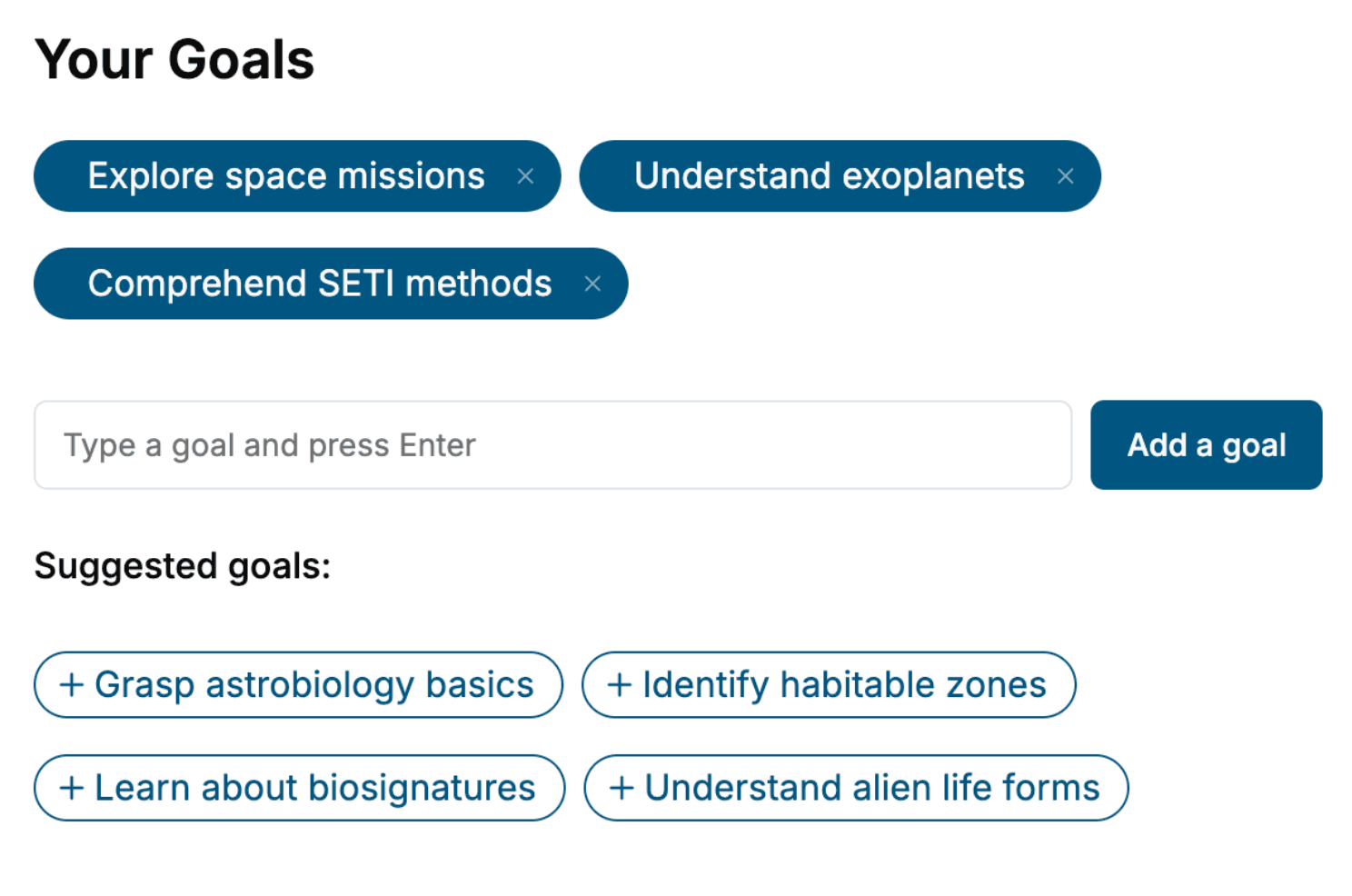
Specify your goals and choose sub-topics to include
- 3. Get your tailored book
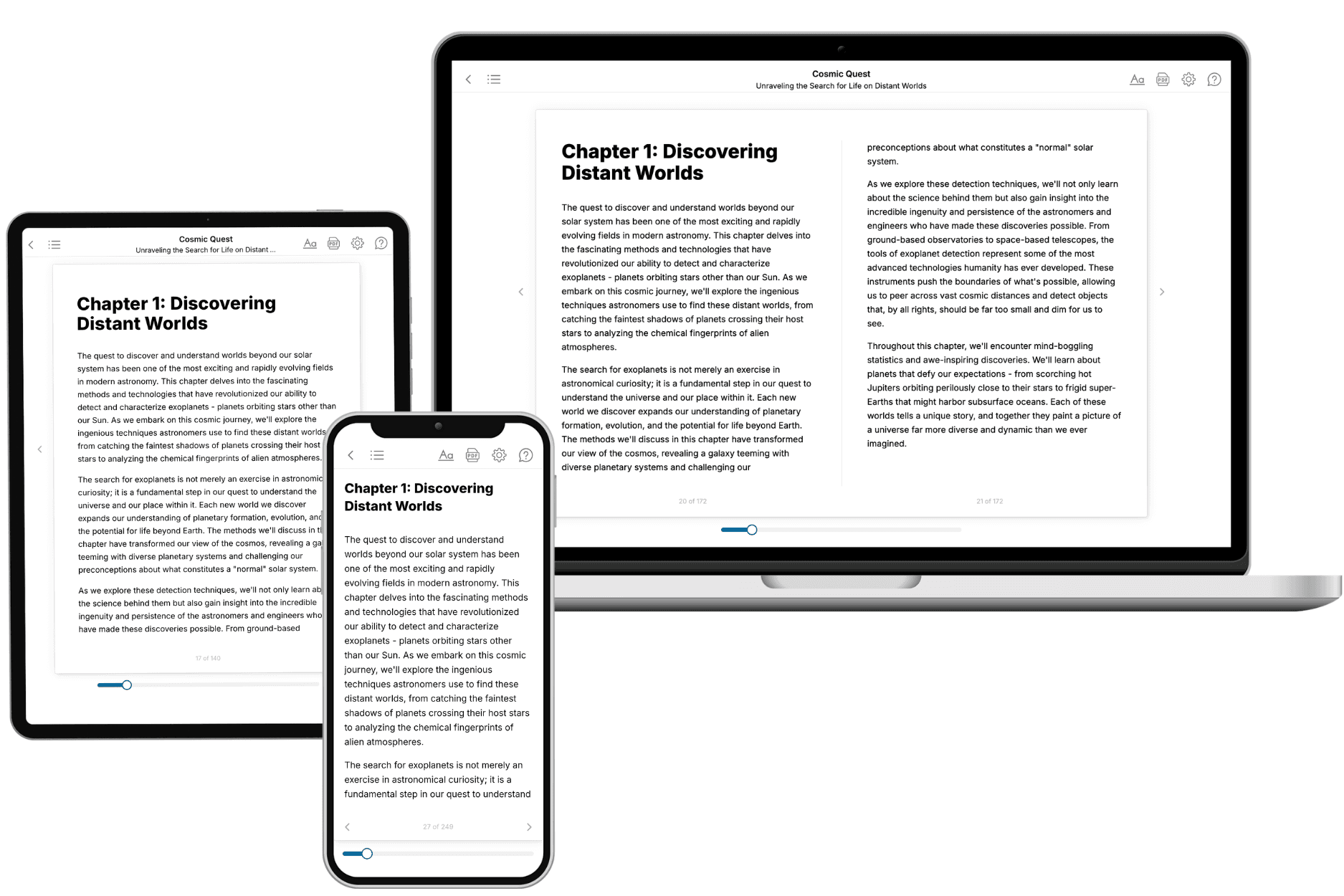
Your book is ready in 10 minutes. Read it online, download as EPUB or PDF, or send to Kindle.

Frequently asked questions
- What is TailoredRead?
TailoredRead creates complete, full-length nonfiction ebooks, written specifically for you. Tell us what you want to learn and why, and TailoredRead writes you a complete ebook on it, with charts, tables, and diagrams throughout. Read it online, on Kindle, or on any e-reader, or download it as a PDF or EPUB. Every book is written fresh the day you order it.
- How is the book tailored to me?
Before anything is written, you answer a few short questions about your goals, your background, and the topics you care about. Your book is then planned around your answers: written at your level, focused on your goals, and covering the topics you chose, instead of the one-size-fits-all book a store sells everyone.
- Will it read like generic AI content?
No. Your book isn't a chat transcript: it's planned chapter by chapter before a single word is written, told in a clear book voice, and explains ideas visually with charts, tables, and diagrams. After writing, every book goes through an editorial pass that polishes chapters so the book reads consistent from start to finish. Judge for yourself: browse thousands of sample books on our Explore Books page.
- How accurate is the content?
Our AI first checks whether your subject needs live research. Niche and fast-moving subjects are researched before writing, and the book plan and chapters are grounded in what it finds. After writing, every book goes through a quality pass that checks its facts and consistency, and researched books list their sources in a Notes section at the back.
- How long is the book?
You choose the length: Comprehensive (250-300 pages), Detailed (150-200 pages), Essential (70-100 pages), or Short (30-50 pages).
- Does the book include visuals?
Yes. Every book includes visual elements such as timelines, checklists, step-by-step guides, decision trees, comparison tables, and matrices, and many include bar charts. A typical book includes dozens of these visual elements.
- Can I read it on Kindle? What formats can I download?
Yes. Every book can be read in our online reader or downloaded as a PDF or EPUB. The EPUB can be opened with Kindle, Apple Books, Kobo, and any e-reader. The Commercial and Author licenses also include an editable Word (DOCX) and Markdown download.
- How much does it cost?
About the price of a regular ebook. The exact price depends on your book's length and complexity, from $2 for the shortest books to $35 for the most comprehensive, and it's shown when you review your book, before you commit to anything. Each book is a one-time purchase, yours to keep, no subscription. Licenses that let you share, teach, or publish your book range from $35.99 to $49.99.
- Can I preview the book before purchasing?
Before you pay, you'll see what your book will cover: the title, a detailed description, the estimated length, and the complete chapter-by-chapter table of contents, so you know what you're getting before you decide. The full text itself is written after you purchase.
- How long does it take to create a book?
About 10 minutes. You can start reading the opening chapters while the rest is still being written.