Zeigarnik Effect: The Unfinished Advantage
Cognitive science behind sharper choices and smarter problem-solving
Imagine a world where your mind effortlessly retains important information, your decision-making skills are sharper than ever, and you solve problems with remarkable efficiency.
284 pages14 chaptersJan 16, 2025Productivity
About this book
This isn't a far-off dream – it's the potential within you, waiting to be unlocked through the power of the Zeigarnik Effect. In "The Unfinished Advantage," you'll discover how this fascinating cognitive phenomenon can revolutionize your approach to daily challenges and long-term goals. Named after the pioneering psychologist Bluma Zeigarnik, this effect explains why unfinished tasks stick in our minds, creating a cognitive tension that can be harnessed for incredible productivity and mental clarity. Through engaging examples, cutting-edge research, and practical exercises, this book guides you on a journey to master your cognitive processes. You'll learn how to leverage the Zeigarnik Effect to enhance your memory, boost your motivation, and make more informed decisions. From breaking down complex problems into manageable steps to maintaining focus in a world full of distractions, you'll gain invaluable tools for both personal and professional growth. Whether you're a student looking to optimize your study habits, a professional aiming to excel in your career, or simply someone fascinated by the workings of the human mind, "The Unfinished Advantage" offers insights that will transform your understanding of how you think and act. Get ready to tap into the hidden potential of your brain and experience the profound impact of the Zeigarnik Effect on your life.
Table of contents
- IntroductionThe Zeigarnik Effect: An Overview, Cognitive Biases and Decision Making, Your Journey Through This BookRead below
- Chapter 1: The Discovery of the Zeigarnik EffectBluma Zeigarnik and Her Observations, The Initial Experiments, Psychological Implications of the Findings, Early Applications in Psychology
- Chapter 2: Understanding Cognitive ProcessesMemory Formation and Retention, Attention and Focus, Cognitive Load Theory, Information Processing Models
- Chapter 3: The Mechanism Behind the Zeigarnik EffectThe Psychological Tension System, Memory Encoding of Unfinished Tasks, Cognitive Dissonance and Task Completion, Neural Correlates of the Zeigarnik Effect
- Chapter 4: The Zeigarnik Effect in Decision MakingOvercoming Choice Overload, Prioritization and the Zeigarnik Effect, Combating Decision Fatigue, Balancing Intuition and Rationality
- Chapter 5: Enhancing Problem-Solving with the Zeigarnik EffectBreaking Down Complex Problems, The Incubation Effect in Problem-Solving, Fostering Creative Solutions, Strategies for Persistent Problem-Solving
- Chapter 6: Boosting Productivity and MotivationOvercoming Procrastination through Task Initiation, The Power of Progress Tracking, Effective Goal Setting and the Zeigarnik Effect, Maintaining Long-term Motivation
- Chapter 7: Improving Memory and LearningZeigarnik-Inspired Study Techniques, Enhancing Information Retention, The Zeigarnik Effect and Spaced Repetition, Accelerating Skill Acquisition
- Chapter 8: Managing Mental Workload and StressCognitive Offloading Techniques, Mindfulness and the Zeigarnik Effect, Achieving Work-Life Balance, Stress Reduction Strategies
- Chapter 9: Fostering Creativity and InnovationIdea Generation and Incubation, Overcoming Creative Blocks, Enhancing Divergent Thinking, The Innovation Process and Unfinished Tasks
- Chapter 10: Time Management and the Zeigarnik EffectEffective Prioritization Techniques, Time Blocking and Task Completion, Managing Deadlines and Expectations, Integrating the Zeigarnik Effect into Productivity Systems
- Chapter 11: The Zeigarnik Effect in Social DynamicsEnhancing Interpersonal Communication, Improving Team Collaboration, Conflict Resolution and Unfinished Conversations, Social Influence and Persuasion
- Chapter 12: The Zeigarnik Effect in Consumer BehaviorMarketing Strategies Leveraging the Zeigarnik Effect, Enhancing Customer Engagement, Improving Brand Recall and Loyalty, Ethical Considerations in Application
- Chapter 13: The Zeigarnik Effect in the Digital AgeApplication Design and User Experience, Social Media and Attention Economy, Digital Learning Platforms, Future Implications of the Zeigarnik Effect in Technology
- Chapter 14: Practical Applications in Daily LifePersonal Growth and Self-Improvement, Habit Formation and Breaking, Relationship Management, Life Planning and Goal Achievement
- ConclusionKey Takeaways, Future Research Directions, Final Thoughts on Harnessing the Zeigarnik Effect
- Glossary
- Further Reading
Introduction
Welcome to "The Unfinished Advantage: Harnessing the Zeigarnik Effect for Better Decision-Making and Problem-Solving." This book is your gateway to understanding and leveraging one of the most fascinating phenomena in cognitive psychology: the Zeigarnik Effect. Named after the pioneering psychologist Bluma Zeigarnik, this effect explains why unfinished tasks tend to stick in our minds, creating a cognitive tension that can be harnessed for remarkable productivity and mental clarity. As you embark on this journey, you'll discover how this seemingly simple concept can revolutionize your approach to daily challenges and long-term goals, enhancing your decision-making skills and problem-solving abilities in ways you might never have imagined.
Throughout this book, you'll explore the intricate workings of your mind, gaining insights into how memory, attention, and cognitive processes interact to shape your thoughts and actions. You'll learn how to tap into the hidden potential of your brain, using the Zeigarnik Effect as a powerful tool to boost your productivity, improve your learning capacity, and make more informed decisions. Whether you're a student looking to optimize your study habits, a professional aiming to excel in your career, or simply someone fascinated by the workings of the human mind, the concepts and strategies presented in this book will provide you with invaluable tools for both personal and professional growth.
As we delve deeper into the Zeigarnik Effect and its applications, you'll find that this book is not just a theoretical exploration, but a practical guide filled with actionable advice and real-world examples. You'll learn how to break down complex problems into manageable steps, maintain focus in a world full of distractions, and leverage cognitive tension to your advantage. By the time you finish reading, you'll have a comprehensive understanding of how to apply the Zeigarnik Effect in various aspects of your life, from enhancing your memory and boosting your motivation to managing stress and fostering creativity.
The Zeigarnik Effect: An Overview
The Zeigarnik Effect, at its core, is a psychological phenomenon that describes our tendency to remember unfinished or interrupted tasks better than completed ones. This effect was first observed and studied by Soviet psychologist Bluma Zeigarnik in the 1920s. During a visit to a café, Zeigarnik noticed that waiters seemed to have better memories for orders that were in the process of being served, compared to orders that had already been completed and paid for. This observation led her to conduct a series of experiments that would eventually give birth to what we now know as the Zeigarnik Effect.
The fundamental principle behind the Zeigarnik Effect is that when we start a task but don't finish it, our mind creates a state of tension or cognitive dissonance. This mental state acts as a sort of placeholder in our memory, keeping the unfinished task at the forefront of our thoughts until it's completed. It's as if our brain has a built-in to-do list, constantly reminding us of what's left undone. This cognitive mechanism likely evolved as a survival tool, helping our ancestors remember important tasks that needed completion, such as finding food or securing shelter.
Understanding the Zeigarnik Effect is crucial because it has far-reaching implications for how we approach tasks, make decisions, and solve problems. For instance, this effect explains why you might find yourself thinking about an unfinished project while trying to relax, or why a cliffhanger in a TV show can leave you eagerly anticipating the next episode. By harnessing this natural tendency of our minds, we can significantly enhance our productivity and cognitive performance.
One of the key aspects of the Zeigarnik Effect is its impact on our attention and focus. When we have an unfinished task, it tends to occupy a portion of our working memory, which can be both a blessing and a curse. On one hand, this persistent mental reminder can help us stay motivated and return to important tasks. On the other hand, if not managed properly, it can lead to mental clutter and increased stress levels. Throughout this book, you'll learn strategies to leverage the positive aspects of this effect while mitigating its potential drawbacks.
The Zeigarnik Effect also plays a significant role in learning and memory formation. Research has shown that information associated with unfinished tasks is often more easily recalled than information related to completed tasks. This has important implications for how we approach studying and skill acquisition. By strategically using interruptions and creating "deliberate incompleteness," you can enhance your ability to retain and recall important information.
Moreover, the Zeigarnik Effect has profound implications for decision-making processes. When faced with a complex decision, our tendency to dwell on unresolved issues can actually work in our favor. By keeping various aspects of a problem active in our minds, we're more likely to consider multiple perspectives and arrive at a more comprehensive solution. This book will guide you on how to harness this cognitive tendency to make more informed and balanced decisions in both your personal and professional life.
In the realm of problem-solving, the Zeigarnik Effect offers a powerful framework for tackling complex challenges. By breaking down large problems into smaller, manageable tasks, you can create a series of "unfinished" states that keep your mind engaged and motivated throughout the problem-solving process. This approach not only makes daunting tasks seem more approachable but also increases the likelihood of finding innovative solutions as your mind continues to work on these "open loops" even when you're not actively focused on the problem.
As we progress through this book, you'll discover how the Zeigarnik Effect intersects with other cognitive phenomena and psychological principles. For instance, we'll explore its relationship with the incubation effect in creativity, where stepping away from a problem can lead to sudden insights or "aha!" moments. We'll also examine how it relates to concepts like cognitive load theory and information processing models, providing you with a comprehensive understanding of how your mind works and how you can optimize its performance.
By the end of this overview, you'll have a solid foundation in understanding what the Zeigarnik Effect is and why it's so important. This knowledge will serve as the cornerstone for the practical applications and strategies we'll explore in the subsequent chapters. As you continue reading, keep in mind that the goal is not just to understand this psychological phenomenon, but to actively apply it in your daily life to enhance your cognitive abilities, boost your productivity, and achieve your goals more effectively.
Cognitive Biases and Decision Making
To fully appreciate the impact of the Zeigarnik Effect on decision-making, it's essential to understand the broader context of cognitive biases and their influence on our thought processes. Cognitive biases are systematic patterns of deviation from norm or rationality in judgment. They are often a result of our brain's attempt to simplify information processing. While these mental shortcuts can be beneficial in many situations, allowing us to make quick decisions, they can also lead to errors in judgment and decision-making.
One of the most well-known cognitive biases is confirmation bias, which is our tendency to search for, interpret, favor, and recall information in a way that confirms or supports our prior beliefs or values. This bias can significantly impact decision-making by causing us to overlook or dismiss information that contradicts our existing views. In the context of the Zeigarnik Effect, confirmation bias might cause us to focus more on unfinished tasks that align with our preconceived notions, potentially leading to skewed priorities or incomplete problem-solving approaches.
Another relevant cognitive bias is the availability heuristic, which is our tendency to overestimate the likelihood of events with greater "availability" in memory. This bias is closely related to the Zeigarnik Effect, as unfinished tasks tend to be more readily available in our memory. While this can be beneficial in keeping important tasks at the forefront of our minds, it can also lead to overemphasis on recent or emotionally charged unfinished tasks at the expense of other, potentially more important ones. Understanding this interaction can help you better prioritize tasks and make more balanced decisions.
The sunk cost fallacy is another cognitive bias that often intersects with the Zeigarnik Effect in decision-making processes. This fallacy describes our tendency to continue investing time, money, or effort into something because of previously invested resources, even when it may not be the most rational choice. The Zeigarnik Effect can exacerbate this bias by keeping unfinished projects or investments prominent in our minds, making it harder to let go even when it might be the best decision. Awareness of this interaction can help you make more objective decisions about whether to continue or abandon certain pursuits.
The planning fallacy, a tendency to underestimate the time, costs, and risks of future actions while overestimating the benefits, is another cognitive bias that can be influenced by the Zeigarnik Effect. Our preoccupation with unfinished tasks might lead us to be overly optimistic about our ability to complete them, potentially resulting in unrealistic timelines or resource allocations. By understanding this interplay, you can develop more accurate planning strategies and set more achievable goals.
Decision fatigue is a psychological phenomenon where the quality of our decisions deteriorates after a long session of decision making. This is particularly relevant when considering the Zeigarnik Effect, as the mental effort required to keep track of multiple unfinished tasks can contribute to decision fatigue. Learning to manage the cognitive load associated with unfinished tasks can help mitigate decision fatigue and maintain the quality of your decision-making throughout the day.
The framing effect, which describes how the way information is presented can influence decision-making, also interacts with the Zeigarnik Effect. How we frame our unfinished tasks – as opportunities or burdens, for instance – can significantly impact our motivation and approach to completing them. This book will explore techniques for positively framing unfinished tasks to harness the motivational aspects of the Zeigarnik Effect while minimizing stress and anxiety.
Anchoring bias, our tendency to rely too heavily on the first piece of information offered when making decisions, can be both amplified and mitigated by the Zeigarnik Effect. On one hand, the prominence of unfinished tasks in our memory might serve as strong anchors, potentially skewing our judgment. On the other hand, the persistent cognitive engagement with unfinished tasks might help us consider multiple perspectives over time, potentially reducing the impact of initial anchors. Understanding this dynamic can help you develop strategies to make more balanced and considered decisions.
The Dunning-Kruger effect, where individuals with limited knowledge or expertise in a domain overestimate their abilities, can interact with the Zeigarnik Effect in interesting ways. The persistent mental engagement with unfinished tasks might lead some individuals to overestimate their progress or understanding of a subject. Conversely, for others, it might promote a more realistic assessment of their knowledge gaps. Recognizing this interaction can help you maintain a more accurate self-assessment of your skills and progress in various endeavors.
As we delve deeper into the Zeigarnik Effect and its applications, it's crucial to keep these cognitive biases in mind. By understanding how the Zeigarnik Effect interacts with various cognitive biases, you can develop more nuanced strategies for decision-making and problem-solving. This awareness will allow you to leverage the benefits of the Zeigarnik Effect while guarding against potential pitfalls caused by cognitive biases.
Throughout this book, we'll explore practical techniques for recognizing and mitigating the impact of cognitive biases in conjunction with the Zeigarnik Effect. You'll learn how to create decision-making frameworks that account for these psychological tendencies, helping you make more rational and effective choices. By the end of this journey, you'll be equipped with the knowledge and tools to navigate the complex landscape of your mind, using the Zeigarnik Effect as a powerful ally in overcoming cognitive biases and enhancing your decision-making capabilities.
Your Journey Through This Book
As you embark on this exploration of the Zeigarnik Effect and its applications, it's important to understand the journey that lies ahead. This book is designed to take you on a comprehensive tour of this fascinating psychological phenomenon, from its historical roots to its practical applications in modern life. Each chapter builds upon the previous ones, gradually expanding your understanding and providing you with increasingly sophisticated tools to harness the power of the Zeigarnik Effect in your daily life.
We'll begin our journey by delving into the discovery of the Zeigarnik Effect, exploring the work of Bluma Zeigarnik and the initial experiments that led to this groundbreaking insight. Understanding the historical context and the early applications in psychology will provide you with a solid foundation for appreciating the significance of this effect. You'll learn about the psychological implications of Zeigarnik's findings and how they've shaped our understanding of human cognition over the decades.
From there, we'll dive deep into the cognitive processes that underlie the Zeigarnik Effect. You'll gain insights into memory formation and retention, attention and focus, cognitive load theory, and information processing models. This exploration of cognitive science will equip you with a nuanced understanding of how your mind works, setting the stage for more advanced applications of the Zeigarnik Effect. By the end of this section, you'll have a clear grasp of the psychological mechanisms that make the Zeigarnik Effect such a powerful tool for enhancing mental performance.
As we progress, we'll examine the specific mechanisms behind the Zeigarnik Effect, including the psychological tension system, memory encoding of unfinished tasks, and the role of cognitive dissonance. We'll also explore the neural correlates of the Zeigarnik Effect, giving you a glimpse into how this phenomenon manifests in brain activity. This deeper understanding will allow you to more effectively leverage the Zeigarnik Effect in various aspects of your life.
The heart of the book focuses on practical applications of the Zeigarnik Effect in key areas of life and work. We'll explore how to use this effect to enhance decision-making, looking at strategies for overcoming choice overload, combating decision fatigue, and balancing intuition with rationality. You'll learn techniques for prioritizing tasks and making more informed choices by harnessing the cognitive tension created by unfinished tasks.
In the realm of problem-solving, you'll discover how to break down complex problems into smaller, more manageable tasks, leveraging the Zeigarnik Effect to maintain engagement and motivation throughout the problem-solving process. We'll explore the incubation effect in creativity and how strategic use of the Zeigarnik Effect can foster innovative solutions and persistent problem-solving strategies.
Productivity and motivation are key areas where the Zeigarnik Effect can have a profound impact. You'll learn techniques for overcoming procrastination, setting and achieving goals, and maintaining long-term motivation. We'll explore how to use progress tracking and effective goal-setting strategies in conjunction with the Zeigarnik Effect to boost your productivity and drive.
The book will also cover applications in learning and memory improvement. You'll discover Zeigarnik-inspired study techniques, methods for enhancing information retention, and strategies for accelerating skill acquisition. We'll explore how the Zeigarnik Effect intersects with other learning techniques like spaced repetition, providing you with a comprehensive toolkit for optimizing your learning processes.
Managing mental workload and stress is another crucial area we'll address. You'll learn cognitive offloading techniques, mindfulness practices, and strategies for achieving work-life balance, all informed by our understanding of the Zeigarnik Effect. These tools will help you manage the potential downsides of cognitive tension while maximizing its benefits.
We'll also explore how the Zeigarnik Effect can be applied to foster creativity and innovation. You'll learn techniques for idea generation, overcoming creative blocks, and enhancing divergent thinking. We'll examine how the tension created by unfinished tasks can be channeled into creative problem-solving and innovative thinking.
As we near the end of our journey, we'll look at broader applications of the Zeigarnik Effect in areas such as time management, social dynamics, consumer behavior, and the digital age. You'll gain insights into how this effect influences interpersonal communication, team collaboration, marketing strategies, and even app design. We'll also consider ethical implications and future directions for research and application of the Zeigarnik Effect.
Throughout this journey, you'll find practical exercises, real-world examples, and actionable advice that will help you apply the concepts you're learning to your own life. By the time you reach the conclusion, you'll have a comprehensive understanding of the Zeigarnik Effect and a diverse set of tools for applying it in various aspects of your personal and professional life.
Remember, the goal of this book is not just to impart knowledge, but to empower you to actively use the Zeigarnik Effect to enhance your cognitive abilities, boost your productivity, and achieve your goals more effectively. As you progress through each chapter, take the time to reflect on how you can apply these concepts in your own life. Experiment with the techniques and strategies presented, and don't be afraid to adapt them to your unique circumstances and needs.
By the end of this book, you'll have gained not just a theoretical understanding of the Zeigarnik Effect, but practical mastery of its applications. You'll be equipped to harness the power of unfinished tasks to drive your success, make better decisions, solve problems more effectively, and unlock new levels of creativity and productivity. So, let's begin this exciting journey into the world of the Zeigarnik Effect, and discover the unfinished advantage that lies within your own mind.
This is the end of the free sample. The full book has 14 chapters.
Want this book written for you?
Tell us your goals and background, and get your own version of this book, tailored by AI to you.


Benefits of AI-tailored books
- Read one book, not ten:
- all the Productivity knowledge you need, gathered into a single book.
- Save days of learning:
- tell us your goals, choose your topics, and the whole book is built around them.
- Learn effortlessly:
- Productivity book written for your specific background and expertise.
- Understand at a glance:
- includes charts, tables, timelines, checklists, decision trees, and more.
- Stay current:
- written the day you order it, not years ago.
- Trust what you read:
- every book is checked for accuracy, with real research when your subject needs it.
Create your unique book in 3 steps
- 1. Select your focus
Select the focus of your Productivity book and share your background
- 2. Personalize your book
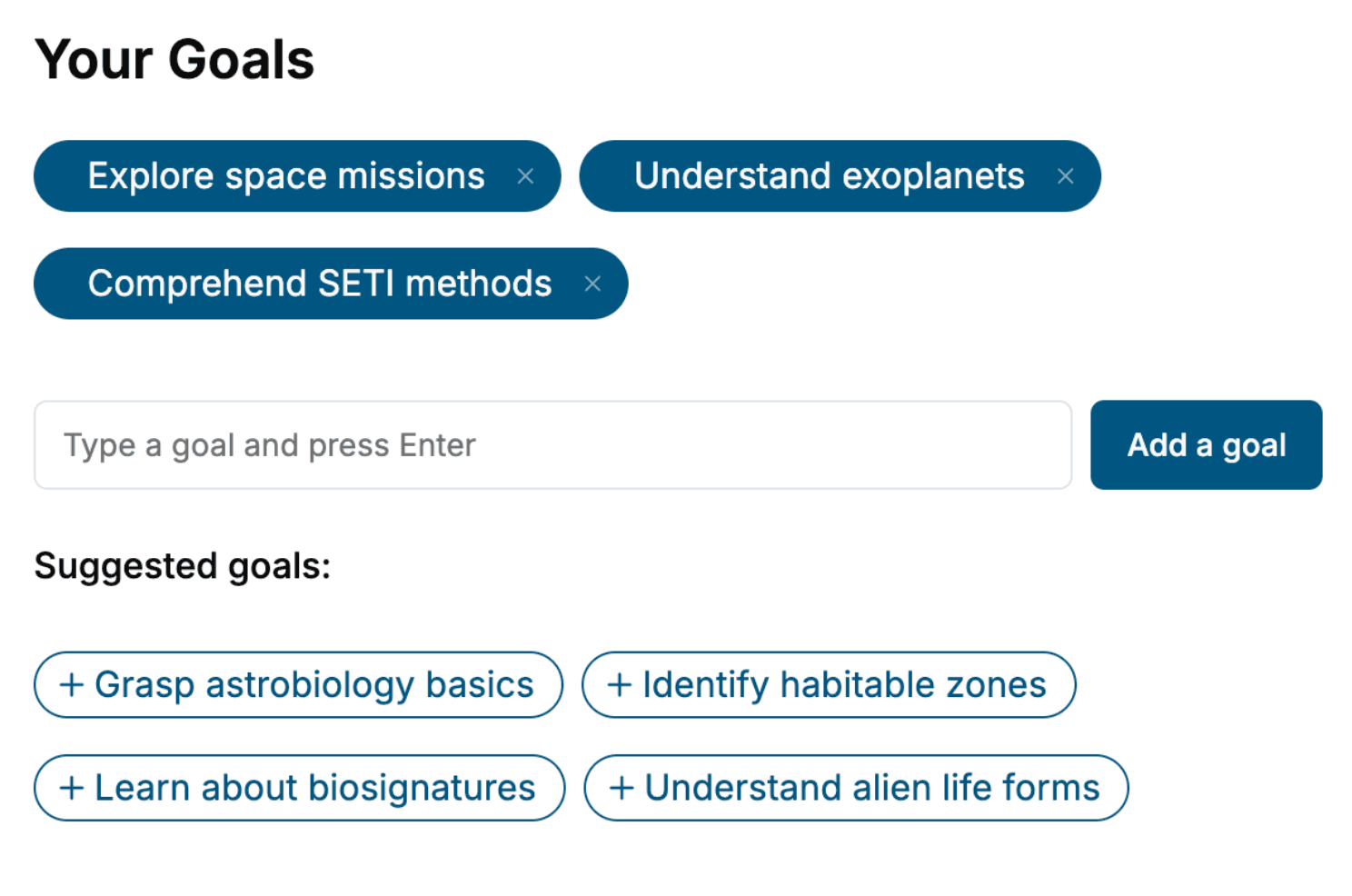
Specify your goals and choose sub-topics to include
- 3. Get your tailored book
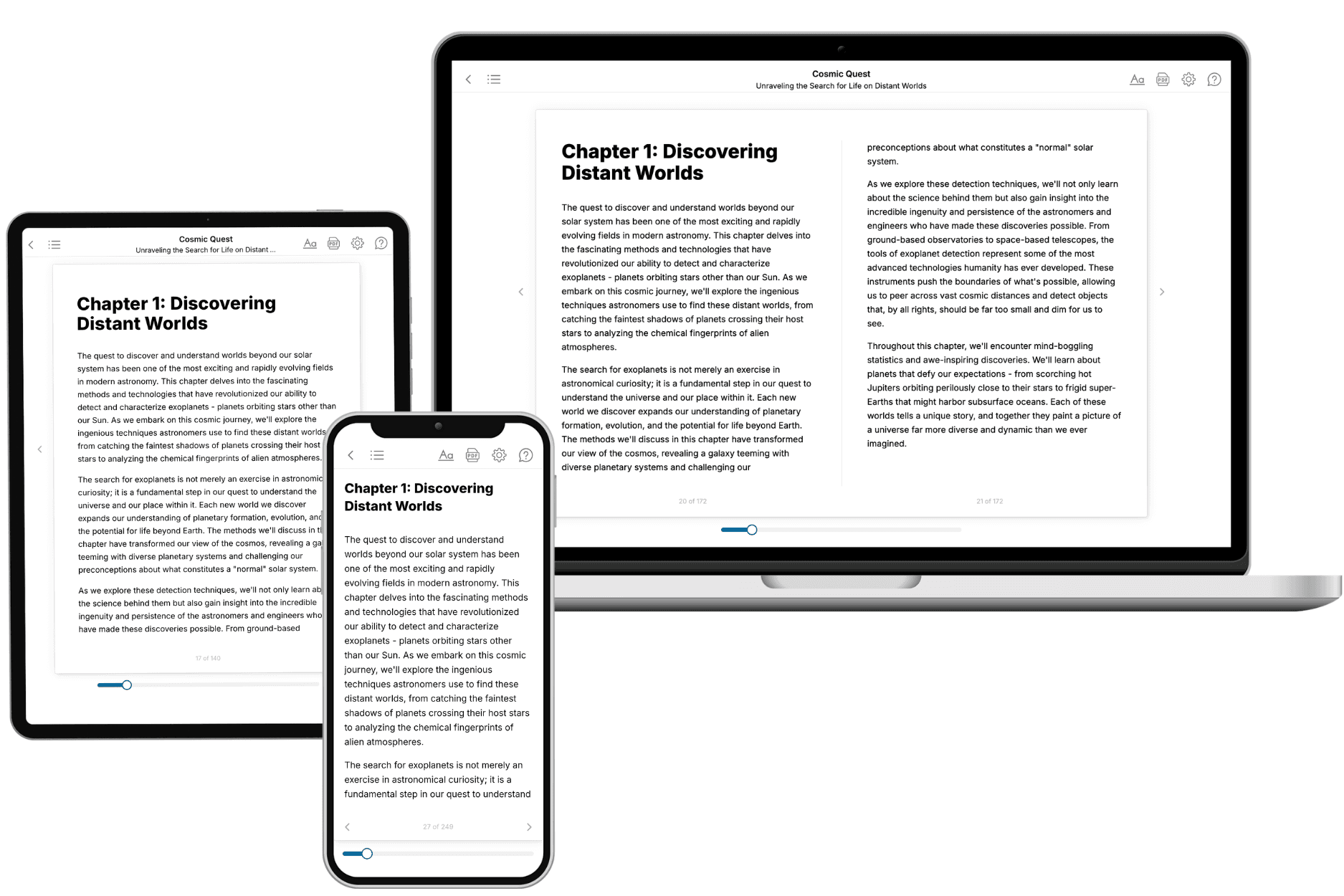
Your book is ready in 10 minutes. Read it online, download as EPUB or PDF, or send to Kindle.

Frequently asked questions
- What is TailoredRead?
TailoredRead creates complete, full-length nonfiction ebooks, written specifically for you. Tell us what you want to learn and why, and TailoredRead writes you a complete ebook on it, with charts, tables, and diagrams throughout. Read it online, on Kindle, or on any e-reader, or download it as a PDF or EPUB. Every book is written fresh the day you order it.
- How is the book tailored to me?
Before anything is written, you answer a few short questions about your goals, your background, and the topics you care about. Your book is then planned around your answers: written at your level, focused on your goals, and covering the topics you chose, instead of the one-size-fits-all book a store sells everyone.
- Will it read like generic AI content?
No. Your book isn't a chat transcript: it's planned chapter by chapter before a single word is written, told in a clear book voice, and explains ideas visually with charts, tables, and diagrams. After writing, every book goes through an editorial pass that polishes chapters so the book reads consistent from start to finish. Judge for yourself: browse thousands of sample books on our Explore Books page.
- How accurate is the content?
Our AI first checks whether your subject needs live research. Niche and fast-moving subjects are researched before writing, and the book plan and chapters are grounded in what it finds. After writing, every book goes through a quality pass that checks its facts and consistency, and researched books list their sources in a Notes section at the back.
- How long is the book?
You choose the length: Comprehensive (250-300 pages), Detailed (150-200 pages), Essential (70-100 pages), or Short (30-50 pages).
- Does the book include visuals?
Yes. Every book includes visual elements such as timelines, checklists, step-by-step guides, decision trees, comparison tables, and matrices, and many include bar charts. A typical book includes dozens of these visual elements.
- Can I read it on Kindle? What formats can I download?
Yes. Every book can be read in our online reader or downloaded as a PDF or EPUB. The EPUB can be opened with Kindle, Apple Books, Kobo, and any e-reader. The Commercial and Author licenses also include an editable Word (DOCX) and Markdown download.
- How much does it cost?
About the price of a regular ebook. The exact price depends on your book's length and complexity, from $2 for the shortest books to $35 for the most comprehensive, and it's shown when you review your book, before you commit to anything. Each book is a one-time purchase, yours to keep, no subscription. Licenses that let you share, teach, or publish your book range from $35.99 to $49.99.
- Can I preview the book before purchasing?
Before you pay, you'll see what your book will cover: the title, a detailed description, the estimated length, and the complete chapter-by-chapter table of contents, so you know what you're getting before you decide. The full text itself is written after you purchase.
- How long does it take to create a book?
About 10 minutes. You can start reading the opening chapters while the rest is still being written.