Unveiling the Hidden
A Comprehensive Guide to Hidden Markov Models in Computer Science
Embark on a journey through the fascinating world of Hidden Markov Models (HMMs) with "Unveiling the Hidden: A Comprehensive Guide to Hidden Markov Models in Computer Science." This book is your key to unlocking the power of these versatile probabilistic models that have revolutionized various fields within computer science.
253 pages12 chaptersNov 24, 2024Computer Science and Algorithms
About this book
Starting from the foundations of Markov Chains, you'll gradually build your understanding of the intricate workings of Hidden Markov Models. You'll explore their mathematical underpinnings, delve into efficient algorithms for inference and learning, and discover how to implement HMMs in real-world applications. Through clear explanations, practical examples, and hands-on exercises, you'll gain the skills to apply HMMs to a wide range of problems, from speech recognition and natural language processing to bioinformatics and time series analysis. By the end of this book, you'll have a deep appreciation for the elegance and utility of Hidden Markov Models, empowering you to leverage their capabilities in your own projects and research.
Table of contents
- IntroductionWhat are Hidden Markov Models?, Importance in Computer Science, Book Overview and Learning Objectives, Prerequisites and Mathematical NotationRead below
- Chapter 1: Foundations of Markov ChainsBasic Concepts and Definitions, Markov Property and Transition Probabilities, Matrix Representation of Markov Chains, Examples of Markov Chains in Practice
- Chapter 2: Introduction to Hidden Markov ModelsFormal Definition of HMMs, Components: Hidden States and Observations, Probability Distributions in HMMs, HMMs vs. Observable Markov Chains
- Chapter 3: The Three Fundamental Problems of HMMsThe Evaluation Problem, The Decoding Problem, The Learning Problem, Importance and Interconnections of the Three Problems
- Chapter 4: The Forward-Backward AlgorithmThe Forward Algorithm, The Backward Algorithm, Combining Forward and Backward Probabilities, Applications of the Forward-Backward Algorithm
- Chapter 5: The Viterbi AlgorithmPrinciple of Dynamic Programming in Viterbi, Step-by-Step Viterbi Algorithm, Worked Example of Viterbi Decoding, Time and Space Complexity Analysis
- Chapter 6: The Baum-Welch AlgorithmExpectation-Maximization in HMMs, Steps of the Baum-Welch Algorithm, Convergence and Stopping Criteria, Limitations and Practical Considerations
- Chapter 7: Implementing HMMsData Structures for HMMs, Implementing Core Algorithms, Optimization Techniques, HMM Libraries and Tools
- Chapter 8: Applications of HMMs in Computer ScienceSpeech Recognition, Natural Language Processing, Bioinformatics and Sequence Analysis, Computer Vision and Image Processing
- Chapter 9: Variations and Extensions of HMMsHierarchical HMMs, Factorial HMMs, Input-Output HMMs, Continuous Emission HMMs
- Chapter 10: Advanced Topics in HMMsBayesian Approaches to HMMs, Online Learning for HMMs, Parallel and Distributed HMM Algorithms, HMMs and Deep Learning
- Chapter 11: Challenges and Limitations of HMMsScalability Issues, Local Optima in Parameter Estimation, Model Selection and Complexity, Handling Long-Range Dependencies
- Chapter 12: Future Directions and Emerging TrendsQuantum HMMs, HMMs in Big Data and Stream Processing, HMMs in Internet of Things (IoT) Applications, Current Research Frontiers
- ConclusionSummary of Key Concepts, The Impact of HMMs on Computer Science, Future of HMMs and Final Thoughts
- AppendixMathematical Background, Pseudocode for Key Algorithms, Additional Resources and References
- Glossary
Introduction
Welcome to the fascinating world of Hidden Markov Models (HMMs), a powerful and versatile class of probabilistic models that have revolutionized numerous areas of computer science and beyond. As you embark on this journey through "Unveiling the Hidden: A Comprehensive Guide to Hidden Markov Models in Computer Science," you'll discover the elegance, complexity, and practical applications of these remarkable mathematical constructs. This introduction serves as your gateway to understanding the fundamental concepts, importance, and wide-ranging applications of HMMs in the field of computer science.
Hidden Markov Models represent a significant advancement in the realm of statistical modeling, particularly for sequential data analysis. They build upon the foundation of Markov Chains, extending their capabilities to handle scenarios where the underlying states of a system are not directly observable. This characteristic makes HMMs exceptionally well-suited for a diverse array of real-world problems, from speech recognition and natural language processing to bioinformatics and financial modeling. As you progress through this book, you'll gain a deep appreciation for the versatility and power of HMMs, as well as the algorithms and techniques used to harness their potential.
Throughout this introductory chapter, we'll lay the groundwork for your exploration of Hidden Markov Models. We'll begin by defining what HMMs are and how they differ from traditional Markov Chains. Next, we'll delve into the significance of HMMs in computer science, highlighting their role in advancing various subfields and applications. We'll then provide an overview of the book's structure and learning objectives, giving you a roadmap for your journey ahead. Finally, we'll discuss the prerequisites for studying HMMs and introduce the mathematical notation used throughout the book, ensuring you're well-prepared for the chapters that follow.
As you read through this introduction and the subsequent chapters, keep in mind that mastering Hidden Markov Models is not just about understanding their theoretical foundations. It's also about developing the skills to apply them effectively to real-world problems. To this end, we've designed this book to balance theory with practical examples, algorithms, and implementation guidance. By the time you reach the conclusion, you'll have gained not only a comprehensive understanding of HMMs but also the ability to leverage their power in your own projects and research endeavors.
So, without further ado, let's begin our exploration of Hidden Markov Models and unlock the potential they hold for advancing the field of computer science and beyond.
What are Hidden Markov Models?
Hidden Markov Models (HMMs) are a class of probabilistic models that extend the concept of Markov Chains to scenarios where the system being modeled is assumed to be a Markov process with unobservable (hidden) states. In essence, an HMM is a statistical model that describes a sequence of observations that are probabilistically related to a sequence of hidden states. This powerful framework allows us to make inferences about the hidden states based on the observable data, making HMMs particularly useful for analyzing and predicting sequential data in various domains.
To understand HMMs, it's helpful to first grasp the concept of Markov Chains. A Markov Chain is a mathematical system that transitions from one state to another according to certain probabilistic rules. The defining characteristic of a Markov Chain is the Markov property, which states that the probability of transitioning to any particular state depends solely on the current state and not on the sequence of events that preceded it. This "memoryless" property makes Markov Chains relatively simple to analyze and use.
Hidden Markov Models build upon this foundation by introducing two key elements: hidden states and observations. In an HMM, the system being modeled is assumed to be a Markov process with unobservable states. Instead of directly observing the states, we see only a sequence of observations that are probabilistically related to these hidden states. This added layer of complexity allows HMMs to model a wider range of phenomena and solve more sophisticated problems than traditional Markov Chains.
Formally, an HMM is characterized by the following components:
- A set of N hidden states
- A set of M possible observations
- A state transition probability matrix A, describing the probability of moving from one hidden state to another
- An observation probability matrix B, describing the probability of an observation given a particular hidden state
- An initial state probability distribution π
One of the key strengths of HMMs is their ability to handle uncertainty and incomplete information. By modeling the relationship between hidden states and observations probabilistically, HMMs can make informed inferences even when the underlying process is not fully observable. This capability has made HMMs invaluable in a wide range of applications, from speech recognition and natural language processing to bioinformatics and financial modeling.
The power of HMMs lies not only in their ability to model complex sequential processes but also in the efficient algorithms developed to work with them. These algorithms address three fundamental problems associated with HMMs:
- The Evaluation Problem: Given an HMM and a sequence of observations, compute the probability that the observed sequence was produced by the model.
- The Decoding Problem: Given an HMM and a sequence of observations, determine the most likely sequence of hidden states that produced the observations.
- The Learning Problem: Given a sequence of observations, find the HMM parameters that maximize the probability of observing that sequence.
It's important to note that while HMMs are powerful, they do have limitations. For instance, they assume that the current state depends only on the immediately preceding state (the first-order Markov assumption), which may not always hold in real-world scenarios. Additionally, the number of states in an HMM is fixed, which can be a limitation when modeling systems with varying complexity. Despite these constraints, HMMs have proven to be remarkably effective in a wide range of applications, and various extensions and modifications have been developed to address some of these limitations.
As we delve deeper into the world of Hidden Markov Models throughout this book, you'll gain a thorough understanding of their mathematical foundations, learn how to implement and work with HMMs, and explore their diverse applications in computer science and beyond. By the end of your journey, you'll be well-equipped to harness the power of HMMs in your own work, whether you're developing speech recognition systems, analyzing biological sequences, or tackling other complex sequential data problems.
In the next section, we'll explore the importance of Hidden Markov Models in computer science, highlighting their impact on various subfields and their role in advancing the state of the art in numerous applications. This will provide you with a broader context for understanding the significance of HMMs and their place in the landscape of modern computational techniques.
Importance in Computer Science
Hidden Markov Models (HMMs) have emerged as a cornerstone in various branches of computer science, playing a crucial role in advancing the field and enabling breakthrough applications. Their importance stems from their ability to model complex sequential processes, handle uncertainty, and make inferences about hidden states based on observable data. This unique combination of features has made HMMs indispensable in numerous areas of computer science, from artificial intelligence and machine learning to natural language processing and computer vision.
One of the most prominent applications of HMMs in computer science is in the field of speech recognition. HMMs have been instrumental in developing accurate and robust speech recognition systems, which have become ubiquitous in modern technology. In speech recognition, the hidden states of an HMM typically represent phonemes or other linguistic units, while the observations are the acoustic features extracted from the speech signal. The ability of HMMs to model the temporal structure of speech and account for variations in pronunciation has made them a fundamental component of many state-of-the-art speech recognition systems[1].
In natural language processing (NLP), HMMs have been widely used for tasks such as part-of-speech tagging, named entity recognition, and machine translation. For example, in part-of-speech tagging, the hidden states represent the grammatical categories (e.g., noun, verb, adjective), while the observations are the words in a sentence. HMMs can effectively capture the sequential dependencies between words and their grammatical roles, leading to accurate tagging systems. Similarly, in machine translation, HMMs have been used to model the alignment between words in source and target languages, contributing to the development of statistical machine translation systems[2].
The field of bioinformatics has also greatly benefited from the application of HMMs. In this domain, HMMs are used for various sequence analysis tasks, such as gene prediction, protein structure prediction, and sequence alignment. For instance, in gene prediction, the hidden states might represent coding and non-coding regions of DNA, while the observations are the nucleotide sequences. HMMs can capture the statistical patterns in DNA sequences, allowing for accurate identification of genes and other functional elements in genomes. The use of HMMs in bioinformatics has led to significant advancements in our understanding of biological sequences and has become a standard tool in computational biology[3].
In the realm of computer vision and image processing, HMMs have found applications in tasks such as handwriting recognition, gesture recognition, and facial expression analysis. For example, in handwriting recognition, HMMs can model the sequential nature of pen strokes, with hidden states representing different parts of characters and observations being the extracted features from the handwritten input. This approach has led to robust handwriting recognition systems capable of handling variations in writing styles and noise in input data.
The importance of HMMs in computer science extends beyond these specific applications. They have played a significant role in advancing our understanding of probabilistic modeling and inference in sequential data. The algorithms developed for HMMs, such as the Forward-Backward algorithm, the Viterbi algorithm, and the Baum-Welch algorithm, have not only solved practical problems but have also contributed to the broader field of probabilistic graphical models and dynamic programming.
Moreover, HMMs have served as a foundation for more advanced models and techniques. For instance, the concept of hidden states in HMMs has influenced the development of latent variable models in machine learning. Extensions of HMMs, such as Hidden Semi-Markov Models and Hierarchical HMMs, have been developed to address more complex modeling scenarios. The principles underlying HMMs have also contributed to the development of other sequential models, including Conditional Random Fields (CRFs) and Recurrent Neural Networks (RNNs).
In the field of artificial intelligence, HMMs have been instrumental in developing systems that can reason about temporal processes and make decisions under uncertainty. They have been used in robotics for tasks such as localization and mapping, where a robot needs to estimate its position and build a map of its environment based on noisy sensor readings. HMMs provide a principled framework for combining prior knowledge with uncertain observations, making them valuable in various AI applications.
The importance of HMMs in computer science is also evident in their role in bridging the gap between theoretical concepts and practical applications. HMMs provide a concrete example of how probabilistic models can be applied to real-world problems, helping students and researchers understand the connections between probability theory, algorithms, and applications. This pedagogical value has made HMMs a staple in computer science curricula, particularly in courses on artificial intelligence, machine learning, and natural language processing.
As we move towards an era of big data and more complex computational challenges, the importance of HMMs in computer science continues to grow. While newer techniques, such as deep learning, have gained prominence in recent years, HMMs remain relevant and continue to be used in conjunction with these methods. For example, hybrid models that combine HMMs with neural networks have shown promising results in various applications, leveraging the strengths of both approaches.
In conclusion, the importance of Hidden Markov Models in computer science cannot be overstated. They have revolutionized numerous subfields, enabled breakthrough applications, and contributed to our fundamental understanding of sequential data modeling and inference. As you delve deeper into the world of HMMs throughout this book, you'll gain a greater appreciation for their versatility, power, and ongoing relevance in the ever-evolving landscape of computer science.
Book Overview and Learning Objectives
"Unveiling the Hidden: A Comprehensive Guide to Hidden Markov Models in Computer Science" is designed to provide you with a thorough understanding of Hidden Markov Models (HMMs), from their theoretical foundations to practical applications. This book is structured to gradually build your knowledge and skills, starting with the basics and progressing to advanced topics and cutting-edge research. Throughout your journey, you'll encounter a blend of theoretical concepts, algorithms, implementation details, and real-world applications, ensuring a well-rounded understanding of HMMs and their place in computer science.
The book is organized into twelve main chapters, each focusing on a specific aspect of HMMs. Here's an overview of what you can expect to learn:
- Foundations of Markov Chains: You'll start by revisiting the concept of Markov Chains, which form the basis for understanding HMMs. This chapter will ensure you have a solid grasp of the fundamental principles underlying sequential probabilistic models.
- Introduction to Hidden Markov Models: Here, you'll be formally introduced to HMMs, learning about their components, structure, and how they differ from observable Markov Chains.
- The Three Fundamental Problems of HMMs: This chapter will outline the evaluation, decoding, and learning problems associated with HMMs, setting the stage for the algorithms that solve these problems.
- The Forward-Backward Algorithm: You'll dive deep into this crucial algorithm for efficient probability calculations in HMMs, understanding its mechanics and applications.
- The Viterbi Algorithm: This chapter focuses on the algorithm used for finding the most likely sequence of hidden states, a key task in many HMM applications.
- The Baum-Welch Algorithm: Here, you'll explore how to estimate the parameters of an HMM given a set of observations, a critical step in applying HMMs to real-world data.
- Implementing HMMs: This practical chapter will guide you through the process of implementing HMMs, covering data structures, algorithm implementation, and optimization techniques.
- Applications of HMMs in Computer Science: You'll discover the wide-ranging applications of HMMs across various domains of computer science, including speech recognition, natural language processing, and bioinformatics.
- Variations and Extensions of HMMs: This chapter introduces you to more advanced HMM variants, such as hierarchical and factorial HMMs, expanding your modeling toolkit.
- Advanced Topics in HMMs: Here, you'll explore cutting-edge research areas related to HMMs, including Bayesian approaches and the intersection of HMMs with deep learning.
- Challenges and Limitations of HMMs: This chapter provides a critical perspective on HMMs, discussing their limitations and the challenges faced when applying them to complex real-world problems.
- Future Directions and Emerging Trends: Finally, you'll get a glimpse into the future of HMM research and applications, preparing you to contribute to this evolving field.
By the end of this book, you will have achieved the following learning objectives:
- Understand the theoretical foundations of Hidden Markov Models and their relationship to Markov Chains.
- Master the three fundamental problems in HMMs: evaluation, decoding, and learning.
- Comprehend and implement key algorithms for HMMs, including the Forward-Backward, Viterbi, and Baum-Welch algorithms.
- Gain practical skills in implementing HMMs, including choosing appropriate data structures and optimizing performance.
- Recognize the wide range of applications for HMMs in computer science and related fields.
- Understand advanced variations of HMMs and their specific use cases.
- Critically evaluate the strengths and limitations of HMMs in different scenarios.
- Stay informed about current research trends and future directions in the field of HMMs.
Throughout the book, you'll find numerous examples, case studies, and exercises to reinforce your learning. Code snippets and pseudocode will be provided to help you understand the practical implementation of HMM algorithms. Additionally, each chapter will include references to seminal papers and further reading materials, allowing you to delve deeper into specific topics of interest.
To make the most of this book, it's recommended that you work through the chapters sequentially, as each builds upon the knowledge gained in previous sections. However, if you're already familiar with certain aspects of HMMs, you may choose to focus on specific chapters that align with your learning goals. The appendices at the end of the book provide additional resources, including a review of essential mathematical concepts and detailed algorithm implementations.
As you progress through "Unveiling the Hidden," you'll not only gain a deep understanding of Hidden Markov Models but also develop the skills to apply them to real-world problems in computer science. Whether you're a student, researcher, or practitioner, this book will equip you with the knowledge and tools to leverage the power of HMMs in your work and contribute to the advancement of this fascinating field.
Prerequisites and Mathematical Notation
To fully benefit from this comprehensive guide to Hidden Markov Models, it's important to have a solid foundation in certain mathematical and computer science concepts. While we'll review key ideas as needed throughout the book, having prior knowledge in the following areas will significantly enhance your learning experience:
- Probability Theory: A strong understanding of basic probability concepts is essential. This includes familiarity with probability distributions, conditional probability, Bayes' theorem, and expectation.
- Linear Algebra: Knowledge of matrices, vectors, and basic matrix operations is crucial for understanding the mathematical representations of HMMs and their algorithms.
- Calculus: Basic differential calculus, particularly the ability to work with partial derivatives, will be helpful when discussing parameter estimation and optimization techniques.
- Algorithms and Data Structures: Familiarity with fundamental algorithms, complexity analysis, and common data structures will aid in understanding the implementation aspects of HMMs.
- Programming: While not strictly necessary for understanding the concepts, having programming experience (preferably in Python or a similar high-level language) will be beneficial for implementing HMMs and following code examples.
If you find that your knowledge in any of these areas needs refreshing, don't worry. The appendix of this book includes a review of essential mathematical concepts, and we'll provide explanations and references for key ideas as they arise. Additionally, online resources such as Khan Academy or Coursera offer excellent refresher courses on these topics.
Throughout this book, we'll use consistent mathematical notation to describe HMMs and their associated algorithms. Familiarizing yourself with this notation will help you navigate the material more easily. Here's an overview of the key notation you'll encounter:
- T: The length of an observation sequence
- N: The number of hidden states in the HMM
- M: The number of possible observations (in the case of discrete observations)
- S = {s₁, s₂, ..., sN}: The set of possible hidden states
- V = {v₁, v₂, ..., vM}: The set of possible observations (for discrete observations)
- Q = {q₁, q₂, ..., qT}: A sequence of hidden states
- O = {o₁, o₂, ..., oT}: A sequence of observations
- A = {aij}: The state transition probability matrix, where aij = P(qt+1 = sj | qt = si)
- B = {bj(k)}: The observation probability matrix, where bj(k) = P(ot = vk | qt = sj)
- π = {πi}: The initial state probability distribution, where πi = P(q1 = si)
- λ = (A, B, π): The complete parameter set of an HMM
We'll also use the following conventions:
- Lowercase letters (e.g., x, y) typically represent scalar values or individual random variables.
- Uppercase letters (e.g., X, Y) often represent sets, matrices, or sequences of random variables.
- Greek letters (e.g., α, β, γ) are commonly used for probabilities, parameters, or special functions.
- Subscripts and superscripts will be used to denote specific elements or time steps.
- P(·) denotes probability, and E[·] represents expectation.
When introducing new notation or concepts, we'll provide clear definitions and explanations. If you encounter unfamiliar notation, you can refer back to this section or consult the glossary at the end of the book.
As we progress through the book, we'll introduce more specialized notation as needed, particularly when discussing specific algorithms or advanced topics. We'll always strive to maintain clarity and consistency in our mathematical representations.
Remember, the goal of this book is not just to present mathematical formulas, but to help you develop a deep, intuitive understanding of Hidden Markov Models. While the mathematics is important, we'll complement it with explanations, examples, and visualizations to ensure you grasp the underlying concepts.
If at any point you find the material challenging, don't hesitate to revisit earlier chapters or consult the additional resources provided. Learning about HMMs is a journey, and it's natural to need time to fully absorb the concepts. With persistence and practice, you'll find that the elegant mathematics of HMMs becomes second nature, allowing you to focus on their powerful applications in computer science and beyond.
Now that we've established the prerequisites and mathematical notation, you're well-prepared to dive into the fascinating world of Hidden Markov Models. In the next chapter, we'll begin our exploration with a thorough review of Markov Chains, laying the foundation for our study of HMMs. Let's embark on this exciting journey of discovery together!
Notes
Introduction
- 1. L. R. Rabiner, "A tutorial on hidden Markov models and selected applications in speech recognition," Proceedings of the IEEE, 1989
- 2. P. F. Brown and others, "The mathematics of statistical machine translation," Computational linguistics, 1993
- 3. S. R. Eddy, "Profile hidden Markov models," Bioinformatics, 1998
This is the end of the free sample. The full book has 12 chapters.
Want this book written for you?
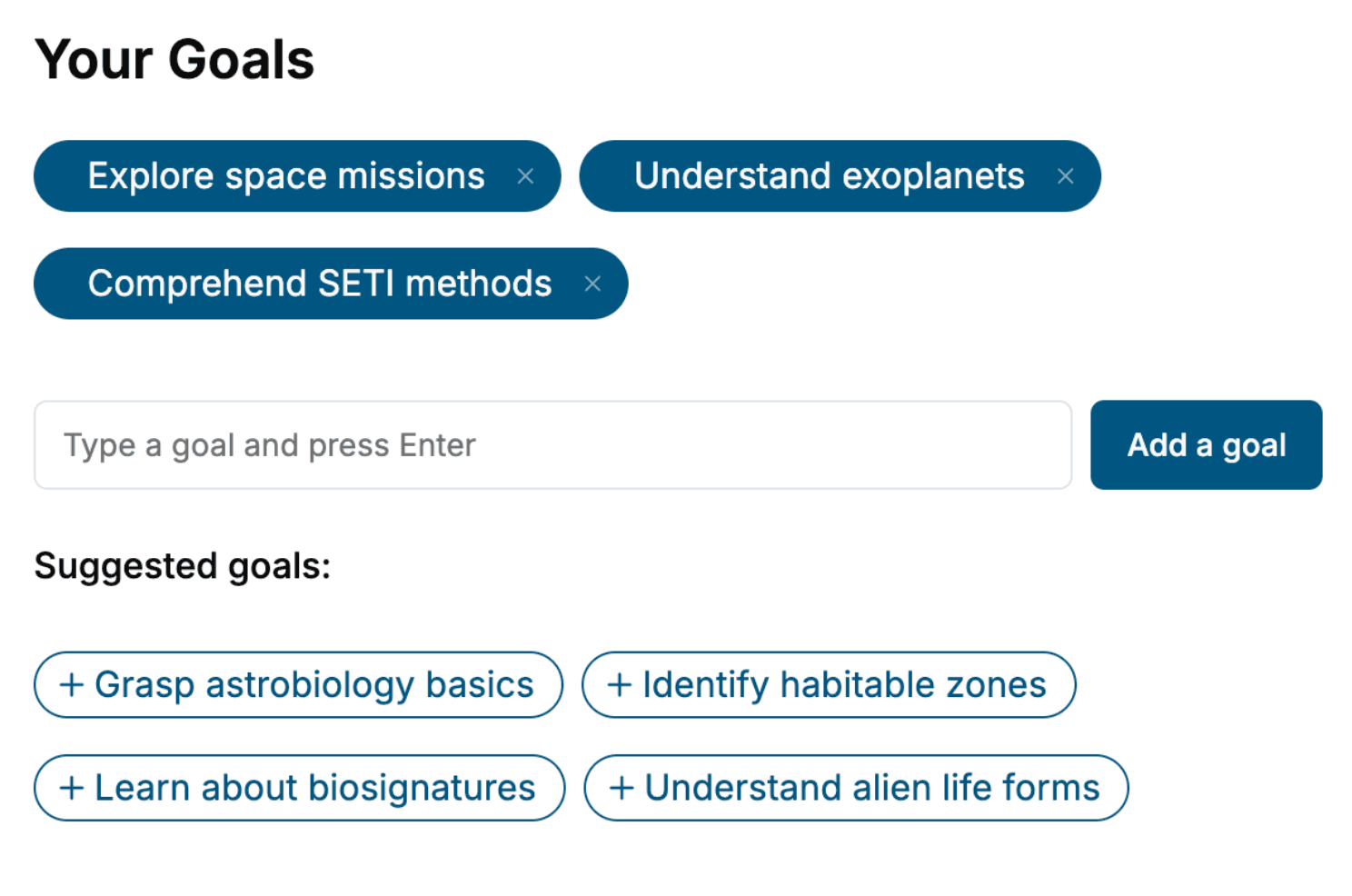
Tell us your goals and background, and get your own version of this book, tailored by AI to you.


Benefits of AI-tailored books
- Read one book, not ten:
- all the Computer Science and Algorithms knowledge you need, gathered into a single book.
- Save days of learning:
- tell us your goals, choose your topics, and the whole book is built around them.
- Learn effortlessly:
- Computer Science and Algorithms book written for your specific background and expertise.
- Understand at a glance:
- includes charts, tables, timelines, checklists, decision trees, and more.
- Stay current:
- written the day you order it, not years ago.
- Trust what you read:
- every book is checked for accuracy, with real research when your subject needs it.
Create your unique book in 3 steps
- 1. Select your focus
Select the focus of your Computer Science and Algorithms book and share your background
- 2. Personalize your book
Specify your goals and choose sub-topics to include
- 3. Get your tailored book
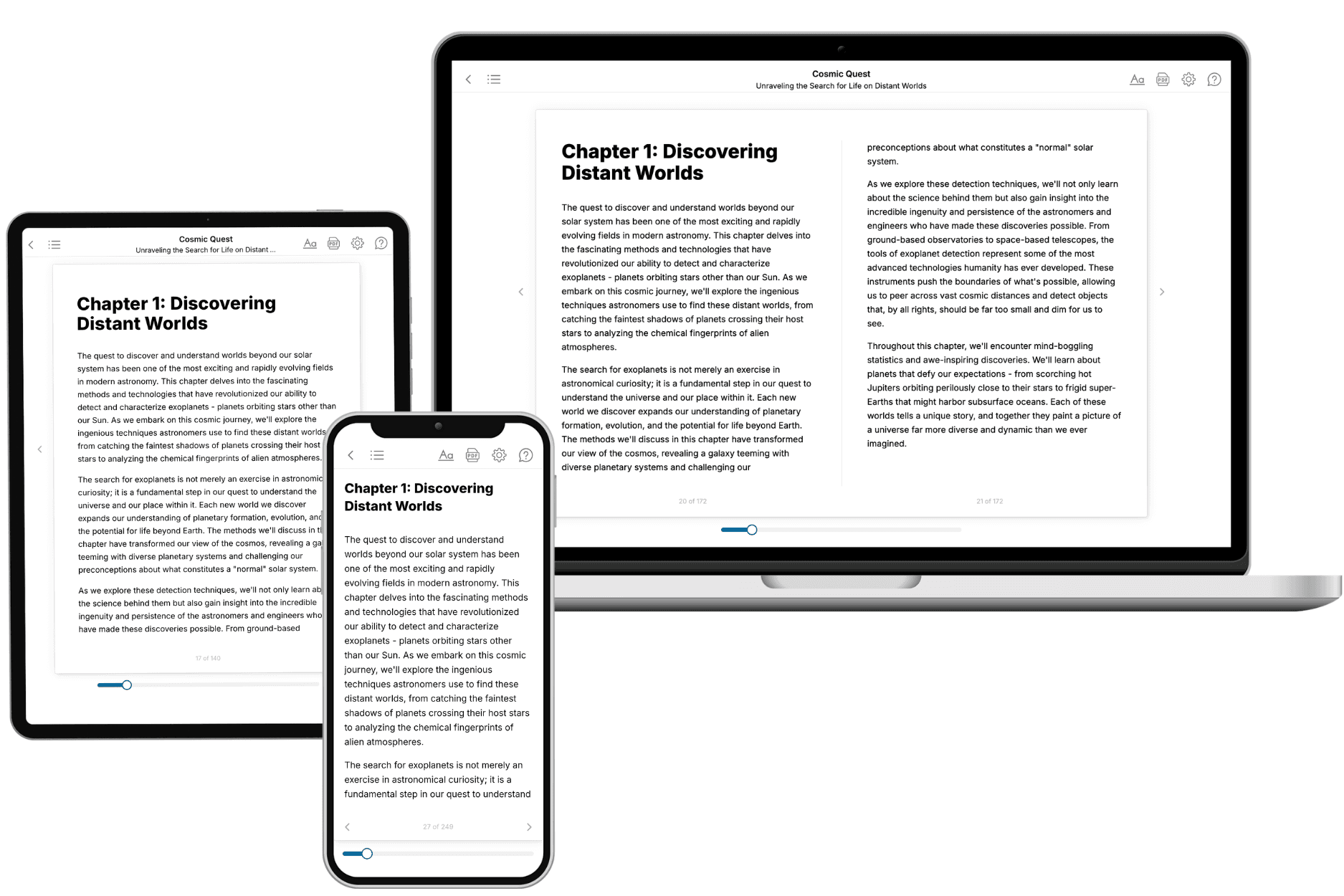
Your book is ready in 10 minutes. Read it online, download as EPUB or PDF, or send to Kindle.

Frequently asked questions
- What is TailoredRead?
TailoredRead creates complete, full-length nonfiction ebooks, written specifically for you. Tell us what you want to learn and why, and TailoredRead writes you a complete ebook on it, with charts, tables, and diagrams throughout. Read it online, on Kindle, or on any e-reader, or download it as a PDF or EPUB. Every book is written fresh the day you order it.
- How is the book tailored to me?
Before anything is written, you answer a few short questions about your goals, your background, and the topics you care about. Your book is then planned around your answers: written at your level, focused on your goals, and covering the topics you chose, instead of the one-size-fits-all book a store sells everyone.
- Will it read like generic AI content?
No. Your book isn't a chat transcript: it's planned chapter by chapter before a single word is written, told in a clear book voice, and explains ideas visually with charts, tables, and diagrams. After writing, every book goes through an editorial pass that polishes chapters so the book reads consistent from start to finish. Judge for yourself: browse thousands of sample books on our Explore Books page.
- How accurate is the content?
Our AI first checks whether your subject needs live research. Niche and fast-moving subjects are researched before writing, and the book plan and chapters are grounded in what it finds. After writing, every book goes through a quality pass that checks its facts and consistency, and researched books list their sources in a Notes section at the back.
- How long is the book?
You choose the length: Comprehensive (250-300 pages), Detailed (150-200 pages), Essential (70-100 pages), or Short (30-50 pages).
- Does the book include visuals?
Yes. Every book includes visual elements such as timelines, checklists, step-by-step guides, decision trees, comparison tables, and matrices, and many include bar charts. A typical book includes dozens of these visual elements.
- Can I read it on Kindle? What formats can I download?
Yes. Every book can be read in our online reader or downloaded as a PDF or EPUB. The EPUB can be opened with Kindle, Apple Books, Kobo, and any e-reader. The Commercial and Author licenses also include an editable Word (DOCX) and Markdown download.
- How much does it cost?
About the price of a regular ebook. The exact price depends on your book's length and complexity, from $2 for the shortest books to $35 for the most comprehensive, and it's shown when you review your book, before you commit to anything. Each book is a one-time purchase, yours to keep, no subscription. Licenses that let you share, teach, or publish your book range from $35.99 to $49.99.
- Can I preview the book before purchasing?
Before you pay, you'll see what your book will cover: the title, a detailed description, the estimated length, and the complete chapter-by-chapter table of contents, so you know what you're getting before you decide. The full text itself is written after you purchase.
- How long does it take to create a book?
About 10 minutes. You can start reading the opening chapters while the rest is still being written.