The Viola Fundamentals Handbook
A Systematic Approach to Mastering Technique, Tone, and Musical Expression
What if your approach to learning viola has been missing the systematic structure that could accelerate your progress?
238 pages12 chaptersJun 5, 2026Viola
About this book
This handbook provides a methodical roadmap for developing viola proficiency, designed for learners who appreciate logical progression and measurable improvement. Rather than scattered exercises, you'll discover how to build foundational techniques in the correct sequence—from proper positioning through advanced vibrato mastery. Each chapter breaks down complex skills into manageable components, explains the "why" behind each technique, and provides targeted practice routines. Whether you're learning through the Suzuki method or traditional approaches, you'll find practical strategies for improving bow control, intonation accuracy, sight reading fluency, and musical expression. This book treats viola learning as a systematic discipline, combining music theory fundamentals with hands-on technical development. You'll develop the finger agility, tone control, and ensemble collaboration skills needed for confident performance, all while building the practice discipline that separates casual players from accomplished musicians.
Table of contents
- IntroductionWhy Systematic Learning Matters for Viola, How to Use This Book for Maximum Progress, Overview of Your Learning PathRead below
- Chapter 1: Understanding the Viola and Its MechanicsViola Anatomy and Sound Production, Proper Instrument Setup and Maintenance, The Physics of Viola Sound Generation
- Chapter 2: Foundational Positioning and PostureLeft Hand Positioning and Finger Placement, Right Hand Bow Hold and Arm Alignment, Body Posture and Instrument Alignment
- Chapter 3: Bow Control FundamentalsBow Pressure Control and Weight Distribution, Bow Speed and Directional Control, Bow Angle and Contact Point Optimization, Integrating Pressure, Speed, and Angle
- Chapter 4: Scales, Arpeggios, and Interval RecognitionMajor and Minor Scales: Building Finger Patterns, Arpeggio Patterns and Harmonic Understanding, Interval Recognition Training for Intonation
- Chapter 5: Intonation Accuracy and Tone QualityIntonation Fundamentals and Pitch Accuracy, Tone Quality Consistency Through Controlled Practice, Ear Training Methods for Pitch Discrimination
- Chapter 6: Shifting Positions SmoothlyThe Position System and Hand Movement, Smooth Shifting Technique and Finger Transitions, Shifting Practice Routines and Progression
- Chapter 7: Vibrato Technique MasteryVibrato Mechanics and Hand Movement, Vibrato Speed Control and Consistency, Expressive Vibrato Application in Musical Context
- Chapter 8: Rhythmic Accuracy and Sight ReadingRhythmic Accuracy Development and Timing, Sight Reading Fluency and Note Recognition, Reading Practice Strategies and Progression
- Chapter 9: Music Theory Essentials for ViolaMusic Theory Fundamentals and Notation, Harmonic Understanding and Chord Recognition, Applying Theory to Your Practice Routine
- Chapter 10: The Suzuki Method and Structured PracticeSuzuki Method Principles and Philosophy, Suzuki Repertoire Progression and Learning Sequence, Effective Practice Discipline and Routine Building
- Chapter 11: Musical Expression and Artistic DevelopmentBuilding Musical Expression Skills, Dynamics, Phrasing, and Musical Interpretation, Emotional Communication Through Technique
- Chapter 12: Ensemble Playing and CollaborationEnsemble Collaboration Skills and Listening, Rhythmic Synchronization and Ensemble Balance, Preparing for Ensemble Performance and Rehearsal
- ConclusionIntegrating All Skills Into Cohesive Musicianship, Your Long-Term Development Path
- Appendix: Practice Logs and Reference Materials
Introduction
The viola occupies a unique and often underappreciated place in the world of string instruments. It sits between the violin and the cello in both size and pitch range, producing a warm, rich, slightly dark tone that no other instrument quite replicates. Yet despite its beauty, the viola is frequently treated as an afterthought in music education, with fewer dedicated method books, fewer specialized teachers, and a long-standing cultural joke about its players being violinists who couldn't quite make the cut. None of that is true, of course, but it does mean that serious viola learners often have to work harder to find structured, thoughtful guidance tailored specifically to their instrument.
This handbook exists to fill that gap. It approaches viola learning the way a physicist might approach a new field of study: by identifying the fundamental principles first, understanding the underlying mechanics, and then building systematically from the ground up. Every technique covered in these pages has a logical reason behind it. Every exercise connects to a broader skill. Nothing is presented as arbitrary tradition or "just the way it's done." If a particular bow hold is recommended, you'll understand why it produces better tone. If a specific finger placement is emphasized, you'll see how it enables cleaner intonation and faster shifts later on. The reasoning is always part of the lesson.
Learning an instrument as an adult, or as someone with a strong analytical background, comes with both advantages and challenges. The advantages are significant: you can understand complex explanations quickly, you can self-monitor your practice with discipline, and you can apply deliberate, focused effort in ways that younger learners often cannot. The challenges are equally real: adult learners sometimes struggle with the patience required for slow, repetitive foundational work, and the analytical mind can occasionally get in the way of the physical intuition that music demands. This book is designed to work with both sides of that equation, giving you the intellectual framework you need while also guiding you toward the embodied, physical skill that viola playing ultimately requires.
What follows is not a collection of random exercises or a loosely organized survey of viola topics. It is a structured progression, built so that each chapter prepares you for the next. Skipping ahead is possible, but not recommended. The sequence matters. Foundational positioning shapes bow control. Bow control shapes tone quality. Tone quality shapes musical expression. Each layer depends on the one beneath it, and rushing past an earlier stage almost always creates problems that surface later, often in frustrating and hard-to-diagnose ways. The systematic approach described throughout this book is not about being rigid. It is about being efficient.
Why Systematic Learning Matters for Viola
Most people who pick up a viola for the first time want to play music as quickly as possible. That impulse is completely understandable. The goal, after all, is to make beautiful sounds. But the path to beautiful sounds on a string instrument is not a straight line from "pick up the bow" to "play a melody." It runs through a series of physical habits, perceptual skills, and coordinated movements that must be built in a specific order. Skipping that order doesn't save time. It creates compensations that slow progress later and, in some cases, cause physical strain or injury.
Research in motor learning consistently shows that complex physical skills are acquired most efficiently when broken into component parts and practiced in isolation before being combined.[1] Viola technique is no different. Bow pressure, bow speed, and bow angle are three separate variables that each require independent attention before they can be coordinated smoothly. Trying to manage all three simultaneously from the beginning is like trying to learn to drive by immediately merging onto a highway. The individual components need to become automatic before integration is possible.
Systematic learning also makes progress measurable. When you work through a defined sequence of skills, you always know where you are and what comes next. You can assess whether a specific technique is solid before moving forward. This is enormously valuable for self-directed learners, who don't have a teacher watching every practice session. A clear framework gives you the ability to diagnose your own weaknesses and address them deliberately, rather than practicing in circles without knowing why improvement feels stalled.
Consider a concrete example. Many intermediate viola players struggle with shifting positions smoothly. The shift feels jerky, the intonation lands inconsistently, and the sound breaks up during the movement. In most cases, this problem doesn't originate in the shift itself. It originates in left hand tension that was never fully addressed during the foundational positioning stage. The hand grips the neck slightly too hard, the thumb locks up, and the arm can't move freely. A systematic approach catches this at the source, in Chapter 2, before it becomes embedded in every piece of music the player attempts.
The viola also presents specific technical challenges that make systematic learning especially important. Its larger size compared to the violin means that left hand stretches are wider, bow arm angles are slightly different, and the physical demands on the body are greater. These differences are not insurmountable, but they do require deliberate attention. A method designed for violin will not always translate directly. This handbook addresses viola-specific mechanics throughout, so the guidance you receive is calibrated to the actual instrument in your hands.
There is also a psychological dimension to systematic learning that deserves acknowledgment. Progress on a string instrument can feel slow, especially in the early months. Having a clear map of where you are in the learning sequence helps maintain motivation during those periods when improvement feels invisible. When you know that the slow, careful work you're doing on open string bow exercises is directly building the tone control you'll need for vibrato six months from now, the work feels purposeful rather than tedious. Systematic learning doesn't just build technique. It builds the mindset that sustains long-term development.
A note on patience: Research on skill acquisition suggests that foundational physical habits in string playing typically require between 50 and 200 hours of correct repetition before they become reliably automatic. This is not a discouraging number. It is a realistic one. Knowing it helps you plan your practice with appropriate expectations rather than frustration.
Finally, systematic learning protects against one of the most common and costly mistakes in self-directed music study: practicing errors. Every time you repeat a movement incorrectly, you are reinforcing a habit that will eventually need to be unlearned. Unlearning is significantly harder than learning. A structured approach, with clear checkpoints and specific criteria for moving forward, dramatically reduces the risk of building technique on a flawed foundation.
How to Use This Book for Maximum Progress
This handbook is designed to be worked through sequentially, but it is also built to serve as a reference you return to repeatedly. The early chapters on positioning and bow control will be most relevant during your first months of study. Later chapters on vibrato, shifting, and musical expression will become primary resources as your technique develops. Even after you've moved past a chapter, revisiting it periodically is valuable. Skills that felt solid at one level of development often reveal new layers of nuance when you return to them with more experience.
Each chapter follows a consistent structure. It opens with the conceptual foundation: why the skill matters and how it connects to the broader system of viola technique. It then moves into specific mechanics, breaking the skill into its component parts. Finally, it provides targeted practice routines with clear instructions for how to work through them. This structure is intentional. Understanding the "why" before the "how" helps you practice more intelligently and troubleshoot more effectively when something isn't working.
Here is a practical framework for working through each chapter:
- Read the full chapter before picking up your instrument. Understand the concepts and the sequence before you begin physical practice. This primes your attention and helps you notice the right things when you start playing.
- Work through the exercises slowly, at a tempo where you can maintain correct form. Speed is never the goal in foundational practice. Accuracy and consistency are.
- Record yourself regularly. A simple phone recording reveals things that are invisible in the moment of playing. Listen back critically and compare what you hear to the descriptions in the relevant chapter.
- Use the practice routines as written before modifying them. The sequences are designed with specific developmental logic. Changing them before you understand that logic often undermines their effectiveness.
- Don't advance to the next chapter until the current one feels genuinely solid. A useful test: can you execute the core technique consistently, without conscious effort, across multiple practice sessions? If yes, you're ready to move forward.
One of the most important tools you can use alongside this book is a practice journal. This doesn't need to be elaborate. A simple notebook where you record what you worked on, what felt difficult, and what improved is sufficient. Over time, this journal becomes an invaluable diagnostic tool. Patterns emerge. You'll notice that certain problems recur under specific conditions, or that progress in one area consistently unlocks improvement in another. The appendix at the back of this book includes a practice log template you can use or adapt.
If you are working with a teacher, this book functions well as a companion to your lessons. Bring specific questions from the chapters to your teacher. Use the frameworks here to articulate what you're experiencing technically, which will make your lessons more productive. If you are studying independently, the book is designed to be self-sufficient, but occasional check-ins with a qualified teacher, even just a few sessions per year, are strongly recommended. Some aspects of viola technique are genuinely difficult to self-assess, particularly bow arm alignment and left hand tension.
Regarding practice time: quality consistently outperforms quantity. A focused 30-minute session with clear objectives and attentive self-monitoring will produce more progress than a distracted 90-minute session where you simply run through pieces. As a general guideline, beginners benefit most from daily sessions of 20 to 40 minutes. Intermediate players can extend to 45 to 75 minutes. The key variable is not duration but concentration. When your focus starts to fade, the practice session is effectively over, even if your hands keep moving.
This book also integrates concepts from the Suzuki method, particularly in Chapter 10, alongside more traditional technical approaches. These are not competing philosophies. They are complementary tools. The Suzuki emphasis on listening, repetition, and building a rich musical environment is highly compatible with the systematic technical development described throughout this handbook. Where the two approaches intersect, both are acknowledged. Where they diverge, the reasoning is explained so you can make informed choices about your own practice.
Practical tip: Before each practice session, spend two minutes reviewing your goals for that session. Before you put the viola away, spend two minutes assessing what actually happened. This simple habit, sometimes called "deliberate reflection," has been shown to significantly accelerate skill acquisition in complex motor tasks.[2]
Finally, approach this process with genuine curiosity rather than anxiety about progress. The viola is a deeply rewarding instrument, and the journey of developing technique is interesting in its own right. Every time you isolate a variable, test a hypothesis about your bow arm, or notice a connection between two seemingly unrelated skills, you are engaging in exactly the kind of analytical, exploratory learning that this book is designed to support.
Overview of Your Learning Path
The twelve chapters of this handbook trace a deliberate arc from physical foundation to musical expression. Understanding the overall shape of that arc before you begin helps you see how each chapter fits into the larger picture. What follows is a brief map of the journey ahead, organized into four broad phases.
Phase 1: Physical Foundation (Chapters 1 through 3) covers everything that must be in place before meaningful musical development can begin. Chapter 1 introduces the viola itself: its anatomy, how it produces sound, and the physics underlying that process. This is not merely background information. Understanding how the instrument works mechanically informs every technical decision you'll make. Chapter 2 addresses positioning and posture in detail, covering left hand placement, right hand bow hold, and full body alignment. Chapter 3 then builds on that foundation with a systematic treatment of bow control, separating pressure, speed, and angle into distinct areas of study before showing how they integrate.
Phase 2: Pitch and Finger Development (Chapters 4 through 6) shifts focus to the left hand and the ear. Chapter 4 works through scales and arpeggios not as warm-up exercises but as systematic tools for building finger patterns and harmonic understanding. Chapter 5 addresses intonation accuracy and tone quality together, because they are deeply interconnected: a player who can't hear pitch discrepancies can't correct them, and a player with poor tone control can't evaluate intonation clearly. Chapter 6 introduces position shifting, one of the most technically demanding skills on any string instrument, with a step-by-step approach that minimizes the tension and hesitation that typically plague early attempts.
Phase 3: Advanced Technique and Musicianship (Chapters 7 through 10) builds the skills that distinguish intermediate players from beginners. Chapter 7 covers vibrato in full, from the initial mechanics of the motion through speed control and expressive application. Chapter 8 addresses rhythmic accuracy and sight reading, two skills that are often underdeveloped in players who learn primarily by ear. Chapter 9 provides the music theory foundation that supports everything else, covering notation, harmony, and how theoretical understanding can be applied directly to practice. Chapter 10 examines the Suzuki method and structured practice discipline, offering frameworks for building consistent, productive practice habits.
Phase 4: Expression and Ensemble (Chapters 11 and 12) addresses the musical and collaborative dimensions of viola playing. Chapter 11 focuses on musical expression: how dynamics, phrasing, and interpretation are developed, and how technical mastery enables rather than constrains emotional communication. Chapter 12 prepares you for ensemble playing, covering the listening skills, rhythmic synchronization, and collaborative awareness that chamber music and orchestral playing demand.
Here is a visual summary of the learning path:
- Chapters 1–3: Instrument mechanics, positioning, posture, and bow control fundamentals
- Chapters 4–6: Scales, intonation, tone quality, and position shifting
- Chapters 7–10: Vibrato, sight reading, music theory, and practice discipline
- Chapters 11–12: Musical expression, dynamics, phrasing, and ensemble collaboration
Each phase builds directly on the previous one. The physical habits established in Phase 1 make the pitch work of Phase 2 possible. The intonation and finger control developed in Phase 2 give vibrato in Phase 3 its accuracy and expressiveness. The technical mastery accumulated across Phases 1 through 3 is what allows the musical expression of Phase 4 to feel natural rather than forced. This is not an arbitrary sequence. It reflects the actual developmental logic of string instrument learning, informed by both pedagogical research and the practical experience of generations of string teachers.
It is worth noting what this book does not cover. It does not address advanced orchestral excerpts, concerto preparation, or professional-level performance practice. Those topics belong to a more advanced stage of development than this handbook targets. The goal here is to bring you from foundational technique to confident intermediate playing, with the skills and habits in place to continue developing independently or with a teacher. That is a substantial and genuinely achievable goal, and it is the one this book is built to help you reach.
One more thing before you begin. The viola has a long and distinguished history as a solo and chamber instrument, with a repertoire that includes works by Bartók, Hindemith, Walton, and many others. It is not a second-tier violin. It is a distinct instrument with its own voice, its own technical demands, and its own expressive possibilities. Approaching it with that understanding, as a serious instrument worthy of serious study, will shape your entire learning experience. The systematic work ahead is not a means to an end. It is the beginning of a relationship with an instrument that will reward your investment for as long as you choose to play it.
Before you turn to Chapter 1: If you haven't already, take a few minutes to simply hold your viola and bow without playing. Notice the weight of each. Notice how the instrument rests against your body. Notice the balance point of the bow in your hand. This kind of quiet, attentive observation is a habit worth building from the very first session. The players who develop the fastest are almost always the ones who pay the closest attention.
This is the end of the free sample. The full book has 12 chapters.
Want this book written for you?
Tell us your goals and background, and get your own version of this book, tailored by AI to you.


Benefits of AI-tailored books
- Read one book, not ten:
- all the Viola knowledge you need, gathered into a single book.
- Save days of learning:
- tell us your goals, choose your topics, and the whole book is built around them.
- Learn effortlessly:
- Viola book written for your specific background and expertise.
- Understand at a glance:
- includes charts, tables, timelines, checklists, decision trees, and more.
- Stay current:
- written the day you order it, not years ago.
- Trust what you read:
- every book is checked for accuracy, with real research when your subject needs it.
Create your unique book in 3 steps
- 1. Select your focus
Select the focus of your Viola book and share your background
- 2. Personalize your book
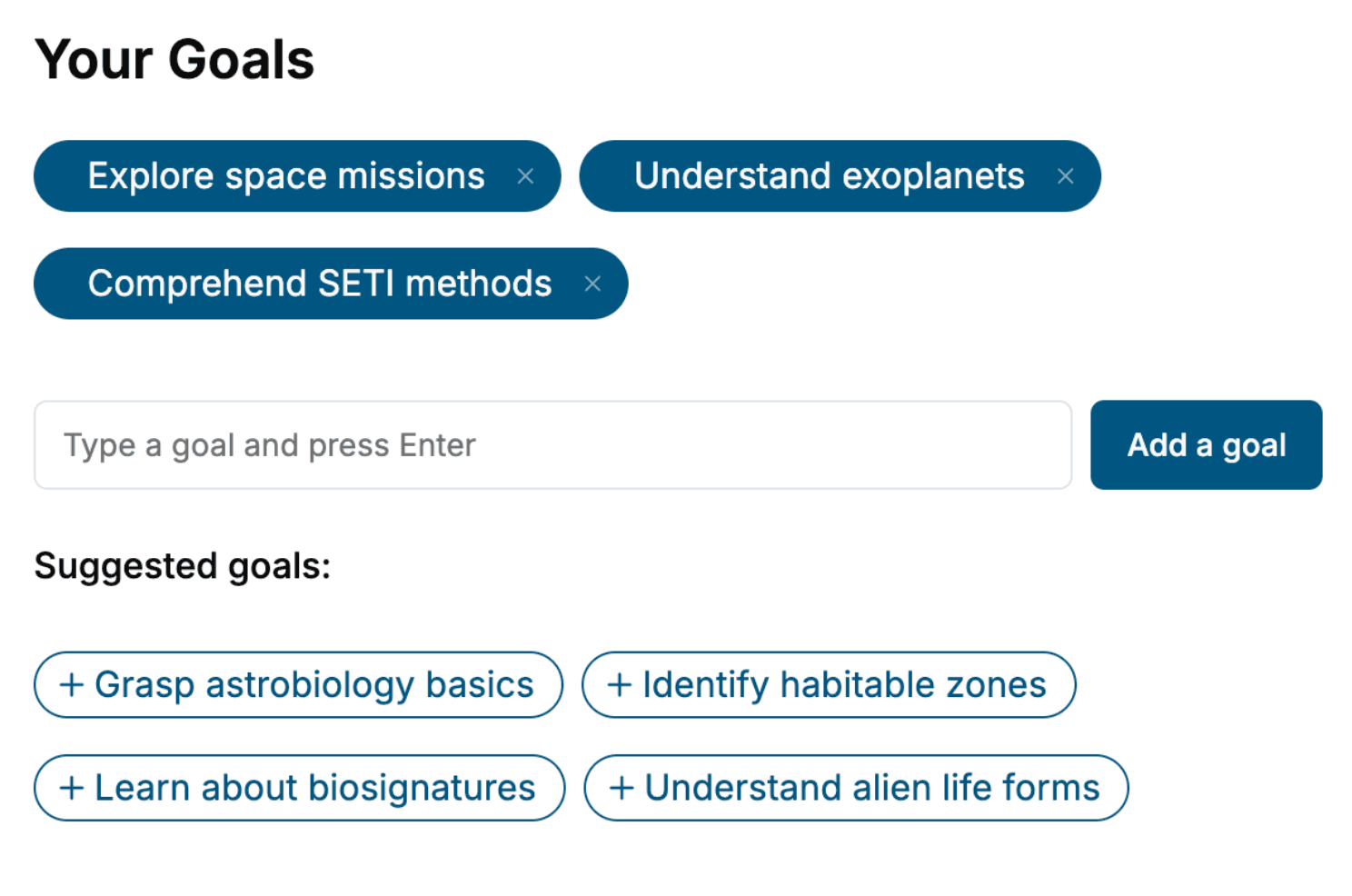
Specify your goals and choose sub-topics to include
- 3. Get your tailored book
Your book is ready in 10 minutes. Read it online, download as EPUB or PDF, or send to Kindle.

Frequently asked questions
- What is TailoredRead?
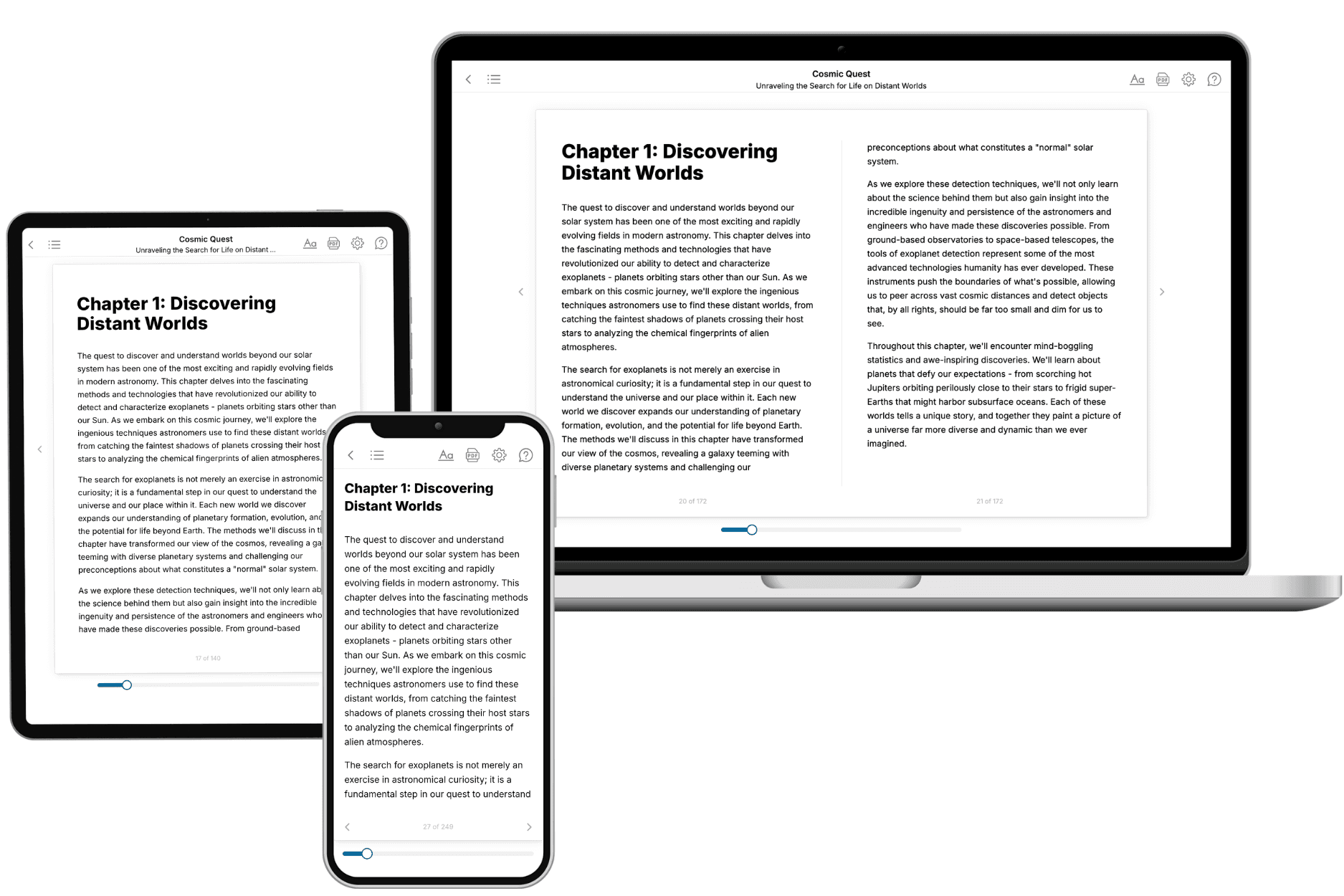
TailoredRead creates complete, full-length nonfiction ebooks, written specifically for you. Tell us what you want to learn and why, and TailoredRead writes you a complete ebook on it, with charts, tables, and diagrams throughout. Read it online, on Kindle, or on any e-reader, or download it as a PDF or EPUB. Every book is written fresh the day you order it.
- How is the book tailored to me?
Before anything is written, you answer a few short questions about your goals, your background, and the topics you care about. Your book is then planned around your answers: written at your level, focused on your goals, and covering the topics you chose, instead of the one-size-fits-all book a store sells everyone.
- Will it read like generic AI content?
No. Your book isn't a chat transcript: it's planned chapter by chapter before a single word is written, told in a clear book voice, and explains ideas visually with charts, tables, and diagrams. After writing, every book goes through an editorial pass that polishes chapters so the book reads consistent from start to finish. Judge for yourself: browse thousands of sample books on our Explore Books page.
- How accurate is the content?
Our AI first checks whether your subject needs live research. Niche and fast-moving subjects are researched before writing, and the book plan and chapters are grounded in what it finds. After writing, every book goes through a quality pass that checks its facts and consistency, and researched books list their sources in a Notes section at the back.
- How long is the book?
You choose the length: Comprehensive (250-300 pages), Detailed (150-200 pages), Essential (70-100 pages), or Short (30-50 pages).
- Does the book include visuals?
Yes. Every book includes visual elements such as timelines, checklists, step-by-step guides, decision trees, comparison tables, and matrices, and many include bar charts. A typical book includes dozens of these visual elements.
- Can I read it on Kindle? What formats can I download?
Yes. Every book can be read in our online reader or downloaded as a PDF or EPUB. The EPUB can be opened with Kindle, Apple Books, Kobo, and any e-reader. The Commercial and Author licenses also include an editable Word (DOCX) and Markdown download.
- How much does it cost?
About the price of a regular ebook. The exact price depends on your book's length and complexity, from $2 for the shortest books to $35 for the most comprehensive, and it's shown when you review your book, before you commit to anything. Each book is a one-time purchase, yours to keep, no subscription. Licenses that let you share, teach, or publish your book range from $35.99 to $49.99.
- Can I preview the book before purchasing?
Before you pay, you'll see what your book will cover: the title, a detailed description, the estimated length, and the complete chapter-by-chapter table of contents, so you know what you're getting before you decide. The full text itself is written after you purchase.
- How long does it take to create a book?
About 10 minutes. You can start reading the opening chapters while the rest is still being written.