The Visual Field Handbook
Understanding How Your Eyes Perceive the World Around You
Discover how your eyes perceive the world beyond what you consciously notice.
191 pages8 chaptersJun 16, 2026Ophthalmology
About this book
Your visual field—the entire area you can see when looking straight ahead—is far more complex than most people realize. This book explores the science of visual field testing, explaining how eye care professionals assess your peripheral vision and detect hidden problems that could affect your safety and independence. You'll learn why visual field testing matters, how different testing methods work, and what your results actually mean. Whether you're curious about your own eye health, studying visual perception, or working in a healthcare field, this guide demystifies the technology and psychology behind one of medicine's most important diagnostic tools. Understand the connection between your visual field and conditions like glaucoma, stroke, and retinal disease. Explore how your brain processes visual information across your entire visual space, and why some people experience blind spots or peripheral vision loss. This practical yet scientifically rigorous exploration bridges the gap between clinical practice and everyday vision, giving you the knowledge to better understand your own eyes and the eyes of those around you.
Table of contents
- IntroductionWhy Your Visual Field Matters More Than You Think, What You'll Discover in This Book, How to Get the Most From This GuideRead below
- Chapter 1: The Basics of Vision and Visual FieldUnderstanding Eye Anatomy and How Light Enters, The Visual Pathway: From Eye to Brain, Defining the Visual Field: Central and Peripheral Vision, What a Normal Visual Field Looks Like
- Chapter 2: The Psychology of Visual PerceptionHow Attention Shapes What You See, Peripheral Vision and Unconscious Processing, Natural Blind Spots and Visual Gaps, The Gap Between Perception and Reality
- Chapter 3: Visual Field Testing MethodsConfrontation Testing: The Simple Screening Method, Automated Perimetry: Advanced Technology and Precision, Goldmann Perimetry: The Gold Standard Approach, Other Testing Techniques and When They're Used
- Chapter 4: Understanding Your Test ResultsHow to Read and Interpret Visual Field Reports, Normal Variations and Individual Differences, Common Defect Patterns and What They Indicate, Reliability Factors and Test Quality Indicators
- Chapter 5: Visual Field Defects and DiseaseGlaucoma and Progressive Field Loss, Stroke, Brain Tumors, and Neurological Damage, Retinal Diseases and Their Visual Field Signatures, Other Conditions Affecting the Visual Field
- Chapter 6: Age, Health, and Visual Field ChangesHow Aging Affects Your Visual Field, Systemic Diseases and Visual Field Impact, Medications and Their Effects on Vision, Lifestyle Factors That Influence Visual Field Health
- Chapter 7: Clinical Applications and MonitoringThe Diagnostic Role of Visual Field Testing, Monitoring Disease Progression Over Time, How Test Results Guide Treatment Decisions, Follow-Up Protocols and Testing Schedules
- Chapter 8: Practical Insights for Daily LifeVisual Field and Driving Safety, Workplace Implications and Occupational Vision, Adaptation Strategies for Field Loss, Maintaining Quality of Life With Visual Changes
- ConclusionKey Takeaways and Moving Forward, The Future of Visual Field Testing
- Glossary
- Further Reading and Resources
Introduction
Think about the last time you reached for a glass of water without looking directly at it, or noticed a car pulling out from a side street just in time to brake. In both cases, your peripheral vision did the work quietly, without fanfare, without you even consciously directing your eyes toward the object. This is your visual field in action: the entire sweep of space you can see at any given moment, not just the sharp center where your gaze lands. Most people take this remarkable capability completely for granted, and that's precisely why understanding it matters so much.
Your visual field is not a simple, uniform window onto the world. It's a complex, layered system shaped by the anatomy of your eyes, the wiring of your brain, and the habits of your attention. The edges of your vision detect motion and contrast in ways your central vision cannot. Your central vision, in turn, delivers the fine detail and color resolution that your periphery lacks. Together, these two systems create a seamless experience of sight that feels effortless but is, in reality, the product of extraordinary biological engineering. When any part of that system breaks down, the consequences can range from subtle inconveniences to serious threats to safety and independence.
Visual field testing is the clinical tool that makes the invisible visible. It maps the boundaries and quality of your vision in a systematic way, revealing blind spots, areas of reduced sensitivity, and patterns of loss that can point directly to specific diseases or neurological events. Glaucoma, stroke, brain tumors, and retinal diseases all leave characteristic fingerprints on the visual field, and trained clinicians can read those fingerprints to guide diagnosis and treatment. Yet despite its importance, visual field testing remains poorly understood outside of clinical settings. Many people who undergo the test leave the clinic with little sense of what was measured, what the results mean, or why the test was ordered in the first place.
This book exists to close that gap. Whether you're a student exploring visual perception, a healthcare professional looking to deepen your understanding of perimetry, or simply someone who wants to make sense of a recent eye examination, the pages ahead offer a clear, grounded, and genuinely engaging guide to one of medicine's most important diagnostic tools. The goal is not to replace clinical expertise but to build the kind of foundational knowledge that makes clinical conversations more productive and personal health decisions more informed.
Why Your Visual Field Matters More Than You Think
Most people think of vision as a single sense, but it's more accurate to think of it as a collection of overlapping capabilities working in parallel. Your ability to read this sentence depends on your central vision, the small, high-resolution zone at the center of your visual field. Your ability to notice someone walking toward you from the side depends on your peripheral vision, the wide, lower-resolution zone that surrounds that central area. Lose your central vision and reading becomes nearly impossible. Lose your peripheral vision and you may walk into doorframes, miss cars at intersections, or fail to see a child running into the street. Both types of loss are serious, but peripheral vision loss is particularly dangerous because it often goes unnoticed for years.
This is one of the most striking facts about visual field loss: it is frequently invisible to the person experiencing it. The brain is remarkably good at filling in missing information, a process called perceptual completion. When a region of the visual field goes dark due to disease or nerve damage, the brain often substitutes surrounding visual information to create the illusion of a complete picture. A person with significant peripheral field loss may genuinely believe their vision is fine, right up until they have a car accident or trip over an obstacle they never saw coming. Research suggests that patients with glaucoma, one of the leading causes of visual field loss, can lose up to 40 percent of their retinal nerve fibers before noticing any change in their vision.[1]
The stakes extend well beyond individual health. Visual field loss has measurable effects on driving safety, workplace performance, and quality of life. Studies have consistently shown that drivers with significant peripheral field defects have higher rates of motor vehicle accidents and are more likely to fail standardized driving assessments.[2] In occupational settings, certain professions including commercial driving, aviation, and surgery have strict visual field requirements precisely because the consequences of undetected field loss can be catastrophic. Understanding your visual field is not an abstract academic exercise. It has direct, practical implications for how safely and independently you can live your life.
Beyond safety, the visual field is a window into the health of your entire visual system, from the retina at the back of your eye to the visual cortex at the back of your brain. Because the visual pathway travels through so many critical brain structures, damage anywhere along that route leaves a characteristic pattern of field loss. A stroke affecting the right side of the brain, for example, typically causes loss of the left half of the visual field in both eyes, a pattern called homonymous hemianopia. A tumor pressing on the optic chiasm, the crossing point of the optic nerves, produces a different and equally distinctive pattern. Visual field testing, in this sense, is as much a neurological tool as it is an ophthalmological one.
There's also a psychological dimension to visual field health that deserves attention. Vision is the dominant sense for most people, and changes to visual function can profoundly affect mental health, social engagement, and sense of identity. People who experience significant visual field loss often report feelings of anxiety, depression, and social withdrawal. They may give up activities they love, from driving to sports to reading, and struggle to adapt to a changed relationship with the visual world. Understanding what has changed, why it has changed, and what can be done about it is the first step toward effective adaptation and maintained quality of life.
Finally, visual field testing matters because early detection saves function. Many of the conditions that cause field loss, including glaucoma, diabetic retinopathy, and certain neurological conditions, are far more treatable when caught early. Regular visual field testing is one of the primary tools clinicians use to detect these conditions before they cause irreversible damage. For anyone at elevated risk, whether due to family history, age, systemic disease, or other factors, understanding the purpose and value of this testing is genuinely important. The more clearly you understand what the test measures and why it matters, the more likely you are to prioritize it and to engage meaningfully with the results.
What You'll Discover in This Book
This book is organized to take you from foundational concepts to practical applications in a logical, progressive sequence. Each chapter builds on the one before it, so by the time you reach the later sections on clinical applications and daily life implications, you'll have the conceptual framework needed to make sense of the details. Here's a brief map of the journey ahead.
Chapter 1 lays the groundwork by explaining the anatomy of the eye and the visual pathway. You'll learn how light enters the eye, how the retina converts it into electrical signals, and how those signals travel through the optic nerve and into the brain. This chapter also defines the visual field precisely, distinguishing between central and peripheral vision and describing what a normal, healthy visual field actually looks like. If you've ever wondered why your blind spot exists or why your peripheral vision is blurry compared to your central vision, this chapter answers those questions.
Chapter 2 shifts from anatomy to psychology, exploring how attention, expectation, and unconscious processing shape what you actually perceive. Vision is not a passive recording of the world. It's an active, interpretive process that your brain constructs in real time. This chapter examines phenomena like inattentional blindness, the filling-in of blind spots, and the surprising capabilities of peripheral vision for detecting motion and threat. Understanding these psychological dimensions helps explain why visual field loss can be so difficult to notice and why testing is so important.
Chapter 3 is a practical guide to the testing methods themselves. You'll learn about confrontation testing, the simple bedside technique that clinicians use for quick screening, as well as automated perimetry, the computerized method used in most modern eye clinics. The chapter also covers Goldmann perimetry, the manual technique that remains valuable for certain clinical situations, and several other specialized methods. For each approach, you'll understand not just how it works but when and why it's used, and what its strengths and limitations are.
Chapter 4 tackles the often-confusing task of interpreting visual field results. Visual field reports are filled with numbers, grayscale maps, probability plots, and reliability indices that can be overwhelming without guidance. This chapter walks through each element of a typical report, explaining what it measures and what it means. You'll also learn about normal variations in visual field results, the factors that affect test reliability, and the common patterns of field loss that point to specific diagnoses.
Chapters 5 and 6 explore the conditions that cause visual field changes, from glaucoma and retinal disease to stroke, brain tumors, and the effects of aging and systemic illness. These chapters connect the clinical patterns described in Chapter 4 to their underlying causes, giving you a richer understanding of why visual field testing is such a powerful diagnostic tool. Chapter 6 also addresses the role of medications and lifestyle factors in visual field health, topics that are often overlooked but genuinely important.
Chapter 7 examines how visual field data is used in clinical practice, from initial diagnosis through long-term monitoring and treatment planning. You'll learn how clinicians track disease progression over time, how they use field data to make treatment decisions, and what follow-up testing schedules typically look like for different conditions. This chapter is particularly valuable for anyone managing a chronic eye condition or supporting someone who is.
Chapter 8 brings everything back to everyday life, addressing the practical implications of visual field health for driving, work, and daily activities. It also covers adaptation strategies for people living with field loss, including low vision rehabilitation, compensatory techniques, and the psychological support that can make a real difference in quality of life. The book closes with a conclusion that synthesizes the key themes and looks ahead to emerging technologies and future directions in visual field testing.
Throughout all of these chapters, the emphasis is on clarity, accuracy, and practical relevance. Technical terms are introduced carefully and explained in plain language. Clinical concepts are illustrated with concrete examples and real-world scenarios. The goal is to give you knowledge you can actually use, whether that means understanding your own test results, having a more informed conversation with your eye care provider, or simply appreciating the remarkable complexity of the visual system you rely on every day.
How to Get the Most From This Guide
This book is designed to be read from beginning to end, but it's also structured so that individual chapters can stand alone as reference material. If you're coming to this guide with a specific question, such as what a particular visual field defect pattern means or how glaucoma affects peripheral vision, you can jump directly to the relevant chapter and find a self-contained explanation. The glossary at the back of the book provides quick definitions for technical terms, and the further reading section points you toward additional resources for deeper exploration.
If you're reading this book as part of a course or professional development program, the chapter structure maps well onto a progressive curriculum. Each chapter introduces new concepts while reinforcing earlier ones, and the practical examples throughout the text provide material for discussion and reflection. The footnotes and citations throughout the book point to primary sources and key studies that can serve as starting points for more advanced reading.
For those who are reading because of a personal health concern, perhaps you've recently had a visual field test and want to understand the results, or you've been diagnosed with a condition that affects the visual field, a few specific suggestions may help. Start with Chapters 1 and 2 to build your foundational understanding of how the visual system works. Then move to Chapter 4 for guidance on interpreting test results, and Chapter 5 or 6 for information about the specific condition that concerns you. Chapter 8 will be particularly relevant if you're thinking about the practical implications of visual field changes for your daily life.
One important note about the scope of this book: it is an educational resource, not a substitute for professional medical advice. Visual field testing is a clinical procedure, and the interpretation of results requires the expertise of a trained eye care professional who knows your full medical history and can examine you directly. The information in this book will help you understand and engage with that clinical process more effectively, but it should complement professional care, not replace it. If you have concerns about your vision or your visual field test results, the right first step is always to speak with your eye care provider.
It's also worth setting realistic expectations about what this book will and won't do. It will give you a solid, accurate understanding of visual field science at an intermediate level. It will not turn you into a clinical perimetrist or enable you to diagnose conditions from raw test data. The goal is informed understanding, not clinical competence. That said, informed understanding is genuinely valuable. Patients who understand their conditions ask better questions, follow through more consistently with treatment, and report higher satisfaction with their care.[3] This book aims to support exactly that kind of engaged, informed approach to eye health.
As you read, try to connect the concepts to your own experience of vision. Notice how your peripheral vision picks up movement at the edges of your awareness. Pay attention to how your vision changes in low light versus bright light, or when you're tired versus alert. These everyday observations will make the scientific concepts more concrete and memorable. Vision is something you experience constantly, and one of the pleasures of learning about it in depth is that it transforms a familiar, taken-for-granted sense into something genuinely fascinating.
A few practical tips for getting the most from each chapter are worth highlighting here:
- Read the chapter introduction carefully before diving into the subchapters. Each introduction frames the key questions the chapter addresses and helps you orient to the material.
- Pay attention to the examples and case scenarios. These are not decorative. They're designed to make abstract concepts concrete and to show how the science plays out in real clinical and everyday situations.
- Use the glossary actively. When you encounter a term that feels unfamiliar or unclear, look it up rather than pushing past it. Building a solid vocabulary makes the later chapters much easier to follow.
- Take notes on questions that arise as you read. Visual field science connects to many other areas of medicine, neuroscience, and psychology, and your questions may point you toward fascinating adjacent topics worth exploring.
- If you're a healthcare professional or student, consider how the material in each chapter connects to your clinical or academic work. The most durable learning happens when new information is linked to existing knowledge and practical experience.
The visual field is one of the most clinically important and scientifically rich aspects of human perception. It sits at the intersection of ophthalmology, neurology, and psychology, drawing on all three disciplines to tell a coherent story about how we see and what happens when seeing goes wrong. That story is worth understanding deeply, and this book is your guide to doing exactly that. The chapters ahead are dense with useful information, but they're also written to be genuinely engaging. Vision is a remarkable thing, and learning about it in depth should feel like discovery, not drudgery.
The eye sees only what the mind is prepared to comprehend. Understanding your visual field means understanding not just your eyes, but the entire perceptual system that turns light into experience.
With that framing in mind, turn the page and begin. By the time you finish this book, you'll see your own vision, quite literally, in a new light.
Notes
Introduction
- 1. H. A. Quigley and E. M. Addicks, "Quantitative studies of retinal nerve fiber layer defects," Archives of Ophthalmology, 1982
- 2. C. Owsley and G. McGwin, "Vision and driving," Vision Research, 2010
- 3. J. H. Hibbard and J. Greene, "What the evidence shows about patient activation," Health Affairs, 2013
This is the end of the free sample. The full book has 8 chapters.
Want this book written for you?
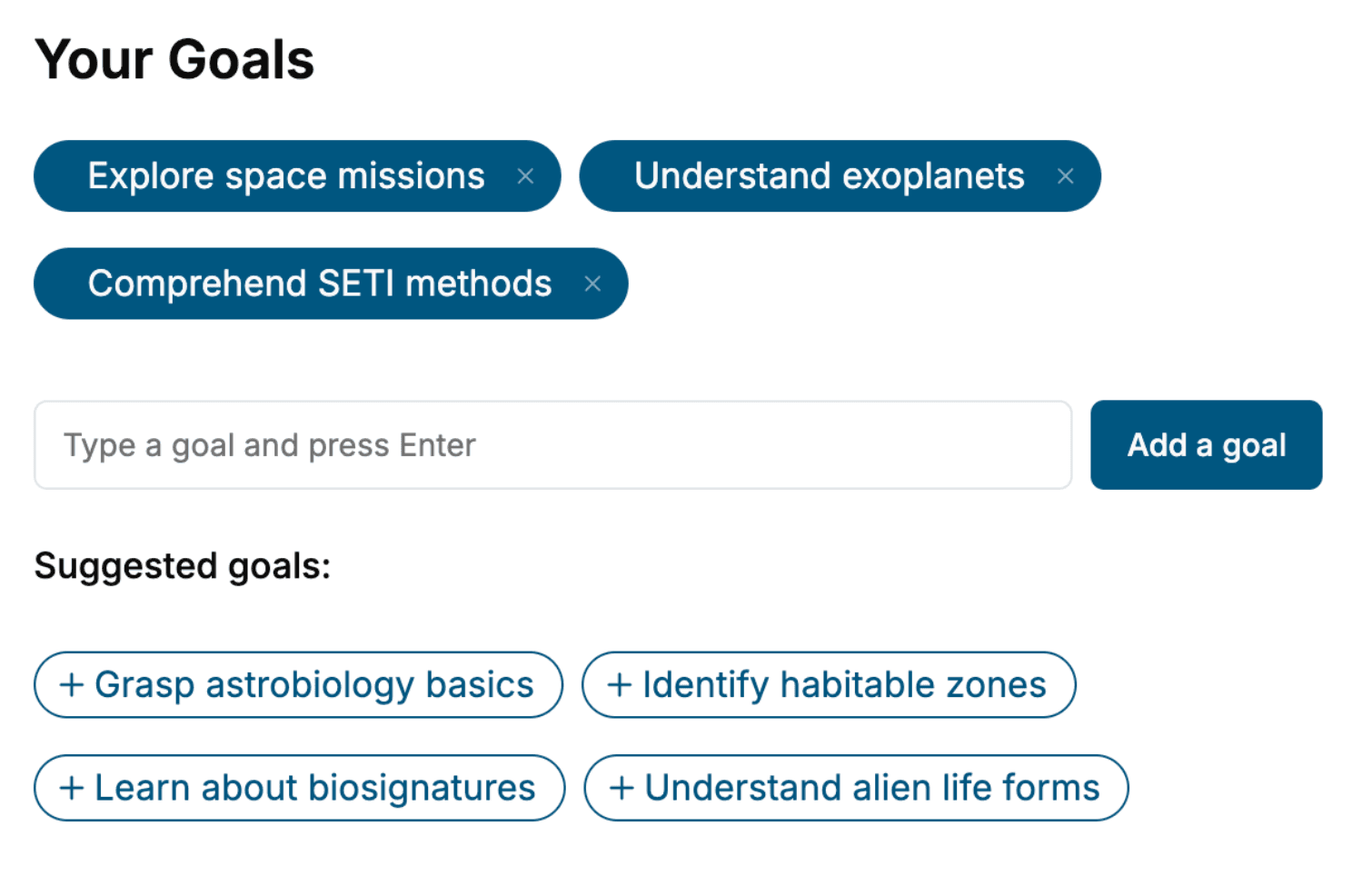
Tell us your goals and background, and get your own version of this book, tailored by AI to you.


Benefits of AI-tailored books
- Read one book, not ten:
- all the Ophthalmology knowledge you need, gathered into a single book.
- Save days of learning:
- tell us your goals, choose your topics, and the whole book is built around them.
- Learn effortlessly:
- Ophthalmology book written for your specific background and expertise.
- Understand at a glance:
- includes charts, tables, timelines, checklists, decision trees, and more.
- Stay current:
- written the day you order it, not years ago.
- Trust what you read:
- every book is checked for accuracy, with real research when your subject needs it.
Create your unique book in 3 steps
- 1. Select your focus
Select the focus of your Ophthalmology book and share your background
- 2. Personalize your book
Specify your goals and choose sub-topics to include
- 3. Get your tailored book
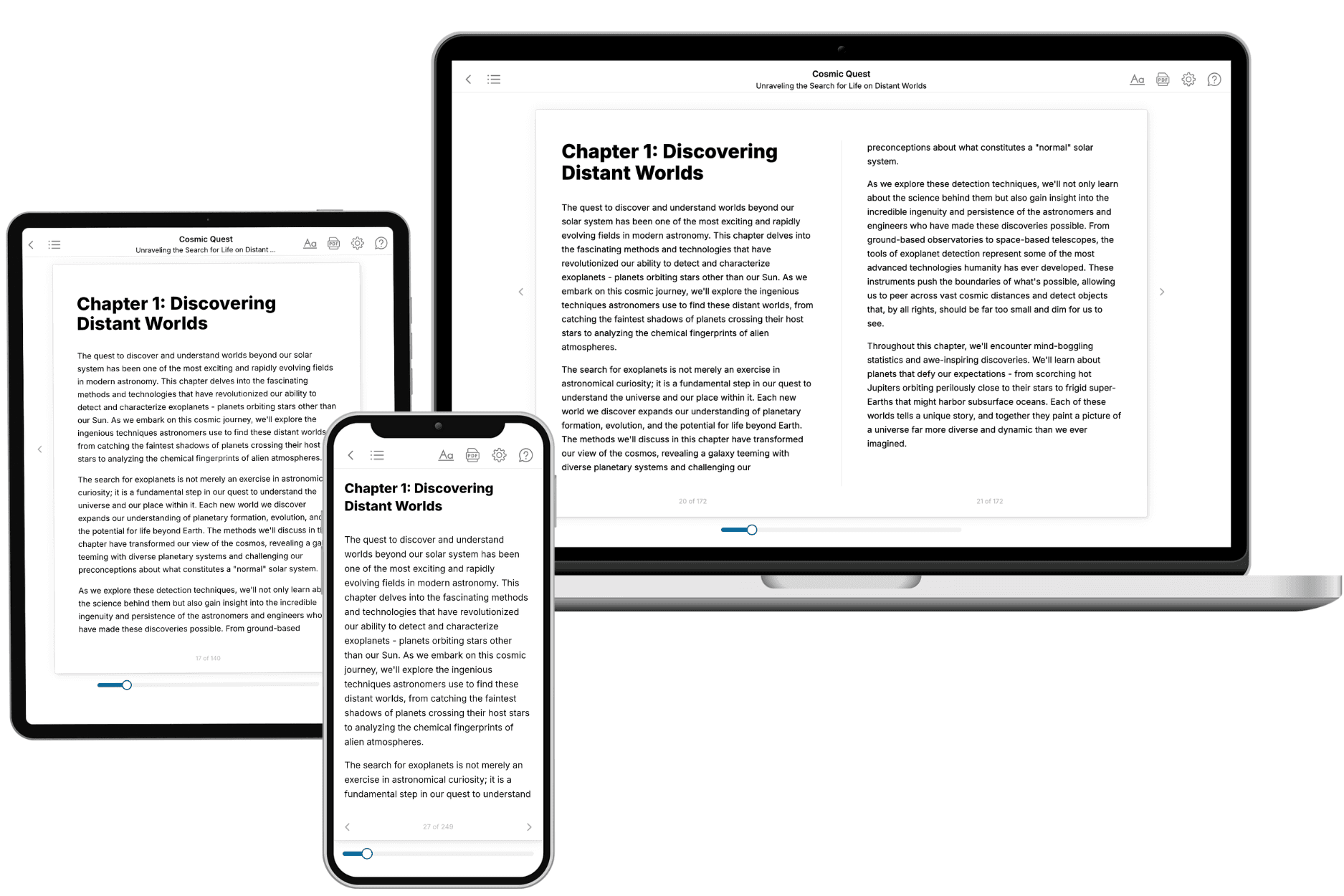
Your book is ready in 10 minutes. Read it online, download as EPUB or PDF, or send to Kindle.

Frequently asked questions
- What is TailoredRead?
TailoredRead creates complete, full-length nonfiction ebooks, written specifically for you. Tell us what you want to learn and why, and TailoredRead writes you a complete ebook on it, with charts, tables, and diagrams throughout. Read it online, on Kindle, or on any e-reader, or download it as a PDF or EPUB. Every book is written fresh the day you order it.
- How is the book tailored to me?
Before anything is written, you answer a few short questions about your goals, your background, and the topics you care about. Your book is then planned around your answers: written at your level, focused on your goals, and covering the topics you chose, instead of the one-size-fits-all book a store sells everyone.
- Will it read like generic AI content?
No. Your book isn't a chat transcript: it's planned chapter by chapter before a single word is written, told in a clear book voice, and explains ideas visually with charts, tables, and diagrams. After writing, every book goes through an editorial pass that polishes chapters so the book reads consistent from start to finish. Judge for yourself: browse thousands of sample books on our Explore Books page.
- How accurate is the content?
Our AI first checks whether your subject needs live research. Niche and fast-moving subjects are researched before writing, and the book plan and chapters are grounded in what it finds. After writing, every book goes through a quality pass that checks its facts and consistency, and researched books list their sources in a Notes section at the back.
- How long is the book?
You choose the length: Comprehensive (250-300 pages), Detailed (150-200 pages), Essential (70-100 pages), or Short (30-50 pages).
- Does the book include visuals?
Yes. Every book includes charts, tables, and diagrams: timelines, checklists, step-by-step guides, decision trees, comparison tables, matrices, and bar charts. A typical book includes dozens of these visual elements.
- Can I read it on Kindle? What formats can I download?
Yes. Every book can be read in our online reader or downloaded as a PDF or EPUB. The EPUB can be opened with Kindle, Apple Books, Kobo, and any e-reader. The Commercial and Author licenses also include an editable Word (DOCX) and Markdown download.
- How much does it cost?
About the price of a regular ebook. The exact price depends on your book's length and complexity, from $2 for the shortest books to $35 for the most comprehensive, and it's shown when you review your book, before you commit to anything. Each book is a one-time purchase, yours to keep, no subscription. Licenses that let you share, teach, or publish your book range from $35.99 to $49.99.
- Can I preview the book before purchasing?
Before you pay, you'll see what your book will cover: the title, a detailed description, the estimated length, and the complete chapter-by-chapter table of contents, so you know what you're getting before you decide. The full text itself is written after you purchase.
- How long does it take to create a book?
About 10 minutes. You can start reading the opening chapters while the rest is still being written.