Voices for Change
A Comprehensive Guide to Animal Rights Activism and Social Movements
You're about to dive into a world where compassion meets action, where individual voices unite to create a chorus of change.
331 pages17 chaptersJan 12, 2025Animal Rights
About this book
"Voices for Change" is your comprehensive guide to understanding and participating in animal rights activism and social movements. This book will take you on an enlightening exploration of the history, strategies, and dynamics that shape successful social movements. You'll gain insights into the power of nonviolent action, the art of movement leadership, and the intricacies of campaign planning. Through a critical lens, you'll analyze case studies that bring theory to life, helping you grasp the real-world application of advocacy techniques. As you progress through the pages, you'll develop essential skills that form the backbone of effective activism. From honing your public speaking abilities to mastering the art of coalition building, you'll be equipped with a toolkit for creating impactful change. You'll learn how to navigate media landscapes, understand the nuances of public opinion, and craft compelling narratives that resonate with diverse audiences. "Voices for Change" doesn't just inform; it empowers. By the time you reach the final chapter, you'll have sharpened your critical thinking, enhanced your research capabilities, and gained a deep understanding of the ethical foundations that underpin animal rights and social justice movements. This book is your roadmap to becoming a more effective, informed, and strategic advocate for the causes you believe in.
Table of contents
- IntroductionWhy Activism Matters, Book Overview and How to Use It, Your Personal Journey in ActivismRead below
- Chapter 1: Foundations of Social MovementsDefining Social Movements, Historical Context of Activism, Types of Social Movements, The Lifecycle of a Movement
- Chapter 2: Understanding Animal RightsPhilosophical Foundations of Animal Rights, Key Issues in Animal Rights, History of the Animal Rights Movement, Current Challenges and Debates
- Chapter 3: Movement Dynamics and StructureOrganizational Models in Activism, Roles and Responsibilities within Movements, Decision-Making Processes, Conflict Resolution in Movements
- Chapter 4: Leadership in Social MovementsLeadership Styles and Their Impact, Developing Movement Leaders, Ethical Considerations in Leadership, Case Studies of Influential Movement Leaders
- Chapter 5: Strategy and Campaign PlanningSetting Achievable Goals, Analyzing Targets and Opponents, Resource Allocation and Management, Developing Campaign Timelines, Measuring and Evaluating Success
- Chapter 6: Nonviolent Action and Civil DisobediencePhilosophy of Nonviolence, Types of Nonviolent Action, Planning Nonviolent Campaigns, Handling Opposition and Repression
- Chapter 7: Effective Communication in ActivismCrafting Compelling Messages, Public Speaking for Activists, Working with Media, Leveraging Social Media for Advocacy
- Chapter 8: Building Coalitions and AlliancesIdentifying Potential Partners, Negotiation and Compromise, Maintaining Strong Coalitions, Intersectionality in Movement Building
- Chapter 9: Research and Knowledge BuildingResearch Methods for Activists, Data Analysis and Interpretation, Ethical Considerations in Research, Presenting Research Findings Effectively
- Chapter 10: Policy Advocacy and LobbyingUnderstanding the Policy-Making Process, Effective Lobbying Techniques, Grassroots Lobbying and Citizen Engagement, Policy Analysis for Activists
- Chapter 11: Digital Activism and Online OrganizingPlanning and Executing Online Campaigns, Digital Tools for Organizing, Online Security and Privacy for Activists, Measuring Online Impact
- Chapter 12: Fundraising and Resource MobilizationDeveloping Funding Strategies, Grant Writing for Nonprofits, Building and Maintaining Donor Relations, Ethical Considerations in Fundraising
- Chapter 13: Media Strategies and Public RelationsUnderstanding the Media Landscape, Writing Effective Press Releases, Preparing for Media Interviews, Crisis Communication Management
- Chapter 14: Understanding Legal ConsiderationsKnowing Your Rights in Protests, Navigating Nonprofit Regulations, Intellectual Property in Activism, Accessing Legal Support for Movements
- Chapter 15: Self-Care and Sustainable ActivismPreventing Activist Burnout, Mental Health in Activism, Balancing Activism with Personal Life, Building Support Networks
- Chapter 16: Case Studies in Animal Rights ActivismCampaigns Against Factory Farming, Ending Animal Testing Initiatives, Wildlife Conservation Efforts, Advocacy for Companion Animals
- Chapter 17: Future Trends in ActivismEmerging Technologies in Activism, The Rise of Global Movements, Youth Engagement and Leadership, Adapting to New Challenges
- ConclusionKey Takeaways, A Call to Action
- Glossary
- Further Reading
Introduction
Welcome to "Voices for Change: A Comprehensive Guide to Animal Rights Activism and Social Movements." This book is designed to be your companion on a transformative journey into the world of activism, with a particular focus on animal rights and the broader landscape of social movements. As you embark on this exploration, you'll discover the power of collective action, the intricacies of movement dynamics, and the tools needed to effect meaningful change in society.
The path of activism is both challenging and rewarding. It requires dedication, knowledge, and a deep commitment to the causes you hold dear. Whether you're a seasoned activist looking to refine your skills or someone just beginning to explore the realm of social change, this book aims to provide you with a comprehensive understanding of the principles, strategies, and practical applications of effective activism.
Throughout this introduction and the chapters that follow, you'll be introduced to key concepts, historical contexts, and contemporary issues that shape the landscape of animal rights activism and social movements. You'll gain insights into the philosophical underpinnings of these causes, the organizational structures that drive them forward, and the tactical approaches that have proven successful in creating lasting change.
As we delve into the world of activism, it's important to approach this journey with an open mind and a willingness to challenge preconceptions. The field of social change is dynamic and ever-evolving, requiring activists to be adaptable, thoughtful, and critically engaged with the issues at hand. This book will encourage you to think deeply about the complexities of social movements, to question established norms, and to consider innovative approaches to advocacy.
In the following sections of this introduction, we'll explore why activism matters in today's world, provide an overview of the book's structure and content, and offer guidance on how to make the most of the information and resources presented. We'll also reflect on the personal journey of activism, recognizing that each individual's path to engagement is unique and valuable.
Why Activism Matters
Activism is the lifeblood of social progress. Throughout history, it has been the driving force behind monumental shifts in societal norms, laws, and cultural attitudes. From the abolition of slavery to the recognition of women's suffrage, from the civil rights movement to environmental protection efforts, activism has played a crucial role in shaping the world we live in today. In the realm of animal rights, activism has been instrumental in raising awareness about the ethical treatment of animals, challenging long-held assumptions about human-animal relationships, and pushing for legislative changes to protect animal welfare.
The importance of activism in today's world cannot be overstated. In an era marked by complex global challenges such as climate change, social inequality, and the ongoing struggle for animal rights, the need for informed, strategic, and passionate activism is more critical than ever. Activism serves as a vital counterbalance to entrenched power structures, giving voice to the voiceless and advocating for those who cannot speak for themselves. It challenges the status quo, pushes for accountability, and drives innovation in addressing societal issues.
For animal rights specifically, activism has been pivotal in exposing the harsh realities of factory farming, advocating for more humane treatment of animals in various industries, and promoting plant-based lifestyles. The efforts of animal rights activists have led to significant policy changes, increased public awareness, and shifts in consumer behavior. From campaigns against animal testing in cosmetics to efforts to protect endangered species, activism has been at the forefront of advancing animal welfare and rights[1].
Moreover, activism plays a crucial role in democratic societies by fostering civic engagement and participatory democracy. It encourages individuals to take an active role in shaping their communities and the policies that govern them. Through activism, citizens can hold institutions accountable, demand transparency, and work towards a more just and equitable society. This engagement is essential for maintaining a healthy democracy and ensuring that diverse voices are heard in the decision-making processes that affect our lives and the lives of animals.
Activism also serves as a catalyst for personal growth and empowerment. Engaging in activist work can be a profoundly transformative experience, helping individuals develop critical thinking skills, empathy, and a deeper understanding of complex social issues. It can foster a sense of purpose and community, connecting like-minded individuals and creating networks of support and collaboration. For many, activism becomes a lifelong commitment, shaping their worldview and influencing their personal and professional choices.
In the context of animal rights, activism has the power to challenge deeply ingrained societal norms and practices. It raises fundamental questions about our relationship with other species, our ethical obligations to non-human animals, and the impact of our choices on the natural world. By advocating for animal rights, activists contribute to a broader conversation about compassion, sustainability, and the interconnectedness of all living beings.
Furthermore, activism in the animal rights sphere often intersects with other social justice movements, highlighting the interconnected nature of various forms of oppression and exploitation. This intersectionality underscores the importance of a holistic approach to activism, recognizing that the struggle for animal rights is part of a larger movement towards a more just and compassionate world for all beings[2].
As we move forward in this book, it's crucial to keep in mind that activism is not just about grand gestures or high-profile campaigns. It's also about the small, everyday actions that collectively contribute to significant change. From making conscious consumer choices to engaging in conversations with friends and family about animal rights issues, every action has the potential to create ripples of change.
By understanding why activism matters, you can approach your journey with a sense of purpose and conviction. You'll be better equipped to navigate the challenges that come with advocacy work and to persevere in the face of obstacles. Remember that your voice and actions, no matter how small they may seem, have the power to contribute to meaningful change in the world.
As we delve deeper into the strategies, theories, and practical applications of activism throughout this book, keep in mind the fundamental importance of your role as an activist. Your commitment to animal rights and social justice is part of a long and proud tradition of individuals standing up for what they believe in and working tirelessly to create a better world for all.
Book Overview and How to Use It
"Voices for Change" is designed to be a comprehensive resource for both novice and experienced activists. The book is structured to provide a logical progression from foundational concepts to advanced strategies, allowing you to build your knowledge and skills systematically. Each chapter is crafted to stand alone as a resource on its specific topic while also contributing to the overall narrative of effective activism.
The book begins with an exploration of the foundations of social movements, providing historical context and theoretical frameworks that will help you understand the broader landscape of activism. From there, it delves into the specific realm of animal rights, examining the philosophical underpinnings of the movement and the key issues that drive it forward. This foundation is crucial for developing a nuanced understanding of the challenges and opportunities in animal rights activism.
As you progress through the book, you'll encounter chapters that focus on the practical aspects of organizing and leading social movements. These sections cover topics such as movement dynamics, leadership, strategy development, and campaign planning. You'll learn about different organizational models, decision-making processes, and conflict resolution strategies that are essential for building strong and effective activist groups.
A significant portion of the book is dedicated to developing the skills necessary for effective activism. Chapters on communication, public speaking, media relations, and digital activism will equip you with the tools to amplify your message and engage with diverse audiences. You'll learn how to craft compelling narratives, leverage social media platforms, and navigate the complexities of modern media landscapes.
The book also addresses critical aspects of movement building, such as coalition formation, fundraising, and resource mobilization. These chapters will help you understand how to build alliances, secure funding for your initiatives, and manage resources effectively. Additionally, sections on research methods and policy advocacy will enhance your ability to ground your activism in solid evidence and engage with policymakers to create lasting change.
To make the most of this book, it's recommended that you approach it with a mindset of active learning. As you read, consider how the concepts and strategies presented can be applied to your specific context and the causes you care about. Take notes, highlight key points, and reflect on how you can incorporate new ideas into your activist practice.
Each chapter includes practical exercises, case studies, and reflection questions designed to deepen your understanding and help you apply the concepts to real-world situations. Engage with these activities fully, as they provide valuable opportunities to practice new skills and think critically about complex issues.
The book also features a comprehensive glossary of terms related to activism and animal rights, which you can refer to as needed. Additionally, the "Further Reading" section at the end of the book provides a curated list of resources for those who wish to explore specific topics in greater depth.
While the book is designed to be read sequentially, feel free to jump to chapters that are most relevant to your current needs or interests. The table of contents and clear chapter structure make it easy to navigate to specific topics. However, it's recommended that you read the foundational chapters before delving into more advanced topics to ensure a solid understanding of core concepts.
As you progress through the book, keep in mind that activism is both an art and a science. While the strategies and techniques presented here have proven effective in various contexts, it's important to adapt them to your specific situation and the unique challenges of your cause. Use this book as a guide, but don't be afraid to innovate and experiment with new approaches.
Remember that learning is an ongoing process in activism. The field is constantly evolving, and new challenges and opportunities emerge regularly. Use this book as a starting point for your continued education and growth as an activist. Stay curious, remain open to new ideas, and continue to seek out additional resources and perspectives beyond what is presented here.
Finally, consider this book a companion on your journey as an activist. Return to it as needed for inspiration, guidance, and practical advice. Share the insights you gain with fellow activists, and use the knowledge to mentor others who are just beginning their activist journeys. By doing so, you'll contribute to the growth and strengthening of the broader activist community.
Your Personal Journey in Activism
Embarking on a journey in activism is a deeply personal and transformative experience. As you delve into the world of animal rights advocacy and social movements, it's important to recognize that your path will be unique, shaped by your experiences, values, and the specific causes that resonate with you. This section aims to guide you in reflecting on your personal journey and help you navigate the challenges and opportunities that lie ahead.
Your journey in activism likely begins with a spark - a moment of realization, a personal experience, or an encounter with information that ignites a passion for change. For many animal rights activists, this spark often comes from witnessing animal suffering, learning about the realities of factory farming, or developing a deeper understanding of animal sentience and cognition. Whatever your catalyst, it's important to stay connected to this initial motivation as you progress in your activist work. This connection will serve as a source of inspiration and resilience during challenging times.
As you begin to engage more deeply with activism, you'll likely experience a range of emotions. Passion and excitement about making a difference may be accompanied by feelings of anger or frustration at the injustices you're working to address. It's not uncommon to feel overwhelmed by the scale of the challenges facing animals and the environment. Acknowledge these emotions as a natural part of the process, but also learn to channel them constructively into your activist work.
One of the most crucial aspects of your personal journey in activism is the development of your own voice and perspective. While it's valuable to learn from experienced activists and to study successful campaigns, it's equally important to cultivate your unique approach. Your personal experiences, skills, and insights are valuable assets to the movement. Don't be afraid to bring your authentic self to your activist work, as this authenticity can be a powerful tool for connecting with others and inspiring change.
As you progress in your journey, you'll likely encounter challenges and setbacks. These might include resistance from others, slow progress on campaigns, or personal burnout. It's important to approach these challenges as opportunities for growth and learning. Reflect on setbacks to identify lessons that can inform your future efforts. Develop resilience by building a support network of fellow activists, practicing self-care, and maintaining a long-term perspective on change.
Your journey in activism will also involve continuous learning and skill development. As you engage with the material in this book and in your practical activist work, you'll discover areas where you excel and others where you need improvement. Embrace opportunities to develop new skills, whether it's public speaking, research, organizing, or digital communication. Remember that every activist brings a unique set of skills to the movement, and part of your journey is discovering how your particular talents can best contribute to the cause.
An important aspect of your personal journey is finding your place within the broader activist community. This might involve joining existing organizations, forming your own groups, or collaborating with like-minded individuals on specific campaigns. As you engage with the activist community, you'll have the opportunity to learn from others, share your own insights, and build meaningful relationships. These connections can provide support, inspiration, and opportunities for collaboration that will enrich your activist experience.
As you deepen your involvement in activism, you may find that it influences other aspects of your life. Many activists find that their advocacy work shapes their career choices, personal relationships, and lifestyle decisions. This integration of activism into your broader life can be a powerful way to create consistent, sustainable change. However, it's also important to maintain balance and to respect your own boundaries to prevent burnout.
Your journey in activism is likely to be marked by moments of both triumph and disappointment. Celebrate the victories, no matter how small they may seem. Whether it's convincing a friend to try plant-based meals, successfully organizing a protest, or contributing to a policy change, each success is a step towards your larger goals. At the same time, learn to find value in the process of activism itself, not just in the outcomes. The relationships you build, the skills you develop, and the personal growth you experience are all important aspects of your journey.
As you progress, you may find yourself taking on leadership roles within the movement. This evolution comes with new responsibilities and challenges, including mentoring newer activists, making strategic decisions, and representing your cause to wider audiences. Embrace these opportunities for growth, but also remain humble and open to learning from others, regardless of their level of experience.
Remember that your journey in activism is ongoing. The field of animal rights and social justice is constantly evolving, presenting new challenges and opportunities. Stay curious, remain open to new ideas and perspectives, and be willing to adapt your approach as you gain new insights and experiences. Your journey may take unexpected turns, leading you to explore new areas of advocacy or to approach familiar issues from fresh angles.
Finally, as you embark on this journey, remember the importance of self-reflection and personal growth. Regular reflection on your experiences, motivations, and impact can help you stay aligned with your values and continue to grow as an activist. Consider keeping a journal of your activist journey, documenting your experiences, challenges, and insights. This practice can provide valuable perspective over time and serve as a source of motivation during challenging periods.
Your personal journey in activism is a powerful testament to the change that individuals can create in the world. By committing to this path, you're joining a long tradition of individuals who have dedicated themselves to creating a more just and compassionate world. As you move forward, carry with you the knowledge that your efforts, no matter how small they may seem, contribute to a larger movement for positive change.
This is the end of the free sample. The full book has 17 chapters.
Want this book written for you?
Tell us your goals and background, and get your own version of this book, tailored by AI to you.


Benefits of AI-tailored books
- Read one book, not ten:
- all the Animal Rights knowledge you need, gathered into a single book.
- Save days of learning:
- tell us your goals, choose your topics, and the whole book is built around them.
- Learn effortlessly:
- Animal Rights book written for your specific background and expertise.
- Understand at a glance:
- includes charts, tables, timelines, checklists, decision trees, and more.
- Stay current:
- written the day you order it, not years ago.
- Trust what you read:
- every book is checked for accuracy, with real research when your subject needs it.
Create your unique book in 3 steps
- 1. Select your focus
Select the focus of your Animal Rights book and share your background
- 2. Personalize your book
Specify your goals and choose sub-topics to include
- 3. Get your tailored book
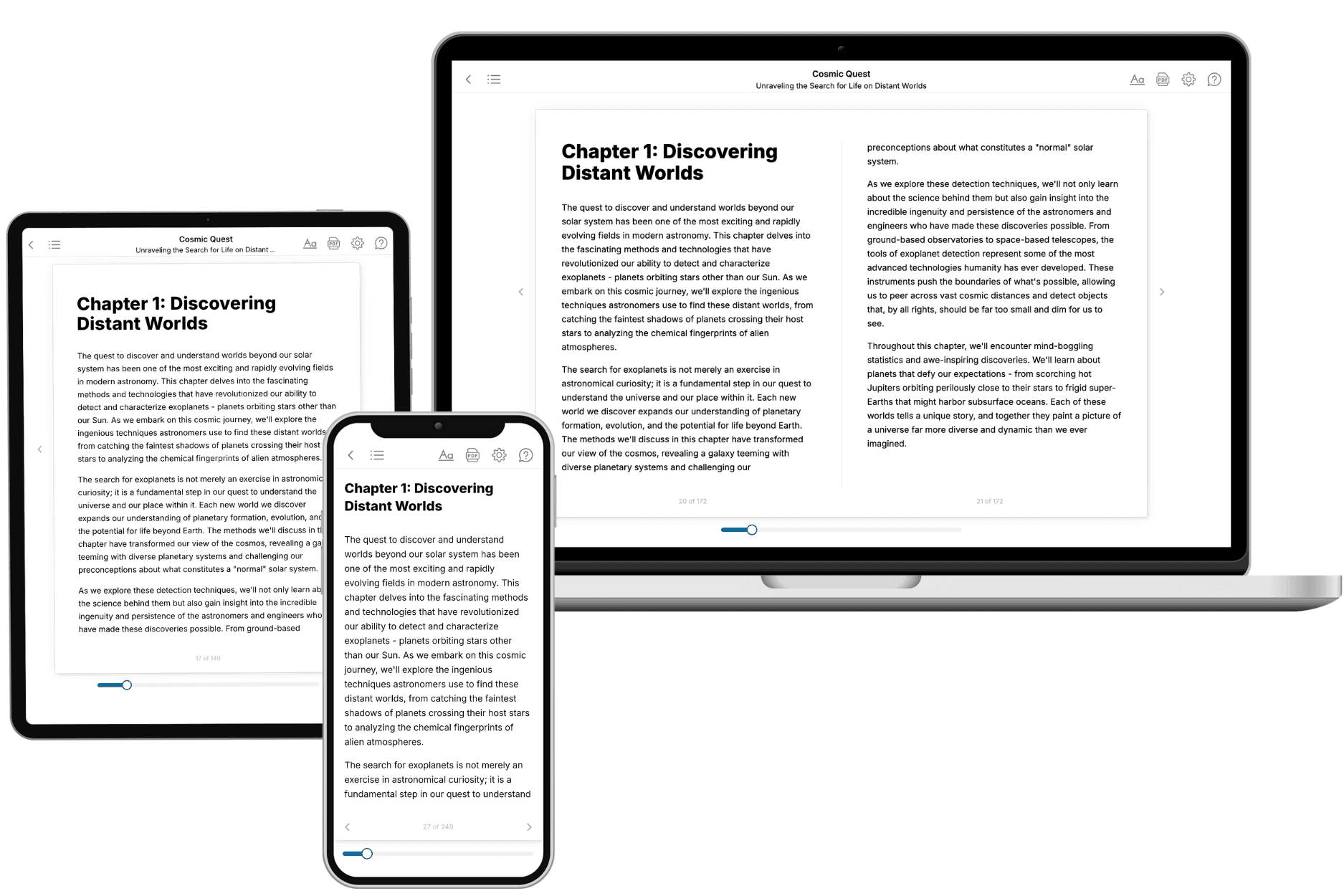
Your book is ready in 10 minutes. Read it online, download as EPUB or PDF, or send to Kindle.

Frequently asked questions
- What is TailoredRead?
TailoredRead creates complete, full-length nonfiction ebooks, written specifically for you. Tell us what you want to learn and why, and TailoredRead writes you a complete ebook on it, with charts, tables, and diagrams throughout. Read it online, on Kindle, or on any e-reader, or download it as a PDF or EPUB. Every book is written fresh the day you order it.
- How is the book tailored to me?
Before anything is written, you answer a few short questions about your goals, your background, and the topics you care about. Your book is then planned around your answers: written at your level, focused on your goals, and covering the topics you chose, instead of the one-size-fits-all book a store sells everyone.
- Will it read like generic AI content?
No. Your book isn't a chat transcript: it's planned chapter by chapter before a single word is written, told in a clear book voice, and explains ideas visually with charts, tables, and diagrams. After writing, every book goes through an editorial pass that polishes chapters so the book reads consistent from start to finish. Judge for yourself: browse thousands of sample books on our Explore Books page.
- How accurate is the content?
Our AI first checks whether your subject needs live research. Niche and fast-moving subjects are researched before writing, and the book plan and chapters are grounded in what it finds. After writing, every book goes through a quality pass that checks its facts and consistency, and researched books list their sources in a Notes section at the back.
- How long is the book?
You choose the length: Comprehensive (250-300 pages), Detailed (150-200 pages), Essential (70-100 pages), or Short (30-50 pages).
- Does the book include visuals?
Yes. Every book includes charts, tables, and diagrams: timelines, checklists, step-by-step guides, decision trees, comparison tables, matrices, and bar charts. A typical book includes dozens of these visual elements.
- Can I read it on Kindle? What formats can I download?
Yes. Every book can be read in our online reader or downloaded as a PDF or EPUB. The EPUB can be opened with Kindle, Apple Books, Kobo, and any e-reader. The Commercial and Author licenses also include an editable Word (DOCX) and Markdown download.
- How much does it cost?
About the price of a regular ebook. The exact price depends on your book's length and complexity, from $2 for the shortest books to $35 for the most comprehensive, and it's shown when you review your book, before you commit to anything. Each book is a one-time purchase, yours to keep, no subscription. Licenses that let you share, teach, or publish your book range from $35.99 to $49.99.
- Can I preview the book before purchasing?
Before you pay, you'll see what your book will cover: the title, a detailed description, the estimated length, and the complete chapter-by-chapter table of contents, so you know what you're getting before you decide. The full text itself is written after you purchase.
- How long does it take to create a book?
About 10 minutes. You can start reading the opening chapters while the rest is still being written.