Whale Watching in Cape Cod
The Complete Guide to Spotting Whales and Marine Life in New England's Premier Destination
Planning a whale watching trip to Cape Cod can feel overwhelming when you don't know where to start, which tour to book, or what to expect once you're on the water.
207 pages9 chaptersAug 4, 2026Whale Watching
About this book
This guide cuts through the confusion and gives you everything needed for a successful marine wildlife adventure. You'll discover the best times to visit for maximum whale sightings, learn how to identify different species you might encounter, and understand the behaviors that make whales fascinating to observe. The book covers top-rated tour operators, what to pack, safety considerations, and how to photograph your experience. Whether you're a first-time whale watcher or returning for another adventure, you'll find practical, actionable advice grounded in marine biology and local expertise. This is your complete resource for experiencing Cape Cod's incredible marine life responsibly and memorably.
Table of contents
- IntroductionWhy Cape Cod Is the Whale Watching Capital of New England, What to Expect from This Guide, The Importance of Responsible Marine Wildlife ViewingRead below
- Chapter 1: Whale Watching BasicsUnderstanding Cape Cod's Marine Ecosystem, Whale Species Found in Cape Cod Waters, Common Whale Behaviors and What They Mean
- Chapter 2: Planning Your Whale Watching TripThe Best Season and Months for Whale Watching, How Weather and Ocean Conditions Affect Sightings, Choosing the Right Tour Duration and Type
- Chapter 3: Selecting the Right Tour OperatorComparing Cape Cod's Top Whale Watching Operators, Safety Standards and Certifications to Look For, Booking Your Tour and Getting the Best Value
- Chapter 4: Identifying Whale SpeciesHumpback Whales: The Acrobats of Cape Cod, Finback Whales: The Ocean's Speedsters, Minke Whales and Other Smaller Species, Rare Species and Unexpected Encounters
- Chapter 5: Preparing for Your Whale Watching AdventureEssential Items to Bring on Your Tour, Dressing for Success: Comfort and Safety on the Water, Health Considerations and Motion Sickness Prevention
- Chapter 6: During Your Whale Watching TourUnderstanding Safety Protocols and Regulations, Techniques for Spotting Whales and Marine Life, Capturing Your Experience: Photography and Video Tips
- Chapter 7: Marine Conservation and Responsible ViewingWhy Marine Conservation Matters for Whale Populations, Ethical Whale Watching Practices, Understanding Threats to Cape Cod's Whale Population
- Chapter 8: Combining Whale Watching with Cape Cod ExperiencesMust-See Attractions Near Whale Watching Departure Points, Exploring Cape Cod's Charming Coastal Towns, Building Your Perfect Cape Cod Itinerary
- Chapter 9: Practical Information and ResourcesGetting to Cape Cod and Local Transportation, Where to Stay for Convenient Whale Watching Access, Budgeting Your Whale Watching Experience
- ConclusionMaking the Most of Your Cape Cod Whale Watching Adventure
- Frequently Asked Questions
- Additional Resources and Further Reading
Introduction
Off the outer arm of Cape Cod, roughly 25 miles north of Provincetown, a shallow underwater plateau rises from the seafloor to within about 100 feet of the surface. This is Stellwagen Bank National Marine Sanctuary, and it functions like a giant underwater dinner table. Cold, nutrient-rich water wells up along its edges, feeding massive blooms of tiny organisms that attract sand lance, mackerel, and herring by the millions. Those fish, in turn, draw some of the largest animals on Earth. On any given summer morning, a boat leaving Provincetown Harbor can reach this feeding ground in under an hour and find humpback whales, finback whales, and minke whales actively feeding within sight of the rail.
Cape Cod's position along the northeastern Atlantic coast puts it at a geographic crossroads. The Cape hooks out into the ocean like a bent arm, separating the cooler waters of the Gulf of Maine from the warmer shallows of Nantucket Sound. This boundary creates a mixing zone that supports an extraordinarily productive marine food web. Few places on the East Coast concentrate so many whale species in such an accessible area, which is why Cape Cod has built a reputation as one of North America's premier whale watching destinations over the past several decades.
Yet for many visitors, the experience of planning a whale watching trip can feel uncertain. Which tour operator should you book? What month gives you the best odds of seeing whales? What do you do if the sea is rough or you start feeling seasick? What does it actually look like when a humpback whale breaches 50 yards from your boat? This guide answers all of those questions in plain, practical terms. It is organized to take you from zero knowledge to fully prepared, covering everything from the biology of the sanctuary to the logistics of getting there and back.
Whether this is your first time on a whale watching boat or you have been out before and want to get more out of the experience, the chapters ahead are built around one goal: helping you have a genuinely memorable encounter with wild marine life, done responsibly and with confidence. The information here draws on established marine biology, the practices of experienced tour operators, and the regulatory framework set by NOAA to protect these animals. Nothing in this guide is speculative. Every recommendation is grounded in what actually works on the water.
Why Cape Cod Is the Whale Watching Capital of New England
The phrase "whale watching capital" gets used loosely in tourism marketing, but Cape Cod earns the title through geography and ecology rather than branding. Stellwagen Bank National Marine Sanctuary sits at the mouth of Massachusetts Bay, directly accessible from multiple Cape Cod departure points. The sanctuary covers roughly 842 square miles of ocean and was designated a federal marine sanctuary in 1992 specifically because of its ecological significance.[1] That federal protection has helped maintain the food-rich conditions that keep whales returning season after season.
The productivity of Stellwagen Bank comes down to a process called upwelling. As ocean currents push against the edges of the bank, cold, nutrient-dense water rises from deeper layers. Those nutrients fuel phytoplankton growth, which feeds zooplankton, which feeds small schooling fish. Sand lance, a slender eel-like fish that burrows into the sandy bottom of the bank, is particularly abundant here and forms the primary diet of humpback whales during the summer feeding season. This chain from microscopic organisms to 40-ton whales is the marine food web in action, and Stellwagen Bank runs it at an exceptional scale.
Cape Cod's whale watching season runs roughly from late April through October, with peak activity concentrated between May and September. During this window, multiple whale species overlap in the sanctuary at the same time. A single three-hour tour can produce sightings of humpback whales, finback whales, and minke whales, along with Atlantic white-sided dolphins, harbor porpoises, and ocean sunfish. Very few destinations in the world offer that kind of species diversity within a short boat ride from shore.
The departure infrastructure around Cape Cod is also unusually well developed. Provincetown, at the tip of the Cape, sits closest to Stellwagen Bank and has supported commercial whale watching since the late 1970s. Several operators run daily trips from Provincetown, and additional departures leave from Barnstable Harbor and other points along the Cape. This density of options means you can almost always find a trip that fits your schedule, budget, and comfort level.
Compared to other New England whale watching hubs like Boston or Gloucester, Cape Cod offers a distinct advantage in transit time. Boats from Provincetown can reach active feeding areas in 30 to 45 minutes, leaving more of your three-hour trip for actual whale time rather than transit. That efficiency matters enormously when you are on the water with children, or when conditions are choppy and you want to minimize time spent traveling.
Stellwagen Bank is not just a whale watching destination. It is a functioning marine ecosystem where the food chain plays out visibly at the surface. Watching a humpback whale lunge-feed through a ball of fish is not a performance. It is the real thing, happening in real time, in one of the most productive ocean environments on the Atlantic coast.
The North Atlantic right whale, one of the most critically endangered large animals on Earth, also passes through Cape Cod waters during certain times of year. Sightings are rare and never guaranteed, but the possibility adds a layer of significance to every trip. Understanding why these animals are here, what they are doing, and what threatens them transforms a boat ride into something genuinely meaningful. That understanding is exactly what this guide is designed to build.
What to Expect from This Guide
This guide is organized to match the natural sequence of planning and executing a whale watching trip. It starts with the ecological foundation, moves through planning and preparation, covers the on-water experience in detail, and then broadens out to conservation, Cape Cod attractions, and practical logistics. You do not need to read it cover to cover in one sitting. Each chapter is designed to stand on its own, so you can jump to the section most relevant to where you are in your planning process.
The first major section establishes the ecological context of Cape Cod's marine environment. Understanding why whales come to Stellwagen Bank, what they eat, and how the marine food web supports them makes every subsequent observation more meaningful. When you know that a humpback whale needs to consume roughly a ton of food per day during the feeding season, watching one bubble-net feed stops being a random spectacle and becomes a window into a highly evolved survival strategy.
From there, the guide moves into the practical mechanics of planning your trip. The chapter on timing covers the whale watching season month by month, explaining which species are most likely to be present at different points in the season and how ocean conditions shift over time. The chapter on weather and ocean conditions explains what to look for in a forecast and how sea state affects both whale activity and your comfort on the boat.
Selecting a tour operator is one of the most consequential decisions you will make, and the guide gives it serious attention. The relevant chapter covers what to look for in terms of safety standards, naturalist expertise, vessel size, and booking policies. It also addresses the practical question of how to get the best value without sacrificing quality or safety. Specific factors to evaluate include:
- Whether the operator employs a NOAA naturalist or trained marine educator on board
- The vessel's size and stability in open ocean conditions
- The operator's sighting guarantee or rebooking policy
- Departure location and proximity to Stellwagen Bank
- Accessibility features for passengers with mobility considerations
Species identification gets its own dedicated chapter because knowing what you are looking at dramatically improves the experience. The guide walks through the key visual markers for humpback whales, finback whales, minke whales, and the North Atlantic right whale, with attention to the specific features you can realistically observe from a moving boat. Fluke pattern, blow shape, body size, and surfacing behavior are all covered with practical, field-applicable descriptions.
Preparation and packing are covered in detail because being physically comfortable on the water is not a minor concern. Cold, wind, and motion sickness can turn an exciting trip into a miserable one if you are not ready for them. The guide provides a specific packing list, a layering system for dressing appropriately, and evidence-based strategies for managing motion sickness before and during the trip. These are not generic travel tips. They are specific to the conditions you will encounter on a Cape Cod whale watching boat.
The on-water experience chapter covers what actually happens during a tour, from the safety briefing at the dock to the moment the captain cuts the engines near a feeding whale. It explains whale spotting techniques, how to position yourself on the boat for the best views, and how to photograph whales effectively without expensive professional equipment. The conservation chapter that follows connects the experience to the larger stakes of marine wildlife protection, covering entanglement, ship strike, and the regulatory framework that governs how close boats can approach whales under NOAA whale approach regulations.
The final chapters address Cape Cod as a destination beyond the whale watching boat. Provincetown and the surrounding coastal towns offer exceptional food, art, history, and natural scenery. The itinerary planning chapter helps you build a multi-day Cape Cod trip that integrates whale watching with other experiences. The practical logistics chapter covers transportation, accommodation options near departure points, and how to build a realistic whale watching budget. By the time you finish this guide, you will have everything you need to plan and execute a trip with confidence.
The Importance of Responsible Marine Wildlife Viewing
Whale watching is not a passive activity. Every boat that approaches a whale affects that animal's behavior, even when the approach is careful and well-intentioned. Whales that are repeatedly disturbed while feeding may abandon productive feeding areas. Mothers with calves may become stressed by vessel traffic. Over time, cumulative disturbance from poorly managed whale watching can degrade the very experience that draws visitors to Cape Cod in the first place. Responsible viewing is not just an ethical preference. It is what keeps the experience viable for future visitors and, more importantly, for the whales themselves.
NOAA has established specific regulations governing how vessels must behave around whales in U.S. waters. These NOAA whale approach regulations set minimum distances that boats must maintain from different species, with stricter rules applying to the critically endangered North Atlantic right whale. Reputable tour operators follow these rules rigorously, and understanding them helps you recognize good operator behavior when you see it. If a captain holds the boat at a respectful distance rather than pushing closer for a better view, that is professionalism, not timidity.
The ethical viewing distance concept extends beyond legal minimums. Experienced naturalists and captains read whale behavior continuously during an approach. Signs that a whale is disturbed include:
- Rapid changes in direction or speed
- Prolonged dives that interrupt a feeding sequence
- Tail slapping or other agitated surface behavior
- A mother moving her calf away from the vessel
A responsible operator responds to these signals by backing off, even if the legal minimum distance has not been reached. The best whale watching experiences happen when animals are calm and behaving naturally, which only occurs when boats give them adequate space.
The threats facing Cape Cod's whale populations are real and ongoing. Entanglement in fishing gear is the leading cause of serious injury and death for large whales in the Northwest Atlantic, including humpback whales and North Atlantic right whales.[2] Ship strike is another significant threat, particularly for the North Atlantic right whale, whose slow swimming speed and tendency to rest near the surface make it vulnerable to vessel collisions. Understanding these threats gives context to the conservation chapter later in this guide and helps you appreciate why the regulations around whale watching exist.
Responsible viewing also means being honest about what whale watching is and is not. It is a wildlife encounter, not a guaranteed performance. Whales are wild animals operating on their own schedules in a vast ocean. Some trips produce extraordinary close encounters. Others yield distant blows and brief surfacings. Both are legitimate wildlife experiences. Going in with realistic expectations, rather than the assumption that every trip will look like a nature documentary highlight reel, makes you a better observer and a more satisfied visitor.
Your presence on a whale watching boat also has a positive dimension. Commercial whale watching generates significant economic support for marine conservation research and advocacy. Many tour operators contribute directly to research programs, and the presence of paying passengers funds the NOAA naturalists who collect behavioral data on every trip. When you book a trip with a responsible operator, you are participating in a system that funds the science and advocacy that protects these animals. That connection between tourism and conservation is worth understanding before you ever step on the boat.
The chapters ahead will return to responsible viewing practices in specific contexts, from the regulations that govern approach distances to the ethics of photography near sensitive species. The goal throughout is not to make whale watching feel like a compliance exercise. The goal is to help you understand that the most rewarding encounters happen when animals are treated with genuine respect. A humpback whale that surfaces calmly 30 yards from a quiet boat, rolls onto its side, and slaps a 15-foot pectoral fin on the water is an experience that stays with people for years. That kind of encounter is far more likely when the boat has approached slowly, cut its engines early, and given the animal room to come to you rather than chasing it down. That is the philosophy this guide is built on, and it runs through every recommendation from here to the final page.
Notes
Introduction
- 1. NOAA Office of National Marine Sanctuaries, "Stellwagen Bank National Marine Sanctuary," NOAA, 2023
- 2. NOAA Fisheries, "Whale Entanglement," NOAA, 2023
This is the end of the free sample. The full book has 9 chapters.
Want this book written for you?
Tell us your goals and background, and get your own version of this book, tailored by AI to you.


Benefits of AI-tailored books
- Read one book, not ten:
- all the Whale Watching knowledge you need, gathered into a single book.
- Save days of learning:
- tell us your goals, choose your topics, and the whole book is built around them.
- Learn effortlessly:
- Whale Watching book written for your specific background and expertise.
- Understand at a glance:
- includes charts, tables, timelines, checklists, decision trees, and more.
- Stay current:
- written the day you order it, not years ago.
- Trust what you read:
- every book is checked for accuracy, with real research when your subject needs it.
Create your unique book in 3 steps
- 1. Select your focus
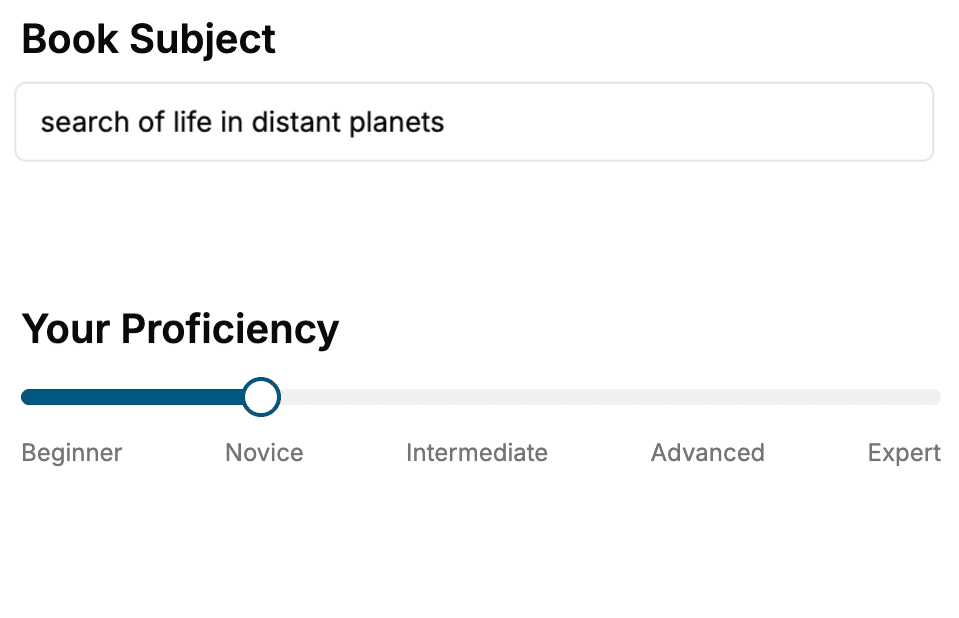
Select the focus of your Whale Watching book and share your background
- 2. Personalize your book
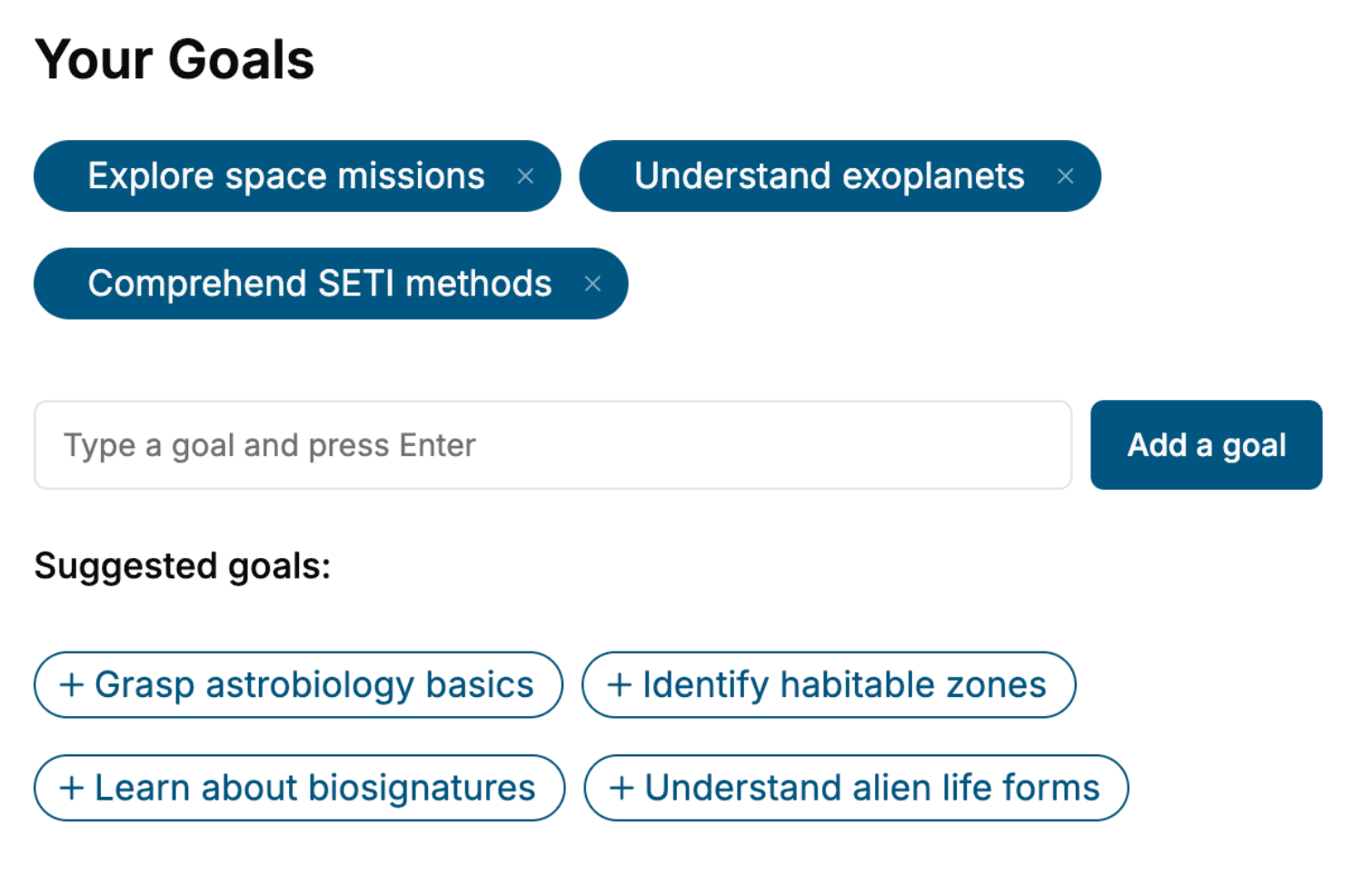
Specify your goals and choose sub-topics to include
- 3. Get your tailored book
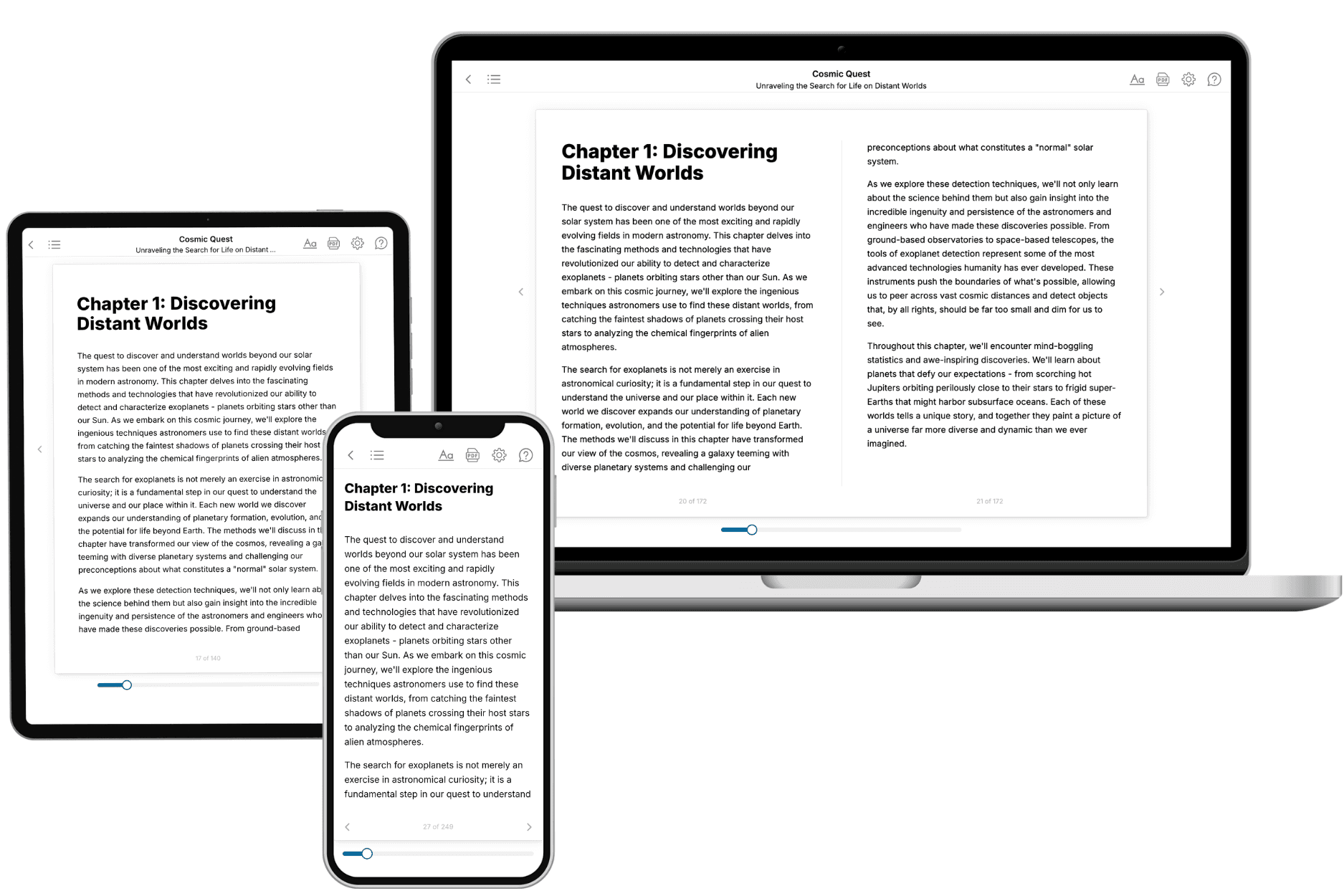
Your book is ready in 10 minutes. Read it online, download as EPUB or PDF, or send to Kindle.
Frequently asked questions
- What is TailoredRead?
TailoredRead creates complete, full-length nonfiction ebooks, written specifically for you. Tell us what you want to learn and why, and TailoredRead writes you a complete ebook on it, with charts, tables, and diagrams throughout. Read it online, on Kindle, or on any e-reader, or download it as a PDF or EPUB. Every book is written fresh the day you order it.
- How is the book tailored to me?
Before anything is written, you answer a few short questions about your goals, your background, and the topics you care about. Your book is then planned around your answers: written at your level, focused on your goals, and covering the topics you chose, instead of the one-size-fits-all book a store sells everyone.
- Will it read like generic AI content?
No. Your book isn't a chat transcript: it's planned chapter by chapter before a single word is written, told in a clear book voice, and explains ideas visually with charts, tables, and diagrams. After writing, every book goes through an editorial pass that polishes chapters so the book reads consistent from start to finish. Judge for yourself: browse thousands of sample books on our Explore Books page.
- How accurate is the content?
Our AI first checks whether your subject needs live research. Niche and fast-moving subjects are researched before writing, and the book plan and chapters are grounded in what it finds. After writing, every book goes through a quality pass that checks its facts and consistency, and researched books list their sources in a Notes section at the back.
- How long is the book?
You choose the length: Comprehensive (250-300 pages), Detailed (150-200 pages), Essential (70-100 pages), or Short (30-50 pages).
- Does the book include visuals?
Yes. Every book includes visual elements such as timelines, checklists, step-by-step guides, decision trees, comparison tables, and matrices, and many include bar charts. A typical book includes dozens of these visual elements.
- Can I read it on Kindle? What formats can I download?
Yes. Every book can be read in our online reader or downloaded as a PDF or EPUB. The EPUB can be opened with Kindle, Apple Books, Kobo, and any e-reader. The Commercial and Author licenses also include an editable Word (DOCX) and Markdown download.
- How much does it cost?
About the price of a regular ebook. The exact price depends on your book's length and complexity, from $2 for the shortest books to $35 for the most comprehensive, and it's shown when you review your book, before you commit to anything. Each book is a one-time purchase, yours to keep, no subscription. Licenses that let you share, teach, or publish your book range from $35.99 to $49.99.
- Can I preview the book before purchasing?
Before you pay, you'll see what your book will cover: the title, a detailed description, the estimated length, and the complete chapter-by-chapter table of contents, so you know what you're getting before you decide. The full text itself is written after you purchase.
- How long does it take to create a book?
About 10 minutes. You can start reading the opening chapters while the rest is still being written.