About this book
Those shortcuts miss how much is happening at once. Gold sits at the crossroads of interest rates, currency values, central-bank policy, investor sentiment, consumer demand, and physical supply, and these forces do not always move in step. This book is written for professionals who need to make sense of that complexity without drowning in it. Across its chapters, you will look at real interest rates and the dollar, the growing role of central-bank buying, the trends in jewelry and industrial demand, and how geopolitical risk moves markets. You will also learn why gold volatility can outpace the fundamentals and how to weigh competing signals. The goal is not a crystal ball but a clearer framework, so that your forecasts, budgets, and purchasing decisions rest on a sound understanding of what truly moves gold.
Table of contents
- IntroductionWhy Gold Prices Are Hard to Read, Who This Book Is For, How to Use This BookRead below
- Chapter 1: The Core Forces Behind Gold PricesAn Overview of Interacting Market Forces, Why No Single Factor Predicts Gold, Gold as Both Asset and Commodity
- Chapter 2: Real Interest Rates and the Opportunity Cost of GoldDefining the Real Interest Rate, The Logic of Non-Yielding Assets, When the Rate Relationship Breaks Down
- Chapter 3: Currency Effects and the Dollar ConnectionHow Dollar Quotation Shapes Price, Dollar Cycles and Gold Responses, Local Currencies and Non-Dollar Buyers
- Chapter 4: Central Bank Gold BuyingReserve Diversification as a Motive, Tracking Official Sector Purchases, Implications of Official Demand for Price
- Chapter 5: Investment Demand and Market FlowsBullion Coins, Bars, and ETF Holdings, Speculative Positioning and Futures Markets, When Flows Drive Short-Term Moves
- Chapter 6: Geopolitical Risk and Safe-Haven DemandWhat Makes an Asset a Safe Haven, Geopolitical Shocks and Price Reactions, When Risk Premiums Fade Quickly
- Chapter 7: Jewelry, Industry, and Consumer Demand TrendsJewelry Demand Across Price Cycles, Industrial and Technology Uses of Gold, Regional Patterns in Consumer Buying
- Chapter 8: Mine Supply, Recycling, and Physical BalanceMine Production and Its Constraints, Recycling as a Price-Responsive Supply, Reading the Physical Supply-Demand Balance
- Chapter 9: Understanding and Forecasting Gold VolatilitySources of Short-Term Price Swings, Measuring and Interpreting Volatility, Combining Signals into a Forecast Framework
- Chapter 10: Applying These Insights to Procurement DecisionsBuilding a Monitoring Dashboard, Scenario Planning Under Uncertainty, Common Errors in Reading Gold Markets
- ConclusionKey Takeaways From the Forces Behind Gold, Looking Ahead With a Clearer Lens
- Further Reading and Resources
- Glossary
Introduction
A procurement manager locks in a gold purchase price on a Tuesday morning after reading a headline about central-bank buying, only to watch the price drop the next day when a currency report shifts market attention elsewhere. Neither the headline nor the drop was wrong. Both reflected real forces acting on the same market at the same time, just not in the order or combination anyone expected. This kind of whiplash is not a sign of a broken market or a failure of analysis. It is what happens when several independent forces, each with its own logic and timing, push on the same price from different directions.
Gold is unusual among the assets and commodities that a procurement professional might track. It behaves partly like a currency, partly like an insurance policy against fear, and partly like a raw material with jewelers, electronics makers, and dentists as customers. A single number, the price quoted each day, has to absorb the combined pressure of interest rate decisions in Washington, reserve decisions in Beijing, wedding season demand in Mumbai, and a mining company's output in a remote part of Africa. No other widely traded asset carries quite that mixture of roles.
This book exists because that mixture creates a specific, recurring problem for anyone who has to plan around gold's price rather than simply observe it. Reading a single data point, such as an interest rate cut or a geopolitical flare-up, and drawing a confident conclusion about where gold goes next is tempting and usually wrong. The more reliable approach treats gold's price as the outcome of several forces in tension, some pulling for weeks, others for years, and still others for only a few trading sessions.
The chapters ahead build that approach piece by piece. Real interest rates and currency effects set a financial backdrop. Central banks, investors, and consumers add layers of demand with different motives and different time horizons. Mine output and recycling supply set a physical floor beneath it all. Later chapters turn these pieces into something usable: a way to watch volatility, weigh competing signals, and apply the whole framework to actual purchasing and budgeting decisions.
Why Gold Prices Are Hard to Read
Most commodities have a dominant story. Oil prices track supply disruptions and demand from transportation and industry fairly closely. Wheat prices track harvests and weather. Gold resists this kind of simple narrative because it does not have one dominant buyer or one dominant use. A jeweler in India, a central bank in an emerging economy, a hedge fund trading futures in Chicago, and a semiconductor manufacturer in South Korea all compete for the same metal, and each one responds to a completely different set of signals.
Consider what happens when a major central bank signals it may cut interest rates. Investors holding gold as a hedge against a weaker currency and lower bond yields may see this as a reason to buy more, since gold pays no interest and becomes more attractive when the alternative, holding cash or bonds, pays less. At the very same moment, a jewelry buyer in a price-sensitive market might see a rising gold price as a reason to buy less gold jewelry, substituting lighter pieces or delaying a purchase. The two forces push in opposite directions, and the price that results depends on which group is larger or more active that week.
This layering effect means that explanations which sound complete are often incomplete. A news report crediting a price jump entirely to geopolitical tension, for example, may be describing a real and immediate trigger while ignoring that investment flows and currency movements were already pushing in the same direction beforehand. The tension spike might have been the spark, but the fuel was already in place. Treating the spark as the whole story leads to forecasts that work until the next time the same spark produces no reaction at all, because the underlying fuel was missing.
Timing adds another layer of difficulty. Some forces act fast and fade fast, such as a sudden safe-haven rush during a geopolitical shock. Others act slowly and persist for years, such as a sustained shift in official sector demand as central banks diversify their reserves. A procurement professional watching only short-term news may miss the slower trend entirely, while someone focused only on long-term fundamentals may be caught off guard by a sharp weekly swing that has little to do with those fundamentals. Reading gold well means holding both timeframes in view at once.
The practical consequence is that gold price movements often look contradictory in the moment and only make sense in hindsight, once all the contributing forces can be weighed together. This is not a reason to give up on forecasting or planning. It is a reason to build a framework sturdy enough to hold multiple explanations at once, rather than searching for the one true cause behind every move.
A short self-check helps fix this idea before moving on.
Why can a single news event sometimes fail to move gold's price as expected? Gold's price reflects several forces acting at once, so one trigger can be offset or amplified by others already in motion.Quiz: Checking the Idea
Who This Book Is For
This book is written for a procurement professional who already has a working familiarity with commodities and financial markets but needs a sharper, more structured understanding of what specifically drives gold. That reader does not need an introduction to what a futures contract is or why diversification matters in a general sense. What is needed instead is a clear map of the particular forces that act on gold, how they interact, and how to translate that understanding into forecasts, budgets, and purchase timing decisions that hold up under scrutiny.
The role this reader occupies usually involves responsibility for sourcing gold, whether as raw material for manufacturing, as a component in finished goods, or as part of a broader commodities portfolio that a company manages to protect against cost volatility. Decisions made in this role carry real consequences. Locking in a purchase price too early, based on a shaky read of a single indicator, can leave a budget exposed if the price falls afterward. Waiting too long, hoping for a dip that market fundamentals never actually supported, can mean paying more than necessary or missing a supply window.
Because of these stakes, the approach in this book favors frameworks over predictions. A forecast that confidently names a target price six months out is far less useful to this reader than a clear understanding of which signals matter most right now, which ones are likely to dominate in the coming weeks, and which risks could upend the picture entirely. The goal is to make the reader a better interpreter of gold market information as it arrives, not to hand over a fixed set of rules that will inevitably fail when conditions change.
This reader is also likely to sit inside a broader organization, reporting forecasts and recommendations to finance teams, operations leaders, or executive committees who may not share the same depth of market knowledge. Part of the value of a structured framework is that it can be explained and defended to that wider audience. Saying gold rose because of geopolitical fear
invites a follow-up question about why gold fell the following week despite continued tension. Saying investment flows reversed even as geopolitical risk stayed elevated, which is common because safe-haven premiums fade quickly
gives a defensible, teachable answer.
None of this requires an academic background in economics or finance theory. The concepts covered in later chapters, such as real interest rates, reserve diversification, and physical supply-demand balance, are explained from first principles and illustrated with concrete reasoning rather than dense theory. The ambition is practical fluency: enough grounding to read a market report critically, spot which explanations are incomplete, and build a defensible view of where gold prices are likely headed and why.
How to Use This Book
The chapters that follow are organized to build understanding in layers, starting with the broadest view of how multiple forces interact and then drilling into each force individually before returning, in the final chapters, to practical application. Reading in order has real value, since later chapters assume familiarity with terms and concepts introduced earlier, such as real interest rates, opportunity cost, and official sector demand. That said, the structure also supports targeted use, since each chapter is written to stand reasonably well on its own for someone who needs a refresher on one specific force.
The early chapters lay financial groundwork. Real interest rates and the opportunity cost of holding a non-yielding asset come first, because this relationship offers one of the more theoretically grounded explanations for gold's investment appeal. Currency effects follow closely, since gold's dollar quotation means that currency movements can shift its price even when nothing about underlying demand has changed. These two chapters together explain a large share of the financial logic that professional investors apply when deciding how much gold to hold.
The middle chapters shift toward demand and supply in the physical and investment markets. Central-bank buying gets its own dedicated treatment, since reserve diversification by official institutions has become a demand category large enough to shift the market's baseline over multi-year periods. Investment flows through bullion, coins, and exchange-traded funds get similar attention, since this demand category tends to be the most volatile and the most responsible for sharp short-term price swings. Safe-haven demand during geopolitical shocks, jewelry and industrial consumption, and the supply side of mining and recycling round out the picture of what physically and financially moves the market.
The later chapters pull these threads together into tools a procurement professional can actually use. One chapter focuses specifically on volatility, covering where short-term price swings come from and how to measure and interpret them rather than being surprised by them. Another translates the whole framework into a procurement monitoring dashboard and a scenario planning approach, giving a concrete structure for turning market understanding into calendar decisions about when and how much gold to purchase.
Throughout the book, a recurring caution deserves attention before diving into the details ahead.
Key takeaway: A Caution Worth Carrying Through Every Chapter
No chapter in this book claims that its force is the dominant or most reliable predictor of gold's price. Real interest rates, currency effects, central-bank buying, investment flows, safe-haven demand, and physical supply and demand all matter, and their relative weight shifts across different periods and market conditions. The practical skill this book builds is not picking the one right factor, but learning to weigh several at once and update that weighting as conditions change.
Each chapter also includes concrete examples and, where useful, simple tools such as checklists, tables, or decision frameworks meant to be applied directly rather than only read. These are not decorative additions. A procurement professional under time pressure benefits more from a short checklist that can be run through before a purchase decision than from another paragraph of general commentary. Treat these tools as starting templates, adaptable to the specific commodities, markets, and internal reporting requirements of your own organization.
It helps to read this book alongside the kind of reporting already referenced by institutions such as the World Gold Council, the International Monetary Fund, and the London Bullion Market Association, since these organizations publish the data that most of the concepts in later chapters rely on in practice. The framework built here is meant to make that external reporting easier to interpret critically, not to replace the need to follow it. By the time the final chapters arrive at procurement application, the goal is for market commentary from any of these sources to read less like a verdict and more like one input among several, weighed against everything else covered along the way.
This is the end of the free sample. The full book has 10 chapters.
Want this book written for you?
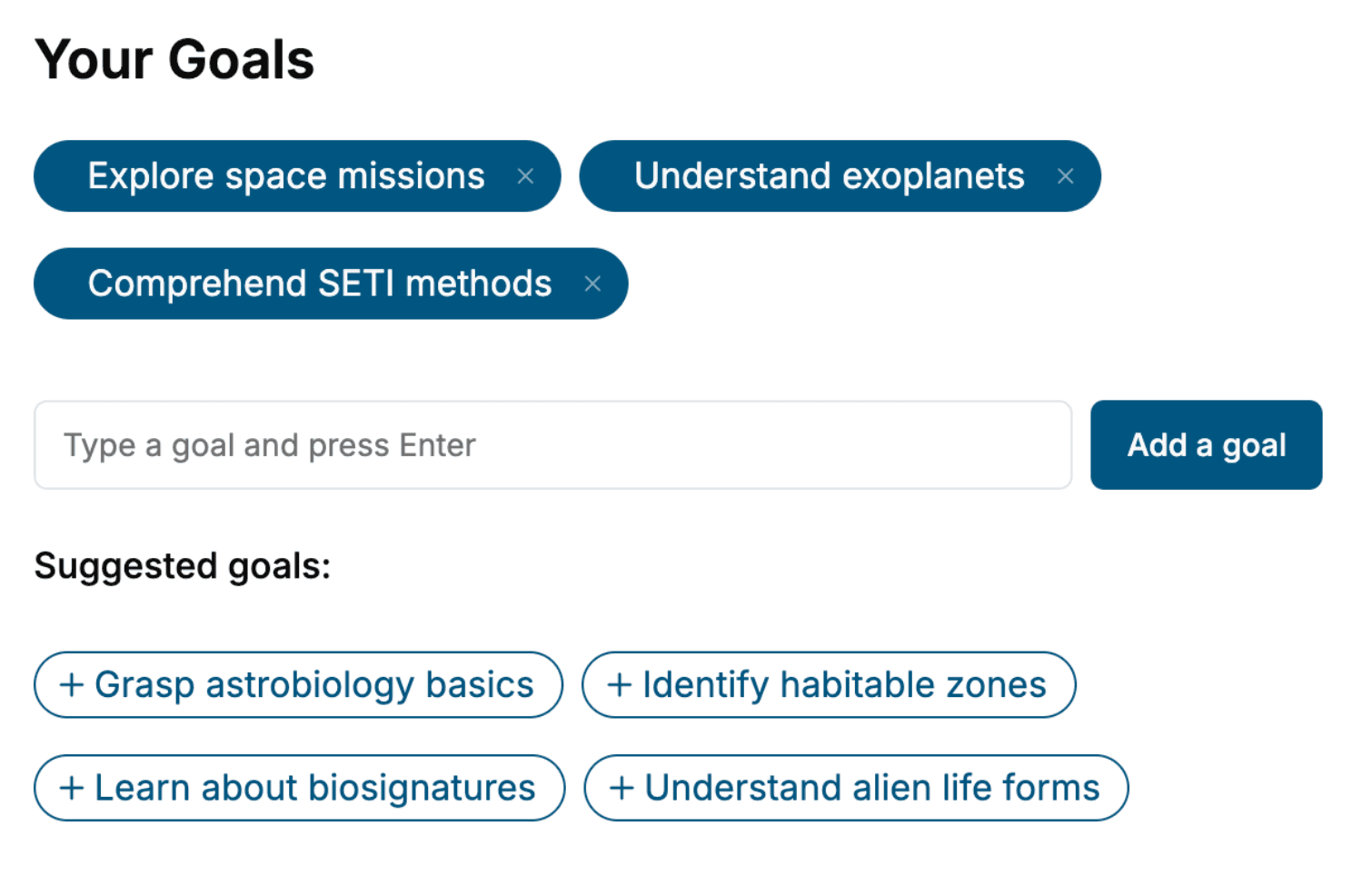
Tell us your goals and background, and get your own version of this book, tailored by AI to you.


Benefits of AI-tailored books
- Read one book, not ten:
- all the knowledge you need, gathered into a single book.
- Save days of learning:
- tell us your goals, choose your topics, and the whole book is built around them.
- Learn effortlessly:
- a book written for your specific background and expertise.
- Understand at a glance:
- includes charts, tables, timelines, checklists, decision trees, and more.
- Stay current:
- written the day you order it, not years ago.
- Trust what you read:
- every book is checked for accuracy, with real research when your subject needs it.

Create your unique book in 3 steps
- 1. Pick a subject
Select what you want to learn and share your background
- 2. Personalize your book
Specify your goals and choose sub-topics to include
- 3. Get your tailored book
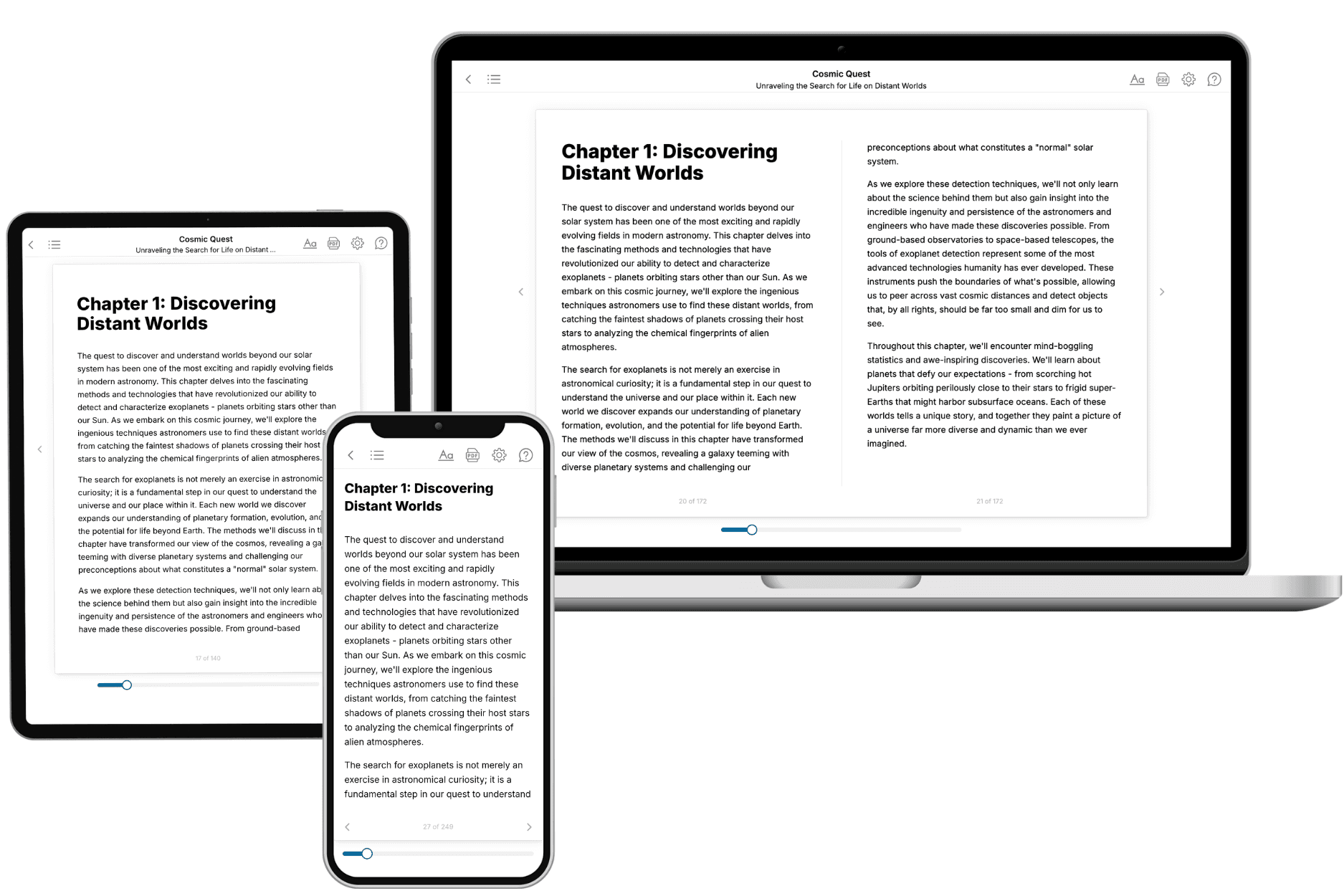
Your book is ready in 10 minutes. Read it online, download as EPUB or PDF, or send to Kindle.

Frequently asked questions
- What is TailoredRead?
TailoredRead creates complete, full-length nonfiction ebooks, written specifically for you. Tell us what you want to learn and why, and TailoredRead writes you a complete ebook on it, with charts, tables, and diagrams throughout. Read it online, on Kindle, or on any e-reader, or download it as a PDF or EPUB. Every book is written fresh the day you order it.
- How is the book tailored to me?
Before anything is written, you answer a few short questions about your goals, your background, and the topics you care about. Your book is then planned around your answers: written at your level, focused on your goals, and covering the topics you chose, instead of the one-size-fits-all book a store sells everyone.
- Will it read like generic AI content?
No. Your book isn't a chat transcript: it's planned chapter by chapter before a single word is written, told in a clear book voice, and explains ideas visually with charts, tables, and diagrams. After writing, every book goes through an editorial pass that polishes chapters so the book reads consistent from start to finish. Judge for yourself: browse thousands of sample books on our Explore Books page.
- How accurate is the content?
Our AI first checks whether your subject needs live research. Niche and fast-moving subjects are researched before writing, and the book plan and chapters are grounded in what it finds. After writing, every book goes through a quality pass that checks its facts and consistency, and researched books list their sources in a Notes section at the back.
- How long is the book?
You choose the length: Comprehensive (250-300 pages), Detailed (150-200 pages), Essential (70-100 pages), or Short (30-50 pages).
- Does the book include visuals?
Yes. Every book includes charts, tables, and diagrams: timelines, checklists, step-by-step guides, decision trees, comparison tables, matrices, and bar charts. A typical book includes dozens of these visual elements.
- Can I read it on Kindle? What formats can I download?
Yes. Every book can be read in our online reader or downloaded as a PDF or EPUB. The EPUB can be opened with Kindle, Apple Books, Kobo, and any e-reader. The Commercial and Author licenses also include an editable Word (DOCX) and Markdown download.
- How much does it cost?
About the price of a regular ebook. The exact price depends on your book's length and complexity, from $2 for the shortest books to $35 for the most comprehensive, and it's shown when you review your book, before you commit to anything. Each book is a one-time purchase, yours to keep, no subscription. Licenses that let you share, teach, or publish your book range from $35.99 to $49.99.
- Can I preview the book before purchasing?
Before you pay, you'll see what your book will cover: the title, a detailed description, the estimated length, and the complete chapter-by-chapter table of contents, so you know what you're getting before you decide. The full text itself is written after you purchase.
- How long does it take to create a book?
About 10 minutes. You can start reading the opening chapters while the rest is still being written.