When Crowds Lose Their Minds
Understanding Epidemic Hysteria and Mass Psychology in Modern Society
Discover how ordinary people in groups can experience extraordinary psychological phenomena that defy rational explanation.
176 pages8 chaptersApr 11, 2026Mass Psychology
About this book
This book reveals the hidden mechanics of epidemic hysteria—from medieval dancing plagues to modern social media panics—and shows you how to recognize when collective psychology is overriding individual judgment. You'll learn the specific psychological triggers that make groups vulnerable to shared delusions, how emotions spread through crowds faster than facts, and why intelligent people can become convinced of things they'd normally dismiss. By understanding the patterns of mass hysteria, you'll develop the critical awareness needed to protect yourself and others from psychological manipulation, recognize when fear is being amplified beyond reason, and maintain rational perspective even when surrounded by collective panic. This isn't about dismissing people's experiences—it's about understanding the psychological forces at work so you can respond with compassion and clarity.
Table of contents
- IntroductionWhat Is Epidemic Hysteria?, Why This Matters Today, How to Use This BookRead below
- Chapter 1: The Psychology of Collective BehaviorThe Individual Versus the Group Mind, Social Proof and Conformity, Emotional Contagion: The Basics
- Chapter 2: Historical Patterns of Epidemic HysteriaDancing Plagues and Ancient Cases, Witch Hunts and Moral Panics, Twentieth-Century Examples, Common Threads Across History
- Chapter 3: The Mechanisms of Mass SuggestionThe Power of Suggestion, Expectancy Effects and Nocebo, The Role of Authority Figures
- Chapter 4: Vulnerability Factors and Risk ConditionsStress and Uncertainty, Group Identity and Belonging, Information Gaps and Rumors
- Chapter 5: Modern Epidemic Hysteria in the Digital AgeSocial Media Amplification, Viral Misinformation and Panic, Contemporary Case Studies
- Chapter 6: Recognizing the Warning SignsEarly Indicators of Hysteria, Distinguishing Real Threats from Panic, Personal Vulnerability Assessment
- Chapter 7: Building Psychological ResilienceCritical Thinking Skills, Emotional Regulation Techniques, Maintaining Perspective Under Pressure
- Chapter 8: Responding to Hysteria in Your CommunityCommunication Strategies, Supporting Affected Individuals, Organizational and Institutional Responses
- ConclusionKey Takeaways, Moving Forward with Awareness
- Further Reading and Resources
Introduction
In the summer of 1518, the streets of Strasbourg witnessed something that defies easy explanation. A woman named Frau Troffea stepped into the street and began to dance. She danced without music, without apparent reason, and without stopping. Within a week, dozens of people had joined her. Within a month, hundreds were dancing in the streets, some collapsing from exhaustion, some reportedly dying from the effort. Physicians of the time prescribed more dancing as a cure. The episode lasted for roughly two months before it faded as mysteriously as it had begun. No clear physical cause was ever identified. What happened in Strasbourg was not unique. It was one of the most dramatic examples of a phenomenon that has appeared throughout human history and continues to appear today, just wearing different clothes.
Most people encounter the concept of mass hysteria and immediately picture something extreme: medieval villagers convulsing in the streets, or a crowd stampeding in blind panic. But epidemic hysteria is far more subtle and far more common than those dramatic images suggest. It shows up in schools where clusters of students develop unexplained symptoms after one classmate falls ill. It appears in workplaces where employees report dizziness and nausea from a smell that laboratory testing cannot detect. It surfaces online, where a single alarming post can trigger waves of anxiety across thousands of people who have never met. The mechanisms are the same whether the setting is a sixteenth-century town square or a twenty-first-century social media feed.
This book is not about dismissing people's experiences. The symptoms people feel during episodes of epidemic hysteria are real. The fear is genuine. The distress is authentic. What this book explores is the psychological machinery that produces those experiences without a corresponding physical cause, and why that machinery is so powerful that it can override even intelligent, well-informed people's critical judgment. Understanding that machinery is not an act of condescension toward those affected. It is an act of respect for the complexity of human psychology and a practical tool for navigating a world where collective psychological phenomena are becoming more frequent, not less.
The goal here is psychological literacy. Just as health literacy helps you make better decisions about your body, psychological literacy about collective behavior helps you make better decisions about what you believe, how you respond to alarming information, and when to trust the crowd versus when to step back and think independently. By the time you finish this book, you will have a clear framework for recognizing epidemic hysteria, understanding why it happens, and responding to it with both clarity and compassion.
What Is Epidemic Hysteria?
Epidemic hysteria, also called mass psychogenic illness or mass sociogenic illness, refers to the collective occurrence of physical symptoms, emotional distress, or unusual behaviors among a group of people, where no organic or environmental cause can be identified to explain the spread. The term has evolved over time. Older literature used "mass hysteria," a phrase that carries unfortunate historical baggage tied to outdated and sexist theories about women's psychology. Modern researchers generally prefer "mass sociogenic illness" or "epidemic hysteria" because these terms more accurately describe the social and psychological processes involved without implying individual weakness or irrationality.[1]
The defining features of epidemic hysteria are fairly consistent across cases. First, there is a cluster of symptoms or behaviors that spreads through a group faster than any known biological or chemical agent could explain. Second, medical or environmental investigation fails to find a physical cause that accounts for the pattern of spread. Third, the spread tends to follow social networks rather than physical proximity alone, meaning people who know about the illness or who are emotionally connected to those affected are more likely to develop symptoms than people who are physically nearby but socially isolated from the group. These three features together distinguish epidemic hysteria from genuine outbreaks of infectious disease or environmental poisoning.
It is worth being precise about what epidemic hysteria is not. It is not faking. People experiencing mass psychogenic illness are not consciously pretending to be sick or frightened. Their symptoms are produced by real neurological and physiological processes, specifically the same processes that allow suggestion, expectation, and emotional arousal to generate genuine physical sensations. The nausea is real. The headache is real. The trembling is real. What is absent is the external physical agent that would normally cause those sensations. This distinction matters enormously for how we respond to affected individuals and communities.
Researchers have identified two broad categories of epidemic hysteria. The first is anxiety hysteria, which spreads rapidly, typically within hours or days, and involves symptoms like dizziness, nausea, fainting, and hyperventilation. This type tends to occur in enclosed settings like schools or factories and often follows a visible triggering event, such as a strange smell or a classmate collapsing. The second is motor hysteria, which develops more slowly over weeks or months and involves more dramatic physical symptoms like tremors, uncontrollable movements, or paralysis. The dancing plague of 1518 falls into this second category. Both types share the same core psychological mechanisms, but they differ in their timescale and the intensity of their physical expression.[2]
A useful way to think about epidemic hysteria is as a form of social contagion. Just as laughter spreads through a room without anyone deciding to laugh, and just as yawning is triggered by seeing someone else yawn, psychological states and even physical symptoms can spread through social observation and emotional resonance. Human beings are deeply wired for social synchrony. We read each other's emotional states constantly and unconsciously, and we calibrate our own responses based on what we observe in those around us. This is normally a highly adaptive feature of human psychology. In the context of epidemic hysteria, it becomes the very mechanism that allows fear and symptoms to propagate through a group.
The concept of suggestion is central to understanding how this works. When someone in a group develops symptoms and others observe this, a powerful suggestion is planted: something is wrong here, and it might affect me too. The brain, primed by this suggestion and by the emotional arousal of witnessing distress, begins scanning the body for confirming evidence. It finds it, because the human body always has some level of background noise: mild headaches, slight nausea, occasional dizziness. Under normal circumstances, these sensations are filtered out as insignificant. Under conditions of heightened anxiety and social suggestion, they are amplified and interpreted as symptoms of whatever the group believes is happening. This is not a failure of intelligence. It is a feature of how human perception works under stress.
Understanding epidemic hysteria also requires understanding what it is not caused by. It is not caused by low intelligence, weak character, or mental illness. Research consistently shows that epidemic hysteria affects people across the full range of intelligence and psychological health. It is more strongly predicted by social factors, such as group cohesion, shared stress, and information environment, than by individual psychological traits. This is a crucial point because it means that anyone, under the right conditions, is potentially susceptible. Recognizing this is the first step toward genuine understanding rather than judgment.
A concrete example: In 2006, a school in Portugal experienced a wave of students reporting dizziness, rashes, and difficulty breathing after an episode of a popular television drama depicted a mysterious illness spreading through a school. Over 300 students across multiple schools reported symptoms. Medical investigation found no environmental or biological cause. The symptoms spread along social lines, following students who had watched the episode and discussed it with friends. This case became one of the most thoroughly documented modern examples of epidemic hysteria triggered by media exposure.[3]
The language used to describe epidemic hysteria matters. Calling something "just hysteria" or "all in their heads" is both scientifically imprecise and socially harmful. The psychological processes involved are real, measurable, and well-documented. The experiences of those affected deserve to be taken seriously even as the underlying mechanisms are correctly identified. Throughout this book, the aim is to maintain that balance: rigorous about the science, respectful about the human experience.
Why This Matters Today
There is a reasonable argument that epidemic hysteria has always been part of human social life. What has changed dramatically in the past two decades is the speed and scale at which it can spread. The same psychological mechanisms that once required physical proximity to propagate now operate across digital networks that connect billions of people instantaneously. A single alarming video, a viral post about a mysterious illness, or a wave of shared anxiety about a perceived threat can now reach millions of people before any fact-checking or medical investigation has had time to occur. The implications of this shift are profound and still not fully understood.
Social media platforms are particularly effective amplifiers of the psychological conditions that enable epidemic hysteria. They create environments of high emotional arousal, rapid information spread, and strong social proof. When you see that thousands of people are frightened about something, the social signal is powerful: this must be real, this must be serious, I should be worried too. Algorithms that prioritize engagement tend to surface the most emotionally intense content, which means alarming and frightening information spreads faster and further than calm, corrective information. This is not a conspiracy or a deliberate design flaw. It is an emergent property of systems optimized for attention, and it has real consequences for collective psychological health.[4]
Consider what happened in 2012 in LeRoy, New York, when a group of teenage girls at a local high school began developing tics, verbal outbursts, and involuntary movements. The story spread nationally through news coverage and social media. More students developed symptoms. Parents demanded environmental investigations. Activists arrived claiming the school was built on contaminated land. Extensive testing found no environmental cause. Neurologists eventually concluded the episode was a case of mass psychogenic illness, likely triggered by stress and amplified by media attention. But the media coverage itself had become part of the contagion mechanism, spreading awareness of the symptoms to a wider audience and inadvertently suggesting those symptoms to susceptible individuals.[5]
The stakes extend beyond individual health episodes. Epidemic hysteria and related phenomena of collective irrationality have real consequences for public policy, social cohesion, and democratic decision-making. When large groups of people become convinced of things that are not supported by evidence, whether about health threats, social dangers, or the behavior of out-groups, the downstream effects can include harmful policy decisions, discrimination, and social conflict. Understanding the psychological mechanisms behind collective belief formation is therefore not just an academic exercise. It is a practical necessity for anyone who wants to participate thoughtfully in modern civic life.
There is also a personal dimension to why this matters. Most people have experienced some version of collective anxiety amplification, even if they did not recognize it at the time. Perhaps you found yourself more frightened about a health scare after reading about it online, even though your actual risk was low. Perhaps you noticed your mood shifting in a crowd, or found yourself agreeing with a group consensus that you later questioned when alone. These are not signs of weakness. They are signs of being human. But they are also entry points for understanding how the same mechanisms, operating at larger scale and under more intense conditions, can produce the dramatic episodes that fill the historical record.
The modern information environment has also created new forms of epidemic hysteria that do not fit neatly into the traditional categories. Online communities can develop shared belief systems that function like hysteria in some respects, spreading rapidly, resisting correction, and producing genuine distress in participants, without involving the physical symptoms that characterize classic cases. Understanding where these phenomena overlap with traditional epidemic hysteria and where they diverge is one of the more interesting challenges in contemporary social psychology. This book addresses that challenge directly, particularly in the chapters on modern digital contexts.
Finally, this matters because the tools for recognizing and responding to epidemic hysteria are learnable. Critical thinking skills, emotional regulation techniques, and an understanding of social influence processes can all be developed and strengthened. People who understand how social contagion works are measurably better at resisting it without becoming cynical or dismissive of genuine concerns. The goal is not to make you suspicious of every collective emotion or skeptical of every shared concern. It is to give you a more accurate map of how collective psychology works so you can navigate it more effectively.
- Speed: Digital networks allow psychological contagion to spread globally within hours, far outpacing any institutional response.
- Scale: Episodes that once affected dozens or hundreds of people can now affect millions simultaneously.
- Persistence: Online content remains accessible indefinitely, meaning the triggering material for an episode can continue to spread long after the initial event.
- Anonymity: Online environments reduce social accountability, which can intensify emotional expression and lower the threshold for spreading alarming information.
- Algorithmic amplification: Platform algorithms actively prioritize emotionally intense content, creating structural incentives for the spread of fear-based information.
How to Use This Book
This book is organized to build understanding progressively. Each chapter adds a layer to the overall picture, moving from foundational psychological concepts through historical examples, then into the specific mechanisms of suggestion and social influence, and finally into practical tools for recognition and response. You do not need a background in psychology to follow the argument. The concepts are explained from the ground up, with concrete examples at each stage. If you do have a psychology background, you will find the later chapters particularly useful for connecting established theory to contemporary phenomena.
The first two chapters establish the psychological and historical foundations. Chapter 1 covers the basic psychology of collective behavior, including how individual judgment changes in group settings, how social proof operates, and how emotions spread through social networks. These are the building blocks for everything that follows. Chapter 2 surveys the historical record of epidemic hysteria, from the dancing plagues of medieval Europe through the witch trials of the early modern period and into the twentieth century. The historical perspective is important because it reveals consistent patterns that transcend any particular cultural or technological context.
Chapters 3 and 4 go deeper into the mechanisms. Chapter 3 examines the psychology of suggestion in detail, including the nocebo effect (the harmful counterpart to the placebo effect) and the role that authority figures play in amplifying or dampening collective responses. Chapter 4 looks at the conditions that make groups particularly vulnerable to epidemic hysteria, including stress, uncertainty, group identity dynamics, and information gaps. Understanding these vulnerability factors is essential for both prevention and response.
Chapter 5 brings the analysis into the present, examining how digital technology and social media have transformed the landscape of epidemic hysteria. This chapter includes contemporary case studies that illustrate how traditional mechanisms operate in new environments. Chapter 6 provides a practical framework for recognizing the warning signs of epidemic hysteria, both in communities and in yourself. This chapter includes a personal vulnerability assessment that you can use to identify your own susceptibility factors.
The final two chapters are explicitly practical. Chapter 7 covers the skills and techniques that build psychological resilience against collective irrationality, including specific critical thinking practices and emotional regulation strategies. Chapter 8 addresses how to respond when epidemic hysteria is already underway in your community, school, or workplace, with guidance on communication, supporting affected individuals, and institutional responses. The conclusion ties the key themes together and offers a framework for moving forward with greater psychological awareness.
A few notes on how to get the most from this material. First, approach each chapter with the assumption that the phenomena described could, under the right conditions, affect you. Resistance to that idea is itself a psychological phenomenon worth examining. Research on social influence consistently shows that people who believe they are immune to social pressure are often more susceptible to it, not less, because their confidence reduces their vigilance.[6] Approaching this material with genuine openness rather than defensive certainty will make it far more useful.
Second, pay attention to the examples. Each chapter includes specific, documented cases that illustrate the concepts being discussed. These are not chosen for their dramatic value, though some are genuinely dramatic. They are chosen because they clearly demonstrate the mechanisms at work. When you encounter an example, try to identify the specific psychological processes involved before reading the analysis. This active engagement will help the concepts stick and make them easier to apply in real situations.
Third, use the practical frameworks actively. The chapters on recognition and resilience include specific tools, checklists, and assessment questions. These are not decorative. They are designed to be used. Consider keeping notes as you work through those sections, particularly the personal vulnerability assessment in Chapter 6. Self-knowledge is the foundation of psychological resilience, and the more honestly you engage with those exercises, the more useful the book will be.
A note on compassion: Throughout this book, the analysis of epidemic hysteria is conducted with the understanding that the people involved in these episodes are not foolish, weak, or mentally ill. They are human beings responding to powerful psychological forces in ways that are entirely predictable given what we know about social influence and emotional contagion. Maintaining that compassionate perspective is not just ethically important. It is also analytically important, because dismissing affected individuals as irrational makes it harder to understand the actual mechanisms at work and harder to respond effectively.
Finally, consider how the concepts in this book apply to your own social environment. Every community, workplace, school, and family has its own version of collective psychology. The dynamics described here operate at every scale, from a small group of friends to a national population. As you read, you will likely recognize patterns from your own experience. That recognition is valuable. It means the concepts are connecting to real knowledge you already have, and it means you are building the kind of practical psychological literacy that this book is designed to develop.
The phenomenon of epidemic hysteria sits at the intersection of some of the most fascinating questions in psychology: How do individuals relate to groups? How do emotions spread? How does the brain construct experience from expectation? How do social environments shape what we perceive as real? These are not just academic questions. They are questions about what it means to be a social creature in a world that is increasingly connected, increasingly fast-moving, and increasingly saturated with information designed to provoke emotional responses. Understanding epidemic hysteria is, in a real sense, understanding something fundamental about the human condition. That understanding begins here.
Notes
Introduction
- 1. R. E. Bartholomew and S. Wessely, "Protean nature of mass sociogenic illness," British Journal of Psychiatry, 2002
- 2. S. Wessely, "Mass hysteria," Psychological Medicine, 1987
- 3. R. E. Bartholomew and B. Rickard, Mass Hysteria in Schools: A Worldwide History Since 1566, McFarland & Company, 2014
- 4. S. Vosoughi and others, "The spread of true and false news online," Science, 2018
- 5. S. Dominus, "What Happened to the Girls in LeRoy?," The New York Times Magazine, 2012
- 6. E. Pronin and others, "The bias blind spot," Personality and Social Psychology Bulletin, 2002
This is the end of the free sample. The full book has 8 chapters.
Want this book written for you?
Tell us your goals and background, and get your own version of this book, tailored by AI to you.


Benefits of AI-tailored books
- Read one book, not ten:
- all the Mass Psychology knowledge you need, gathered into a single book.
- Save days of learning:
- tell us your goals, choose your topics, and the whole book is built around them.
- Learn effortlessly:
- Mass Psychology book written for your specific background and expertise.
- Understand at a glance:
- includes charts, tables, timelines, checklists, decision trees, and more.
- Stay current:
- written the day you order it, not years ago.
- Trust what you read:
- every book is checked for accuracy, with real research when your subject needs it.
Create your unique book in 3 steps
- 1. Select your focus
Select the focus of your Mass Psychology book and share your background
- 2. Personalize your book
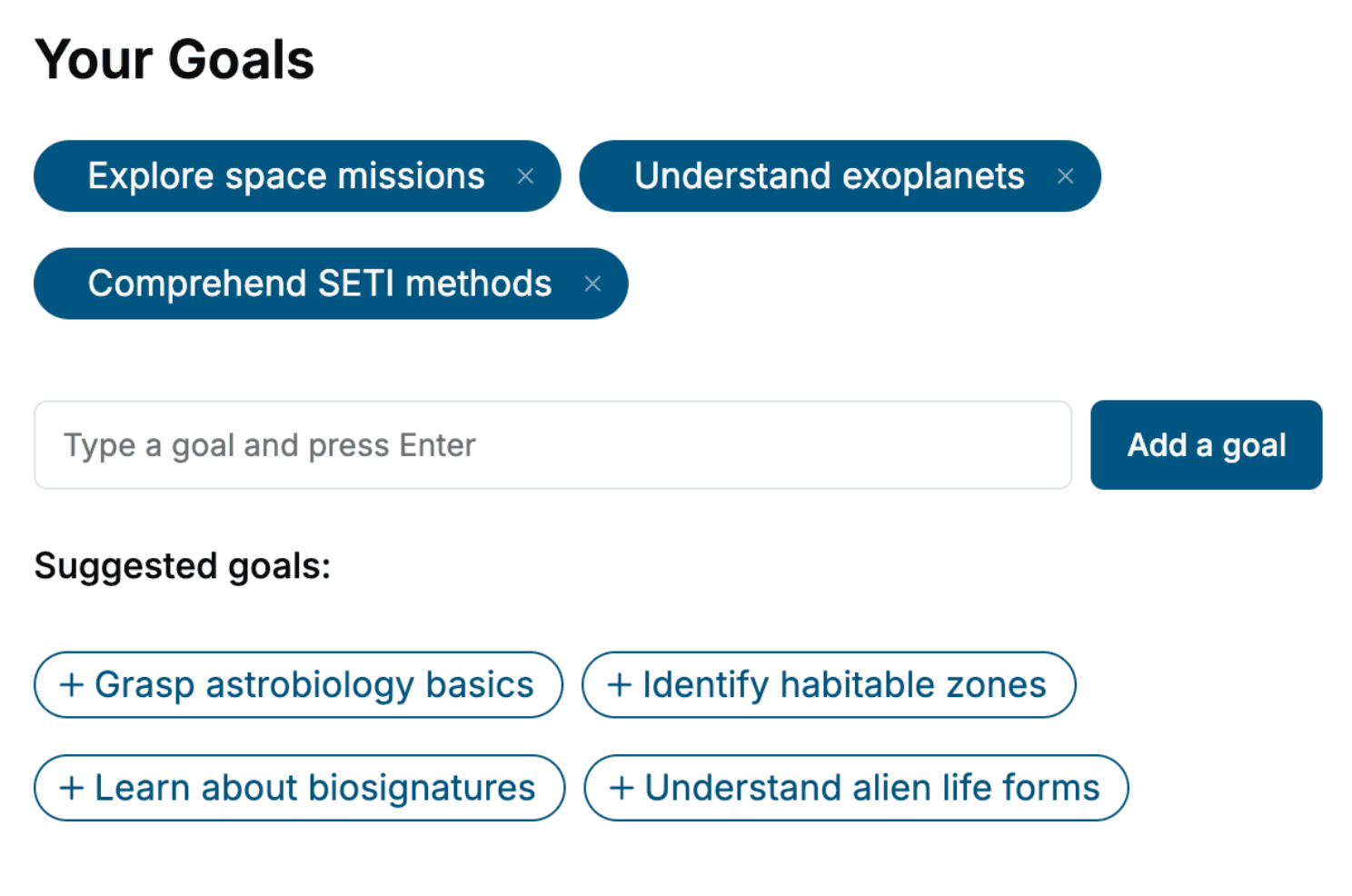
Specify your goals and choose sub-topics to include
- 3. Get your tailored book
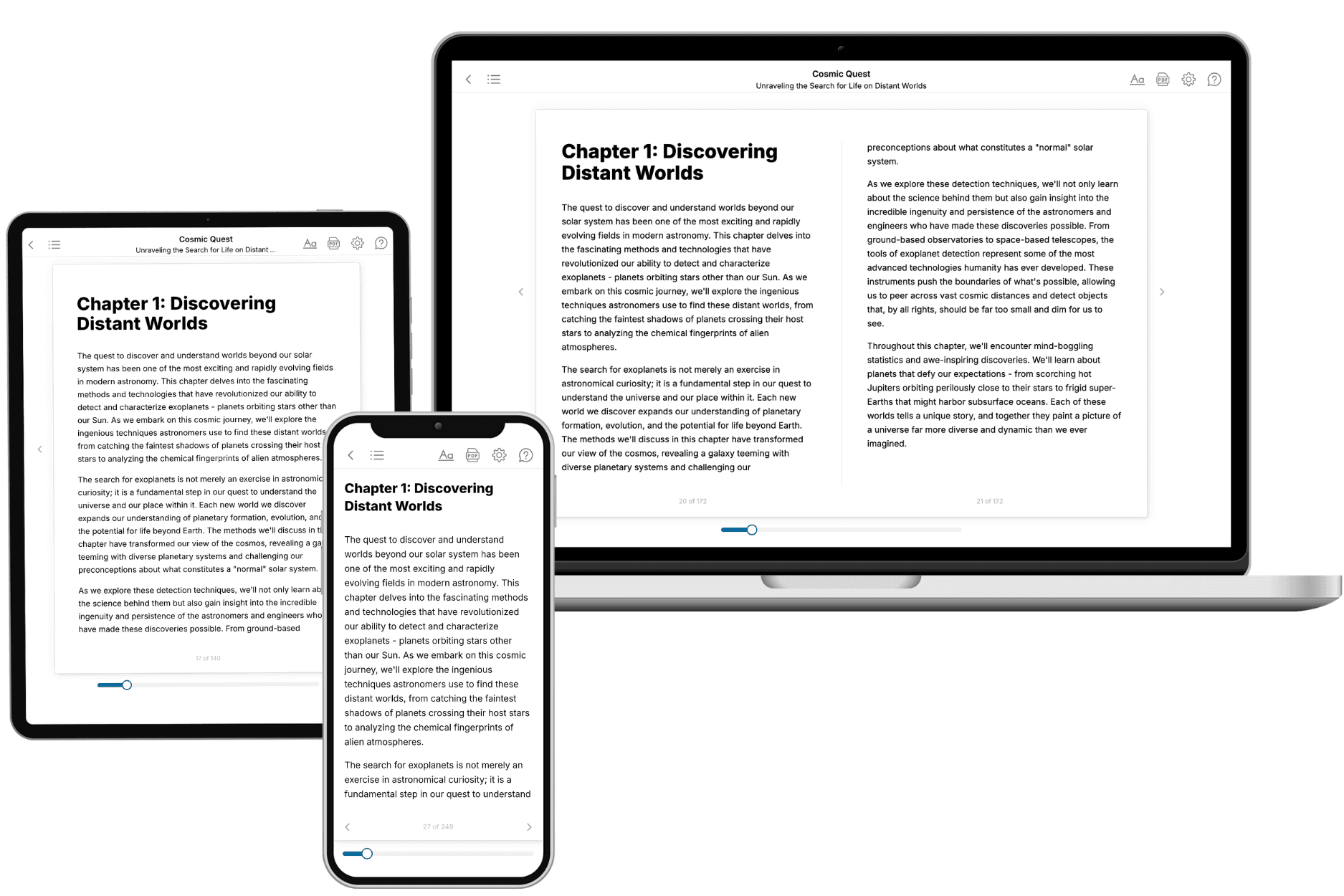
Your book is ready in 10 minutes. Read it online, download as EPUB or PDF, or send to Kindle.

Frequently asked questions
- What is TailoredRead?
TailoredRead creates complete, full-length nonfiction ebooks, written specifically for you. Tell us what you want to learn and why, and TailoredRead writes you a complete ebook on it, with charts, tables, and diagrams throughout. Read it online, on Kindle, or on any e-reader, or download it as a PDF or EPUB. Every book is written fresh the day you order it.
- How is the book tailored to me?
Before anything is written, you answer a few short questions about your goals, your background, and the topics you care about. Your book is then planned around your answers: written at your level, focused on your goals, and covering the topics you chose, instead of the one-size-fits-all book a store sells everyone.
- Will it read like generic AI content?
No. Your book isn't a chat transcript: it's planned chapter by chapter before a single word is written, told in a clear book voice, and explains ideas visually with charts, tables, and diagrams. After writing, every book goes through an editorial pass that polishes chapters so the book reads consistent from start to finish. Judge for yourself: browse thousands of sample books on our Explore Books page.
- How accurate is the content?
Our AI first checks whether your subject needs live research. Niche and fast-moving subjects are researched before writing, and the book plan and chapters are grounded in what it finds. After writing, every book goes through a quality pass that checks its facts and consistency, and researched books list their sources in a Notes section at the back.
- How long is the book?
You choose the length: Comprehensive (250-300 pages), Detailed (150-200 pages), Essential (70-100 pages), or Short (30-50 pages).
- Does the book include visuals?
Yes. Every book includes charts, tables, and diagrams: timelines, checklists, step-by-step guides, decision trees, comparison tables, matrices, and bar charts. A typical book includes dozens of these visual elements.
- Can I read it on Kindle? What formats can I download?
Yes. Every book can be read in our online reader or downloaded as a PDF or EPUB. The EPUB can be opened with Kindle, Apple Books, Kobo, and any e-reader. The Commercial and Author licenses also include an editable Word (DOCX) and Markdown download.
- How much does it cost?
About the price of a regular ebook. The exact price depends on your book's length and complexity, from $2 for the shortest books to $35 for the most comprehensive, and it's shown when you review your book, before you commit to anything. Each book is a one-time purchase, yours to keep, no subscription. Licenses that let you share, teach, or publish your book range from $35.99 to $49.99.
- Can I preview the book before purchasing?
Before you pay, you'll see what your book will cover: the title, a detailed description, the estimated length, and the complete chapter-by-chapter table of contents, so you know what you're getting before you decide. The full text itself is written after you purchase.
- How long does it take to create a book?
About 10 minutes. You can start reading the opening chapters while the rest is still being written.