Wildlife Photography in the San Juan Islands
A Complete Guide to Capturing Nature's Beauty in the Pacific Northwest
Capture breathtaking wildlife photographs in one of North America's most spectacular natural settings.
222 pages11 chaptersMar 5, 2026Wildlife Photography
About this book
This guide combines practical photography techniques with insider knowledge of the San Juan Islands' unique ecosystem, helping you photograph orcas, bald eagles, seals, and countless seabirds with confidence and skill. You'll discover the best locations for each species, learn how to anticipate animal behavior, and master the technical settings that work in the Pacific Northwest's challenging light conditions. Whether you're photographing from shore, boat, or kayak, you'll find detailed strategies for each environment. The book also covers essential topics like ethical wildlife photography, seasonal timing, gear recommendations, and post-processing workflows tailored to marine and coastal subjects. With location-specific tips, species guides, and troubleshooting advice, you'll transform your San Juan Islands visit into a wildlife photography adventure that produces images you'll treasure for years.
Table of contents
- IntroductionWhy the San Juan Islands Are a Wildlife Photographer's Paradise, What You'll Learn in This Guide, How to Use This Book for Maximum ResultsRead below
- Chapter 1: Understanding the San Juan Islands EcosystemGeography, Climate, and Seasonal Patterns, Marine Habitats and Coastal Zones, Wildlife Diversity and Distribution
- Chapter 2: Essential Gear and EquipmentChoosing the Right Camera Body, Lenses and Focal Lengths for Wildlife, Accessories, Stabilization, and Weather Protection
- Chapter 3: Mastering Camera Settings for WildlifeExposure Fundamentals in Coastal Light, Focus Techniques for Moving Subjects, Shooting Modes and Drive Settings
- Chapter 4: Composition and Visual StorytellingComposition Rules and Breaking Them Effectively, Framing Wildlife in Their Environment, Creating Visual Narrative and Emotion
- Chapter 5: Photographing Marine MammalsOrca Whales: Behavior, Locations, and Techniques, Seals and Sea Lions: Hauling Out and Underwater Moments, Dolphins, Porpoises, and Other Marine Mammals
- Chapter 6: Capturing Raptors and SeabirdsBald Eagles: Perched, Flying, and Hunting, Hawks, Falcons, and Other Raptors, Seabirds, Shorebirds, and Waterfowl
- Chapter 7: Island-by-Island Photography LocationsSan Juan Island: Best Spots and Species, Orcas Island: Diverse Habitats and Wildlife, Lopez Island: Accessible Locations and Seasonal Highlights, Smaller Islands and Hidden Gems
- Chapter 8: Seasonal Strategies and PlanningSpring: Migration and Breeding Season, Summer: Peak Activity and Visitor Challenges, Fall and Winter: Quieter Seasons and Unique Opportunities
- Chapter 9: Ethical Wildlife Photography and ConservationEthical Practices and Wildlife Welfare, Legal Regulations and Protected Areas, Your Role in Conservation and Habitat Protection
- Chapter 10: Post-Processing and Image ManagementWorkflow and Image Organization, Editing Techniques for Wildlife Images, Sharing, Displaying, and Protecting Your Work
- Chapter 11: Practical Tips and TroubleshootingCommon Challenges and Solutions, Photography from Boats, Kayaks, and Shore, Building Connections with Local Experts and Photographers
- ConclusionYour Next Steps as a Wildlife Photographer, Final Thoughts and Inspiration
- Appendix: Quick Reference GuidesWildlife Species Checklist, Recommended Locations and Local Contacts, Additional Resources and Further Reading
Introduction
There are places in the world where wildlife and landscape come together so perfectly that every direction you point a camera feels like a gift. The San Juan Islands, tucked into the northwest corner of Washington State, is one of those places. Spread across the protected waters between the Olympic Peninsula and Vancouver Island, this archipelago of more than 170 islands and reefs hosts a concentration of wildlife that rivals almost anywhere in North America. Orcas surface in the channels. Bald eagles perch on every other snag. Harbor seals haul out on sun-warmed rocks just a few feet from the ferry dock. For a wildlife photographer, it can feel almost overwhelming in the best possible way.
What makes the San Juan Islands especially compelling is not just the variety of species, but the accessibility. You don't need to charter a remote expedition or hike for days into the backcountry. Many of the most productive wildlife photography spots are reachable by ferry, kayak, or a short walk from a parking area. That said, accessibility doesn't mean easy. The Pacific Northwest light is moody and unpredictable. Marine subjects move fast and don't wait for you to adjust your settings. The tides, the weather, and the animals themselves all operate on their own schedules. Success here rewards preparation, patience, and a genuine understanding of the ecosystem you're working in.
This guide was built specifically for photographers who already have some experience behind the lens and want to take their wildlife work to the next level in this particular environment. Whether you're visiting for a long weekend or spending an entire season exploring the islands, the chapters ahead will give you the knowledge, techniques, and location-specific strategies to come home with images that genuinely reflect the wildness and beauty of this place. The goal isn't just better photos. It's a deeper connection to the natural world you're photographing, and a clearer sense of how to work within it responsibly and skillfully.
Before diving into the technical chapters, it's worth spending a moment with the bigger picture. Wildlife photography in the San Juan Islands is as much about mindset as it is about megapixels. The photographers who consistently produce stunning work here are the ones who study the tides before they study their histograms, who know which direction the light falls on Lime Kiln Point at 7 a.m. in June, and who understand that a harbor seal hauled out on a rock is not a prop but a living animal with its own needs and boundaries. This introduction will orient you to what makes this place special, what you'll gain from this guide, and how to use it most effectively.
Why the San Juan Islands Are a Wildlife Photographer's Paradise
The San Juan Islands sit at the convergence of several powerful ecological forces. The cold, nutrient-rich waters of the Salish Sea funnel through the channels between the islands, creating upwellings that support enormous populations of fish, particularly salmon. That food base drives everything else. It's why the Southern Resident killer whales spend their summers here. It's why bald eagles are so abundant that seeing a dozen in a single morning is entirely normal. The entire food web, from the smallest krill to the largest orca, is stacked and visible in a relatively compact geographic area.[1]
The islands also benefit from a unique rain shadow effect created by the Olympic Mountains to the southwest. While the rest of western Washington receives heavy rainfall, the San Juans average only about 25 to 30 inches of precipitation per year, making them significantly drier and sunnier than Seattle or the Olympic Peninsula.[2] For photographers, this matters enormously. More clear days mean more opportunities for the kind of golden-hour light that transforms a good wildlife shot into a great one. It also means more predictable shooting conditions across the seasons.
The diversity of habitats packed into a small area is another major advantage. Within a single day, you can photograph marine mammals in open water, shorebirds on tidal flats, raptors in old-growth forest edges, and waterfowl in freshwater ponds. Each habitat zone presents different compositional challenges and rewards. That variety keeps the work interesting and gives you multiple backup options when one location isn't producing. If the orcas aren't showing up in Haro Strait, there's almost certainly something worth photographing at a nearby kelp bed or rocky shoreline.
The islands are also home to some genuinely iconic and rare wildlife photography subjects. The Southern Resident killer whales are among the most studied and photographed orca populations in the world, yet they remain wild, unpredictable, and endlessly compelling as photographic subjects.[3] Bald eagles here are so numerous and habituated to human presence that you can photograph them at close range in natural behavior, something that's genuinely difficult in most other parts of their range. Rhinoceros auklets, tufted puffins, pigeon guillemots, and dozens of other seabird species nest on the outer islands and feed in the channels throughout the warmer months.
Beyond the wildlife itself, the visual backdrop of the San Juan Islands adds a layer of drama and beauty to every image. The dark green of the Douglas fir forests, the rust-colored madrone trees peeling along rocky bluffs, the snow-capped peaks of the Cascades and Olympics visible across the water on clear days, and the constantly changing sky all contribute to a photographic environment that rewards wide environmental shots as much as tight wildlife portraits. Learning to incorporate that landscape into your wildlife images is one of the skills this guide will help you develop.
Finally, the San Juan Islands have a well-developed infrastructure for wildlife tourism that actually benefits photographers. Whale-watching boats, kayak outfitters, naturalist guides, and wildlife research organizations all operate here, and many of them are genuinely knowledgeable and willing to share information. The local community has a strong conservation ethic and a deep familiarity with the wildlife. Tapping into that network, as you'll learn in later chapters, can dramatically improve your ability to find subjects and anticipate behavior.
The San Juan Islands host more than 100 species of breeding birds, over 30 species of marine mammals, and some of the most productive marine waters on the Pacific Coast. For a wildlife photographer, that density of opportunity in a compact, accessible area is almost unmatched anywhere in North America.
It's also worth acknowledging that the San Juan Islands are not without their challenges. The marine environment is demanding on gear. Salt air, spray, and humidity can damage cameras and lenses quickly if you're not prepared. The light, while often beautiful, can shift from flat overcast to harsh midday glare within minutes. And the wildlife, for all its abundance, doesn't perform on cue. Understanding these challenges upfront, rather than being surprised by them in the field, is part of what separates photographers who come home frustrated from those who come home with exceptional images.
What You'll Learn in This Guide
This guide covers the full arc of wildlife photography in the San Juan Islands, from understanding the ecosystem to processing your final images. It's organized to build knowledge progressively, but it's also designed so you can jump to the sections most relevant to your current needs. Here's a clear picture of what each major area of the book will give you.
Ecosystem and species knowledge forms the foundation of everything else. Chapter 1 walks you through the geography, climate, and seasonal rhythms of the islands in a way that's directly relevant to photography planning. You'll understand why certain species appear in certain locations at certain times of year, and how tidal cycles, weather patterns, and food availability drive animal behavior. This isn't biology for its own sake. It's the knowledge that puts you in the right place at the right time.
Gear and technical skills are covered in Chapters 2 and 3. Rather than generic camera advice, these chapters focus specifically on what works in the San Juan Islands environment. You'll get concrete recommendations for camera bodies, lenses, and accessories suited to marine and coastal wildlife, along with specific settings and techniques for the lighting conditions you'll actually encounter here. The focus section alone, covering how to track fast-moving subjects like diving birds and surfacing orcas, addresses challenges that trip up even experienced photographers.
Composition and visual storytelling in Chapter 4 goes beyond the standard rules-of-thirds discussion. You'll learn how to frame wildlife within the dramatic San Juan Islands landscape, how to use environmental context to tell a richer story, and how to make deliberate choices about what to include and exclude from the frame. Specific examples drawn from common San Juan Islands scenarios make these concepts immediately applicable.
The species-specific chapters (Chapters 5 and 6) are among the most practically useful sections of the book. Each major wildlife group gets detailed coverage of:
- Typical behavior patterns and what to anticipate
- Best locations and times of day for each species
- Specific camera settings and techniques that work for that subject
- Common mistakes and how to avoid them
- Safety and ethical considerations unique to that species
The location chapters in Chapter 7 give you island-by-island breakdowns of the best photography spots, including specific access points, what species to expect, and what time of year each location is most productive. These aren't vague suggestions. They're the kind of specific, practical information that usually only comes from spending years exploring the islands yourself or knowing someone who has.
Seasonal planning in Chapter 8 helps you match your visit to the wildlife calendar. Spring migration, summer orca season, fall shorebird concentrations, and winter raptor activity each offer distinct opportunities. Understanding the seasonal rhythm of the islands lets you set realistic expectations and plan your shooting days more effectively. You'll also find guidance on how to make the most of whatever season you happen to be visiting, rather than feeling like you've missed the best time.
Ethics and conservation in Chapter 9 is not an afterthought. The San Juan Islands are a place where wildlife photography and conservation intersect in very direct ways. Federal regulations govern how close you can approach marine mammals. Nesting birds can be disturbed by careless photographers. The choices you make in the field have real consequences for the animals you're photographing. This chapter gives you a clear, practical framework for ethical wildlife photography that protects both the animals and your continued access to these locations.
Finally, post-processing and practical troubleshooting in Chapters 10 and 11 round out the complete workflow. You'll learn editing techniques specifically suited to the color profiles and lighting conditions common in the Pacific Northwest, along with workflow strategies for managing large volumes of images from multi-day shoots. The troubleshooting chapter addresses the specific challenges of boat and kayak photography, common technical problems in marine environments, and how to build the local connections that will accelerate your learning over time.
How to Use This Book for Maximum Results
There's no single right way to work through this guide, but there are some approaches that will get you better results faster depending on your situation. The way you use this book should match where you are in your photography journey and how much time you have before your next visit to the islands.
If you're planning a trip in the next few weeks, start with Chapter 8 on seasonal strategies to understand what wildlife activity to expect during your visit. Then read Chapter 7 for the specific locations most relevant to your itinerary. After that, go back and read the species chapters (5 and 6) for the animals you're most likely to encounter. Use Chapters 2 and 3 to check your gear and settings before you leave. You can fill in the ecosystem background and composition chapters during downtime on the trip itself.
If you have more time to prepare, reading the book from front to back will give you the most complete foundation. The early chapters on ecosystem knowledge and gear build context that makes the later species and location chapters much more useful. Understanding why the orcas are in Haro Strait in summer, for example, makes the photography advice in Chapter 5 feel grounded rather than arbitrary.
If you're already in the islands and using this as a field reference, the most immediately useful sections are:
- The location breakdowns in Chapter 7 for finding subjects today
- The species behavior sections in Chapters 5 and 6 for anticipating what you'll see
- The settings quick-reference material in Chapter 3 for dialing in your camera
- The troubleshooting section in Chapter 11 for solving problems as they arise
Throughout the book, you'll find several recurring features designed to make the content more immediately useful. Practical examples appear throughout each chapter, drawn from real scenarios you're likely to encounter in the San Juan Islands. These aren't hypothetical situations. They're the kinds of moments that happen regularly here, described in enough detail that you can recognize them when they occur and respond effectively. Settings recommendations are given as starting points, not rigid rules. Wildlife photography requires constant adjustment, and the goal is to give you a logical baseline to work from rather than a formula to follow blindly.
Pay particular attention to the ethical guidelines woven throughout the book, and especially in Chapter 9. The San Juan Islands wildlife photography community takes ethics seriously, and for good reason. The Southern Resident killer whales are an endangered population.[4] Bald eagle nests are protected under federal law. Harbor seals with pups are highly sensitive to disturbance. Knowing the rules and the reasoning behind them isn't just about legal compliance. It's about being the kind of photographer who contributes to conservation rather than undermining it.
One of the most valuable things you can do alongside reading this guide is to start building your knowledge of the local wildlife community before you arrive. Organizations like the Center for Whale Research, the San Juan Islands Audubon Society, and the San Juan County Land Bank all maintain resources, event calendars, and sometimes real-time wildlife sighting reports that can dramatically improve your planning.[5] Chapter 11 covers how to connect with these resources and the local photography community in more detail.
It's also worth setting realistic expectations about what this guide can and can't do. No book can guarantee you'll photograph an orca breach or a bald eagle catching a fish. Wildlife photography involves genuine uncertainty, and that uncertainty is part of what makes it rewarding. What this guide can do is dramatically improve your odds by making sure you're in the right place, with the right settings, at the right time, with a clear understanding of what you're looking at and how to respond when the moment arrives. The rest is patience, practice, and a willingness to keep showing up.
The San Juan Islands reward photographers who treat them as a place to learn, not just a backdrop to shoot in front of. The more time you spend here, the more you'll notice. The more you notice, the better your images will become. This guide is designed to accelerate that process, compressing years of trial and error into a structured body of knowledge you can apply from your very first morning on the water. Use it actively. Take notes in the margins. Return to sections after a shoot to understand what worked and what didn't. Let it be a working document, not a coffee table book.
The best wildlife photographs from the San Juan Islands aren't accidents. They're the result of preparation meeting opportunity in a place where opportunity is genuinely abundant. This guide is your preparation.
One final thought before you dive in. The San Juan Islands are a genuinely special place, and the wildlife that lives here is worth far more than any photograph. The images you make here are a record of something real and wild and increasingly rare in the modern world. Approach the work with that awareness, and you'll find that it changes not just how you photograph, but how you see. That shift in perspective is, in many ways, the most valuable thing wildlife photography in a place like this has to offer.
Notes
Introduction
- 1. Puget Sound Partnership, State of the Sound Report, Olympia, WA: Puget Sound Partnership, 2020
- 2. National Weather Service, Climate Data for Friday Harbor, WA, NOAA, 2023
- 3. Center for Whale Research, Southern Resident Killer Whale Census, Friday Harbor, WA, 2023
- 4. NOAA Fisheries, Southern Resident Killer Whale (Orcinus orca), National Oceanic and Atmospheric Administration, 2023
- 5. Center for Whale Research, Whale Sightings Network, Friday Harbor, WA. centerforwhaleresearch.org, 2023
This is the end of the free sample. The full book has 11 chapters.
Want this book written for you?
Tell us your goals and background, and get your own version of this book, tailored by AI to you.


Benefits of AI-tailored books
- Read one book, not ten:
- all the Wildlife Photography knowledge you need, gathered into a single book.
- Save days of learning:
- tell us your goals, choose your topics, and the whole book is built around them.
- Learn effortlessly:
- Wildlife Photography book written for your specific background and expertise.
- Understand at a glance:
- includes charts, tables, timelines, checklists, decision trees, and more.
- Stay current:
- written the day you order it, not years ago.
- Trust what you read:
- every book is checked for accuracy, with real research when your subject needs it.
Create your unique book in 3 steps
- 1. Select your focus
Select the focus of your Wildlife Photography book and share your background
- 2. Personalize your book
Specify your goals and choose sub-topics to include
- 3. Get your tailored book
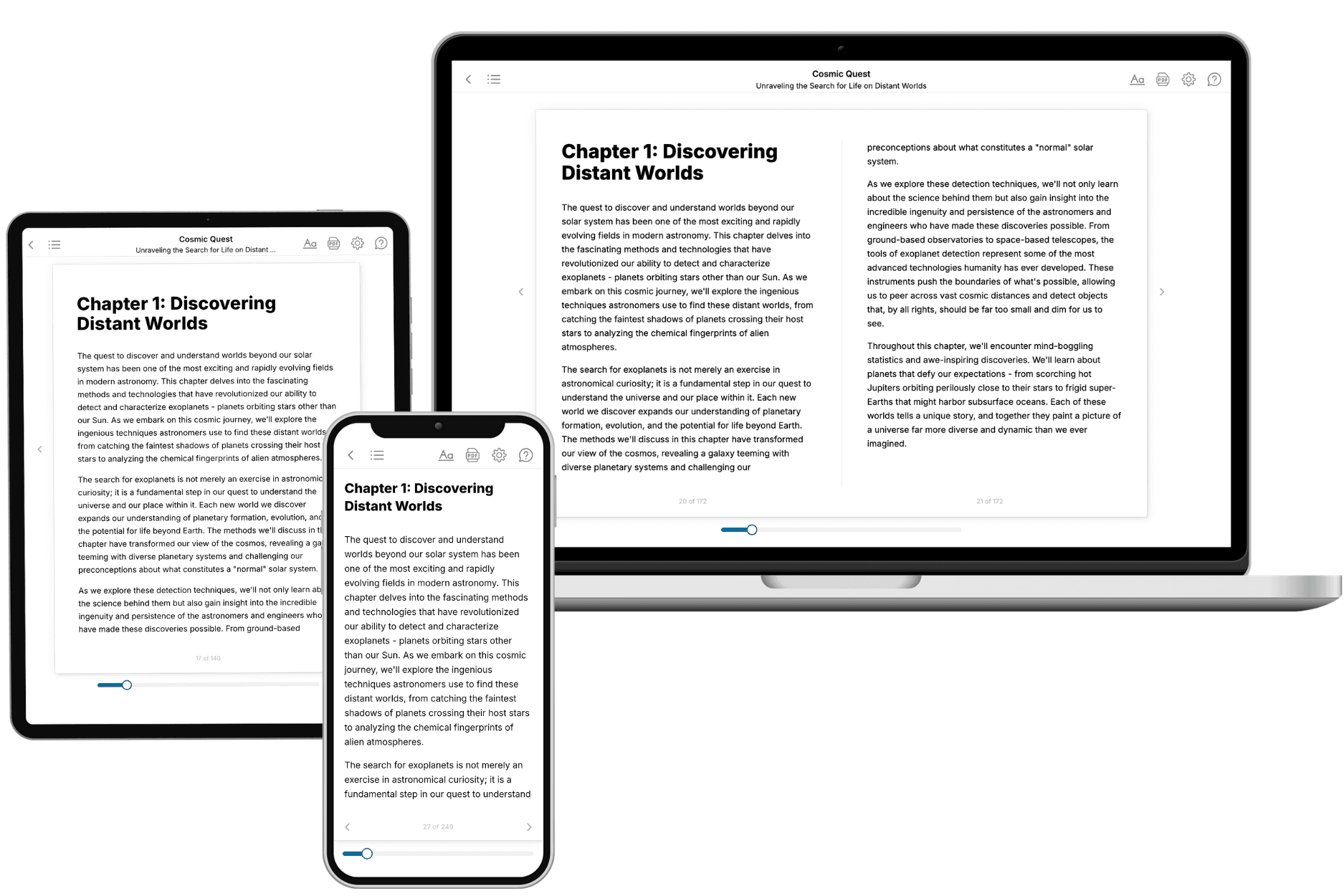
Your book is ready in 10 minutes. Read it online, download as EPUB or PDF, or send to Kindle.
Frequently asked questions
- What is TailoredRead?
TailoredRead creates complete, full-length nonfiction ebooks, written specifically for you. Tell us what you want to learn and why, and TailoredRead writes you a complete ebook on it, with charts, tables, and diagrams throughout. Read it online, on Kindle, or on any e-reader, or download it as a PDF or EPUB. Every book is written fresh the day you order it.
- How is the book tailored to me?
Before anything is written, you answer a few short questions about your goals, your background, and the topics you care about. Your book is then planned around your answers: written at your level, focused on your goals, and covering the topics you chose, instead of the one-size-fits-all book a store sells everyone.
- Will it read like generic AI content?
No. Your book isn't a chat transcript: it's planned chapter by chapter before a single word is written, told in a clear book voice, and explains ideas visually with charts, tables, and diagrams. After writing, every book goes through an editorial pass that polishes chapters so the book reads consistent from start to finish. Judge for yourself: browse thousands of sample books on our Explore Books page.
- How accurate is the content?
Our AI first checks whether your subject needs live research. Niche and fast-moving subjects are researched before writing, and the book plan and chapters are grounded in what it finds. After writing, every book goes through a quality pass that checks its facts and consistency, and researched books list their sources in a Notes section at the back.
- How long is the book?
You choose the length: Comprehensive (250-300 pages), Detailed (150-200 pages), Essential (70-100 pages), or Short (30-50 pages).
- Does the book include visuals?
Yes. Every book includes charts, tables, and diagrams: timelines, checklists, step-by-step guides, decision trees, comparison tables, matrices, and bar charts. A typical book includes dozens of these visual elements.
- Can I read it on Kindle? What formats can I download?
Yes. Every book can be read in our online reader or downloaded as a PDF or EPUB. The EPUB can be opened with Kindle, Apple Books, Kobo, and any e-reader. The Commercial and Author licenses also include an editable Word (DOCX) and Markdown download.
- How much does it cost?
About the price of a regular ebook. The exact price depends on your book's length and complexity, from $2 for the shortest books to $35 for the most comprehensive, and it's shown when you review your book, before you commit to anything. Each book is a one-time purchase, yours to keep, no subscription. Licenses that let you share, teach, or publish your book range from $35.99 to $49.99.
- Can I preview the book before purchasing?
Before you pay, you'll see what your book will cover: the title, a detailed description, the estimated length, and the complete chapter-by-chapter table of contents, so you know what you're getting before you decide. The full text itself is written after you purchase.
- How long does it take to create a book?
About 10 minutes. You can start reading the opening chapters while the rest is still being written.