Zinedine Zidane: Football Icon and French History
From Algerian roots to World Cup glory and lasting cultural legacy
Embark on a captivating journey through the life of Zinedine Zidane, one of football's greatest icons, and discover how his story intertwines with the rich tapestry of French and European history.
269 pages13 chaptersNov 26, 2024Sports Biography
About this book
This book offers a unique perspective on the man behind the legend, exploring Zidane's roots, his rise to stardom, and his enduring impact on both the sport and French culture. You'll delve into the social and cultural context that shaped Zidane's early years, from his family's Algerian origins to the complexities of immigration and integration in France. As you follow his meteoric rise in the world of football, you'll gain insights into the evolving landscape of European sports and its reflection of broader societal changes. Through Zidane's triumphs and challenges, you'll explore pivotal moments in recent French history, from the multicultural dynamics of the 1998 World Cup victory to the nation's ongoing struggle with identity and unity. This book not only celebrates the achievements of a football legend but also offers a window into the heart of modern France, its people, and its place in the European community.
Table of contents
- IntroductionZidane's Enduring Legacy, A Journey Through History and Football, The Cultural Impact of an IconRead below
- Chapter 1: Roots and Early YearsAlgerian Origins and French Immigration, Growing Up in Marseille, Navigating Cultural Identity, Early Football Experiences
- Chapter 2: Rise to StardomProfessional Debut with Cannes, The Bordeaux Years, Transfer to Juventus: A New Challenge, Making His Mark on the International Stage
- Chapter 3: The 1998 World Cup: A Nation UnitedFrance's Road to the Finals, Zidane's Stellar Performance, The Impact of Victory on French Society, The 'Black-Blanc-Beur' Team and National Identity
- Chapter 4: The Real Madrid EraJoining the Galácticos, Champions League Glory, Zidane's Unique Playing Style, Becoming a Global Football Icon
- Chapter 5: Euro 2000: Cementing a LegacyFrance's Tournament Journey, Zidane's Leadership on the Field, The Final Victory Against Italy, France's European Football Dominance
- Chapter 6: The 2006 World Cup: Triumph and ControversyZidane's Comeback from Retirement, Leading France as Captain, The Infamous Final Incident, Impact on Zidane's Legacy
- Chapter 7: The Art of Zidane: Playing Style and TechniqueMasterful Ball Control, Vision and Passing Ability, Tactical Awareness and Positioning, Signature Moves and Techniques
- Chapter 8: Zidane's Cultural Impact in FranceA Role Model for Integration, Media Portrayal and Public Image, Influence on French National Identity, Social Initiatives and Charity Work
- Chapter 9: From Player to Coach: Zidane's Managerial CareerAssistant Coach at Real Madrid, Managing Real Madrid Castilla, Taking Over the Real Madrid First Team, Champions League Success as a Coach
- Chapter 10: Zidane's Leadership StyleManaging Star Players, Tactical Approach and Flexibility, Handling Media Pressure, Leadership Lessons from Zidane
- Chapter 11: Zidane's Legacy in Football and BeyondImpact on Football's Evolution, Inspiring Future Generations, Role as a Cultural Ambassador, Ongoing Influence in French Society
- Chapter 12: The State of French Football Post-ZidaneThe National Team's Continued Success, Youth Development and Academies, Diversity and Inclusion in French Football, France's Global Football Influence
- Chapter 13: Reflecting on Zidane's JourneyPersonal Growth and Challenges, Cultural Significance in Modern France, Enduring Popularity and Admiration, Future Prospects and Potential Roles
- Conclusion
- Glossary
- Further Reading
Introduction
In the pantheon of football legends, few names resonate as powerfully as Zinedine Zidane. A maestro on the pitch, a symbol of multicultural France, and a figure whose influence extends far beyond the realm of sports, Zidane's story is inextricably woven into the fabric of modern French history. This book invites you on a journey through time, exploring not just the career of an extraordinary athlete, but also the evolving landscape of French society, politics, and culture that both shaped and was shaped by Zidane's remarkable trajectory.
As you embark on this exploration, you'll discover how Zidane's life story serves as a prism through which to view the complexities of French identity, immigration, and integration in the late 20th and early 21st centuries. From his humble beginnings as the son of Algerian immigrants in the tough La Castellane neighborhood of Marseille to his ascension as a global football icon, Zidane's path mirrors the hopes, challenges, and transformations of a nation grappling with its colonial past and multicultural present.
Throughout this book, you'll gain insights into how Zidane's career paralleled and influenced significant changes in European football. From the increasing globalization of the sport to the rise of football as a cultural and economic powerhouse, Zidane's journey offers a unique lens through which to understand these broader shifts. You'll see how his playing style, which combined sublime technical skill with tactical intelligence, not only dazzled fans but also reflected evolving approaches to the game itself.
Moreover, this narrative extends beyond the confines of the football pitch to explore Zidane's impact on French society at large. You'll examine how his achievements, particularly the 1998 World Cup victory on home soil, became powerful symbols of a new, inclusive French identity. The image of Zidane's face projected onto the Arc de Triomphe became an iconic moment, representing hope for a united, multicultural France. Through this book, you'll delve into the complexities of this symbolism and its lasting effects on French national discourse.
As you progress through these pages, you'll also encounter the challenges and controversies that marked Zidane's career, from the infamous headbutt in the 2006 World Cup final to his transition into coaching. These moments serve not just as dramatic turning points in a sports narrative, but as opportunities to reflect on issues of pressure, expectation, and the human elements that underlie even the most celebrated public figures.
This introduction sets the stage for a multifaceted exploration of Zidane's life and times. It promises to offer you not just a biography of a football star, but a window into the heart of contemporary France, its evolving national identity, and its place within the broader European context. As you turn these pages, prepare to embark on a journey that transcends sport, touching on themes of cultural identity, social mobility, leadership, and the power of symbolism in shaping national narratives.
Zidane's Enduring Legacy
Zinedine Zidane's legacy extends far beyond the confines of football stadiums and trophy cabinets. It is a legacy that has left an indelible mark on French society, European football, and global sports culture. As you delve into this section, you'll uncover the multifaceted nature of Zidane's enduring impact, which continues to resonate years after his retirement from professional play. This legacy is not merely about athletic achievements, but about cultural significance, social change, and the power of sports to transcend boundaries.
At the heart of Zidane's legacy is his role as a symbol of successful integration in France. Born to Algerian immigrant parents in Marseille, Zidane's rise to become one of the greatest footballers of all time and a national hero exemplifies the potential for social mobility and acceptance in French society. His success story has inspired generations of young people from immigrant backgrounds, showing that it is possible to achieve greatness while embracing both their heritage and their French identity. This aspect of Zidane's legacy has had a profound impact on discussions about national identity and integration in France, challenging stereotypes and promoting a more inclusive vision of what it means to be French[1].
On the football pitch, Zidane's legacy is characterized by his unique playing style, which combined technical brilliance with tactical intelligence. His ability to control the game, make split-second decisions, and execute complex maneuvers with grace and precision set a new standard for midfielders. The 'Zidane turn', his signature move, became iconic and is still emulated by players around the world. But beyond individual skills, Zidane's approach to the game emphasized the importance of teamwork, vision, and adaptability. These qualities have influenced coaching philosophies and player development programs across Europe and beyond, shaping the way football is played and taught at all levels.
Zidane's impact on French football cannot be overstated. His pivotal role in France's 1998 World Cup victory and the subsequent Euro 2000 triumph ushered in a golden era for Les Bleus. These victories not only brought glory to French football but also had far-reaching societal impacts. The image of a multicultural French team, with Zidane at its center, celebrating on the Champs-Élysées became a powerful symbol of national unity and pride. This moment challenged long-standing notions of French identity and sparked important conversations about diversity and inclusion in French society. The legacy of these victories continues to inspire French football, contributing to the development of world-class talent and maintaining France's position as a footballing powerhouse[2].
In the realm of sports diplomacy and cultural exchange, Zidane's legacy is equally significant. As a global icon, he has used his platform to promote understanding between cultures and to support various charitable causes. His work with the United Nations Development Programme and his involvement in numerous humanitarian initiatives have showcased the potential for athletes to effect positive change beyond the sports arena. Zidane's efforts have inspired other athletes to engage in social causes, amplifying the impact of sports on global issues such as poverty, education, and health.
The transition of Zidane from player to coach has added another dimension to his legacy. His success as the manager of Real Madrid, including three consecutive UEFA Champions League titles, demonstrated that his understanding of the game and leadership abilities extend beyond playing. This successful transition has challenged perceptions about former players becoming top-level coaches and has inspired a new generation of players to consider management as a viable post-playing career. Zidane's coaching style, characterized by a calm demeanor and strategic acumen, has become a subject of study for aspiring managers and sports psychologists alike.
Zidane's legacy also encompasses his role in the evolution of football as a global business and entertainment industry. His transfer to Real Madrid in 2001 for a then-record fee exemplified the increasing commercialization and globalization of football. Zidane became a central figure in the 'Galácticos' era at Real Madrid, a period that saw football clubs transform into global brands and players into international celebrities. This aspect of his legacy reflects broader changes in the economics and culture of professional sports, influencing everything from transfer policies to marketing strategies in the football industry.
In the context of French national identity, Zidane's legacy continues to be a subject of discussion and reflection. His story has become intertwined with ongoing debates about immigration, integration, and what it means to be French in the 21st century. The complexities of Zidane's identity – French-born of Algerian descent, Muslim in a secular state, a national hero with a global following – have made him a figure through which France examines its own multicultural identity. His legacy in this regard is not without controversy, particularly following incidents like the 2006 World Cup final headbutt, but it remains a powerful catalyst for important societal conversations.
The educational impact of Zidane's legacy is also noteworthy. His life story has become a subject of study in schools and universities, not just in sports-related fields but also in sociology, cultural studies, and even political science. The 'Zidane phenomenon' offers rich material for examining issues of race, class, media representation, and national identity. This academic interest ensures that Zidane's influence extends into intellectual and educational spheres, contributing to a deeper understanding of the role of sports figures in shaping societal narratives.
As you progress through this book, you'll discover that Zidane's enduring legacy is a tapestry woven from athletic brilliance, cultural significance, and societal impact. It's a legacy that continues to evolve, influencing new generations of players, fans, and citizens. From the streets of Marseille to the grand stadiums of Europe, from political discussions in Paris to classrooms around the world, the ripples of Zidane's career continue to be felt. This enduring impact underscores the power of sports to transcend its boundaries and become a force for social change, cultural expression, and national identity.
A Journey Through History and Football
This book offers you a unique journey through the intertwined narratives of Zinedine Zidane's life and career, and the broader historical and cultural context of France and Europe. As you embark on this exploration, you'll find that Zidane's story serves as a compelling lens through which to view significant developments in French society, European football, and global sports culture over the past few decades. This journey is not just about recounting the achievements of a football legend, but about understanding how individual stories can reflect and influence larger societal trends and transformations.
The narrative begins with Zidane's roots, taking you back to the Algeria of his parents and the immigrant experience in France. This section provides crucial context for understanding the complexities of French colonial history and its lasting impact on contemporary French society. You'll explore the challenges faced by immigrant communities in France during the 1970s and 1980s, the period of Zidane's childhood. This background is essential for appreciating the significance of Zidane's rise to prominence and his role as a symbol of successful integration. The book delves into the socio-economic conditions of Marseille's La Castellane neighborhood, where Zidane grew up, offering insights into how environment shapes opportunities and aspirations[3].
As the journey progresses, you'll follow Zidane's early football career, from his beginnings at local clubs to his professional debut with Cannes. This part of the story is set against the backdrop of French football in the late 1980s and early 1990s, a period of significant change in the sport. You'll gain insights into the structure of youth football in France, the role of academies, and the emerging emphasis on technical skills that would come to define French football. The narrative explores how these systemic factors contributed to the development of players like Zidane, setting the stage for France's future successes on the international stage.
The book then takes you through Zidane's rise to stardom, coinciding with major developments in European football. His transfers to Bordeaux, Juventus, and eventually Real Madrid are examined not just as career moves, but as reflections of the increasing globalization and commercialization of football. You'll explore how these transfers impacted the football landscape, influencing transfer policies, financial structures, and the growing influence of football clubs as global brands. This section also delves into the tactical evolution of football during this period, examining how Zidane's playing style both reflected and influenced these changes.
A significant portion of the book is dedicated to the 1998 World Cup, a pivotal moment in both Zidane's career and French history. You'll be transported to the excitement and tension of that summer, experiencing the tournament through multiple perspectives. The narrative goes beyond match reports to explore the societal impact of France's victory, examining how the success of the multicultural French team, symbolized by Zidane, challenged and reshaped notions of French identity. This section draws on sociological studies, media analyses, and personal accounts to provide a comprehensive view of this watershed moment in French cultural history[4].
The journey continues through the highs and lows of Zidane's career, including the triumph at Euro 2000 and the controversial end to the 2006 World Cup. Each of these events is contextualized within the broader narrative of French and European football, as well as the evolving discourse around immigration, integration, and national identity in France. The book examines how media representation of Zidane changed over time, reflecting shifting attitudes towards immigrants and their descendants in French society.
As you progress through the chapters, you'll also explore Zidane's transition from player to coach. This part of the journey coincides with significant changes in football tactics, training methods, and management approaches. The narrative examines how Zidane's coaching philosophy was shaped by his experiences as a player and how it reflects broader trends in modern football management. This section also touches on the increasing pressure and scrutiny faced by top-level coaches in the age of social media and 24/7 sports coverage.
Throughout the book, you'll find that Zidane's story is consistently linked to larger historical and cultural narratives. The rise of football as a global entertainment industry, the impact of migration on European societies, the role of sports in national identity formation, and the evolving nature of celebrity culture in the digital age are all explored through the prism of Zidane's career. The book draws on a wide range of sources, including historical documents, sociological studies, media archives, and interviews, to provide a rich, multifaceted account of this journey through history and football.
Importantly, this journey is not presented as a simple, linear narrative. The book acknowledges the complexities and contradictions inherent in Zidane's story and in the broader societal issues it reflects. You'll encounter different perspectives on controversial moments in Zidane's career, such as the 2006 World Cup headbutt incident, and be encouraged to consider the multiple factors at play in these events. The narrative also explores how Zidane's image and significance have been interpreted differently by various groups within French society, reflecting ongoing debates about national identity and integration.
As you near the end of this journey, you'll find that the book doesn't just look back but also forward. It examines Zidane's ongoing influence on French football, including the development of the current generation of French players. The final chapters explore how the lessons from Zidane's career and the broader historical context it represents might inform future approaches to integration, sports development, and national identity in France and beyond.
This journey through history and football, as seen through the life and career of Zinedine Zidane, offers you a unique perspective on some of the most significant social, cultural, and sporting developments of recent decades. By the end of this book, you'll have gained not just a deeper understanding of a football legend, but also valuable insights into the complex interplay between sports, society, and history in the modern world.
The Cultural Impact of an Icon
Zinedine Zidane's influence extends far beyond the boundaries of football fields and into the very fabric of French and global culture. As you explore this section, you'll discover how Zidane has become more than just a sports figure; he is a cultural icon whose impact resonates in diverse spheres of society. This cultural significance is multifaceted, touching on issues of national identity, social integration, and the power of sports to shape collective narratives and aspirations.
At the heart of Zidane's cultural impact is his role in reshaping perceptions of French national identity. Born to Algerian immigrant parents and raised in the multicultural milieu of Marseille, Zidane embodies the complexities of modern French identity. His rise to prominence coincided with a period of intense debate in France about immigration, integration, and what it means to be French. Zidane's success on the football pitch, particularly as a key member of the 1998 World Cup-winning team, provided a powerful counter-narrative to exclusionary notions of French identity. The image of Zidane, a son of immigrants, leading France to victory on home soil became a potent symbol of a new, inclusive vision of the nation[5].
This symbolism was further reinforced by the multicultural composition of the 1998 French national team, often referred to as "Black-Blanc-Beur" (Black-White-Arab), reflecting the diverse ethnic backgrounds of its players. Zidane, as the team's star player, became the face of this new, multicultural France. His success challenged stereotypes about immigrants and their descendants, demonstrating that diversity could be a source of national strength rather than division. In the years following the World Cup victory, "Zizou," as he is affectionately known, became a unifying figure in French society, admired across ethnic, social, and political divides.
Zidane's cultural impact is also evident in his influence on youth culture, particularly in France's immigrant communities. His success story has provided inspiration and aspiration for countless young people from similar backgrounds. In the banlieues (suburbs) of French cities, where many immigrant families reside, Zidane is often seen as a role model who proves that success is possible despite socio-economic challenges. This inspirational aspect of Zidane's legacy has had tangible effects on youth engagement in sports and education, with many community programs and initiatives citing him as a motivational figure.
In the realm of popular culture, Zidane's influence is pervasive. His image has been used in numerous advertising campaigns, not just for sports products but for a wide range of consumer goods, reflecting his broad appeal. Artists and filmmakers have also been inspired by Zidane, creating works that explore his significance beyond sports. The 2006 film "Zidane: A 21st Century Portrait" by Douglas Gordon and Philippe Parreno, which follows Zidane throughout an entire football match, is a notable example of how his persona has transcended sports to become a subject of artistic exploration[6].
Zidane's impact on fashion and style is another aspect of his cultural influence. His understated elegance both on and off the pitch has made him a style icon. The "shaved head" look that he popularized in the late 1990s became a widely emulated style, symbolizing a kind of masculine cool that transcended ethnic boundaries. In the world of football fashion, Zidane's preference for classic, unadorned boots in an era of increasingly flashy football shoes set him apart and influenced trends in sports apparel.
In the political sphere, Zidane's cultural impact has been complex and sometimes controversial. While he has generally avoided explicit political statements, his mere presence in the public eye has often been politicized. Various political figures and movements have attempted to co-opt Zidane's image to support their agendas, particularly on issues related to immigration and national identity. Zidane's careful navigation of these attempts, maintaining a largely apolitical stance while occasionally speaking out on issues of discrimination, has itself been a subject of cultural analysis.
The linguistic impact of Zidane's career is an often-overlooked aspect of his cultural influence. His name has entered the French lexicon as a synonym for excellence, with phrases like "faire un Zidane" (to do a Zidane) becoming common in everyday speech. This linguistic integration is a testament to how deeply Zidane's influence has permeated French culture.
Zidane's cultural impact extends to the world of education and academia. His life story has become a subject of study in various disciplines, including sociology, cultural studies, and sports science. Academic papers and books have analyzed the "Zidane phenomenon," exploring how his career intersects with issues of race, class, media representation, and globalization. This scholarly interest ensures that Zidane's cultural significance continues to be examined and debated in intellectual circles.
The global nature of Zidane's cultural impact is also significant. While his influence is most pronounced in France, his status as a global football icon has made him a cultural reference point in many parts of the world. In countries with large Muslim populations, Zidane, as a successful Muslim athlete on the global stage, has been particularly influential. His success has challenged stereotypes and provided a positive representation of Muslim identity in the West.
Zidane's transition to coaching has added new dimensions to his cultural impact. His success as a manager, particularly with Real Madrid, has reinforced his status as a football sage, extending his influence to a new generation of players and fans. The calm, composed demeanor he displays as a coach contrasts with the passionate playing style he was known for, offering a new facet of his personality for public consumption and admiration.
As you delve deeper into this book, you'll find that Zidane's cultural impact is a recurring theme, intersecting with various aspects of his life and career. From his childhood in Marseille to his current status as a global icon, Zidane's journey reflects and has helped shape significant cultural shifts in France and beyond. His story provides a unique lens through which to view the evolving dynamics of national identity, the role of sports in society, and the power of individual narratives to influence collective cultural consciousness.
Understanding Zidane's cultural impact is crucial not just for appreciating his personal legacy, but for gaining insights into broader societal trends. As you explore this theme throughout the book, you'll develop a richer understanding of how sports figures can become cultural touchstones, reflecting and shaping the societies they emerge from. Zidane's enduring influence serves as a powerful example of how athletic achievement can transcend the boundaries of sport to leave a lasting imprint on culture, society, and national identity.
Notes
Introduction
- 1. Geoff Hare, Football in France, Berg Publishers, 2003
- 2. Laurent Dubois, Soccer Empire, University of California Press, 2011
- 3. Yvan Gastaut, Le métissage par le foot: L'intégration, mais jusqu'où?, Autrement, 2008
- 4. Hugh Dauncey and Geoff Hare, France and the 1998 World Cup, Frank Cass Publishers, 1999
- 5. Paul A. Silverstein, "Sporting Faith," Social Text, 2000
- 6. Douglas Gordon and Philippe Parreno, Zidane: A 21st Century Portrait [Film], Anna Lena Films, 2006
This is the end of the free sample. The full book has 13 chapters.
Want this book written for you?
Tell us your goals and background, and get your own version of this book, tailored by AI to you.


Benefits of AI-tailored books
- Read one book, not ten:
- all the Sports Biography knowledge you need, gathered into a single book.
- Save days of learning:
- tell us your goals, choose your topics, and the whole book is built around them.
- Learn effortlessly:
- Sports Biography book written for your specific background and expertise.
- Understand at a glance:
- includes charts, tables, timelines, checklists, decision trees, and more.
- Stay current:
- written the day you order it, not years ago.
- Trust what you read:
- every book is checked for accuracy, with real research when your subject needs it.
Create your unique book in 3 steps
- 1. Select your focus
Select the focus of your Sports Biography book and share your background
- 2. Personalize your book
Specify your goals and choose sub-topics to include
- 3. Get your tailored book
Your book is ready in 10 minutes. Read it online, download as EPUB or PDF, or send to Kindle.


Frequently asked questions
- What is TailoredRead?
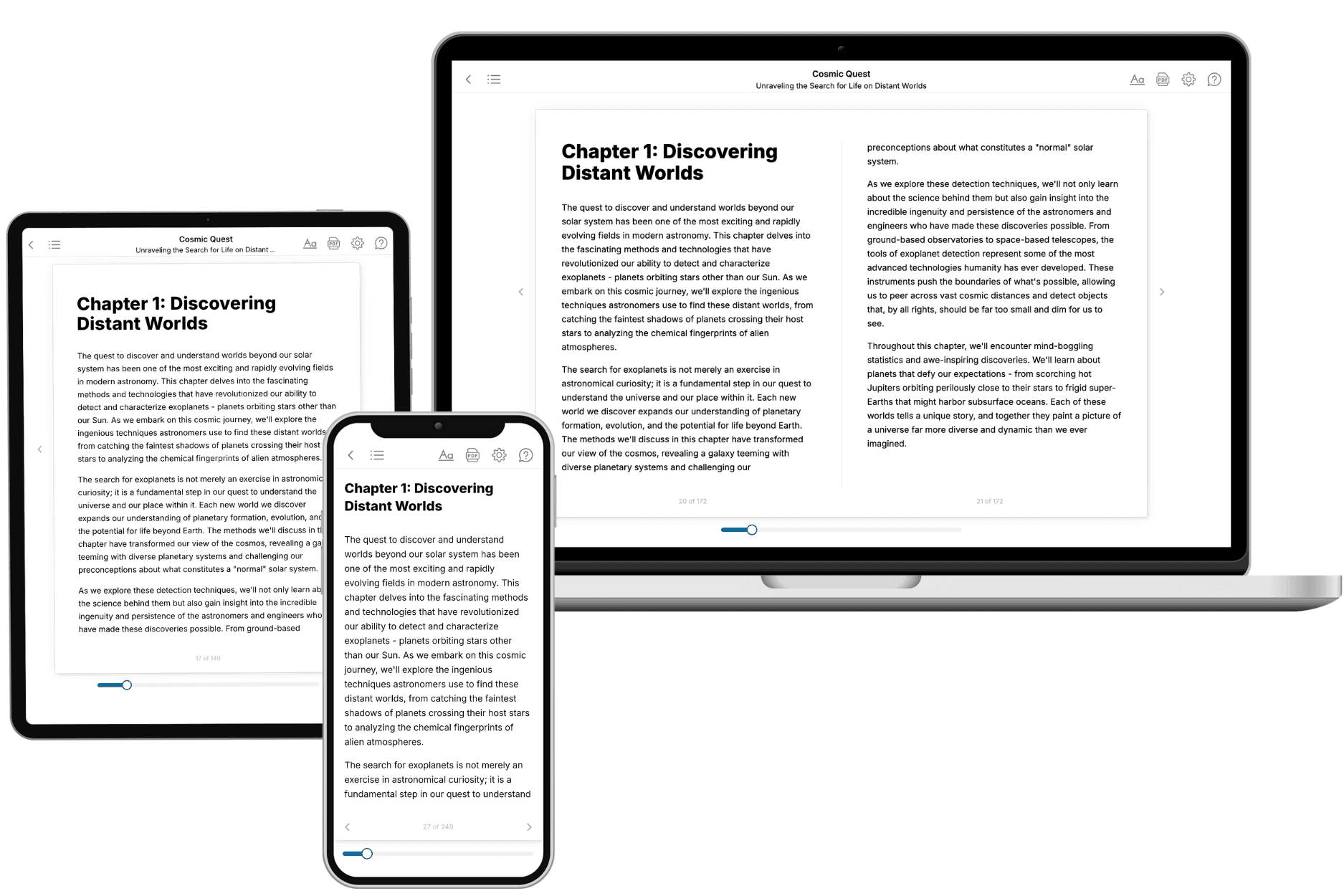
TailoredRead creates complete, full-length nonfiction ebooks, written specifically for you. Tell us what you want to learn and why, and TailoredRead writes you a complete ebook on it, with charts, tables, and diagrams throughout. Read it online, on Kindle, or on any e-reader, or download it as a PDF or EPUB. Every book is written fresh the day you order it.
- How is the book tailored to me?
Before anything is written, you answer a few short questions about your goals, your background, and the topics you care about. Your book is then planned around your answers: written at your level, focused on your goals, and covering the topics you chose, instead of the one-size-fits-all book a store sells everyone.
- Will it read like generic AI content?
No. Your book isn't a chat transcript: it's planned chapter by chapter before a single word is written, told in a clear book voice, and explains ideas visually with charts, tables, and diagrams. After writing, every book goes through an editorial pass that polishes chapters so the book reads consistent from start to finish. Judge for yourself: browse thousands of sample books on our Explore Books page.
- How accurate is the content?
Our AI first checks whether your subject needs live research. Niche and fast-moving subjects are researched before writing, and the book plan and chapters are grounded in what it finds. After writing, every book goes through a quality pass that checks its facts and consistency, and researched books list their sources in a Notes section at the back.
- How long is the book?
You choose the length: Comprehensive (250-300 pages), Detailed (150-200 pages), Essential (70-100 pages), or Short (30-50 pages).
- Does the book include visuals?
Yes. Every book includes charts, tables, and diagrams: timelines, checklists, step-by-step guides, decision trees, comparison tables, matrices, and bar charts. A typical book includes dozens of these visual elements.
- Can I read it on Kindle? What formats can I download?
Yes. Every book can be read in our online reader or downloaded as a PDF or EPUB. The EPUB can be opened with Kindle, Apple Books, Kobo, and any e-reader. The Commercial and Author licenses also include an editable Word (DOCX) and Markdown download.
- How much does it cost?
About the price of a regular ebook. The exact price depends on your book's length and complexity, from $2 for the shortest books to $35 for the most comprehensive, and it's shown when you review your book, before you commit to anything. Each book is a one-time purchase, yours to keep, no subscription. Licenses that let you share, teach, or publish your book range from $35.99 to $49.99.
- Can I preview the book before purchasing?
Before you pay, you'll see what your book will cover: the title, a detailed description, the estimated length, and the complete chapter-by-chapter table of contents, so you know what you're getting before you decide. The full text itself is written after you purchase.
- How long does it take to create a book?
About 10 minutes. You can start reading the opening chapters while the rest is still being written.