The 2025 UI Revolution
Master Cutting-Edge User Interface Trends and Tools for the Future
Level up your UI design skills and become a trailblazer in the field with "The 2025 UI Revolution." This comprehensive guide takes you on an exhilarating exploration of the most innovative user interface trends and tools that will shape the digital landscape in 2025 and beyond.
284 pages14 chaptersJul 16, 2025User ExperienceCreated by Kwan
About this book
Dive into a world where AI seamlessly integrates with design, where responsive layouts adapt to any device, and where accessibility is not just a feature but a fundamental principle. You'll discover how to create immersive user experiences that push the boundaries of interaction design and visual aesthetics. From mastering advanced prototyping techniques to conducting insightful UX research, this book equips you with the knowledge and skills to stay ahead of the curve. Learn how to develop cutting-edge UI design patterns, harness the power of emerging technologies, and create interfaces that are not just functional, but truly transformative. Whether you're looking to enhance your current projects or revolutionize your approach to UI design, "The 2025 UI Revolution" is your essential guide to shaping the future of digital interfaces.
Table of contents
- IntroductionThe UI Landscape of 2025, Book Overview and How to Use It, Preparing to Be Future-ReadyRead below
- Chapter 1: AI Integration in UI DesignAI Fundamentals for UI Designers, Creating AI-Powered Interfaces, AI-Driven Personalization in UI, Predictive UI Elements
- Chapter 2: Next-Gen Responsive DesignDesigning Beyond Screens, Creating Adaptive Layouts, Context-Aware Interfaces, Responsive Animation Techniques
- Chapter 3: Accessibility as a Core PrinciplePrinciples of Inclusive Design, Designing for Assistive Technologies, WCAG and the Future of Accessibility Standards, Accessibility Testing Tools and Techniques
- Chapter 4: Advanced Prototyping TechniquesCreating High-Fidelity Prototypes, Building Interactive Prototypes, Prototyping for VR and AR Experiences, Collaborative Prototyping Workflows
- Chapter 5: Advanced UX Research MethodologiesData-Driven Design Decisions, AI-Assisted User Testing, Advanced Behavioral Analytics, Remote Research Techniques
- Chapter 6: Emerging Visual Design TrendsCreating Immersive Interfaces, Emotional Design in UI, Dynamic Typography and Layouts, Advanced Color Theory for Digital Interfaces
- Chapter 7: Designing for Emerging TechnologiesAugmented Reality Interfaces, Virtual Reality User Experiences, Voice User Interfaces, Gestural and Motion-Based Interfaces
- Chapter 8: Evolving UI Design PatternsMicrointeractions and Animations, Avoiding Dark Patterns, Gamification in UI Design, Progressive Disclosure Techniques
- Chapter 9: Wearable UI DesignDesigning for Smartwatch Interfaces, UI for Fitness Trackers and Health Wearables, Interfaces for AR Glasses, Incorporating Haptic Feedback in Wearable UI
- Chapter 10: Advanced Data Visualization in UIDesigning Interactive Dashboards, Visualizing Real-Time Data, 3D Data Visualization Techniques, Data Storytelling through UI
- Chapter 11: Cross-Platform UI DesignBuilding Flexible Design Systems, Maintaining Consistency Across Platforms, Leveraging Platform-Specific Features, Creating a Unified User Experience
- Chapter 12: UI Performance OptimizationReducing Load Times, Optimizing Animations for Smoothness, Efficient Rendering Techniques, UI Performance Testing and Monitoring
- Chapter 13: Ethical Considerations in UI DesignPrivacy-First Design Approaches, Transparency in AI-Driven Interfaces, Promoting Digital Wellbeing, Inclusive Representation in UI
- Chapter 14: The Future UI DesignerThe Evolving Role of UI Designers, Essential Skills for Future UI Designers, Collaborating with AI and Developers, Strategies for Continuous Learning
- ConclusionThe Future Outlook of UI Design, Final Thoughts and Recommendations
- Glossary
- Further Reading
Introduction
Welcome to "The 2025 UI Revolution: Master Cutting-Edge User Interface Trends and Tools for the Future." As you embark on this journey through the cutting-edge world of user interface design, you're about to discover a landscape that's rapidly evolving, driven by technological advancements and changing user expectations. This introduction will set the stage for your exploration of the UI design field as it's projected to be in 2025, providing you with a comprehensive overview of the book and equipping you with the mindset needed to become a future-ready UI designer.
The field of UI design is undergoing a profound transformation. As we approach 2025, the convergence of artificial intelligence, advanced hardware capabilities, and innovative software tools is reshaping how we think about and create user interfaces. This book is your guide to navigating this exciting new terrain, offering insights into emerging trends, practical skills, and forward-thinking strategies that will position you at the forefront of the UI design revolution.
Throughout this book, you'll explore how AI is becoming an integral part of UI design, enabling more intuitive and personalized user experiences. You'll delve into the evolution of responsive design, which is adapting to an ever-expanding range of devices and contexts. You'll discover how accessibility is transitioning from a secondary consideration to a core principle of UI design, ensuring inclusive experiences for all users. Advanced prototyping tools, sophisticated UX research methodologies, and emerging technologies like AR and VR will be unveiled as powerful assets in your design toolkit.
As we progress through the chapters, you'll gain insights into the shifting visual design trends that are creating more immersive and emotionally engaging interfaces. You'll learn how UI design patterns are evolving to accommodate new interaction paradigms and user expectations. Moreover, you'll understand how the role of a UI designer is expanding, requiring a broader skill set and a deeper understanding of technology.
This introduction chapter will lay the groundwork for your journey, providing an overview of the UI landscape in 2025, guiding you on how to make the most of this book, and preparing you to embrace the future of UI design with confidence and creativity. Let's begin by exploring the exciting world of UI design that awaits us in 2025.
The UI Landscape of 2025
As we peer into the future of UI design in 2025, we find ourselves on the cusp of a digital renaissance. The user interface landscape is evolving at an unprecedented pace, driven by technological advancements, changing user behaviors, and a growing emphasis on seamless, intuitive interactions. This transformation is not just about aesthetics; it's a fundamental shift in how we conceive, create, and interact with digital interfaces.
One of the most significant changes in the 2025 UI landscape is the pervasive integration of artificial intelligence. AI is no longer just a buzzword or a nice-to-have feature; it has become an integral part of the UI design process and the interfaces themselves. Machine learning algorithms are now capable of analyzing user behavior in real-time, allowing interfaces to adapt and personalize themselves to individual users' preferences and needs. This level of personalization goes beyond simple customization options; it involves interfaces that learn and evolve with each interaction, creating truly unique experiences for every user.
The concept of responsive design has also undergone a radical transformation by 2025. No longer limited to adapting layouts for different screen sizes, responsive design now encompasses a much broader range of contexts and devices. Interfaces seamlessly transition between traditional screens, wearable devices, augmented reality overlays, and even holographic displays. The boundaries between physical and digital interfaces are blurring, with UI elements often integrated into the real world through advanced AR technologies. This evolution demands that designers think beyond the confines of rectangular screens and consider how interfaces can exist in three-dimensional spaces and interact with the physical environment.
Accessibility has moved from being a compliance requirement to a fundamental design principle in 2025. The UI landscape now prioritizes inclusive design practices that cater to users with diverse abilities, ensuring that digital experiences are accessible to everyone. This shift is not just about accommodating disabilities; it's about creating interfaces that are inherently more usable and intuitive for all users. Advanced assistive technologies, such as sophisticated voice interfaces and brain-computer interfaces, are becoming mainstream, further expanding the ways in which users can interact with digital systems.
Visual design trends in 2025 are characterized by a move towards more immersive and emotionally engaging interfaces. The flat design trend of the early 2020s has evolved into a more nuanced approach that combines depth, texture, and motion to create rich, tactile digital environments. Dynamic typography, adaptive color schemes, and context-aware layouts are common features, allowing interfaces to adjust their appearance based on factors such as time of day, user mood, or environmental conditions. These visual elements are not just aesthetic choices; they play a crucial role in guiding user attention, conveying information, and eliciting emotional responses.
The rise of emerging technologies has opened up new frontiers for UI design. Virtual and augmented reality interfaces have become more prevalent, requiring designers to think in terms of spatial computing and three-dimensional interactions. Voice user interfaces (VUIs) and gestural controls are now standard interaction methods, complementing traditional touch and pointer-based inputs. These technologies are not just standalone platforms but are often integrated into hybrid interfaces that combine multiple interaction modalities.
Data visualization has become an increasingly important aspect of UI design in 2025. With the exponential growth of data generation and collection, interfaces must be capable of presenting complex information in clear, actionable formats. Advanced data visualization techniques, including interactive 3D visualizations and AI-assisted data storytelling, are essential tools for making sense of big data and presenting it in ways that users can easily understand and act upon.
The ethical considerations surrounding UI design have also come to the forefront by 2025. Designers are now expected to be well-versed in data privacy regulations, digital well-being principles, and the potential societal impacts of their designs. There's a growing emphasis on creating interfaces that are not just user-friendly but also socially responsible, promoting healthy digital habits and protecting user privacy.
Cross-platform design has evolved to address the increasingly fragmented device ecosystem. Design systems have become more sophisticated, allowing for greater flexibility while maintaining consistency across a wide range of platforms and form factors. The challenge for designers is to create unified experiences that feel native to each platform while preserving a coherent brand identity and user experience across all touchpoints.
Performance optimization remains a critical concern in the 2025 UI landscape. As interfaces become more complex and data-rich, ensuring smooth, responsive experiences across various devices and network conditions is paramount. Designers must work closely with developers to create interfaces that are not just visually appealing but also highly performant, utilizing techniques such as progressive loading, efficient rendering, and intelligent caching.
The role of the UI designer has expanded significantly by 2025. Designers are now expected to have a broader skill set that includes not just visual design and interaction design, but also a solid understanding of front-end development, data analysis, AI and machine learning concepts, and UX research methodologies. Collaboration between designers, developers, data scientists, and other specialists has become more seamless, with interdisciplinary teams working together to create cohesive, innovative user experiences.
As we navigate this complex and exciting UI landscape of 2025, it's clear that the field of UI design is more dynamic and impactful than ever before. The interfaces we create have the power to shape how people interact with technology, access information, and connect with the world around them. This book will equip you with the knowledge, skills, and mindset needed to thrive in this rapidly evolving field, enabling you to create interfaces that are not just functional and beautiful, but truly transformative.
Book Overview and How to Use It
"The 2025 UI Revolution" is designed to be your comprehensive guide to the future of user interface design. This book is structured to provide you with both theoretical knowledge and practical skills, ensuring that you're well-equipped to tackle the challenges and opportunities that lie ahead in the field of UI design. To help you make the most of this resource, let's take a closer look at how the book is organized and how you can best utilize its contents.
The book is divided into 14 main chapters, each focusing on a crucial aspect of UI design as it's projected to be in 2025. These chapters are designed to build upon each other, gradually expanding your understanding of advanced UI concepts and techniques. However, they're also written to be relatively self-contained, allowing you to jump to specific topics of interest if you prefer a non-linear approach.
Chapter 1 delves into AI integration in UI design, providing you with a solid foundation in AI concepts relevant to UI designers and exploring how AI can be leveraged to create more intuitive and personalized interfaces. This chapter sets the stage for many of the AI-related concepts that will be referenced throughout the book. As you read through this chapter, pay close attention to the practical examples and case studies provided, as they illustrate how AI is being applied in real-world UI design scenarios.
Chapters 2 and 3 focus on next-gen responsive design and accessibility as a core principle, respectively. These chapters are crucial for understanding how to create interfaces that adapt to various contexts and are truly inclusive. The techniques and principles discussed in these chapters should be applied across all your UI design projects, regardless of the specific technology or platform you're designing for.
In Chapters 4 and 5, you'll explore advanced prototyping techniques and UX research methodologies. These chapters provide you with practical skills and tools that will enhance your design process and help you create more effective, user-centered interfaces. Pay particular attention to the hands-on exercises and tool recommendations in these chapters, as they'll help you build your technical skills and streamline your workflow.
Chapters 6 through 8 cover emerging visual design trends, designing for new technologies, and evolving UI design patterns. These chapters are where you'll find inspiration for pushing the boundaries of what's possible in UI design. As you read through these sections, try to think creatively about how you can apply these cutting-edge concepts to your own projects, even if you're not working with the most advanced technologies.
Chapters 9 and 10 focus on specific areas of UI design that are gaining prominence: wearable UI design and advanced data visualization. These chapters offer specialized knowledge that can set you apart in the field. Even if you're not currently working on wearable devices or data-heavy applications, the principles discussed here can inform your approach to UI design in general.
Chapters 11 and 12 address the practical challenges of cross-platform UI design and performance optimization. These chapters provide essential knowledge for creating interfaces that work seamlessly across different devices and perform well under various conditions. The techniques discussed here should become an integral part of your design process.
Chapter 13 delves into the critical topic of ethical considerations in UI design. This chapter will help you navigate the complex ethical landscape of modern UI design, ensuring that your work not only looks good and functions well but also respects user privacy and promotes digital well-being. The principles discussed in this chapter should inform all aspects of your design work.
Finally, Chapter 14 looks at the future of the UI designer role, helping you prepare for the evolving demands of the profession. This chapter is particularly valuable for planning your career development and identifying areas where you might want to expand your skills.
Throughout the book, you'll find a variety of learning aids to help you absorb and apply the information:
- Case studies: Real-world examples that illustrate how the concepts are being applied in industry-leading products and services.
- Practical exercises: Hands-on activities that allow you to apply what you've learned and build your skills.
- Code snippets: Where relevant, you'll find code examples that demonstrate how certain UI elements or interactions can be implemented.
- Visual examples: Illustrations and mockups that bring the concepts to life and provide inspiration for your own designs.
- Expert insights: Quotes and perspectives from leading professionals in the field, offering additional context and real-world wisdom.
- Further reading: Recommendations for additional resources where you can deepen your knowledge on specific topics.
To get the most out of this book, it's recommended that you:
- Read through each chapter thoroughly, taking notes on key concepts and ideas that resonate with you.
- Complete the practical exercises to reinforce your learning and build your skills.
- Reflect on how the concepts can be applied to your current or future projects.
- Experiment with the tools and techniques mentioned, even if they're not directly related to your current work.
- Engage with the further reading suggestions to deepen your understanding of topics that particularly interest you.
- Revisit chapters as needed when you encounter related challenges in your work.
Remember, the field of UI design is constantly evolving, and this book is designed to give you a strong foundation for adapting to future changes. Use it as a starting point for your continued learning and exploration in the exciting world of UI design. By actively engaging with the content and applying what you learn, you'll be well-positioned to become a leader in the UI design field of 2025 and beyond.
Preparing to Be Future-Ready
As we stand on the cusp of a new era in UI design, preparing to be future-ready is not just an advantage—it's a necessity. The rapid pace of technological advancement and the ever-changing landscape of user expectations demand that UI designers adopt a proactive approach to their professional development. This section will guide you through the mindset and strategies needed to stay ahead of the curve and thrive in the dynamic world of UI design in 2025 and beyond.
First and foremost, embracing a growth mindset is crucial for future-readiness. The field of UI design is in a constant state of flux, with new technologies, methodologies, and best practices emerging regularly. Cultivating a mindset that views challenges as opportunities for learning and growth will serve you well in this environment. Be open to new ideas, willing to experiment with unfamiliar concepts, and ready to adapt your skills and knowledge as the field evolves. Remember, the most successful UI designers of the future will be those who can learn, unlearn, and relearn quickly.
Developing a broad skill set is another key aspect of being future-ready. While specialization can be valuable, the UI designers of 2025 need to be versatile and have a working knowledge of various related fields. This includes not just mastery of design tools and principles, but also an understanding of:
- Front-end development: Being able to understand and even write basic code will help you communicate better with developers and create more feasible designs.
- User psychology: A deep understanding of human behavior and cognitive processes will enable you to create more intuitive and effective interfaces.
- Data analysis: As data-driven design becomes more prevalent, the ability to interpret and act on user data will be invaluable.
- Artificial Intelligence and Machine Learning: Familiarity with AI/ML concepts will be crucial as these technologies become more integrated into UI design.
- Business strategy: Understanding how UI design impacts business goals will make you a more valuable asset to any organization.
Staying informed about emerging technologies is critical for future-readiness. Keep abreast of developments in areas such as augmented reality (AR), virtual reality (VR), voice interfaces, gesture control, and brain-computer interfaces. While not all of these technologies may become mainstream, having an awareness of their potential applications and limitations will help you anticipate future trends and adapt your skills accordingly. Regularly read tech news, follow industry leaders on social media, and participate in webinars or conferences to stay updated.
Developing a strong professional network is another crucial strategy for staying future-ready. Connect with other UI designers, developers, UX researchers, and professionals from related fields. Engage in online communities, attend industry events, and participate in design challenges or hackathons. These connections can provide you with diverse perspectives, expose you to new ideas, and potentially lead to collaborative opportunities. Remember, in the fast-paced world of UI design, your network can be one of your most valuable resources for learning and growth.
Practicing continuous learning is perhaps the most important aspect of being future-ready. Set aside time regularly to learn new skills, explore emerging tools, and deepen your understanding of UI design principles. This could involve:
- Taking online courses or obtaining relevant certifications
- Experimenting with new design tools and technologies
- Reading books and academic papers on UI design and related fields
- Creating personal projects to apply new concepts and techniques
- Seeking feedback on your work from peers and mentors
Developing your creative problem-solving skills is another crucial aspect of future-readiness. As UI design challenges become more complex, the ability to think creatively and approach problems from multiple angles will be invaluable. Practice design thinking methodologies, engage in brainstorming exercises, and challenge yourself to find innovative solutions to UI problems. Cultivate curiosity about the world around you, as inspiration for creative UI solutions can come from unexpected sources.
Embracing an iterative design process is key to adapting to the rapid changes in UI design. Get comfortable with the idea that your first solution may not be the best one, and be willing to iterate based on user feedback, technological advancements, or changing requirements. Develop the ability to quickly prototype and test ideas, and don't be afraid to discard concepts that aren't working. This iterative mindset will serve you well in a field where user needs and technological capabilities are constantly evolving.
Understanding and prioritizing accessibility in your designs is not just a moral imperative but a practical necessity for future-ready UI designers. As digital experiences become more integral to daily life, ensuring that interfaces are usable by people of all abilities is crucial. Familiarize yourself with accessibility guidelines, learn how to design for assistive technologies, and make inclusive design a core part of your process. This focus on accessibility will not only make your designs more universally usable but also prepare you for potential future regulations and standards in this area.
Developing strong communication and collaboration skills is essential for future UI designers. As design processes become more complex and interdisciplinary, the ability to clearly articulate your ideas, collaborate effectively with diverse teams, and advocate for user needs will be crucial. Practice presenting your designs, explaining your rationale, and receiving constructive feedback. Learn to collaborate effectively with developers, product managers, and other stakeholders to bring your UI designs to life.
Finally, cultivating adaptability and resilience will be key to thriving in the future of UI design. The only constant in this field is change, and being able to adapt to new technologies, methodologies, and user expectations is crucial. Develop strategies for managing stress and maintaining work-life balance in a fast-paced field. Remember that setbacks and challenges are opportunities for growth, and maintain a positive attitude towards change and uncertainty.
By embracing these strategies and mindsets, you'll be well-prepared to navigate the exciting and dynamic future of UI design. Remember, being future-ready isn't about predicting exactly what will happen in 2025 and beyond. It's about developing the skills, knowledge, and adaptability to thrive in whatever future unfolds. As you progress through this book, keep these principles in mind, and you'll be well on your way to becoming a UI designer who's not just ready for the future, but actively shaping it.
This is the end of the free sample. The full book has 14 chapters.
Want this book written for you?
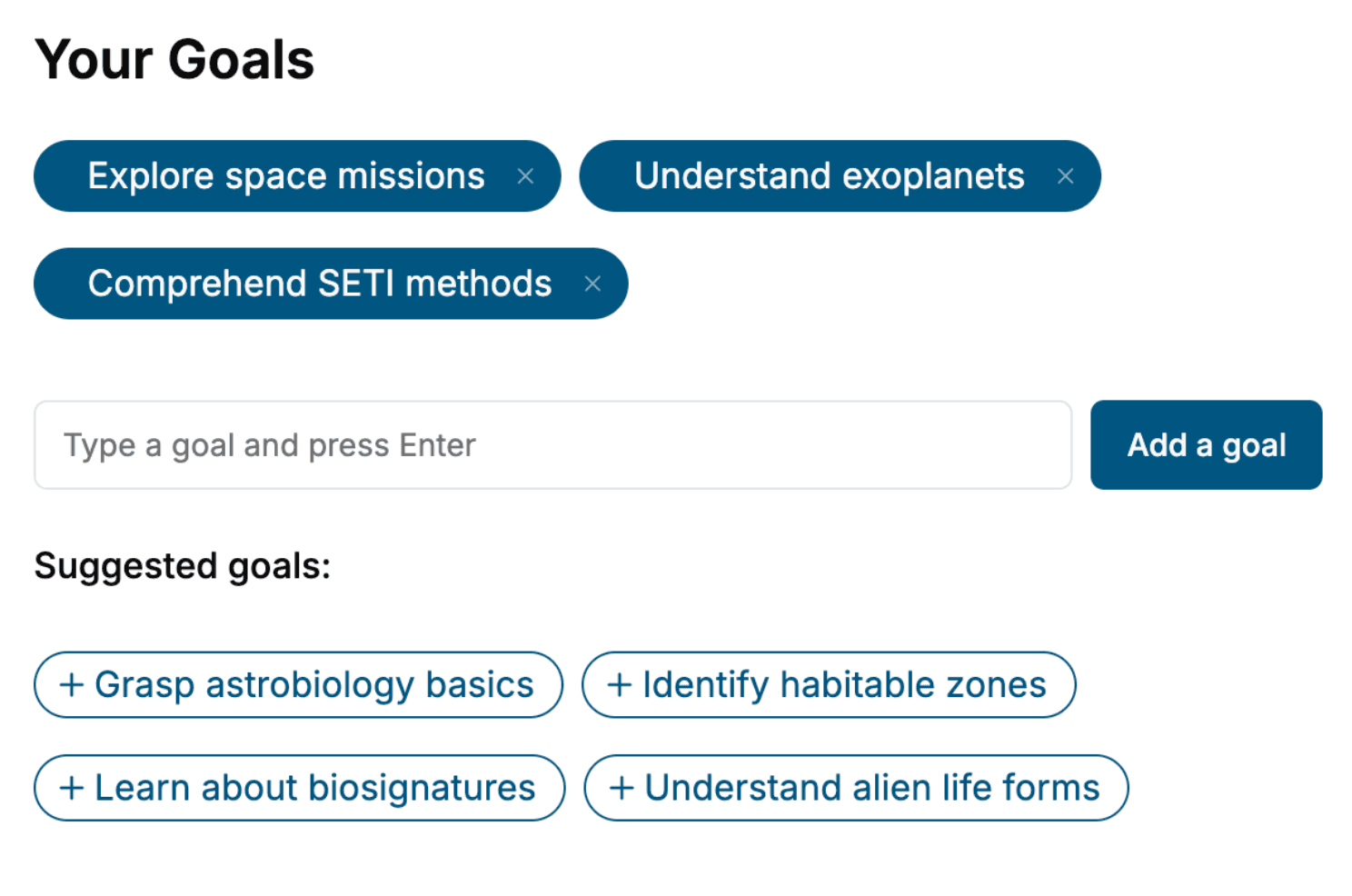
Tell us your goals and background, and get your own version of this book, tailored by AI to you.


Benefits of AI-tailored books
- Read one book, not ten:
- all the User Experience knowledge you need, gathered into a single book.
- Save days of learning:
- tell us your goals, choose your topics, and the whole book is built around them.
- Learn effortlessly:
- User Experience book written for your specific background and expertise.
- Understand at a glance:
- includes charts, tables, timelines, checklists, decision trees, and more.
- Stay current:
- written the day you order it, not years ago.
- Trust what you read:
- every book is checked for accuracy, with real research when your subject needs it.
Create your unique book in 3 steps
- 1. Select your focus
Select the focus of your User Experience book and share your background
- 2. Personalize your book
Specify your goals and choose sub-topics to include
- 3. Get your tailored book
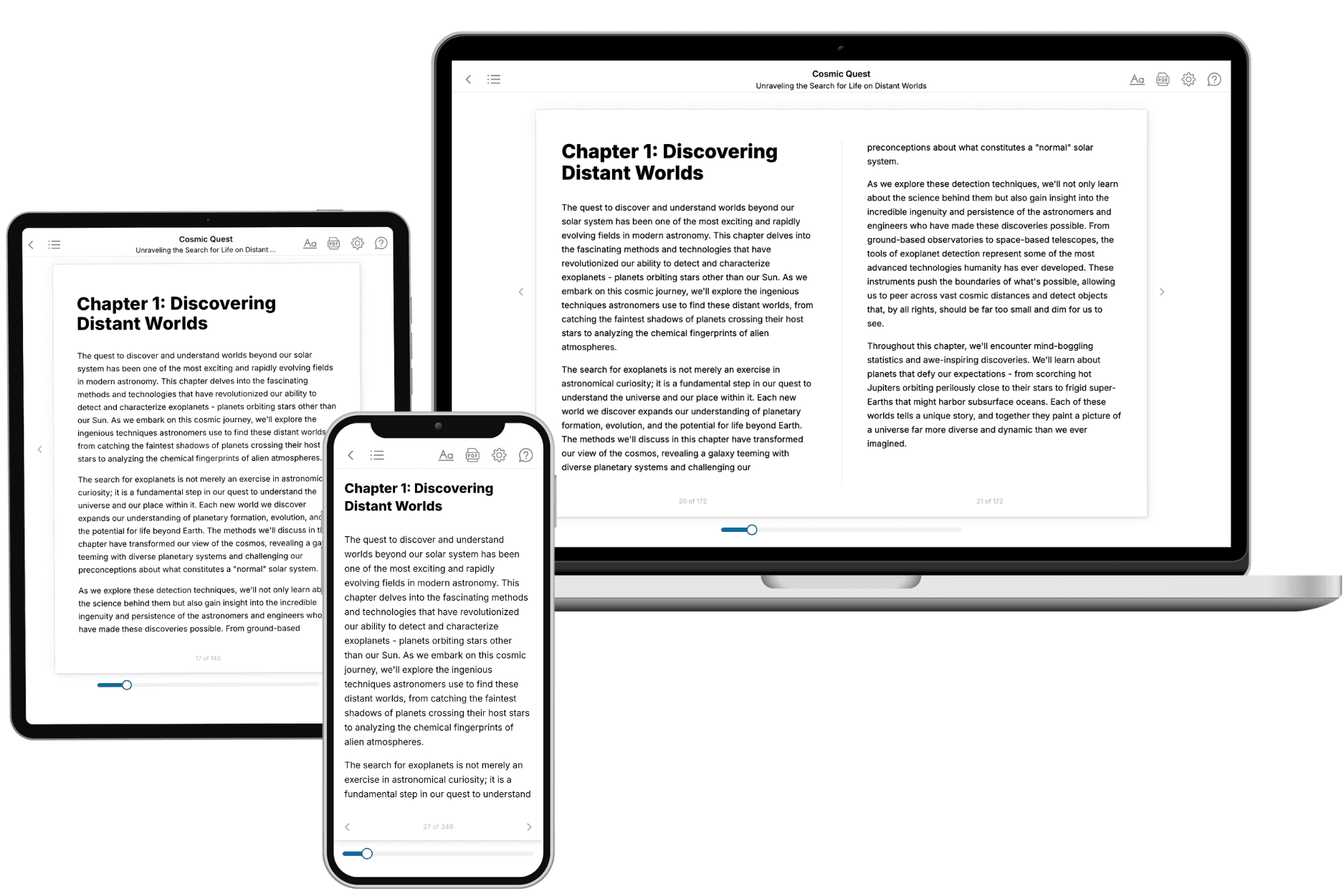
Your book is ready in 10 minutes. Read it online, download as EPUB or PDF, or send to Kindle.

Frequently asked questions
- What is TailoredRead?
TailoredRead creates complete, full-length nonfiction ebooks, written specifically for you. Tell us what you want to learn and why, and TailoredRead writes you a complete ebook on it, with charts, tables, and diagrams throughout. Read it online, on Kindle, or on any e-reader, or download it as a PDF or EPUB. Every book is written fresh the day you order it.
- How is the book tailored to me?
Before anything is written, you answer a few short questions about your goals, your background, and the topics you care about. Your book is then planned around your answers: written at your level, focused on your goals, and covering the topics you chose, instead of the one-size-fits-all book a store sells everyone.
- Will it read like generic AI content?
No. Your book isn't a chat transcript: it's planned chapter by chapter before a single word is written, told in a clear book voice, and explains ideas visually with charts, tables, and diagrams. After writing, every book goes through an editorial pass that polishes chapters so the book reads consistent from start to finish. Judge for yourself: browse thousands of sample books on our Explore Books page.
- How accurate is the content?
Our AI first checks whether your subject needs live research. Niche and fast-moving subjects are researched before writing, and the book plan and chapters are grounded in what it finds. After writing, every book goes through a quality pass that checks its facts and consistency, and researched books list their sources in a Notes section at the back.
- How long is the book?
You choose the length: Comprehensive (250-300 pages), Detailed (150-200 pages), Essential (70-100 pages), or Short (30-50 pages).
- Does the book include visuals?
Yes. Every book includes charts, tables, and diagrams: timelines, checklists, step-by-step guides, decision trees, comparison tables, matrices, and bar charts. A typical book includes dozens of these visual elements.
- Can I read it on Kindle? What formats can I download?
Yes. Every book can be read in our online reader or downloaded as a PDF or EPUB. The EPUB can be opened with Kindle, Apple Books, Kobo, and any e-reader. The Commercial and Author licenses also include an editable Word (DOCX) and Markdown download.
- How much does it cost?
About the price of a regular ebook. The exact price depends on your book's length and complexity, from $2 for the shortest books to $35 for the most comprehensive, and it's shown when you review your book, before you commit to anything. Each book is a one-time purchase, yours to keep, no subscription. Licenses that let you share, teach, or publish your book range from $35.99 to $49.99.
- Can I preview the book before purchasing?
Before you pay, you'll see what your book will cover: the title, a detailed description, the estimated length, and the complete chapter-by-chapter table of contents, so you know what you're getting before you decide. The full text itself is written after you purchase.
- How long does it take to create a book?
About 10 minutes. You can start reading the opening chapters while the rest is still being written.