The Battle of Atlanta
Sherman's March to Victory and the Turning Point of the Civil War
Picture yourself standing at a pivotal moment in American history—July 1864, when the fate of a nation hung in the balance.
207 pages10 chaptersApr 19, 2026US Civil War History
About this book
The Battle of Atlanta was far more than a military engagement; it was the turning point that determined whether the Union would survive and slavery would end. This comprehensive account takes you through the strategic decisions, tactical maneuvers, and human drama that unfolded as General William Tecumseh Sherman's Union forces clashed with Confederate General John Bell Hood's desperate defense of Georgia's vital city. You'll discover how this single battle shifted the entire trajectory of the Civil War, boosted Northern morale when it mattered most, and introduced revolutionary concepts of modern warfare. Through detailed analysis of troop movements, supply lines, and command decisions, you'll understand why Atlanta's fall was inevitable and how it set the stage for Sherman's devastating March to the Sea. This is essential reading for anyone seeking to comprehend the Civil War's most consequential moments and the military innovations that shaped American conflict forever.
Table of contents
- IntroductionWhy Atlanta Matters: Understanding a Turning Point, The Civil War in 1864: A Nation at the Crossroads, What You'll Discover in This BookRead below
- Chapter 1: The Road to AtlantaGeorgia's Strategic Importance to the Confederacy, Sherman Appointed: A New Union Strategy, Hood Takes Command: Confederate Desperation
- Chapter 2: The Armies ConvergeUnion Forces: Numbers, Organization, and Morale, Confederate Forces: Strength and Weaknesses, Supply Lines and Logistics: The Hidden Advantage
- Chapter 3: The Campaign UnfoldsSherman's Advance: Flanking and Maneuvering, Hood's Defensive Positions and Early Engagements, The Battle of Peachtree Creek: Hood's First Counterattack
- Chapter 4: July 22: The Main BattleOpening Moves: The Battle Begins, Hardee's Corps Assault: Hood's Desperate Gamble, The Union Response and Tactical Victory
- Chapter 5: The Siege and SurrenderAtlanta Surrounded: The Noose Tightens, Hood's Evacuation Decision and Final Battles, The City Falls: Atlanta Under Union Control
- Chapter 6: Military Innovation and TacticsSherman's Tactical Innovations and Maneuvers, Artillery and Cavalry: Coordinated Warfare, Entrenchments and Fortifications: Defensive Evolution
- Chapter 7: The Human CostCasualties and Losses: The Price of Battle, Soldier Experiences: Letters and Accounts, Civilian Impact: Atlanta's Population and Suffering
- Chapter 8: Political and Psychological ImpactLincoln's Reelection: A Crucial Political Victory, Northern Morale: From Doubt to Determination, Southern Demoralization: The Collapse of Hope
- Chapter 9: From Atlanta to the SeaPreparation for the March to the Sea, Total War Doctrine: A New Kind of Conflict, Atlanta as Foundation for Final Union Victory
- Chapter 10: Legacy and Historical SignificanceHow Atlanta Determined the Civil War's Outcome, Influence on Modern Warfare and Military Strategy, Impact on American History and National Development
- ConclusionAtlanta: A Watershed Moment in American History, Lessons for Understanding Conflict and Leadership
- Further Reading and Resources
Introduction
In the summer of 1864, the American Civil War had been grinding on for more than three years. Hundreds of thousands of men had already died. The nation was exhausted, divided, and uncertain about its future. In the North, public support for the war was wavering. President Abraham Lincoln privately feared he would lose the upcoming presidential election to a peace candidate who might negotiate an end to the conflict on terms that left the Confederacy intact. Then, in early September, a telegraph message arrived in Washington that changed everything: Atlanta had fallen to Union forces under General William Tecumseh Sherman.
That single event reshaped the entire trajectory of the war. It revived Northern morale at a moment when despair had been spreading. It secured Lincoln's reelection, ensuring the war would be fought to a decisive conclusion. It stripped the Confederacy of one of its most vital industrial and logistical hubs. And it opened the door for Sherman's famous March to the Sea, a campaign that would bring the war's destruction directly to the Southern heartland. Few battles in American history have carried such concentrated strategic weight as the campaign for Atlanta.
This book tells the full story of that campaign. It covers the strategic decisions made in Washington and Richmond, the tactical maneuvers on the ground in Georgia, the experiences of the soldiers who fought and died, and the political consequences that rippled outward from the city's fall. Along the way, it examines how the Atlanta campaign reflected broader shifts in how wars were fought, how commanders thought about logistics and civilian infrastructure, and how military success could translate directly into political outcomes. Understanding Atlanta means understanding a great deal about the Civil War itself, and about the nature of modern conflict.
Whether you are coming to this subject as a longtime Civil War enthusiast or as someone building a deeper understanding of American military history, this account is designed to be both comprehensive and accessible. The goal is not simply to recount what happened, but to explain why it happened, what it meant at the time, and why it still matters today. The Battle of Atlanta is not just a chapter in a history textbook. It is a story about leadership under pressure, the relationship between military force and political will, and the moments when history genuinely turns on a single campaign.
Why Atlanta Matters: Understanding a Turning Point
The word "turning point" gets used frequently in historical writing, sometimes too freely. Not every battle that changed the immediate situation actually changed the war's ultimate direction. But Atlanta genuinely qualifies. To understand why, it helps to think about what the city represented in 1864, both materially and symbolically, to both sides of the conflict.
Materially, Atlanta was the industrial and logistical backbone of the western Confederacy. Four major railroad lines converged on the city, making it the primary hub through which Confederate armies in the Deep South received supplies, reinforcements, and equipment. The city contained foundries, machine shops, and manufacturing facilities that produced war materials the South could not easily replace. Losing Atlanta did not just cost the Confederacy a city. It severed critical supply arteries and destroyed productive capacity that had no equivalent elsewhere in the region.[1]
Symbolically, Atlanta carried enormous weight on both sides. For the Confederacy, it represented the resilience of the Southern cause and the ability to defend the Deep South against Union invasion. For the Union, capturing it would demonstrate that the war could be won, that Confederate defenses could be broken, and that the enormous sacrifices already made had not been in vain. In a war where public morale was a genuine strategic resource, symbols mattered enormously.
The timing made Atlanta's fall even more consequential. The presidential election of November 1864 was approaching, and Lincoln's prospects looked genuinely uncertain through much of the summer. His opponent, General George McClellan, was running on a platform that many interpreted as favoring a negotiated peace. If Lincoln lost, the political will to continue fighting might collapse entirely. Atlanta's capture in early September transformed the political landscape almost overnight, giving Northern voters a concrete reason to believe the war was being won.
Atlanta also matters because of what it made possible afterward. Sherman's March to the Sea, which began after the city's capture, introduced a form of warfare that deliberately targeted the economic and psychological foundations of the Confederate war effort. That campaign, and the strategic doctrine behind it, grew directly from the lessons Sherman drew during the Atlanta campaign. In a very real sense, understanding Atlanta means understanding the final phase of the Civil War and the principles of modern warfare that emerged from it.
Key reasons Atlanta stands as a genuine turning point:
- It destroyed a critical Confederate industrial and logistical hub with no equivalent replacement available
- It secured Lincoln's reelection, ensuring the war would be prosecuted to unconditional Confederate surrender
- It shattered Confederate morale at a moment when Southern public support for the war was already fragile
- It enabled Sherman's March to the Sea, which accelerated the Confederacy's final collapse
- It demonstrated that Union forces could penetrate deep into Confederate territory and hold what they captured
Finally, Atlanta matters because it showcases the evolution of military thinking during the Civil War. The campaign demonstrated how a skilled commander could use superior logistics, coordinated maneuver, and an understanding of strategic geography to overcome determined defensive resistance. Sherman's approach to the campaign was genuinely innovative, and studying it reveals how warfare was changing in the mid-nineteenth century in ways that would influence military doctrine for generations to come.
Taken together, these factors explain why historians consistently rank Atlanta among the most consequential military campaigns in American history. It was not the largest battle of the Civil War in terms of casualties, nor the most dramatic in terms of individual heroism. But in terms of strategic impact, political consequences, and lasting influence on how wars are fought, it stands in a category of its own.
The Civil War in 1864: A Nation at the Crossroads
To fully appreciate what the Atlanta campaign meant, you need to understand the broader situation the United States found itself in during the spring and summer of 1864. By that point, the war had been going on for three years. The initial enthusiasm of 1861, when both sides expected a short conflict, had long since given way to grim endurance. The human cost had been staggering, and there was no clear end in sight.
In the East, General Ulysses S. Grant had taken command of all Union armies in March 1864 and launched the Overland Campaign against Robert E. Lee's Army of Northern Virginia. The battles that followed, including the Wilderness, Spotsylvania Court House, and Cold Harbor, produced horrific casualties on both sides without delivering the decisive victory Grant sought. By June, Grant had settled into a siege at Petersburg, Virginia, and the Eastern theater had ground to a bloody stalemate. Northern newspapers were calling Grant a "butcher," and public confidence in the war effort was eroding.[2]
In the West, the situation was more fluid but equally uncertain. Sherman had been given command of Union forces in the Western theater and tasked with advancing into Georgia, capturing Atlanta, and breaking the Confederate Army of Tennessee. His campaign began in May 1864, pushing south from Chattanooga, Tennessee. But progress was slow, Confederate resistance was determined, and the campaign's outcome remained genuinely uncertain through much of the summer.
The political dimension of the war in 1864 cannot be overstated. Lincoln faced a presidential election in November, and his prospects were deeply uncertain. The Democratic Party had nominated George McClellan, the former Union general, on a platform that included a call for an armistice and peace negotiations. Many in the North, exhausted by years of war and mounting casualties, found this appealing. Lincoln himself wrote a private memorandum in August 1864 acknowledging that he would likely lose the election, and that his successor would probably negotiate a peace that left the Confederacy intact.[3]
The Confederacy understood this dynamic clearly. Confederate President Jefferson Davis and his military commanders knew that if they could hold out long enough, Northern war-weariness might deliver a political victory that military force alone could not achieve. The strategy was not necessarily to defeat Union armies in the field, but to make the war costly enough that Northern voters would choose peace over continued fighting. This made Atlanta's defense not just a military objective but a political one. Every week the city held was another week of pressure on Lincoln's reelection prospects.
The Confederate command situation in Georgia had also undergone a significant change just before the main battle. General Joseph Johnston, who had commanded the Army of Tennessee during the long retreat from Chattanooga to the outskirts of Atlanta, was replaced by General John Bell Hood in July 1864. Johnston's strategy had been to trade space for time, preserving his army while making Sherman's advance as costly as possible. Davis, frustrated by the continued retreat and fearing Atlanta would fall without a fight, replaced Johnston with Hood, who was known for his aggressive, attacking style. This decision would have profound consequences for the campaign's outcome.
Understanding 1864 also means recognizing how much the war had changed since its opening battles. Both sides had learned hard lessons about the power of defensive positions, the importance of entrenchments, and the devastating effectiveness of rifle fire against attacking infantry. The romantic notions of quick, decisive battles that had characterized early thinking on both sides had been replaced by a grimmer understanding of industrial-age warfare. Commanders who adapted to these realities, as Sherman did, gained significant advantages over those who did not.
The summer of 1864 represented perhaps the most dangerous moment for the Union cause since the war began. Military stalemate in Virginia, uncertain progress in Georgia, and a presidential election that could end the war on Confederate terms created a crisis of confidence that only a major military success could resolve. Atlanta provided that success at precisely the right moment.
The economic dimensions of the war in 1864 also deserve attention. The Union's industrial capacity, railroad network, and ability to supply its armies far exceeded anything the Confederacy could match. But translating that material advantage into battlefield results required commanders who understood logistics as a strategic weapon. Sherman was one of the few Union generals who grasped this fully, and the Atlanta campaign was in many ways a demonstration of how superior logistics could be used to force an opponent into an impossible position.
What You'll Discover in This Book
This book is organized to take you through the Atlanta campaign from its strategic origins to its lasting historical consequences. Each chapter builds on the previous one, moving from the broad strategic context to the specific tactical details of individual battles, and then outward again to the political, psychological, and historical significance of the campaign's outcome. Here is a brief guide to what each section covers and what you can expect to take away from it.
The opening chapters establish the strategic foundation. You will learn why Georgia and Atlanta specifically were so vital to the Confederate war effort, how Sherman came to command Union forces in the West, and why the replacement of Johnston with Hood proved so consequential. These chapters provide the context needed to understand the decisions that followed, and they introduce the key commanders whose choices shaped the campaign's outcome.
The middle chapters focus on the campaign itself, from the initial advance through the decisive battles of late July 1864. You will follow Sherman's flanking maneuvers and Hood's aggressive counterattacks, examining the tactical logic behind each commander's decisions and the consequences when those decisions succeeded or failed. Particular attention is paid to the Battle of July 22, the main engagement that gives the campaign its name, and to the siege operations that followed as Sherman tightened his grip on the city.
A dedicated chapter examines the military innovations that emerged from the campaign. Sherman's approach to coordinated maneuver, the use of artillery and cavalry in combination, and the evolution of entrenchment and fortification techniques all receive detailed treatment. These innovations did not appear from nowhere. They grew from hard experience and careful thinking about how to apply the Union's material advantages most effectively.
The human dimension of the campaign receives serious attention as well. Casualty figures and their strategic implications are examined alongside firsthand accounts from soldiers on both sides. The experience of Atlanta's civilian population, caught between two armies and ultimately forced to evacuate their city, is treated with the gravity it deserves. War is not just a matter of troop movements and command decisions. It is also a human experience, and this book does not lose sight of that.
The final chapters move from the battlefield to the broader consequences of Atlanta's fall. You will see how the city's capture transformed the political situation in the North, secured Lincoln's reelection, and demoralized the Confederate leadership and population. You will follow the logical thread from Atlanta to Sherman's March to the Sea, understanding how the capture of the city made that subsequent campaign both possible and strategically coherent. And you will examine the campaign's lasting influence on American military doctrine and on the nation's historical development.
What this book will give you:
- A clear understanding of why Atlanta was strategically indispensable to the Confederacy
- A detailed account of the tactical decisions and maneuvers that determined the campaign's outcome
- An analysis of how Sherman's innovations changed the way wars are fought
- An appreciation of the human cost paid by soldiers and civilians on both sides
- A grasp of the political and psychological consequences that made Atlanta a true turning point
- A framework for understanding how the Atlanta campaign connects to the Civil War's final phase and ultimate outcome
- Insight into the lasting influence of the campaign on American military thinking and national history
Throughout the book, the focus remains on making complex military and historical material genuinely accessible. Technical terms are explained when they appear. Maps and troop movements are described in plain language that does not require prior military training to follow. The goal is to give you a thorough, accurate, and engaging account that respects both the complexity of the subject and your time as a reader.
One important note about sources and perspective: the Atlanta campaign has been written about extensively, and historians have sometimes disagreed about specific details, casualty figures, and the interpretation of command decisions. Where significant disagreements exist, this book acknowledges them rather than pretending a false consensus. History is not a settled matter, and part of understanding any major event is recognizing where the evidence is clear and where it remains genuinely contested.
The Atlanta campaign also raises questions that extend well beyond military history. It touches on the nature of leadership under extreme pressure, the relationship between military strategy and political reality, the moral dimensions of warfare that targets civilian infrastructure, and the way that single events can reshape the course of history in ways that no one fully anticipated at the time. These larger questions run through the narrative, giving the story a depth that goes beyond the movement of troops and the counting of casualties.
By the time you finish this book, you will have a comprehensive understanding of one of the Civil War's most consequential campaigns. More than that, you will have a set of analytical tools for thinking about military strategy, political will, and the relationship between battlefield outcomes and historical change. The Battle of Atlanta is a story worth knowing in detail, and this book is designed to tell it as fully and clearly as possible.
Notes
Introduction
- 1. Castel, Albert. Decision in the West: The Atlanta Campaign of 1864. University Press of Kansas, 1992
- 2. McPherson, James M. Battle Cry of Freedom: The Civil War Era. Oxford University Press, 1988
- 3. Lincoln, Abraham. Memorandum on Probable Failure of Re-election, August 23, 1864. Abraham Lincoln Papers, Library of Congress.
This is the end of the free sample. The full book has 10 chapters.
Want this book written for you?
Tell us your goals and background, and get your own version of this book, tailored by AI to you.


Benefits of AI-tailored books
- Read one book, not ten:
- all the US Civil War History knowledge you need, gathered into a single book.
- Save days of learning:
- tell us your goals, choose your topics, and the whole book is built around them.
- Learn effortlessly:
- US Civil War History book written for your specific background and expertise.
- Understand at a glance:
- includes charts, tables, timelines, checklists, decision trees, and more.
- Stay current:
- written the day you order it, not years ago.
- Trust what you read:
- every book is checked for accuracy, with real research when your subject needs it.
Create your unique book in 3 steps
- 1. Select your focus
Select the focus of your US Civil War History book and share your background
- 2. Personalize your book
Specify your goals and choose sub-topics to include
- 3. Get your tailored book
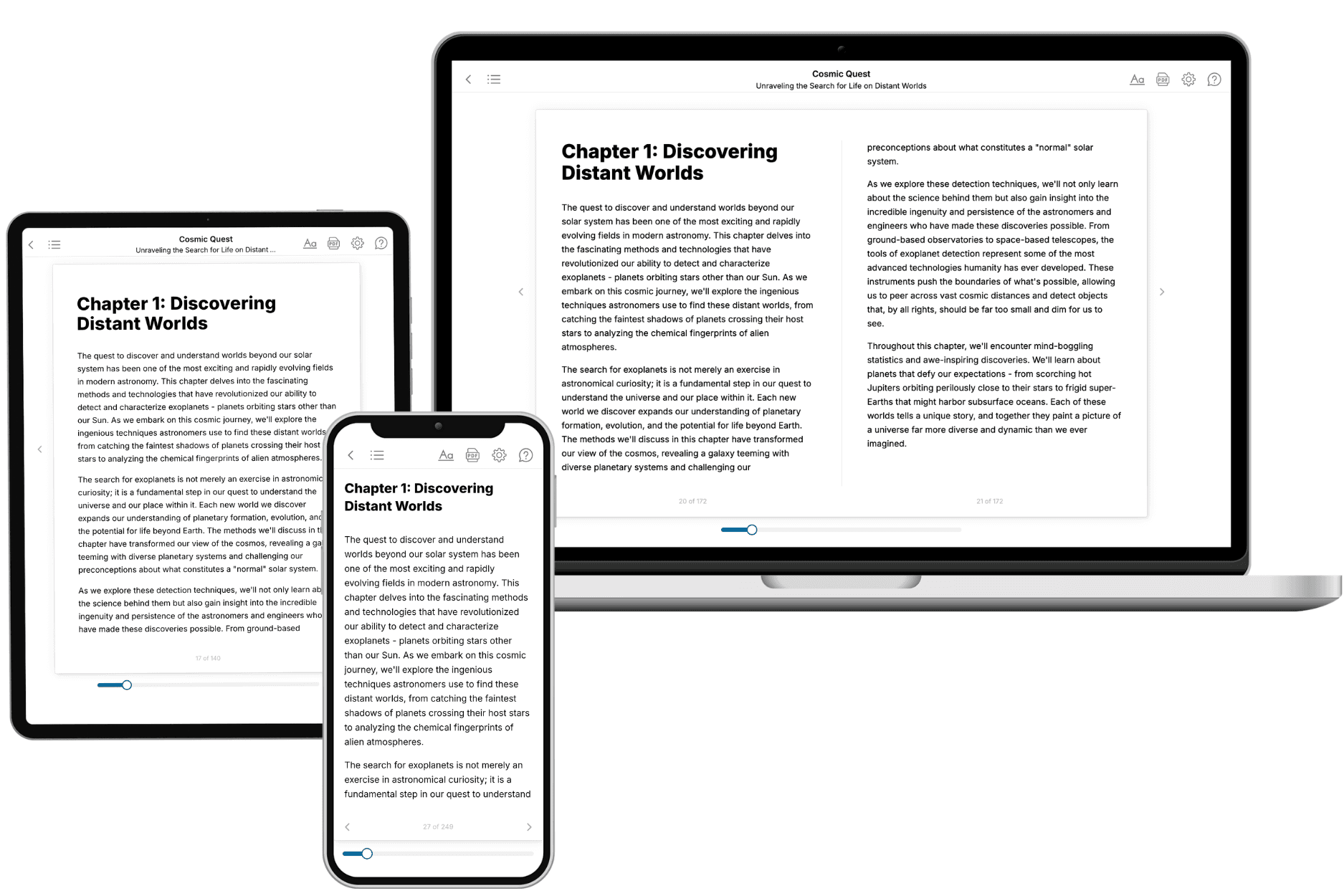
Your book is ready in 10 minutes. Read it online, download as EPUB or PDF, or send to Kindle.

Frequently asked questions
- What is TailoredRead?
TailoredRead creates complete, full-length nonfiction ebooks, written specifically for you. Tell us what you want to learn and why, and TailoredRead writes you a complete ebook on it, with charts, tables, and diagrams throughout. Read it online, on Kindle, or on any e-reader, or download it as a PDF or EPUB. Every book is written fresh the day you order it.
- How is the book tailored to me?
Before anything is written, you answer a few short questions about your goals, your background, and the topics you care about. Your book is then planned around your answers: written at your level, focused on your goals, and covering the topics you chose, instead of the one-size-fits-all book a store sells everyone.
- Will it read like generic AI content?
No. Your book isn't a chat transcript: it's planned chapter by chapter before a single word is written, told in a clear book voice, and explains ideas visually with charts, tables, and diagrams. After writing, every book goes through an editorial pass that polishes chapters so the book reads consistent from start to finish. Judge for yourself: browse thousands of sample books on our Explore Books page.
- How accurate is the content?
Our AI first checks whether your subject needs live research. Niche and fast-moving subjects are researched before writing, and the book plan and chapters are grounded in what it finds. After writing, every book goes through a quality pass that checks its facts and consistency, and researched books list their sources in a Notes section at the back.
- How long is the book?
You choose the length: Comprehensive (250-300 pages), Detailed (150-200 pages), Essential (70-100 pages), or Short (30-50 pages).
- Does the book include visuals?
Yes. Every book includes visual elements such as timelines, checklists, step-by-step guides, decision trees, comparison tables, and matrices, and many include bar charts. A typical book includes dozens of these visual elements.
- Can I read it on Kindle? What formats can I download?
Yes. Every book can be read in our online reader or downloaded as a PDF or EPUB. The EPUB can be opened with Kindle, Apple Books, Kobo, and any e-reader. The Commercial and Author licenses also include an editable Word (DOCX) and Markdown download.
- How much does it cost?
About the price of a regular ebook. The exact price depends on your book's length and complexity, from $2 for the shortest books to $35 for the most comprehensive, and it's shown when you review your book, before you commit to anything. Each book is a one-time purchase, yours to keep, no subscription. Licenses that let you share, teach, or publish your book range from $35.99 to $49.99.
- Can I preview the book before purchasing?
Before you pay, you'll see what your book will cover: the title, a detailed description, the estimated length, and the complete chapter-by-chapter table of contents, so you know what you're getting before you decide. The full text itself is written after you purchase.
- How long does it take to create a book?
About 10 minutes. You can start reading the opening chapters while the rest is still being written.