American Civil War Books
Explore tailored American Civil War books created by our AI
Gain a deeper understanding of America's defining conflict and how it fundamentally reshaped the nation. This comprehensive guide takes you through the complex causes, pivotal battles, and transformative consequences of the Civil War, revealing how a nation divided over slavery, states' rights, and competing economic systems fought to determine its future. You'll explore the political maneuvering that led to secession, the military strategies that defined major campaigns, the experiences of soldiers and civilians caught in the conflict, and the ambitious Reconstruction efforts that followed. By examining the war through multiple perspectives—political leaders, military commanders, enslaved people seeking freedom, and ordinary citizens—you'll understand how this four-year struggle fundamentally altered American democracy, ended slavery, and established the federal government's authority over the states. This book connects the dots between the war's origins and its lasting impact on American identity, race relations, and constitutional law.
The Battle of Atlanta
How Sherman's Campaign Turned the Tide of the Civil War
Discover how a single battle transformed the course of American history. The Battle of Atlanta stands as one of the Civil War's most consequential engagements, marking the moment when Union forces seized control of the Confederacy's industrial heartland. Through detailed analysis of troop movements, strategic decisions, and the personalities who shaped the conflict, you'll understand why this July 1864 battle became the turning point that sealed the South's fate. This account examines General Sherman's innovative campaign strategy, Confederate General Hood's desperate counterattacks, and the human cost of warfare. You'll explore how Atlanta's fall energized Northern voters, influenced Lincoln's reelection, and opened the door to Sherman's devastating March to the Sea. Whether you're a Civil War scholar or history enthusiast, this comprehensive examination reveals how military strategy, logistics, and leadership converge to determine historical outcomes.
The Petersburg campaign stands as one of the Civil War's most pivotal yet often misunderstood chapters. From June 1864 to April 1865, Union and Confederate forces clashed in a grinding siege that would determine the war's outcome. This account examines the ten-month struggle through the experiences of the regiments who fought there, revealing how ordinary soldiers endured trench warfare, constant bombardment, and the psychological strain of prolonged combat. You'll discover how Grant's strategy of attrition, Lee's desperate defensive measures, and the contributions of individual units combined to create a turning point in American history. Through detailed regimental histories, tactical analysis, and personal accounts, this book illuminates why Petersburg mattered—not just militarily, but as a watershed moment that demonstrated the brutal efficiency of modern warfare and sealed the Confederacy's fate.
Battlefields of the Civil War
A Comprehensive Travel Guide to the East South Central Theater
Discover the stories etched into the soil of America's most consequential battlefields. This comprehensive guide takes you through the East South Central region's most significant Civil War sites, where you'll walk the same ground where thousands fought and fell. Each chapter combines detailed historical context with practical travel information, helping you understand not just what happened, but why it mattered. You'll learn how terrain shaped military strategy, explore the experiences of soldiers from all backgrounds, and discover how these battlefields are preserved and interpreted today. Whether you're a history buff planning your first battlefield visit or an experienced traveler seeking deeper insights, this guide provides the knowledge and logistics you need. From the rolling hills of Tennessee to the river crossings of Kentucky and the contested ground of Mississippi and Alabama, you'll gain a richer appreciation for the Civil War's complexity and human cost. Each site becomes a classroom where history comes alive.
Many believe the Civil War was decided by grand strategy and famous generals alone. In reality, the Second Battle of Manassas was won and lost through the courage, decisions, and sacrifices of individual regiments fighting in the Virginia heat. This book examines how Union and Confederate regiments clashed across the plains near Manassas Junction in August 1862, revealing the human dimension of one of the war's most consequential battles. Through detailed regimental histories, you'll discover how specific units held critical positions, executed desperate charges, and endured devastating artillery barrages. You'll understand why Pope's Union army was routed despite outnumbering Lee's forces, and how this Confederate victory emboldened the South while shocking the North into recognizing the war's true scope. This is not a distant account of famous generals—it's the story of the soldiers who fought, bled, and died, and how their actions shaped American history.
Divided Nation
Understanding the Deep Roots of America's Greatest Conflict
Discover how a young nation built on ideals of liberty gradually fractured along irreconcilable lines. This book traces the intricate web of political decisions, economic forces, and ideological conflicts that transformed the United States from a unified republic into a house divided against itself. You'll explore how the founding compromise on slavery created a ticking time bomb, how westward expansion forced the nation to repeatedly confront its deepest contradictions, and how political leaders struggled—and ultimately failed—to bridge an ever-widening chasm. Through careful examination of key events, influential figures, and competing visions of America's future, you'll gain a comprehensive understanding of why compromise became impossible and why millions of Americans felt compelled to take up arms. This is not a story of inevitable destiny, but rather a chronicle of choices, missed opportunities, and the tragic consequences when a nation cannot reconcile its founding principles with its lived reality.
First Blood
The Battle of Bull Run and the Awakening of the American Civil War
Many assume the Civil War's opening battle was a minor skirmish quickly forgotten. In reality, the Battle of Bull Run on July 21, 1861, was a watershed moment that shattered Northern confidence and revealed the true scale of the conflict ahead. This book examines how two armies collided near a small Virginia stream, why both commanders misjudged their opponents, and how a chaotic day of fighting transformed American understanding of war itself. You'll discover the political pressures that rushed unprepared troops into battle, the tactical decisions that determined the outcome, and the profound consequences that rippled through the next four years of conflict. Through detailed analysis of commanders, soldiers, and strategy, this account shows how Bull Run exposed the inadequacy of prewar assumptions and forced both North and South to prepare for a far longer and bloodier struggle than anyone had anticipated.
Discover how a single summer day in 1861 shattered America's assumptions about war and set the stage for four years of unprecedented conflict. First Blood at Manassas takes you beyond the broad strokes of Civil War history to explore the Battle of Manassas through the eyes of the regiments that fought there. Through detailed regimental histories, tactical analysis, and firsthand accounts, you'll understand how individual soldiers and commanders shaped this pivotal battle and why its outcome reverberated across the nation. Learn how the battle exposed critical weaknesses in both armies, transformed military strategy, and forced Americans to confront the true cost of civil conflict. Whether you're a Civil War scholar, history student, or someone seeking to understand how this battle changed America, this book provides the depth and clarity needed to grasp Manassas's lasting significance. Explore the courage, confusion, and consequences that defined the first major engagement of the Civil War.
Antietam: The Bloodiest Day
How One Battle Shaped the Civil War and the Nation
What if a single day of fighting could determine the fate of a nation? The Battle of Antietam on September 17, 1862, stands as the bloodiest day in American military history, yet its true significance lies not just in casualty counts but in how it transformed the Civil War itself. This book takes you beyond the generals' perspectives to explore how individual regiments experienced the chaos, courage, and carnage of Sharpsburg's fields. Through carefully researched regimental accounts, primary sources, and military analysis, you'll discover how ordinary soldiers faced extraordinary circumstances and how their actions rippled through the war's trajectory. From the predawn movements to the twilight aftermath, you'll understand the tactical decisions that shaped the battle's outcome and the strategic consequences that reverberated across the nation. Whether you're a Civil War scholar, history student, or someone seeking to understand America's defining conflict, this comprehensive examination reveals why Antietam matters—not just as a historical event, but as the moment when military necessity and moral purpose converged.
Sherman's March to the Sea
How Total War Reshaped the American Civil War and the Nation
Many believe Sherman's March to the Sea was simply a destructive rampage by a vengeful general—but the reality is far more complex and strategically sophisticated. This campaign, stretching from Atlanta to Savannah in late 1864, fundamentally changed how wars are fought and won. Rather than a conventional military operation, Sherman pioneered total war: a strategy that recognized civilian morale and economic capacity as legitimate military targets. This book explores how a Union general transformed military strategy, the meticulous planning behind what appeared chaotic, and the profound human consequences of this approach. You'll discover why military historians consider this campaign a turning point in the Civil War, how it influenced warfare doctrine for over a century, and why it remains one of history's most debated military operations. Through detailed analysis of strategy, tactics, and firsthand accounts, this examination reveals how Sherman's March accelerated the war's conclusion while raising timeless questions about the ethics and limits of military force.
Many believe the Civil War was decided by grand strategy and famous generals, but the truth is far more complex. The Battle of Shiloh, fought April 6-7, 1862, in southwestern Tennessee, shattered every assumption Americans held about their conflict. In just two days, over 23,000 soldiers fell—more casualties than in all previous American wars combined. This battle transformed the Civil War from a romantic notion of heroic combat into a grim reality of industrial-scale slaughter. Through detailed accounts of the fighting, personal narratives of soldiers and commanders, and analysis of tactical decisions, this book reveals how Shiloh changed everything. You'll discover why both armies were unprepared for what they faced, how weather and terrain shaped the outcome, and why this "victory" for the Union actually proved inconclusive. More importantly, you'll understand how Shiloh forced military leaders, politicians, and citizens to confront the war's true nature—a prolonged struggle that would demand total commitment and exact an unprecedented human cost.
Spotsylvania: The Turning Point
How One Battle Reshaped the Civil War and American History
Many believe the Civil War was decided by grand strategy and famous generals alone. The truth is far more complex. The Battle of Spotsylvania Court House in May 1864 reveals how regimental-level soldiers, officers, and commanders transformed the war's trajectory through courage, adaptation, and relentless determination. This battle marked a watershed moment when Grant's Army of the Potomac proved it could outmaneuver and outlast Lee's legendary Army of Northern Virginia. Through detailed regimental histories, you'll discover how ordinary soldiers endured some of the war's most brutal fighting, including the infamous assault on the Mule Shoe salient where thousands fell in hand-to-hand combat. You'll understand how tactical innovations, supply chain management, and the evolution of entrenchment warfare changed Civil War strategy forever. This account moves beyond traditional battle narratives to show the human experiences, strategic decisions, and long-term consequences that made Spotsylvania a pivotal moment in American history.
Most Civil War histories focus on generals, battles, and political leaders—nearly all men. Yet women were everywhere during America's bloodiest conflict, making decisions that determined outcomes and sacrifices that shaped the nation's future. From nurses who revolutionized battlefield medicine to spies who gathered intelligence, from enslaved women who seized freedom to activists who challenged the status quo, women's contributions have been systematically overlooked. This book restores their stories to the historical record, revealing how women navigated impossible choices, defied gender conventions, and influenced the course of the war. You'll discover how their wartime experiences catalyzed the women's rights movement, how economic necessity transformed gender roles, and how women's moral authority challenged prevailing assumptions about their place in society. By examining letters, diaries, and historical records, this book shows that understanding the Civil War requires understanding the women who lived it—not as footnotes, but as central figures whose agency and courage shaped American history.
What if the deadliest eight days of the Civil War could teach us something about leadership, sacrifice, and the true cost of war? The Battle of Cold Harbor in June 1864 saw Union forces suffer approximately 13,000 casualties in a single catastrophic offensive—yet this tragedy remains less known than Gettysburg or Antietam. Through detailed regimental histories, this book reconstructs the battle from the perspective of the soldiers who fought it, revealing how individual regiments experienced dramatically different outcomes based on their commanders' decisions and positioning. You'll discover how Civil War tactics collided with modern weaponry, why General Grant's assault remains controversial, and how ordinary soldiers processed the horror of watching their comrades fall in waves against entrenched Confederate positions. These regimental accounts preserve voices that official histories often overlook—soldiers' letters, diary entries, and unit records that illuminate the human dimensions of military strategy. Whether you're a Civil War scholar, history student, or someone seeking to understand how warfare evolved, Cold Harbor's regimental stories offer essential lessons about command decisions, soldier resilience, and the profound human cost of military conflict.
Picture yourself standing on the frozen banks of the Rappahannock River in December 1862, witnessing one of the Civil War's most tragic and consequential battles unfold. The Battle of Fredericksburg tested the resolve of an entire nation and left scars that would shape America's future. This comprehensive account takes you beyond the headlines to explore the tactical decisions, regimental experiences, and human stories that defined this pivotal engagement. Through detailed analysis of troop movements, commander strategies, and soldier accounts, you'll understand why this battle became a watershed moment in the Civil War. You'll discover how the clash at Fredericksburg exposed the limitations of frontal assault tactics, influenced military leadership, and forced both North and South to reconsider their strategies for victory. By examining the battle through the lens of individual regiments and their commanders, you'll gain insight into the courage, sacrifice, and moral complexity that defined this era. This book equips you with the knowledge to understand not just what happened at Fredericksburg, but why it mattered then and why it still resonates today.
The Civil War: America's Defining Conflict
Understanding the War That Shaped a Nation
Discover how America's bloodiest conflict reshaped the nation's political, social, and economic landscape. This comprehensive guide takes you through the Civil War's origins in sectional tensions, its pivotal battles and turning points, and the transformative Reconstruction era that followed. You'll explore the motivations of key military leaders, the experiences of soldiers and civilians caught in the conflict, and the revolutionary changes that abolished slavery and redefined American federalism. Whether you're seeking to understand how the war began, why it lasted four devastating years, or how it fundamentally altered the course of American history, this book provides the context, analysis, and insights needed to grasp this defining moment. From the economic and political divisions that made conflict inevitable to the constitutional amendments that reshaped the nation, you'll gain a deeper appreciation for how the Civil War determined what America would become.
Battlefields of the Nation
Understanding the Pivotal Conflicts That Shaped America
You'll journey through the defining moments of the American Civil War, exploring the battles that determined the nation's fate. From the opening shots at Fort Sumter to the final confrontations at Appomattox, this book examines the strategic decisions, tactical innovations, and human costs that shaped each engagement. You'll discover how geography influenced battle outcomes, why certain commanders succeeded while others failed, and how technological advances transformed military tactics. Through detailed analysis of major battles like Gettysburg, Antietam, and Vicksburg, you'll understand the broader patterns of the war and how individual conflicts contributed to the Union's ultimate victory. By examining both Union and Confederate perspectives, you'll gain a balanced view of the war's complexity. This comprehensive exploration combines historical narrative with strategic analysis, revealing how the Civil War's battles established military principles still studied today.
Related books you may like:
Embark on a captivating journey through one of the most pivotal moments in British history with "1066: The Year That Changed England." This meticulously researched account of the Battle of Hastings offers you a front-row seat to the events that reshaped the course of European history. Delve into the complex web of political intrigue, military strategy, and cultural shifts that led to this momentous clash. You'll gain a deep understanding of the key players - William the Conqueror, Harold Godwinson, and Harald Hardrada - and the high-stakes game of thrones they played. Through vivid storytelling and expert analysis, you'll experience the tension of the battlefield, the clash of Anglo-Saxon and Norman cultures, and the far-reaching consequences of William's victory. Discover how this single event transformed England's language, laws, and social structure, leaving an indelible mark on the nation's identity. Whether you're a history buff or simply curious about this transformative period, this book offers fresh insights and a comprehensive overview that will enrich your understanding of medieval Europe and the foundations of modern Britain.
Many assume the French Revolution ended in 1799 with Napoleon's rise to power. In reality, the struggle for democracy and social justice continued to convulse France throughout the nineteenth century. The 1848 Revolution represents a pivotal moment when ordinary people—workers, students, intellectuals, and the poor—rose up against an entrenched monarchy and demanded fundamental change. This book explores the dramatic events of that revolutionary year, from the February uprising that toppled King Louis-Philippe to the violent June Days that exposed the revolution's internal contradictions. You'll discover how economic crisis, industrial transformation, and competing political ideologies collided to reshape not just France, but the entire European continent. Through vivid narratives and careful analysis, this account reveals why 1848 mattered then and why its lessons remain relevant today for understanding how societies change, how revolutions succeed and fail, and how the pursuit of liberty continues to define our world.
Discover how a single year transformed global history and set the stage for the modern world. The Russian Revolutions of 1917 were pivotal moments that toppled an empire, established the first communist state, and triggered consequences that rippled across the entire 20th century. This book walks you through the complex web of causes—from centuries of imperial rule and industrialization to the devastating impact of World War I—that made revolution possible. You'll explore the dramatic events of both the February and October revolutions, meet the key figures who shaped these upheavals, and understand how ordinary Russians experienced these extraordinary times. Beyond the headlines and heroic narratives, you'll examine the real economic hardships, military failures, and social tensions that drove millions to support radical change. This comprehensive account reveals why 1917 matters today, how it reshaped global politics and ideology, and what it teaches us about revolution, power, and historical change. Whether you're a history student, curious learner, or someone seeking to understand the roots of modern geopolitics, this book provides the context and clarity needed to grasp one of history's most consequential moments.
Discover the pivotal events and complex forces that shaped one of the 20th century's most consequential moments. This comprehensive examination takes you through the centuries of Jewish diaspora, the rise of Zionism, and the dramatic final years leading to Israel's establishment in 1948. You'll understand how the Holocaust transformed international politics, why the British Mandate created irreconcilable tensions, and how the UN Partition Plan became a flashpoint for conflict. Through careful analysis of key figures, military campaigns, and political negotiations, you'll gain insight into how a new nation emerged from centuries of displacement and persecution—while grappling with the displacement of another people. This book presents the historical evidence, competing narratives, and lasting consequences of 1948, enabling you to understand not just what happened, but why it matters for the modern Middle East and global politics today.
Most people think the Norman Conquest was simply a military victory that happened in a single day. In reality, 1066 marked the beginning of a decades-long transformation that would fundamentally reshape English society, language, and identity. This book reveals how William the Conqueror's invasion wasn't inevitable—it emerged from a disputed succession, political intrigue, and the ambitions of ambitious leaders. Beyond the famous Battle of Hastings, you'll discover how Norman rulers consolidated power through feudalism, how the French language permanently altered English, and how a new ruling class gradually integrated with the existing population. Through vivid storytelling and careful analysis, you'll understand how this single conquest rippled across centuries, influencing everything from English law and governance to the very words we speak today. Whether you're exploring medieval history for the first time or deepening your existing knowledge, this book illuminates why 1066 remains one of history's most consequential moments—and how its effects continue to shape our world.
Create an American Civil War Book Tailored to You
Create an AI-crafted book tailored to your goals, interests, and background






Benefits of AI-tailored books
- Read one book, not ten:
- all the American Civil War knowledge you need, gathered into a single book.
- Save days of learning:
- tell us your goals, choose your topics, and the whole book is built around them.
- Learn effortlessly:
- American Civil War book written for your specific background and expertise.
- Understand at a glance:
- includes charts, tables, timelines, checklists, decision trees, and more.
- Stay current:
- written the day you order it, not years ago.
- Trust what you read:
- every book is checked for accuracy, with real research when your subject needs it.
Create your unique book in 3 steps
- 1. Select your focus
Select the focus of your American Civil War book and share your background
- 2. Personalize your book
Specify your goals and choose sub-topics to include
- 3. Get your tailored book
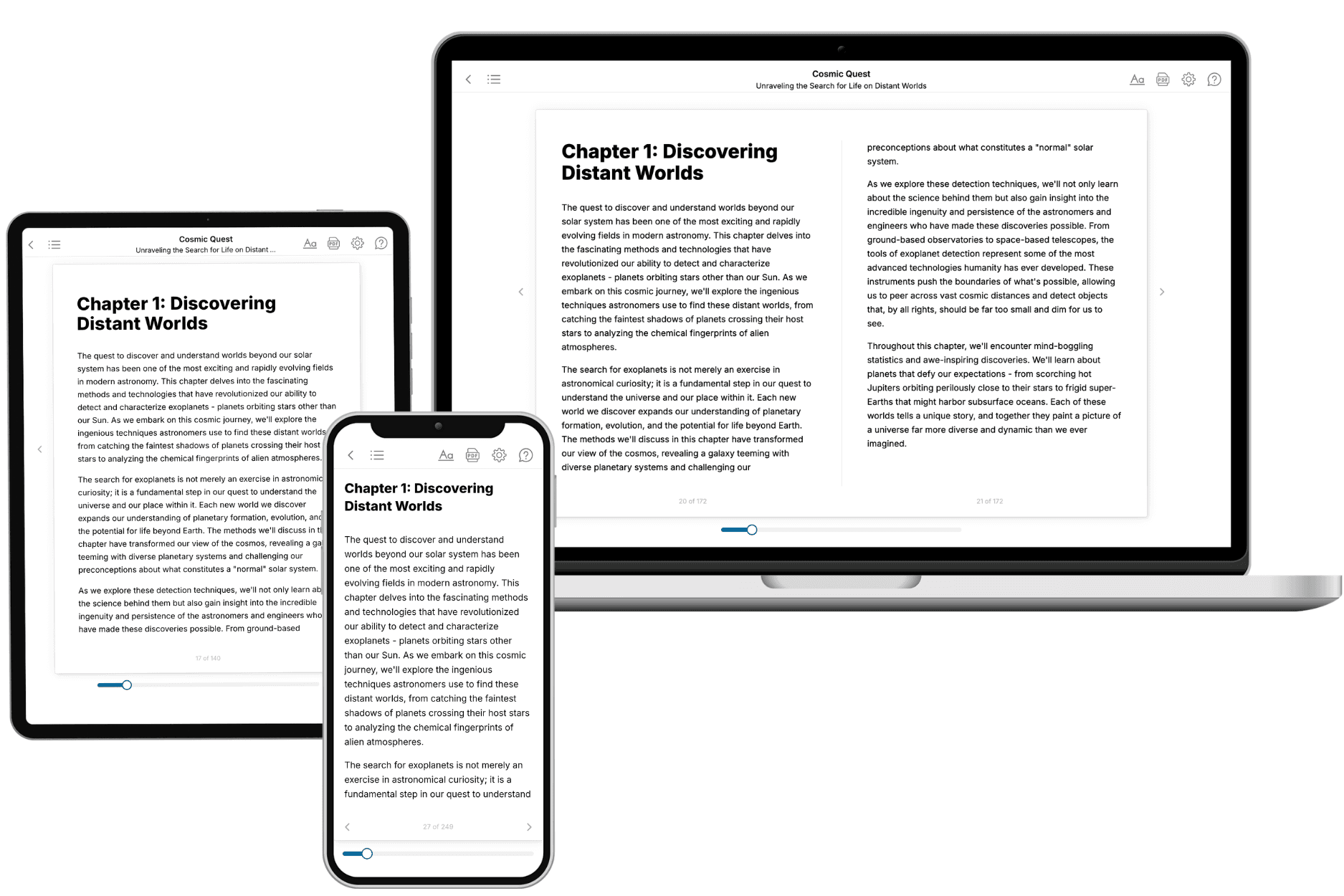
Your book is ready in 10 minutes. Read it online, download as EPUB or PDF, or send to Kindle.

Start from a template
Frequently asked questions
- What is TailoredRead?
TailoredRead creates complete, full-length nonfiction ebooks, written specifically for you. Tell us what you want to learn and why, and TailoredRead writes you a complete ebook on it, with charts, tables, and diagrams throughout. Read it online, on Kindle, or on any e-reader, or download it as a PDF or EPUB. Every book is written fresh the day you order it.
- How is the book tailored to me?
Before anything is written, you answer a few short questions about your goals, your background, and the topics you care about. Your book is then planned around your answers: written at your level, focused on your goals, and covering the topics you chose, instead of the one-size-fits-all book a store sells everyone.
- Will it read like generic AI content?
No. Your book isn't a chat transcript: it's planned chapter by chapter before a single word is written, told in a clear book voice, and explains ideas visually with charts, tables, and diagrams. After writing, every book goes through an editorial pass that polishes chapters so the book reads consistent from start to finish. Judge for yourself: browse thousands of sample books on our Explore Books page.
- How accurate is the content?
Our AI first checks whether your subject needs live research. Niche and fast-moving subjects are researched before writing, and the book plan and chapters are grounded in what it finds. After writing, every book goes through a quality pass that checks its facts and consistency, and researched books list their sources in a Notes section at the back.
- How long is the book?
You choose the length: Comprehensive (250-300 pages), Detailed (150-200 pages), Essential (70-100 pages), or Short (30-50 pages).
- Does the book include visuals?
Yes. Every book includes charts, tables, and diagrams: timelines, checklists, step-by-step guides, decision trees, comparison tables, matrices, and bar charts. A typical book includes dozens of these visual elements.
- Can I read it on Kindle? What formats can I download?
Yes. Every book can be read in our online reader or downloaded as a PDF or EPUB. The EPUB can be opened with Kindle, Apple Books, Kobo, and any e-reader. The Commercial and Author licenses also include an editable Word (DOCX) and Markdown download.
- How much does it cost?
About the price of a regular ebook. The exact price depends on your book's length and complexity, from $2 for the shortest books to $35 for the most comprehensive, and it's shown when you review your book, before you commit to anything. Each book is a one-time purchase, yours to keep, no subscription. Licenses that let you share, teach, or publish your book range from $35.99 to $49.99.
- Can I preview the book before purchasing?
Before you pay, you'll see what your book will cover: the title, a detailed description, the estimated length, and the complete chapter-by-chapter table of contents, so you know what you're getting before you decide. The full text itself is written after you purchase.
- How long does it take to create a book?
About 10 minutes. You can start reading the opening chapters while the rest is still being written.