Revolution History Books
Explore tailored Revolution History books created by our AI
Dive deep into the tumultuous world of 18th-century France and discover the enigmatic figure of Maximilien Robespierre. This captivating exploration of one of history's most controversial revolutionaries will challenge your preconceptions and offer a nuanced perspective on the man known as "The Incorruptible." From his early life in Arras to his rise as a key figure in the French Revolution, you'll follow Robespierre's journey through the corridors of power and the streets of Paris. Uncover the ideals that drove him, the decisions that defined him, and the legacy that continues to spark debate among historians and political thinkers alike. Through meticulous research and engaging storytelling, this book paints a vivid picture of Robespierre's world, bringing to life the characters, events, and ideologies that shaped the course of French history. You'll gain insights into the complexities of revolutionary politics, the origins of modern democracy, and the human cost of radical change. Whether you're a history buff or simply curious about one of the most influential periods in European history, this book offers a thought-provoking journey into the heart of the French Revolution and the mind of the man who, for better or worse, became its most iconic figure.
Discover how a single year transformed global history and set the stage for the modern world. The Russian Revolutions of 1917 were pivotal moments that toppled an empire, established the first communist state, and triggered consequences that rippled across the entire 20th century. This book walks you through the complex web of causes—from centuries of imperial rule and industrialization to the devastating impact of World War I—that made revolution possible. You'll explore the dramatic events of both the February and October revolutions, meet the key figures who shaped these upheavals, and understand how ordinary Russians experienced these extraordinary times. Beyond the headlines and heroic narratives, you'll examine the real economic hardships, military failures, and social tensions that drove millions to support radical change. This comprehensive account reveals why 1917 matters today, how it reshaped global politics and ideology, and what it teaches us about revolution, power, and historical change. Whether you're a history student, curious learner, or someone seeking to understand the roots of modern geopolitics, this book provides the context and clarity needed to grasp one of history's most consequential moments.
The Jasmine Revolution stands as one of the most consequential political upheavals of the 21st century, yet many struggle to understand what sparked it and why it mattered. This book cuts through the complexity to reveal how decades of economic hardship, political oppression, and social marginalization under President Ben Ali created conditions ripe for explosive change. You'll discover how ordinary Tunisians—street vendors, students, and workers—mobilized through social networks to challenge an entrenched dictatorship, and how their courage inspired democratic movements across the Arab world. From the self-immolation of Mohamed Bouazizi to the fall of Ben Ali's regime in just 28 days, this account examines the revolution's pivotal moments, key figures, and the diverse coalition that made change possible. More importantly, you'll understand how Tunisia navigated the turbulent transition that followed, emerging as the Arab Spring's most democratic success story while grappling with ongoing challenges. This is essential reading for anyone seeking to comprehend modern North African history and the power of popular movements to reshape nations.
The Loyalists
America's Forgotten Revolutionaries and the Fight for the Crown
The American Revolution is typically told as a triumphant story of patriots fighting for freedom. But what about those who opposed independence? Loyalists—roughly one-third of the colonial population—have been largely erased from popular memory, dismissed as traitors or forgotten entirely. Yet their story is essential to understanding America's founding. This book restores Loyalists to their rightful place in Revolutionary history. You'll discover who they really were: merchants and farmers, enslaved people and Native Americans, religious minorities and political philosophers. You'll explore their genuine concerns about independence, their experiences during the war, and the devastating consequences they faced in defeat. From property confiscation to exile, from family separation to cultural displacement, the Loyalist experience reveals uncomfortable truths about the Revolution's human cost. By examining Loyalist perspectives on constitutional governance, imperial unity, and political legitimacy, you'll gain deeper insight into the Founders' own thinking. This balanced, nuanced exploration challenges simplistic narratives and shows why understanding the Loyalists matters for understanding America itself.
The Year of Revolutions
How 1848 Reshaped Europe and Changed the Course of History
What if a single year could fundamentally reshape an entire continent's political future? The revolutions of 1848 swept across Europe like wildfire, challenging centuries of monarchical rule and inspiring millions to demand democracy, national independence, and social justice. Yet within months, most had been crushed by military force. This book explores the dramatic story of how ordinary people rose up against entrenched power, why their movements ultimately faltered, and how their legacy continues to influence our world today. From the barricades of Paris to the streets of Vienna, from the halls of Frankfurt to the mountains of Italy, discover the interconnected revolutions that nearly transformed Europe. Through vivid narratives, historical analysis, and examination of the key figures who shaped these events, you'll understand not just what happened in 1848, but why it matters for understanding modern democracy, nationalism, and social change. This is the story of a pivotal moment when history hung in the balance.
What if the American Revolution had ended not with a bang, but with a whimper—a negotiated peace that left the colonies still under British rule? The Siege of Yorktown in 1781 prevented exactly that outcome. This book reveals how a desperate military gamble, an unlikely French alliance, and the strategic brilliance of George Washington combined to create the moment that secured American independence. You'll discover the intricate military maneuvers that trapped British General Cornwallis, the naval battle that changed everything, and the grueling siege that broke British resolve. Through vivid accounts of soldiers' experiences, strategic decisions, and the personalities who shaped events, you'll understand why Yorktown mattered more than any other battle of the Revolution. This is the story of how a ragtag colonial army defeated the world's greatest military power—and how one siege made it all possible.
Discover the extraordinary story of how enslaved people in Saint-Domingue transformed themselves into free citizens and built the world's first Black republic. This book traces the Haitian Revolution from its roots in colonial oppression through the thirteen-year struggle that shook the Atlantic world. You'll encounter the brilliant military strategists, visionary leaders, and countless ordinary people who risked everything for freedom. The narrative explores the complex social hierarchies, economic forces, and ideological conflicts that made Haiti's revolution unique among the age of revolutions. You'll understand how enslaved Africans and their descendants drew on African traditions, Enlightenment principles, and practical military knowledge to defeat French armies and establish an independent nation. This comprehensive account examines the revolution's profound impact on global politics, slavery debates, and the struggle for human rights. Whether you're studying history, exploring themes of resistance and liberation, or seeking to understand a pivotal moment that reshaped the modern world, this book provides the context, analysis, and human stories that bring the Haitian Revolution to life.
The Battles of Lexington and Concord
How Two Skirmishes Ignited the American Revolution
Many assume the American Revolution began with grand declarations and philosophical debates, but the truth is far more dramatic. The Battles of Lexington and Concord on April 19, 1775, transformed colonial discontent into armed conflict in a single day of chaos, courage, and bloodshed. This book reveals how two small engagements in Massachusetts became the spark that ignited a nation's fight for independence. You'll discover the political tensions that made conflict inevitable, the personalities and decisions that shaped the battles' outcome, and how ordinary colonists became soldiers willing to die for their cause. Through detailed accounts of the midnight ride, the confrontations on the town greens, and the running battles along country roads, you'll understand how these events shifted the American colonies from seeking reconciliation to pursuing independence. This is the story of how revolution truly begins—not with a bang, but with the collision of irreconcilable visions and the courage of ordinary people standing their ground.
Lexington and Concord
The Battles That Sparked the American Revolution
The question of who fired the first shot at Lexington has echoed through American history for nearly 250 years, but the real story is far more complex and consequential than a single moment. On April 19, 1775, two small battles in Massachusetts transformed colonial grievances into armed revolution, yet most people know surprisingly little about what actually happened that day or why it mattered so profoundly. This book cuts through myth and legend to reveal the true narrative: the political miscalculations, the military strategies, the ordinary people who became soldiers, and the chain of events that made armed conflict inevitable. You'll discover how local militia networks outmaneuvered British regulars, why the colonial response was so swift and coordinated, and how these battles shifted the entire trajectory of the American independence movement. By understanding Lexington and Concord in vivid, human detail, you'll gain deeper insight into how revolutions begin and why these two small engagements became the opening chapter of a nation's founding story.
Imagine understanding one of history's most transformative periods with clarity and depth—grasping not just what happened, but why it mattered then and why it still matters now. The French Revolution reshaped the political landscape of Europe and established principles that continue to influence democratic societies worldwide. This book takes you beyond the dramatic images of guillotines and storming barricades to explore the complex forces that drove France from absolute monarchy to republic, through terror, and ultimately to empire. You'll discover how Enlightenment philosophy, economic crisis, and social inequality converged to create revolutionary conditions. You'll follow the Revolution through its distinct phases, understanding how moderate reform gave way to radical transformation and eventually authoritarian rule. Through clear analysis of key events, influential figures, and competing ideologies, you'll gain insight into the Revolution's internal contradictions and its profound impact across Europe. You'll explore how revolutionary ideals of liberty, equality, and fraternity clashed with the realities of governance, and how this tension continues to shape modern political thought. Whether you're deepening existing knowledge or seeking comprehensive understanding, this book provides the context and analysis to truly comprehend this pivotal moment in European history.
The complexity of the Iranian Revolution often gets reduced to simplistic narratives that miss the nuanced reality of how an ancient civilization transformed overnight. You've likely encountered conflicting accounts that leave you wondering: How did a modernizing nation under the Shah become an Islamic Republic? What really drove millions into the streets? This book cuts through the confusion by examining the revolution's deep historical roots, from foreign interference in Iranian affairs to the social pressures of rapid modernization. You'll discover how diverse groups—from bazaar merchants to Marxist students, from rural villagers to urban intellectuals—found common cause against the Pahlavi regime, only to see their revolution take an unexpected turn. Through careful analysis of primary sources and historical evidence, you'll understand the key figures, pivotal moments, and critical decisions that shaped the revolution's outcome. You'll explore how Ayatollah Khomeini consolidated power, why the hostage crisis became a defining moment, and how the revolution's ripples continue affecting Iran and the Middle East today. Whether you're deepening your knowledge of Middle Eastern history or seeking to understand contemporary Iranian politics, this book provides the context and clarity you need to grasp one of the twentieth century's most consequential events.
The Iranian Revolution
How a Nation Transformed the Middle East and Reshaped Global Politics
Imagine understanding one of history's most transformative political upheavals—the moment when an entire nation rejected centuries of monarchy and fundamentally rewrote its future. The Iranian Revolution of 1979 stands as a watershed moment that reshaped not just Iran, but the entire Middle East and global politics. This book takes you through the compelling story of how a diverse coalition of Iranians—from religious scholars to secular intellectuals, from workers to students—united to topple the Shah's regime and establish an Islamic Republic. You'll discover the deep historical roots of discontent, the key figures who shaped events, and the revolutionary moment itself. More importantly, you'll understand how this revolution created ripple effects across the Muslim world, influenced international relations for decades, and continues to impact global politics today. Whether you're studying history, international relations, or simply seeking to understand the modern Middle East, this comprehensive yet accessible account provides the context and clarity needed to grasp why the Iranian Revolution matters.
Flames of Change
The Untold Stories of Spanish Revolutionaries
Ignite your passion for Spanish history with "Flames of Change: The Untold Stories of Spanish Revolutionaries." This captivating exploration takes you on a thrilling journey through the lives and legacies of Spain's most influential revolutionaries. You'll discover the hidden motivations, daring actions, and profound impacts of these remarkable individuals who shaped the course of Spanish history. Delve into the heart of Spanish revolutionary movements, from the tumultuous 19th century to the modern era. You'll gain a nuanced understanding of the social, political, and cultural forces that drove these visionaries to challenge the status quo and fight for a better future. Through vivid storytelling and meticulous research, this book brings to life the triumphs, struggles, and lasting contributions of Spanish revolutionaries. You'll explore their ideologies, strategies, and the ripple effects of their actions that continue to influence Spain today. Whether you're a history buff or simply curious about the forces that shape nations, "Flames of Change" offers a compelling narrative that will deepen your appreciation for Spain's rich and complex past.
Discover the complete story of the Cuban Revolution—one of the 20th century's most transformative and controversial events. This book takes you from the corrupt Batista regime through Fidel Castro's rise to power, exploring the social, economic, and political forces that made revolution inevitable. You'll understand the revolution's early radical policies, the dramatic confrontations with the United States including the Bay of Pigs and Missile Crisis, and how Cuba became a Cold War flashpoint. Beyond the headlines, you'll examine the revolution's complex legacy: genuine improvements in healthcare and education alongside political repression and economic challenges. Whether you're studying Latin American history, interested in Cold War politics, or seeking to understand modern Cuba, this book provides the context, analysis, and nuance needed to grasp why the Cuban Revolution remains one of history's most debated turning points.
You'll gain a comprehensive understanding of one of history's most turbulent periods—the Reign of Terror during the French Revolution. This book cuts through the myths and misconceptions to reveal the complex political, social, and ideological forces that transformed France between 1793 and 1794. You'll discover how revolutionary ideals of liberty and equality descended into mass executions and political paranoia, and why thousands lost their lives to the guillotine. Through careful analysis of primary sources and modern scholarship, you'll explore the key figures who shaped this era—Robespierre, Danton, Marat, and others—and understand the mechanisms of revolutionary justice that defined the period. You'll examine the Committee of Public Safety, the Law of Suspects, and the Revolutionary Tribunal, learning how these institutions wielded unprecedented power over French citizens. Beyond the bloodshed, you'll grasp the Terror's lasting impact on modern political thought, human rights, and revolutionary movements worldwide. This book provides the historical context and analytical framework you need to understand not just what happened, but why it happened and what it means for our world today.
This book guides you through Peru's rich and complex history, beginning with the geographical foundations that shaped human settlement and civilization. You'll explore the sophisticated pre-Incan coastal societies, then examine the Incan Empire's remarkable administrative systems, engineering achievements, and cultural innovations. Moving into the colonial period, you'll understand how Spanish conquest transformed Peru's economy, society, and religion while indigenous cultures adapted and persisted. Finally, you'll trace the independence movements that emerged from colonial tensions and indigenous resistance. Throughout, you'll discover how Peru's diverse regions, from the Pacific coast to the high Andes to the Amazon basin, developed distinct yet interconnected cultures. By the end, you'll have a comprehensive understanding of how Peru evolved from multiple pre-Columbian civilizations into a unified nation, and how its indigenous heritage continues to define its identity today.
Many believe the Battle of Bunker Hill was a straightforward British victory with little significance beyond a single engagement. In reality, this June 1775 battle fundamentally altered the trajectory of the American Revolution. What began as a hastily constructed earthwork on Breed's Hill became the crucible where colonial militia proved they could inflict devastating casualties on the world's most powerful military force. This account explores the strategic decisions, logistical challenges, and human drama that unfolded across the Charlestown Peninsula. You'll discover how ammunition shortages shaped tactical doctrine, why the British paid such a terrible price for victory, and how this single battle transformed colonial confidence and recruitment. Through detailed analysis of troop movements, leadership decisions, and eyewitness accounts, this book reveals how an unplanned engagement became a turning point that demonstrated American forces could compete with professional soldiers, ultimately strengthening the resolve for independence.
The Articles of Confederation
America's First Constitution and the Path to a Stronger Union
What if the American Revolution had succeeded militarily but failed politically? The Articles of Confederation nearly made this a reality. This book explores the nation's first governing document—a bold experiment in decentralized power that ultimately proved unworkable. You'll discover how the Founding Fathers' justified fear of tyranny led them to create a government so weak it couldn't pay its debts, regulate trade, or enforce its own laws. Through vivid historical narratives and clear analysis, this book traces the economic collapse, interstate conflicts, and social unrest that forced a reckoning. Learn how the Articles' spectacular failure became the catalyst for the Constitutional Convention and shaped the federal system we know today. Whether you're studying American history, exploring the roots of federalism, or simply curious about how a nation nearly fell apart before it truly began, this book provides essential context for understanding the pivotal moment when America chose a stronger union.
The Road to Revolution
Understanding the Forces That Toppled the French Monarchy
Most people assume the French Revolution exploded suddenly in 1789, sparked by an angry mob storming the Bastille. This oversimplification misses the decades of mounting pressures that made revolution inevitable. The truth is far more complex and fascinating. France in the late 18th century was a powder keg of contradictions: a wealthy nation with a bankrupt government, an enlightened culture governed by absolute monarchy, and a society where merit mattered less than birth. Understanding why the revolution happened requires examining how financial mismanagement, social inequality, intellectual ferment, and political paralysis converged into a perfect storm. This book takes you beyond the dramatic events to explore the underlying causes that made the French Revolution possible. You'll discover how decades of expensive wars drained the treasury, why the tax system protected the wealthy while burdening the poor, and how Enlightenment philosophy transformed subjects into citizens demanding their rights. You'll see how crop failures turned theoretical grievances into desperate hunger, and how weak leadership at critical moments sealed the monarchy's fate. By understanding these interconnected causes, you'll gain insight into not just what happened, but why it had to happen.
Embark on a captivating journey through one of the most pivotal moments in world history with "The Russian Revolution Unveiled." This meticulously researched book offers a fresh perspective on the events that shook the foundations of Russian society and reverberated across the globe. You'll be transported to the streets of Petrograd as you explore the complex web of social, political, and economic factors that led to the fall of the Romanov dynasty and the rise of the Bolsheviks. Through vivid storytelling and insightful analysis, you'll gain a deeper understanding of the key figures who shaped this tumultuous period, from the last Tsar Nicholas II to the revolutionary leaders Lenin and Trotsky. As you delve into the pages of this book, you'll uncover the far-reaching consequences of the Russian Revolution, examining its impact on international relations, social movements, and political ideologies throughout the 20th century and beyond. Whether you're a history buff or simply curious about this transformative era, "The Russian Revolution Unveiled" offers a compelling and accessible exploration of a moment that changed the course of human civilization.
Revolution in Budapest
The Hungarian Uprising of 1956 and Its Impact on European History
The streets of Budapest erupt in chaos as ordinary citizens rise against an oppressive regime. The year is 1956, and Hungary is about to change the course of European history. But what led to this moment of defiance, and how did it shape the future of a nation and a continent? In "Revolution in Budapest," you'll be transported to the heart of Cold War Europe, where tensions between East and West reached a boiling point. This book offers a vivid account of the Hungarian Uprising, from its roots in post-World War II politics to its dramatic unfolding and lasting consequences. You'll gain insights into the key players, the international response, and the human stories that defined this pivotal moment. Through meticulous research and compelling narratives, you'll discover how the Hungarian people's brave stand against Soviet dominance resonated far beyond their borders. This book not only chronicles the events of 1956 but also explores their significance in the broader tapestry of European history, offering a fresh perspective on the Cold War era and its impact on modern geopolitics.
The French Revolutionary Wars
How Europe's Greatest Conflict Reshaped Nations and Ideologies
Discover how a financial crisis in France spiraled into a quarter-century of warfare that fundamentally transformed Europe. This comprehensive exploration takes you through the ideological fervor, military genius, and political upheaval that defined the French Revolutionary Wars from 1792 to 1815. You'll understand the economic collapse that triggered revolution, the radical ideologies that inspired armies, and the military innovations that changed warfare forever. Follow the rise of Napoleon from artillery officer to emperor, witness the coalition wars that reshaped the continent, and grasp why this conflict mattered more than any other in European history. Whether you're exploring how nations are born from revolution, studying military strategy, or understanding the roots of modern Europe, this book provides the context, analysis, and narrative you need to see how one nation's internal crisis became the defining event of an era.
Discover how a decade of ideological fervor transformed China and reshaped global communism. The Chinese Cultural Revolution (1966-1976) stands as one of history's most consequential yet misunderstood political upheavals. This book provides a comprehensive examination of how Mao Zedong launched a radical campaign to purify communist ideology, mobilize youth through the Red Guards, and consolidate power—with catastrophic human consequences. You'll explore the ideological foundations that drove the movement, the mechanisms of mass mobilization and violence, the factional struggles that spiraled into chaos, and the profound impact on millions of Chinese citizens. Through careful analysis of primary sources, historical accounts, and scholarly perspectives, you'll understand how the Cultural Revolution emerged from specific political circumstances, how it unfolded across different regions and institutions, and how its legacy continues to shape contemporary China. This accessible yet rigorous exploration reveals the dangers of unchecked ideological extremism and offers essential lessons about power, control, and social transformation.
John Paul Jones
Scotland's Son, America's First Naval Hero
Most accounts of John Paul Jones focus solely on his American achievements, overlooking the Scottish roots that forged his character and ambition. This incomplete picture obscures the fascinating story of how a gardener's son from Kirkcudbrightshire became the father of the American Navy. This biography examines Jones's life through the dual lens of Scottish heritage and American achievement, revealing how his identity as a Scottish emigrant shaped his revolutionary fervor and naval innovations. You'll discover the circumstances that drove John Paul from Scotland, the controversies that haunted his early career, and the battles that made him legendary. From his humble beginnings in southwestern Scotland to his dramatic naval victories against the British, his diplomatic missions in France, and his service to Catherine the Great, this book presents a complete portrait of a complex man caught between two nations. Through careful analysis of primary sources and recent scholarship, you'll understand not just what Jones accomplished, but why his story matters to both Scottish and American identity. This is the story of how Scotland's son became America's first naval hero.
The Pahlavi Dynasty
Iran's Modern Transformation and the Legacy of a Contested Era
Many assume the Pahlavi Dynasty was simply a period of Western-backed authoritarianism in Iran. In reality, this 54-year era (1925-1979) represents one of history's most dramatic national transformations—for better and worse. This book examines how two rulers took a fragmented, semi-colonial nation and built a modern state with significant regional power, while simultaneously creating the conditions for revolution. You'll discover how Reza Shah consolidated power and reformed the military, how Mohammad Reza Shah leveraged oil wealth to fuel rapid industrialization, and why modernization policies ultimately alienated the very society they aimed to transform. Through careful analysis of political decisions, economic policies, cultural shifts, and social tensions, this book reveals how the Pahlavi Dynasty reshaped Iran's identity and continues to influence Middle Eastern politics today. Whether you're studying history, understanding contemporary Iran, or exploring how modernization and tradition collide, this comprehensive guide provides the context and insights you need.
Related books you may like:
Embark on a captivating journey through one of the most pivotal moments in British history with "1066: The Year That Changed England." This meticulously researched account of the Battle of Hastings offers you a front-row seat to the events that reshaped the course of European history. Delve into the complex web of political intrigue, military strategy, and cultural shifts that led to this momentous clash. You'll gain a deep understanding of the key players - William the Conqueror, Harold Godwinson, and Harald Hardrada - and the high-stakes game of thrones they played. Through vivid storytelling and expert analysis, you'll experience the tension of the battlefield, the clash of Anglo-Saxon and Norman cultures, and the far-reaching consequences of William's victory. Discover how this single event transformed England's language, laws, and social structure, leaving an indelible mark on the nation's identity. Whether you're a history buff or simply curious about this transformative period, this book offers fresh insights and a comprehensive overview that will enrich your understanding of medieval Europe and the foundations of modern Britain.
Many assume the French Revolution ended in 1799 with Napoleon's rise to power. In reality, the struggle for democracy and social justice continued to convulse France throughout the nineteenth century. The 1848 Revolution represents a pivotal moment when ordinary people—workers, students, intellectuals, and the poor—rose up against an entrenched monarchy and demanded fundamental change. This book explores the dramatic events of that revolutionary year, from the February uprising that toppled King Louis-Philippe to the violent June Days that exposed the revolution's internal contradictions. You'll discover how economic crisis, industrial transformation, and competing political ideologies collided to reshape not just France, but the entire European continent. Through vivid narratives and careful analysis, this account reveals why 1848 mattered then and why its lessons remain relevant today for understanding how societies change, how revolutions succeed and fail, and how the pursuit of liberty continues to define our world.
Discover the pivotal events and complex forces that shaped one of the 20th century's most consequential moments. This comprehensive examination takes you through the centuries of Jewish diaspora, the rise of Zionism, and the dramatic final years leading to Israel's establishment in 1948. You'll understand how the Holocaust transformed international politics, why the British Mandate created irreconcilable tensions, and how the UN Partition Plan became a flashpoint for conflict. Through careful analysis of key figures, military campaigns, and political negotiations, you'll gain insight into how a new nation emerged from centuries of displacement and persecution—while grappling with the displacement of another people. This book presents the historical evidence, competing narratives, and lasting consequences of 1948, enabling you to understand not just what happened, but why it matters for the modern Middle East and global politics today.
Most people think the Norman Conquest was simply a military victory that happened in a single day. In reality, 1066 marked the beginning of a decades-long transformation that would fundamentally reshape English society, language, and identity. This book reveals how William the Conqueror's invasion wasn't inevitable—it emerged from a disputed succession, political intrigue, and the ambitions of ambitious leaders. Beyond the famous Battle of Hastings, you'll discover how Norman rulers consolidated power through feudalism, how the French language permanently altered English, and how a new ruling class gradually integrated with the existing population. Through vivid storytelling and careful analysis, you'll understand how this single conquest rippled across centuries, influencing everything from English law and governance to the very words we speak today. Whether you're exploring medieval history for the first time or deepening your existing knowledge, this book illuminates why 1066 remains one of history's most consequential moments—and how its effects continue to shape our world.
Create a Revolution History Book Tailored to You
Create an AI-crafted book tailored to your goals, interests, and background






Benefits of AI-tailored books
- Read one book, not ten:
- all the Revolution History knowledge you need, gathered into a single book.
- Save days of learning:
- tell us your goals, choose your topics, and the whole book is built around them.
- Learn effortlessly:
- Revolution History book written for your specific background and expertise.
- Understand at a glance:
- includes charts, tables, timelines, checklists, decision trees, and more.
- Stay current:
- written the day you order it, not years ago.
- Trust what you read:
- every book is checked for accuracy, with real research when your subject needs it.
Create your unique book in 3 steps
- 1. Select your focus
Select the focus of your Revolution History book and share your background
- 2. Personalize your book
Specify your goals and choose sub-topics to include
- 3. Get your tailored book
Your book is ready in 10 minutes. Read it online, download as EPUB or PDF, or send to Kindle.


Frequently asked questions
- What is TailoredRead?
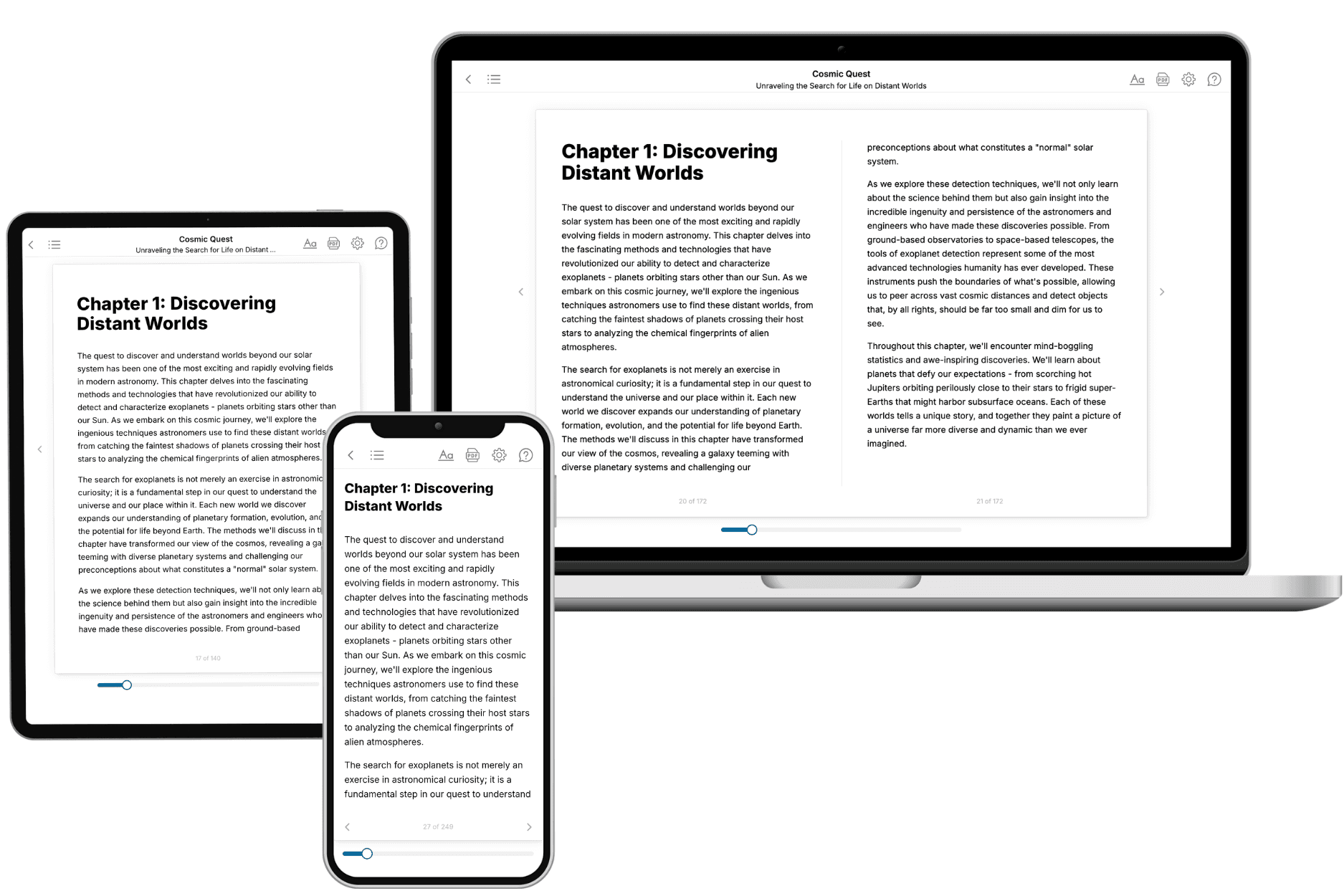
TailoredRead creates complete, full-length nonfiction ebooks, written specifically for you. Tell us what you want to learn and why, and TailoredRead writes you a complete ebook on it, with charts, tables, and diagrams throughout. Read it online, on Kindle, or on any e-reader, or download it as a PDF or EPUB. Every book is written fresh the day you order it.
- How is the book tailored to me?
Before anything is written, you answer a few short questions about your goals, your background, and the topics you care about. Your book is then planned around your answers: written at your level, focused on your goals, and covering the topics you chose, instead of the one-size-fits-all book a store sells everyone.
- Will it read like generic AI content?
No. Your book isn't a chat transcript: it's planned chapter by chapter before a single word is written, told in a clear book voice, and explains ideas visually with charts, tables, and diagrams. After writing, every book goes through an editorial pass that polishes chapters so the book reads consistent from start to finish. Judge for yourself: browse thousands of sample books on our Explore Books page.
- How accurate is the content?
Our AI first checks whether your subject needs live research. Niche and fast-moving subjects are researched before writing, and the book plan and chapters are grounded in what it finds. After writing, every book goes through a quality pass that checks its facts and consistency, and researched books list their sources in a Notes section at the back.
- How long is the book?
You choose the length: Comprehensive (250-300 pages), Detailed (150-200 pages), Essential (70-100 pages), or Short (30-50 pages).
- Does the book include visuals?
Yes. Every book includes charts, tables, and diagrams: timelines, checklists, step-by-step guides, decision trees, comparison tables, matrices, and bar charts. A typical book includes dozens of these visual elements.
- Can I read it on Kindle? What formats can I download?
Yes. Every book can be read in our online reader or downloaded as a PDF or EPUB. The EPUB can be opened with Kindle, Apple Books, Kobo, and any e-reader. The Commercial and Author licenses also include an editable Word (DOCX) and Markdown download.
- How much does it cost?
About the price of a regular ebook. The exact price depends on your book's length and complexity, from $2 for the shortest books to $35 for the most comprehensive, and it's shown when you review your book, before you commit to anything. Each book is a one-time purchase, yours to keep, no subscription. Licenses that let you share, teach, or publish your book range from $35.99 to $49.99.
- Can I preview the book before purchasing?
Before you pay, you'll see what your book will cover: the title, a detailed description, the estimated length, and the complete chapter-by-chapter table of contents, so you know what you're getting before you decide. The full text itself is written after you purchase.
- How long does it take to create a book?
About 10 minutes. You can start reading the opening chapters while the rest is still being written.