German History Books
Explore tailored German History books created by our AI
Imagine standing at the Brandenburg Gate, witnessing the fall of the Berlin Wall and the dawn of a new era in European history. This pivotal moment marked the beginning of German Reunification, a process that would reshape not only Germany but the entire continent. In "Bridging the Divide," you'll be transported to this transformative period, gaining a deep understanding of the events that led to the reunification of East and West Germany and its far-reaching consequences. As you delve into the pages of this book, you'll uncover the complex web of political, social, and economic factors that both hindered and facilitated the reunification process. You'll gain insights into the challenges faced by both East and West Germans as they worked to integrate two vastly different systems into a cohesive whole. From the fall of the Berlin Wall to the official reunification and beyond, you'll explore how this monumental event reshaped German identity, European politics, and global dynamics. Whether you're a history enthusiast or simply curious about one of the most significant events of the 20th century, "Bridging the Divide" offers a compelling narrative that brings the story of German Reunification to life. Through engaging storytelling and in-depth analysis, you'll gain a nuanced understanding of this crucial chapter in European history and its lasting impact on the world we live in today.
Rhine Rivals
A Tale of Two Cities: Düsseldorf and Köln Through the Ages
Embark on a captivating journey through time along the banks of the mighty Rhine River. "Rhine Rivals: A Tale of Two Cities" offers an immersive exploration of Düsseldorf and Köln, two of Germany's most fascinating urban centers. This meticulously researched narrative weaves together the rich tapestries of both cities, from their humble beginnings to their modern-day grandeur. Discover the origins of Köln as the Roman Colonia Agrippina and witness its growth into a medieval powerhouse, crowned by the awe-inspiring Köln Cathedral. Follow Düsseldorf's transformation from a small medieval settlement to a vibrant cultural and economic hub. You'll gain insights into the cities' roles in Rhine River trade, their devastation during World War II, and their remarkable post-war reconstructions. Through vivid storytelling and expert analysis, you'll uncover the unique character of each city while drawing fascinating parallels between their developments. Whether you're a history enthusiast, a lover of German culture, or simply curious about urban evolution, this book offers a compelling narrative that brings the past to life and illuminates the present.
Forging a Nation
The Dramatic Story of German Unification and Its Impact on European History
Discover the fascinating journey of how modern Germany came to be. "Forging a Nation" takes you on a captivating exploration of the complex and dramatic process of German unification. From the aftermath of the Napoleonic Wars to the proclamation of the German Empire, you'll gain a deep understanding of the political, social, and cultural forces that shaped this pivotal moment in European history. Through vivid storytelling and insightful analysis, you'll explore the roles of key figures like Otto von Bismarck, witness the power struggles between Prussia and Austria, and understand the impact of events such as the Revolutions of 1848 and the Franco-Prussian War. You'll also discover how the unification process influenced Germany's neighbors and set the stage for future European developments. This book goes beyond mere facts and dates, offering you a nuanced perspective on the challenges, triumphs, and lasting consequences of German unification. You'll gain valuable insights into the formation of national identity, the balance of power in 19th-century Europe, and the roots of modern German society. Whether you're a history enthusiast or simply curious about the forces that have shaped our world, "Forging a Nation" will enrich your understanding of this crucial chapter in European history.
The Weimar Experiment
Democracy, Crisis, and the Making of Modern Germany
What if Germany's first democracy was doomed not by inevitability, but by a series of critical choices that could have gone differently? The Weimar Republic stands as one of history's most fascinating and tragic experiments in democratic governance, emerging from the ruins of World War I only to collapse fourteen years later under the weight of economic crisis and political extremism. This comprehensive exploration takes you deep into the heart of Germany's tumultuous interwar period, revealing how a nation attempted to reinvent itself as a modern democracy while grappling with defeat, revolution, and social upheaval. You'll discover how the republic's founders crafted a progressive constitution that promised equality and freedom, yet contained fatal flaws that would ultimately contribute to its downfall. From the revolutionary chaos of 1918-1919 through the golden age of the mid-1920s to the final crisis years, you'll witness how ordinary Germans navigated extraordinary circumstances. The book illuminates the vibrant cultural renaissance that flourished alongside political instability, the economic disasters that shattered public confidence, and the rise of extremist movements that exploited democratic freedoms to destroy democracy itself. Through careful analysis of key events, personalities, and social forces, you'll gain essential insights into how democracies can both thrive and fail, making this historical study remarkably relevant to understanding political challenges in our own time. The Weimar Republic's story is not just German history—it's a crucial chapter in the broader narrative of modern democracy's struggles and possibilities.
German Historians
Architects of National Memory and Identity
Imagine holding in your hands the key to understanding how German national identity has been shaped through the lens of its most influential historians. "German Historians: Architects of National Memory and Identity" opens a window into the fascinating world of German biographical writing and its profound impact on the nation's self-perception. This book takes you on an intellectual journey through the lives and works of Germany's most prominent historians, revealing how their approaches to biography have influenced the way Germans understand their own history and culture. You'll discover the intricate connections between historical writing and the formation of national consciousness, gaining insights into the power of narrative in shaping collective memory. From the groundbreaking methodologies of 19th-century scholars to the critical perspectives of modern historians, this book illuminates the evolution of German historiography and its role in addressing complex questions of identity, ethnicity, and nationhood. You'll explore how these historians navigated political upheavals, societal changes, and intellectual currents to produce works that continue to resonate in contemporary discussions of German heritage. Whether you're a history enthusiast, a student of German culture, or simply curious about the forces that shape national narratives, this book offers a rich tapestry of ideas and personalities that have left an indelible mark on Germany's historical landscape. Prepare to gain a deeper appreciation for the art of biography and its power to illuminate the soul of a nation.
Lifeline to Freedom
The Berlin Airlift and the Dawn of the Cold War
Imagine standing on the tarmac of Tempelhof Airport in 1948, watching as plane after plane lands, bringing vital supplies to a city under siege. The roar of engines fills the air, a constant reminder of the determination and ingenuity that would soon change the course of history. This is the world you'll step into with "Lifeline to Freedom: The Berlin Airlift and the Dawn of the Cold War." As you delve into the pages of this book, you'll find yourself at the heart of one of the most pivotal moments in post-World War II history. You'll witness the rising tensions between former allies, the strategic decisions that shaped the future of Europe, and the extraordinary efforts of those who refused to let a city fall to oppression. Through vivid narratives and insightful analysis, you'll gain a deep understanding of the political chess game that unfolded in the skies over Berlin. You'll explore the logistical challenges of supplying an entire city by air, the personal stories of the pilots who risked their lives daily, and the resilience of the Berliners who endured months of hardship. This book doesn't just recount history; it brings it to life. You'll feel the urgency of the crisis, the weight of the decisions made by world leaders, and the hope that each successful flight brought to the people of Berlin. By the time you turn the last page, you'll have gained not just knowledge, but a profound appreciation for the power of human determination in the face of seemingly insurmountable odds.
Masters of Expression
The Lives, Legacies, and Cultural Impact of Germany's Greatest Artists
Discover how Germany's greatest artists transformed not just their nation, but the entire trajectory of Western culture. This book takes you beyond museum labels and concert programs to reveal the compelling personal stories, creative struggles, and historical forces that shaped artistic giants across painting, sculpture, music, literature, and theater. You'll explore how German artists responded to revolution, war, exile, and social change—and how their innovations in technique, philosophy, and artistic vision continue to resonate today. From Renaissance masters to contemporary figures, learn how these creators navigated patronage systems, political pressures, and the relentless pursuit of artistic truth. Whether you're an art enthusiast, history buff, or simply curious about the human stories behind cultural achievement, this book illuminates the interconnected lives and legacies of the artists who defined an era and influenced generations to come.
Discover how a single structure became the defining symbol of Cold War division and ultimately a monument to human determination. This comprehensive exploration traces the Berlin Wall from its shocking construction in 1961 through its dramatic collapse in 1989, examining the political calculations, personal tragedies, and extraordinary acts of courage that defined nearly three decades of separation. You'll understand the ideological battle between East and West, the daily realities of families torn apart, and the remarkable chain of events that led to reunification. Through vivid historical narratives, personal accounts, and geopolitical analysis, this book reveals how the wall's rise and fall shaped not just Germany, but the entire trajectory of modern world history. Whether you're exploring Cold War history or seeking to understand how ordinary people navigate extraordinary circumstances, this account illuminates one of history's most pivotal moments and its enduring lessons about freedom, resilience, and change.
German Expressionism
Art, Politics, and Rebellion in Early 20th Century Germany
Many assume German Expressionism was simply an avant-garde art movement focused on aesthetic innovation. In reality, it was a profound cultural rebellion rooted in the anxieties and upheavals of early 20th-century Germany. This book explores how artists responded to industrialization, war, and social transformation through radical new forms of visual expression. You'll discover how Expressionist painters, sculptors, and printmakers used distorted forms, vibrant colors, and psychological intensity to capture the inner emotional landscape of their turbulent era. From the revolutionary Die Brücke group to Wassily Kandinsky's spiritual abstractions, you'll understand the philosophical foundations and artistic techniques that defined the movement. The book also examines how political forces—particularly Nazi suppression of Expressionism as "degenerate art"—reveal the dangerous intersection of culture and authoritarianism. By tracing Expressionism's influence on film, theater, and contemporary art, you'll gain insight into how artistic movements shape and reflect historical moments, and why creative freedom remains essential to society.
The Clash of Empires
Unraveling the Franco-Prussian War and Its Lasting Impact on Europe
You might think the Franco-Prussian War was just another conflict in Europe's tumultuous history, but its significance extends far beyond the battlefields of 1870-1871. This pivotal moment reshaped the balance of power in Europe and set the stage for decades of geopolitical tension. The Clash of Empires takes you on a captivating journey through this crucial period, offering fresh insights into the complex web of alliances, ambitions, and miscalculations that led to war. You'll discover how the conflict between France and Prussia was more than just a military engagement – it was a clash of cultures, ideologies, and visions for the future of Europe. From the political maneuverings of Napoleon III and Otto von Bismarck to the dramatic siege of Paris, this book brings the Franco-Prussian War to life in vivid detail. You'll gain a deeper understanding of how this conflict influenced the formation of the German Empire, weakened France's position on the continent, and sowed the seeds for future European conflicts. Whether you're a history buff or simply curious about the forces that shaped modern Europe, The Clash of Empires offers a compelling and accessible exploration of this often-overlooked but profoundly important war.
Embark on an extraordinary journey through a millennium of European history with "The Holy Roman Empire: A Thousand Years of Power, Politics, and Cultural Legacy in the Heart of Europe." This captivating exploration delves into the complex and fascinating story of one of the most enduring political entities in Western civilization. From its inception under Charlemagne to its dissolution in the face of Napoleonic conquest, you'll discover how the Holy Roman Empire shaped the political, religious, and cultural landscape of medieval and early modern Europe. Uncover the intricate power dynamics between emperors, popes, and princes, and witness the empire's evolution through pivotal events such as the Investiture Controversy, the Reformation, and the Thirty Years' War. Through vivid narratives and insightful analysis, you'll gain a deeper appreciation for the empire's lasting legacy on modern European institutions, national identities, and cultural traditions. Whether you're a history buff or simply curious about the forces that molded contemporary Europe, this book offers a rich and accessible account of a crucial chapter in world history.
The Year of Revolutions
How 1848 Reshaped Europe and Changed the Course of History
What if a single year could fundamentally reshape an entire continent's political future? The revolutions of 1848 swept across Europe like wildfire, challenging centuries of monarchical rule and inspiring millions to demand democracy, national independence, and social justice. Yet within months, most had been crushed by military force. This book explores the dramatic story of how ordinary people rose up against entrenched power, why their movements ultimately faltered, and how their legacy continues to influence our world today. From the barricades of Paris to the streets of Vienna, from the halls of Frankfurt to the mountains of Italy, discover the interconnected revolutions that nearly transformed Europe. Through vivid narratives, historical analysis, and examination of the key figures who shaped these events, you'll understand not just what happened in 1848, but why it matters for understanding modern democracy, nationalism, and social change. This is the story of a pivotal moment when history hung in the balance.
The Thirty Years' War
Europe's Bloodiest Conflict and the Birth of the Modern State System
Many assume the Thirty Years' War was simply a religious conflict between Catholics and Protestants. In reality, this devastating struggle (1618-1648) was a complex web of religious fervor, dynastic ambition, and geopolitical maneuvering that fundamentally reshaped Europe. This book cuts through the complexity to reveal how religious differences became tools for political power, how entire regions were depopulated by warfare and disease, and how one peace treaty established principles that still govern international relations today. You'll discover why Sweden became a major power, how France consolidated its dominance, and why the Holy Roman Empire never recovered its authority. By examining the war's military innovations, economic consequences, and diplomatic solutions, you'll gain insight into how Europe transformed from a religiously fractured continent into a system of sovereign states. This is the story of how catastrophic conflict created the modern world.
Architects of Innovation
The Lives and Legacies of Germany's Greatest Scientific Minds
Discover how a small nation produced some of history's most brilliant scientific minds and fundamentally changed our understanding of the universe. From the laws of thermodynamics to quantum mechanics, from medical breakthroughs to chemical innovations, German scientists have left an indelible mark on human knowledge and progress. This book explores the lives, achievements, and lasting legacies of these remarkable individuals—the visionaries who asked bold questions, conducted groundbreaking experiments, and developed theories that continue to guide scientific inquiry today. You'll learn not just what they discovered, but how they thought, what drove them, and how their work emerged from a unique cultural and historical context. Whether you're fascinated by the history of science, interested in understanding how great minds work, or simply curious about the people behind the discoveries that shaped our world, this exploration of German scientific achievement offers compelling insights into human ingenuity and the pursuit of knowledge.
Imagine walking through a building where every element serves a purpose, where beauty emerges naturally from function, and where the design speaks to both your practical needs and your aesthetic sensibilities. This is the Bauhaus legacy—a revolutionary approach to architecture and design that emerged in 1920s Germany and fundamentally transformed how we build, create, and inhabit spaces. This book takes you on a comprehensive journey through Bauhaus architecture, from its idealistic beginnings in Weimar to its global influence today. You'll discover how visionary educators and designers rejected ornamental excess in favor of honest materials and geometric clarity. You'll meet the pioneering figures who shaped the movement and understand the philosophical principles that made Bauhaus so radical for its time—and so relevant now. Whether you're an architecture student, a design professional, or simply curious about how the spaces around you came to be, this exploration reveals why Bauhaus remains the foundation of modern design thinking. Learn how a school that existed for just 14 years created principles that continue to guide architects, designers, and creators worldwide, proving that great ideas transcend time and circumstance.
The Reformation Revolution
How Martin Luther's 95 Theses Changed the Course of Christianity
Step into the tumultuous world of 16th-century Europe, where a single act of defiance ignited a firestorm that would reshape the Christian faith forever. "The Reformation Revolution" takes you on an exhilarating journey through the Protestant Reformation, a pivotal moment in history that challenged centuries of religious tradition and sparked a new era of spiritual and intellectual freedom. As you delve into the pages of this book, you'll witness the courage and conviction of reformers who dared to question the established order. From the thunderous impact of Martin Luther's 95 Theses to the spread of new ideas across Europe, you'll gain a deep understanding of the forces that drove this monumental shift in Christian thought and practice. Discover how the Reformation's ripple effects extended far beyond the realm of religion, influencing art, politics, education, and the very fabric of society. Through vivid storytelling and insightful analysis, you'll explore the complex web of events that led to the birth of Protestant denominations and the lasting changes in the Catholic Church. By the end of this illuminating journey, you'll have a newfound appreciation for the enduring legacy of the Reformation and its continued relevance in shaping our modern world.
Discover how German architecture tells the story of a nation's evolution, ambitions, and values across centuries. This comprehensive guide takes you through the major architectural movements that shaped Germany—from soaring Gothic cathedrals and ornate Baroque palaces to the revolutionary Bauhaus and cutting-edge contemporary designs. You'll learn how each era's buildings reflect the political, social, and technological forces of their time, while gaining insight into the design principles that made German architecture influential worldwide. Whether you're learning German, studying cultural history, or simply fascinated by how buildings embody national identity, this book connects architectural styles to the cultural context that created them. Explore the regional differences that make German architecture diverse, understand the vocabulary that architects use, and see how modern Germany continues to innovate in sustainable and socially conscious design. By the end, you'll appreciate German buildings not just as structures, but as windows into the German character and worldview.
Kulturschatz
Unveiling the Rich Tapestry of German Culture for Language Learners
Many language learners focus solely on grammar and vocabulary, overlooking the crucial role that cultural understanding plays in true fluency. Kulturschatz shatters this misconception by immersing you in the vibrant world of German traditions, customs, and daily life. This comprehensive guide takes you beyond textbook German, offering a deep dive into the heart of German culture. You'll explore everything from traditional festivals and culinary delights to social etiquette and contemporary lifestyle. Each chapter not only enriches your cultural knowledge but also provides context for language use, helping you grasp nuances that mere translation can't convey. Kulturschatz is your passport to authentic German experiences. Whether you're planning a trip, preparing for a study abroad program, or simply want to converse more naturally with German speakers, this book equips you with the cultural intelligence to navigate German society with confidence. Embrace the Kulturschatz and watch as your language skills and cultural appreciation flourish hand in hand.
Masters of Space and Form
The Lives and Legacies of Germany's Greatest Architects
Discover how a small group of visionary architects transformed not just Germany, but the entire world's approach to design and construction. This book traces the remarkable stories of Germany's most influential architects—from the neoclassical elegance of Karl Friedrich Schinkel to the revolutionary modernism of Walter Gropius and Ludwig Mies van der Rohe. You'll explore how these creative minds navigated political upheaval, technological advancement, and cultural change to develop design philosophies that still guide architects today. Through detailed examinations of their most iconic works and the principles that guided their designs, you'll understand how German architects pioneered functionalism, sustainable design, and the integration of art with everyday life. This exploration reveals not just what these architects built, but why their ideas matter—and how their legacy continues to shape the spaces where we live, work, and gather.
The Berlin Airlift
A Turning Point in US Cold War Strategy
Discover the gripping story of the Berlin Airlift, a remarkable feat of logistics and determination that shaped the course of the Cold War. This book takes you behind the scenes of one of the most intense confrontations between the United States and the Soviet Union, revealing how a city's survival became a symbol of Western resolve. You'll explore the intricate details of the Berlin Blockade, from the political tensions that led to its implementation to the heroic efforts of Allied pilots who kept West Berlin supplied against overwhelming odds. Through vivid narratives and insightful analysis, you'll gain a deep understanding of the strategic decisions, technological innovations, and human stories that defined this critical moment in history. As you delve into the pages of this book, you'll uncover the long-lasting consequences of the Berlin Airlift on US foreign policy, NATO's formation, and the broader landscape of international relations. You'll also gain valuable insights into the leadership styles of key figures like President Truman, General Lucius Clay, and Soviet leader Joseph Stalin, and how their actions during this crisis influenced the trajectory of the Cold War. Whether you're a history buff or simply curious about this pivotal event, "The Berlin Airlift: A Turning Point in US Cold War Strategy" offers a compelling and comprehensive look at a moment that tested American resolve and reshaped the post-World War II world order.
The Eastern Gamble
Operation Barbarossa and the Turning Point of World War II
Step into the pivotal moment when Nazi Germany launched the largest military invasion in human history against the Soviet Union. This comprehensive examination takes you through the strategic planning, brutal execution, and ultimate failure of Operation Barbarossa, revealing how this single campaign reshaped the entire trajectory of World War II. You'll discover the intricate web of political calculations, military strategies, and human decisions that led to June 22, 1941, when over three million Axis troops crossed into Soviet territory. Through detailed analysis of battle tactics, logistical challenges, and leadership choices, you'll understand how initial German successes gave way to devastating setbacks that would ultimately seal the Third Reich's fate. From the frozen battlefields of Moscow to the siege of Leningrad, you'll explore how weather, terrain, and Soviet resilience combined to halt what seemed like an unstoppable German war machine. The book examines the human cost of this massive conflict while analyzing the strategic miscalculations that turned Hitler's eastern gamble into a catastrophic overreach. By the final pages, you'll possess a complete understanding of how Operation Barbarossa became the turning point that transformed World War II from a European conflict into a global struggle, setting the stage for the Cold War and fundamentally altering the balance of world power for generations to come.
Berlin's Last Stand
The Dramatic Fall of Nazi Germany's Capital in World War II
Have you ever wondered what it was like to witness the fall of one of history's most notorious regimes? "Berlin's Last Stand" takes you to the heart of the action as the Allied forces converge on the German capital in the final days of World War II. This gripping account brings to life the intensity, chaos, and human drama of urban warfare on an unprecedented scale. You'll experience the relentless advance of Soviet troops from the east and the determined push of Western Allies from the west. Through vivid storytelling and meticulous research, you'll gain a deeper understanding of the strategic decisions, tactical maneuvers, and personal sacrifices that shaped this crucial moment in history. From the desperate defense mounted by the remaining German forces to the plight of civilians caught in the crossfire, this book offers a 360-degree view of the battle that brought the European theater of World War II to its climactic end. You'll explore the political implications of Berlin's capture, the race between Allied powers to reach the city first, and the far-reaching consequences of this momentous event. "Berlin's Last Stand" is not just a military history; it's a compelling narrative that brings the past to life, offering valuable insights into leadership, strategy, and the human spirit in times of extreme adversity. Whether you're a history buff or simply curious about one of the 20th century's defining moments, this book will leave you with a profound understanding of the forces that shaped our modern world.
The winter of 1944 brought the largest and bloodiest battle fought by American forces in World War II. In the snow-covered forests of the Ardennes, over a million soldiers clashed in a desperate struggle that would determine the fate of Western Europe. This book takes you deep into the strategic calculations, tactical decisions, and human experiences that defined this pivotal moment in history. You'll discover how Hitler conceived his audacious plan to split the Allied armies, why Allied intelligence failed to detect the massive German buildup, and how ordinary soldiers endured extraordinary conditions to hold critical positions. Through careful analysis of command decisions, battlefield tactics, and personal accounts, you'll gain insight into what made this battle a turning point. From the initial shock of the German assault to the heroic defense of Bastogne, from the clearing skies that brought Allied airpower to bear to the final German retreat, you'll understand not just what happened, but why it mattered. This comprehensive examination reveals how the Battle of the Bulge exhausted Germany's last reserves and set the stage for Allied victory in Europe.
The Architecture of Atrocity
Understanding Concentration Camps in World War II
Gain a comprehensive understanding of one of history's darkest chapters through a systematic examination of concentration camps during World War II. This book provides you with the historical context, operational mechanics, and human stories that define this tragic period, helping you grasp both the immediate horrors and lasting consequences of systematic persecution. You'll explore the evolution of these camps from early detention facilities to instruments of mass murder, understanding how bureaucratic systems enabled unprecedented atrocities. Through careful analysis of survivor testimonies, liberation accounts, and historical documentation, you'll develop a nuanced appreciation for both the depths of human cruelty and the remarkable resilience of those who endured. The book examines the international response, the challenges of liberation and rehabilitation, and the ongoing efforts to preserve memory and prevent future genocides. You'll discover how these events shaped modern human rights law and continue to influence contemporary discussions about persecution and justice. This educational resource serves as both a historical record and a moral compass, providing you with the knowledge needed to understand this critical period while honoring the memory of those who suffered and died.
When the Wall Came Down
How America Won the Cold War and Reshaped the World
Discover how the Cold War—the defining conflict of the 20th century—came to an unexpected end and transformed global politics forever. This book takes you through the final decades of superpower tension, revealing the economic pressures, political miscalculations, and bold decisions that led to the Soviet Union's collapse. You'll understand how Reagan's military strategy, Gorbachev's reform gamble, and the courage of ordinary people in Eastern Europe combined to bring down the Iron Curtain. More than just a historical account, this book explores what America's Cold War victory meant for the world and why the consequences of that triumph continue to shape international relations today. Whether you're interested in understanding recent history, geopolitics, or how superpowers rise and fall, you'll gain essential insights into one of history's most pivotal moments and its lasting legacy.
Munich Beer Halls
The Complete Guide to Bavaria's Most Iconic Gathering Places
Many travelers visit Munich only to experience the same crowded, overpriced beer halls as thousands of others, missing the authentic Bavarian culture that makes these establishments truly special. This guide cuts through the tourist noise to reveal what makes Munich's beer halls legendary gathering places—and how to experience them like a local. You'll discover the history behind each major hall, learn the unwritten rules that separate insiders from outsiders, and find hidden gems where locals actually spend their evenings. From navigating the massive Hofbräuhaus to discovering intimate neighborhood beer gardens, you'll understand the traditions, food, and beer styles that define Bavarian hospitality. Whether you're planning your first visit or returning to explore deeper, this guide provides the insider knowledge needed to experience Munich's beer hall culture authentically, respectfully, and memorably.
Discover how a small island nation faced down the most powerful military force in Europe and emerged victorious in one of history's most consequential battles. The Battle of Britain stands as a turning point in World War II—the moment when Nazi Germany's seemingly unstoppable advance was halted in the skies above England. This account takes you through the strategic calculations, technological innovations, and human courage that defined this pivotal conflict. You'll explore how the RAF's revolutionary radar systems and tactical innovations countered the Luftwaffe's numerical superiority, how political leadership shaped critical decisions, and how ordinary citizens endured the devastating Blitz. By examining the military strategies, key personalities, and broader historical context, you'll understand why this battle mattered not just for Britain, but for the entire course of European history. This is the story of how determination, innovation, and resolve changed the world.
The Enlightenment Revolution
How Reason Transformed Europe and Shaped the Modern World
The complexity of understanding how a single historical period could so dramatically reshape human civilization often overwhelms those seeking to grasp the true significance of the Age of Enlightenment. This comprehensive exploration cuts through the confusion by revealing how 18th-century European thinkers fundamentally altered the course of human history through the power of reason and scientific inquiry. You'll discover how philosophers like Voltaire, Rousseau, and Diderot challenged centuries of traditional authority, creating intellectual frameworks that still govern our modern world. From the coffeehouses of London to the salons of Paris, you'll witness how revolutionary ideas spread across Europe, transforming everything from government and religion to science and social customs. This book illuminates the connections between Enlightenment principles and the democratic revolutions that followed, showing how concepts of individual liberty, separation of powers, and natural rights emerged from this remarkable period. You'll understand how the Scientific Revolution provided the foundation for rational thinking and how the Encyclopedia project democratized knowledge in unprecedented ways. By the end, you'll possess a clear understanding of why the Enlightenment remains one of history's most influential periods and how its legacy continues to shape contemporary debates about reason, progress, and human nature.
The overwhelming complexity of Expressionist art movements often leaves even knowledgeable enthusiasts struggling to distinguish between different groups, understand their historical significance, and properly catalog their works. With dozens of artists, multiple national movements, and evolving styles spanning several decades, navigating this revolutionary period requires more than surface-level familiarity. This comprehensive guide cuts through the confusion by providing clear frameworks for understanding each major Expressionist movement, from German pioneers like Die Brücke and Der Blaue Reiter to international variations across Europe and America. You'll discover how to identify key characteristics, understand the social and cultural forces that shaped these artists, and develop the skills needed to properly document and catalog Expressionist works. Through detailed analysis of major works, artist profiles, and practical cataloging techniques, you'll gain the confidence to engage with Expressionist art on a deeper level. Whether you're building a collection, working in a museum, or simply passionate about this transformative period in art history, this book provides the tools and knowledge you need to become a true expert in Expressionist movements. By the end, you'll possess both the theoretical understanding and practical skills to navigate the complex world of Expressionist art with authority and insight, making informed decisions about attribution, significance, and historical context.
The Revolutionary Storm
How the Napoleonic Wars Reshaped Europe and Changed the World Forever
Many people think the Napoleonic Wars were simply about one man's ambition to conquer Europe. This common misconception overlooks the profound revolutionary forces that created Napoleon and drove two decades of unprecedented conflict across the continent. You'll discover how the French Revolution unleashed ideas and energies that could not be contained within France's borders, leading to wars that fundamentally altered European society, politics, and culture. This comprehensive exploration reveals how revolutionary ideals of liberty, equality, and nationalism spread through conquest and resistance, creating the modern European state system. Through detailed analysis of major campaigns, diplomatic maneuvering, and social transformation, you'll understand how these conflicts went far beyond traditional dynastic wars. You'll explore the military innovations that revolutionized warfare, the economic strategies that attempted to reshape global trade, and the cultural changes that awakened national consciousness across Europe. From the chaos of revolutionary France to the final defeat at Waterloo and the Congress of Vienna, you'll gain insight into how this pivotal period established patterns of international relations, legal systems, and national identities that continue to influence our world today.
The Battle of the Somme stands as one of history's most devastating conflicts, yet many struggle to understand why it happened, what made it so catastrophic, and why it still matters today. This book cuts through the complexity to reveal how a single battle reshaped European history, military strategy, and national identity. You'll discover the political tensions and military miscalculations that led to the offensive, follow the experiences of soldiers across multiple nations, and explore how the Somme's unprecedented scale of destruction forced the world to reconsider warfare itself. From the trenches of northern France to the halls of power in Paris and London, this account examines both the grand strategy and the human reality of industrial-scale conflict. Whether you're interested in military history, European politics, or understanding how societies cope with catastrophic loss, this book provides the context, analysis, and narrative you need to grasp why the Somme remains a pivotal moment in human history.
The Soaring Spirit
Understanding Gothic Architecture and Its Enduring Legacy
Deepen your appreciation for one of history's most ambitious architectural achievements. This comprehensive exploration takes you beyond the soaring spires and stained glass windows to understand the revolutionary engineering, cultural forces, and aesthetic philosophy that defined Gothic architecture. You'll discover how medieval builders solved complex structural challenges, why light became architecture's primary medium, and how regional traditions created distinct Gothic expressions across Europe. Through detailed analysis of iconic cathedrals and lesser-known masterpieces, you'll gain insight into the construction processes, symbolic programs, and social contexts that shaped these extraordinary buildings. Learn to read Gothic buildings as sophisticated texts that reveal medieval worldviews, technological capabilities, and artistic ambitions. Explore how the Gothic legacy influenced later architectural movements and continues to resonate in contemporary design. Whether you're studying architectural history, planning cathedral visits, or simply fascinated by these magnificent structures, you'll develop a nuanced understanding that transforms how you see and interpret Gothic architecture's enduring power and relevance.
Discover how a single maritime disaster reshaped the course of world history. On May 7, 1915, the RMS Lusitania sank off the Irish coast, killing nearly 1,200 people and shocking the world. This book examines the events leading to that fateful day, the immediate aftermath, and the profound consequences that rippled across continents and decades. You'll understand the military strategies behind Germany's submarine campaign, the geopolitical tensions that made the sinking so consequential, and how public reaction to the tragedy accelerated America's path toward entering World War I. Through detailed historical analysis and compelling narratives, you'll explore the complex questions the sinking raised about civilian casualties, maritime law, and the ethics of modern warfare. Whether you're a history student, a World War I enthusiast, or simply curious about pivotal moments that changed history, this book provides the context, evidence, and perspective needed to fully grasp why the Lusitania matters today.
Discover the untold story of one of World War II's most dramatic military engagements. The Siege of Bastogne stands as a testament to American courage, strategic brilliance, and the indomitable human spirit in the face of overwhelming odds. From December 1944 through January 1945, a surrounded American garrison held a critical Belgian town against relentless Nazi assaults during the Battle of the Bulge. This account takes you through the frozen forests of the Ardennes, into the command posts where crucial decisions were made, and into the foxholes where soldiers endured impossible conditions. You'll meet the commanders who refused to surrender, the soldiers who held the line, and the civilians caught in the crossfire. Through detailed analysis of military strategy, personal accounts, and historical context, this book reveals how a determined force of Americans turned what could have been a catastrophic defeat into a symbol of Allied victory. The siege's outcome reshaped the course of the war and demonstrated that American resolve could not be broken.
Many assume the French Revolution ended in 1799 with Napoleon's rise to power. In reality, the struggle for democracy and social justice continued to convulse France throughout the nineteenth century. The 1848 Revolution represents a pivotal moment when ordinary people—workers, students, intellectuals, and the poor—rose up against an entrenched monarchy and demanded fundamental change. This book explores the dramatic events of that revolutionary year, from the February uprising that toppled King Louis-Philippe to the violent June Days that exposed the revolution's internal contradictions. You'll discover how economic crisis, industrial transformation, and competing political ideologies collided to reshape not just France, but the entire European continent. Through vivid narratives and careful analysis, this account reveals why 1848 mattered then and why its lessons remain relevant today for understanding how societies change, how revolutions succeed and fail, and how the pursuit of liberty continues to define our world.
Related books you may like:
Embark on a captivating journey through one of the most pivotal moments in British history with "1066: The Year That Changed England." This meticulously researched account of the Battle of Hastings offers you a front-row seat to the events that reshaped the course of European history. Delve into the complex web of political intrigue, military strategy, and cultural shifts that led to this momentous clash. You'll gain a deep understanding of the key players - William the Conqueror, Harold Godwinson, and Harald Hardrada - and the high-stakes game of thrones they played. Through vivid storytelling and expert analysis, you'll experience the tension of the battlefield, the clash of Anglo-Saxon and Norman cultures, and the far-reaching consequences of William's victory. Discover how this single event transformed England's language, laws, and social structure, leaving an indelible mark on the nation's identity. Whether you're a history buff or simply curious about this transformative period, this book offers fresh insights and a comprehensive overview that will enrich your understanding of medieval Europe and the foundations of modern Britain.
Discover how a single year transformed global history and set the stage for the modern world. The Russian Revolutions of 1917 were pivotal moments that toppled an empire, established the first communist state, and triggered consequences that rippled across the entire 20th century. This book walks you through the complex web of causes—from centuries of imperial rule and industrialization to the devastating impact of World War I—that made revolution possible. You'll explore the dramatic events of both the February and October revolutions, meet the key figures who shaped these upheavals, and understand how ordinary Russians experienced these extraordinary times. Beyond the headlines and heroic narratives, you'll examine the real economic hardships, military failures, and social tensions that drove millions to support radical change. This comprehensive account reveals why 1917 matters today, how it reshaped global politics and ideology, and what it teaches us about revolution, power, and historical change. Whether you're a history student, curious learner, or someone seeking to understand the roots of modern geopolitics, this book provides the context and clarity needed to grasp one of history's most consequential moments.
Discover the pivotal events and complex forces that shaped one of the 20th century's most consequential moments. This comprehensive examination takes you through the centuries of Jewish diaspora, the rise of Zionism, and the dramatic final years leading to Israel's establishment in 1948. You'll understand how the Holocaust transformed international politics, why the British Mandate created irreconcilable tensions, and how the UN Partition Plan became a flashpoint for conflict. Through careful analysis of key figures, military campaigns, and political negotiations, you'll gain insight into how a new nation emerged from centuries of displacement and persecution—while grappling with the displacement of another people. This book presents the historical evidence, competing narratives, and lasting consequences of 1948, enabling you to understand not just what happened, but why it matters for the modern Middle East and global politics today.
Most people think the Norman Conquest was simply a military victory that happened in a single day. In reality, 1066 marked the beginning of a decades-long transformation that would fundamentally reshape English society, language, and identity. This book reveals how William the Conqueror's invasion wasn't inevitable—it emerged from a disputed succession, political intrigue, and the ambitions of ambitious leaders. Beyond the famous Battle of Hastings, you'll discover how Norman rulers consolidated power through feudalism, how the French language permanently altered English, and how a new ruling class gradually integrated with the existing population. Through vivid storytelling and careful analysis, you'll understand how this single conquest rippled across centuries, influencing everything from English law and governance to the very words we speak today. Whether you're exploring medieval history for the first time or deepening your existing knowledge, this book illuminates why 1066 remains one of history's most consequential moments—and how its effects continue to shape our world.
Create a German History Book Tailored to You
Create an AI-crafted book tailored to your goals, interests, and background






Benefits of AI-tailored books
- Read one book, not ten:
- all the German History knowledge you need, gathered into a single book.
- Save days of learning:
- tell us your goals, choose your topics, and the whole book is built around them.
- Learn effortlessly:
- German History book written for your specific background and expertise.
- Understand at a glance:
- includes charts, tables, timelines, checklists, decision trees, and more.
- Stay current:
- written the day you order it, not years ago.
- Trust what you read:
- every book is checked for accuracy, with real research when your subject needs it.
Create your unique book in 3 steps
- 1. Select your focus
Select the focus of your German History book and share your background
- 2. Personalize your book
Specify your goals and choose sub-topics to include
- 3. Get your tailored book
Your book is ready in 10 minutes. Read it online, download as EPUB or PDF, or send to Kindle.


Frequently asked questions
- What is TailoredRead?
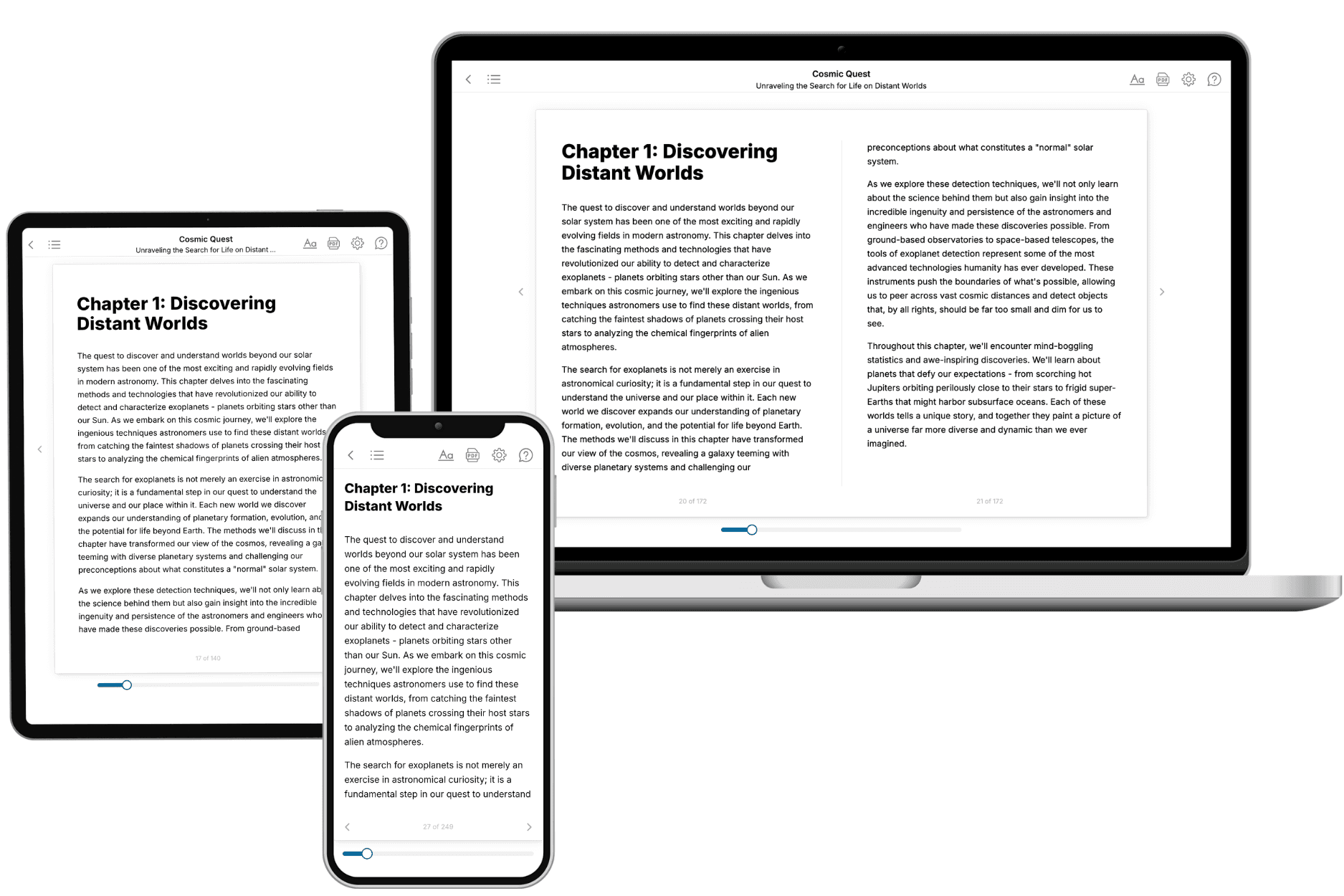
TailoredRead creates complete, full-length nonfiction ebooks, written specifically for you. Tell us what you want to learn and why, and TailoredRead writes you a complete ebook on it, with charts, tables, and diagrams throughout. Read it online, on Kindle, or on any e-reader, or download it as a PDF or EPUB. Every book is written fresh the day you order it.
- How is the book tailored to me?
Before anything is written, you answer a few short questions about your goals, your background, and the topics you care about. Your book is then planned around your answers: written at your level, focused on your goals, and covering the topics you chose, instead of the one-size-fits-all book a store sells everyone.
- Will it read like generic AI content?
No. Your book isn't a chat transcript: it's planned chapter by chapter before a single word is written, told in a clear book voice, and explains ideas visually with charts, tables, and diagrams. After writing, every book goes through an editorial pass that polishes chapters so the book reads consistent from start to finish. Judge for yourself: browse thousands of sample books on our Explore Books page.
- How accurate is the content?
Our AI first checks whether your subject needs live research. Niche and fast-moving subjects are researched before writing, and the book plan and chapters are grounded in what it finds. After writing, every book goes through a quality pass that checks its facts and consistency, and researched books list their sources in a Notes section at the back.
- How long is the book?
You choose the length: Comprehensive (250-300 pages), Detailed (150-200 pages), Essential (70-100 pages), or Short (30-50 pages).
- Does the book include visuals?
Yes. Every book includes charts, tables, and diagrams: timelines, checklists, step-by-step guides, decision trees, comparison tables, matrices, and bar charts. A typical book includes dozens of these visual elements.
- Can I read it on Kindle? What formats can I download?
Yes. Every book can be read in our online reader or downloaded as a PDF or EPUB. The EPUB can be opened with Kindle, Apple Books, Kobo, and any e-reader. The Commercial and Author licenses also include an editable Word (DOCX) and Markdown download.
- How much does it cost?
About the price of a regular ebook. The exact price depends on your book's length and complexity, from $2 for the shortest books to $35 for the most comprehensive, and it's shown when you review your book, before you commit to anything. Each book is a one-time purchase, yours to keep, no subscription. Licenses that let you share, teach, or publish your book range from $35.99 to $49.99.
- Can I preview the book before purchasing?
Before you pay, you'll see what your book will cover: the title, a detailed description, the estimated length, and the complete chapter-by-chapter table of contents, so you know what you're getting before you decide. The full text itself is written after you purchase.
- How long does it take to create a book?
About 10 minutes. You can start reading the opening chapters while the rest is still being written.