History of Science Books
Explore tailored History of Science books created by our AI
The Cosmic Tapestry
Unraveling the History of Physics Through the Ages
Imagine standing at the crossroads of human knowledge, where the mysteries of the universe unfold before your eyes. As you turn each page of "The Cosmic Tapestry," you'll find yourself transported through time, witnessing the birth of revolutionary ideas and the moments that forever changed our understanding of the physical world. This captivating journey through the history of physics will ignite your curiosity and expand your horizons. You'll walk alongside giants like Galileo, Newton, and Einstein as they grapple with the fundamental questions of existence. From the ancient Greeks' first ponderings about the nature of matter to the mind-bending realms of quantum mechanics and relativity, you'll discover how each breakthrough has built upon the last, weaving an intricate tapestry of scientific progress. "The Cosmic Tapestry" is more than just a chronology of events; it's an exploration of the human spirit's relentless pursuit of knowledge. You'll gain insights into the social and cultural contexts that shaped scientific thought, the technological advancements that enabled new discoveries, and the philosophical implications of our evolving understanding of the cosmos. Whether you're a science enthusiast or simply curious about the world around you, this book will deepen your appreciation for the incredible journey of physics and inspire you to look at the universe with fresh eyes.
Many people struggle to understand how the Scientific Revolution fundamentally reshaped human civilization, often viewing it as a distant historical event disconnected from modern life. This book reveals how 16th-century thinkers dared to question centuries of accepted wisdom and developed new methods for understanding nature that still guide science today. You'll discover how figures like Copernicus challenged the Earth-centered universe, how Galileo's telescope revealed unexpected celestial phenomena, and how mathematical reasoning became the key to unlocking nature's secrets. Through engaging narratives and clear explanations, you'll explore the intellectual courage required to overturn established beliefs, the role of technological innovations like the printing press, and how the tension between science and religion emerged during this transformative period. This book shows you not just what changed, but why it mattered—and how those changes continue to shape our world, from medicine to technology to how we understand our place in the cosmos.
The Bridge of Knowledge
How Medieval Islamic Science Ignited the European Renaissance
Most accounts of the Renaissance credit a sudden European awakening, overlooking a critical truth: the intellectual explosion of 15th and 16th century Europe was built directly upon centuries of Islamic scientific achievement. This book reveals how Medieval Islamic civilization—from the House of Wisdom in Baghdad to the scientific centers of Córdoba—preserved, advanced, and systematized knowledge that European scholars had lost. You'll discover how Al-Ghazali's empirical methodology, Ibn Sina's physics, and Al-Haytham's revolutionary optical science provided the theoretical foundations that Renaissance thinkers refined. Through detailed examination of astronomical instruments, mechanical innovations, and the translation movement that converted Islamic texts into Latin, you'll understand precisely how Islamic science became the bridge connecting classical antiquity to modern Europe. This is not merely history; it's the story of how rigorous methodology, institutional knowledge preservation, and cross-cultural intellectual exchange created the conditions for humanity's greatest scientific leap forward.
Architects of Innovation
The Lives and Legacies of Germany's Greatest Scientific Minds
Discover how a small nation produced some of history's most brilliant scientific minds and fundamentally changed our understanding of the universe. From the laws of thermodynamics to quantum mechanics, from medical breakthroughs to chemical innovations, German scientists have left an indelible mark on human knowledge and progress. This book explores the lives, achievements, and lasting legacies of these remarkable individuals—the visionaries who asked bold questions, conducted groundbreaking experiments, and developed theories that continue to guide scientific inquiry today. You'll learn not just what they discovered, but how they thought, what drove them, and how their work emerged from a unique cultural and historical context. Whether you're fascinated by the history of science, interested in understanding how great minds work, or simply curious about the people behind the discoveries that shaped our world, this exploration of German scientific achievement offers compelling insights into human ingenuity and the pursuit of knowledge.
The Elements of Discovery
How Chemistry Shaped Science, Industry, and Human Civilization
Chemistry's story is the story of human curiosity transformed into understanding. You'll journey through centuries of discovery, from ancient alchemists seeking to transmute lead into gold to modern chemists unlocking the secrets of molecular structure. This book traces how chemistry evolved from mystical speculation into rigorous science, revealing the brilliant minds and pivotal moments that changed everything. You'll discover how the periodic table brought order to chaos, how chemical reactions power our bodies and industries, and how laboratory breakthroughs led to medicines, plastics, and technologies that define modern life. Along the way, you'll encounter the unexpected failures that led to success, the fierce debates that advanced understanding, and the elegant simplicity underlying nature's complexity. Whether you're fascinated by how things work or curious about the scientific revolution that shaped our world, this exploration of chemistry's past illuminates why this science remains central to solving humanity's greatest challenges today.
Starlight and Science
How Humanity Discovered the Universe and Our Place in It
Imagine understanding not just where the stars are, but how humanity learned to read the cosmos like an open book. This exploration of astronomy's history reveals how each generation of observers and thinkers built upon previous discoveries to transform our understanding of the universe. From ancient Babylonian star-watchers tracking celestial patterns to modern astronomers detecting gravitational waves, you'll discover how astronomical breakthroughs repeatedly forced humanity to reconsider its place in the cosmos. You'll learn why the shift from Earth-centered to sun-centered models took centuries, how the telescope opened entirely new worlds of discovery, and why understanding the universe's age and expansion changed everything. This book shows how astronomy isn't just about distant stars—it's about how scientific thinking itself evolved, how evidence challenges belief, and how curiosity drives human progress. Whether you're fascinated by the night sky or interested in how science actually works, you'll gain insight into one of humanity's greatest intellectual achievements.
Most people think quantum mechanics is an esoteric field reserved for physicists in laboratories, disconnected from everyday life and historical events. Nothing could be further from the truth. Every smartphone you touch, every medical scan you receive, every GPS direction you follow exists because of quantum physics—and the story of how we discovered these principles is inseparable from the rise and fall of empires, the outcome of wars, and the transformation of human society. This book reveals the hidden connections between physics breakthroughs and civilizational change. You'll discover how Newton's laws enabled the Industrial Revolution, how Einstein's relativity reshaped geopolitics, and how quantum mechanics birthed the digital age. From ancient astronomers to Manhattan Project scientists, from the steam engine to the silicon chip, you'll see how our understanding of the physical world has repeatedly rewritten the human story. This is not a textbook—it's the epic tale of how curiosity about nature's deepest secrets changed everything about how we live, work, and understand our place in the cosmos.
Discover the fascinating world of Galileo Galilei, the man who revolutionized our understanding of the universe. This captivating biography takes you on a journey through 17th century Italy, where you'll witness the birth of modern science through the eyes of one of its greatest pioneers. From his groundbreaking observations of the night sky to his controversial stance against the Catholic Church, you'll gain a deep appreciation for Galileo's unwavering pursuit of truth. Explore how his inventions and discoveries laid the foundation for physics, astronomy, and the scientific method we use today. Delve into Galileo's personal life, his relationships, and the societal pressures he faced as he challenged long-held beliefs. You'll come to understand the courage it took to stand up for scientific truth in the face of powerful opposition, and how his legacy continues to shape our world centuries later.
Have you ever wondered how a single individual could change the course of medical history and save countless lives? Step into the world of 18th century Scotland and meet James Lind, a pioneering physician whose groundbreaking work laid the foundation for modern clinical research. This captivating biography takes you on a voyage through time, exploring Lind's life, his revolutionary experiments, and the lasting impact of his discoveries on naval health and beyond. From the bustling ports of Edinburgh to the treacherous seas of the British Royal Navy, you'll witness the challenges Lind faced and the ingenious solutions he devised. Discover how his meticulous approach to treating scurvy not only saved sailors but also paved the way for evidence-based medicine. Through vivid storytelling and historical context, you'll gain a deep appreciation for Lind's contributions to science and humanity. Prepare to be inspired by the story of a true Scottish hero whose legacy continues to shape medical practice today.
Einstein's Revolution
How Relativity Reshaped Our Understanding of Space, Time, and Reality
Most people think relativity is an abstract mathematical theory disconnected from everyday life—something only physicists need to understand. In reality, relativity fundamentally changed how we comprehend space, time, matter, and energy, and its effects shape our world in countless ways. From the GPS in your phone to our understanding of black holes and the origin of the universe, relativity's influence is everywhere. This book traces the intellectual journey that led Einstein and his contemporaries to overturn centuries of Newtonian certainty. You'll discover how specific scientific puzzles of the 1890s sparked a revolution in thought, how relativity emerged from the work of multiple brilliant minds, and why its predictions—once considered impossible—have been repeatedly confirmed by evidence. More importantly, you'll understand what relativity actually means: not just the equations, but the profound insights about the nature of reality itself. Whether you're interested in the history of science, the philosophy of physics, or simply how humanity's greatest minds solved the universe's deepest mysteries, this book provides the context and clarity you need.
What if everything you thought you knew about how psychology became a science was incomplete? The story of psychology isn't just about famous theories or influential figures—it's about how humanity learned to study the mind itself using rigorous scientific methods. This book traces psychology's remarkable journey from ancient philosophical speculation through its emergence as an empirical discipline in the 19th century to its current integration with neuroscience and technology. You'll discover how early experimenters like Wilhelm Wundt created the first psychology laboratory, how behaviorists challenged introspection with observable evidence, and how cognitive scientists revolutionized our understanding of mental processes. By exploring the key discoveries, methodological breakthroughs, and theoretical debates that shaped the field, you'll gain deeper insight into why psychologists study what they study and how they know what they claim to know. This exploration reveals not just the history of a science, but the fascinating process of how scientific knowledge itself develops and evolves.
Discover how one man's relentless pursuit of truth revolutionized mathematics and physics, forever changing humanity's understanding of the cosmos. This biography traces Isaac Newton's extraordinary life from his humble origins in rural England through his transformation into history's most influential mathematician and scientist. You'll explore the personal struggles, creative breakthroughs, and fierce intellectual battles that defined his career. Learn how the plague forced him into isolation, sparking his most productive years and the birth of calculus. Understand the obsessive personality that drove him to solve nature's deepest mysteries while simultaneously alienating colleagues and rivals. From his groundbreaking work on gravity and motion to his lesser-known pursuits in alchemy and theology, this account reveals Newton as a fully human figure—brilliant yet flawed, secretive yet transformative. Whether you're fascinated by scientific history, mathematical innovation, or the psychology of genius, this biography illuminates how one individual's dedication reshaped the entire trajectory of human knowledge and set the stage for the modern scientific age.
The Voice of Innovation
Alexander Graham Bell's Journey from Teacher to Telephone Pioneer
Many believe Alexander Graham Bell's sole contribution to the world was the telephone. But did you know that this remarkable inventor's curiosity and ingenuity extended far beyond this groundbreaking device? "The Voice of Innovation" takes you on a captivating journey through the life of Alexander Graham Bell, revealing the multifaceted genius behind the man who forever changed the way we communicate. From his early years as a teacher of the deaf to his groundbreaking work in aviation and hydrofoils, you'll discover the relentless spirit of innovation that drove Bell to push the boundaries of what was possible. This book delves deep into Bell's personal life, exploring the relationships and experiences that shaped his worldview and fueled his passion for invention. You'll gain insight into his creative process, understanding how his diverse interests in sound, speech, and technology converged to create revolutionary advancements that we still benefit from today. Whether you're a science enthusiast, a history buff, or simply someone who appreciates the stories of those who dared to dream big, "The Voice of Innovation" offers a fresh perspective on one of history's most influential figures. Prepare to be inspired by the man whose voice still echoes through time, challenging us all to listen closely to the world around us and imagine the possibilities that lie ahead.
Atoms and Revolution
How Nuclear Science Emerged from the Ashes of the French Revolution
Discover how one of history's most violent upheavals gave birth to the science that would define the modern world. The French Revolution didn't just topple a monarchy—it shattered the old order of scientific patronage and opened the door to revolutionary thinking about matter itself. This book traces the fascinating connection between the chaos of 1789 and the discovery of nuclear energy, showing how the Enlightenment ideals that sparked revolution directly enabled scientists to unlock the secrets of the atom. You'll explore how France's scientific institutions were rebuilt from rubble, how the pursuit of reason became a national obsession, and how the dream of progress through science became inseparable from French identity. From the laboratories of post-revolutionary Paris to the cutting-edge physics of the 19th century, witness how political transformation and scientific breakthrough became intertwined, ultimately positioning France as a global leader in nuclear science and energy.
Most people encounter Einstein's name in popular culture but struggle to understand what his theories actually mean. The gap between "E=mc²" and genuine comprehension feels insurmountable. This book bridges that gap by weaving together Einstein's life story with the mathematical and conceptual foundations of his revolutionary theories. You'll discover how a young patent clerk in Switzerland challenged the scientific establishment, why space and time aren't what you think they are, and how gravity actually works according to Einstein's vision. Rather than drowning you in equations, this book uses clear explanations, intuitive analogies, and historical context to make Relativity accessible. You'll understand not just what Einstein discovered, but why it matters and how it transformed our understanding of the universe. Whether you're fascinated by physics, biography, or the history of ideas, this exploration of Einstein's genius will reshape how you think about reality itself.
Einstein Unraveled
The Man Behind the Genius
Think you know everything about Albert Einstein? Think again. Beyond the iconic wild hair and famous equations lies a complex individual whose life and work continue to shape our understanding of the universe. Einstein Unraveled takes you on a captivating journey through the life of one of history's most brilliant minds. From his early struggles in school to his groundbreaking theories that revolutionized physics, you'll discover the lesser-known aspects of Einstein's life that contributed to his extraordinary achievements. This book goes beyond the surface-level facts, delving into Einstein's personal relationships, his political views, and the historical context that influenced his work. You'll gain insight into how his unconventional thinking and unwavering curiosity led to some of the most important scientific discoveries of the 20th century. By the time you finish Einstein Unraveled, you'll have a newfound appreciation for the man behind the genius. You'll understand not just what Einstein accomplished, but how his unique perspective and relentless pursuit of knowledge continue to inspire scientists and thinkers today. Get ready to see the world through the eyes of a true visionary.
The gap between what we observe in the universe and what our best theories predict has long frustrated physicists. String theory emerged as an audacious attempt to bridge this gap—proposing that everything in existence, from light to gravity to matter itself, consists of infinitesimally small vibrating strings. This book traces string theory's remarkable intellectual journey from its accidental discovery in the 1960s through its evolution into one of the most ambitious scientific endeavors of our time. You'll discover how physicists overcame seemingly insurmountable mathematical obstacles, why the theory requires extra dimensions, and why it remains both celebrated and controversial. Rather than focusing on complex equations, this exploration emphasizes the historical context, key personalities, and conceptual breakthroughs that shaped string theory's development. Whether you're fascinated by the history of science, curious about cutting-edge physics, or interested in how humanity pursues ultimate truth, this book reveals how one revolutionary idea challenged everything we thought we knew about reality.
The Evolution of Political Science
From Ancient Philosophy to Modern Scientific Inquiry
Political science today is a rigorous, data-driven discipline, but few scholars understand how it became one. The challenge many face is viewing political science as either purely scientific or purely philosophical—missing the rich, complex history that bridges these worlds. This book traces the fascinating evolution of political science from ancient philosophical inquiry through its transformation into a modern scientific discipline. You'll discover how thinkers from Plato and Aristotle to Machiavelli and Hobbes grappled with fundamental questions about power and governance, and how Enlightenment scholars introduced systematic methods that would eventually define the discipline. The narrative continues through the professionalization of political science in universities, the behavioral revolution that brought quantitative rigor, and contemporary innovations in computational analysis. By understanding this history, you'll gain deeper insight into why political scientists ask the questions they do, what methods they employ, and how the discipline continues to evolve in response to new challenges and technologies.
The Healing Journey
Unraveling the Tapestry of Medical History
Venture into the captivating world of medical history, where ancient wisdom meets modern science. The Healing Journey: Unraveling the Tapestry of Medical History takes you on an exhilarating exploration of humanity's quest to understand and heal the human body. From the mystical practices of early civilizations to the groundbreaking discoveries of the 21st century, this book weaves together the threads of medical knowledge that have shaped our understanding of health and disease. You'll witness the birth of revolutionary ideas, the triumphs over seemingly insurmountable challenges, and the relentless pursuit of knowledge that has driven medical progress. As you delve into the pages of this illuminating work, you'll gain a deeper appreciation for the intricate dance between scientific inquiry and medical practice. Discover how cultural beliefs, technological advancements, and serendipitous moments have all played crucial roles in the evolution of healthcare. By the end of this journey, you'll emerge with a rich understanding of how far we've come and the exciting possibilities that lie ahead in the ever-evolving field of medicine.
The Renaissance Unveiled
How Art, Ideas, and Innovation Transformed Europe
Many people struggle to understand why the Renaissance matters or how it differs from the Middle Ages that preceded it. This book cuts through the confusion by revealing how a deliberate revival of classical learning sparked one of history's most transformative periods. You'll discover how Renaissance thinkers, artists, and innovators fundamentally changed European society—from the revolutionary techniques that made paintings come alive to the scientific methods that challenged centuries of accepted wisdom. Through compelling stories of patrons, artists, and scholars, you'll see how the printing press spread ideas across continents, how merchant cities became cultural powerhouses, and how the period's emphasis on human potential reshaped Western civilization. By the end, you'll understand not just what happened during the Renaissance, but why it remains essential to understanding the modern world we inhabit today.
Discover the true story of Omar Khayyam, one of history's most misunderstood geniuses. While many know him only as the author of the Rubaiyat, Khayyam was actually a groundbreaking mathematician, astronomer, and philosopher whose work fundamentally advanced human knowledge. This book reveals how Khayyam navigated the intellectual landscape of 11th-century Persia, made revolutionary contributions to algebra and geometry, reformed the Persian calendar with remarkable precision, and developed philosophical ideas that challenged conventional thinking. You'll explore the Islamic Golden Age that made his achievements possible, understand his scientific methodology, and learn how his work influenced both Eastern and Western scholarship. By examining primary sources and separating historical fact from romantic legend, you'll gain a complete picture of Khayyam's life and legacy. Whether you're interested in the history of mathematics, Persian civilization, or the remarkable minds that shaped our world, this book provides the authoritative yet accessible guide you've been seeking.
Imagine reading a simple word and suddenly understanding the ancient story embedded within each letter—the journey from Egyptian hieroglyphics to the alphabet on your screen. This book reveals how every letter you've ever written carries centuries of human history, cultural meaning, and symbolic power. You'll discover why the letter A once represented an ox, how the shape of B evolved from a house, and what hidden messages are encoded in the letters you use daily. Through fascinating explorations of etymology, visual symbolism, and cultural significance, you'll learn to read between the lines—literally. Whether you're a writer seeking deeper connection with language, a student curious about linguistic origins, or simply someone who wants to see the world of written communication in a new light, this book transforms ordinary letters into extraordinary windows into human civilization. Explore the invisible architecture of language and unlock a richer understanding of how symbols shape thought, culture, and meaning.
Discover how British inventors revolutionized the world and shaped the modern age. This book takes you beyond the textbook names to reveal the fascinating stories of the men and women who transformed everyday life through their ingenuity. You'll explore the personal struggles, brilliant insights, and relentless determination that drove innovations from the steam engine to the jet engine, from photography to wireless communication. Learn how these inventors overcame financial constraints, social prejudices, and technical impossibilities to create technologies that still impact your daily life. Through vivid narratives and historical context, you'll understand not just what they invented, but why their work mattered and how their legacies continue to influence modern innovation. Whether you're interested in history, science, entrepreneurship, or simply great human achievement, this book reveals the remarkable individuals behind Britain's greatest contributions to civilization.
The Enlightenment Mind
How Reason, Liberty, and Progress Shaped the Modern World
Imagine understanding the philosophical revolution that created the modern world—the ideas that transformed how we think about reason, freedom, and human potential. The Enlightenment wasn't just an historical period; it was a fundamental reimagining of what humans could achieve through rational thought and individual liberty. This book guides you through the essential ideas and thinkers that shaped our contemporary world, from Descartes' revolutionary method of doubt to Kant's critical philosophy. You'll discover how Enlightenment principles directly influenced the founding of democratic nations, the scientific revolution, and our modern conception of human rights. By exploring the tensions between reason and emotion, individual freedom and social order, and progress and tradition, you'll gain deeper insight into the philosophical foundations of today's most pressing debates. Whether you're interested in intellectual history, political philosophy, or understanding the roots of modern thought, this exploration reveals how Enlightenment ideas remain profoundly relevant to how we live, think, and organize society today.
Mapping Reality
Understanding Cartographic Projections and How Maps Shape Our World
Have you ever noticed that Greenland looks enormous on most world maps, yet it's actually smaller than Australia? This visual paradox reveals a fundamental truth: every map lies. The question isn't whether maps distort reality—they must—but rather how, why, and what we lose in the process. Cartographic projections are the mathematical solutions cartographers use to flatten Earth's curved surface onto paper or screens, and each choice involves deliberate trade-offs. This book demystifies the science and art behind map-making, exploring how projections work, why different maps serve different purposes, and how understanding these choices transforms the way you read and interpret spatial information. From the Mercator projection that shaped colonial empires to cutting-edge digital mapping technologies, you'll discover how the maps we use daily influence our understanding of geography, politics, and our place in the world. Whether you're a student, professional, or curious explorer, this guide equips you with the knowledge to evaluate maps critically and appreciate the elegant mathematics that makes global representation possible.
The Gutenberg Revolution
How the Printing Press Changed the World in the 15th Century
Most people assume the printing press was a sudden invention that instantly changed the world. In reality, the story is far more complex and fascinating. Before Gutenberg's breakthrough in the 1450s, Europe was trapped in a knowledge bottleneck—books were rare, expensive, and took months to copy by hand. This book reveals how Johannes Gutenberg combined existing technologies into a revolutionary system that would reshape civilization. You'll discover how the printing press democratized knowledge, transformed literacy from an elite privilege into a widespread skill, and ignited the Renaissance, Reformation, and Scientific Revolution. Through vivid historical narratives and clear explanations, you'll understand not just what the printing press was, but why it mattered so profoundly. From the technical innovations that made it possible to the social upheaval it caused, this book shows how one invention fundamentally altered how humans share, preserve, and act on information—a transformation whose echoes still resonate today.
The Calculus Story
How Mathematics Evolved to Solve the Unsolvable
You've likely encountered calculus in passing and wondered why it's considered so important—or perhaps felt intimidated by its reputation for complexity. The real obstacle isn't that calculus is inherently difficult; it's that most explanations skip the story of how and why it was invented. Without that context, the symbols and procedures feel arbitrary and disconnected from reality. This book changes that approach. You'll discover how ancient astronomers struggled with problems that existing mathematics couldn't solve, how medieval scholars built the intellectual foundations across centuries, and how brilliant minds finally cracked the code. Along the way, you'll learn what calculus actually does—how it measures change, predicts motion, and unlocks patterns hidden in data. By understanding the historical journey and the real problems calculus solves, the notation and concepts become not just understandable, but inevitable. Whether you're curious about mathematics, interested in how financial markets work, or simply want to understand one of humanity's greatest intellectual achievements, this book makes the calculus story accessible and meaningful.
Step into the fascinating world of 19th-century England and discover the extraordinary life of Ada Lovelace, a woman who defied societal norms to become a pioneer in mathematics and computing. This captivating biography takes you on an illuminating journey through Ada's life, from her unconventional upbringing as the daughter of the famous poet Lord Byron to her groundbreaking collaboration with Charles Babbage on the Analytical Engine. As you delve into the pages of this book, you'll gain a deep appreciation for Ada's unique blend of poetic imagination and mathematical precision. You'll explore how her "poetical science" approach led her to envision the potential of computers far beyond mere calculation, laying the foundation for the digital age we live in today. Through meticulous research and engaging storytelling, this biography brings Ada Lovelace to life, showcasing her struggles, triumphs, and the lasting legacy she left on the fields of mathematics and computer science. You'll gain insights into the social and scientific context of her time, the challenges she faced as a woman in a male-dominated field, and the visionary ideas that were far ahead of her era. Prepare to be inspired by the story of a true trailblazer whose work continues to shape our technological landscape.
From Contamination to Clarity
The Engineering Evolution of Water Purification Technologies
Access to clean water remains one of humanity's greatest engineering challenges. Many people understand that water treatment is necessary, but few grasp how the technologies we rely on today emerged from centuries of trial, error, and scientific discovery. This book traces the fascinating engineering history of water purification—from ancient sand filtration methods to cutting-edge membrane technologies—revealing how each innovation solved real problems faced by growing communities. You'll discover why certain purification techniques were invented when they were, how engineers overcame technical obstacles, and which methods work best for different contamination scenarios. Whether you're an engineering student, environmental professional, or simply curious about the infrastructure that delivers safe water to your home, this comprehensive guide connects historical developments to modern practice, showing how understanding the past illuminates the future of water treatment.
One Small Step
The Extraordinary Life and Legacy of Neil Armstrong
Think you know everything about the first man on the Moon? Think again. Neil Armstrong's life was far more than just that historic lunar landing. From his early days as a naval aviator to his groundbreaking spacewalk, Armstrong's journey was filled with challenges, triumphs, and moments that shaped not only his life but the course of human history. In "One Small Step: The Extraordinary Life and Legacy of Neil Armstrong," you'll discover the lesser-known aspects of this American hero's life. Explore the rigorous training, the near-disasters, and the personal sacrifices that paved the way for that iconic first step on lunar soil. Through meticulously researched accounts and personal anecdotes, this book paints a vivid picture of a man whose quiet determination and unwavering focus helped push the boundaries of human achievement. This isn't just another space race narrative. It's an intimate look at the person behind the spacesuit - a humble Midwesterner whose passion for flight and exploration led him to the pinnacle of human accomplishment. Whether you're a space enthusiast or simply curious about one of the 20th century's most influential figures, this book offers a fresh perspective on Armstrong's life and the enduring impact of his historic achievement.
This book takes you through the fascinating world of Gnosticism, a movement that challenged the foundations of early Christianity. You'll discover how Gnostic Christians understood Jesus, salvation, and the divine in radically different ways than the mainstream church that eventually dominated history. Starting with the historical context of the first centuries CE, you'll explore the core beliefs that made Gnosticism so controversial—including its vision of a flawed creator god and a hidden, transcendent divine reality. You'll examine the remarkable Nag Hammadi texts that were buried for 1,600 years, revealing sophisticated theological ideas that scholars had only glimpsed through the writings of their critics. Throughout, you'll understand why church authorities worked so hard to suppress these teachings and how Gnosticism's influence persisted in unexpected ways. Whether you're studying religious history, exploring alternative Christian perspectives, or simply curious about the diversity of early Christian thought, this book provides the context and clarity you need to grasp this complex and compelling movement.
The Lunar Calendar
A Complete Guide to Understanding and Observing Moon Phases
Many people believe that lunar phases are caused by Earth casting shadows on the Moon, but this common misconception prevents them from truly understanding one of nature's most reliable and beautiful celestial displays. The reality is far more elegant and predictable than most realize. This comprehensive guide reveals the true mechanics behind lunar phases and transforms you into a confident lunar observer. You'll discover why the Moon appears to change shape in a precise 29.5-day cycle, learn to predict exactly when each phase will occur, and understand how these celestial mechanics have shaped human civilization for thousands of years. From the barely visible new moon to the brilliant full moon, each phase tells a story about the cosmic dance between our planet, its satellite, and the Sun. You'll master the art of lunar observation using nothing more than your eyes, while also exploring how modern technology can enhance your understanding. Whether you're planning nighttime photography, understanding tidal patterns, or simply satisfying your curiosity about the night sky, this book provides the knowledge and practical skills you need. By the end of this guide, you'll not only understand the science behind lunar phases but also appreciate the cultural significance and practical applications that have made the Moon humanity's first and most enduring timekeeper.
Imagine understanding Christianity not as a static set of beliefs handed down unchanged, but as a living, evolving movement shaped by real people navigating real cultural pressures. This book reveals how Christianity transformed from a small, radical Jewish sect into a global religion—and how that transformation happened through deliberate theological choices, cultural adaptation, and sometimes fierce disagreement among early Christian leaders. You'll discover what the earliest Christian communities actually believed and practiced, how patristic theologians grappled with philosophical challenges to articulate Christian doctrine, and why the Bible itself became standardized only after centuries of debate. By exploring the moral philosophy foundations, the influence of Greek and Roman thought, and the major paradigm shifts that reshaped Christian identity, you'll gain a nuanced understanding of how Christianity became what it is today—and why different Christian traditions developed such different interpretations of the same faith.
Related books you may like:
Discover how advanced functional materials are reshaping industries and enabling solutions to humanity's greatest challenges. This comprehensive guide takes you beyond basic materials science to explore the cutting-edge world of engineered materials designed to perform specific, transformative functions. You'll learn how scientists and engineers manipulate atomic structures and processing conditions to create materials that respond to stimuli, conduct electricity with unprecedented efficiency, or heal themselves. From smart polymers that change properties on demand to nanomaterials with revolutionary capabilities, this book reveals the principles behind these innovations and their practical applications in healthcare, energy, electronics, and aerospace. Whether you're advancing your career, developing new products, or simply fascinated by the materials shaping our future, you'll gain the knowledge to understand, evaluate, and potentially contribute to this rapidly evolving field.
Most chemical reactions should happen instantly, yet they don't. The culprit? Activation energy—the invisible barrier that keeps reactants locked in place until enough energy arrives to break them free. Without understanding this fundamental concept, enzyme kinetics remains a mystery, and the elegant mechanisms by which life accelerates reactions seem like magic. This book demystifies activation energy and enzyme kinetics through clear explanations, practical examples, and visual frameworks. You'll discover how enzymes perform their catalytic miracles by lowering activation energy, explore the mathematics of reaction rates through the Arrhenius equation and Michaelis-Menten kinetics, and learn how inhibition mechanisms control biological processes. Whether you're studying biochemistry, developing pharmaceuticals, or optimizing industrial processes, this guide equips you with both the conceptual understanding and quantitative tools needed to predict, analyze, and manipulate enzyme-catalyzed reactions with confidence.
Achieve reliable, reproducible separations of complex chemical mixtures using adsorption chromatography. This practical guide bridges the gap between theoretical principles and real-world laboratory application, providing you with the knowledge and skills to design effective separation strategies for your specific analytical needs. You'll explore the fundamental science of how compounds interact with adsorbent materials, learn to select optimal stationary and mobile phases, and master the practical techniques that ensure consistent results. Whether you're working with thin-layer chromatography, column chromatography, or HPLC systems, this book equips you with systematic approaches to troubleshooting common problems, optimizing separations, and interpreting data with confidence. Packed with practical examples, decision-making frameworks, and evidence-based strategies, you'll develop the expertise to tackle challenging separation problems and advance your analytical capabilities in pharmaceutical, environmental, or materials research.
Many assume adipose tissue is simply inert fat to be minimized or removed. In reality, it's a sophisticated, metabolically active organ with remarkable regenerative potential. This book reveals how adipose tissue engineering is revolutionizing medicine by creating functional tissue solutions for reconstruction, regeneration, and therapeutic applications. You'll discover the biological foundations of adipose tissue, learn how scientists harvest and cultivate adipose-derived stem cells, and explore cutting-edge engineering strategies that transform these cells into viable tissue constructs. From scaffold design and bioreactor optimization to vascularization techniques and clinical translation, this guide provides practical insights into the science and engineering behind adipose tissue regeneration. Whether you're a researcher, student, or healthcare professional, you'll gain actionable knowledge about the current state of the field, emerging technologies, and the real-world challenges of bringing engineered tissues from the laboratory to clinical practice.
In the rapidly evolving world of ultra-high-speed communications, the challenge of designing secure and efficient chips has never been more daunting. As a Principal Architect, you face the complex task of integrating cutting-edge VLSI techniques with robust cryptographic solutions. This book is your comprehensive guide to conquering these challenges. "Advanced VLSI Design" delves deep into the intricacies of modern chip architecture, offering you practical insights into overcoming CMOS scaling limitations, harnessing the power of 3D IC integration, and implementing state-of-the-art FinFET technology. You'll explore innovative approaches to low-power design and high-speed SerDes, crucial for next-generation communication systems. This book doesn't just stop at performance; it equips you with the knowledge to build security from the ground up. From hardware Trojan detection to side-channel analysis resistance, you'll learn how to create chips that are not only fast but also fortified against modern security threats. Dive into advanced topics like quantum-dot cellular automata and EUV lithography, positioning yourself at the forefront of VLSI innovation.
Create a History of Science Book Tailored to You
Create an AI-crafted book tailored to your goals, interests, and background






Benefits of AI-tailored books
- Read one book, not ten:
- all the History of Science knowledge you need, gathered into a single book.
- Save days of learning:
- tell us your goals, choose your topics, and the whole book is built around them.
- Learn effortlessly:
- History of Science book written for your specific background and expertise.
- Understand at a glance:
- includes charts, tables, timelines, checklists, decision trees, and more.
- Stay current:
- written the day you order it, not years ago.
- Trust what you read:
- every book is checked for accuracy, with real research when your subject needs it.
Create your unique book in 3 steps
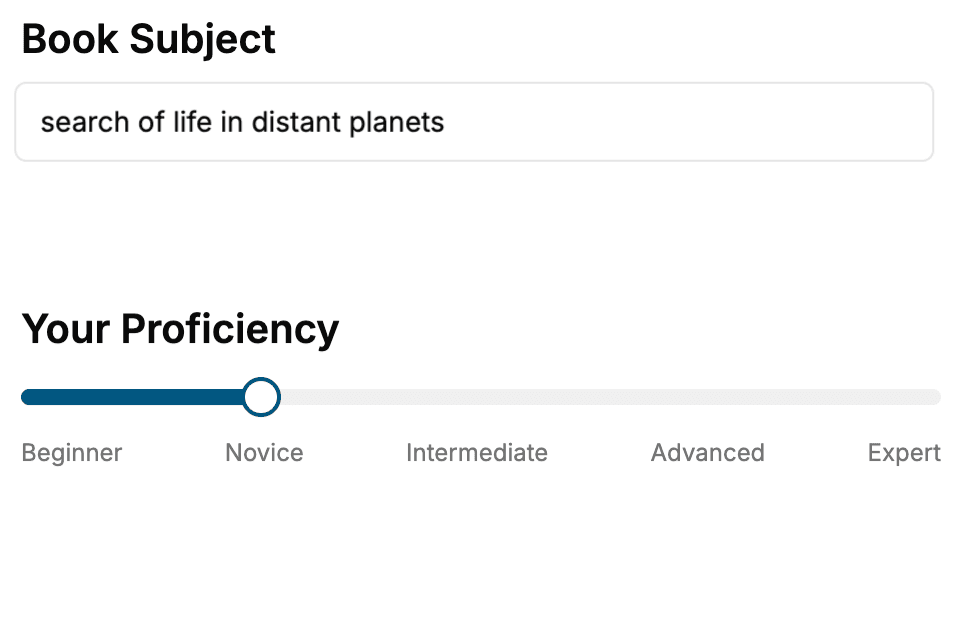
- 1. Select your focus
Select the focus of your History of Science book and share your background
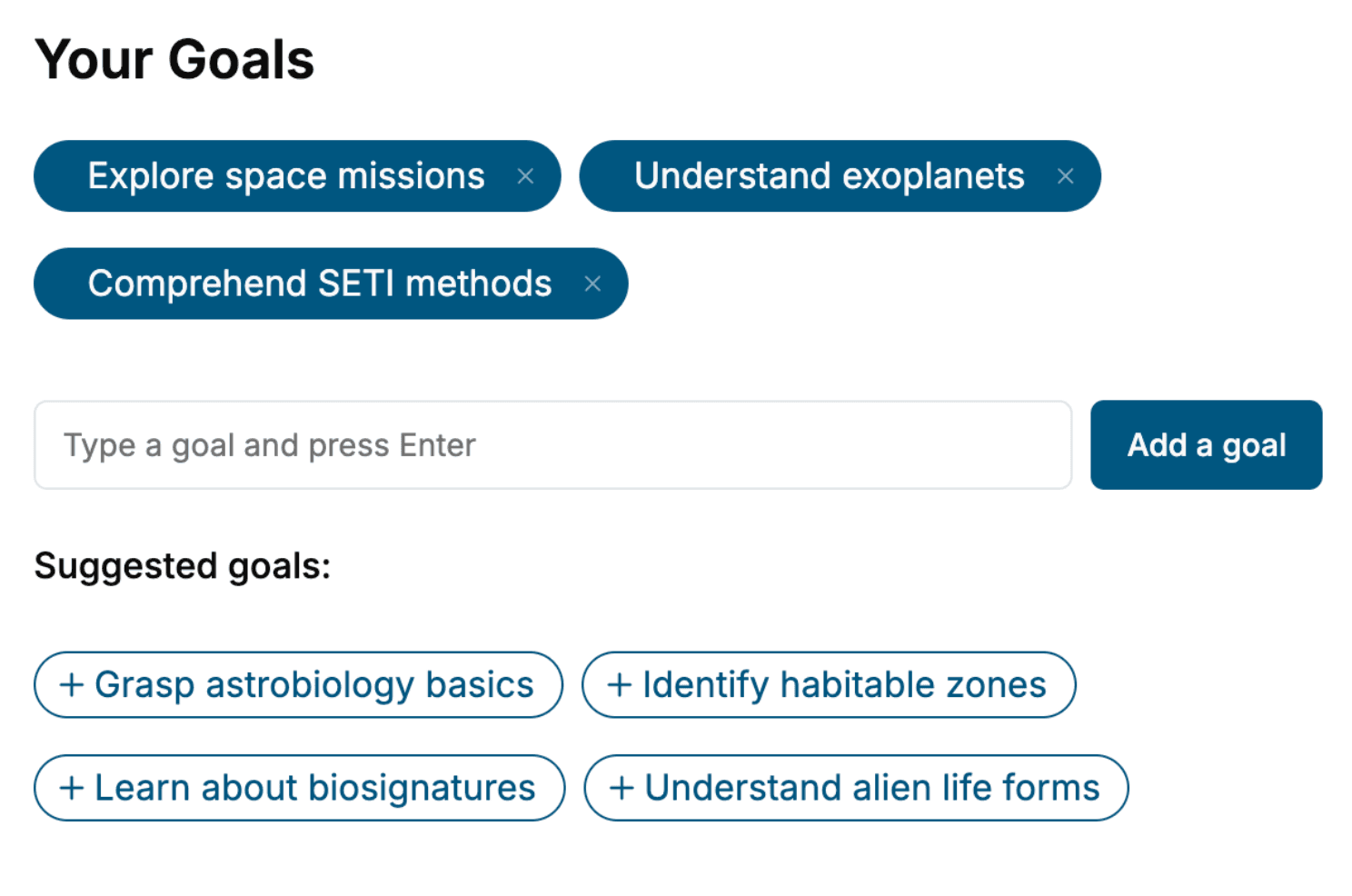
- 2. Personalize your book
Specify your goals and choose sub-topics to include
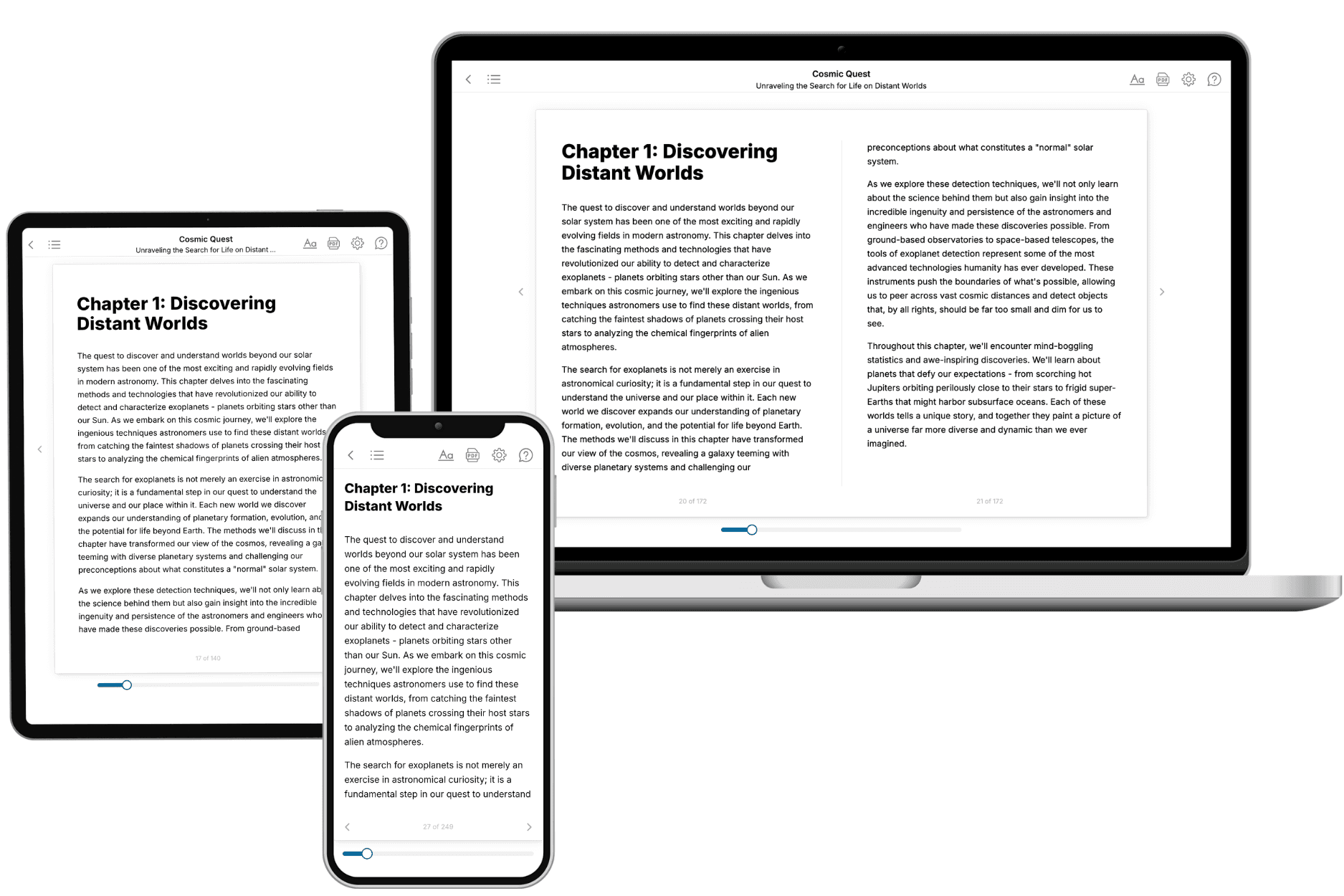
- 3. Get your tailored book
Your book is ready in 10 minutes. Read it online, download as EPUB or PDF, or send to Kindle.
Frequently asked questions
- What is TailoredRead?
TailoredRead creates complete, full-length nonfiction ebooks, written specifically for you. Tell us what you want to learn and why, and TailoredRead writes you a complete ebook on it, with charts, tables, and diagrams throughout. Read it online, on Kindle, or on any e-reader, or download it as a PDF or EPUB. Every book is written fresh the day you order it.
- How is the book tailored to me?
Before anything is written, you answer a few short questions about your goals, your background, and the topics you care about. Your book is then planned around your answers: written at your level, focused on your goals, and covering the topics you chose, instead of the one-size-fits-all book a store sells everyone.
- Will it read like generic AI content?
No. Your book isn't a chat transcript: it's planned chapter by chapter before a single word is written, told in a clear book voice, and explains ideas visually with charts, tables, and diagrams. After writing, every book goes through an editorial pass that polishes chapters so the book reads consistent from start to finish. Judge for yourself: browse thousands of sample books on our Explore Books page.
- How accurate is the content?
Our AI first checks whether your subject needs live research. Niche and fast-moving subjects are researched before writing, and the book plan and chapters are grounded in what it finds. After writing, every book goes through a quality pass that checks its facts and consistency, and researched books list their sources in a Notes section at the back.
- How long is the book?
You choose the length: Comprehensive (250-300 pages), Detailed (150-200 pages), Essential (70-100 pages), or Short (30-50 pages).
- Does the book include visuals?
Yes. Every book includes charts, tables, and diagrams: timelines, checklists, step-by-step guides, decision trees, comparison tables, matrices, and bar charts. A typical book includes dozens of these visual elements.
- Can I read it on Kindle? What formats can I download?
Yes. Every book can be read in our online reader or downloaded as a PDF or EPUB. The EPUB can be opened with Kindle, Apple Books, Kobo, and any e-reader. The Commercial and Author licenses also include an editable Word (DOCX) and Markdown download.
- How much does it cost?
About the price of a regular ebook. The exact price depends on your book's length and complexity, from $2 for the shortest books to $35 for the most comprehensive, and it's shown when you review your book, before you commit to anything. Each book is a one-time purchase, yours to keep, no subscription. Licenses that let you share, teach, or publish your book range from $35.99 to $49.99.
- Can I preview the book before purchasing?
Before you pay, you'll see what your book will cover: the title, a detailed description, the estimated length, and the complete chapter-by-chapter table of contents, so you know what you're getting before you decide. The full text itself is written after you purchase.
- How long does it take to create a book?
About 10 minutes. You can start reading the opening chapters while the rest is still being written.