Church History Books
Explore tailored Church History books created by our AI
The Eastern Orthodox Tapestry
Unraveling Two Millennia of Faith, Culture, and Tradition
Many assume that the history of Christianity is solely centered around Western traditions. However, the rich and complex story of the Eastern Orthodox Church often remains in the shadows, despite its profound influence on world history and culture. "The Eastern Orthodox Tapestry" invites you to explore the lesser-known yet fascinating journey of Eastern Orthodoxy. From its roots in the early Christian communities to its role in shaping modern-day Eastern Europe and beyond, this book weaves together the threads of theology, politics, art, and spirituality that form the unique fabric of the Orthodox tradition. You'll discover the lives of influential saints and theologians, the significance of iconic art and architecture, and the enduring impact of Orthodox spirituality on millions of believers worldwide. Through engaging narratives and insightful analysis, you'll gain a newfound appreciation for the depth and diversity of Christian heritage.
Imagine understanding the rich spiritual heritage that shaped medieval Europe and continues to inspire seekers today. This comprehensive exploration reveals how Celtic Christianity developed as a vibrant, distinctive expression of faith in the remote lands of Ireland, Scotland, Wales, and beyond. You'll discover how isolated Celtic communities created unique theological perspectives, developed revolutionary monastic systems, and produced some of history's most beautiful sacred art. From the missionary journeys of Saint Columba to the scholarly achievements of Irish monks, this book traces how Celtic Christians preserved classical learning during Europe's darkest ages and influenced the broader development of Western Christianity. You'll explore the theological distinctiveness of Celtic spirituality, the tension between Celtic and Roman practices, and how this ancient tradition speaks to contemporary spiritual questions. Whether you're interested in church history, spirituality, or the cultural achievements of the early medieval period, this book provides the context, detail, and insight needed to appreciate one of Christianity's most fascinating chapters.
Many assume the Nicene Creed simply summarizes what Christians have always believed, but the truth is far more complex and fascinating. This creed emerged from a turbulent moment in Christian history when the Church faced an existential crisis over fundamental questions about God and Christ. Rather than being handed down unchanged, the Nicene Creed was forged through intense theological debate, political maneuvering, and the collision of competing visions for Christian orthodoxy. This book traces the creed's remarkable journey from the Council of Nicaea in 325 CE through its evolution and enduring influence on Christian faith and practice. You'll discover how ancient philosophers shaped theological language, why Constantine convened the council, what made the creed so controversial, and how different Christian traditions relate to it today. Whether you're exploring Christian history, deepening your faith understanding, or simply curious about one of history's most influential religious statements, this exploration reveals how doctrine develops and why the Nicene Creed remains central to Christian identity across denominations.
Ecumenical Councils
Shaping the Faith: A Journey Through Christianity's Defining Moments
Have you ever wondered how the core beliefs of Christianity were shaped and defined throughout history? "Ecumenical Councils: Shaping the Faith" takes you on a fascinating journey through the pivotal gatherings that have molded Christian doctrine and practice for centuries. You'll discover how these councils navigated complex theological debates, addressed heresies, and established the foundations of Christian orthodoxy. From the Council of Nicaea to the Second Vatican Council, this book illuminates the historical context, key players, and lasting impact of each major ecumenical council. You'll gain insights into the political and cultural forces that influenced these gatherings, and understand how their decisions continue to resonate in modern Christianity. Whether you're a history enthusiast, a theology student, or simply curious about the development of Christian thought, this book offers a clear and engaging exploration of the ecumenical councils. By the end, you'll have a deeper appreciation for the rich tapestry of Christian history and the collaborative process that has defined the faith for generations.
Imagine understanding Christianity not as a static set of beliefs handed down unchanged, but as a living, evolving movement shaped by real people navigating real cultural pressures. This book reveals how Christianity transformed from a small, radical Jewish sect into a global religion—and how that transformation happened through deliberate theological choices, cultural adaptation, and sometimes fierce disagreement among early Christian leaders. You'll discover what the earliest Christian communities actually believed and practiced, how patristic theologians grappled with philosophical challenges to articulate Christian doctrine, and why the Bible itself became standardized only after centuries of debate. By exploring the moral philosophy foundations, the influence of Greek and Roman thought, and the major paradigm shifts that reshaped Christian identity, you'll gain a nuanced understanding of how Christianity became what it is today—and why different Christian traditions developed such different interpretations of the same faith.
The Dissolution of the Monasteries stands as one of history's most consequential yet often misunderstood events. You face the challenge of grasping how a single monarch's personal crisis—Henry VIII's desire for an annulment—cascaded into the wholesale destruction of institutions that had shaped English civilization for nearly a thousand years. This book cuts through the complexity to reveal the true story: a masterfully executed political strategy that was simultaneously a religious revolution, an economic restructuring, and a social catastrophe. Discover how the seizure of monastic lands financed a nation's rise to global power, how it created a new aristocracy bound to Protestant rule, and how it left millions vulnerable and displaced. Through vivid narratives, primary sources, and clear analysis, you'll understand not just what happened, but why it mattered—and how its effects continue to shape Britain and Europe today.
You'll discover how a small religious movement in first-century Palestine grew into a force that reshaped empires, created institutions that still influence society today, and fundamentally altered the course of human civilization. This exploration takes you through the pivotal moments when Christian beliefs intersected with political power, cultural transformation, and social change. You'll examine how medieval monasteries preserved knowledge, how the Reformation challenged established authority, how missionary movements connected distant continents, and how Christian thought influenced everything from science to social justice. By understanding these historical connections, you'll gain insight into how religious movements shape societies, why certain historical events unfolded as they did, and how the past continues to influence our present world. This is not merely a chronicle of dates and figures—it's an analysis of cause and effect, belief and consequence, that reveals the profound ways faith and history intertwine.
The Gnostic Divide
Understanding the Hidden Teachings That Shaped Early Christianity
Discover how a hidden spiritual movement challenged the foundations of early Christianity and shaped the religion we know today. This book traces the fascinating history of Gnosticism—a diverse collection of mystical beliefs that offered an alternative vision of Jesus, God, and salvation. You'll explore the theological battles that raged in the first centuries of Christianity, learn why Church authorities worked to suppress Gnostic teachings, and understand the profound differences between Gnostic and orthodox interpretations of scripture. Through careful analysis of ancient texts, including the remarkable Nag Hammadi library, you'll see how Gnosticism drew from Jewish mysticism, Greek philosophy, and early Christian thought. This exploration reveals not just a historical curiosity, but a crucial lens for understanding Christianity's development, the nature of religious authority, and how competing visions of truth shaped Western civilization. Whether you're a student of religious history, theology, or simply curious about Christianity's hidden dimensions, this book provides the context and clarity needed to grasp one of history's most misunderstood spiritual movements.
The Great Awakenings
How Spiritual Revivals Shaped American Christianity and Culture
Understand how waves of spiritual revival fundamentally transformed American Christianity and left an indelible mark on the nation's culture, politics, and social fabric. This comprehensive exploration examines the Great Awakenings as pivotal moments when religious fervor swept across communities, challenging established institutions and creating new forms of faith expression. You'll discover how these movements emerged during times of crisis, why they resonated so powerfully with ordinary people, and how they catalyzed profound social reforms from abolition to education. Through careful analysis of key figures, theological innovations, and cultural contexts, you'll gain insight into the patterns that connect these revivals across centuries. Whether you're seeking to deepen your understanding of Christian history, explore the roots of American evangelicalism, or comprehend how religious movements shape society, this book provides the historical perspective and analytical framework you need. You'll come away with a nuanced appreciation for how spiritual awakenings continue to influence contemporary religious life and cultural conversations.
What if the Christianity you know today is the result of specific historical moments when everything could have turned out differently? This book takes you beyond Sunday school narratives into the actual historical forces, personalities, and decisions that shaped Christian faith across two millennia. You'll discover how a persecuted Jewish sect became the Roman Empire's religion, why theological councils mattered as much as military battles, and how reformers fractured and renewed Christianity simultaneously. Through carefully structured exploration of pivotal events—from Constantine's vision to the Reformation's upheaval—you'll gain the analytical tools to understand not just what happened, but why it mattered. Each chapter builds your knowledge systematically, connecting ancient church fathers to medieval scholastics to modern movements. You'll trace how theological ideas emerged from historical crises, how cultural contexts shaped religious expression, and how individual figures redirected entire traditions. Whether you're deepening your faith understanding or satisfying intellectual curiosity, this blueprint provides the comprehensive historical foundation you've been seeking.
The Tudor Transformation
A Comprehensive Guide to the English Reformation
Uncover the dramatic events that reshaped England's religious landscape during the 16th century. The Tudor Transformation takes you on a captivating journey through the English Reformation, a pivotal period that forever altered the course of British history and Christianity. You'll explore the complex web of political, social, and theological factors that led to this monumental shift. From Henry VIII's break with Rome to the establishment of the Church of England, you'll gain a nuanced understanding of the key players and pivotal moments that defined this tumultuous era. Delve into the lives of influential figures like Thomas Cranmer, Anne Boleyn, and Elizabeth I, and discover how their actions and beliefs shaped the religious landscape of England. You'll also examine the wider European context of the Reformation and its lasting impact on English society, culture, and politics. Whether you're a history buff or simply curious about this transformative period, this book offers a balanced and accessible account of the English Reformation. Prepare to gain new insights into one of the most fascinating chapters of religious history.
The Trinity Explained
Understanding God's Nature Through Scripture, History, and Theology
What if the most fundamental Christian doctrine isn't actually spelled out in the Bible? The Trinity stands as Christianity's most distinctive and debated theological claim—that God exists as three persons in one essence. Yet this doctrine doesn't appear explicitly in Scripture, and its development spans centuries of theological struggle, church politics, and philosophical debate. This book traces the Trinity's journey from scattered biblical hints through the heated councils of the early church to its place in modern Christian thought. You'll discover how biblical passages about Father, Son, and Holy Spirit were gradually synthesized into formal doctrine, why early theologians found this framework essential, and how different Christian traditions understand it today. Whether you're exploring Christianity's intellectual foundations, preparing for theological discussions, or simply curious about how one of religion's most complex ideas came to be, this book provides the historical context, scriptural evidence, and theological clarity you need to grasp this central Christian belief.
Gain a deep, nuanced understanding of one of Christianity's most influential and often misunderstood movements. This comprehensive exploration traces fundamentalist Christianity from its 19th-century origins through its modern expressions, revealing how theological convictions, historical circumstances, and cultural pressures shaped a movement that continues to influence millions today. You'll discover the key figures, pivotal moments, and theological debates that defined fundamentalism's emergence as a distinct Christian response to modernity. From the publication of "The Fundamentals" to the Scopes Trial, from denominational splits to the rise of independent churches, this book illuminates the complex historical forces that created and sustained this movement. Through careful analysis of primary sources, theological documents, and historical records, you'll understand how fundamentalist Christianity developed its characteristic emphasis on biblical inerrancy, premillennialism, and separation from liberal theology. The book examines regional variations, denominational differences, and the movement's evolving relationship with broader evangelicalism. Whether you're a student of religious history, a curious believer, or someone seeking to understand the historical roots of contemporary Christian conservatism, this book provides the historical context and analytical framework necessary to comprehend fundamentalism's enduring significance in American Christianity and beyond.
The Sound of Faith
How Christian Music Shaped History, Culture, and the Soul
Christian music has been woven into the fabric of faith for nearly two thousand years, yet many people don't fully understand how deeply it shaped both religious practice and Western culture itself. From the haunting chants of medieval monasteries to the electrifying energy of modern worship services, music has been far more than entertainment—it's been theology set to sound, a way for believers to express what words alone cannot capture. This book traces the remarkable journey of Christian music through history, revealing how each era's musical innovations reflected the spiritual needs and cultural contexts of their time. You'll discover how Gregorian chant influenced all Western music, why the Reformation made hymn-singing revolutionary, how African American spirituals became expressions of unbreakable faith, and why contemporary Christian music continues to evolve. Whether you're a musician, a history enthusiast, or simply someone curious about how faith and culture intersect, this exploration will deepen your appreciation for the power of sacred sound and its enduring influence on human spirituality.
Discover the truth behind one of the world's most mysterious institutions. The Vatican Secret Archives has captivated imaginations for centuries, inspiring countless theories and legends. This guide cuts through the mythology to reveal what the Archives actually contains, why it matters to history, and how you can engage with this remarkable institution during your Rome visit. Learn about the real documents housed within its walls—from papal correspondence to diplomatic records that shaped European history. Understand the legitimate reasons for restricted access and how researchers can gain entry. Explore the fascinating stories behind famous historical events documented in the Archives, and discover the Vatican's ongoing digitization efforts that are opening these treasures to the world. Whether you're a history buff, curious traveler, or serious researcher, this book provides the practical knowledge and historical context you need to appreciate the Archives' true significance and make the most of Vatican-related experiences in Rome.
Passion and Reason
Abelard and Heloise in the Crucible of Medieval Thought
Have you ever wondered how a scandalous love affair could shape the course of medieval philosophy? In 12th century Paris, two brilliant minds collided, igniting a passion that would challenge the intellectual and social norms of their time. "Passion and Reason: Abelard and Heloise in the Crucible of Medieval Thought" delves deep into the lives of Peter Abelard and Heloise d'Argenteuil, unraveling their complex relationship and its profound impact on medieval philosophy. This book takes you on an intellectual journey through the bustling streets of medieval Paris, where the seeds of scholasticism were being sown. You'll explore the revolutionary ideas that Abelard introduced to logic and ethics, and discover how Heloise's sharp intellect and unwavering devotion both complemented and challenged her lover's thoughts. Beyond their personal story, you'll gain insight into the broader landscape of medieval thought, understanding how their ideas fit into and shaped the intellectual debates of their time. From the rise of urban schools to the clash between faith and reason, this book illuminates the dynamic world of medieval philosophy through the lens of one of history's most famous couples.
The Hanging Church of Cairo
A Traveler's Guide to Egypt's Ancient Coptic Marvel
Discover the awe-inspiring beauty and rich history of the Hanging Church of Cairo. This guide takes you on a captivating exploration of one of Egypt's most remarkable Coptic Christian landmarks. You'll uncover the church's fascinating architectural features, delve into its historical significance, and gain insider tips for making the most of your visit. From its unique suspended structure to its intricate iconography, the Hanging Church holds centuries of stories waiting to be revealed. This book provides you with the knowledge to appreciate every detail, from the ornate wooden ceiling to the marble pulpit. You'll learn about the church's role in Coptic Christianity and its place in Cairo's diverse religious landscape. Whether you're planning your first trip to Cairo or seeking to deepen your understanding of Egyptian culture, this guide offers practical advice and cultural insights. Explore nearby attractions, understand local customs, and navigate the bustling streets of Coptic Cairo with confidence. Get ready to experience the Hanging Church of Cairo like never before, armed with the expertise of a seasoned traveler and the curiosity of a passionate historian.
The Medieval Mind
Exploring the Intellectual Landscape of the Middle Ages
Imagine yourself transported to a world where faith and reason intertwine, where ancient wisdom meets Christian doctrine, and where the foundations of modern thought are being laid. This is the world of medieval philosophy, a realm of intellectual ferment that shaped the course of Western civilization. "The Medieval Mind: Exploring the Intellectual Landscape of the Middle Ages" invites you on a captivating journey through one of the most misunderstood yet profoundly influential periods in the history of ideas. From the fall of Rome to the dawn of the Renaissance, you'll discover how brilliant thinkers grappled with fundamental questions about God, humanity, and the nature of reality. This book illuminates the lives and ideas of towering figures like Augustine, Aquinas, and Ockham, revealing how their insights continue to resonate in contemporary philosophy, theology, and science. You'll explore the intricate debates that raged in medieval universities, the mystical traditions that flourished in monasteries, and the cultural exchanges that brought Islamic and Jewish thought into dialogue with Christian philosophy. Whether you're a student of philosophy, a history enthusiast, or simply curious about the intellectual roots of our modern world, "The Medieval Mind" offers a fresh perspective on a pivotal era. Prepare to challenge your preconceptions and gain a deeper appreciation for the enduring legacy of medieval thought.
The Missional Disciple
Advanced Strategies for Christian Leadership and Global Outreach
In a world of spiritual confusion and declining faith, you face the challenge of effectively sharing the Gospel and leading others to Christ. The Missional Disciple offers a comprehensive guide to overcoming this obstacle, providing you with advanced strategies for Christian leadership and global outreach. Drawing from deep theological insights and practical experience, this book equips you with the tools to navigate complex cultural landscapes and inspire transformative discipleship. You'll discover how to integrate spiritual formation principles with missiology concepts, creating a powerful approach to Christian living and ministry. Whether you're called to lead a congregation, mentor individuals, or serve in cross-cultural missions, The Missional Disciple will empower you to make a lasting impact. Dive into this resource to sharpen your biblical counseling skills, develop effective discipleship methods, and cultivate a missional mindset that reaches far beyond your immediate community.
The Pauline Letters Explained
Understanding Paul's Revolutionary Message to the Early Church
Discover the revolutionary letters that shaped Christianity. Paul's epistles stand as the earliest Christian writings, offering unfiltered access to how the first believers understood Jesus, community, and faith itself. This book guides you through Paul's world—his Jewish background, his dramatic conversion, his missionary travels across the Mediterranean—and shows you how to read his letters as responses to real churches facing real problems. You'll explore the major themes that run through his writings: justification by faith, the role of the Holy Spirit, what it means to be part of Christ's body, and how believers should live together. Rather than treating Paul's letters as isolated proof-texts, you'll learn to read them in their historical sequence and context, discovering how his thinking developed and deepened over time. Whether you're studying for personal growth, preparing to teach others, or simply wanting to understand these foundational Christian texts more deeply, this book provides the historical knowledge, theological insight, and practical tools you need to engage Paul's letters with confidence and clarity.
The Rational Faith
Anselm of Canterbury and the Foundations of Medieval Philosophy
Many believe that faith and reason are incompatible, especially when it comes to medieval philosophy. But what if one of the greatest minds of the Middle Ages showed us how faith and logic could coexist harmoniously? "The Rational Faith" takes you on an intellectual journey through the life and ideas of Anselm of Canterbury, a pivotal figure in medieval thought. You'll discover how this 11th-century monk revolutionized philosophical discourse by applying rigorous logical reasoning to matters of faith. As you delve into Anselm's world, you'll uncover the profound impact of his ontological argument for God's existence, which continues to spark debate among philosophers today. You'll explore his innovative approach to understanding the nature of truth, free will, and the human mind, all within the context of his unwavering Christian faith. This book doesn't just recount history; it brings Anselm's ideas to life, showing their relevance to contemporary philosophical discussions. Whether you're a student of philosophy, a history enthusiast, or simply someone intrigued by the intersection of faith and reason, "The Rational Faith" offers a fresh perspective on a thinker who bridged worlds of thought we often consider separate.
Bridging Faiths
Understanding and Overcoming Antisemitism in the Christian Church
Imagine a world where Christians and Jews come together in mutual understanding and respect, free from the shadows of historical prejudice and misunderstanding. In "Bridging Faiths: Understanding and Overcoming Antisemitism in the Christian Church," you'll discover the path to this enlightened future. This groundbreaking book delves deep into the complex history of Christian-Jewish relations, exploring the roots of antisemitism within the Church and its impact on both communities. You'll gain insights into the theological misconceptions that have fueled prejudice and learn how different Christian denominations have grappled with this issue. "Bridging Faiths" doesn't just illuminate problems; it offers solutions. You'll explore successful interfaith dialogue initiatives, examine educational strategies for combating antisemitism, and discover how individuals and communities are working to build bridges of understanding. Through compelling narratives and rigorous analysis, this book equips you with the knowledge and tools to become an agent of positive change in your faith community. Whether you're a religious leader, an educator, or simply someone passionate about fostering interfaith harmony, "Bridging Faiths" will challenge your perceptions and inspire you to action. It's time to heal old wounds and create a future where Christian-Jewish relations are marked by mutual respect, understanding, and cooperation.
What if the deepest truths of Scripture were meant to be experienced, not just studied? Christian mysticism offers a pathway to direct encounter with God that has been practiced by faithful believers for nearly two thousand years. This book explores the rich tradition of Christian contemplative spirituality, grounded in biblical history and theological rigor, while providing practical methods you can implement immediately. You'll discover how the Desert Fathers approached prayer, why medieval mystics developed sophisticated frameworks for spiritual growth, and how ancient practices like lectio divina remain profoundly relevant today. Whether you're seeking to move beyond intellectual faith into lived experience, or you're curious about the contemplative dimension of Christianity that often remains hidden in modern churches, this guide bridges the gap between theory and practice. Learn the difference between authentic mystical experience and spiritual sentimentality, understand the stages of spiritual development, and develop a sustainable contemplative practice that transforms your relationship with God and Scripture.
This book takes you through the fascinating world of Gnosticism, a movement that challenged the foundations of early Christianity. You'll discover how Gnostic Christians understood Jesus, salvation, and the divine in radically different ways than the mainstream church that eventually dominated history. Starting with the historical context of the first centuries CE, you'll explore the core beliefs that made Gnosticism so controversial—including its vision of a flawed creator god and a hidden, transcendent divine reality. You'll examine the remarkable Nag Hammadi texts that were buried for 1,600 years, revealing sophisticated theological ideas that scholars had only glimpsed through the writings of their critics. Throughout, you'll understand why church authorities worked so hard to suppress these teachings and how Gnosticism's influence persisted in unexpected ways. Whether you're studying religious history, exploring alternative Christian perspectives, or simply curious about the diversity of early Christian thought, this book provides the context and clarity you need to grasp this complex and compelling movement.
St. Peter's Basilica
An Architectural Journey Through the Heart of Vatican City
Have you ever stood in awe before a magnificent structure, wondering about the stories etched in its very foundations? St. Peter's Basilica, the crown jewel of Vatican City, is not just a religious icon but a testament to human ingenuity and artistic brilliance. This book takes you on an immersive exploration of the basilica's architectural wonders, unraveling centuries of history, art, and faith woven into its walls. As you plan your visit to the Vatican, this guide will equip you with insider knowledge to truly appreciate the grandeur that awaits. From the sweeping curves of Bernini's colonnade to the soaring dome designed by Michelangelo, you'll discover the genius behind every arch, pillar, and fresco. Whether you're an architecture enthusiast, a history buff, or a curious traveler, this book offers a fresh perspective on one of the world's most visited landmarks. Prepare to see St. Peter's Basilica through new eyes, understanding the vision, challenges, and triumphs that shaped this architectural masterpiece over the centuries.
The Great Divide
Unraveling the Schism of 1054 and Its Enduring Legacy in Christian History
Step into the tumultuous world of 11th-century Christianity as you explore the monumental event that forever changed the face of the Christian faith. The Great Divide takes you on a captivating journey through time, unraveling the complex web of political, theological, and cultural factors that led to the Schism of 1054. As you delve into the pages of this book, you'll gain a deep understanding of the key players, the conflicting ideologies, and the dramatic events that culminated in the split between the Eastern Orthodox and Roman Catholic Churches. You'll explore the long-standing tensions between Constantinople and Rome, the role of language and ritual in deepening the divide, and the lasting consequences of this schism on the Christian world. The Great Divide doesn't just recount historical facts; it brings the past to life, allowing you to immerse yourself in the charged atmosphere of medieval Christendom. You'll gain insights into the minds of influential figures like Pope Leo IX and Patriarch Michael Cerularius, and understand the broader context of a rapidly changing medieval world. By the end of this journey, you'll have a nuanced understanding of how this pivotal moment in history continues to shape Christianity and global politics to this day.
Uncover the captivating story of the Byzantine Empire, a realm that stood at the crossroads of East and West for over a thousand years. This book takes you on an immersive journey through the rise, golden age, and eventual fall of one of history's most influential civilizations. You'll explore the intricate tapestry of Byzantine culture, from its Roman roots to its unique blend of Greek, Oriental, and Christian influences. Discover how this empire preserved classical knowledge, developed sophisticated art and architecture, and created a legacy that continues to impact our world today. Through vivid narratives and insightful analysis, you'll gain a deep understanding of the Byzantine Empire's role in shaping medieval Europe, the Islamic world, and the Renaissance. You'll encounter larger-than-life figures like Justinian and Theodora, witness epic battles and political intrigues, and explore the empire's lasting contributions to law, religion, and the arts. Whether you're a history buff or simply curious about this often-overlooked chapter of world history, "The Byzantine Millennium" offers a fresh perspective on an empire that was truly ahead of its time.
The Synoptic Question
Understanding the Literary Relationship Between Matthew, Mark, and Luke
The relationship between Matthew, Mark, and Luke has puzzled readers for nearly two millennia. Why do these three gospels share so much material, sometimes word-for-word, yet differ in significant ways? This question—known as the Synoptic Problem—stands at the heart of understanding how the New Testament came to be and what it tells us about early Christianity. This book guides you through the fascinating detective work of source criticism, form criticism, and redaction criticism. You'll discover why most scholars believe Mark wrote first, what the mysterious Q source might have contained, and how each gospel writer adapted their materials for specific audiences and theological purposes. Beyond academic theories, you'll gain practical tools for reading the gospels with greater insight and appreciation. Whether you're studying theology, exploring religious history, or simply curious about how these foundational texts came together, you'll find clear explanations of complex scholarly debates alongside concrete examples from the gospel texts themselves. By understanding the synoptic gospels' literary relationships, you'll develop a richer, more nuanced appreciation for these ancient documents and the communities that produced them.
Navigate the complexities of moral living with confidence by understanding the biblical and theological foundations of Christian ethics. This comprehensive guide explores how Christian moral principles have developed from Scripture through centuries of theological reflection, equipping you with the wisdom to make ethical decisions that honor God and serve others. You'll discover how the Ten Commandments and Jesus's teachings establish the framework for Christian virtue, learn why character development matters more than rule-following alone, and understand how to apply ancient wisdom to modern dilemmas. Whether you're wrestling with personal integrity, social justice, or complex ethical questions, this book provides the theological grounding and practical guidance you need. Rooted in Scripture and informed by church tradition, these principles offer a coherent vision for living ethically as a Christian in today's world.
The Spanish Inquisition
Power, Faith, and Terror in the Making of Modern Spain
Separating historical fact from centuries of myth and propaganda about the Spanish Inquisition remains one of the greatest challenges for anyone seeking to understand this pivotal institution. You've likely encountered sensationalized accounts that obscure the complex realities of how and why the Inquisition operated for over three centuries. This book cuts through the distortions to reveal the Spanish Inquisition as it actually was: a sophisticated political instrument wielded by the Spanish monarchy to consolidate power, enforce religious uniformity, and control a diverse population. You'll discover how the Reconquista, the expulsion of Jews, and the formation of a unified Spain created the conditions for the Inquisition's emergence in 1478. Through careful examination of historical records, you'll explore the institution's actual procedures, its evolving targets, and its far-reaching impact on Spanish society, culture, and intellectual life. You'll understand why Spain, once Europe's most powerful empire, became increasingly isolated from the scientific and philosophical revolutions transforming the continent. By grounding the Inquisition within its proper historical context, you'll gain insights into the dangerous intersection of religious authority and state power—lessons that remain relevant today.
The Holy Roman Empire
A Thousand Years of Power, Politics, and Cultural Legacy
You're about to embark on an illuminating exploration of one of history's most fascinating and misunderstood entities: the Holy Roman Empire. This book will take you on a captivating journey through a millennium of European history, unraveling the complex tapestry of power, politics, and cultural influence that defined this unique political structure. As you delve into these pages, you'll discover how the Holy Roman Empire shaped the course of European civilization, from its inception under Charlemagne to its dissolution in the face of Napoleonic conquest. You'll gain insights into the intricate relationships between emperors, popes, and princes, and how their struggles for supremacy influenced the development of modern concepts of governance and diplomacy. Through vivid narratives and insightful analysis, this book will bring to life the grand imperial cities, the elaborate ceremonies of coronation, and the diverse tapestry of cultures that existed within the Empire's borders. You'll come to understand how this political entity, neither fully holy, nor Roman, nor truly an empire in the conventional sense, managed to endure for centuries and leave an indelible mark on European identity.
Related books you may like:
Embark on a captivating journey through one of the most pivotal moments in British history with "1066: The Year That Changed England." This meticulously researched account of the Battle of Hastings offers you a front-row seat to the events that reshaped the course of European history. Delve into the complex web of political intrigue, military strategy, and cultural shifts that led to this momentous clash. You'll gain a deep understanding of the key players - William the Conqueror, Harold Godwinson, and Harald Hardrada - and the high-stakes game of thrones they played. Through vivid storytelling and expert analysis, you'll experience the tension of the battlefield, the clash of Anglo-Saxon and Norman cultures, and the far-reaching consequences of William's victory. Discover how this single event transformed England's language, laws, and social structure, leaving an indelible mark on the nation's identity. Whether you're a history buff or simply curious about this transformative period, this book offers fresh insights and a comprehensive overview that will enrich your understanding of medieval Europe and the foundations of modern Britain.
Many assume the French Revolution ended in 1799 with Napoleon's rise to power. In reality, the struggle for democracy and social justice continued to convulse France throughout the nineteenth century. The 1848 Revolution represents a pivotal moment when ordinary people—workers, students, intellectuals, and the poor—rose up against an entrenched monarchy and demanded fundamental change. This book explores the dramatic events of that revolutionary year, from the February uprising that toppled King Louis-Philippe to the violent June Days that exposed the revolution's internal contradictions. You'll discover how economic crisis, industrial transformation, and competing political ideologies collided to reshape not just France, but the entire European continent. Through vivid narratives and careful analysis, this account reveals why 1848 mattered then and why its lessons remain relevant today for understanding how societies change, how revolutions succeed and fail, and how the pursuit of liberty continues to define our world.
Discover how a single year transformed global history and set the stage for the modern world. The Russian Revolutions of 1917 were pivotal moments that toppled an empire, established the first communist state, and triggered consequences that rippled across the entire 20th century. This book walks you through the complex web of causes—from centuries of imperial rule and industrialization to the devastating impact of World War I—that made revolution possible. You'll explore the dramatic events of both the February and October revolutions, meet the key figures who shaped these upheavals, and understand how ordinary Russians experienced these extraordinary times. Beyond the headlines and heroic narratives, you'll examine the real economic hardships, military failures, and social tensions that drove millions to support radical change. This comprehensive account reveals why 1917 matters today, how it reshaped global politics and ideology, and what it teaches us about revolution, power, and historical change. Whether you're a history student, curious learner, or someone seeking to understand the roots of modern geopolitics, this book provides the context and clarity needed to grasp one of history's most consequential moments.
Discover the pivotal events and complex forces that shaped one of the 20th century's most consequential moments. This comprehensive examination takes you through the centuries of Jewish diaspora, the rise of Zionism, and the dramatic final years leading to Israel's establishment in 1948. You'll understand how the Holocaust transformed international politics, why the British Mandate created irreconcilable tensions, and how the UN Partition Plan became a flashpoint for conflict. Through careful analysis of key figures, military campaigns, and political negotiations, you'll gain insight into how a new nation emerged from centuries of displacement and persecution—while grappling with the displacement of another people. This book presents the historical evidence, competing narratives, and lasting consequences of 1948, enabling you to understand not just what happened, but why it matters for the modern Middle East and global politics today.
Most people think the Norman Conquest was simply a military victory that happened in a single day. In reality, 1066 marked the beginning of a decades-long transformation that would fundamentally reshape English society, language, and identity. This book reveals how William the Conqueror's invasion wasn't inevitable—it emerged from a disputed succession, political intrigue, and the ambitions of ambitious leaders. Beyond the famous Battle of Hastings, you'll discover how Norman rulers consolidated power through feudalism, how the French language permanently altered English, and how a new ruling class gradually integrated with the existing population. Through vivid storytelling and careful analysis, you'll understand how this single conquest rippled across centuries, influencing everything from English law and governance to the very words we speak today. Whether you're exploring medieval history for the first time or deepening your existing knowledge, this book illuminates why 1066 remains one of history's most consequential moments—and how its effects continue to shape our world.
Create a Church History Book Tailored to You
Create an AI-crafted book tailored to your goals, interests, and background






Benefits of AI-tailored books
- Read one book, not ten:
- all the Church History knowledge you need, gathered into a single book.
- Save days of learning:
- tell us your goals, choose your topics, and the whole book is built around them.
- Learn effortlessly:
- Church History book written for your specific background and expertise.
- Understand at a glance:
- includes charts, tables, timelines, checklists, decision trees, and more.
- Stay current:
- written the day you order it, not years ago.
- Trust what you read:
- every book is checked for accuracy, with real research when your subject needs it.
Create your unique book in 3 steps
- 1. Select your focus
Select the focus of your Church History book and share your background
- 2. Personalize your book
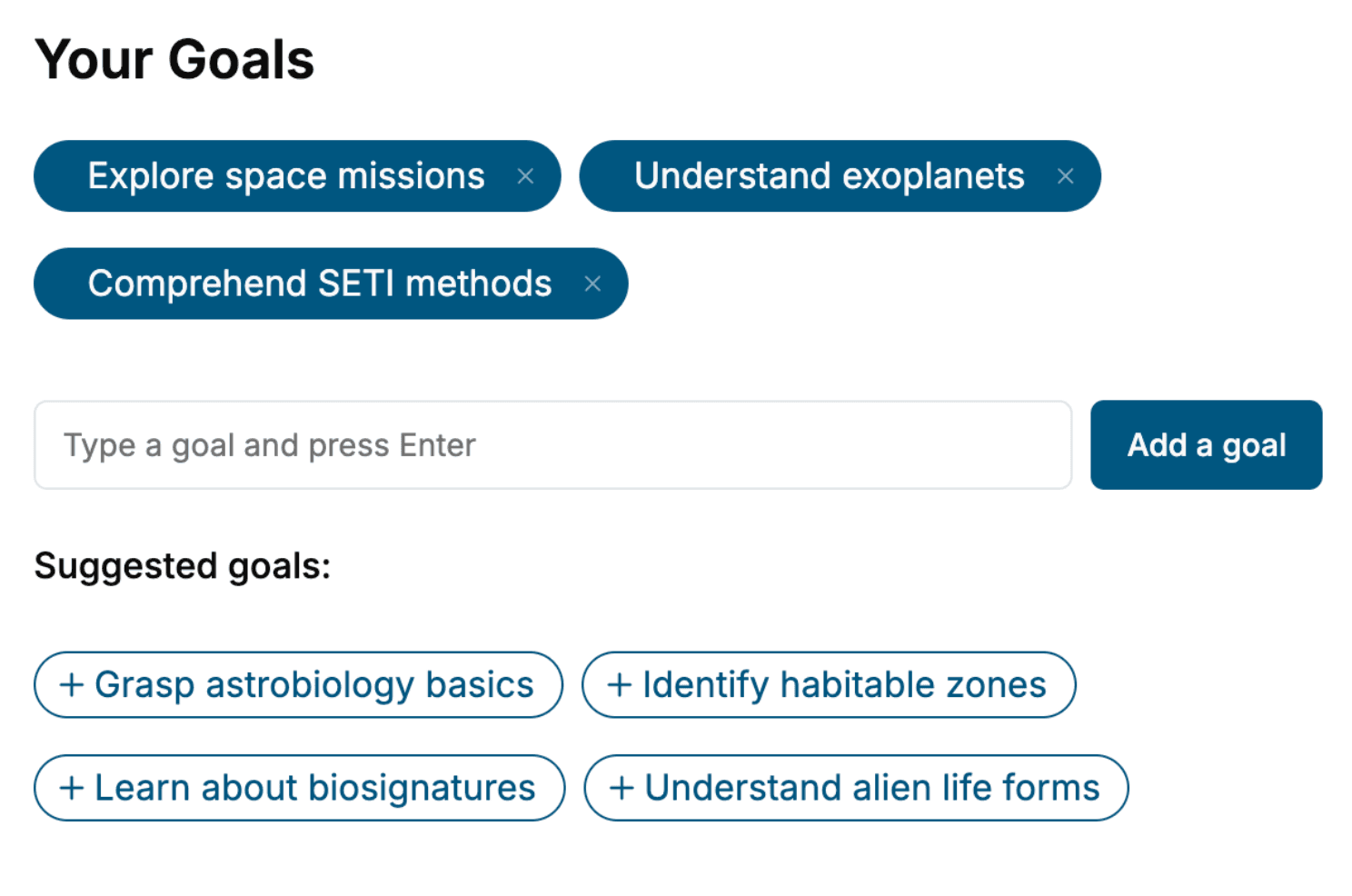
Specify your goals and choose sub-topics to include
- 3. Get your tailored book
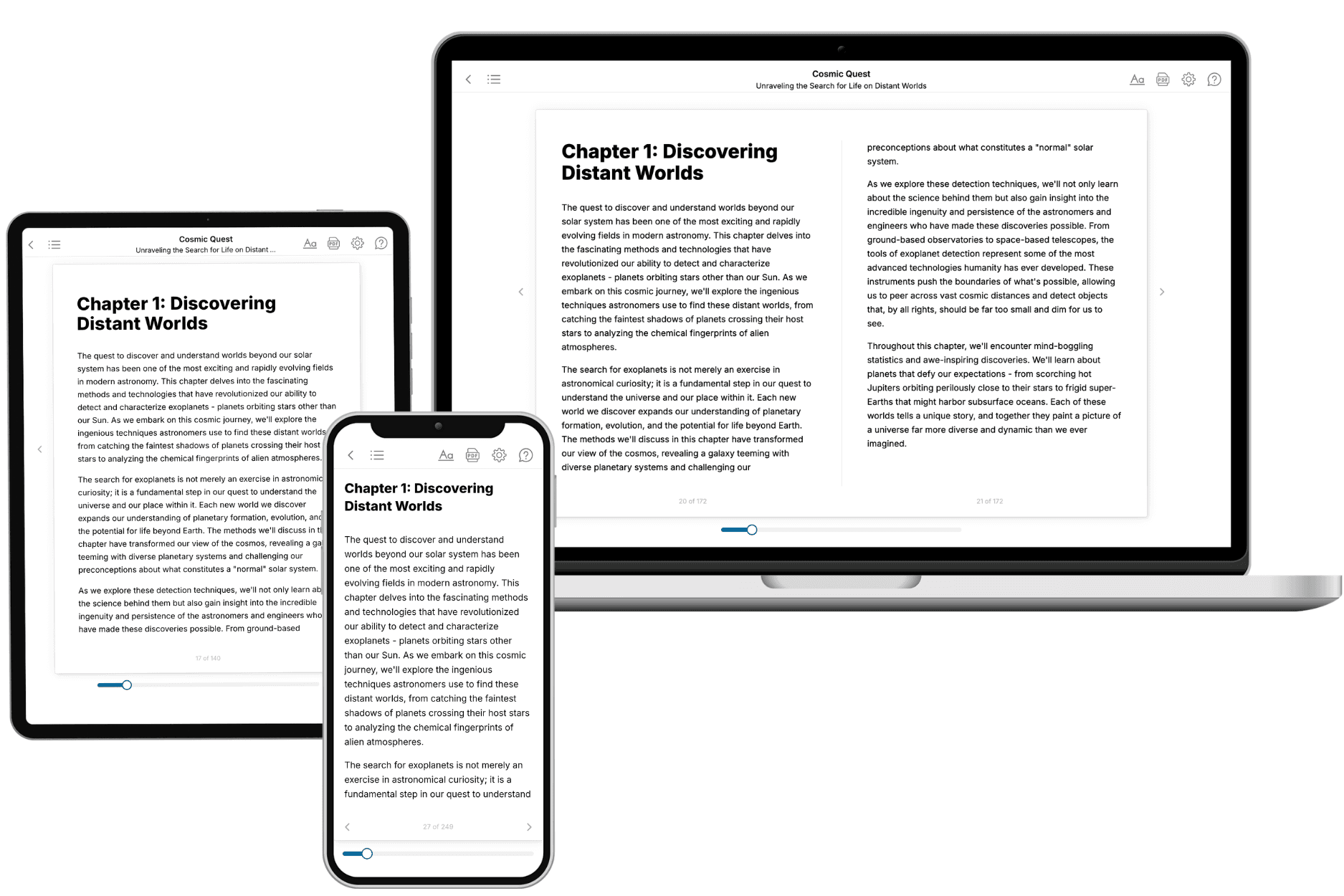
Your book is ready in 10 minutes. Read it online, download as EPUB or PDF, or send to Kindle.

Frequently asked questions
- What is TailoredRead?
TailoredRead creates complete, full-length nonfiction ebooks, written specifically for you. Tell us what you want to learn and why, and TailoredRead writes you a complete ebook on it, with charts, tables, and diagrams throughout. Read it online, on Kindle, or on any e-reader, or download it as a PDF or EPUB. Every book is written fresh the day you order it.
- How is the book tailored to me?
Before anything is written, you answer a few short questions about your goals, your background, and the topics you care about. Your book is then planned around your answers: written at your level, focused on your goals, and covering the topics you chose, instead of the one-size-fits-all book a store sells everyone.
- Will it read like generic AI content?
No. Your book isn't a chat transcript: it's planned chapter by chapter before a single word is written, told in a clear book voice, and explains ideas visually with charts, tables, and diagrams. After writing, every book goes through an editorial pass that polishes chapters so the book reads consistent from start to finish. Judge for yourself: browse thousands of sample books on our Explore Books page.
- How accurate is the content?
Our AI first checks whether your subject needs live research. Niche and fast-moving subjects are researched before writing, and the book plan and chapters are grounded in what it finds. After writing, every book goes through a quality pass that checks its facts and consistency, and researched books list their sources in a Notes section at the back.
- How long is the book?
You choose the length: Comprehensive (250-300 pages), Detailed (150-200 pages), Essential (70-100 pages), or Short (30-50 pages).
- Does the book include visuals?
Yes. Every book includes charts, tables, and diagrams: timelines, checklists, step-by-step guides, decision trees, comparison tables, matrices, and bar charts. A typical book includes dozens of these visual elements.
- Can I read it on Kindle? What formats can I download?
Yes. Every book can be read in our online reader or downloaded as a PDF or EPUB. The EPUB can be opened with Kindle, Apple Books, Kobo, and any e-reader. The Commercial and Author licenses also include an editable Word (DOCX) and Markdown download.
- How much does it cost?
About the price of a regular ebook. The exact price depends on your book's length and complexity, from $2 for the shortest books to $35 for the most comprehensive, and it's shown when you review your book, before you commit to anything. Each book is a one-time purchase, yours to keep, no subscription. Licenses that let you share, teach, or publish your book range from $35.99 to $49.99.
- Can I preview the book before purchasing?
Before you pay, you'll see what your book will cover: the title, a detailed description, the estimated length, and the complete chapter-by-chapter table of contents, so you know what you're getting before you decide. The full text itself is written after you purchase.
- How long does it take to create a book?
About 10 minutes. You can start reading the opening chapters while the rest is still being written.