The Foundations of Christian Ethics
Understanding Moral Principles from Scripture to Modern Life
Navigate the complexities of moral living with confidence by understanding the biblical and theological foundations of Christian ethics.
191 pages8 chaptersAug 20, 2026Ethics
About this book
This comprehensive guide explores how Christian moral principles have developed from Scripture through centuries of theological reflection, equipping you with the wisdom to make ethical decisions that honor God and serve others. You'll discover how the Ten Commandments and Jesus's teachings establish the framework for Christian virtue, learn why character development matters more than rule-following alone, and understand how to apply ancient wisdom to modern dilemmas. Whether you're wrestling with personal integrity, social justice, or complex ethical questions, this book provides the theological grounding and practical guidance you need. Rooted in Scripture and informed by church tradition, these principles offer a coherent vision for living ethically as a Christian in today's world.
Table of contents
- IntroductionWhy Christian Ethics Matter Today, Defining Christian Ethics and Its Scope, How to Use This BookRead below
- Chapter 1: The Biblical Foundation of Christian EthicsGod's Character as the Source of Morality, Old Testament Ethical Principles and the Law, Jesus's Ethical Teachings and the Sermon on the Mount, Apostolic Ethics in the New Testament
- Chapter 2: The Ten Commandments and Core Moral PrinciplesUnderstanding the Ten Commandments, Love God and Love Your Neighbor: The Greatest Commandments, Applying the Commandments to Modern Life
- Chapter 3: Christian Virtues and Character DevelopmentUnderstanding Virtue Ethics in Christian Tradition, The Cardinal Virtues: Prudence, Justice, Courage, and Temperance, The Theological Virtues: Faith, Hope, and Love, Cultivating Virtue Through Spiritual Disciplines
- Chapter 4: Conscience, Freedom, and Moral Decision-MakingWhat Is Conscience and How Does It Function?, The Role of the Holy Spirit in Moral Discernment, A Framework for Making Ethical Decisions, Christian Freedom and Moral Responsibility
- Chapter 5: Personal Holiness and Spiritual FormationUnderstanding Sanctification and Spiritual Growth, Sin, Repentance, and Moral Transformation, Spiritual Disciplines for Moral Development
- Chapter 6: Social Justice and Christian ResponsibilityBiblical Foundations of Justice and Compassion, Caring for the Poor, Marginalized, and Vulnerable, Addressing Systemic Injustice and Structural Sin, Practicing Social Ethics in Community
- Chapter 7: Historical Development of Christian Ethical ThoughtEarly Church Fathers and Medieval Theology, Reformation and Post-Reformation Ethical Perspectives, Modern and Contemporary Christian Ethical Movements
- Chapter 8: Navigating Complex Ethical IssuesBioethical Issues: Life, Death, and Medical Decisions, Economic Ethics and Stewardship, Ethics of Sexuality, Marriage, and Relationships, Technology, Environment, and Creation Care
- ConclusionIntegrating Christian Ethics Into Your Life, The Ongoing Journey of Moral Growth
- Glossary of Key Terms
- Further Reading and Resources
Introduction
A hospital chaplain once sat with a family deciding whether to withdraw life support from a grandmother whose brain scan showed no meaningful activity left. Nobody in the room had a seminary degree. Nobody could quote a theologian. Yet each person in that circle was doing ethics, wrestling with what love required, what God's character demanded, and what a life well ordered toward him actually looked like at its final hour. That scene captures what this book is about. Christian ethics is not an academic exercise confined to classrooms. It is the daily, sometimes agonizing work of figuring out how to live faithfully in a world that rarely offers clean answers.
Most people who grew up in church can recite the Ten Commandments or name the fruit of the Spirit. Fewer can explain why those commands hold moral weight, or how a list written for a Bronze Age tribal community still binds a software engineer in a modern city. This gap between knowing the content of Christian morality and understanding its foundations creates real problems. It leaves believers vulnerable to shallow moralism on one side and cultural drift on the other, unable to give a reasoned account of why they believe what they believe about right and wrong.
This book exists to close that gap. It treats Christian ethics as a coherent intellectual and spiritual tradition, not a loose collection of proof-texts or inherited taboos. Scripture provides the raw material. Centuries of theological reflection, from the early church through the Reformation and into contemporary movements, provide the interpretive tools. Philosophy and lived experience provide the testing ground where principles meet practice. Bringing these threads together lets a reader move from simply following rules to genuinely understanding the moral logic behind them, which produces sturdier conviction than memorization ever could.
The stakes for getting this right are not small. Christians today face questions no biblical author addressed directly: genetic editing, algorithmic bias, the ethics of a globalized supply chain. Without a solid grasp of the principles underneath the specific commands, believers either freeze in the face of novelty or default to whatever the surrounding culture happens to endorse that decade. A well-formed ethical framework does not hand out a verse for every scenario. It builds the capacity to reason faithfully when no verse fits, which is precisely the skill this book aims to build.
Why Christian Ethics Matter Today
Consider two coworkers facing the same temptation to pad an expense report by a modest amount, small enough that nobody would ever notice. One has spent years thinking seriously about honesty as a reflection of God's own truthfulness. The other has absorbed vague notions that lying is bad unless it hurts no one. Under pressure, only the first person has anything solid to stand on. The difference is not intelligence or willpower. It is the depth of ethical formation each one carries into the moment of decision, formation that either holds or collapses when tested.
Secular ethical systems, whatever their strengths, tend to ground morality in something unstable: majority opinion, individual preference, or evolving social consensus. When the foundation is a shifting cultural mood, the structure built on it shifts too. Christian ethics claims something different and more demanding. It grounds moral obligation in the unchanging character of God, which means right and wrong do not fluctuate with polling data or generational trends. This claim is not a nostalgic preference for old rules. It is a theological conviction that has practical consequences for how a person weathers moral pressure.
Take the question of human dignity. A purely materialist framework struggles to explain why every person deserves equal moral consideration, since biology alone offers no obvious reason to value a person with severe disabilities as much as a healthy adult. Christian ethics answers this cleanly: every person bears the image of God, a status that has nothing to do with capacity, productivity, or social utility. This single conviction, explored further under Sanctity of Life in later chapters, has shaped hospital policy, disability rights, and end-of-life care in ways that outlast whatever political mood happens to dominate a given decade.
The urgency also comes from a specific modern condition: moral fatigue. Many people, including sincere Christians, feel worn down by competing ethical claims shouted from every direction, each one demanding allegiance without offering coherent reasoning. Christian ethics offers relief from this exhaustion, not by simplifying every issue into a slogan, but by supplying a stable center of gravity. When a person understands that Love of Neighbor and Moral Law flow from the same divine source, contested issues become less about picking a side and more about discerning what faithfulness looks like given a settled foundation.
There is also a communal dimension that individual-focused discussions of ethics often miss. A church that has thought carefully about Christian ethics behaves differently in its neighborhood than one that has not. It notices who gets overlooked. It asks harder questions about how its money gets spent. It resists the temptation to treat faith as a private feeling disconnected from public conduct. The chapter on Social Justice later in this book develops this communal dimension at length, but the seed of it needs planting here: ethics that stays personal and private has already failed half its calling.
Finally, ethical seriousness matters because unbelieving observers are watching, whether Christians like it or not. A community's credibility rests heavily on whether its stated values match its visible conduct. History offers painful examples of Christian institutions that preached love while tolerating cruelty, and the damage from that gap has outlived the institutions themselves. Rigorous ethical formation is not merely about avoiding personal sin. It is about ensuring that the gospel is not discredited by the very people who claim to carry it, a responsibility every generation inherits fresh.
None of this is meant to induce guilt or anxiety. It is meant to establish why the chapters that follow deserve careful attention rather than a quick skim. Ethics done well is not a burden added onto faith. It is faith worked out in the texture of ordinary decisions, the kind made at kitchen tables, in hospital rooms, and during quiet moments of temptation when no one else is watching.
Defining Christian Ethics and Its Scope
Before going further, a working definition helps. Christian ethics is the disciplined reflection on how human beings ought to live, think, and act, given what God has revealed about his character, his purposes, and his claim on human life. This definition has three parts worth unpacking. First, it is disciplined reflection, meaning it involves careful reasoning rather than gut reaction. Second, it concerns the whole of life, not merely a narrow band of religious observance. Third, and most distinctively, it takes divine revelation as its starting point rather than treating human intuition as the final court of appeal.
This last point separates Christian ethics from most secular ethical theories in a way that deserves clear statement. Utilitarian ethics asks what produces the greatest good for the greatest number. Kantian ethics asks what duty reason itself imposes on a rational agent. Christian ethics asks something different: what does faithfulness to God look like in this situation. The theological term for this starting point is Divine Command Theory, the conviction that moral obligations exist because God commands them, not because they happen to align with independent human calculations of benefit or duty. This distinction gets fuller treatment in the chapter on Biblical Authority, but its implications shape everything discussed here.
It would be a mistake, however, to think Christian ethics reduces to blind obedience with no room for reasoning. The tradition has always held that God's commands are not arbitrary. They flow from his nature, which is loving, just, holy, and wise. This means Christian ethics can and should engage reason, asking why a command serves human flourishing, without ever treating reason as superior to revelation. The Natural Law tradition, developed extensively within Scholastic Ethics, represents one major attempt to show how divine command and rational reflection work together rather than in competition.
The scope of Christian ethics is broader than many assume. It covers obvious territory: honesty, sexual conduct, care for the poor, treatment of enemies. But it also covers less obvious territory that often gets left out of popular discussions. How should a Christian think about ambition at work? What obligations does wealth create? How does one weigh loyalty to family against loyalty to truth when the two conflict? Christian ethics has resources for these questions too, even when no single Bible verse addresses them directly, because it operates from principles broad enough to generate guidance on unanticipated situations.
A helpful way to picture the scope is as three concentric circles. The innermost circle covers personal holiness, the shape of an individual's character and private conduct. The middle circle covers relational ethics, how a person treats family, friends, coworkers, and strangers. The outer circle covers social and structural ethics, how communities, institutions, and nations should be ordered to reflect divine justice. Many popular treatments of Christian ethics stay stuck in the innermost circle, treating morality as a purely personal matter of avoiding certain sins. This book insists on all three circles, because Scripture itself refuses to stay confined to the personal.
It also matters to distinguish Christian ethics from Christian etiquette. Etiquette concerns social convention, the kind of thing that changes across cultures and eras without moral weight attached. Ethics concerns obligations rooted in something deeper and more permanent. Confusing the two has caused real damage historically, when cultural preferences got dressed up as moral absolutes and imposed on people with unnecessary force. Learning to tell the difference, a skill this book aims to build throughout, protects against both legalism and a shallow relativism that treats every moral claim as merely cultural.
Christian ethics, properly scoped, is therefore neither a rulebook nor a vague feeling. It is a coherent account of the good life grounded in God's character, worked out through Scripture, tested by centuries of reflection, and applied through reasoned discernment to situations old and new. That account forms the spine of every chapter that follows, from the biblical foundations in early chapters to the contested contemporary issues addressed near the end.
How to Use This Book
This book is organized to build understanding cumulatively, which means reading chapters in sequence will pay off more than jumping straight to a chapter on a specific hot-button issue. The early chapters establish the biblical and theological foundation, tracing how Moral Law develops from God's character through the Ten Commandments, the Sermon on the Mount, and Apostolic Ethics. Without this foundation, later material on virtue, conscience, and applied ethics will feel arbitrary rather than grounded. Readers tempted to skip ahead to the chapter on contested issues are encouraged to resist that urge, at least on a first pass through the book.
Each chapter is built to stand somewhat independently once the foundational material has been covered, which makes the book useful as a reference after the first complete reading. A person facing a specific decision about end-of-life care, for instance, can return to the chapter addressing Bioethics and Sanctity of Life without re-reading everything that precedes it. The glossary at the back reinforces this reference function, offering quick definitions of terms like Synderesis or Structural Sin for readers who encounter a concept mid-book and need a fast refresher rather than a full re-explanation.
A practical suggestion: keep a notebook while reading, not for summarizing what each chapter says, but for recording specific situations from personal experience where the concepts apply. When the chapter on Conscience and Moral Discernment discusses how the Holy Spirit guides ethical decisions, pause and think of an actual decision faced recently, then ask how that chapter's framework would have shaped the choice. This kind of active engagement turns abstract theological content into usable wisdom, which is the entire point of studying ethics rather than merely studying theology.
The chapters on virtue, found under Virtue Ethics and its component Cardinal Virtues and Theological Virtues, work best when paired with actual practice rather than passive reading. Virtue is built through repetition, not through information transfer. A reader who studies Temperance without attempting to practice restraint in some concrete area of life, whether food, spending, or speech, will retain the concept without gaining the character trait. This book can describe the shape of virtue, but only lived practice, often through Spiritual Disciplines covered later, actually forms it in a person.
For readers approaching this material in a small group or classroom setting, each subchapter offers natural discussion units, since the paragraph-level content is dense enough to generate substantive conversation without needing supplementary material. A group might spend one session per subchapter rather than one session per chapter, allowing enough time to work through the practical examples rather than rushing past them. Groups wrestling with the chapter on Social Justice in particular will benefit from slowing down, since that material often surfaces disagreement that needs room to be worked through honestly rather than glossed over.
It also helps to hold the historical chapter, which traces Reformation Ethics and Liberation Theology alongside earlier Scholastic Ethics, not as a detour into dusty history but as evidence that Christian ethical reasoning has always adapted to new circumstances while staying anchored to Scripture. Readers who feel impatient with historical material, eager to reach contemporary application, should remember that every contemporary application in this book stands on centuries of prior reasoning. Skipping that history produces a thinner, more fragile grasp of why current positions hold the shape they do.
Finally, approach this book expecting to be changed rather than merely informed. A study of Christian ethics that leaves character and conduct untouched has missed its purpose entirely. The final chapters on integrating these principles into daily life and continuing the journey of moral growth exist precisely because this material is meant to move from the page into practice. Read with that expectation from the start, and the chapters ahead will function less like an academic survey and more like a companion for the ongoing work of living faithfully.
This is the end of the free sample. The full book has 8 chapters.
Want this book written for you?
Tell us your goals and background, and get your own version of this book, tailored by AI to you.


Benefits of AI-tailored books
- Read one book, not ten:
- all the Ethics knowledge you need, gathered into a single book.
- Save days of learning:
- tell us your goals, choose your topics, and the whole book is built around them.
- Learn effortlessly:
- Ethics book written for your specific background and expertise.
- Understand at a glance:
- includes charts, tables, timelines, checklists, decision trees, and more.
- Stay current:
- written the day you order it, not years ago.
- Trust what you read:
- every book is checked for accuracy, with real research when your subject needs it.
Create your unique book in 3 steps
- 1. Select your focus
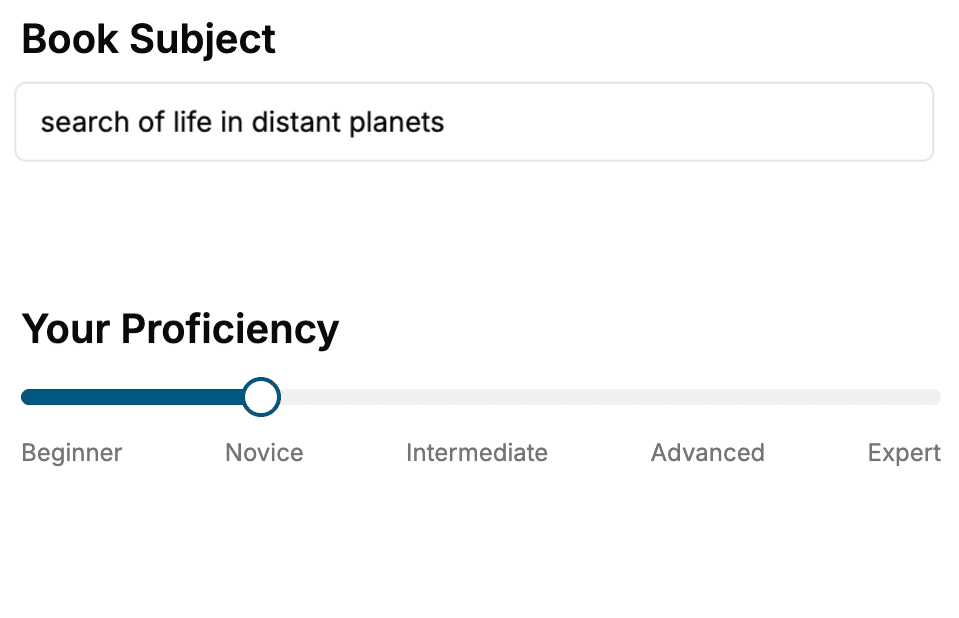
Select the focus of your Ethics book and share your background
- 2. Personalize your book
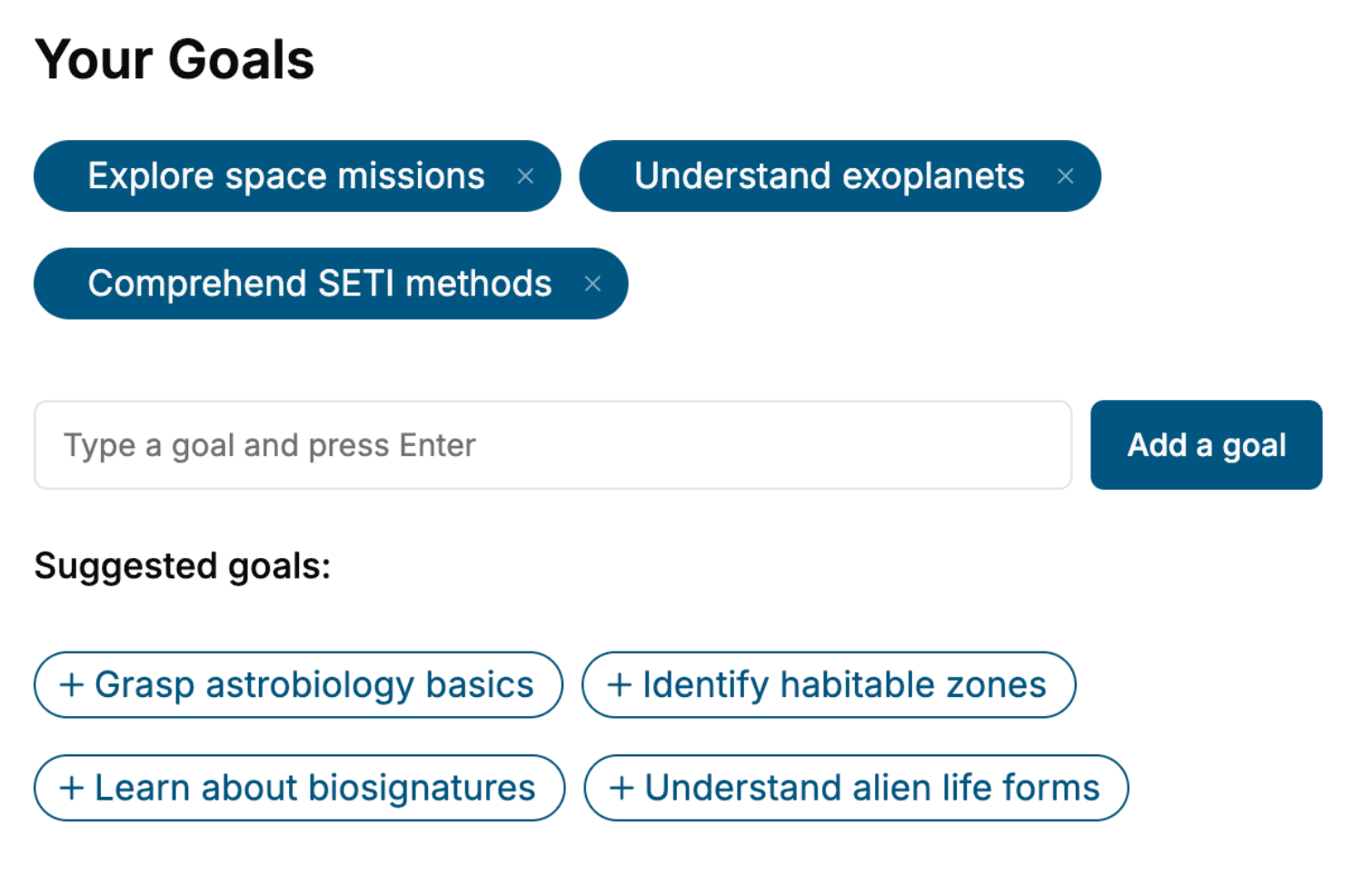
Specify your goals and choose sub-topics to include
- 3. Get your tailored book
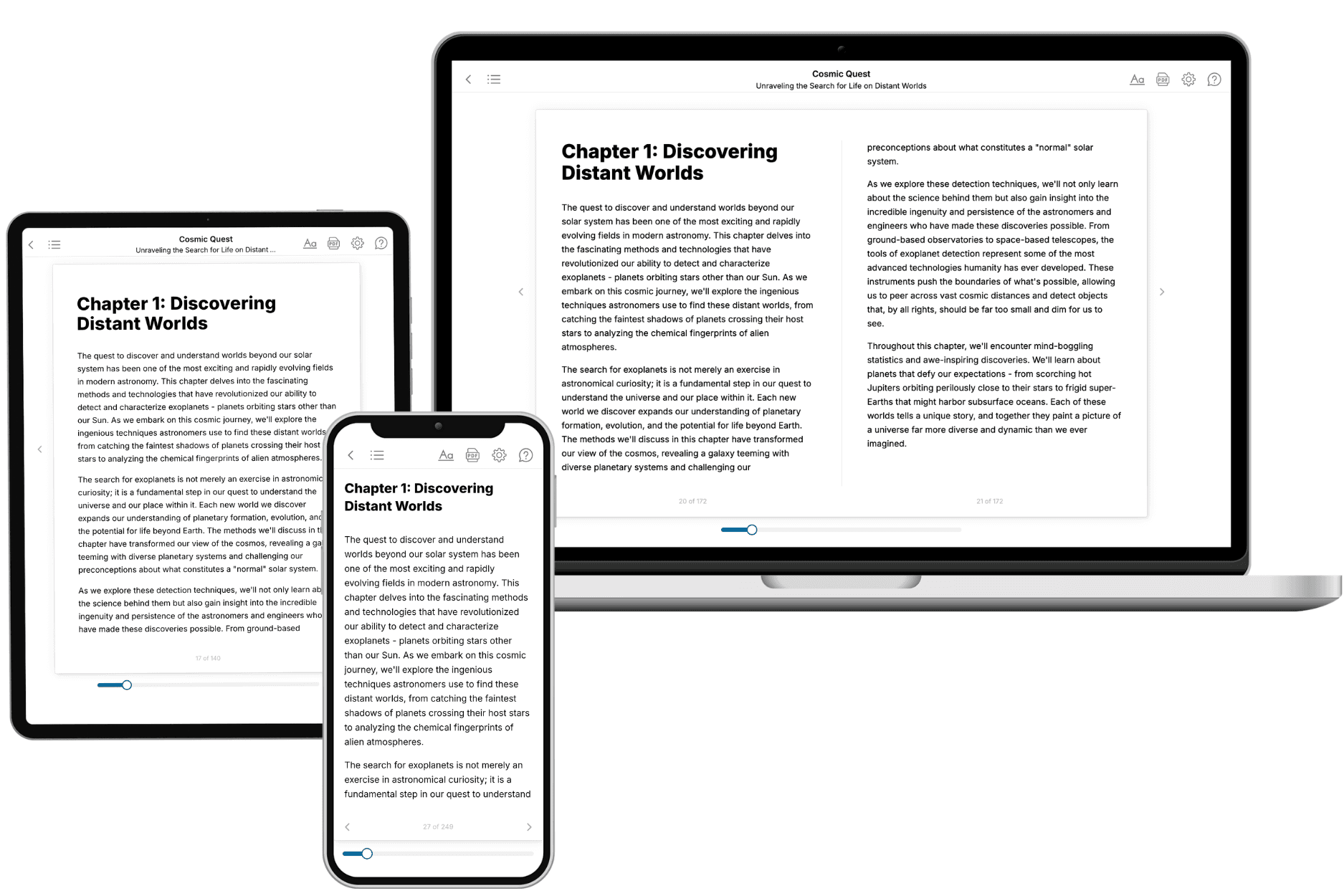
Your book is ready in 10 minutes. Read it online, download as EPUB or PDF, or send to Kindle.
Frequently asked questions
- What is TailoredRead?
TailoredRead creates complete, full-length nonfiction ebooks, written specifically for you. Tell us what you want to learn and why, and TailoredRead writes you a complete ebook on it, with charts, tables, and diagrams throughout. Read it online, on Kindle, or on any e-reader, or download it as a PDF or EPUB. Every book is written fresh the day you order it.
- How is the book tailored to me?
Before anything is written, you answer a few short questions about your goals, your background, and the topics you care about. Your book is then planned around your answers: written at your level, focused on your goals, and covering the topics you chose, instead of the one-size-fits-all book a store sells everyone.
- Will it read like generic AI content?
No. Your book isn't a chat transcript: it's planned chapter by chapter before a single word is written, told in a clear book voice, and explains ideas visually with charts, tables, and diagrams. After writing, every book goes through an editorial pass that polishes chapters so the book reads consistent from start to finish. Judge for yourself: browse thousands of sample books on our Explore Books page.
- How accurate is the content?
Our AI first checks whether your subject needs live research. Niche and fast-moving subjects are researched before writing, and the book plan and chapters are grounded in what it finds. After writing, every book goes through a quality pass that checks its facts and consistency, and researched books list their sources in a Notes section at the back.
- How long is the book?
You choose the length: Comprehensive (250-300 pages), Detailed (150-200 pages), Essential (70-100 pages), or Short (30-50 pages).
- Does the book include visuals?
Yes. Every book includes visual elements such as timelines, checklists, step-by-step guides, decision trees, comparison tables, and matrices, and many include bar charts. A typical book includes dozens of these visual elements.
- Can I read it on Kindle? What formats can I download?
Yes. Every book can be read in our online reader or downloaded as a PDF or EPUB. The EPUB can be opened with Kindle, Apple Books, Kobo, and any e-reader. The Commercial and Author licenses also include an editable Word (DOCX) and Markdown download.
- How much does it cost?
About the price of a regular ebook. The exact price depends on your book's length and complexity, from $2 for the shortest books to $35 for the most comprehensive, and it's shown when you review your book, before you commit to anything. Each book is a one-time purchase, yours to keep, no subscription. Licenses that let you share, teach, or publish your book range from $35.99 to $49.99.
- Can I preview the book before purchasing?
Before you pay, you'll see what your book will cover: the title, a detailed description, the estimated length, and the complete chapter-by-chapter table of contents, so you know what you're getting before you decide. The full text itself is written after you purchase.
- How long does it take to create a book?
About 10 minutes. You can start reading the opening chapters while the rest is still being written.