Theology Books
Explore tailored Theology books created by our AI
What if the love you've been seeking has been woven into the fabric of existence since before time began? This exploration delves into the profound theological foundations of divine love as expressed through God's creative acts, Christ's redemptive ministry, and the transformative witness of the twelve disciples. You'll examine how the heavens and earth declare God's character, how Jesus embodied compassion in revolutionary ways, and how ordinary individuals became extraordinary vessels of sacred love. Through careful analysis of Scripture and theological reflection, you'll discover practical pathways for cultivating a compassionate mindset and fostering loving relationships rooted in spiritual truth. This book bridges ancient wisdom with contemporary application, offering you a comprehensive framework for understanding how God's love operates in creation, redemption, and daily life. Whether you're deepening your theological knowledge or seeking to live more mindfully in God's presence, you'll find insights that challenge, inspire, and equip you for a life characterized by divine love.
The Unveiled Mystery
Understanding Divine Revelation and the Nature of Existence
Many people struggle with a fundamental tension: how can divine revelation be real and meaningful in a world that demands rational explanation? This book addresses that central conflict by exploring divine revelation not as a relic of ancient texts, but as a living philosophical and existential reality. You'll discover how revelation operates across multiple dimensions—through direct experience, intellectual insight, and the very fabric of existence itself. Rather than asking you to choose between faith and reason, this exploration shows how both are essential to understanding transcendent truth. By examining revelation through philosophical inquiry, spiritual traditions, and contemporary thought, you'll develop a more integrated understanding of how the divine communicates with human consciousness. This book equips you with frameworks for recognizing, interpreting, and living according to revelatory insights, while maintaining intellectual integrity and openness to mystery.
The Trinity Explained
Understanding God's Nature Through Scripture, History, and Theology
What if the most fundamental Christian doctrine isn't actually spelled out in the Bible? The Trinity stands as Christianity's most distinctive and debated theological claim—that God exists as three persons in one essence. Yet this doctrine doesn't appear explicitly in Scripture, and its development spans centuries of theological struggle, church politics, and philosophical debate. This book traces the Trinity's journey from scattered biblical hints through the heated councils of the early church to its place in modern Christian thought. You'll discover how biblical passages about Father, Son, and Holy Spirit were gradually synthesized into formal doctrine, why early theologians found this framework essential, and how different Christian traditions understand it today. Whether you're exploring Christianity's intellectual foundations, preparing for theological discussions, or simply curious about how one of religion's most complex ideas came to be, this book provides the historical context, scriptural evidence, and theological clarity you need to grasp this central Christian belief.
Navigate the complexities of moral living with confidence by understanding the biblical and theological foundations of Christian ethics. This comprehensive guide explores how Christian moral principles have developed from Scripture through centuries of theological reflection, equipping you with the wisdom to make ethical decisions that honor God and serve others. You'll discover how the Ten Commandments and Jesus's teachings establish the framework for Christian virtue, learn why character development matters more than rule-following alone, and understand how to apply ancient wisdom to modern dilemmas. Whether you're wrestling with personal integrity, social justice, or complex ethical questions, this book provides the theological grounding and practical guidance you need. Rooted in Scripture and informed by church tradition, these principles offer a coherent vision for living ethically as a Christian in today's world.
Divine Providence Unveiled
Exploring the Intersection of Divine Will and Human Existence
Imagine a world where the intricate tapestry of life's events unfolds with purpose and meaning. In "Divine Providence Unveiled," you'll discover the profound concept that has captivated philosophers, theologians, and seekers for centuries. This book delves deep into the heart of divine providence, offering a fresh perspective on how it shapes our understanding of existence and purpose. As you journey through these pages, you'll explore the intricate relationship between divine will and human free will, uncovering insights that challenge and expand your worldview. You'll gain a nuanced understanding of how providence intersects with the complexities of human experience, from moments of triumph to periods of adversity. "Divine Providence Unveiled" doesn't just present abstract concepts; it provides a framework for contemplating your place in the grand design of the universe. Through thought-provoking examples and accessible explanations, you'll develop a richer appreciation for the philosophical implications of divine providence in your daily life.
Discover the hidden spiritual dimensions that have shaped Jewish thought and practice for over two thousand years. This book guides you through the essential teachings of Jewish mysticism—from the earliest Merkavah mystics to modern Hasidic philosophy—revealing how these traditions transformed Jewish identity and continue to offer profound insights today. You'll explore the symbolic architecture of Kabbalah, understand how Hasidic masters democratized spiritual experience, and learn practical approaches to contemplative practice rooted in Jewish tradition. Whether you're seeking to deepen your connection to Jewish heritage, understand the philosophical foundations of Jewish spirituality, or explore how mystical thinking addresses life's deepest questions, this book provides the historical context, conceptual frameworks, and practical wisdom you need. Written for those with foundational Jewish knowledge, it makes complex mystical concepts accessible without oversimplifying their depth and significance.
Many assume the Nicene Creed simply summarizes what Christians have always believed, but the truth is far more complex and fascinating. This creed emerged from a turbulent moment in Christian history when the Church faced an existential crisis over fundamental questions about God and Christ. Rather than being handed down unchanged, the Nicene Creed was forged through intense theological debate, political maneuvering, and the collision of competing visions for Christian orthodoxy. This book traces the creed's remarkable journey from the Council of Nicaea in 325 CE through its evolution and enduring influence on Christian faith and practice. You'll discover how ancient philosophers shaped theological language, why Constantine convened the council, what made the creed so controversial, and how different Christian traditions relate to it today. Whether you're exploring Christian history, deepening your faith understanding, or simply curious about one of history's most influential religious statements, this exploration reveals how doctrine develops and why the Nicene Creed remains central to Christian identity across denominations.
AI and the End Times
Discerning Technology Through Scripture, Prophecy, and Spiritual Wisdom
As artificial intelligence reshapes society, Christian leaders face urgent questions: Does AI fulfill biblical prophecy? Is it inherently dangerous? How should we respond spiritually and practically? This book guides you through a careful, theologically grounded exploration of these questions. You'll examine how to interpret end-times prophecy responsibly, develop spiritual discernment practices for evaluating technology, assess genuine existential risks without succumbing to fear, and understand the theological implications of algorithmic decision-making and deepfakes. Drawing on Scripture, Christian wisdom traditions, and contemporary technological realities, you'll discover how to lead your congregation with both prophetic clarity and pastoral compassion. Rather than offering simplistic answers, this book equips you with frameworks for ongoing discernment, helping you distinguish between legitimate concerns and unfounded speculation. You'll learn to address your community's anxieties about AI while modeling thoughtful engagement with technology that honors both faith and reason.
Faith and Justice
The Historical Roots and Modern Relevance of Christian Socialism
Discover how Christianity's earliest followers practiced radical economic sharing and how this vision resurged during the Industrial Revolution as Christian thinkers confronted unprecedented human suffering. This book traces Christian Socialism from its biblical roots through its emergence as a distinct theological movement in 19th-century Europe and America, exploring how faith communities have wrestled with the relationship between spiritual salvation and social justice. You'll examine the lives and ideas of influential Christian Socialist thinkers, understand the theological arguments that distinguish this tradition from both secular socialism and conservative Christianity, and explore how these principles manifest in contemporary movements addressing inequality, labor rights, and environmental justice. Through historical analysis and theological reflection, you'll gain insight into a often-overlooked dimension of Christian history that continues shaping faith-based activism today. Whether you're a student of religious history, an activist seeking theological grounding, or a believer exploring Christianity's prophetic tradition, this book provides the context and analysis needed to understand how faith and justice have been inseparably linked throughout Christian history.
Many assume miracles are either impossible superstitions or divine interventions that bypass natural law entirely. But what if miracles reveal something deeper about the nature of reality itself? This book explores miracles not as violations of physics, but as phenomena that challenge our fundamental assumptions about existence, causality, and consciousness. You'll discover how miracles have been understood across philosophical traditions, why they matter to questions about meaning and purpose, and how examining them can expand your understanding of what's possible. Whether you approach this from faith, skepticism, or genuine curiosity, you'll find a rigorous exploration that respects both reason and experience. This is not a book about proving miracles happen—it's about understanding what miracles reveal about the nature of existence and why the question matters to how you live.
Many Christians struggle to move beyond surface-level faith, unsure how to truly forgive themselves and others, or how to hear God's voice clearly in their daily decisions. This book addresses that struggle by offering a practical, spiritually grounded guide rooted in the unique prayer movement happening across Stark County's 24 border towns. You'll discover how biblical forgiveness principles can free you from spiritual burdens, learn proven techniques for building a consistent prayer discipline, and explore how soul cleansing through confession leads to genuine spiritual renewal. Through devotional routines, scripture meditation, and intercessory prayer practices, you'll strengthen your relationship with God while developing the spiritual courage needed to follow His will. This guide also connects you with your local faith community, showing how shared prayer and collective witness amplify individual transformation. Whether you're beginning your spiritual journey or deepening an existing faith, you'll find practical tools, biblical wisdom, and inspiration to experience the redemption, peace, and purpose God offers.
The Gnostic Divide
Understanding the Hidden Teachings That Shaped Early Christianity
Discover how a hidden spiritual movement challenged the foundations of early Christianity and shaped the religion we know today. This book traces the fascinating history of Gnosticism—a diverse collection of mystical beliefs that offered an alternative vision of Jesus, God, and salvation. You'll explore the theological battles that raged in the first centuries of Christianity, learn why Church authorities worked to suppress Gnostic teachings, and understand the profound differences between Gnostic and orthodox interpretations of scripture. Through careful analysis of ancient texts, including the remarkable Nag Hammadi library, you'll see how Gnosticism drew from Jewish mysticism, Greek philosophy, and early Christian thought. This exploration reveals not just a historical curiosity, but a crucial lens for understanding Christianity's development, the nature of religious authority, and how competing visions of truth shaped Western civilization. Whether you're a student of religious history, theology, or simply curious about Christianity's hidden dimensions, this book provides the context and clarity needed to grasp one of history's most misunderstood spiritual movements.
What if the deepest truths of Scripture were meant to be experienced, not just studied? Christian mysticism offers a pathway to direct encounter with God that has been practiced by faithful believers for nearly two thousand years. This book explores the rich tradition of Christian contemplative spirituality, grounded in biblical history and theological rigor, while providing practical methods you can implement immediately. You'll discover how the Desert Fathers approached prayer, why medieval mystics developed sophisticated frameworks for spiritual growth, and how ancient practices like lectio divina remain profoundly relevant today. Whether you're seeking to move beyond intellectual faith into lived experience, or you're curious about the contemplative dimension of Christianity that often remains hidden in modern churches, this guide bridges the gap between theory and practice. Learn the difference between authentic mystical experience and spiritual sentimentality, understand the stages of spiritual development, and develop a sustainable contemplative practice that transforms your relationship with God and Scripture.
Discover how mathematical patterns and numerical codes are woven throughout the Book of Revelation, revealing layers of meaning hidden in plain sight. This comprehensive guide combines your mathematical expertise with ancient biblical scholarship to decode the gematria systems, prophetic number sequences, and symbolic patterns that early Christians and Jewish mystics embedded in apocalyptic literature. You'll learn systematic methods for calculating Hebrew gematria values, identifying numerical prophecy codes, and analyzing the mathematical structures underlying Revelation's symbolism. From understanding the theological significance of 666 to tracing covenant patterns through numerical sequences, this book bridges rigorous mathematical analysis with historical context and theological interpretation. Whether you're exploring Kabbalistic traditions, examining eschatological frameworks, or analyzing the literary architecture of biblical prophecy, you'll gain practical tools for decoding sacred texts while understanding the historical, cultural, and theological contexts that shaped these mathematical systems. Perfect for someone with mathematical training seeking deeper engagement with biblical scholarship.
The Mystics of Israel
Lives, Teachings, and Spiritual Legacies of Jewish Mystical Masters
Discover the extraordinary lives and teachings of history's most influential Jewish mystics. This book takes you through centuries of spiritual seeking, introducing you to visionary figures who transformed how Jews understood the divine and their relationship to the sacred. From the early Kabbalists who mapped the hidden dimensions of reality to the Hasidic masters who brought ecstatic joy into everyday worship, you'll encounter remarkable individuals whose personal spiritual journeys reshaped entire communities. Through their stories, you'll learn the core practices and insights that defined Jewish mysticism—meditation techniques, mystical interpretations of sacred texts, and paths to direct divine experience. Whether you're exploring your own spiritual roots or seeking to understand how mystical traditions continue to influence contemporary Jewish life, this book illuminates the profound wisdom these masters left behind and shows why their teachings remain vital today.
The Ontological Argument
Understanding the Philosophical Case for God's Existence
What if the existence of God could be proven through pure thought alone, without needing to observe the world around you? This question has captivated philosophers for nearly a thousand years. The ontological argument represents one of the most audacious intellectual endeavors in Western philosophy—an attempt to demonstrate God's existence through conceptual analysis and logical reasoning. This book guides you through the intricate landscape of ontological arguments, from Anselm's medieval formulation to contemporary modal logic approaches. You'll discover how philosophers have refined, challenged, and reimagined these arguments across centuries. By examining the logical structure, historical context, and philosophical implications of ontological reasoning, you'll gain insight into fundamental questions about existence, necessity, and the nature of concepts themselves. Whether you're exploring philosophy for the first time or deepening your understanding of classical arguments, this book provides the clarity and rigor needed to engage with one of philosophy's most fascinating debates.
The Pauline Letters Explained
Understanding Paul's Revolutionary Message to the Early Church
Discover the revolutionary letters that shaped Christianity. Paul's epistles stand as the earliest Christian writings, offering unfiltered access to how the first believers understood Jesus, community, and faith itself. This book guides you through Paul's world—his Jewish background, his dramatic conversion, his missionary travels across the Mediterranean—and shows you how to read his letters as responses to real churches facing real problems. You'll explore the major themes that run through his writings: justification by faith, the role of the Holy Spirit, what it means to be part of Christ's body, and how believers should live together. Rather than treating Paul's letters as isolated proof-texts, you'll learn to read them in their historical sequence and context, discovering how his thinking developed and deepened over time. Whether you're studying for personal growth, preparing to teach others, or simply wanting to understand these foundational Christian texts more deeply, this book provides the historical knowledge, theological insight, and practical tools you need to engage Paul's letters with confidence and clarity.
The Synoptic Question
Understanding the Literary Relationship Between Matthew, Mark, and Luke
The relationship between Matthew, Mark, and Luke has puzzled readers for nearly two millennia. Why do these three gospels share so much material, sometimes word-for-word, yet differ in significant ways? This question—known as the Synoptic Problem—stands at the heart of understanding how the New Testament came to be and what it tells us about early Christianity. This book guides you through the fascinating detective work of source criticism, form criticism, and redaction criticism. You'll discover why most scholars believe Mark wrote first, what the mysterious Q source might have contained, and how each gospel writer adapted their materials for specific audiences and theological purposes. Beyond academic theories, you'll gain practical tools for reading the gospels with greater insight and appreciation. Whether you're studying theology, exploring religious history, or simply curious about how these foundational texts came together, you'll find clear explanations of complex scholarly debates alongside concrete examples from the gospel texts themselves. By understanding the synoptic gospels' literary relationships, you'll develop a richer, more nuanced appreciation for these ancient documents and the communities that produced them.
The Thinking Person's Guide to Religion
Understanding Faith Through Philosophy and Reason
Imagine approaching questions of faith, meaning, and spirituality with the same intellectual rigor you'd apply to any important decision. This book equips you with philosophical tools to examine religion not as a believer or skeptic, but as a thoughtful inquirer. You'll explore how major philosophical movements have shaped religious thought, confront timeless questions about God's existence and nature, and discover why the relationship between faith and reason is far more nuanced than popular debates suggest. Whether you're religious, secular, or somewhere in between, you'll gain frameworks for understanding diverse beliefs, engaging in meaningful dialogue across worldviews, and thinking more clearly about spirituality's role in human life. This isn't about convincing you what to believe—it's about helping you think more deeply about why people believe what they do, and what those beliefs mean.
Christian Democracy
Faith, Justice, and the Democratic Tradition
Discover how Christian faith has profoundly shaped democratic thought and governance throughout history. This comprehensive exploration traces the intellectual and spiritual roots of Christian Democracy—a movement that bridges theology and politics in ways that continue to influence societies worldwide. You'll gain insight into how Christian principles of human dignity, justice, and the common good have been translated into concrete political philosophies and policies. From medieval theological foundations through the Reformation and into contemporary debates, you'll understand the key thinkers, movements, and historical moments that defined this tradition. Whether you're studying religious history, political philosophy, or seeking to understand the role of faith in public life, this book provides the context and analysis needed to grasp how Christianity has contributed to democratic development. Explore the tensions, achievements, and ongoing relevance of Christian Democracy in our increasingly pluralistic world.
Discover how one of humanity's most profound concepts—the Trinity—illuminates the deepest questions about existence itself. This book moves beyond religious interpretation to explore the Trinity as a philosophical principle that reveals the fundamental structure of reality. You'll examine how the Trinity appears across diverse traditions, understand its relevance to consciousness and being, and learn how this ancient wisdom applies to modern philosophical inquiry. Through clear analysis and accessible explanations, you'll develop a richer understanding of how unity and multiplicity coexist, how consciousness operates, and how the Trinity principle offers a framework for comprehending existence that transcends traditional dualistic thinking. Whether you're exploring metaphysics, seeking deeper philosophical understanding, or curious about the universal patterns underlying reality, this book provides the conceptual tools to engage with one of humanity's most enduring and transformative ideas.
Imagine understanding Christianity not as a static set of beliefs handed down unchanged, but as a living, evolving movement shaped by real people navigating real cultural pressures. This book reveals how Christianity transformed from a small, radical Jewish sect into a global religion—and how that transformation happened through deliberate theological choices, cultural adaptation, and sometimes fierce disagreement among early Christian leaders. You'll discover what the earliest Christian communities actually believed and practiced, how patristic theologians grappled with philosophical challenges to articulate Christian doctrine, and why the Bible itself became standardized only after centuries of debate. By exploring the moral philosophy foundations, the influence of Greek and Roman thought, and the major paradigm shifts that reshaped Christian identity, you'll gain a nuanced understanding of how Christianity became what it is today—and why different Christian traditions developed such different interpretations of the same faith.
Imagine possessing a deep, nuanced understanding of the human soul that bridges ancient wisdom with contemporary psychological insights. Picture yourself equipped with practical frameworks for spiritual development that have guided millions toward inner peace, moral clarity, and authentic character for over fourteen centuries. This comprehensive exploration of the soul in the Quran reveals the sophisticated psychological and spiritual framework embedded within Islamic teachings. You'll discover how the Quran's unique perspective on human consciousness—distinguishing between nafs, ruh, and qalb—offers profound insights into the nature of spiritual development, moral reasoning, and character transformation. Through detailed analysis of Quranic verses, parables, and wisdom literature, you'll gain access to time-tested methods for soul purification, ethical decision-making, and spiritual growth. The book systematically unpacks Islamic cognitive frameworks, showing how concepts like taqwa, fitrah, and tawhid create integrated approaches to understanding human behavior, emotional regulation, and spiritual development. You'll explore practical applications of Islamic mindfulness through dhikr, learn the stages and methods of tazkiyah (soul cleansing), and understand how Quranic guidance principles can be applied to contemporary challenges. Whether you're seeking to deepen your understanding of Islamic psychology, integrate spiritual wisdom into your practice, or develop a more comprehensive approach to character development, this guide provides the knowledge and tools you need to navigate the rich landscape of Quranic teachings on the soul with confidence and clarity.
Imagine understanding the rich spiritual heritage that shaped medieval Europe and continues to inspire seekers today. This comprehensive exploration reveals how Celtic Christianity developed as a vibrant, distinctive expression of faith in the remote lands of Ireland, Scotland, Wales, and beyond. You'll discover how isolated Celtic communities created unique theological perspectives, developed revolutionary monastic systems, and produced some of history's most beautiful sacred art. From the missionary journeys of Saint Columba to the scholarly achievements of Irish monks, this book traces how Celtic Christians preserved classical learning during Europe's darkest ages and influenced the broader development of Western Christianity. You'll explore the theological distinctiveness of Celtic spirituality, the tension between Celtic and Roman practices, and how this ancient tradition speaks to contemporary spiritual questions. Whether you're interested in church history, spirituality, or the cultural achievements of the early medieval period, this book provides the context, detail, and insight needed to appreciate one of Christianity's most fascinating chapters.
Discover what the biblical authors actually wrote and meant. When you read Scripture in its original languages, you unlock meanings that translations inevitably simplify or miss entirely. This guide makes original language study practical and accessible, whether you're a pastor preparing sermons, a student deepening your faith, or a scholar pursuing rigorous biblical interpretation. You'll learn the essential grammar and vocabulary of Biblical Hebrew, Aramaic, and Greek—not as an academic exercise, but as a direct path to understanding God's Word more fully. Through clear explanations, practical examples, and proven study methods, you'll gain confidence reading original texts, recognize theological nuances in key passages, and evaluate translations with informed discernment. No prior language study required. This book equips you with the tools, strategies, and knowledge to engage Scripture at its deepest level and experience the richness of the biblical text as the original audience understood it.
The Grace Paradox
Understanding Divine Grace in a World of Cause and Effect
Many assume divine grace is a religious concept reserved for the faithful, or worse, a comforting illusion with no basis in reality. Yet grace appears everywhere—in unexpected moments of clarity, in the beauty that moves us without explanation, in second chances we didn't earn. This book explores grace not as dogma but as a fundamental dimension of existence that challenges our assumptions about cause and effect, merit and reward, control and surrender. You'll discover how grace operates across philosophical traditions, why it creates productive tension with free will, and how recognizing grace in your life can transform your relationship with suffering, failure, and meaning. Through accessible philosophy, real-world examples, and practical reflection, this exploration reveals that grace isn't something to believe in—it's something to recognize, understand, and learn to receive. Whether you approach this from a spiritual, philosophical, or purely existential perspective, you'll find a framework for making sense of life's most mysterious and transformative moments.
This book takes you through the fascinating world of Gnosticism, a movement that challenged the foundations of early Christianity. You'll discover how Gnostic Christians understood Jesus, salvation, and the divine in radically different ways than the mainstream church that eventually dominated history. Starting with the historical context of the first centuries CE, you'll explore the core beliefs that made Gnosticism so controversial—including its vision of a flawed creator god and a hidden, transcendent divine reality. You'll examine the remarkable Nag Hammadi texts that were buried for 1,600 years, revealing sophisticated theological ideas that scholars had only glimpsed through the writings of their critics. Throughout, you'll understand why church authorities worked so hard to suppress these teachings and how Gnosticism's influence persisted in unexpected ways. Whether you're studying religious history, exploring alternative Christian perspectives, or simply curious about the diversity of early Christian thought, this book provides the context and clarity you need to grasp this complex and compelling movement.
The Dead Sea Scrolls Revealed
Understanding Ancient Texts That Changed Biblical Studies
Imagine holding a 2,000-year-old manuscript in your hands—one that contains the oldest known biblical texts ever discovered. The Dead Sea Scrolls represent one of archaeology's most significant finds, yet their true significance often remains misunderstood. This book takes you beyond the headlines to explore what these ancient documents actually reveal about biblical history, religious practice, and the world of Second Temple Judaism. You'll discover how a shepherd's chance discovery in 1947 transformed biblical scholarship, what the scrolls tell us about the reliability of biblical transmission, and how they illuminate the religious landscape that shaped early Christianity. Through clear explanations of complex scholarly debates, you'll learn to evaluate competing interpretations and understand why these texts matter for anyone interested in biblical studies, religious history, or ancient civilizations. Whether you're a student, educator, or curious reader, this book provides the knowledge and context needed to appreciate one of humanity's most remarkable archaeological treasures.
Gain a deep, nuanced understanding of one of Christianity's most influential and often misunderstood movements. This comprehensive exploration traces fundamentalist Christianity from its 19th-century origins through its modern expressions, revealing how theological convictions, historical circumstances, and cultural pressures shaped a movement that continues to influence millions today. You'll discover the key figures, pivotal moments, and theological debates that defined fundamentalism's emergence as a distinct Christian response to modernity. From the publication of "The Fundamentals" to the Scopes Trial, from denominational splits to the rise of independent churches, this book illuminates the complex historical forces that created and sustained this movement. Through careful analysis of primary sources, theological documents, and historical records, you'll understand how fundamentalist Christianity developed its characteristic emphasis on biblical inerrancy, premillennialism, and separation from liberal theology. The book examines regional variations, denominational differences, and the movement's evolving relationship with broader evangelicalism. Whether you're a student of religious history, a curious believer, or someone seeking to understand the historical roots of contemporary Christian conservatism, this book provides the historical context and analytical framework necessary to comprehend fundamentalism's enduring significance in American Christianity and beyond.
The Lion of Judah
Understanding Rastafarian Philosophy and Spiritual Kingship
Discover the profound spiritual and philosophical significance of the Lion of Judah within Rastafarianism and beyond. This exploration takes you through centuries of history, from ancient biblical narratives to modern spiritual movements, revealing how a single symbol became a beacon of hope, resistance, and divine consciousness. You'll examine the historical context that shaped Rastafarian theology, the role of Haile Selassie I in crystallizing this belief system, and the deeper philosophical principles underlying the Lion of Judah concept. Through careful analysis of African spirituality, biblical interpretation, and cultural history, you'll understand how this symbol challenges conventional religious frameworks and offers pathways to personal empowerment and collective liberation. Whether you're exploring Rastafarianism for the first time or deepening existing knowledge, this book provides the intellectual and spiritual foundation needed to grasp why the Lion of Judah remains a transformative force in contemporary consciousness and social movements.
What if the Christianity you know today is the result of specific historical moments when everything could have turned out differently? This book takes you beyond Sunday school narratives into the actual historical forces, personalities, and decisions that shaped Christian faith across two millennia. You'll discover how a persecuted Jewish sect became the Roman Empire's religion, why theological councils mattered as much as military battles, and how reformers fractured and renewed Christianity simultaneously. Through carefully structured exploration of pivotal events—from Constantine's vision to the Reformation's upheaval—you'll gain the analytical tools to understand not just what happened, but why it mattered. Each chapter builds your knowledge systematically, connecting ancient church fathers to medieval scholastics to modern movements. You'll trace how theological ideas emerged from historical crises, how cultural contexts shaped religious expression, and how individual figures redirected entire traditions. Whether you're deepening your faith understanding or satisfying intellectual curiosity, this blueprint provides the comprehensive historical foundation you've been seeking.
Discover how one of the Quran's most profound narratives holds the key to understanding yourself at the deepest level. This book bridges three powerful traditions—classical Islamic wisdom, Sufi psychology, and modern psychological science—to reveal what the Adam-Iblis story teaches about human consciousness, moral development, and authentic self-knowledge. Drawing on your medical background and spiritual interests, you'll explore how the nafs (ego-self) functions as both a psychological and spiritual reality, how Iblis's refusal to acknowledge limitation mirrors modern patterns of denial and narcissism, and how Adam's journey of repentance and learning models genuine psychological growth. Rather than treating these traditions as separate, you'll see how they illuminate each other, offering a comprehensive framework for understanding the patterns that shape your thoughts, emotions, and choices. This is not abstract theology—it's a practical guide to recognizing your own psychological and spiritual patterns, understanding the mechanisms of self-deception, and cultivating the humility and self-awareness that lead to genuine transformation. By the end, you'll possess an integrated understanding of human nature that honors both scientific rigor and spiritual depth.
Ecumenical Councils
Shaping the Faith: A Journey Through Christianity's Defining Moments
Have you ever wondered how the core beliefs of Christianity were shaped and defined throughout history? "Ecumenical Councils: Shaping the Faith" takes you on a fascinating journey through the pivotal gatherings that have molded Christian doctrine and practice for centuries. You'll discover how these councils navigated complex theological debates, addressed heresies, and established the foundations of Christian orthodoxy. From the Council of Nicaea to the Second Vatican Council, this book illuminates the historical context, key players, and lasting impact of each major ecumenical council. You'll gain insights into the political and cultural forces that influenced these gatherings, and understand how their decisions continue to resonate in modern Christianity. Whether you're a history enthusiast, a theology student, or simply curious about the development of Christian thought, this book offers a clear and engaging exploration of the ecumenical councils. By the end, you'll have a deeper appreciation for the rich tapestry of Christian history and the collaborative process that has defined the faith for generations.
Bridging Faiths
Understanding and Overcoming Antisemitism in the Christian Church
Imagine a world where Christians and Jews come together in mutual understanding and respect, free from the shadows of historical prejudice and misunderstanding. In "Bridging Faiths: Understanding and Overcoming Antisemitism in the Christian Church," you'll discover the path to this enlightened future. This groundbreaking book delves deep into the complex history of Christian-Jewish relations, exploring the roots of antisemitism within the Church and its impact on both communities. You'll gain insights into the theological misconceptions that have fueled prejudice and learn how different Christian denominations have grappled with this issue. "Bridging Faiths" doesn't just illuminate problems; it offers solutions. You'll explore successful interfaith dialogue initiatives, examine educational strategies for combating antisemitism, and discover how individuals and communities are working to build bridges of understanding. Through compelling narratives and rigorous analysis, this book equips you with the knowledge and tools to become an agent of positive change in your faith community. Whether you're a religious leader, an educator, or simply someone passionate about fostering interfaith harmony, "Bridging Faiths" will challenge your perceptions and inspire you to action. It's time to heal old wounds and create a future where Christian-Jewish relations are marked by mutual respect, understanding, and cooperation.
Peaceful Prayers
Finding Happiness Through Daily Spiritual Practice
Discover how prayer can become your daily anchor for peace and happiness. This book guides you through the transformative power of spiritual practice, showing you that meaningful prayer isn't about perfection—it's about genuine connection. You'll learn practical techniques to establish a prayer routine that fits your life, explore different prayer styles that resonate with your beliefs, and understand how consistent practice rewires your mind toward greater calm and contentment. Through real-world examples and step-by-step guidance, you'll discover how to turn moments of prayer into moments of profound peace. Whether you're beginning your spiritual journey or deepening an existing practice, this book provides the tools, insights, and encouragement you need to experience the happiness that comes from a life rooted in prayer. Learn to navigate life's challenges with spiritual strength, cultivate gratitude that transforms your perspective, and build a prayer practice that sustains you through every season of life.
The Sound of Faith
How Christian Music Shaped History, Culture, and the Soul
Christian music has been woven into the fabric of faith for nearly two thousand years, yet many people don't fully understand how deeply it shaped both religious practice and Western culture itself. From the haunting chants of medieval monasteries to the electrifying energy of modern worship services, music has been far more than entertainment—it's been theology set to sound, a way for believers to express what words alone cannot capture. This book traces the remarkable journey of Christian music through history, revealing how each era's musical innovations reflected the spiritual needs and cultural contexts of their time. You'll discover how Gregorian chant influenced all Western music, why the Reformation made hymn-singing revolutionary, how African American spirituals became expressions of unbreakable faith, and why contemporary Christian music continues to evolve. Whether you're a musician, a history enthusiast, or simply someone curious about how faith and culture intersect, this exploration will deepen your appreciation for the power of sacred sound and its enduring influence on human spirituality.
Many people assume Buddhist monasteries are isolated retreats disconnected from the modern world, but the reality is far more dynamic and relevant. Buddhist monasteries are vibrant communities that have shaped civilizations, preserved knowledge, and continue to offer profound spiritual insights today. This book takes you inside the sacred walls to explore how these remarkable institutions function, from their architectural design rooted in spiritual symbolism to the daily practices that sustain centuries-old traditions. You'll discover how monks and nuns navigate monastic life, understand the differences between Buddhist traditions, and learn why monasteries remain vital centers of learning and spiritual practice. Whether you're interested in Buddhist philosophy, religious history, or simply curious about how contemplative communities operate, this guide provides accessible, authoritative insights into one of humanity's most enduring spiritual institutions.
Sacred Roots
Understanding African Religious Traditions Through History
Deepen your appreciation for one of humanity's oldest and most diverse spiritual landscapes. This comprehensive exploration takes you through the rich tapestry of African religious traditions, revealing how these ancient belief systems have shaped cultures, communities, and worldviews across the continent for thousands of years. You'll discover the profound wisdom embedded in oral traditions, the central role of ancestral veneration, and the sophisticated cosmologies that view all existence as interconnected. From the Yoruba pantheon of West Africa to the spiritual practices of the Maasai, from ancient Egyptian mysteries to contemporary syncretic movements, you'll gain insight into belief systems that emphasize community, balance, and harmony with the natural world. This book illuminates how African religious traditions have not only survived but thrived despite centuries of external pressures, adapting while maintaining their essential character. You'll explore sacred rituals, understand the significance of divination practices, and learn about the role of spiritual leaders in maintaining cultural continuity. Whether you're seeking to understand the historical foundations of African spirituality or exploring how these traditions continue to influence contemporary religious movements worldwide, this book provides the knowledge and context you need to appreciate the enduring power and relevance of Africa's sacred heritage.
You'll discover how a small religious movement in first-century Palestine grew into a force that reshaped empires, created institutions that still influence society today, and fundamentally altered the course of human civilization. This exploration takes you through the pivotal moments when Christian beliefs intersected with political power, cultural transformation, and social change. You'll examine how medieval monasteries preserved knowledge, how the Reformation challenged established authority, how missionary movements connected distant continents, and how Christian thought influenced everything from science to social justice. By understanding these historical connections, you'll gain insight into how religious movements shape societies, why certain historical events unfolded as they did, and how the past continues to influence our present world. This is not merely a chronicle of dates and figures—it's an analysis of cause and effect, belief and consequence, that reveals the profound ways faith and history intertwine.
In a world where information flows endlessly and algorithms shape what you see, how do you know what's true? How do you distinguish genuine spiritual guidance from manipulation disguised as wisdom? This book guides you through the intersection of spirituality and digital life, showing you how to develop the discernment skills needed to navigate today's complex information landscape. You'll learn to recognize the subtle ways digital platforms influence your thinking, identify the characteristics of authentic spiritual authority versus false teachings, and establish boundaries that protect your mental and spiritual health. Through practical exercises, real-world examples, and spiritual principles, you'll discover how to cultivate wisdom that goes beyond mere information gathering. Whether you're struggling with digital overwhelm, questioning the sources of your spiritual guidance, or simply wanting to live more intentionally online, this book provides the tools and insights to help you walk confidently in truth while remaining engaged with the digital world.
The Convergence
How Religion and Science Shape Our Understanding of Reality
Discover how two of humanity's most powerful systems for understanding reality—religion and science—have shaped civilization, challenged each other, and ultimately need one another. This book moves beyond the tired "conflict" narrative to reveal a far more interesting story: one of collaboration, tension, and mutual influence across centuries. You'll explore how religious thinkers contributed to scientific advancement, how scientific discoveries have reshaped religious thought, and why both perspectives remain essential for addressing today's most pressing challenges. From medical ethics to environmental stewardship, from artificial intelligence to the search for meaning, you'll see how integrating scientific rigor with religious wisdom creates a more complete understanding of our world. Whether you're a person of faith curious about science, a scientist interested in religion's role in society, or simply someone seeking to bridge these worlds, this book provides the frameworks and insights you need to navigate one of the defining conversations of our time.
Related books you may like:
You're about to supercharge your animal advocacy efforts and nonprofit management skills with the power of AI. This groundbreaking guide is tailored specifically for leaders in the animal rights movement who are ready to harness cutting-edge technology to make a bigger impact. Discover how to leverage AI tools to streamline your operations, enhance your strategic planning, and amplify your advocacy campaigns. You'll learn practical techniques for automating administrative tasks, optimizing your workflow, and making data-driven decisions that will take your organization to the next level. From improving time management and task delegation to enhancing donor engagement and project tracking, this book offers a comprehensive roadmap for integrating AI into every aspect of your work. You'll gain insights into AI-driven research methods, problem-solving techniques, and productivity metrics that will revolutionize the way you approach animal advocacy.
Discover how air sign energy shapes your thinking, communication style, and approach to relationships. Whether you have a Gemini, Libra, or Aquarius placement in your birth chart, this guide reveals the intellectual and social gifts these signs bring—along with the blind spots worth understanding. You'll learn why air signs are natural communicators and idea-generators, how each sign expresses itself uniquely, and how your specific air sign placements influence your personality across different life areas. Through practical insights and real-world examples, you'll recognize air sign patterns in yourself and others, harness your natural strengths in connection and innovation, and navigate the challenges of overthinking and emotional detachment. Whether you're exploring your Sun, Moon, Rising, or other planetary placements, this book provides the clarity you need to work with your air sign energy authentically and effectively.
What if you could resolve years of trauma in just a handful of therapy sessions instead of months or years of traditional talk therapy? Accelerated Resolution Therapy (ART) offers a scientifically-grounded approach that harnesses your brain's natural healing capacity to process traumatic memories and emotional distress rapidly. This book demystifies how ART works at the neurological level, explains why it's so effective for conditions like PTSD, anxiety, and phobias, and explores how it differs from conventional therapeutic approaches. Whether you're a mental health professional considering adding ART to your practice, someone exploring treatment options for yourself or a loved one, or simply curious about innovative psychological interventions, this guide provides practical insights into one of the most promising developments in modern therapy. Discover how guided imagery and eye movement can facilitate profound emotional healing, what the research shows about its effectiveness, and whether ART might be the breakthrough approach you've been seeking.
The assumption that political parties are natural, inevitable, or even desirable features of democracy is surprisingly recent. For most of Western political history, the most sophisticated thinkers viewed organized factions as corrupting forces that distorted the pursuit of the common good. This book traces the genealogy of anti-party political thought from Plato's critique of democratic factionalism through contemporary populist movements, examining how philosophers, statesmen, and theorists have conceptualized the dangers of partisanship and imagined alternatives. You'll encounter Rousseau's vision of a general will transcending faction, the Federalist Papers' constitutional anxiety about party machinery, Tocqueville's ambivalent analysis of American partisanship, and the radical rejection of parties by socialist and anarchist movements. Rather than treating anti-party sentiment as mere nostalgia or populist demagoguery, this analysis reveals it as a coherent intellectual tradition grappling with enduring tensions between democratic participation and organized political competition. By understanding how different historical periods and ideological traditions have confronted the problem of faction, you gain critical perspective on contemporary debates about party reform, populism, and democratic alternatives.
Many people believe that behavior is determined either by our genetics or by direct rewards and punishments we experience. However, Albert Bandura's groundbreaking research revealed a more nuanced truth: we learn by watching others. This book explores the life and work of one of psychology's most influential figures and the revolutionary theory that transformed our understanding of human behavior. You'll discover how Bandura's concept of self-efficacy explains why some people persevere through challenges while others give up, how observational learning shapes everything from aggression to prosocial behavior, and why the environment, our thoughts, and our actions are constantly influencing each other. Whether you're an educator seeking to improve student outcomes, a professional interested in behavior change, or simply curious about the science of learning, this comprehensive guide illuminates the principles that govern human development and provides practical insights into how these theories apply to everyday life.
Create a Theology Book Tailored to You
Create an AI-crafted book tailored to your goals, interests, and background






Benefits of AI-tailored books
- Read one book, not ten:
- all the Theology knowledge you need, gathered into a single book.
- Save days of learning:
- tell us your goals, choose your topics, and the whole book is built around them.
- Learn effortlessly:
- Theology book written for your specific background and expertise.
- Understand at a glance:
- includes charts, tables, timelines, checklists, decision trees, and more.
- Stay current:
- written the day you order it, not years ago.
- Trust what you read:
- every book is checked for accuracy, with real research when your subject needs it.
Create your unique book in 3 steps
- 1. Select your focus
Select the focus of your Theology book and share your background
- 2. Personalize your book
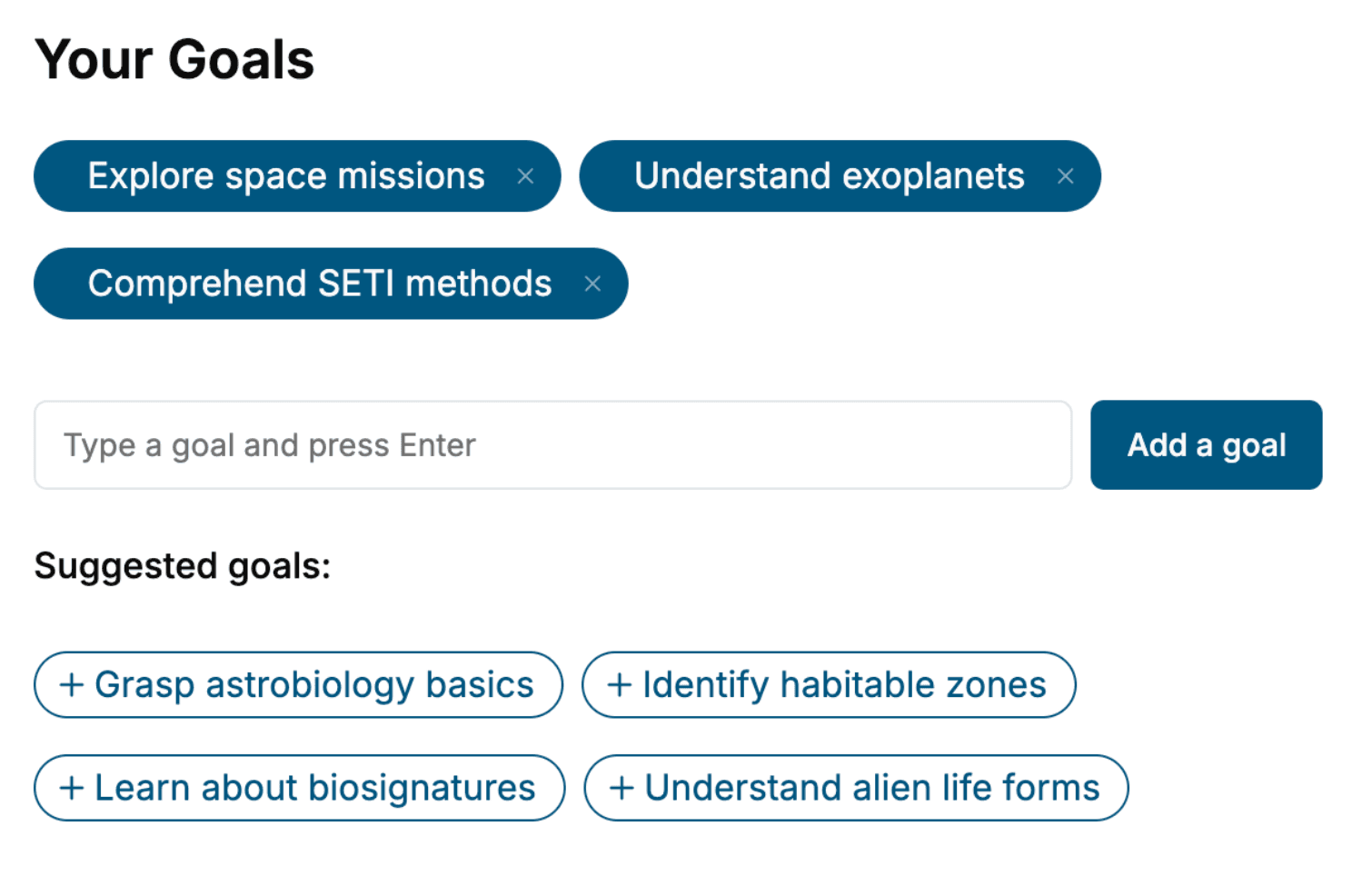
Specify your goals and choose sub-topics to include
- 3. Get your tailored book
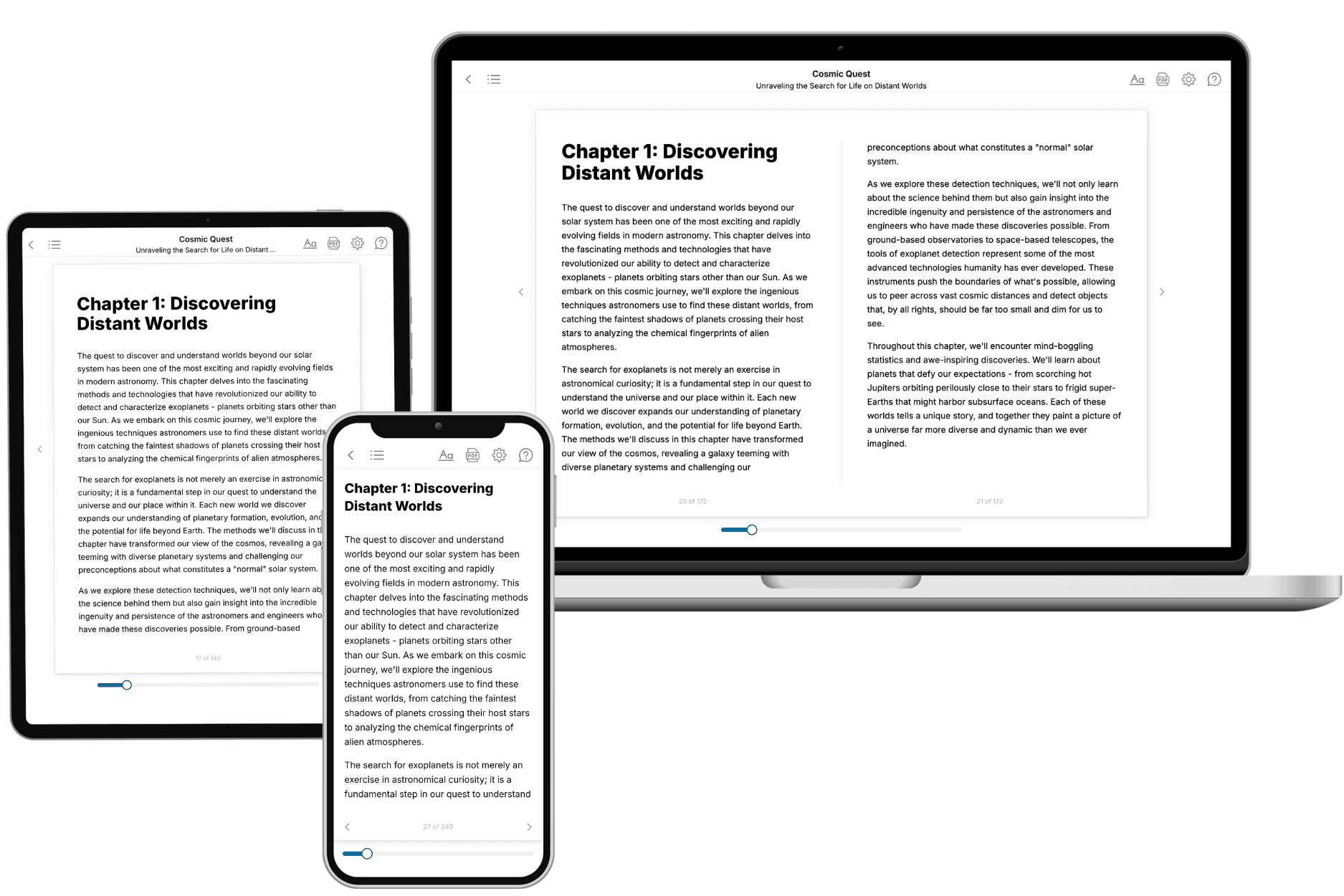
Your book is ready in 10 minutes. Read it online, download as EPUB or PDF, or send to Kindle.

Frequently asked questions
- What is TailoredRead?
TailoredRead creates complete, full-length nonfiction ebooks, written specifically for you. Tell us what you want to learn and why, and TailoredRead writes you a complete ebook on it, with charts, tables, and diagrams throughout. Read it online, on Kindle, or on any e-reader, or download it as a PDF or EPUB. Every book is written fresh the day you order it.
- How is the book tailored to me?
Before anything is written, you answer a few short questions about your goals, your background, and the topics you care about. Your book is then planned around your answers: written at your level, focused on your goals, and covering the topics you chose, instead of the one-size-fits-all book a store sells everyone.
- Will it read like generic AI content?
No. Your book isn't a chat transcript: it's planned chapter by chapter before a single word is written, told in a clear book voice, and explains ideas visually with charts, tables, and diagrams. After writing, every book goes through an editorial pass that polishes chapters so the book reads consistent from start to finish. Judge for yourself: browse thousands of sample books on our Explore Books page.
- How accurate is the content?
Our AI first checks whether your subject needs live research. Niche and fast-moving subjects are researched before writing, and the book plan and chapters are grounded in what it finds. After writing, every book goes through a quality pass that checks its facts and consistency, and researched books list their sources in a Notes section at the back.
- How long is the book?
You choose the length: Comprehensive (250-300 pages), Detailed (150-200 pages), Essential (70-100 pages), or Short (30-50 pages).
- Does the book include visuals?
Yes. Every book includes charts, tables, and diagrams: timelines, checklists, step-by-step guides, decision trees, comparison tables, matrices, and bar charts. A typical book includes dozens of these visual elements.
- Can I read it on Kindle? What formats can I download?
Yes. Every book can be read in our online reader or downloaded as a PDF or EPUB. The EPUB can be opened with Kindle, Apple Books, Kobo, and any e-reader. The Commercial and Author licenses also include an editable Word (DOCX) and Markdown download.
- How much does it cost?
About the price of a regular ebook. The exact price depends on your book's length and complexity, from $2 for the shortest books to $35 for the most comprehensive, and it's shown when you review your book, before you commit to anything. Each book is a one-time purchase, yours to keep, no subscription. Licenses that let you share, teach, or publish your book range from $35.99 to $49.99.
- Can I preview the book before purchasing?
Before you pay, you'll see what your book will cover: the title, a detailed description, the estimated length, and the complete chapter-by-chapter table of contents, so you know what you're getting before you decide. The full text itself is written after you purchase.
- How long does it take to create a book?
About 10 minutes. You can start reading the opening chapters while the rest is still being written.