Formal Logic Books
Explore tailored Formal Logic books created by our AI
The Art of Logical Deduction
Master the Principles of Sound Reasoning and Critical Thinking
Most people believe that good reasoning comes naturally—that if you're smart enough, you'll automatically think logically. The reality is far different. Logical deduction is a learnable skill with specific principles, structures, and rules that can be mastered through study and practice. This book demystifies the philosophy of logic and shows you how deductive reasoning actually works. You'll discover why some arguments are valid while others fail, learn to recognize the logical fallacies that trap even intelligent thinkers, and gain practical tools for constructing sound arguments. Whether you're evaluating claims in the workplace, making important decisions, or simply wanting to think more clearly, understanding logical deduction transforms how you approach problems. This accessible guide bridges the gap between abstract philosophical concepts and real-world application, giving you the frameworks and confidence to reason your way through complex situations with clarity and precision.
Logical Frameworks
Building Rigorous Arguments Through Proof Theory and Formal Logic
Many people struggle to construct truly rigorous arguments or understand why certain logical systems work the way they do. This book bridges the gap between basic logic and advanced proof theory by providing a clear, systematic exploration of logical frameworks. You'll discover how formal systems transform intuitive reasoning into precise, verifiable arguments. Starting with foundational concepts, this guide walks you through natural deduction, sequent calculus, and various logical systems, explaining not just the rules but the reasoning behind them. You'll learn how to evaluate logical validity with confidence, understand the deep connections between syntax and semantics, and explore why some logical systems are better suited for specific problems than others. Whether you're interested in mathematics, computer science, or philosophical logic, this book equips you with the conceptual tools and practical knowledge to work with logical frameworks effectively and understand their real-world applications.
Mathematics speaks a language unlike any other. While we use words to describe the world around us, mathematics employs symbols, logic, and abstraction to reveal patterns and truths that transcend everyday experience. This book explores the philosophical foundations of mathematical language—examining how symbols gain meaning, why mathematical communication is so precise, and what this tells us about the nature of reality itself. You'll discover how mathematical language evolved, why certain notations became standard, and how the structure of mathematical systems both enables and constrains what we can express. Through accessible explanations and concrete examples, you'll gain insight into one of humanity's most powerful intellectual tools. Whether you're curious about why mathematics works so well at describing nature, interested in the philosophy of mathematics, or simply want to understand how mathematical thinking differs from everyday reasoning, this book provides a comprehensive exploration of the language that underlies science, technology, and abstract thought.
The Ontological Argument
Understanding the Philosophical Case for God's Existence
What if the existence of God could be proven through pure thought alone, without needing to observe the world around you? This question has captivated philosophers for nearly a thousand years. The ontological argument represents one of the most audacious intellectual endeavors in Western philosophy—an attempt to demonstrate God's existence through conceptual analysis and logical reasoning. This book guides you through the intricate landscape of ontological arguments, from Anselm's medieval formulation to contemporary modal logic approaches. You'll discover how philosophers have refined, challenged, and reimagined these arguments across centuries. By examining the logical structure, historical context, and philosophical implications of ontological reasoning, you'll gain insight into fundamental questions about existence, necessity, and the nature of concepts themselves. Whether you're exploring philosophy for the first time or deepening your understanding of classical arguments, this book provides the clarity and rigor needed to engage with one of philosophy's most fascinating debates.
The Logic of Arguments
Master Logical Fallacies and Strengthen Your Reasoning
Strengthen your reasoning and become a more persuasive communicator by mastering the art of logical argumentation. This comprehensive guide takes you beyond surface-level understanding to show you exactly how logical fallacies work, why they're so convincing, and how to dismantle them. You'll explore the distinction between formal and informal fallacies, examine the most prevalent fallacies in everyday conversation and debate, and learn practical techniques for constructing bulletproof arguments. Whether you're engaging in professional discussions, academic writing, or casual debates, understanding these logical principles will sharpen your critical thinking and help you identify when reasoning has gone astray. With clear explanations, real-world examples, and actionable strategies, you'll develop the analytical skills needed to evaluate arguments rigorously and communicate with greater clarity and conviction.
Discover why mathematics is far more than equations and calculations—it's a window into fundamental questions about reality, knowledge, and existence. This book guides you through the major philosophical traditions that have shaped mathematical thinking, from ancient Greek geometry to modern set theory. You'll explore whether mathematical objects exist independently of human minds, examine the logical foundations that make mathematics reliable, and understand why mathematicians and philosophers have long disagreed about what mathematics actually is. By examining competing philosophical frameworks—Platonism, formalism, intuitionism, and beyond—you'll gain insight into how these abstract debates influence the mathematics we use daily. Whether you're a student of philosophy, a mathematics enthusiast, or simply curious about the ideas underlying human knowledge, this book reveals the hidden philosophical architecture of mathematical thought and its profound implications for science and our understanding of the universe.
The Fallacy Detective
Master the Art of Spotting Flawed Reasoning and Thinking Clearly
Imagine navigating conversations, debates, and decisions with complete confidence in your reasoning. You spot weak arguments instantly, understand exactly why they fail, and respond with clarity and precision. You're no longer swayed by emotional manipulation or clever-sounding but flawed logic. This book teaches you to think like a reasoning detective, systematically uncovering the hidden flaws in arguments—both those you encounter and those you construct yourself. Through clear explanations, real-world examples, and practical exercises, you'll master the most common logical fallacies and learn the underlying principles that make reasoning sound or broken. Whether you're evaluating claims in the media, winning arguments at work, or simply wanting to think more clearly, this guide transforms you from someone who suspects something is wrong with an argument into someone who knows exactly what it is and why it matters.
Probabilistic Graphical Models
Master the Logic of Uncertainty and Complex Relationships
Master the powerful framework that bridges logic and probability to model uncertainty in complex systems. Probabilistic graphical models provide a structured way to represent relationships between variables, encode domain knowledge, and perform intelligent reasoning under uncertainty. This book guides you through the fundamental concepts, mathematical foundations, and practical applications of Bayesian networks, Markov networks, and factor graphs. You'll learn how to construct models that capture real-world dependencies, implement efficient inference algorithms, and extract meaningful insights from incomplete data. Whether you're working in artificial intelligence, machine learning, medical diagnosis, or any field requiring logical reasoning with uncertainty, this comprehensive guide equips you with both theoretical understanding and practical skills. Discover how to leverage graphical models to make better decisions, build more interpretable AI systems, and solve problems where traditional logic alone falls short.
As a physics scientist, you understand that rigorous reasoning is the foundation of credible research. This book guides you through the essential principles of mathematical proof and logical reasoning—the tools that transform intuition into certainty. You'll progress from mastering fundamental logical concepts and mathematical notation to constructing sophisticated proofs using induction, contradiction, and case analysis. Each chapter builds systematically, introducing formal verification methods, set theory, and axiomatic systems while developing your abstract thinking abilities. You'll learn to identify logical fallacies, validate scientific claims with precision, and communicate mathematical ideas with clarity and authority. By the end, you'll possess the proof-writing expertise and mathematical confidence needed to strengthen your theoretical physics foundation and enhance your scientific argumentation. This is not abstract theory disconnected from practice—every concept connects directly to how you reason about physical systems and validate experimental claims.
Related books you may like:
Discover how advanced functional materials are reshaping industries and enabling solutions to humanity's greatest challenges. This comprehensive guide takes you beyond basic materials science to explore the cutting-edge world of engineered materials designed to perform specific, transformative functions. You'll learn how scientists and engineers manipulate atomic structures and processing conditions to create materials that respond to stimuli, conduct electricity with unprecedented efficiency, or heal themselves. From smart polymers that change properties on demand to nanomaterials with revolutionary capabilities, this book reveals the principles behind these innovations and their practical applications in healthcare, energy, electronics, and aerospace. Whether you're advancing your career, developing new products, or simply fascinated by the materials shaping our future, you'll gain the knowledge to understand, evaluate, and potentially contribute to this rapidly evolving field.
Most chemical reactions should happen instantly, yet they don't. The culprit? Activation energy—the invisible barrier that keeps reactants locked in place until enough energy arrives to break them free. Without understanding this fundamental concept, enzyme kinetics remains a mystery, and the elegant mechanisms by which life accelerates reactions seem like magic. This book demystifies activation energy and enzyme kinetics through clear explanations, practical examples, and visual frameworks. You'll discover how enzymes perform their catalytic miracles by lowering activation energy, explore the mathematics of reaction rates through the Arrhenius equation and Michaelis-Menten kinetics, and learn how inhibition mechanisms control biological processes. Whether you're studying biochemistry, developing pharmaceuticals, or optimizing industrial processes, this guide equips you with both the conceptual understanding and quantitative tools needed to predict, analyze, and manipulate enzyme-catalyzed reactions with confidence.
Achieve reliable, reproducible separations of complex chemical mixtures using adsorption chromatography. This practical guide bridges the gap between theoretical principles and real-world laboratory application, providing you with the knowledge and skills to design effective separation strategies for your specific analytical needs. You'll explore the fundamental science of how compounds interact with adsorbent materials, learn to select optimal stationary and mobile phases, and master the practical techniques that ensure consistent results. Whether you're working with thin-layer chromatography, column chromatography, or HPLC systems, this book equips you with systematic approaches to troubleshooting common problems, optimizing separations, and interpreting data with confidence. Packed with practical examples, decision-making frameworks, and evidence-based strategies, you'll develop the expertise to tackle challenging separation problems and advance your analytical capabilities in pharmaceutical, environmental, or materials research.
Many assume adipose tissue is simply inert fat to be minimized or removed. In reality, it's a sophisticated, metabolically active organ with remarkable regenerative potential. This book reveals how adipose tissue engineering is revolutionizing medicine by creating functional tissue solutions for reconstruction, regeneration, and therapeutic applications. You'll discover the biological foundations of adipose tissue, learn how scientists harvest and cultivate adipose-derived stem cells, and explore cutting-edge engineering strategies that transform these cells into viable tissue constructs. From scaffold design and bioreactor optimization to vascularization techniques and clinical translation, this guide provides practical insights into the science and engineering behind adipose tissue regeneration. Whether you're a researcher, student, or healthcare professional, you'll gain actionable knowledge about the current state of the field, emerging technologies, and the real-world challenges of bringing engineered tissues from the laboratory to clinical practice.
In the rapidly evolving world of ultra-high-speed communications, the challenge of designing secure and efficient chips has never been more daunting. As a Principal Architect, you face the complex task of integrating cutting-edge VLSI techniques with robust cryptographic solutions. This book is your comprehensive guide to conquering these challenges. "Advanced VLSI Design" delves deep into the intricacies of modern chip architecture, offering you practical insights into overcoming CMOS scaling limitations, harnessing the power of 3D IC integration, and implementing state-of-the-art FinFET technology. You'll explore innovative approaches to low-power design and high-speed SerDes, crucial for next-generation communication systems. This book doesn't just stop at performance; it equips you with the knowledge to build security from the ground up. From hardware Trojan detection to side-channel analysis resistance, you'll learn how to create chips that are not only fast but also fortified against modern security threats. Dive into advanced topics like quantum-dot cellular automata and EUV lithography, positioning yourself at the forefront of VLSI innovation.
Create a Formal Logic Book Tailored to You
Create an AI-crafted book tailored to your goals, interests, and background





Benefits of AI-tailored books
- Read one book, not ten:
- all the Formal Logic knowledge you need, gathered into a single book.
- Save days of learning:
- tell us your goals, choose your topics, and the whole book is built around them.
- Learn effortlessly:
- Formal Logic book written for your specific background and expertise.
- Understand at a glance:
- includes charts, tables, timelines, checklists, decision trees, and more.
- Stay current:
- written the day you order it, not years ago.
- Trust what you read:
- every book is checked for accuracy, with real research when your subject needs it.
Create your unique book in 3 steps
- 1. Select your focus
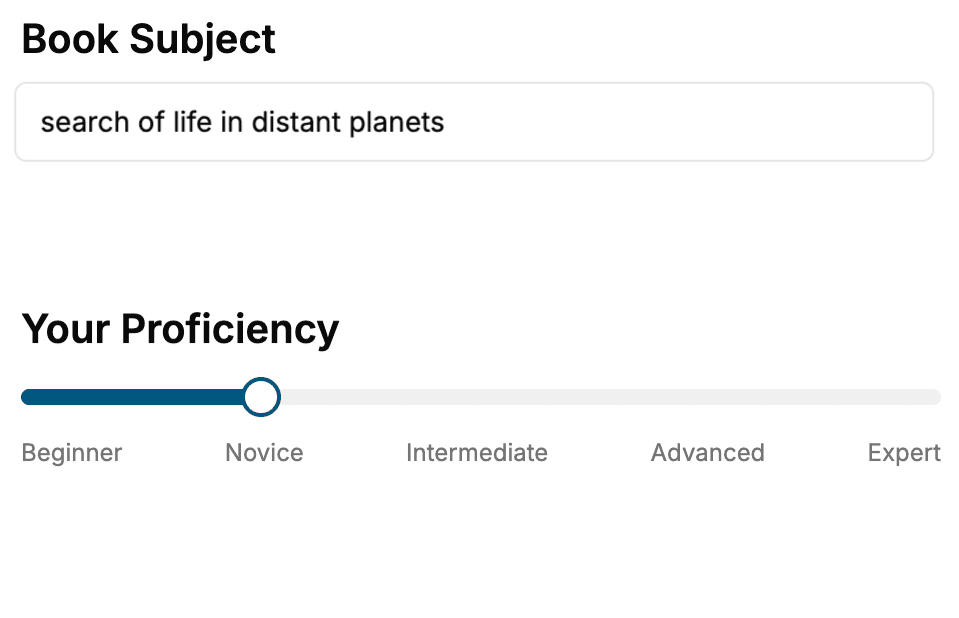
Select the focus of your Formal Logic book and share your background
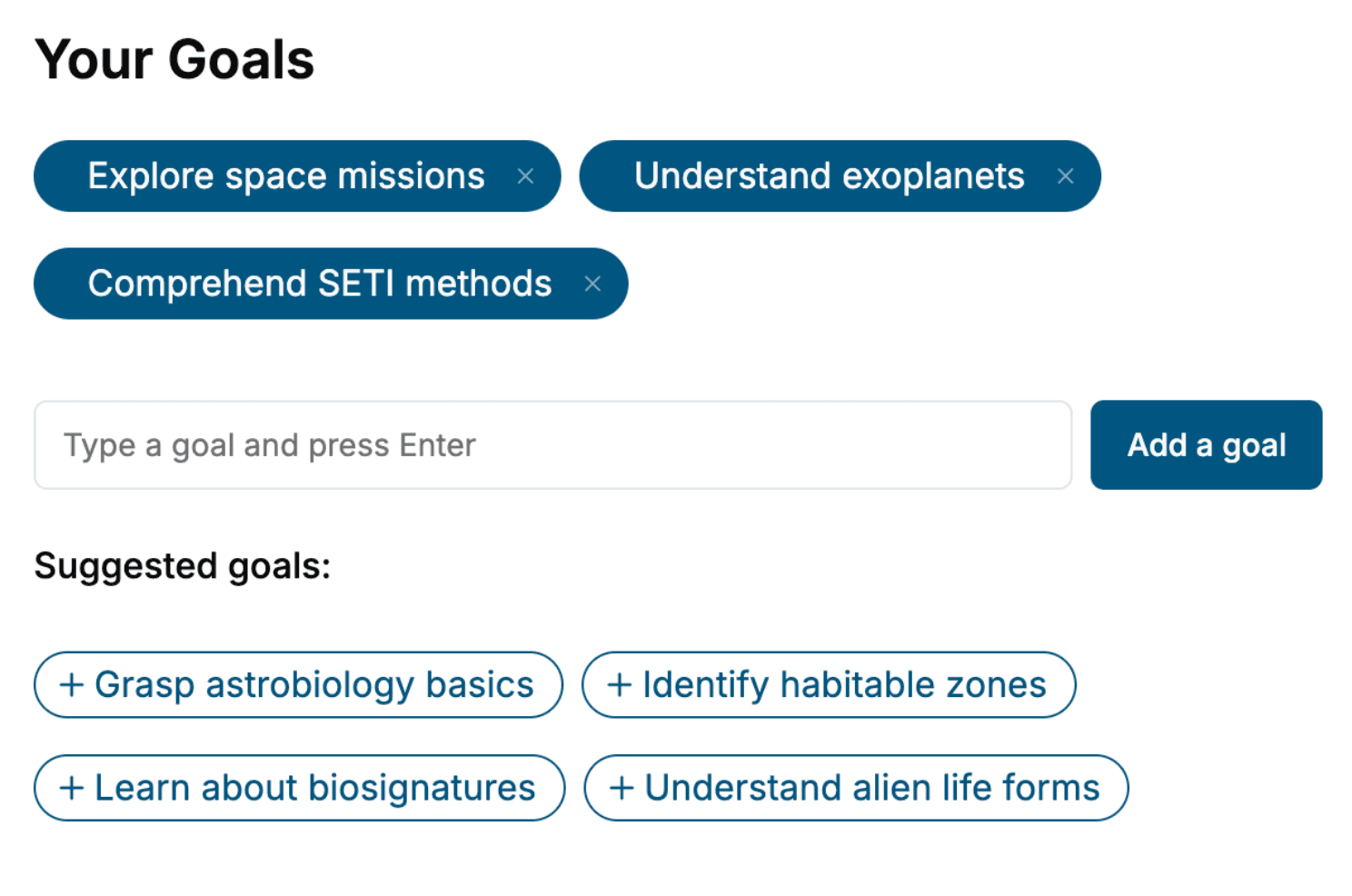
- 2. Personalize your book
Specify your goals and choose sub-topics to include
- 3. Get your tailored book
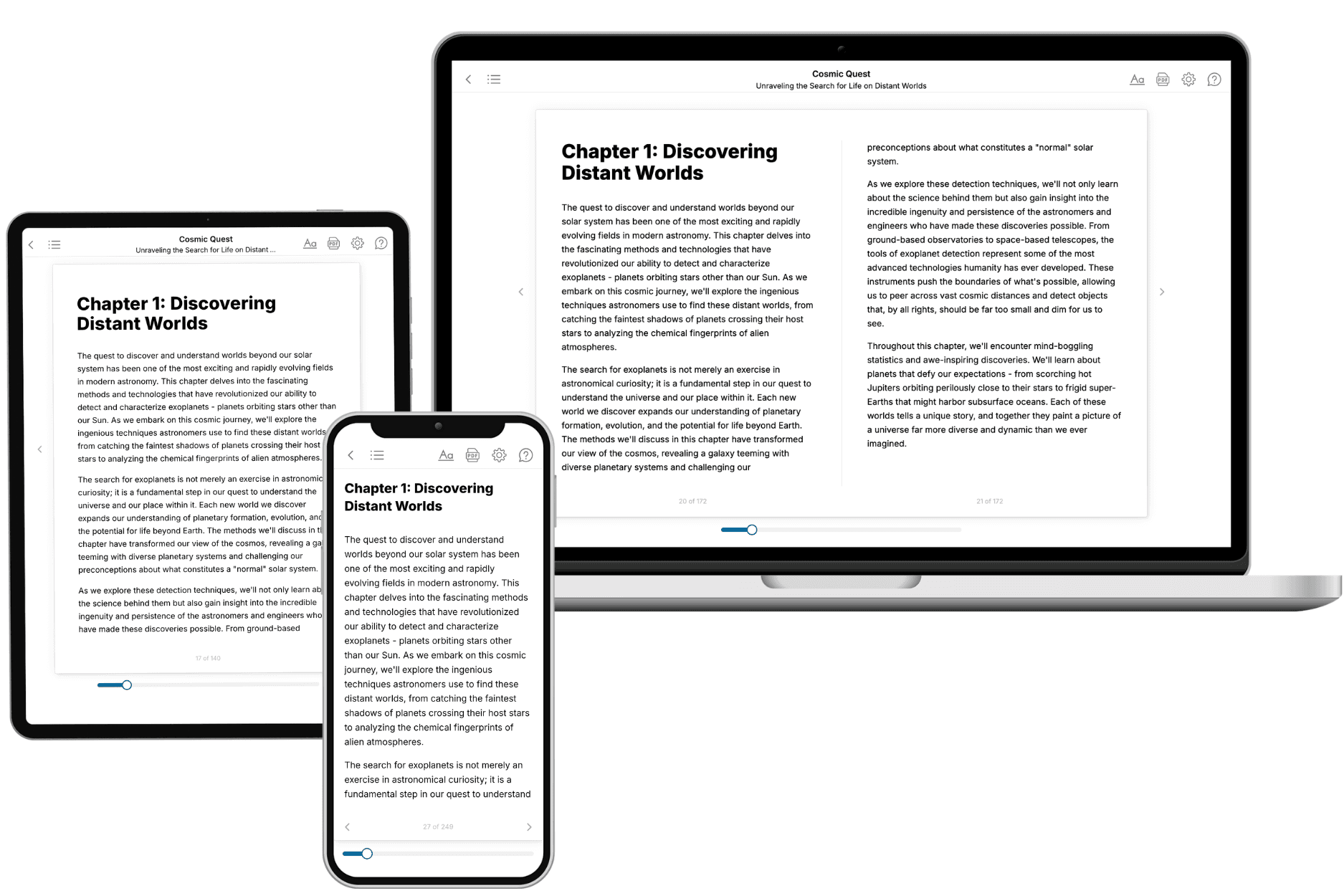
Your book is ready in 10 minutes. Read it online, download as EPUB or PDF, or send to Kindle.
Frequently asked questions
- What is TailoredRead?
TailoredRead creates complete, full-length nonfiction ebooks, written specifically for you. Tell us what you want to learn and why, and TailoredRead writes you a complete ebook on it, with charts, tables, and diagrams throughout. Read it online, on Kindle, or on any e-reader, or download it as a PDF or EPUB. Every book is written fresh the day you order it.
- How is the book tailored to me?
Before anything is written, you answer a few short questions about your goals, your background, and the topics you care about. Your book is then planned around your answers: written at your level, focused on your goals, and covering the topics you chose, instead of the one-size-fits-all book a store sells everyone.
- Will it read like generic AI content?
No. Your book isn't a chat transcript: it's planned chapter by chapter before a single word is written, told in a clear book voice, and explains ideas visually with charts, tables, and diagrams. After writing, every book goes through an editorial pass that polishes chapters so the book reads consistent from start to finish. Judge for yourself: browse thousands of sample books on our Explore Books page.
- How accurate is the content?
Our AI first checks whether your subject needs live research. Niche and fast-moving subjects are researched before writing, and the book plan and chapters are grounded in what it finds. After writing, every book goes through a quality pass that checks its facts and consistency, and researched books list their sources in a Notes section at the back.
- How long is the book?
You choose the length: Comprehensive (250-300 pages), Detailed (150-200 pages), Essential (70-100 pages), or Short (30-50 pages).
- Does the book include visuals?
Yes. Every book includes charts, tables, and diagrams: timelines, checklists, step-by-step guides, decision trees, comparison tables, matrices, and bar charts. A typical book includes dozens of these visual elements.
- Can I read it on Kindle? What formats can I download?
Yes. Every book can be read in our online reader or downloaded as a PDF or EPUB. The EPUB can be opened with Kindle, Apple Books, Kobo, and any e-reader. The Commercial and Author licenses also include an editable Word (DOCX) and Markdown download.
- How much does it cost?
About the price of a regular ebook. The exact price depends on your book's length and complexity, from $2 for the shortest books to $35 for the most comprehensive, and it's shown when you review your book, before you commit to anything. Each book is a one-time purchase, yours to keep, no subscription. Licenses that let you share, teach, or publish your book range from $35.99 to $49.99.
- Can I preview the book before purchasing?
Before you pay, you'll see what your book will cover: the title, a detailed description, the estimated length, and the complete chapter-by-chapter table of contents, so you know what you're getting before you decide. The full text itself is written after you purchase.
- How long does it take to create a book?
About 10 minutes. You can start reading the opening chapters while the rest is still being written.