Epistemology Books
Explore tailored Epistemology books created by our AI
Epistemic Injustice
How Knowledge Systems Silence Voices and What We Can Do About It
You navigate a world where knowledge is power, yet not everyone's voice carries equal weight. This book examines the hidden mechanisms that determine whose expertise we trust, whose experiences we believe, and whose perspectives shape our understanding of reality. Through clear explanations and real-world examples, you'll discover how epistemic injustice—the wronging of people in their capacity as knowers—operates in workplaces, classrooms, courtrooms, and communities. You'll learn to identify testimonial injustice, where credibility is unfairly withheld, and hermeneutical injustice, where entire groups lack the language to name their experiences. More importantly, you'll gain practical tools to challenge these injustices in your own life and institutions. This exploration moves beyond abstract philosophy to show you how recognizing these patterns can transform how you listen, learn, and advocate for more equitable knowledge systems.
Embark on a fascinating journey into the heart of human knowledge with "The Foundations of Knowledge: A Journey Through Epistemology and Its Impact on Human Understanding." This illuminating book delves deep into the philosophical realm of epistemology, exploring how we acquire, justify, and understand knowledge. You'll discover the fundamental questions that have puzzled philosophers for centuries: What is knowledge? How do we know what we know? What are the limits of human understanding? Through clear and engaging prose, this book unravels complex concepts and presents them in an accessible manner, allowing you to grasp the intricacies of epistemological thought. From the classical debates of ancient Greece to contemporary discussions on the role of technology in shaping our understanding, "The Foundations of Knowledge" offers a comprehensive overview of the field. You'll explore various theories of knowledge, examine the relationship between belief and truth, and consider the impact of skepticism on our quest for certainty. This book not only provides a solid grounding in epistemological concepts but also encourages you to question your own assumptions and approach to knowledge. Whether you're a philosophy enthusiast or simply curious about the nature of human understanding, this book will challenge your thinking and broaden your perspective. Prepare to embark on an intellectual adventure that will transform the way you perceive knowledge and its role in shaping our world.
The Art of Understanding
Hermeneutics and Its Impact on Philosophical Thought
The challenge of truly understanding texts, ideas, and philosophical arguments often feels overwhelming when you realize that interpretation itself is far more complex than it initially appears. Every time you engage with a philosophical work, you bring your own assumptions, cultural background, and historical context to the reading—but how do these factors shape what you understand, and how can you become more aware of this process? This comprehensive exploration of hermeneutics reveals how the art of interpretation has evolved from biblical scholarship into one of philosophy's most influential disciplines. You'll discover how major thinkers like Schleiermacher, Dilthey, Heidegger, and Gadamer revolutionized our understanding of what it means to interpret and comprehend. Through clear explanations and practical examples, you'll learn to recognize the hermeneutical dimensions present in all philosophical inquiry. The book guides you through the key concepts that define hermeneutical thinking: the hermeneutical circle, the fusion of horizons, the role of prejudgments, and the relationship between language and understanding. You'll explore how different philosophical movements—from phenomenology to existentialism to postmodernism—have incorporated hermeneutical insights into their approaches to knowledge and reality. By the end, you'll possess a sophisticated understanding of how interpretation works and why hermeneutics matters for anyone serious about philosophical thinking. You'll be equipped with conceptual tools that will enhance your ability to engage with complex texts and ideas while remaining aware of the interpretive processes at work in your own thinking.
The Modern Philosophical Mind
Essential Ideas That Shaped Contemporary Thought
You'll journey through the transformative ideas that reshaped human thought from the 17th century to today. This book traces how philosophers moved away from inherited dogma toward systematic questioning, establishing reason and experience as the pillars of knowledge. You'll encounter the revolutionary thinkers who asked fundamental questions about what we can know, how we should live, and what gives life meaning. From Descartes' radical doubt to Nietzsche's revaluation of values, from Wittgenstein's language games to Sartre's radical freedom, you'll discover how modern philosophy emerged from crisis and continues to address the deepest challenges of human existence. Whether exploring consciousness, ethics, or the nature of reality itself, this book reveals how philosophical thinking remains essential to navigating our complex contemporary world and understanding ourselves more deeply.
The Forms Unveiled
How Plato's Ancient Theory Shapes Modern Thinking
You struggle to understand why abstract concepts like justice, beauty, and goodness feel real and meaningful, yet cannot be touched or directly observed. Plato's Theory of Forms offers a profound answer to this puzzle that has captivated philosophers for millennia. This book makes Plato's ancient theory accessible and relevant to modern life, showing how his ideas about perfect, eternal Forms explain the patterns and universals we encounter daily. You'll discover how this 2,400-year-old framework continues to influence contemporary philosophy, mathematics, physics, and cognitive science. Rather than treating Forms as dusty historical artifacts, this book demonstrates their practical significance: how they help us understand knowledge itself, why categories matter, and what it means for something to be truly real. Whether you're exploring metaphysics, epistemology, or simply curious about foundational philosophical questions, you'll gain clarity on one of Western philosophy's most influential yet misunderstood theories.
The Reality of Realism
A Comprehensive Defense and Exploration of Metaphysical Realism
In "The Reality of Realism: A Comprehensive Defense and Exploration of Metaphysical Realism," readers are taken on an intellectual journey through the complex landscape of metaphysical thought. This book offers a deep dive into the principles of metaphysical realism, presenting a robust defense of this philosophical stance while also providing a fair and thorough examination of alternative theories. Beginning with a detailed explanation of metaphysical realism, the book gradually builds a strong case for its validity and importance in philosophical discourse. It then ventures into a comparative analysis, introducing and summarizing various competing metaphysical theories. Through this contrast, readers gain a nuanced understanding of the strengths and challenges associated with different metaphysical perspectives. A significant portion of the book is dedicated to defending metaphysical realism against its critics, offering compelling arguments and addressing common objections. Additionally, it explores the classical understanding of essence and existence, contrasting it with existential interpretations to provide a well-rounded view of these fundamental concepts. Concluding with a comprehensive summary, this book serves as both an in-depth exploration for the philosophically inclined and a valuable reference for students and thinkers. Whether you're new to metaphysics or looking to deepen your understanding, "The Reality of Realism" offers an accessible yet authoritative guide to one of philosophy's most enduring and significant debates.
Many people assume Plato's Allegory of the Cave is simply an ancient story with little relevance to modern life. In reality, this 2,400-year-old parable speaks directly to how we perceive reality, consume information, and resist change. The allegory describes prisoners chained in a cave, seeing only shadows on a wall, mistaking them for reality. When one prisoner escapes and discovers the true world, he faces a shocking revelation: everything he believed was false. This powerful metaphor reveals how our perceptions, biases, and the information we're exposed to shape our understanding of reality. Whether you're navigating social media echo chambers, questioning your own beliefs, or seeking deeper understanding, the Allegory of the Cave offers profound insights. This book unpacks the allegory's philosophical foundations, explores Plato's broader ideas about knowledge and reality, and shows how these ancient lessons apply to contemporary challenges. You'll discover why enlightenment is uncomfortable, how to recognize your own "cave," and what it truly means to see clearly.
Understanding Social Science
How Philosophy Shapes the Study of Human Behavior and Society
Discover why the way we study society matters as much as what we discover. This book explores the philosophical foundations that shape social science research, from the basic questions researchers ask to the methods they use and the conclusions they draw. You'll learn how epistemology, ontology, and methodology work together to define what counts as knowledge in fields like sociology, psychology, economics, and political science. By understanding these philosophical underpinnings, you'll gain the critical tools to evaluate research claims, recognize hidden assumptions in studies, and appreciate why social scientists sometimes disagree fundamentally about their findings. Whether you're a student, researcher, or informed citizen navigating competing claims about human behavior and social trends, this book clarifies the philosophical stakes behind social science inquiry and shows why getting these foundations right matters for understanding our world.
Achieve a rigorous philosophical critique of medical authority that integrates epistemology, phenomenology, and disability justice into clinical practice. This book deconstructs how biomedical rationality operates as a system of power, examining epistemic injustice, hermeneutical violence, and the medicalization of human vulnerability. You'll explore how medical knowledge is socially constructed, how biopower shapes patient subjectivity, and how necropolitics determines whose suffering matters in healthcare systems. Through critical analysis of diagnosis, pain, disability, and healing, you'll develop frameworks for recognizing patients as epistemic agents, embracing medical pluralism, and resisting biomedical colonialism. Grounded in phenomenology, existentialism, and disability philosophy, this work challenges the limits of bioethical rationality and offers pathways toward more just, humble, and culturally competent medical practice that honors existential vulnerability and patient autonomy.
Kant's Revolution in Thought
How One Philosopher Reshaped the Modern World
Discover how one 18th-century philosopher fundamentally transformed human thought and continues to shape our world today. This book guides you through Kant's revolutionary ideas—from his groundbreaking theory of knowledge to his influential ethics—and shows you why his work remains essential for understanding modernity itself. You'll explore how Kant bridged centuries-old philosophical divides, established the intellectual foundations for human rights and democracy, and created a framework for understanding the limits and possibilities of human knowledge. Whether you're interested in philosophy, history, science, or politics, you'll find that Kant's insights illuminate contemporary debates about truth, morality, freedom, and human dignity. By the end, you'll understand not just what Kant thought, but why his ideas matter for how we live today and how we understand ourselves as thinking, moral beings in an increasingly complex world.
Many assume miracles are either impossible superstitions or divine interventions that bypass natural law entirely. But what if miracles reveal something deeper about the nature of reality itself? This book explores miracles not as violations of physics, but as phenomena that challenge our fundamental assumptions about existence, causality, and consciousness. You'll discover how miracles have been understood across philosophical traditions, why they matter to questions about meaning and purpose, and how examining them can expand your understanding of what's possible. Whether you approach this from faith, skepticism, or genuine curiosity, you'll find a rigorous exploration that respects both reason and experience. This is not a book about proving miracles happen—it's about understanding what miracles reveal about the nature of existence and why the question matters to how you live.
Imagine understanding regression analysis not as a collection of formulas to memorize, but as a sophisticated framework for thinking about how the world works. This book reveals regression analysis as a philosophical endeavor—a method for constructing scientific knowledge, reasoning about causation, and testing theories against evidence. You'll discover how the technical choices you make in regression (which variables to include, what functional form to assume, how to handle uncertainty) are actually philosophical decisions about what you believe is true about reality. By exploring regression through the philosophy of science lens, you'll gain deeper insight into what statistical relationships actually mean, when you can claim causation versus correlation, and how to interpret results responsibly. Whether you're a researcher, analyst, or student, this perspective transforms regression from a mechanical process into a meaningful conversation with data about the nature of scientific truth.
You will navigate the hidden genealogies of Western philosophy's most transgressive and marginalized voices, discovering how radical thinkers from Spinoza to contemporary theorists have fundamentally reshaped our understanding of ontology, ethics, and thought itself. This genealogical diagram traces the conceptual ruptures that separate dialectical from ontological thinking, exposing how deconstruction, schizoanalysis, and genealogical critique function as methods for exposing philosophy's hidden violences and contingencies. You will encounter the ethics of alterity, the affirmative excess of transgressive thought, and the revolutionary potential of marginalized epistemologies—from postcolonial and feminist philosophy to crip theory and biosemiotics. By mapping the plane of immanence, the body without organs, and smooth space as conceptual diagrams, you will learn to think beyond representation and capture. This book synthesizes 400 years of philosophical ruptures, revealing how vulnerability, madness, and impossible subjectivity become sites of philosophical innovation rather than exclusion, ultimately transforming how you understand the relationship between thought, ethics, and resistance.
The Enlightenment Mind
How Reason, Liberty, and Progress Shaped the Modern World
Imagine understanding the philosophical revolution that created the modern world—the ideas that transformed how we think about reason, freedom, and human potential. The Enlightenment wasn't just an historical period; it was a fundamental reimagining of what humans could achieve through rational thought and individual liberty. This book guides you through the essential ideas and thinkers that shaped our contemporary world, from Descartes' revolutionary method of doubt to Kant's critical philosophy. You'll discover how Enlightenment principles directly influenced the founding of democratic nations, the scientific revolution, and our modern conception of human rights. By exploring the tensions between reason and emotion, individual freedom and social order, and progress and tradition, you'll gain deeper insight into the philosophical foundations of today's most pressing debates. Whether you're interested in intellectual history, political philosophy, or understanding the roots of modern thought, this exploration reveals how Enlightenment ideas remain profoundly relevant to how we live, think, and organize society today.
Thinking at the Edges
Philosophy's Radical Margins and the Thinkers Who Rewrote Thought
Philosophy's official history has always been a story of exclusions. Entire traditions of radical thought—from Giordano Bruno's infinite worlds to Spinoza's dangerous immanence, from Deleuze's nomadic philosophy to Foucault's genealogical method—have been marginalized, suppressed, or forgotten. This book recovers those suppressed genealogies and shows how thinkers at philosophy's edges fundamentally rewrote what thought itself could be. You'll discover how Baroque philosophy's ontological excess, vitalist thought's challenge to mechanism, and decolonial frameworks' epistemological justice reshape philosophical foundations. Through careful genealogical reconstruction, you'll trace the hidden lineages connecting Bruno, Spinoza, Deleuze, and contemporary thinkers like Mbembe and Braidotti. This isn't merely historical recovery—it's a practical guide for developing original philosophical arguments, challenging mainstream narratives, and integrating radical ideas into your own intellectual and creative work. By mapping philosophy's margins, you'll learn to think differently about difference itself.
The Unveiled Mystery
Understanding Divine Revelation and the Nature of Existence
Many people struggle with a fundamental tension: how can divine revelation be real and meaningful in a world that demands rational explanation? This book addresses that central conflict by exploring divine revelation not as a relic of ancient texts, but as a living philosophical and existential reality. You'll discover how revelation operates across multiple dimensions—through direct experience, intellectual insight, and the very fabric of existence itself. Rather than asking you to choose between faith and reason, this exploration shows how both are essential to understanding transcendent truth. By examining revelation through philosophical inquiry, spiritual traditions, and contemporary thought, you'll develop a more integrated understanding of how the divine communicates with human consciousness. This book equips you with frameworks for recognizing, interpreting, and living according to revelatory insights, while maintaining intellectual integrity and openness to mystery.
Mind Mastery Blueprint
Personalized Pathways to Master Philosophy of Mind Concepts
The mind-body problem has puzzled philosophers and scientists for centuries: how does subjective experience arise from physical matter? With your background in rigorous analytical disciplines, you're positioned to engage deeply with this question, yet the fragmented landscape of competing theories—dualism, physicalism, emergentism, functionalism—can obscure rather than clarify. This book synthesizes philosophy of mind's most important frameworks, arguments, and contemporary neuroscience findings into a coherent, intellectually rigorous exploration. You'll examine consciousness theories from multiple angles, understand the hard problem and why it resists easy solutions, explore mental representation and qualia, and discover how philosophical analysis and empirical neuroscience inform each other. Rather than advocating for one position, this book equips you with the conceptual tools to evaluate competing views critically, recognize their strengths and limitations, and develop your own informed perspective on consciousness, mind, and the nature of subjective experience.
Power and Knowledge
Understanding Foucault's Revolutionary Framework in German Philosophy
Discover how Michel Foucault's revolutionary theories of power and knowledge fundamentally reshape your understanding of society, institutions, and yourself. This book cuts through the complexity of Foucault's dense philosophical work to reveal its core insights and practical relevance. You'll learn how power operates not through force alone, but through the production of knowledge and the shaping of discourse. Explore how Foucault's ideas emerged from and challenge German philosophical traditions, from Kant to Hegel to Nietzsche. Through clear explanations and concrete examples, you'll understand how surveillance, normalization, and institutional practices shape modern life in ways you've never considered. Whether you're studying philosophy, sociology, or simply seeking to understand the hidden mechanisms of power in contemporary society, this book provides the intellectual tools to think critically about the world around you and your place within it.
Discover why mathematics is far more than equations and calculations—it's a window into fundamental questions about reality, knowledge, and existence. This book guides you through the major philosophical traditions that have shaped mathematical thinking, from ancient Greek geometry to modern set theory. You'll explore whether mathematical objects exist independently of human minds, examine the logical foundations that make mathematics reliable, and understand why mathematicians and philosophers have long disagreed about what mathematics actually is. By examining competing philosophical frameworks—Platonism, formalism, intuitionism, and beyond—you'll gain insight into how these abstract debates influence the mathematics we use daily. Whether you're a student of philosophy, a mathematics enthusiast, or simply curious about the ideas underlying human knowledge, this book reveals the hidden philosophical architecture of mathematical thought and its profound implications for science and our understanding of the universe.
The Architecture of Change
How Philosophical Movements Shape the Course of History
Most people view history as a sequence of events—wars, revolutions, discoveries—without recognizing the invisible force driving them: philosophical ideas. This book reveals how abstract thinking about truth, justice, knowledge, and human nature has repeatedly transformed civilizations. From the Enlightenment's challenge to absolute monarchy to existentialism's reshaping of post-war culture, philosophical movements have been the architects of historical change. You'll discover why understanding these intellectual currents is essential for making sense of the world today. Rather than treating philosophy and history as separate disciplines, this book shows how they're inseparably intertwined. You'll learn to recognize the philosophical assumptions underlying current events, understand why societies embrace certain ideas at particular moments, and appreciate how the thoughts of ancient thinkers still reverberate through modern institutions. This exploration equips you with a deeper framework for understanding not just where we've been, but where we're heading.
Discover how science actually produces knowledge and why the methods scientists use matter more than you might think. This book moves beyond the popular image of science as a collection of facts to reveal the philosophical foundations that make scientific inquiry possible. You'll explore the major philosophical movements that have shaped scientific thinking—from the logical positivists who sought absolute certainty to Karl Popper's revolutionary falsificationism to Thomas Kuhn's paradigm-shifting insights. Understand the deep relationship between observation and theory, why the demarcation between science and pseudoscience remains contested, and how scientific knowledge evolves through both gradual progress and dramatic revolutions. By examining these philosophical questions, you'll gain the critical thinking tools to evaluate scientific claims, appreciate the provisional nature of knowledge, and recognize both the power and limitations of the scientific enterprise. This is essential reading for anyone who wants to think more deeply about how we know what we know.
Most people assume time is straightforward—it simply flows from past to future at a constant rate. Yet philosophers have spent centuries questioning this intuition, uncovering profound complexities beneath our everyday experience of temporality. This book traces how philosophical thought has fundamentally shaped our understanding of time from ancient Greece to the present day. You'll discover how Parmenides challenged the reality of change itself, how Augustine connected time to consciousness, and how Einstein's physics forced philosophers to reconsider time's very nature. Rather than presenting abstract theory divorced from reality, this exploration shows how these ideas directly impact how we understand causality, free will, memory, and mortality. Whether you're curious about why the present moment feels special, how the past can influence the future, or whether time truly flows, you'll find philosophical frameworks that illuminate these questions. This book bridges the gap between technical philosophy and lived experience, making complex ideas accessible without sacrificing depth or rigor.
The Ontological Argument
Understanding the Philosophical Case for God's Existence
What if the existence of God could be proven through pure thought alone, without needing to observe the world around you? This question has captivated philosophers for nearly a thousand years. The ontological argument represents one of the most audacious intellectual endeavors in Western philosophy—an attempt to demonstrate God's existence through conceptual analysis and logical reasoning. This book guides you through the intricate landscape of ontological arguments, from Anselm's medieval formulation to contemporary modal logic approaches. You'll discover how philosophers have refined, challenged, and reimagined these arguments across centuries. By examining the logical structure, historical context, and philosophical implications of ontological reasoning, you'll gain insight into fundamental questions about existence, necessity, and the nature of concepts themselves. Whether you're exploring philosophy for the first time or deepening your understanding of classical arguments, this book provides the clarity and rigor needed to engage with one of philosophy's most fascinating debates.
You navigate the tension between scientific rigor and humanistic understanding, between empirical evidence and philosophical meaning-making. This book guides you through a sophisticated integration of philosophy, humanities, and rigorous science—not as competing frameworks, but as complementary ways of knowing that strengthen your research. You'll examine your foundational assumptions about reality and knowledge, design studies that honor both quantitative precision and qualitative depth, apply ethical frameworks that go beyond compliance, and interpret findings through hermeneutic lenses that reveal deeper significance. From literature mapping and grounded theory to narrative medicine and philosophical critique, you'll master methodologies that bridge disciplines. You'll learn how to conduct systematic reviews that synthesize evidence across epistemological boundaries, develop research protocols that integrate multiple rationalities, and communicate results in ways that honor complexity while remaining accessible. This is research designed for the scholar who refuses false choices between scientific validity and humanistic insight.
The Rational Mind
A Scientist's Guide to Mastering Critical Thinking and Logical Reasoning
Your scientific training has equipped you with powerful analytical tools, but applying rigorous rational thinking beyond the laboratory requires a different set of skills. This comprehensive guide bridges the gap between academic expertise and everyday reasoning mastery. Drawing from decades of research in cognitive science, evolutionary psychology, and epistemology, you'll discover how to systematically identify and overcome the cognitive biases that cloud even the most educated minds. You'll learn to apply falsifiability criteria to evaluate claims, recognize when appeals to authority are legitimate versus fallacious, and understand why your brain's evolutionary programming sometimes works against rational decision-making. Each chapter builds upon your existing scientific foundation while introducing practical frameworks for enhanced critical thinking. You'll master advanced argumentation techniques, develop sophisticated problem-solving methodologies, and learn to navigate the complex landscape of modern information with the same rigor you once applied to molecular structures. By the end of this journey, you'll possess a comprehensive toolkit for rational thinking that transforms how you approach decisions, evaluate evidence, and engage with complex ideas. Your retirement years will be enriched by clearer reasoning, more effective problem-solving, and the confidence that comes from truly mastering the art of rational thought.
The Thinking Person's Guide to Religion
Understanding Faith Through Philosophy and Reason
Imagine approaching questions of faith, meaning, and spirituality with the same intellectual rigor you'd apply to any important decision. This book equips you with philosophical tools to examine religion not as a believer or skeptic, but as a thoughtful inquirer. You'll explore how major philosophical movements have shaped religious thought, confront timeless questions about God's existence and nature, and discover why the relationship between faith and reason is far more nuanced than popular debates suggest. Whether you're religious, secular, or somewhere in between, you'll gain frameworks for understanding diverse beliefs, engaging in meaningful dialogue across worldviews, and thinking more clearly about spirituality's role in human life. This isn't about convincing you what to believe—it's about helping you think more deeply about why people believe what they do, and what those beliefs mean.
The challenge you face is bridging the gap between classical epistemological frameworks and cutting-edge neural rendering techniques—understanding how modern AI systems like Neural Radiance Fields actually perceive and reconstruct reality. This book provides the rigorous mathematical foundation you need to grasp NeRF through Bayesian inference and active inference principles, revealing how these systems model the present as a projection of future states, much like Plato's allegory of the cave. You'll explore how NeRF's coordinate-based neural networks function as Bayesian inference engines, updating beliefs about 3D scene structure through observed evidence. The book connects positional encoding, volume rendering, and optimization techniques to probabilistic reasoning frameworks, showing how uncertainty quantification and active perception principles enhance NeRF's capabilities. Whether you're researching novel applications, teaching advanced students, or developing next-generation rendering systems, this comprehensive treatment equips you with both theoretical understanding and practical insights into how neural radiance fields represent a fundamental shift in how machines learn to see.
The Skeptic's Sage
David Hume and the Revolution of Reason
Many believe that philosophy is an abstract discipline with little relevance to everyday life. However, David Hume, the 18th-century Scottish philosopher, proved this notion wrong. His ideas on human nature, causation, and skepticism continue to shape our understanding of the world and ourselves. "The Skeptic's Sage: David Hume and the Revolution of Reason" takes you on an intellectual journey through the life and mind of one of history's most influential thinkers. You'll discover how Hume's humble beginnings in Scotland led to groundbreaking ideas that challenged the philosophical and religious orthodoxies of his time. This book delves into Hume's major works, explaining complex concepts in accessible language. You'll explore his theories on the limits of human knowledge, the nature of causation, and his famous argument against miracles. Beyond his philosophical contributions, you'll gain insight into Hume's character, his friendships with other Enlightenment figures, and his lasting impact on fields ranging from economics to cognitive science. Whether you're a philosophy enthusiast or simply curious about the ideas that have shaped our world, "The Skeptic's Sage" offers a compelling portrait of a man whose skepticism paradoxically led to some of the most constructive ideas in the history of thought.
The Bridge Between Worlds
Understanding Plato's Theory of Forms Through Eastern Philosophy
Discover how one of Western philosophy's most profound ideas connects to the deepest insights of Eastern thought. Plato's Theory of Forms has puzzled and inspired thinkers for over two thousand years, yet its core insights find remarkable parallels in Buddhist, Hindu, and Taoist traditions. This book bridges these philosophical worlds, showing you how ancient thinkers across different cultures arrived at similar conclusions about the nature of reality. You'll explore the eternal Forms that Plato believed underlie all existence, examine how Eastern philosophers approached the same fundamental questions, and uncover the practical wisdom these ideas offer for understanding your own experience. Whether you're seeking to deepen your philosophical knowledge or find connections between different wisdom traditions, this exploration reveals how timeless truths transcend cultural boundaries and speak to universal human questions about what is real, what is good, and how we should live.
Most people assume that time flows at the same rate everywhere, that space is simply the empty stage where events occur, and that these are obvious truths about reality. Yet Einstein's special relativity reveals something startling: these assumptions are wrong. Time actually stretches and contracts depending on how fast you're moving. Space itself is not what it seems. This book explores how one of science's most revolutionary theories fundamentally challenges our understanding of reality itself. Rather than getting lost in complex mathematics, we'll examine the philosophical implications of special relativity—what it means for causality, free will, the nature of existence, and our place in the cosmos. You'll discover how Einstein's insights forced philosophers and scientists to reconsider what we can truly know about the universe, and why this matters far beyond the laboratory. Whether you're fascinated by physics, philosophy, or the intersection of both, this exploration will reshape how you think about time, space, and reality.
What happens when humanity gains the power to rearrange matter atom by atom? Nanotechnology promises revolutionary solutions to disease, energy, and environmental challenges—yet it simultaneously raises profound questions that science alone cannot answer. This book explores the philosophical dimensions of nanotechnology, examining how it challenges our understanding of reality, knowledge, ethics, and human control. You'll discover why the nanoscale isn't just smaller—it's fundamentally different, operating by rules that defy everyday intuition. Through accessible analysis, you'll engage with questions about whether we can truly predict technological consequences, how we should govern powerful tools we don't fully understand, and what it means to be human in an age of atomic-scale manipulation. This exploration moves beyond hype and fear to examine the genuine philosophical puzzles nanotechnology presents, offering frameworks for thinking critically about technology's role in shaping our future.
Beyond Fixed Meaning
Understanding Structuralism and Post-Structuralism in French Philosophy
You're about to discover how two of the most influential philosophical movements transformed our understanding of meaning, culture, and human existence. This book traces the intellectual journey from structuralism's systematic search for hidden patterns in language and society to post-structuralism's radical questioning of whether meaning can ever be fixed or stable. Through clear explanations of complex ideas, you'll explore how thinkers like Lévi-Strauss, Foucault, Derrida, and Lacan challenged conventional philosophy and reshaped fields from literary criticism to psychology. Rather than treating these movements as abstract academic exercises, this book shows how their insights reveal the constructed nature of meaning, identity, and power in our world. You'll learn practical tools for analyzing texts and culture, understand why these ideas matter beyond academia, and develop a nuanced perspective on one of philosophy's most transformative periods. Whether you're encountering these concepts for the first time or seeking deeper comprehension, this guide makes the complex accessible without sacrificing intellectual rigor.
The ancient Greek philosophers seem distant and abstract, their ideas buried under centuries of interpretation and academic jargon. Yet Socrates, Plato, and Aristotle created the intellectual foundation upon which Western civilization was built—and their insights remain surprisingly relevant to how you think, govern, and understand the world today. This book brings these three towering figures to life within the vibrant, tumultuous world of ancient Athens. You'll discover how Socrates challenged his fellow citizens in the marketplace, why Plato envisioned his ideal Republic, and how Aristotle systematically organized human knowledge. More importantly, you'll trace how their ideas traveled through time—preserved by Islamic scholars, debated in medieval universities, and woven into the fabric of European thought. Through clear explanations and historical context, you'll understand not just what these philosophers taught, but why their questions about truth, justice, knowledge, and the good life continue to matter. By the end, you'll possess a framework for understanding Western intellectual history and the tools to apply ancient wisdom to modern challenges.
Divine Providence Unveiled
Exploring the Intersection of Divine Will and Human Existence
Imagine a world where the intricate tapestry of life's events unfolds with purpose and meaning. In "Divine Providence Unveiled," you'll discover the profound concept that has captivated philosophers, theologians, and seekers for centuries. This book delves deep into the heart of divine providence, offering a fresh perspective on how it shapes our understanding of existence and purpose. As you journey through these pages, you'll explore the intricate relationship between divine will and human free will, uncovering insights that challenge and expand your worldview. You'll gain a nuanced understanding of how providence intersects with the complexities of human experience, from moments of triumph to periods of adversity. "Divine Providence Unveiled" doesn't just present abstract concepts; it provides a framework for contemplating your place in the grand design of the universe. Through thought-provoking examples and accessible explanations, you'll develop a richer appreciation for the philosophical implications of divine providence in your daily life.
Beyond True and False
Understanding Fuzzy Logic and the Philosophy of Imprecision
Discover how fuzzy logic revolutionizes the way we think about truth, reasoning, and decision-making. Most of us learned that statements are either true or false—but the real world rarely works that way. This book guides you through the philosophical foundations and practical power of fuzzy logic, a system that embraces the gray areas between absolutes. You'll explore how fuzzy logic challenges classical philosophy, understand the mathematics behind degrees of truth, and see how this approach solves real-world problems in artificial intelligence, engineering, and everyday decision-making. Whether you're interested in philosophy, mathematics, or practical applications, this book reveals why fuzzy logic isn't just an academic curiosity—it's a more accurate reflection of how the world actually works and how we naturally reason about it. Move beyond binary thinking and gain a deeper understanding of complexity, nuance, and uncertainty.
The Language of Mathematics
How Symbols Shape Our Understanding of Reality
Most people view mathematical symbols as mere shorthand—convenient abbreviations for complex ideas. But this misses something fundamental. Mathematical symbols constitute a complete language that shapes how mathematicians think, what problems they can solve, and ultimately what mathematical truths they discover. This book explores the hidden architecture of mathematical notation and its philosophical implications. You'll discover how the symbols you encounter in equations aren't neutral tools but active participants in mathematical reasoning. Through historical examples, philosophical analysis, and practical demonstrations, you'll learn how notation influences mathematical thought, why different symbolic systems can express identical truths, and what this reveals about the nature of mathematical reality itself. Whether you're a student seeking deeper understanding, a professional mathematician curious about your own tools, or a philosophy enthusiast exploring the foundations of knowledge, this exploration of mathematical symbolism will fundamentally change how you read and think about mathematics.
Most people assume the mind is simply what the brain does—but philosophers have spent centuries discovering it's far more complicated than that. The relationship between your thoughts, feelings, and physical brain remains one of the deepest unsolved mysteries in human knowledge. This book explores the central questions of philosophy of mind: What is consciousness? How does the physical brain produce subjective experience? Are you the same person you were ten years ago? Can machines think? Rather than offering easy answers, this guide walks you through the major theories, historical developments, and contemporary debates that shape how we understand the mind. You'll encounter the arguments of influential philosophers, learn why certain problems have resisted solution for centuries, and discover how modern neuroscience and artificial intelligence are reshaping ancient philosophical questions. Whether you're curious about consciousness, interested in the foundations of psychology, or wondering about the nature of artificial intelligence, this book provides the conceptual tools to think clearly about the mind.
The Art of Logical Deduction
Master the Principles of Sound Reasoning and Critical Thinking
Most people believe that good reasoning comes naturally—that if you're smart enough, you'll automatically think logically. The reality is far different. Logical deduction is a learnable skill with specific principles, structures, and rules that can be mastered through study and practice. This book demystifies the philosophy of logic and shows you how deductive reasoning actually works. You'll discover why some arguments are valid while others fail, learn to recognize the logical fallacies that trap even intelligent thinkers, and gain practical tools for constructing sound arguments. Whether you're evaluating claims in the workplace, making important decisions, or simply wanting to think more clearly, understanding logical deduction transforms how you approach problems. This accessible guide bridges the gap between abstract philosophical concepts and real-world application, giving you the frameworks and confidence to reason your way through complex situations with clarity and precision.
The Logical Mind
Exploring the Foundations and Implications of Philosophical Logic
Sharpen your analytical skills and dive deep into the fascinating world of logical reasoning with "The Logical Mind: Exploring the Foundations and Implications of Philosophical Logic." This comprehensive guide takes you on an intellectual journey through the intricate landscape of logic within philosophy. You'll discover how to construct sound arguments, identify fallacies, and apply logical principles to complex philosophical questions. From classical syllogisms to modern formal systems, this book equips you with the tools to dissect and evaluate arguments with precision and clarity. As you progress through the chapters, you'll explore the historical development of logic, its relationship to language and mathematics, and its crucial role in shaping philosophical discourse. You'll grapple with paradoxes, ponder the nature of truth, and examine how logic intersects with other branches of philosophy such as epistemology and metaphysics. Whether you're a student of philosophy, a critical thinker, or simply curious about the mechanics of reasoning, "The Logical Mind" will elevate your understanding and application of logic in both academic and everyday contexts. Prepare to see the world through a new lens of logical clarity and philosophical insight.
The IRB Examined
Understanding Institutional Review Boards Through Philosophy and Practice
Discover how Institutional Review Boards shape the landscape of social science research and what philosophical questions lie beneath their everyday decisions. This book moves beyond compliance checklists to examine the deeper foundations of research ethics governance. You'll explore the historical events that created IRBs, the philosophical assumptions embedded in their processes, and the real tensions between protecting human subjects and advancing knowledge. Through concrete examples and critical analysis, you'll understand how IRBs function as moral gatekeepers, the implicit value judgments they make, and why their decisions matter far beyond the research lab. Whether you're a researcher navigating IRB review, a student studying research ethics, or someone curious about how institutions govern scientific inquiry, this book provides the conceptual tools to think critically about one of academia's most influential but often misunderstood institutions.
The Logic of Certainty
Understanding Mathematical Proof and Why It Matters
Discover why mathematical proof stands as humanity's most reliable path to certainty. This book guides you through the architecture of mathematical reasoning, revealing how proofs work and why they matter far beyond the classroom. You'll explore the fundamental difference between knowing something is probably true and knowing it's absolutely certain—a distinction that shapes science, philosophy, and rational thought itself. Through clear explanations and illuminating examples, you'll learn how mathematicians construct arguments that withstand scrutiny, what makes a proof valid, and how different proof techniques unlock different kinds of truth. You'll also encounter the philosophical puzzles at mathematics' heart: Do mathematical objects exist in some abstract realm, or are they human inventions? What are the limits of what can be proven? By the end, you'll understand not just how to follow a proof, but why proof represents our deepest form of knowledge and how this understanding transforms the way you think about certainty, logic, and truth.
Related books you may like:
You're about to supercharge your animal advocacy efforts and nonprofit management skills with the power of AI. This groundbreaking guide is tailored specifically for leaders in the animal rights movement who are ready to harness cutting-edge technology to make a bigger impact. Discover how to leverage AI tools to streamline your operations, enhance your strategic planning, and amplify your advocacy campaigns. You'll learn practical techniques for automating administrative tasks, optimizing your workflow, and making data-driven decisions that will take your organization to the next level. From improving time management and task delegation to enhancing donor engagement and project tracking, this book offers a comprehensive roadmap for integrating AI into every aspect of your work. You'll gain insights into AI-driven research methods, problem-solving techniques, and productivity metrics that will revolutionize the way you approach animal advocacy.
Discover how air sign energy shapes your thinking, communication style, and approach to relationships. Whether you have a Gemini, Libra, or Aquarius placement in your birth chart, this guide reveals the intellectual and social gifts these signs bring—along with the blind spots worth understanding. You'll learn why air signs are natural communicators and idea-generators, how each sign expresses itself uniquely, and how your specific air sign placements influence your personality across different life areas. Through practical insights and real-world examples, you'll recognize air sign patterns in yourself and others, harness your natural strengths in connection and innovation, and navigate the challenges of overthinking and emotional detachment. Whether you're exploring your Sun, Moon, Rising, or other planetary placements, this book provides the clarity you need to work with your air sign energy authentically and effectively.
What if you could resolve years of trauma in just a handful of therapy sessions instead of months or years of traditional talk therapy? Accelerated Resolution Therapy (ART) offers a scientifically-grounded approach that harnesses your brain's natural healing capacity to process traumatic memories and emotional distress rapidly. This book demystifies how ART works at the neurological level, explains why it's so effective for conditions like PTSD, anxiety, and phobias, and explores how it differs from conventional therapeutic approaches. Whether you're a mental health professional considering adding ART to your practice, someone exploring treatment options for yourself or a loved one, or simply curious about innovative psychological interventions, this guide provides practical insights into one of the most promising developments in modern therapy. Discover how guided imagery and eye movement can facilitate profound emotional healing, what the research shows about its effectiveness, and whether ART might be the breakthrough approach you've been seeking.
The assumption that political parties are natural, inevitable, or even desirable features of democracy is surprisingly recent. For most of Western political history, the most sophisticated thinkers viewed organized factions as corrupting forces that distorted the pursuit of the common good. This book traces the genealogy of anti-party political thought from Plato's critique of democratic factionalism through contemporary populist movements, examining how philosophers, statesmen, and theorists have conceptualized the dangers of partisanship and imagined alternatives. You'll encounter Rousseau's vision of a general will transcending faction, the Federalist Papers' constitutional anxiety about party machinery, Tocqueville's ambivalent analysis of American partisanship, and the radical rejection of parties by socialist and anarchist movements. Rather than treating anti-party sentiment as mere nostalgia or populist demagoguery, this analysis reveals it as a coherent intellectual tradition grappling with enduring tensions between democratic participation and organized political competition. By understanding how different historical periods and ideological traditions have confronted the problem of faction, you gain critical perspective on contemporary debates about party reform, populism, and democratic alternatives.
Many people believe that behavior is determined either by our genetics or by direct rewards and punishments we experience. However, Albert Bandura's groundbreaking research revealed a more nuanced truth: we learn by watching others. This book explores the life and work of one of psychology's most influential figures and the revolutionary theory that transformed our understanding of human behavior. You'll discover how Bandura's concept of self-efficacy explains why some people persevere through challenges while others give up, how observational learning shapes everything from aggression to prosocial behavior, and why the environment, our thoughts, and our actions are constantly influencing each other. Whether you're an educator seeking to improve student outcomes, a professional interested in behavior change, or simply curious about the science of learning, this comprehensive guide illuminates the principles that govern human development and provides practical insights into how these theories apply to everyday life.
Create an Epistemology Book Tailored to You
Create an AI-crafted book tailored to your goals, interests, and background





Benefits of AI-tailored books
- Read one book, not ten:
- all the Epistemology knowledge you need, gathered into a single book.
- Save days of learning:
- tell us your goals, choose your topics, and the whole book is built around them.
- Learn effortlessly:
- Epistemology book written for your specific background and expertise.
- Understand at a glance:
- includes charts, tables, timelines, checklists, decision trees, and more.
- Stay current:
- written the day you order it, not years ago.
- Trust what you read:
- every book is checked for accuracy, with real research when your subject needs it.
Create your unique book in 3 steps
- 1. Select your focus
Select the focus of your Epistemology book and share your background
- 2. Personalize your book
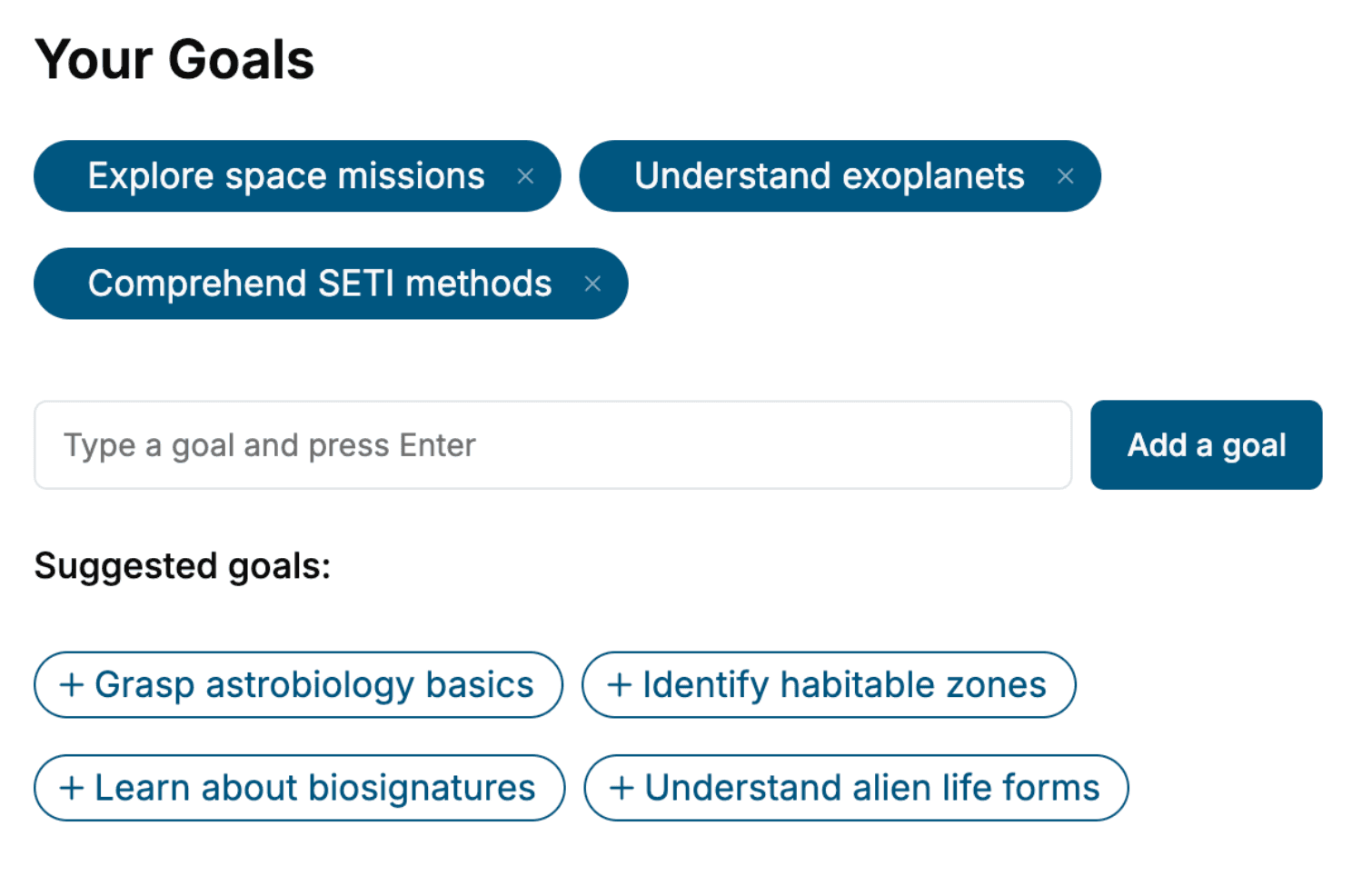
Specify your goals and choose sub-topics to include
- 3. Get your tailored book
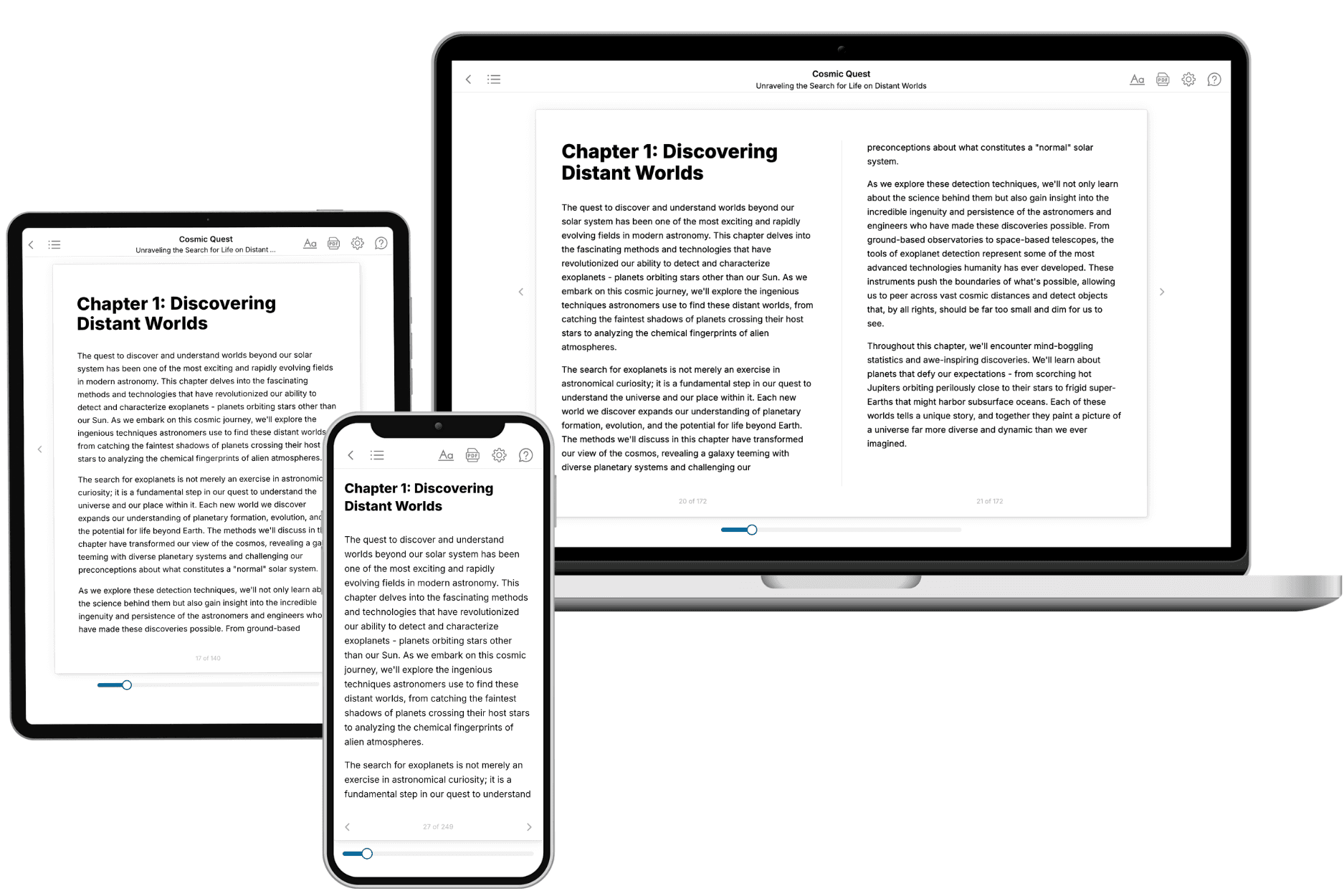
Your book is ready in 10 minutes. Read it online, download as EPUB or PDF, or send to Kindle.

Start from a template
Frequently asked questions
- What is TailoredRead?
TailoredRead creates complete, full-length nonfiction ebooks, written specifically for you. Tell us what you want to learn and why, and TailoredRead writes you a complete ebook on it, with charts, tables, and diagrams throughout. Read it online, on Kindle, or on any e-reader, or download it as a PDF or EPUB. Every book is written fresh the day you order it.
- How is the book tailored to me?
Before anything is written, you answer a few short questions about your goals, your background, and the topics you care about. Your book is then planned around your answers: written at your level, focused on your goals, and covering the topics you chose, instead of the one-size-fits-all book a store sells everyone.
- Will it read like generic AI content?
No. Your book isn't a chat transcript: it's planned chapter by chapter before a single word is written, told in a clear book voice, and explains ideas visually with charts, tables, and diagrams. After writing, every book goes through an editorial pass that polishes chapters so the book reads consistent from start to finish. Judge for yourself: browse thousands of sample books on our Explore Books page.
- How accurate is the content?
Our AI first checks whether your subject needs live research. Niche and fast-moving subjects are researched before writing, and the book plan and chapters are grounded in what it finds. After writing, every book goes through a quality pass that checks its facts and consistency, and researched books list their sources in a Notes section at the back.
- How long is the book?
You choose the length: Comprehensive (250-300 pages), Detailed (150-200 pages), Essential (70-100 pages), or Short (30-50 pages).
- Does the book include visuals?
Yes. Every book includes charts, tables, and diagrams: timelines, checklists, step-by-step guides, decision trees, comparison tables, matrices, and bar charts. A typical book includes dozens of these visual elements.
- Can I read it on Kindle? What formats can I download?
Yes. Every book can be read in our online reader or downloaded as a PDF or EPUB. The EPUB can be opened with Kindle, Apple Books, Kobo, and any e-reader. The Commercial and Author licenses also include an editable Word (DOCX) and Markdown download.
- How much does it cost?
About the price of a regular ebook. The exact price depends on your book's length and complexity, from $2 for the shortest books to $35 for the most comprehensive, and it's shown when you review your book, before you commit to anything. Each book is a one-time purchase, yours to keep, no subscription. Licenses that let you share, teach, or publish your book range from $35.99 to $49.99.
- Can I preview the book before purchasing?
Before you pay, you'll see what your book will cover: the title, a detailed description, the estimated length, and the complete chapter-by-chapter table of contents, so you know what you're getting before you decide. The full text itself is written after you purchase.
- How long does it take to create a book?
About 10 minutes. You can start reading the opening chapters while the rest is still being written.