The Foundations of Knowledge
A Journey Through Epistemology and Its Impact on Human Understanding
Embark on a fascinating journey into the heart of human knowledge with "The Foundations of Knowledge: A Journey Through Epistemology and Its Impact on Human Understanding." This illuminating book delves deep into the philosophical realm of epistemology, exploring how we acquire, justify, and understand knowledge.
284 pages14 chaptersDec 1, 2024Philosophy
About this book
You'll discover the fundamental questions that have puzzled philosophers for centuries: What is knowledge? How do we know what we know? What are the limits of human understanding? Through clear and engaging prose, this book unravels complex concepts and presents them in an accessible manner, allowing you to grasp the intricacies of epistemological thought. From the classical debates of ancient Greece to contemporary discussions on the role of technology in shaping our understanding, "The Foundations of Knowledge" offers a comprehensive overview of the field. You'll explore various theories of knowledge, examine the relationship between belief and truth, and consider the impact of skepticism on our quest for certainty. This book not only provides a solid grounding in epistemological concepts but also encourages you to question your own assumptions and approach to knowledge. Whether you're a philosophy enthusiast or simply curious about the nature of human understanding, this book will challenge your thinking and broaden your perspective. Prepare to embark on an intellectual adventure that will transform the way you perceive knowledge and its role in shaping our world.
Table of contents
- IntroductionWhat is Epistemology?, The Importance of Studying Knowledge, Overview of the BookRead below
- Chapter 1: The Foundations of EpistemologyDefining Knowledge: The Tripartite Theory, Belief and Truth: Necessary Components?, The Role of Justification, Gettier Problems and Their Implications
- Chapter 2: Sources of KnowledgeEmpiricism: Knowledge Through Experience, Rationalism: Knowledge Through Reason, Intuition and A Priori Knowledge, Testimony and Social Knowledge
- Chapter 3: Skepticism and Its ChallengesAncient Skepticism: Pyrrho and the Skeptics, Cartesian Doubt and Radical Skepticism, Hume's Skepticism and Induction, Modern Responses to Skepticism
- Chapter 4: Theories of JustificationFoundationalism: Building on Basic Beliefs, Coherentism: The Web of Beliefs, Reliabilism: Trustworthy Belief-Forming Processes, Internalism vs. Externalism
- Chapter 5: The Nature of TruthCorrespondence Theory of Truth, Coherence Theory of Truth, Pragmatic Theory of Truth, Deflationary Theories of Truth
- Chapter 6: Perception and RealityNaive Realism and Common Sense, Representative Realism, Phenomenalism and Idealism, Critical Realism
- Chapter 7: Structures of KnowledgeA Priori and A Posteriori Knowledge, Analytic and Synthetic Propositions, Necessary and Contingent Truths, Kant's Synthesis
- Chapter 8: The Limits of KnowledgeKnown Unknowns and Unknown Unknowns, Cognitive Biases and Limitations, Paradoxes and Their Implications, Underdetermination of Scientific Theories
- Chapter 9: Social EpistemologyTestimony and Trust in Others, Peer Disagreement and Epistemic Humility, Group Knowledge and Collective Intelligence, Epistemic Injustice and Marginalized Voices
- Chapter 10: Scientific KnowledgeThe Scientific Method and Epistemology, The Problem of Induction, Popper's Falsificationism, Kuhn's Paradigm Shifts
- Chapter 11: Religious and Mystical KnowledgeFaith and Reason, Religious Experience as a Source of Knowledge, Mysticism and Non-Conceptual Knowledge, Epistemology in Theology
- Chapter 12: Moral KnowledgeMoral Realism and Objectivism, Moral Relativism and Subjectivism, Moral Intuitions and Their Reliability, Moral Reasoning and Justification
- Chapter 13: Epistemology and Philosophy of MindConsciousness and Self-Knowledge, The Problem of Other Minds, The Extended Mind Thesis, Artificial Intelligence and Knowledge
- Chapter 14: Contemporary Challenges in EpistemologyVirtue Epistemology, Feminist Epistemology, Naturalized Epistemology, Epistemology in the Digital Age, Future Directions in Epistemology
- ConclusionKey Takeaways, Ongoing Questions in Epistemology, Personal Reflection on Knowledge
- Glossary
- Further Reading
Introduction
Welcome to "The Foundations of Knowledge: A Journey Through Epistemology and Its Impact on Human Understanding." This book is designed to take you on an intellectual adventure, exploring the fascinating realm of epistemology - the study of knowledge. As you embark on this journey, you'll discover that the questions surrounding knowledge are not merely academic exercises, but fundamental inquiries that shape our understanding of the world and our place in it. Throughout this exploration, we'll delve into the nature of knowledge, its sources, and its limits, challenging you to think critically about what you know and how you know it.
Epistemology, as a branch of philosophy, has been at the heart of human inquiry for millennia. From the ancient Greek philosophers to contemporary thinkers, the quest to understand the nature and scope of knowledge has driven intellectual progress and shaped our understanding of reality. This book aims to provide you with a comprehensive overview of this rich field, introducing you to key concepts, debates, and theories that have shaped epistemological thought throughout history. By engaging with these ideas, you'll develop a more nuanced understanding of knowledge and its role in both your personal life and the broader context of human civilization.
As we navigate through the complex landscape of epistemology, we'll encounter a diverse array of perspectives and approaches. You'll be introduced to classical theories that have stood the test of time, as well as cutting-edge ideas that are reshaping our understanding of knowledge in the modern world. Along the way, we'll examine how epistemology intersects with other fields of study, including science, psychology, and technology, revealing the far-reaching implications of epistemological inquiry. By the end of this journey, you'll not only have a solid grasp of epistemological concepts but also a newfound appreciation for the complexity and importance of knowledge in our lives.
What is Epistemology?
Epistemology, derived from the Greek words "episteme" (knowledge) and "logos" (study), is the branch of philosophy concerned with the nature, sources, and limits of knowledge. It seeks to answer fundamental questions about how we acquire knowledge, what constitutes justified belief, and how we can distinguish between knowledge and mere opinion. At its core, epistemology is an attempt to understand the very foundations of human understanding itself.
The field of epistemology encompasses a wide range of inquiries, from abstract philosophical debates to practical considerations about how we navigate the world. Some of the central questions that epistemologists grapple with include: What is knowledge? How do we know what we know? What are the sources of our knowledge? How can we justify our beliefs? What are the limits of human understanding? These questions may seem simple at first glance, but they quickly lead us into complex philosophical territory, challenging our assumptions and pushing us to examine the very basis of our beliefs and understanding.
One of the most fundamental concepts in epistemology is the definition of knowledge itself. The traditional definition, often attributed to Plato, holds that knowledge is justified true belief. This tripartite definition suggests that for something to count as knowledge, it must be believed, it must be true, and the belief must be justified. However, as we'll explore later in this book, this definition has been subject to numerous challenges and refinements over the centuries. The Gettier problems, for instance, have demonstrated that justified true belief may not always be sufficient for knowledge, leading to ongoing debates about the nature of knowledge and justification[1].
Epistemology also explores various theories about the sources of knowledge. Empiricism, for example, holds that knowledge primarily comes from sensory experience, while rationalism argues that reason is the primary source of knowledge. Intuition, memory, and testimony are other potential sources of knowledge that epistemologists examine. Each of these approaches has its strengths and limitations, and understanding them can help us better appreciate the complexity of human knowledge acquisition.
Another crucial area of epistemological inquiry is the study of justification. How do we justify our beliefs? What makes a belief rational or warranted? Various theories of justification have been proposed, including foundationalism, which argues that all justified beliefs are either basic (self-evident) or derived from basic beliefs, and coherentism, which holds that beliefs are justified if they cohere with other beliefs in a person's belief system. These theories of justification have significant implications for how we evaluate claims to knowledge and how we build our understanding of the world.
Epistemology also grapples with skepticism, the philosophical position that questions the possibility of certain knowledge. Skeptical arguments have played a crucial role in shaping epistemological thought, challenging us to examine our assumptions and the foundations of our beliefs. From Descartes' methodological doubt to contemporary debates about the reliability of our senses and cognitive faculties, skepticism continues to be a driving force in epistemological inquiry.
In recent years, epistemology has expanded to include new areas of inquiry that reflect the changing nature of knowledge in our modern world. Social epistemology, for instance, examines how social factors influence knowledge acquisition and dissemination. Feminist epistemology challenges traditional assumptions about knowledge and explores how gender and other social factors shape our understanding. The rise of artificial intelligence and big data has also sparked new epistemological questions about the nature of machine knowledge and the role of algorithms in shaping human understanding.
As we delve deeper into epistemology throughout this book, you'll discover that it's not just an abstract philosophical exercise, but a field with profound implications for how we live our lives and understand the world around us. By examining the nature of knowledge, we can become more critical thinkers, better equipped to evaluate claims and make informed decisions. Epistemology provides us with tools to navigate the complex landscape of information in the modern world, helping us distinguish between reliable knowledge and unfounded beliefs.
Moreover, epistemology intersects with numerous other fields of study, including psychology, cognitive science, neuroscience, and computer science. These interdisciplinary connections highlight the relevance of epistemological inquiry to our broader understanding of human cognition and the nature of intelligence. As we explore these connections, you'll gain insights into how our understanding of knowledge shapes and is shaped by advances in these related fields.
In essence, epistemology invites us to step back and examine the very foundations of our understanding. It challenges us to question our assumptions, critically evaluate our beliefs, and consider alternative perspectives. By engaging with epistemological questions, we can develop a more nuanced and reflective approach to knowledge, enhancing our ability to learn, reason, and engage with the world around us. As we embark on this journey through the landscape of epistemology, prepare to have your assumptions challenged and your understanding of knowledge transformed.
The Importance of Studying Knowledge
The study of knowledge, or epistemology, might seem abstract or removed from everyday concerns at first glance. However, its importance cannot be overstated, as it underpins virtually every aspect of human thought and action. Understanding the nature, sources, and limits of knowledge is crucial for navigating the complexities of the modern world, making informed decisions, and engaging critically with the vast array of information we encounter daily. In this section, we'll explore why the study of knowledge is not just an academic exercise, but a vital pursuit with far-reaching implications for individuals and society as a whole.
At its core, the study of knowledge is about understanding how we come to know things and how we can be confident in our beliefs. This understanding is fundamental to critical thinking, which is essential in an age of information overload and misinformation. By examining the processes by which we acquire and justify knowledge, we can develop better tools for evaluating claims, distinguishing between reliable and unreliable sources, and making more informed judgments. This critical approach to knowledge is invaluable in both personal and professional contexts, from making decisions about health and finances to evaluating scientific claims and political arguments.
The importance of studying knowledge becomes even more apparent when we consider the rapid pace of technological advancement and the changing nature of information in the digital age. The internet has democratized access to information, but it has also created new challenges in terms of information quality and reliability. Understanding epistemological concepts can help us navigate this complex information landscape, enabling us to identify credible sources, recognize logical fallacies, and resist the spread of misinformation and conspiracy theories. In an era where "fake news" and "alternative facts" have become part of the public discourse, a solid grounding in epistemology can serve as a bulwark against manipulation and deception[2].
Moreover, the study of knowledge is crucial for scientific progress and innovation. Science, at its core, is a method for acquiring reliable knowledge about the world. Understanding the epistemological foundations of scientific inquiry - including concepts like empiricism, falsifiability, and the problem of induction - can help us appreciate the strengths and limitations of scientific knowledge. This understanding is essential not only for scientists but for anyone who wants to engage meaningfully with scientific information, whether it's evaluating medical treatments, understanding climate change, or assessing the implications of new technologies.
In the realm of education, the study of knowledge has profound implications for how we approach teaching and learning. By understanding different theories of knowledge acquisition, educators can develop more effective teaching strategies that align with how humans actually learn and understand. For students, grasping epistemological concepts can enhance metacognition - the awareness and understanding of one's own thought processes - which has been shown to improve learning outcomes and problem-solving skills[3].
The study of knowledge also has significant ethical implications. Many ethical debates hinge on questions of knowledge and certainty. For instance, discussions about the ethics of artificial intelligence often involve epistemological questions about machine knowledge and consciousness. Similarly, debates about climate change policy are inextricably linked to questions about the nature and reliability of scientific knowledge. By engaging with epistemology, we can develop a more nuanced understanding of these complex issues and make more informed ethical judgments.
Furthermore, the study of knowledge is crucial for fostering intellectual humility and open-mindedness. By examining the limits of human knowledge and understanding, we can develop a healthy skepticism that protects against dogmatism and close-mindedness. This epistemological humility can lead to greater tolerance for different perspectives and a willingness to revise our beliefs in light of new evidence - qualities that are essential for personal growth and social progress.
In the professional world, understanding epistemology can be a significant asset. In fields ranging from law and journalism to business and technology, the ability to critically evaluate evidence, construct sound arguments, and understand the limitations of different types of knowledge is invaluable. For instance, in the legal profession, understanding concepts like justification and the reliability of testimony is crucial for building cases and evaluating evidence. In business, grasping epistemological concepts can enhance decision-making processes and risk assessment strategies.
The study of knowledge also has important implications for social and political discourse. In an era of increasing polarization and echo chambers, understanding how we come to know things and why we believe what we believe can foster more productive dialogue and mutual understanding. By recognizing the epistemological foundations of our own beliefs and those of others, we can engage in more empathetic and constructive conversations across ideological divides.
Moreover, epistemology plays a crucial role in addressing some of the most pressing challenges of our time. Issues like climate change, global health crises, and the ethical implications of emerging technologies all involve complex questions about the nature and limits of human knowledge. By studying epistemology, we can develop better frameworks for addressing these challenges, balancing different types of knowledge and expertise, and making decisions in the face of uncertainty.
Finally, the study of knowledge is intrinsically valuable as a pursuit of self-understanding. By examining how we know what we know, we gain deeper insights into our own cognitive processes, biases, and limitations. This self-reflection can lead to personal growth, enhanced self-awareness, and a richer, more nuanced understanding of our place in the world.
In conclusion, the study of knowledge is far from a mere academic exercise. It is a vital pursuit with profound implications for how we think, learn, make decisions, and engage with the world around us. As we navigate an increasingly complex and information-rich environment, the tools and insights provided by epistemology become ever more crucial. By engaging with the study of knowledge, we equip ourselves to be more critical thinkers, more informed citizens, and more reflective individuals, better prepared to face the challenges and opportunities of our rapidly changing world.
Overview of the Book
"The Foundations of Knowledge: A Journey Through Epistemology and Its Impact on Human Understanding" is designed to provide you with a comprehensive exploration of epistemology, guiding you through its key concepts, debates, and implications. This book is structured to build your understanding progressively, starting with fundamental concepts and moving towards more complex and contemporary issues. Each chapter is crafted to be both informative and engaging, combining theoretical discussions with practical examples and thought-provoking questions to stimulate your own epistemological reflections.
We begin our journey in Chapter 1, "The Foundations of Epistemology," where we lay the groundwork for our exploration. This chapter introduces the fundamental concepts of epistemology, including the traditional definition of knowledge as justified true belief. We'll examine each component of this definition in detail, considering what it means for a belief to be true, justified, and genuinely held. We'll also introduce the Gettier problems, which challenge this traditional definition and have sparked decades of philosophical debate. This chapter sets the stage for the rest of the book by establishing the core questions and concepts that epistemologists grapple with.
Chapter 2, "Sources of Knowledge," delves into the various ways humans acquire knowledge. We'll explore empiricism, which posits that knowledge primarily comes from sensory experience, and rationalism, which argues for the primacy of reason in knowledge acquisition. We'll also consider other potential sources of knowledge, such as intuition and testimony. This chapter will encourage you to reflect on your own processes of knowledge acquisition and to consider the strengths and limitations of different epistemological approaches.
In Chapter 3, "Skepticism and Its Challenges," we confront one of the most persistent and provocative strands of epistemological thought. We'll trace the history of skepticism from ancient Greek philosophy to modern times, examining how skeptical arguments have shaped and refined epistemological theories. We'll consider radical skepticism, such as Descartes' methodological doubt, as well as more moderate forms of skepticism. This chapter will challenge you to question your own certainties and to consider the limits of human knowledge.
Chapter 4, "Theories of Justification," explores how we justify our beliefs and what makes a belief rational or warranted. We'll examine foundationalism, which argues for the existence of basic, self-evident beliefs, and coherentism, which focuses on the interconnectedness of our beliefs. We'll also consider reliabilism and other contemporary approaches to justification. This chapter will provide you with tools to evaluate the strength of your own beliefs and the claims of others.
In Chapter 5, "The Nature of Truth," we grapple with one of the most fundamental concepts in epistemology. We'll explore various theories of truth, including the correspondence theory, the coherence theory, and pragmatic approaches. This chapter will challenge you to think deeply about what we mean when we say something is "true" and how different conceptions of truth shape our understanding of knowledge.
Chapter 6, "Perception and Reality," delves into the relationship between our perceptions and the external world. We'll examine various philosophical positions, from naive realism to idealism, considering how each approach conceptualizes the relationship between our experiences and reality. This chapter will encourage you to reflect on the reliability of your senses and the nature of the reality you perceive.
In Chapter 7, "Structures of Knowledge," we explore different ways of categorizing and understanding knowledge. We'll examine distinctions such as a priori versus a posteriori knowledge, analytic versus synthetic propositions, and necessary versus contingent truths. We'll also consider Kant's influential synthesis of rationalism and empiricism. This chapter will provide you with a framework for understanding different types of knowledge and their relationships.
Chapter 8, "The Limits of Knowledge," pushes us to consider the boundaries of human understanding. We'll explore concepts like known unknowns and unknown unknowns, examine cognitive biases that limit our knowledge, and consider paradoxes that challenge our understanding. This chapter will encourage humility in the face of the vast complexity of the universe and the limitations of human cognition.
In Chapter 9, "Social Epistemology," we shift our focus to the social dimensions of knowledge. We'll explore how knowledge is created, shared, and validated within communities, examining concepts like testimony, peer disagreement, and collective intelligence. We'll also consider issues of epistemic injustice and the role of power in shaping what counts as knowledge. This chapter will highlight the deeply social nature of human knowledge and its implications for how we understand expertise and authority.
Chapter 10, "Scientific Knowledge," focuses on the epistemology of science. We'll examine the scientific method from an epistemological perspective, consider the problem of induction, and explore influential philosophies of science such as Popper's falsificationism and Kuhn's paradigm shifts. This chapter will deepen your understanding of the strengths and limitations of scientific knowledge and its role in our understanding of the world.
In Chapter 11, "Religious and Mystical Knowledge," we venture into more controversial territory, examining claims to knowledge based on faith, religious experience, and mystical insights. We'll consider the relationship between faith and reason, the epistemological status of religious experiences, and the concept of non-conceptual knowledge. This chapter will challenge you to think critically about different ways of knowing and their validity.
Chapter 12, "Moral Knowledge," explores the epistemological dimensions of ethics. We'll examine moral realism and relativism, consider the reliability of moral intuitions, and explore how moral reasoning works from an epistemological perspective. This chapter will encourage you to reflect on the foundations of your own moral beliefs and how we can justify ethical claims.
In Chapter 13, "Epistemology and Philosophy of Mind," we explore the intersections between theories of knowledge and theories of consciousness and cognition. We'll examine issues like self-knowledge, the problem of other minds, and the extended mind thesis. We'll also consider the epistemological implications of artificial intelligence. This chapter will highlight the deep connections between how we think and how we know.
Finally, Chapter 14, "Contemporary Challenges in Epistemology," brings us to the cutting edge of epistemological thought. We'll explore recent developments like virtue epistemology and feminist epistemology, consider the impact of cognitive science on our understanding of knowledge, and examine the epistemological challenges posed by the digital age. This chapter will demonstrate that epistemology is a vibrant, evolving field with crucial relevance to contemporary issues.
Throughout the book, you'll find numerous examples, thought experiments, and case studies that illustrate abstract concepts and bring epistemological debates to life. Each chapter concludes with reflection questions and suggestions for further reading, encouraging you to deepen your engagement with the material and continue your epistemological journey beyond the pages of this book.
By the end of "The Foundations of Knowledge," you'll have gained a comprehensive understanding of epistemology, from its historical roots to its contemporary frontiers. More importantly, you'll have developed a more nuanced and critical approach to knowledge in your own life. You'll be better equipped to evaluate claims, understand the foundations of your own beliefs, and engage thoughtfully with the complex epistemological challenges of our time. This book is not just about understanding epistemology – it's about transforming how you think about knowledge and its role in shaping our world.
This is the end of the free sample. The full book has 14 chapters.
Want this book written for you?
Tell us your goals and background, and get your own version of this book, tailored by AI to you.


Benefits of AI-tailored books
- Read one book, not ten:
- all the Philosophy knowledge you need, gathered into a single book.
- Save days of learning:
- tell us your goals, choose your topics, and the whole book is built around them.
- Learn effortlessly:
- Philosophy book written for your specific background and expertise.
- Understand at a glance:
- includes charts, tables, timelines, checklists, decision trees, and more.
- Stay current:
- written the day you order it, not years ago.
- Trust what you read:
- every book is checked for accuracy, with real research when your subject needs it.
Create your unique book in 3 steps
- 1. Select your focus
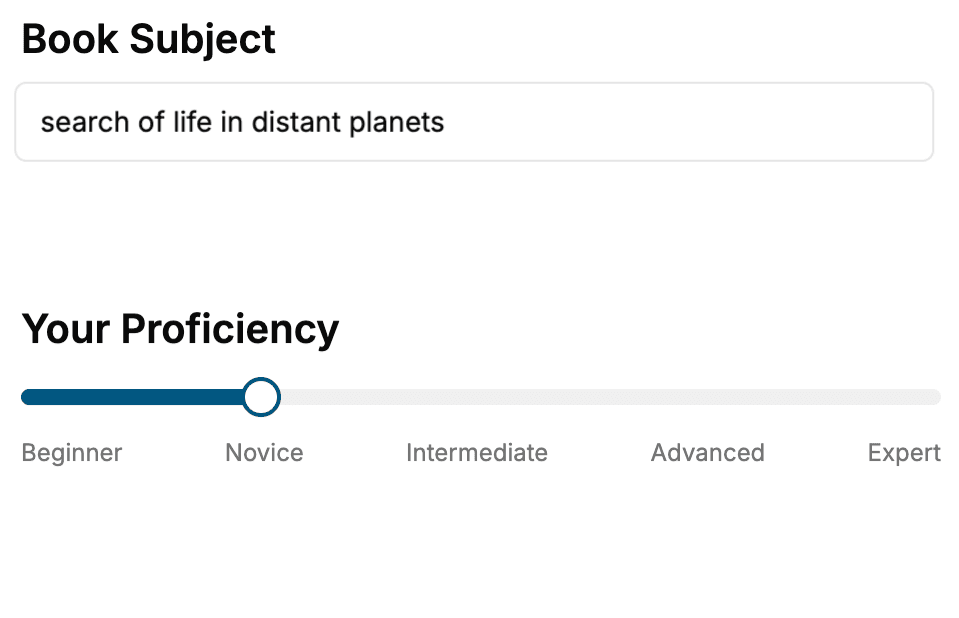
Select the focus of your Philosophy book and share your background
- 2. Personalize your book
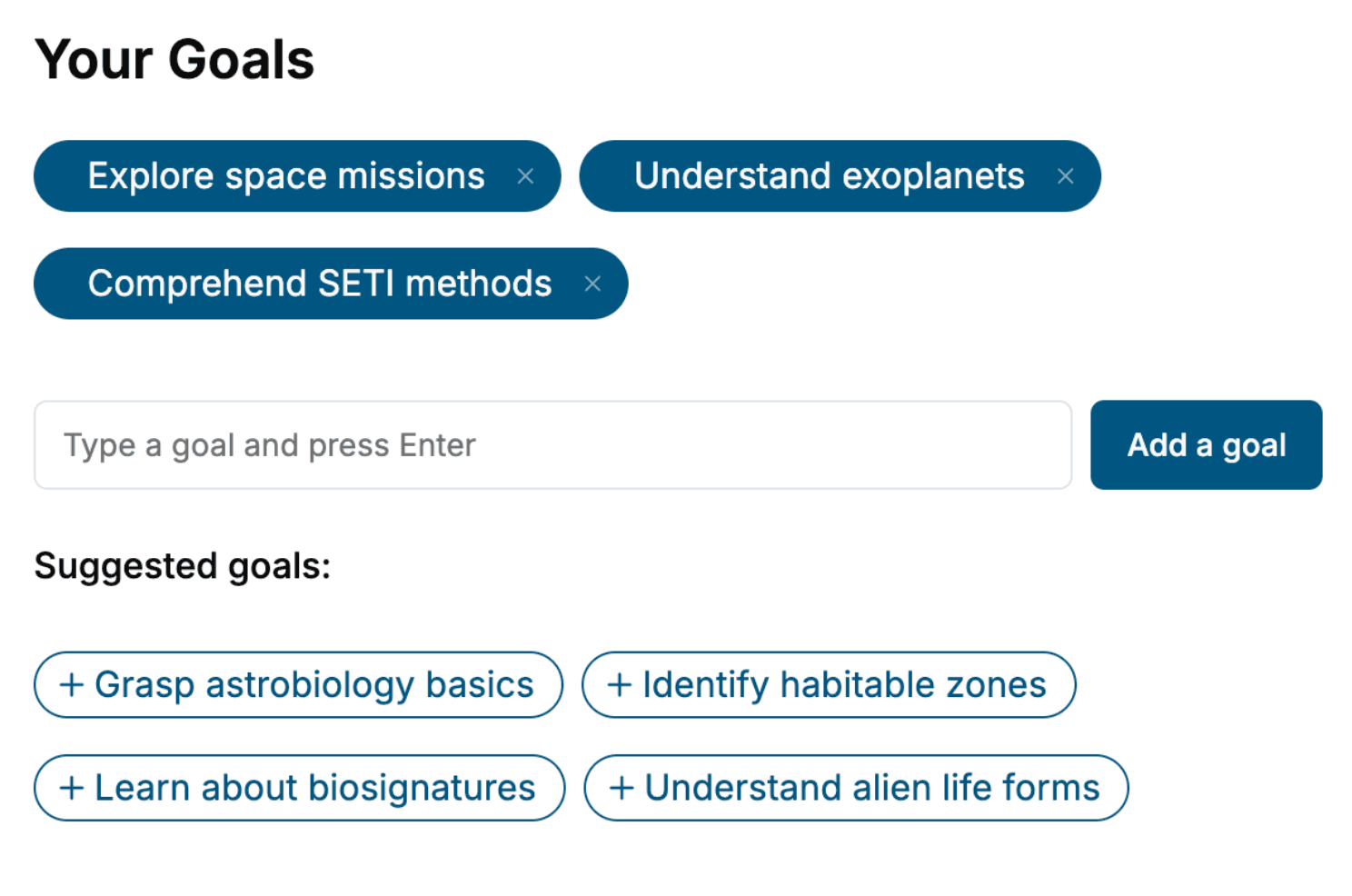
Specify your goals and choose sub-topics to include
- 3. Get your tailored book
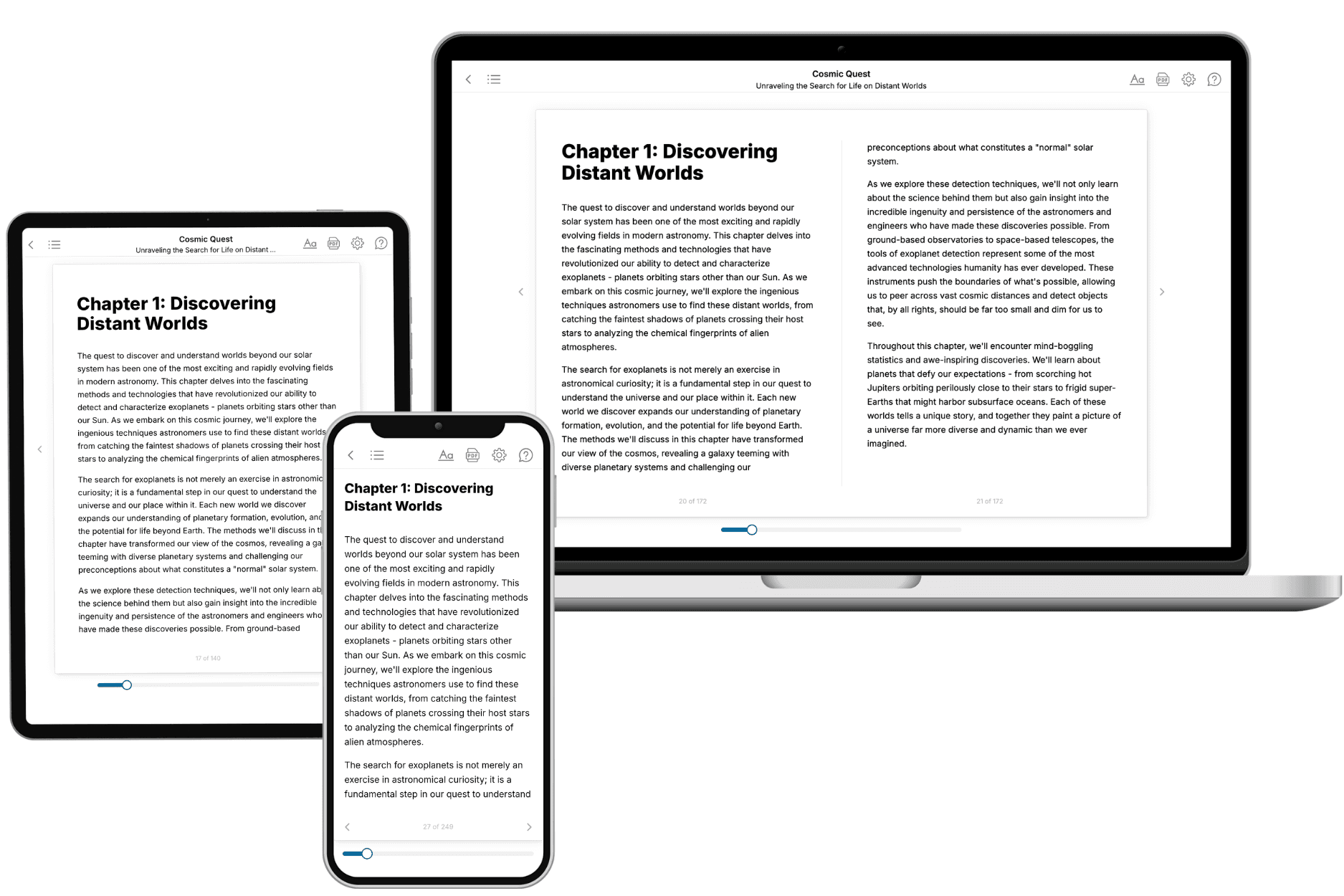
Your book is ready in 10 minutes. Read it online, download as EPUB or PDF, or send to Kindle.
Frequently asked questions
- What is TailoredRead?
TailoredRead creates complete, full-length nonfiction ebooks, written specifically for you. Tell us what you want to learn and why, and TailoredRead writes you a complete ebook on it, with charts, tables, and diagrams throughout. Read it online, on Kindle, or on any e-reader, or download it as a PDF or EPUB. Every book is written fresh the day you order it.
- How is the book tailored to me?
Before anything is written, you answer a few short questions about your goals, your background, and the topics you care about. Your book is then planned around your answers: written at your level, focused on your goals, and covering the topics you chose, instead of the one-size-fits-all book a store sells everyone.
- Will it read like generic AI content?
No. Your book isn't a chat transcript: it's planned chapter by chapter before a single word is written, told in a clear book voice, and explains ideas visually with charts, tables, and diagrams. After writing, every book goes through an editorial pass that polishes chapters so the book reads consistent from start to finish. Judge for yourself: browse thousands of sample books on our Explore Books page.
- How accurate is the content?
Our AI first checks whether your subject needs live research. Niche and fast-moving subjects are researched before writing, and the book plan and chapters are grounded in what it finds. After writing, every book goes through a quality pass that checks its facts and consistency, and researched books list their sources in a Notes section at the back.
- How long is the book?
You choose the length: Comprehensive (250-300 pages), Detailed (150-200 pages), Essential (70-100 pages), or Short (30-50 pages).
- Does the book include visuals?
Yes. Every book includes visual elements such as timelines, checklists, step-by-step guides, decision trees, comparison tables, and matrices, and many include bar charts. A typical book includes dozens of these visual elements.
- Can I read it on Kindle? What formats can I download?
Yes. Every book can be read in our online reader or downloaded as a PDF or EPUB. The EPUB can be opened with Kindle, Apple Books, Kobo, and any e-reader. The Commercial and Author licenses also include an editable Word (DOCX) and Markdown download.
- How much does it cost?
About the price of a regular ebook. The exact price depends on your book's length and complexity, from $2 for the shortest books to $35 for the most comprehensive, and it's shown when you review your book, before you commit to anything. Each book is a one-time purchase, yours to keep, no subscription. Licenses that let you share, teach, or publish your book range from $35.99 to $49.99.
- Can I preview the book before purchasing?
Before you pay, you'll see what your book will cover: the title, a detailed description, the estimated length, and the complete chapter-by-chapter table of contents, so you know what you're getting before you decide. The full text itself is written after you purchase.
- How long does it take to create a book?
About 10 minutes. You can start reading the opening chapters while the rest is still being written.