French Philosophy Books
Explore tailored French Philosophy books created by our AI
Embark on an illuminating journey through the life and times of one of history's most provocative thinkers. "Voltaire: Enlightenment's Firebrand" offers a vivid portrait of the man who dared to challenge the established order and whose ideas continue to shape our world today. From his early years in Paris to his exile in England and his triumphant return to France, you'll trace Voltaire's footsteps through the tumultuous landscape of 18th-century Europe. Discover how his wit, satire, and unwavering commitment to reason made him both a celebrated author and a dangerous enemy of the state. This book delves deep into Voltaire's most influential works, from "Candide" to his letters on English society, revealing how they reflected and influenced the social and political climate of his time. You'll gain insight into the Enlightenment movement and how Voltaire's ideas on religious tolerance, freedom of speech, and separation of church and state laid the groundwork for modern democratic values. More than just a biography, this book places Voltaire within the broader context of European history, exploring how his thoughts and actions rippled through French society and beyond. You'll come away with a rich understanding of how one man's pen became mightier than the sword, shaping the course of Western civilization for centuries to come.
Step into the provocative world of Georges Bataille, one of the most influential yet enigmatic figures in 20th century French philosophy. This book takes you on an intellectual odyssey through Bataille's life, ideas, and the tumultuous historical context that shaped his radical thinking. From his early years in provincial France to his rise as a key figure in Parisian intellectual circles, you'll discover how Bataille's unconventional ideas challenged traditional notions of philosophy, literature, and society. Explore his concepts of excess, eroticism, and the sacred, and how they intersected with the political and cultural upheavals of his time. Delve into Bataille's relationships with other prominent thinkers of his era, including Sartre, Camus, and Breton, and uncover how these interactions influenced the development of existentialism and surrealism. This book not only illuminates Bataille's contributions to philosophy but also provides a unique lens through which to view the broader landscape of 20th century European thought and history.
Embark on a captivating journey through the life and mind of one of the 20th century's most influential philosophers and feminists. "Simone de Beauvoir: A Philosophical Revolution" offers a comprehensive exploration of the woman who challenged societal norms and reshaped modern thought. Delve into the rich tapestry of post-war France as you follow Beauvoir's evolution from a young, brilliant student to a groundbreaking author and thinker. Discover how her experiences and relationships, including her famous partnership with Jean-Paul Sartre, shaped her revolutionary ideas on gender, ethics, and human freedom. This book meticulously examines Beauvoir's major works, including "The Second Sex," which became a cornerstone of feminist philosophy. You'll gain insight into how her ideas developed within the context of existentialism and how they continue to resonate in contemporary discussions on gender equality and human rights. Whether you're a philosophy enthusiast, a student of European history, or simply curious about one of the most compelling intellectuals of our time, this book offers a nuanced and engaging portrait of Simone de Beauvoir and her enduring legacy in shaping our understanding of identity, freedom, and social justice.
Sartre's Century
Existentialism, Freedom, and the Shaping of Modern France
Embark on a captivating journey through the life and times of one of the 20th century's most influential philosophers, Jean-Paul Sartre. "Sartre's Century" offers a rich tapestry of ideas, historical events, and personal anecdotes that bring the world of existentialism to life. From the bustling cafes of Paris to the tumultuous events of World War II, you'll explore how Sartre's philosophy of radical freedom and personal responsibility emerged from and responded to the challenges of his era. Discover how his ideas on existentialism, authenticity, and engagement shaped not only French intellectual life but also influenced global movements in literature, politics, and social thought. This book delves deep into Sartre's key works, illuminating complex philosophical concepts with clarity and insight. You'll gain a nuanced understanding of how Sartre's ideas evolved over time, influenced by his relationships, political commitments, and the rapidly changing world around him. By placing Sartre within the broader context of French and European history, you'll see how his thoughts both reflected and shaped the cultural landscape of the 20th century.
Beyond Fixed Meaning
Understanding Structuralism and Post-Structuralism in French Philosophy
You're about to discover how two of the most influential philosophical movements transformed our understanding of meaning, culture, and human existence. This book traces the intellectual journey from structuralism's systematic search for hidden patterns in language and society to post-structuralism's radical questioning of whether meaning can ever be fixed or stable. Through clear explanations of complex ideas, you'll explore how thinkers like Lévi-Strauss, Foucault, Derrida, and Lacan challenged conventional philosophy and reshaped fields from literary criticism to psychology. Rather than treating these movements as abstract academic exercises, this book shows how their insights reveal the constructed nature of meaning, identity, and power in our world. You'll learn practical tools for analyzing texts and culture, understand why these ideas matter beyond academia, and develop a nuanced perspective on one of philosophy's most transformative periods. Whether you're encountering these concepts for the first time or seeking deeper comprehension, this guide makes the complex accessible without sacrificing intellectual rigor.
Embark on an illuminating journey through the life and times of Albert Camus, one of the most influential thinkers of the 20th century. This book offers a rich tapestry of Camus's experiences, ideas, and artistic creations, all set against the backdrop of a tumultuous period in French and European history. You'll discover how Camus's upbringing in French Algeria shaped his worldview, and how the political and social upheavals of his time influenced his philosophical thoughts. From his early days as a journalist to his rise as a celebrated author and philosopher, you'll gain insight into the events and ideas that molded Camus into the intellectual giant we know today. Delve deep into Camus's major works, including "The Stranger," "The Myth of Sisyphus," and "The Plague," understanding how these masterpieces reflect both his personal experiences and the broader historical context. You'll explore his concept of the absurd, his views on revolt and solidarity, and his unique brand of existentialism that continues to resonate with readers around the world. This book not only illuminates Camus's life and work but also provides a window into the broader currents of 20th-century thought, from existentialism to absurdism, and their lasting impact on our understanding of the human condition. Whether you're a longtime admirer of Camus or new to his ideas, this exploration will deepen your appreciation for this remarkable thinker and his enduring legacy.
Deconstructing Derrida
The Philosopher Who Challenged Western Thought in 20th Century France
Imagine holding in your hands the key to unraveling one of the most influential and controversial philosophical movements of the 20th century. As you delve into "Deconstructing Derrida," you'll find yourself transported to the vibrant intellectual landscape of post-war France, where a young Algerian-born philosopher would soon challenge the very foundations of Western thought. This book offers you a unique opportunity to explore the life and ideas of Jacques Derrida, the father of deconstruction, whose work continues to shape fields as diverse as literature, linguistics, and cultural studies. You'll discover how Derrida's revolutionary approach to language and meaning emerged from the rich tapestry of European philosophy and how it responded to the tumultuous events of his time. From the lecture halls of the École Normale Supérieure to the protests of May 1968, you'll trace Derrida's intellectual journey and its profound impact on contemporary thought. This book doesn't just explain Derrida's complex ideas; it brings them to life, showing you how they relate to your own understanding of language, identity, and the world around you. Whether you're a philosophy enthusiast or simply curious about the ideas that have shaped our modern world, "Deconstructing Derrida" offers you a clear, engaging, and authoritative guide to one of the most important thinkers of our time. Prepare to challenge your assumptions, expand your intellectual horizons, and see the world of ideas in a whole new light.
Many assume sexuality is a private, biological matter—something natural and unchanging across history. Foucault's groundbreaking work shatters this illusion, revealing that sexuality is fundamentally shaped by power, language, and historical forces. This book unpacks his revolutionary analysis, showing how modern institutions—medicine, law, psychiatry—don't simply repress sexuality but actively construct it through discourse. You'll discover how the "homosexual" as a category didn't exist before the nineteenth century, how confession became a tool of social control, and how power operates not just through prohibition but through the production of knowledge and desire. By tracing sexuality's history from ancient Greece through the modern era, you'll gain critical insight into how your own identity and desires are shaped by forces operating beneath conscious awareness. This exploration equips you to question taken-for-granted assumptions about sex, identity, and freedom in contemporary society.
This book guides you through Jean Baudrillard's revolutionary theory of simulacra—one of the most influential yet misunderstood concepts in contemporary philosophy. You'll discover how copies without originals have become the dominant reality of our time, reshaping everything from consumer culture to politics to personal identity. Rather than treating Baudrillard as an abstract theorist, this exploration connects his ideas to concrete examples: why your social media profile feels more real than your actual self, how advertising creates desire for products that don't truly exist, and why distinguishing fact from fiction has become nearly impossible. You'll learn the four orders of simulacra and understand how each represents a progressive collapse of meaning. By the end, you'll possess a powerful analytical lens for interpreting the hyperreal world you inhabit daily—one where simulations don't merely represent reality but have fundamentally replaced it. This is essential reading for anyone seeking to understand the philosophical foundations of our image-saturated, digitally mediated existence.
Foucault's Legacy
Unraveling the Threads of Power, Knowledge, and Society in Modern Europe
Embark on an illuminating journey through the life and ideas of one of the most influential philosophers of the 20th century. "Foucault's Legacy" offers a deep dive into the complex world of Michel Foucault, exploring his revolutionary concepts that continue to shape our understanding of power, knowledge, and society. As you navigate through the pages of this book, you'll discover how Foucault's theories emerged from and responded to the tumultuous landscape of post-war Europe. You'll gain insights into his groundbreaking work on institutions, sexuality, and discourse, and how these ideas have permeated various fields of study, from history and sociology to literature and cultural studies. This comprehensive exploration not only contextualizes Foucault within the broader tapestry of French intellectual tradition but also examines his lasting impact on contemporary thought. Whether you're a student of philosophy, a history enthusiast, or simply curious about the ideas that have shaped our modern world, "Foucault's Legacy" provides a nuanced and accessible entry point into the fascinating world of this revolutionary thinker.
This genealogical investigation traces the conceptual ruptures and radical philosophical genealogies that have shaped Western thought from the seventeenth century to the present. Rather than presenting philosophy as a linear progression, this work maps the hidden connections, deviations, and marginalized voices that constitute philosophy's true genealogy. You will encounter the ontological revolutions initiated by Spinoza and Bruno, the transgressive thought of Bataille and Blanchot, the deconstructive apparatus of Derrida, and the rhizomatic philosophy of Deleuze. Moving through poststructuralism, postmodernism, and contemporary continental thought, you will trace how ethics transforms from representation toward alterity and vulnerability. The book systematically recovers marginalized philosophical voices—feminist philosophers, postcolonial thinkers, disability theorists, and those working at philosophy's transgressive margins. Using genealogical methodology and conceptual diagramming, you will understand how contemporary philosophy's most vital questions emerge not from canonical traditions but from philosophy's radical excesses, its singular voices, and its persistent challenge to dominant frameworks of thought.
Thinking at the Edges
Philosophy's Radical Margins and the Thinkers Who Rewrote Thought
Philosophy's official history has always been a story of exclusions. Entire traditions of radical thought—from Giordano Bruno's infinite worlds to Spinoza's dangerous immanence, from Deleuze's nomadic philosophy to Foucault's genealogical method—have been marginalized, suppressed, or forgotten. This book recovers those suppressed genealogies and shows how thinkers at philosophy's edges fundamentally rewrote what thought itself could be. You'll discover how Baroque philosophy's ontological excess, vitalist thought's challenge to mechanism, and decolonial frameworks' epistemological justice reshape philosophical foundations. Through careful genealogical reconstruction, you'll trace the hidden lineages connecting Bruno, Spinoza, Deleuze, and contemporary thinkers like Mbembe and Braidotti. This isn't merely historical recovery—it's a practical guide for developing original philosophical arguments, challenging mainstream narratives, and integrating radical ideas into your own intellectual and creative work. By mapping philosophy's margins, you'll learn to think differently about difference itself.
Struggling to grasp the complex interplay between Derrida's deconstruction and Renaissance philosophy? This book bridges the gap between these seemingly disparate realms of thought, offering you a unique perspective on how modern critical theory intersects with classical ideas. Through a careful examination of Derrida's revolutionary approach, you'll gain the tools to analyze Renaissance texts and concepts with fresh eyes, challenging traditional interpretations and uncovering hidden layers of meaning. Dive deep into the heart of philosophical discourse, where the past and present collide in a fascinating exploration of language, meaning, and interpretation. This insightful guide will equip you with the knowledge to engage in sophisticated discussions about both deconstruction and Renaissance philosophy, enhancing your critical thinking skills and broadening your intellectual horizons.
Navigate the complex landscape of critical theory and discover how philosophical inquiry can reshape your understanding of society. This book guides you through the essential concepts, historical movements, and thinkers that have fundamentally challenged how we understand power, culture, and meaning. You'll explore the Frankfurt School's groundbreaking analysis of ideology and mass culture, encounter poststructuralist challenges to fixed meaning, and examine how critical theory illuminates contemporary issues from media manipulation to social inequality. Rather than treating critical theory as abstract academic jargon, this book demonstrates its practical relevance to everyday life—showing how these ideas help you recognize hidden power dynamics, question dominant narratives, and think more deeply about the systems shaping society. By the end, you'll possess a coherent framework for engaging with critical theory's major schools, understanding their debates, and applying these insights to analyze the world around you with greater sophistication and awareness.
Many assume Rousseau's Social Contract is simply about government control limiting individual freedom. In reality, Rousseau proposed something revolutionary: a way for people to remain completely free while living under legitimate authority. This book breaks down his complex philosophy into clear, practical concepts that shaped modern democracy. You'll discover how Rousseau's "general will"—the collective interest that emerges when citizens prioritize the common good—differs fundamentally from simple majority rule. You'll understand why he believed humans are naturally good but corrupted by society, and how the social contract can restore moral freedom. By exploring his radical critique of absolute monarchy and his vision of popular sovereignty, you'll see how his 18th-century ideas directly influenced democratic revolutions and continue to challenge how we think about government, freedom, and collective decision-making today. This is essential reading for anyone seeking to understand the philosophical foundations of modern democracy.
Related books you may like:
You're about to supercharge your animal advocacy efforts and nonprofit management skills with the power of AI. This groundbreaking guide is tailored specifically for leaders in the animal rights movement who are ready to harness cutting-edge technology to make a bigger impact. Discover how to leverage AI tools to streamline your operations, enhance your strategic planning, and amplify your advocacy campaigns. You'll learn practical techniques for automating administrative tasks, optimizing your workflow, and making data-driven decisions that will take your organization to the next level. From improving time management and task delegation to enhancing donor engagement and project tracking, this book offers a comprehensive roadmap for integrating AI into every aspect of your work. You'll gain insights into AI-driven research methods, problem-solving techniques, and productivity metrics that will revolutionize the way you approach animal advocacy.
Discover how air sign energy shapes your thinking, communication style, and approach to relationships. Whether you have a Gemini, Libra, or Aquarius placement in your birth chart, this guide reveals the intellectual and social gifts these signs bring—along with the blind spots worth understanding. You'll learn why air signs are natural communicators and idea-generators, how each sign expresses itself uniquely, and how your specific air sign placements influence your personality across different life areas. Through practical insights and real-world examples, you'll recognize air sign patterns in yourself and others, harness your natural strengths in connection and innovation, and navigate the challenges of overthinking and emotional detachment. Whether you're exploring your Sun, Moon, Rising, or other planetary placements, this book provides the clarity you need to work with your air sign energy authentically and effectively.
What if you could resolve years of trauma in just a handful of therapy sessions instead of months or years of traditional talk therapy? Accelerated Resolution Therapy (ART) offers a scientifically-grounded approach that harnesses your brain's natural healing capacity to process traumatic memories and emotional distress rapidly. This book demystifies how ART works at the neurological level, explains why it's so effective for conditions like PTSD, anxiety, and phobias, and explores how it differs from conventional therapeutic approaches. Whether you're a mental health professional considering adding ART to your practice, someone exploring treatment options for yourself or a loved one, or simply curious about innovative psychological interventions, this guide provides practical insights into one of the most promising developments in modern therapy. Discover how guided imagery and eye movement can facilitate profound emotional healing, what the research shows about its effectiveness, and whether ART might be the breakthrough approach you've been seeking.
The assumption that political parties are natural, inevitable, or even desirable features of democracy is surprisingly recent. For most of Western political history, the most sophisticated thinkers viewed organized factions as corrupting forces that distorted the pursuit of the common good. This book traces the genealogy of anti-party political thought from Plato's critique of democratic factionalism through contemporary populist movements, examining how philosophers, statesmen, and theorists have conceptualized the dangers of partisanship and imagined alternatives. You'll encounter Rousseau's vision of a general will transcending faction, the Federalist Papers' constitutional anxiety about party machinery, Tocqueville's ambivalent analysis of American partisanship, and the radical rejection of parties by socialist and anarchist movements. Rather than treating anti-party sentiment as mere nostalgia or populist demagoguery, this analysis reveals it as a coherent intellectual tradition grappling with enduring tensions between democratic participation and organized political competition. By understanding how different historical periods and ideological traditions have confronted the problem of faction, you gain critical perspective on contemporary debates about party reform, populism, and democratic alternatives.
Many people believe that behavior is determined either by our genetics or by direct rewards and punishments we experience. However, Albert Bandura's groundbreaking research revealed a more nuanced truth: we learn by watching others. This book explores the life and work of one of psychology's most influential figures and the revolutionary theory that transformed our understanding of human behavior. You'll discover how Bandura's concept of self-efficacy explains why some people persevere through challenges while others give up, how observational learning shapes everything from aggression to prosocial behavior, and why the environment, our thoughts, and our actions are constantly influencing each other. Whether you're an educator seeking to improve student outcomes, a professional interested in behavior change, or simply curious about the science of learning, this comprehensive guide illuminates the principles that govern human development and provides practical insights into how these theories apply to everyday life.
Create a French Philosophy Book Tailored to You
Create an AI-crafted book tailored to your goals, interests, and background






Benefits of AI-tailored books
- Read one book, not ten:
- all the French Philosophy knowledge you need, gathered into a single book.
- Save days of learning:
- tell us your goals, choose your topics, and the whole book is built around them.
- Learn effortlessly:
- French Philosophy book written for your specific background and expertise.
- Understand at a glance:
- includes charts, tables, timelines, checklists, decision trees, and more.
- Stay current:
- written the day you order it, not years ago.
- Trust what you read:
- every book is checked for accuracy, with real research when your subject needs it.
Create your unique book in 3 steps
- 1. Select your focus
Select the focus of your French Philosophy book and share your background
- 2. Personalize your book
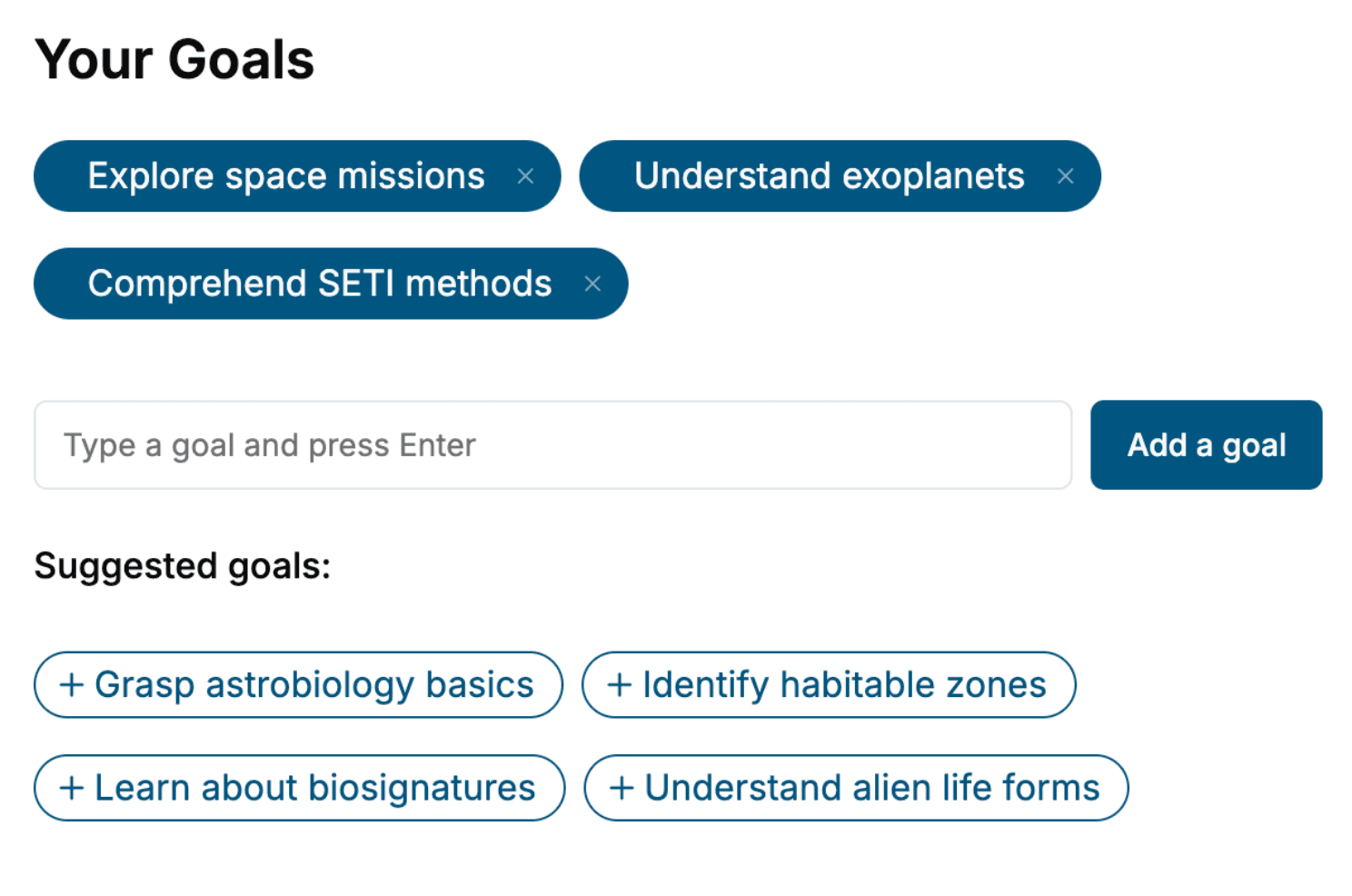
Specify your goals and choose sub-topics to include
- 3. Get your tailored book
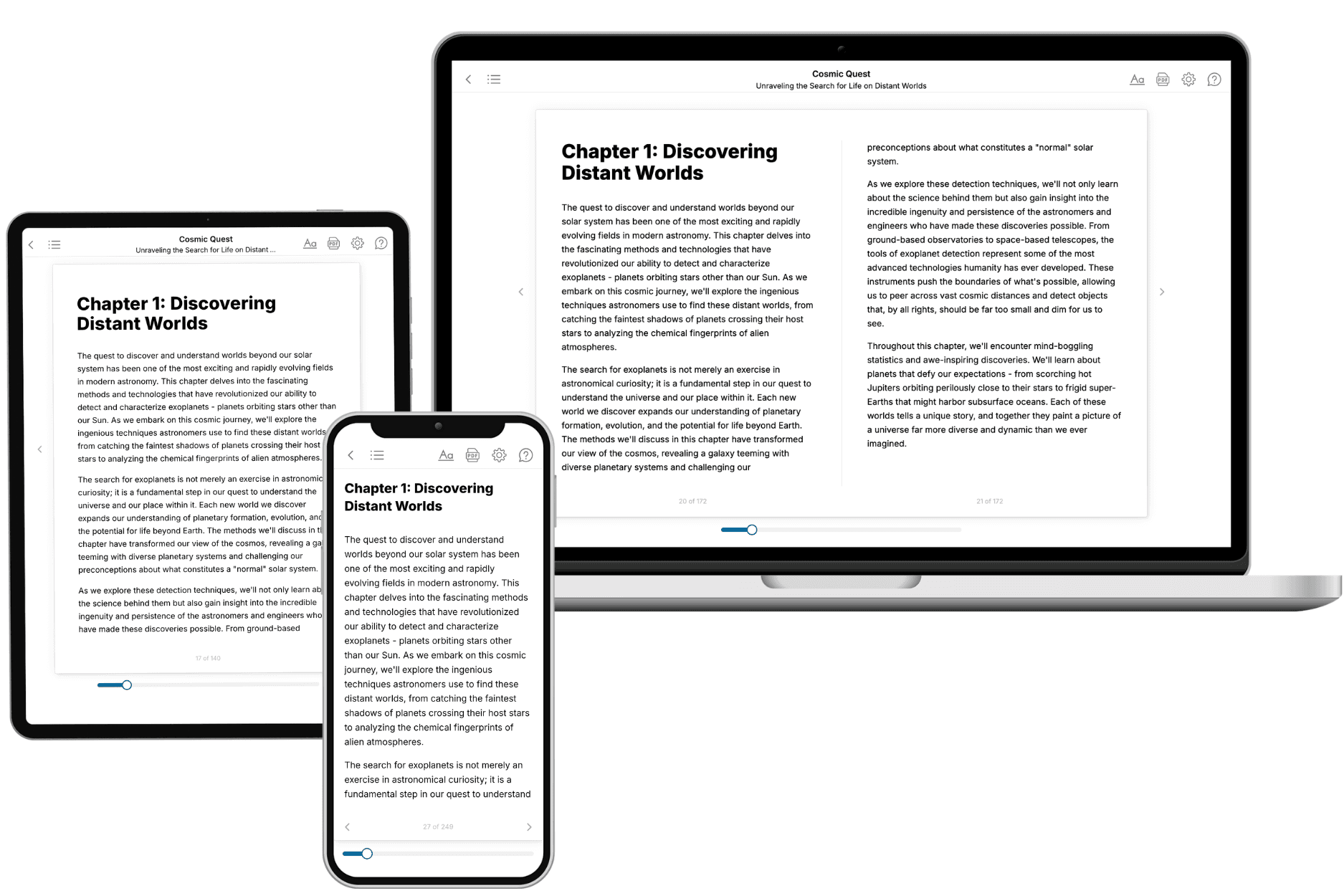
Your book is ready in 10 minutes. Read it online, download as EPUB or PDF, or send to Kindle.

Frequently asked questions
- What is TailoredRead?
TailoredRead creates complete, full-length nonfiction ebooks, written specifically for you. Tell us what you want to learn and why, and TailoredRead writes you a complete ebook on it, with charts, tables, and diagrams throughout. Read it online, on Kindle, or on any e-reader, or download it as a PDF or EPUB. Every book is written fresh the day you order it.
- How is the book tailored to me?
Before anything is written, you answer a few short questions about your goals, your background, and the topics you care about. Your book is then planned around your answers: written at your level, focused on your goals, and covering the topics you chose, instead of the one-size-fits-all book a store sells everyone.
- Will it read like generic AI content?
No. Your book isn't a chat transcript: it's planned chapter by chapter before a single word is written, told in a clear book voice, and explains ideas visually with charts, tables, and diagrams. After writing, every book goes through an editorial pass that polishes chapters so the book reads consistent from start to finish. Judge for yourself: browse thousands of sample books on our Explore Books page.
- How accurate is the content?
Our AI first checks whether your subject needs live research. Niche and fast-moving subjects are researched before writing, and the book plan and chapters are grounded in what it finds. After writing, every book goes through a quality pass that checks its facts and consistency, and researched books list their sources in a Notes section at the back.
- How long is the book?
You choose the length: Comprehensive (250-300 pages), Detailed (150-200 pages), Essential (70-100 pages), or Short (30-50 pages).
- Does the book include visuals?
Yes. Every book includes charts, tables, and diagrams: timelines, checklists, step-by-step guides, decision trees, comparison tables, matrices, and bar charts. A typical book includes dozens of these visual elements.
- Can I read it on Kindle? What formats can I download?
Yes. Every book can be read in our online reader or downloaded as a PDF or EPUB. The EPUB can be opened with Kindle, Apple Books, Kobo, and any e-reader. The Commercial and Author licenses also include an editable Word (DOCX) and Markdown download.
- How much does it cost?
About the price of a regular ebook. The exact price depends on your book's length and complexity, from $2 for the shortest books to $35 for the most comprehensive, and it's shown when you review your book, before you commit to anything. Each book is a one-time purchase, yours to keep, no subscription. Licenses that let you share, teach, or publish your book range from $35.99 to $49.99.
- Can I preview the book before purchasing?
Before you pay, you'll see what your book will cover: the title, a detailed description, the estimated length, and the complete chapter-by-chapter table of contents, so you know what you're getting before you decide. The full text itself is written after you purchase.
- How long does it take to create a book?
About 10 minutes. You can start reading the opening chapters while the rest is still being written.