Foucault's Legacy
Unraveling the Threads of Power, Knowledge, and Society in Modern Europe
Embark on an illuminating journey through the life and ideas of one of the most influential philosophers of the 20th century.
269 pages13 chaptersNov 28, 2024Philosophy
About this book
"Foucault's Legacy" offers a deep dive into the complex world of Michel Foucault, exploring his revolutionary concepts that continue to shape our understanding of power, knowledge, and society. As you navigate through the pages of this book, you'll discover how Foucault's theories emerged from and responded to the tumultuous landscape of post-war Europe. You'll gain insights into his groundbreaking work on institutions, sexuality, and discourse, and how these ideas have permeated various fields of study, from history and sociology to literature and cultural studies. This comprehensive exploration not only contextualizes Foucault within the broader tapestry of French intellectual tradition but also examines his lasting impact on contemporary thought. Whether you're a student of philosophy, a history enthusiast, or simply curious about the ideas that have shaped our modern world, "Foucault's Legacy" provides a nuanced and accessible entry point into the fascinating world of this revolutionary thinker.
Table of contents
- IntroductionThe Enduring Relevance of Michel Foucault, Overview of the Book's Journey, Approaching Foucault's PhilosophyRead below
- Chapter 1: The Formative YearsChildhood and Early Education, Early Intellectual Influences, The Beginning of an Academic Career, Post-War France: The Backdrop of Foucault's Early Work
- Chapter 2: Madness and CivilizationThe Historical Context of Mental Illness, Power and Psychiatric Institutions, The Divide Between Reason and Unreason, Impact on Modern Psychiatry and Social Perceptions
- Chapter 3: The Birth of the ClinicThe Concept of the Medical Gaze, The Transformation of Clinical Experience, The Body as an Object of Knowledge, Implications for Modern Medicine
- Chapter 4: The Order of ThingsUnderstanding Epistemes, From Renaissance to Classical Age, The Modern Episteme, The Birth of the Human Sciences, Foucault and Structuralism
- Chapter 5: The Archaeology of KnowledgeThe Archaeological Method, Discursive Formations and Practices, Statements and Archives, A New Approach to Historical Analysis
- Chapter 6: Discipline and PunishThe Evolution of Punishment, Panopticism and Surveillance, The Birth of the Disciplinary Society, Power-Knowledge in Penal Systems, Modern Implications of Disciplinary Power
- Chapter 7: The History of SexualityThe Repressive Hypothesis, Scientia Sexualis vs Ars Erotica, Power, Pleasure, and Knowledge, The Concept of Biopower, Sexuality and Modern Identity
- Chapter 8: Foucault's Concept of PowerPower as a Network of Relations, Power and Resistance, The Micro-physics of Power, The Productive Nature of Power
- Chapter 9: Knowledge and PowerThe Power-Knowledge Nexus, The Production of Truth, Discourse and Power, The Role of Expert Knowledge
- Chapter 10: Governmentality and BiopoliticsThe Concept of Governmentality, Understanding Biopolitics, Foucault's Analysis of Neoliberalism, Implications for Modern Governance
- Chapter 11: Ethics and SubjectivityThe Care of the Self, Technologies of the Self, Ethics as a Practice of Freedom, The Formation of the Subject
- Chapter 12: Foucault and the EnlightenmentFoucault's Engagement with Kant, Critique of Enlightenment Rationality, The Question of Modernity, Towards a Critical Ontology of Ourselves
- Chapter 13: Foucault's Legacy and InfluenceFoucault and Postmodernism, Impact on Critical Theory, Influence on Social Sciences, Contemporary Relevance of Foucault's Ideas, Global Reception and Interpretation
- ConclusionFoucault in the 21st Century, Future Directions in Foucauldian Thought
- Glossary
- Further Reading
Introduction
In the vast landscape of 20th-century philosophy, few figures loom as large or cast as long a shadow as Michel Foucault. A thinker whose ideas have permeated disciplines far beyond his own, Foucault's work continues to challenge, provoke, and inspire decades after his death. This introduction serves as a gateway into the complex and fascinating world of Foucault's thought, setting the stage for a deeper exploration of his life, ideas, and enduring legacy.
As you embark on this intellectual journey, you'll discover how Foucault's unique perspective on power, knowledge, and society emerged from the crucible of post-war Europe. You'll gain insights into how his theories have reshaped our understanding of institutions, sexuality, and discourse, and how these ideas continue to influence fields as diverse as history, sociology, literature, and cultural studies. Whether you're approaching Foucault's work for the first time or seeking to deepen your existing knowledge, this book aims to provide a comprehensive and accessible entry point into the revolutionary ideas that have left an indelible mark on modern thought.
The Enduring Relevance of Michel Foucault
Michel Foucault's work, spanning from the 1960s to the 1980s, continues to resonate powerfully in the 21st century. His incisive analyses of power structures, institutional control, and the relationship between knowledge and authority have proven remarkably prescient, offering valuable frameworks for understanding contemporary issues. From the surveillance state to identity politics, from the medicalization of society to the nature of truth in the era of "fake news," Foucault's ideas provide critical tools for navigating the complexities of modern life.
One of the key reasons for Foucault's enduring relevance is his radical reconceptualization of power. Unlike traditional views that saw power as a top-down force wielded by the state or dominant groups, Foucault proposed a more nuanced understanding. He argued that power is not something that is possessed, but rather a network of relationships that permeates all levels of society. This perspective has profound implications for how we understand social dynamics, institutional structures, and even our own identities. In an age of social media, global interconnectedness, and rapidly shifting power dynamics, Foucault's insights into the diffuse nature of power offer valuable perspectives on how influence and control operate in the modern world.
Foucault's work on the interplay between knowledge and power continues to be particularly relevant in our information-saturated age. His assertion that knowledge is not neutral, but is instead deeply intertwined with power structures, challenges us to critically examine the sources and purposes of the information we consume. In an era where data is often described as "the new oil," Foucault's ideas about how knowledge shapes and is shaped by power relations provide a crucial framework for understanding the politics of information in the digital age.
The relevance of Foucault's thought extends far beyond academia. His ideas have influenced activists, policymakers, and cultural critics, shaping debates on issues ranging from prison reform to healthcare policy, from educational practices to environmental justice. Foucault's emphasis on the ways in which power operates through seemingly benign or beneficial institutions has prompted a reevaluation of many aspects of modern life that we often take for granted. His work encourages us to question the underlying assumptions and power dynamics at play in our social institutions, our cultural practices, and even our own self-understanding.
Foucault's analysis of disciplinary institutions and their role in social control remains particularly pertinent in discussions about surveillance and privacy. His concept of the "panopticon" - a model prison where inmates could be observed at any time without knowing when they were being watched - has become a powerful metaphor for understanding modern surveillance societies. In an age of ubiquitous digital surveillance, where our online activities are constantly monitored and analyzed, Foucault's insights into how surveillance shapes behavior and enforces social norms are more relevant than ever.
Moreover, Foucault's work on sexuality and identity continues to inform contemporary discussions about gender, sexuality, and personal freedom. His exploration of how societal norms and power structures shape our understanding of sexuality and identity has been instrumental in the development of queer theory and continues to influence debates about gender identity, sexual orientation, and the politics of personal expression. In a time when issues of identity and representation are at the forefront of many social and political debates, Foucault's ideas provide valuable tools for understanding the complex interplay between individual identity, social norms, and power structures.
Foucault's critique of traditional historical narratives and his development of the "archaeological" and "genealogical" methods of historical analysis have had a lasting impact on how we approach the study of history. By challenging linear, progressive narratives of historical development and focusing instead on ruptures, discontinuities, and the contingent nature of historical "truths," Foucault opened up new ways of understanding the past and its relationship to the present. This approach continues to influence historians, encouraging a more critical and nuanced engagement with historical sources and narratives.
The global reach of Foucault's ideas is another testament to their enduring relevance. While his work emerged from a specific French intellectual context, it has been taken up, adapted, and reinterpreted in diverse cultural and geographical settings. Scholars and thinkers around the world have found in Foucault's work valuable tools for analyzing local power dynamics, institutional structures, and cultural practices. This global engagement with Foucault's ideas has led to new insights and applications, demonstrating the flexibility and adaptability of his theoretical framework.
As we navigate the complexities of the 21st century, with its rapid technological changes, shifting global power dynamics, and evolving social norms, Foucault's work continues to offer valuable insights. His emphasis on questioning established truths, examining the hidden operations of power, and understanding the historical contingency of our current arrangements provides a powerful toolkit for critical thinking and social analysis. Whether we're grappling with issues of digital privacy, debating the limits of state power, or exploring questions of identity and self-expression, Foucault's ideas remain as relevant and thought-provoking as ever.
In the chapters that follow, we will delve deeper into Foucault's life, his key works, and the central concepts that define his philosophical legacy. By exploring these ideas in depth, we aim to illuminate not only Foucault's contributions to 20th-century thought but also the continuing relevance of his work to the challenges and questions of our own time. As we embark on this intellectual journey, we invite you to engage critically with Foucault's ideas, to question, to reflect, and to consider how these powerful concepts might shed new light on your own understanding of the world.
Overview of the Book's Journey
This book aims to provide a comprehensive exploration of Michel Foucault's life, work, and enduring influence. As we embark on this intellectual journey, it's important to understand the structure and scope of what lies ahead. The following overview will guide you through the chapters, offering a roadmap of the key themes, concepts, and historical contexts we'll be exploring.
We begin our journey with "The Formative Years," delving into Foucault's childhood, education, and early intellectual influences. This chapter sets the stage by examining the social, cultural, and intellectual milieu of post-war France that shaped Foucault's early thinking. Understanding this context is crucial for appreciating the development of Foucault's ideas and their relationship to broader currents in French and European thought.
The subsequent chapters focus on Foucault's major works, each of which represents a significant milestone in his intellectual development and contribution to philosophy. "Madness and Civilization" explores Foucault's groundbreaking analysis of the historical treatment of mental illness and the power dynamics inherent in psychiatric institutions. This work, which challenged conventional understandings of madness and reason, established Foucault as a major intellectual figure and set the stage for his later investigations into power and knowledge.
"The Birth of the Clinic" continues this line of inquiry, focusing on the development of modern medicine and the concept of the "medical gaze." Here, we'll explore how Foucault's analysis of the transformation of medical knowledge and practice in the 18th and 19th centuries offers insights into broader shifts in how knowledge is produced and power is exercised in modern societies.
In "The Order of Things," we encounter Foucault's ambitious attempt to trace the development of the human sciences. This chapter will unpack Foucault's concept of "epistemes" - the underlying structures of knowledge that shape what can be thought and said in a given historical period. We'll examine how this work positions Foucault in relation to structuralism and sets the stage for his later archaeological and genealogical methods.
"The Archaeology of Knowledge" delves deeper into Foucault's methodological innovations. Here, we'll explore how Foucault's archaeological approach challenges traditional historical analysis, focusing on discontinuities and ruptures rather than linear progress. This chapter will provide crucial insights into Foucault's unique approach to intellectual history and his critique of conventional historiography.
"Discipline and Punish" marks a significant shift in Foucault's work towards a more explicit focus on power. This chapter will explore Foucault's analysis of the evolution of punishment and the birth of the modern prison system. We'll examine key concepts such as panopticism and disciplinary power, considering their relevance to understanding modern institutions and social control mechanisms.
In "The History of Sexuality," we'll explore Foucault's late work on the relationship between power, knowledge, and sexuality. This chapter will unpack Foucault's critique of the "repressive hypothesis" and his analysis of how discourses about sexuality have shaped modern identities and social norms. We'll also introduce the concept of biopower, which has become increasingly relevant in contemporary discussions of politics and governance.
The following chapters focus on key themes that run throughout Foucault's work. "Foucault's Concept of Power" provides a deep dive into his revolutionary understanding of power as a network of relations rather than a top-down force. "Knowledge and Power" explores the intricate relationship between these two concepts in Foucault's thought, examining how power shapes what counts as knowledge and how knowledge, in turn, reinforces power structures.
"Governmentality and Biopolitics" introduces Foucault's later work on forms of power that operate at the level of populations. This chapter will explore how these concepts help us understand modern forms of governance and control, including neoliberalism and the management of public health.
In "Ethics and Subjectivity," we'll examine Foucault's turn towards questions of ethics and self-formation in his later work. This chapter will explore concepts such as "care of the self" and "technologies of the self," considering how Foucault's later work offers possibilities for resistance and self-creation within power structures.
"Foucault and the Enlightenment" situates Foucault's work in relation to the broader tradition of Enlightenment thought. We'll explore his complex engagement with Kant and his critique of Enlightenment rationality, while also considering how Foucault's work can be seen as a continuation of the Enlightenment's critical project.
The final chapter, "Foucault's Legacy and Influence," assesses the broad impact of Foucault's work across various disciplines and intellectual movements. We'll explore how Foucault's ideas have been taken up in postmodernism, critical theory, and the social sciences, and consider their continuing relevance to contemporary issues.
Throughout this journey, we'll strive to balance detailed exploration of Foucault's ideas with consideration of their practical implications and contemporary relevance. By the end of this book, you should have a comprehensive understanding of Foucault's major works and concepts, as well as a sense of how his ideas continue to shape critical thinking across a wide range of fields.
As we proceed, it's important to approach Foucault's work with both an open mind and a critical eye. His ideas are often complex and challenging, sometimes deliberately provocative. They invite us to question our assumptions, to look at familiar institutions and practices in new ways, and to consider the hidden operations of power in our everyday lives. By engaging deeply with Foucault's thought, we open ourselves to new ways of understanding the world and our place within it.
Approaching Foucault's Philosophy
Engaging with Michel Foucault's philosophy can be a challenging yet rewarding endeavor. His work is characterized by its complexity, its interdisciplinary nature, and its tendency to challenge conventional wisdom and established categories of thought. As you embark on this intellectual journey, it's important to approach Foucault's ideas with an open mind, a willingness to grapple with difficult concepts, and an understanding of the unique aspects of his philosophical method.
One of the first things to understand about Foucault's approach is that it defies easy categorization. While he is often associated with post-structuralism and postmodernism, Foucault himself rejected such labels. His work draws on and engages with a wide range of disciplines, including philosophy, history, sociology, psychology, and literary theory. This interdisciplinary approach is one of the strengths of Foucault's work, allowing him to uncover connections and patterns that might be missed by more narrowly focused analyses. However, it also means that readers need to be prepared to engage with ideas and methodologies from multiple fields.
A key aspect of Foucault's philosophical method is his emphasis on historical analysis. Unlike philosophers who focus primarily on abstract concepts or logical arguments, Foucault grounds his philosophical insights in detailed historical investigations. His "archaeological" and "genealogical" methods involve examining historical documents and practices to uncover the underlying structures of thought and power relations that shape a given period. This approach requires readers to engage not just with philosophical arguments, but also with historical evidence and context.
When approaching Foucault's work, it's important to be aware of his critique of universal truths and grand narratives. Foucault challenges the idea that there are timeless, universal principles that govern human society and thought. Instead, he emphasizes the historical contingency of our concepts and institutions, showing how what we take to be natural or inevitable is often the product of specific historical circumstances and power relations. This perspective can be disorienting at first, as it calls into question many of our taken-for-granted assumptions. However, it also opens up new ways of understanding the world and our place in it.
Another key aspect of Foucault's approach is his focus on power relations. Unlike traditional theories that view power as something held by certain individuals or institutions and exercised in a top-down manner, Foucault sees power as a network of relations that permeates all levels of society. This perspective requires a shift in how we think about power, encouraging us to look for its operations in unexpected places and to consider how we ourselves are implicated in power relations. It's an approach that can be both illuminating and unsettling, as it reveals the workings of power in aspects of life we might previously have considered neutral or benign.
Foucault's writing style can also present challenges for readers. His prose is often dense and complex, filled with specialized terminology and intricate arguments. He frequently employs irony and rhetorical strategies that can be difficult to parse. Moreover, his ideas evolved over time, and he was not afraid to revise or even contradict his earlier positions. This means that reading Foucault requires patience, careful attention, and a willingness to grapple with ambiguity and complexity.
Despite these challenges, engaging with Foucault's philosophy can be immensely rewarding. His work provides powerful tools for critical thinking and social analysis. It encourages us to question our assumptions, to examine the historical and cultural contingencies that shape our world, and to consider the complex interplay between knowledge, power, and identity. Foucault's ideas have the potential to transform how we understand ourselves and our society, opening up new possibilities for thought and action.
As you approach Foucault's philosophy, it can be helpful to keep several strategies in mind. First, try to situate each work in its historical and intellectual context. Understanding the debates and issues Foucault was responding to can help illuminate his arguments and intentions. Second, pay attention to Foucault's use of examples and case studies. These often provide concrete illustrations of his more abstract ideas. Third, don't be afraid to read slowly and re-read difficult passages. Foucault's work often rewards close, careful reading.
It's also important to approach Foucault's work with a critical eye. While his ideas are powerful and influential, they are not beyond critique. Many scholars have engaged critically with Foucault's work, pointing out limitations, inconsistencies, or areas where his analysis might be extended or revised. Engaging with these critiques can deepen your understanding of Foucault's ideas and their implications.
Finally, consider how Foucault's ideas might apply to your own experiences and observations. One of the strengths of Foucault's work is its applicability to a wide range of social phenomena. As you encounter his concepts, think about how they might help you understand aspects of your own life, your society, or contemporary issues. This kind of practical application can help make Foucault's sometimes abstract ideas more concrete and meaningful.
As we proceed through this book, we'll strive to present Foucault's ideas in a clear and accessible manner, providing context, examples, and explanations to help you navigate his complex thought. Remember that understanding Foucault is a journey, not a destination. His work invites ongoing engagement, reflection, and reinterpretation. By approaching his philosophy with curiosity, critical thinking, and an openness to new perspectives, you'll be well-positioned to gain valuable insights from one of the most influential thinkers of the 20th century.
This is the end of the free sample. The full book has 13 chapters.
Want this book written for you?
Tell us your goals and background, and get your own version of this book, tailored by AI to you.


Benefits of AI-tailored books
- Read one book, not ten:
- all the Philosophy knowledge you need, gathered into a single book.
- Save days of learning:
- tell us your goals, choose your topics, and the whole book is built around them.
- Learn effortlessly:
- Philosophy book written for your specific background and expertise.
- Understand at a glance:
- includes charts, tables, timelines, checklists, decision trees, and more.
- Stay current:
- written the day you order it, not years ago.
- Trust what you read:
- every book is checked for accuracy, with real research when your subject needs it.
Create your unique book in 3 steps
- 1. Select your focus
Select the focus of your Philosophy book and share your background
- 2. Personalize your book
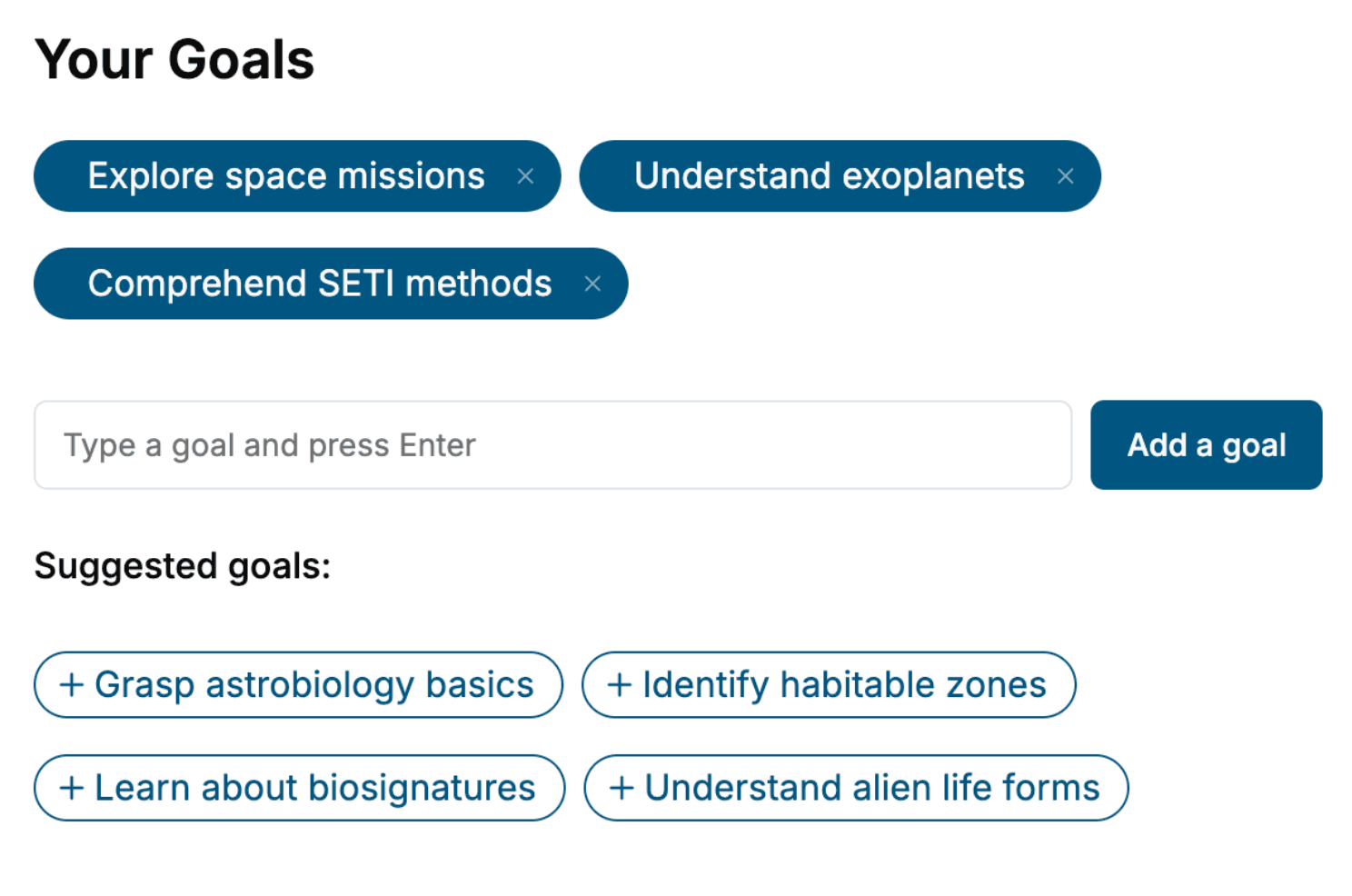
Specify your goals and choose sub-topics to include
- 3. Get your tailored book
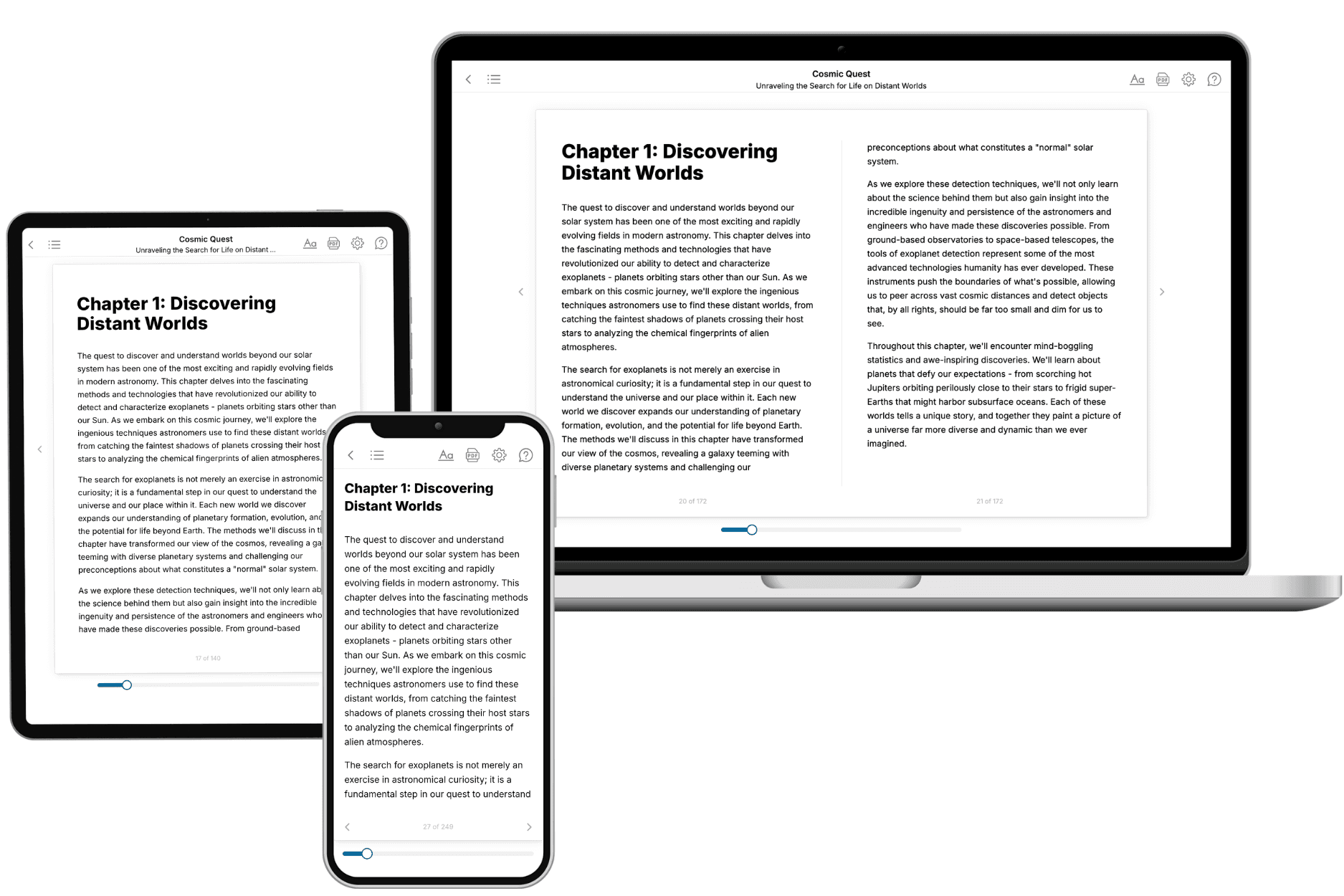
Your book is ready in 10 minutes. Read it online, download as EPUB or PDF, or send to Kindle.

Frequently asked questions
- What is TailoredRead?
TailoredRead creates complete, full-length nonfiction ebooks, written specifically for you. Tell us what you want to learn and why, and TailoredRead writes you a complete ebook on it, with charts, tables, and diagrams throughout. Read it online, on Kindle, or on any e-reader, or download it as a PDF or EPUB. Every book is written fresh the day you order it.
- How is the book tailored to me?
Before anything is written, you answer a few short questions about your goals, your background, and the topics you care about. Your book is then planned around your answers: written at your level, focused on your goals, and covering the topics you chose, instead of the one-size-fits-all book a store sells everyone.
- Will it read like generic AI content?
No. Your book isn't a chat transcript: it's planned chapter by chapter before a single word is written, told in a clear book voice, and explains ideas visually with charts, tables, and diagrams. After writing, every book goes through an editorial pass that polishes chapters so the book reads consistent from start to finish. Judge for yourself: browse thousands of sample books on our Explore Books page.
- How accurate is the content?
Our AI first checks whether your subject needs live research. Niche and fast-moving subjects are researched before writing, and the book plan and chapters are grounded in what it finds. After writing, every book goes through a quality pass that checks its facts and consistency, and researched books list their sources in a Notes section at the back.
- How long is the book?
You choose the length: Comprehensive (250-300 pages), Detailed (150-200 pages), Essential (70-100 pages), or Short (30-50 pages).
- Does the book include visuals?
Yes. Every book includes visual elements such as timelines, checklists, step-by-step guides, decision trees, comparison tables, and matrices, and many include bar charts. A typical book includes dozens of these visual elements.
- Can I read it on Kindle? What formats can I download?
Yes. Every book can be read in our online reader or downloaded as a PDF or EPUB. The EPUB can be opened with Kindle, Apple Books, Kobo, and any e-reader. The Commercial and Author licenses also include an editable Word (DOCX) and Markdown download.
- How much does it cost?
About the price of a regular ebook. The exact price depends on your book's length and complexity, from $2 for the shortest books to $35 for the most comprehensive, and it's shown when you review your book, before you commit to anything. Each book is a one-time purchase, yours to keep, no subscription. Licenses that let you share, teach, or publish your book range from $35.99 to $49.99.
- Can I preview the book before purchasing?
Before you pay, you'll see what your book will cover: the title, a detailed description, the estimated length, and the complete chapter-by-chapter table of contents, so you know what you're getting before you decide. The full text itself is written after you purchase.
- How long does it take to create a book?
About 10 minutes. You can start reading the opening chapters while the rest is still being written.