Intellectual History Books
Explore tailored Intellectual History books created by our AI
The Enlightenment Mind
How Reason, Liberty, and Progress Shaped the Modern World
Imagine understanding the philosophical revolution that created the modern world—the ideas that transformed how we think about reason, freedom, and human potential. The Enlightenment wasn't just an historical period; it was a fundamental reimagining of what humans could achieve through rational thought and individual liberty. This book guides you through the essential ideas and thinkers that shaped our contemporary world, from Descartes' revolutionary method of doubt to Kant's critical philosophy. You'll discover how Enlightenment principles directly influenced the founding of democratic nations, the scientific revolution, and our modern conception of human rights. By exploring the tensions between reason and emotion, individual freedom and social order, and progress and tradition, you'll gain deeper insight into the philosophical foundations of today's most pressing debates. Whether you're interested in intellectual history, political philosophy, or understanding the roots of modern thought, this exploration reveals how Enlightenment ideas remain profoundly relevant to how we live, think, and organize society today.
The Scientific Revolution
How Curiosity and Reason Transformed the World
Most people think science has always been the way we understand the world, but that's not true. Before the 1500s, knowledge came from ancient books and religious authority—not from testing ideas against reality. The Scientific Revolution changed everything, yet many of us don't fully understand how or why this transformation happened. This book reveals the fascinating story of how a handful of brilliant thinkers—from Copernicus challenging the Earth-centered universe to Newton unlocking the laws of motion—fundamentally rewired human civilization. You'll discover how the scientific method actually developed, why it was so radical for its time, and how it continues to shape everything from medicine to technology today. Through vivid stories of intellectual struggle, groundbreaking experiments, and the clash between old and new ways of thinking, you'll gain a deeper appreciation for the ideas that made the modern world possible. Whether you're interested in history, philosophy, or simply understanding the roots of contemporary science, this book provides the essential context you need.
Discover the invisible agreement that holds every society together. The social contract is more than a philosophical concept—it's the fundamental mechanism that explains why we live under governments, follow laws, and cooperate with strangers. This book traces how the idea of a collective agreement between people and their rulers emerged from ancient civilizations, evolved through the Enlightenment, and continues to shape modern democracies. You'll explore how thinkers like Hobbes, Locke, and Rousseau reimagined human organization, why societies sometimes reject their social contracts through revolution, and how contemporary issues from inequality to digital privacy challenge our current agreements. By understanding the social contract's history and logic, you'll gain insight into the forces driving political change, the reasons behind social conflict, and what holds—or threatens to hold—modern societies together. This is essential reading for anyone seeking to understand the deeper structures of civilization.
What if the greatest truths about human existence couldn't be found in institutions or traditions, but within yourself and the natural world around you? This is the radical question that transcendentalism posed to 19th-century America. This book explores how a group of visionary thinkers challenged the intellectual and spiritual foundations of their society, arguing that intuition and nature held more wisdom than established religion or rigid rationalism. You'll discover how figures like Emerson and Thoreau developed philosophies that celebrated human potential, questioned authority, and inspired movements for social justice. From their critique of conformity to their revolutionary ideas about civil disobedience, transcendentalists shaped American thought in ways that continue to influence how we think about individualism, environmentalism, and social change. Whether you're interested in American history, philosophy, or the roots of modern activism, this book reveals how a small group of New England intellectuals sparked a movement that transformed a nation.
The Bridge of Knowledge
How Medieval Islamic Science Ignited the European Renaissance
Most accounts of the Renaissance credit a sudden European awakening, overlooking a critical truth: the intellectual explosion of 15th and 16th century Europe was built directly upon centuries of Islamic scientific achievement. This book reveals how Medieval Islamic civilization—from the House of Wisdom in Baghdad to the scientific centers of Córdoba—preserved, advanced, and systematized knowledge that European scholars had lost. You'll discover how Al-Ghazali's empirical methodology, Ibn Sina's physics, and Al-Haytham's revolutionary optical science provided the theoretical foundations that Renaissance thinkers refined. Through detailed examination of astronomical instruments, mechanical innovations, and the translation movement that converted Islamic texts into Latin, you'll understand precisely how Islamic science became the bridge connecting classical antiquity to modern Europe. This is not merely history; it's the story of how rigorous methodology, institutional knowledge preservation, and cross-cultural intellectual exchange created the conditions for humanity's greatest scientific leap forward.
The Gutenberg Revolution
How the Printing Press Changed the World in the 15th Century
Most people assume the printing press was a sudden invention that instantly changed the world. In reality, the story is far more complex and fascinating. Before Gutenberg's breakthrough in the 1450s, Europe was trapped in a knowledge bottleneck—books were rare, expensive, and took months to copy by hand. This book reveals how Johannes Gutenberg combined existing technologies into a revolutionary system that would reshape civilization. You'll discover how the printing press democratized knowledge, transformed literacy from an elite privilege into a widespread skill, and ignited the Renaissance, Reformation, and Scientific Revolution. Through vivid historical narratives and clear explanations, you'll understand not just what the printing press was, but why it mattered so profoundly. From the technical innovations that made it possible to the social upheaval it caused, this book shows how one invention fundamentally altered how humans share, preserve, and act on information—a transformation whose echoes still resonate today.
Marx and the Modern World
Understanding Marxist Theory Through History and Ideas
Gain a sophisticated understanding of one of history's most influential and misunderstood thinkers. This book cuts through ideological debates to explore Marxist theory as a crucial intellectual tradition that shaped the modern world. You'll discover how Marx's analysis of capitalism emerged from 19th-century conditions, learn the core concepts that define his work, and understand how his ideas were transformed through history. Rather than advocating for or against Marxism, this book equips you with the analytical tools to engage critically with Marx's arguments and their real-world applications. Whether you're studying history, political science, economics, or simply seeking to understand the ideological currents that shaped the 20th century, you'll find clear explanations of complex ideas, historical context that brings theory to life, and balanced perspectives on Marx's enduring relevance. Perfect for anyone wanting to move beyond caricatures and engage seriously with one of humanity's most consequential intellectual legacies.
You'll discover how a small religious movement in first-century Palestine grew into a force that reshaped empires, created institutions that still influence society today, and fundamentally altered the course of human civilization. This exploration takes you through the pivotal moments when Christian beliefs intersected with political power, cultural transformation, and social change. You'll examine how medieval monasteries preserved knowledge, how the Reformation challenged established authority, how missionary movements connected distant continents, and how Christian thought influenced everything from science to social justice. By understanding these historical connections, you'll gain insight into how religious movements shape societies, why certain historical events unfolded as they did, and how the past continues to influence our present world. This is not merely a chronicle of dates and figures—it's an analysis of cause and effect, belief and consequence, that reveals the profound ways faith and history intertwine.
The Chinese Dynasty Timeline
Understanding 5,000 Years of Culture, Power, and Transformation
Most people struggle to make sense of China's vast history—thousands of years of dynasties, emperors, and cultural shifts blur together into an incomprehensible timeline. Without a clear framework, you can't understand how ancient China became the civilization it is today, or why certain cultural values persist in modern Chinese society. This book cuts through the complexity by presenting China's major dynasties in clear, chronological order, showing you not just what happened, but why it mattered. You'll discover how each dynasty introduced innovations in governance, art, and philosophy that shaped Chinese civilization. You'll learn the patterns that governed dynastic rise and fall, understand the Mandate of Heaven concept that legitimized imperial rule, and see how cultural continuity persisted even through periods of dramatic change. Whether you're exploring Chinese history for academic purposes, cultural understanding, or personal enrichment, this guide provides the essential context you need to grasp how 5,000 years of dynastic rule created the China we know today.
Common Sense
Understanding Thomas Paine's Revolutionary Argument for American Independence
Many assume Thomas Paine's Common Sense was simply a call to arms during the American Revolution. In reality, it was a sophisticated political argument that transformed how colonists understood government, freedom, and their own power. This book reveals why a 47-page pamphlet published in January 1776 became the most influential political document of its era, selling over 500,000 copies in a population of just 2.5 million. You'll discover how Paine dismantled the case for monarchy, exposed the economic costs of British rule, and articulated a vision of America that inspired a nation. By examining the historical context, analyzing Paine's key arguments, and exploring the pamphlet's immediate and lasting impact, you'll understand not just what Common Sense said, but why it mattered—and why its ideas about government, representation, and human rights remain relevant today.
The Architecture of Change
How Philosophical Movements Shape the Course of History
Most people view history as a sequence of events—wars, revolutions, discoveries—without recognizing the invisible force driving them: philosophical ideas. This book reveals how abstract thinking about truth, justice, knowledge, and human nature has repeatedly transformed civilizations. From the Enlightenment's challenge to absolute monarchy to existentialism's reshaping of post-war culture, philosophical movements have been the architects of historical change. You'll discover why understanding these intellectual currents is essential for making sense of the world today. Rather than treating philosophy and history as separate disciplines, this book shows how they're inseparably intertwined. You'll learn to recognize the philosophical assumptions underlying current events, understand why societies embrace certain ideas at particular moments, and appreciate how the thoughts of ancient thinkers still reverberate through modern institutions. This exploration equips you with a deeper framework for understanding not just where we've been, but where we're heading.
Words in Motion
How Language Evolved and Shaped Human Civilization
Discover how language emerged from our evolutionary past and became the defining feature of human civilization. This book traces the remarkable journey from pre-linguistic communication to the written word, revealing how each transformation reshaped human society, cognition, and culture. You'll explore the biological foundations of language, understand why different writing systems developed across cultures, and see how literacy fundamentally altered human memory and knowledge. Learn how language structure influences thought itself, why writing was as revolutionary as the internet, and how digital communication is reshaping language once again. Whether you're fascinated by linguistics, history, or human development, this exploration connects the dots between our evolutionary past and the way we communicate today, offering fresh insights into what makes us uniquely human.
The Dissolution of the Monasteries stands as one of history's most consequential yet often misunderstood events. You face the challenge of grasping how a single monarch's personal crisis—Henry VIII's desire for an annulment—cascaded into the wholesale destruction of institutions that had shaped English civilization for nearly a thousand years. This book cuts through the complexity to reveal the true story: a masterfully executed political strategy that was simultaneously a religious revolution, an economic restructuring, and a social catastrophe. Discover how the seizure of monastic lands financed a nation's rise to global power, how it created a new aristocracy bound to Protestant rule, and how it left millions vulnerable and displaced. Through vivid narratives, primary sources, and clear analysis, you'll understand not just what happened, but why it mattered—and how its effects continue to shape Britain and Europe today.
The Meiji Restoration
How Japan Transformed from Feudal Empire to Modern Nation in 50 Years
Imagine a nation that, in just fifty years, transformed itself from a feudal society ruled by competing warlords into a modern industrial power that rivaled Western nations. This is the story of Japan's Meiji Restoration—one of history's most remarkable transformations. You'll discover how a group of visionary leaders, responding to the threat of Western colonization, dismantled centuries of tradition and rebuilt their entire society from the ground up. Through careful study of Western institutions, strategic adoption of foreign technology, and deliberate preservation of Japanese culture, these reformers created a blueprint for modernization that other nations would attempt to replicate. This book takes you through the political upheaval, social revolution, and economic transformation that reshaped Japan. You'll understand the key figures who drove change, the obstacles they overcame, and the lasting impact of their decisions on Japan and the world. Whether you're a history student, a curious learner, or someone interested in how societies successfully navigate radical change, this exploration of the Meiji era offers invaluable insights into modernization, leadership, and cultural resilience.
Discover how a collection of Germanic tribes transformed into one of history's most influential civilizations. This book traces the Anglo-Saxon journey from their initial settlement in post-Roman Britain through their emergence as a dominant European power. You'll explore how these remarkable people built kingdoms, developed sophisticated legal systems, embraced Christianity, and created a cultural legacy that continues to shape the English-speaking world today. Through clear explanations of their social structures, governance systems, religious transformations, and daily life, you'll gain a deep understanding of why the Anglo-Saxon period remains foundational to Western civilization. Whether you're interested in history, governance, or cultural development, this comprehensive guide reveals how ordinary people and extraordinary leaders navigated the challenges of building civilization from the ground up.
Imagine understanding the pivotal moments that shaped modern England—the dramatic power struggles, the religious upheaval, the brilliant minds that flourished under royal patronage. The Tudor Dynasty stands as one of history's most transformative periods, when a small Welsh family rose from obscurity to rule one of Europe's most powerful nations. This book traces the Tudors' remarkable journey from Henry VII's desperate gamble at Bosworth Field through Elizabeth I's golden age, revealing how their personal ambitions, religious convictions, and political genius fundamentally altered the course of English and European history. You'll discover the real stories behind the legends—the strategic marriages that secured dynasties, the religious reforms that divided nations, the cultural flowering that gave us Shakespeare, and the female monarch who proved that power knows no gender. Whether you're exploring this era for the first time or deepening your existing knowledge, this comprehensive yet accessible narrative connects the dynasty's intimate dramas to their world-changing consequences, showing why the Tudors remain endlessly fascinating to historians and history lovers alike.
Architects of Innovation
The Lives and Legacies of Germany's Greatest Scientific Minds
Discover how a small nation produced some of history's most brilliant scientific minds and fundamentally changed our understanding of the universe. From the laws of thermodynamics to quantum mechanics, from medical breakthroughs to chemical innovations, German scientists have left an indelible mark on human knowledge and progress. This book explores the lives, achievements, and lasting legacies of these remarkable individuals—the visionaries who asked bold questions, conducted groundbreaking experiments, and developed theories that continue to guide scientific inquiry today. You'll learn not just what they discovered, but how they thought, what drove them, and how their work emerged from a unique cultural and historical context. Whether you're fascinated by the history of science, interested in understanding how great minds work, or simply curious about the people behind the discoveries that shaped our world, this exploration of German scientific achievement offers compelling insights into human ingenuity and the pursuit of knowledge.
Related books you may like:
Embark on a captivating journey through one of the most pivotal moments in British history with "1066: The Year That Changed England." This meticulously researched account of the Battle of Hastings offers you a front-row seat to the events that reshaped the course of European history. Delve into the complex web of political intrigue, military strategy, and cultural shifts that led to this momentous clash. You'll gain a deep understanding of the key players - William the Conqueror, Harold Godwinson, and Harald Hardrada - and the high-stakes game of thrones they played. Through vivid storytelling and expert analysis, you'll experience the tension of the battlefield, the clash of Anglo-Saxon and Norman cultures, and the far-reaching consequences of William's victory. Discover how this single event transformed England's language, laws, and social structure, leaving an indelible mark on the nation's identity. Whether you're a history buff or simply curious about this transformative period, this book offers fresh insights and a comprehensive overview that will enrich your understanding of medieval Europe and the foundations of modern Britain.
Many assume the French Revolution ended in 1799 with Napoleon's rise to power. In reality, the struggle for democracy and social justice continued to convulse France throughout the nineteenth century. The 1848 Revolution represents a pivotal moment when ordinary people—workers, students, intellectuals, and the poor—rose up against an entrenched monarchy and demanded fundamental change. This book explores the dramatic events of that revolutionary year, from the February uprising that toppled King Louis-Philippe to the violent June Days that exposed the revolution's internal contradictions. You'll discover how economic crisis, industrial transformation, and competing political ideologies collided to reshape not just France, but the entire European continent. Through vivid narratives and careful analysis, this account reveals why 1848 mattered then and why its lessons remain relevant today for understanding how societies change, how revolutions succeed and fail, and how the pursuit of liberty continues to define our world.
Discover how a single year transformed global history and set the stage for the modern world. The Russian Revolutions of 1917 were pivotal moments that toppled an empire, established the first communist state, and triggered consequences that rippled across the entire 20th century. This book walks you through the complex web of causes—from centuries of imperial rule and industrialization to the devastating impact of World War I—that made revolution possible. You'll explore the dramatic events of both the February and October revolutions, meet the key figures who shaped these upheavals, and understand how ordinary Russians experienced these extraordinary times. Beyond the headlines and heroic narratives, you'll examine the real economic hardships, military failures, and social tensions that drove millions to support radical change. This comprehensive account reveals why 1917 matters today, how it reshaped global politics and ideology, and what it teaches us about revolution, power, and historical change. Whether you're a history student, curious learner, or someone seeking to understand the roots of modern geopolitics, this book provides the context and clarity needed to grasp one of history's most consequential moments.
Discover the pivotal events and complex forces that shaped one of the 20th century's most consequential moments. This comprehensive examination takes you through the centuries of Jewish diaspora, the rise of Zionism, and the dramatic final years leading to Israel's establishment in 1948. You'll understand how the Holocaust transformed international politics, why the British Mandate created irreconcilable tensions, and how the UN Partition Plan became a flashpoint for conflict. Through careful analysis of key figures, military campaigns, and political negotiations, you'll gain insight into how a new nation emerged from centuries of displacement and persecution—while grappling with the displacement of another people. This book presents the historical evidence, competing narratives, and lasting consequences of 1948, enabling you to understand not just what happened, but why it matters for the modern Middle East and global politics today.
Most people think the Norman Conquest was simply a military victory that happened in a single day. In reality, 1066 marked the beginning of a decades-long transformation that would fundamentally reshape English society, language, and identity. This book reveals how William the Conqueror's invasion wasn't inevitable—it emerged from a disputed succession, political intrigue, and the ambitions of ambitious leaders. Beyond the famous Battle of Hastings, you'll discover how Norman rulers consolidated power through feudalism, how the French language permanently altered English, and how a new ruling class gradually integrated with the existing population. Through vivid storytelling and careful analysis, you'll understand how this single conquest rippled across centuries, influencing everything from English law and governance to the very words we speak today. Whether you're exploring medieval history for the first time or deepening your existing knowledge, this book illuminates why 1066 remains one of history's most consequential moments—and how its effects continue to shape our world.
Create an Intellectual History Book Tailored to You
Create an AI-crafted book tailored to your goals, interests, and background






Benefits of AI-tailored books
- Read one book, not ten:
- all the Intellectual History knowledge you need, gathered into a single book.
- Save days of learning:
- tell us your goals, choose your topics, and the whole book is built around them.
- Learn effortlessly:
- Intellectual History book written for your specific background and expertise.
- Understand at a glance:
- includes charts, tables, timelines, checklists, decision trees, and more.
- Stay current:
- written the day you order it, not years ago.
- Trust what you read:
- every book is checked for accuracy, with real research when your subject needs it.
Create your unique book in 3 steps
- 1. Select your focus
Select the focus of your Intellectual History book and share your background
- 2. Personalize your book
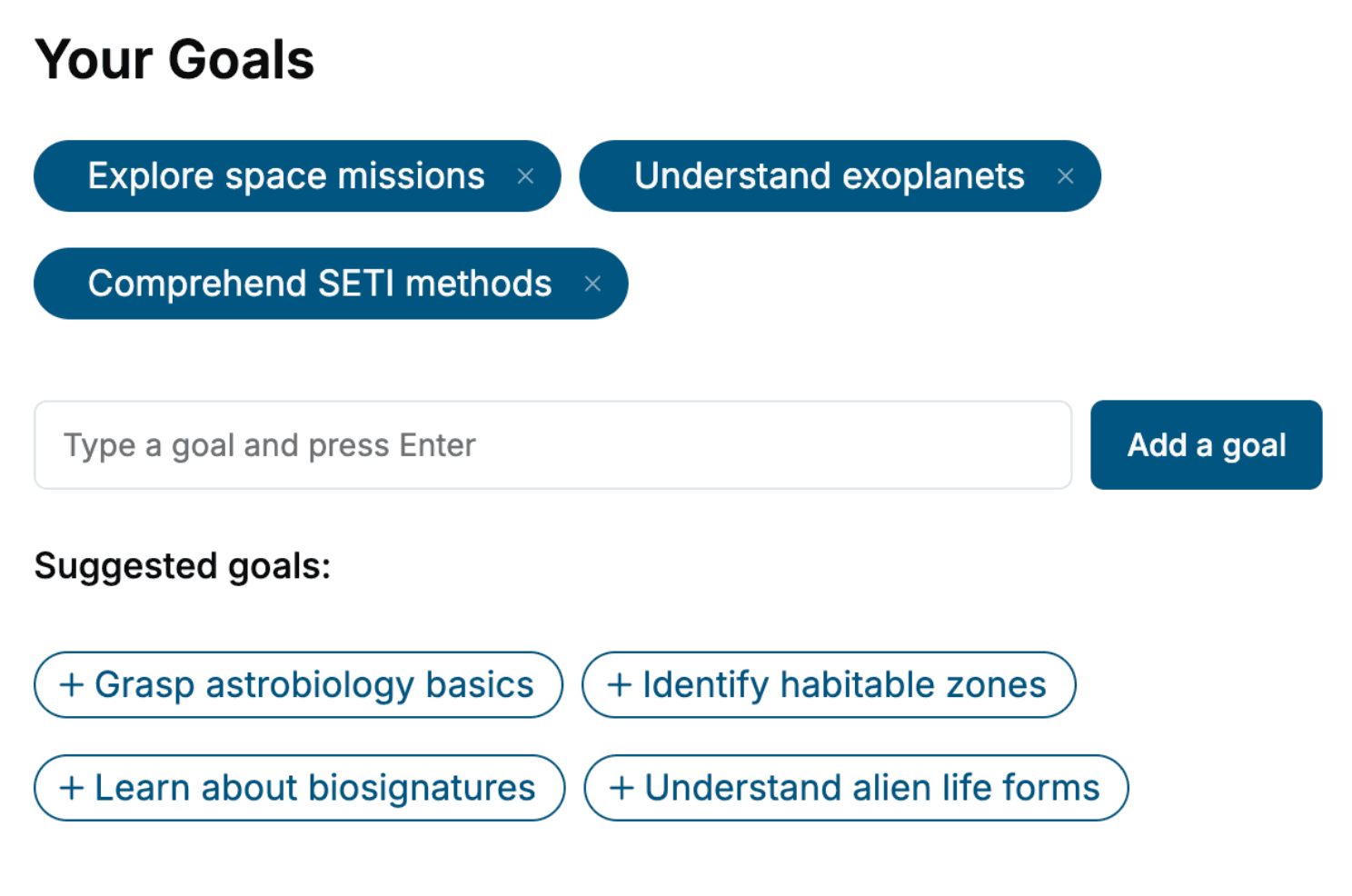
Specify your goals and choose sub-topics to include
- 3. Get your tailored book
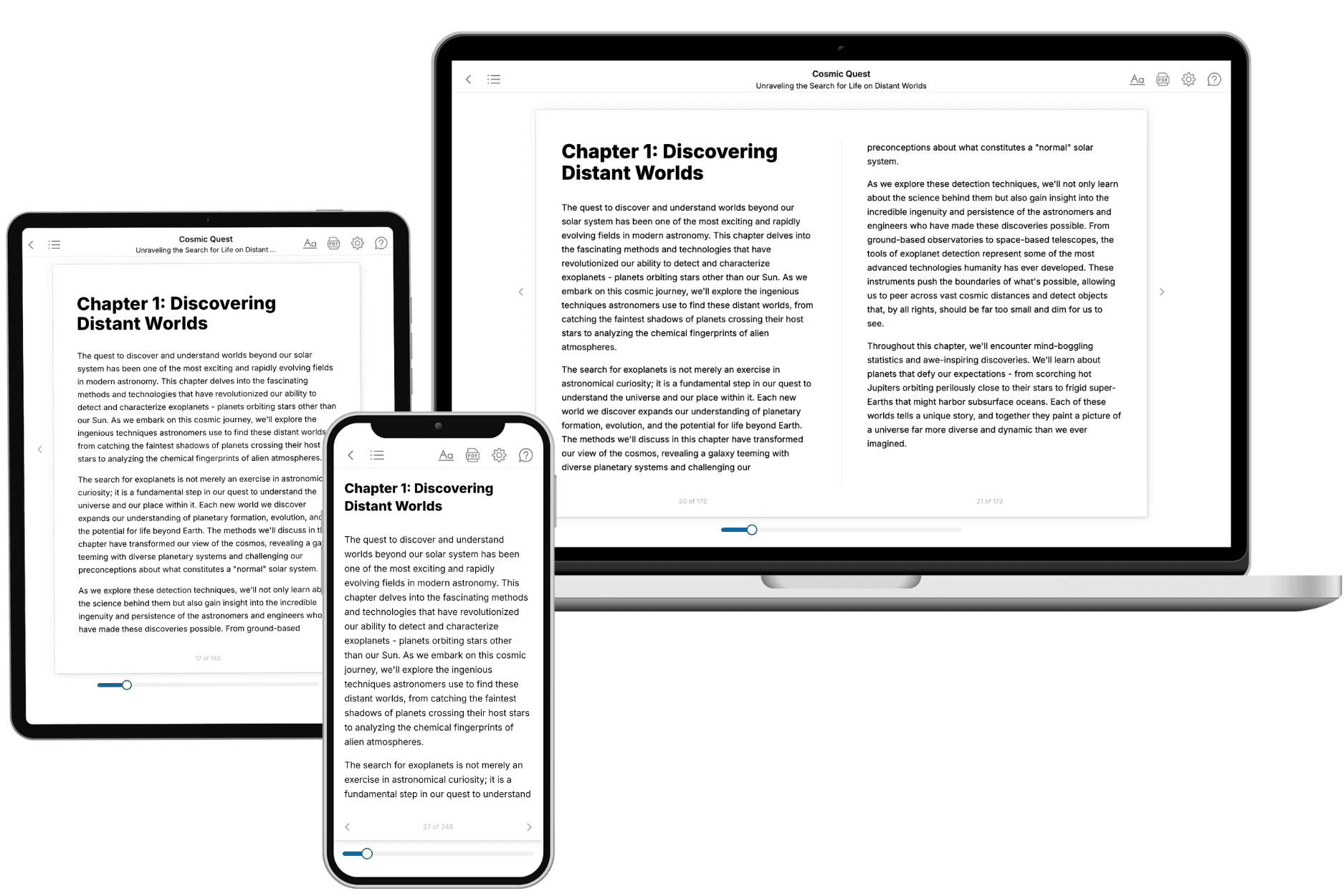
Your book is ready in 10 minutes. Read it online, download as EPUB or PDF, or send to Kindle.

Frequently asked questions
- What is TailoredRead?
TailoredRead creates complete, full-length nonfiction ebooks, written specifically for you. Tell us what you want to learn and why, and TailoredRead writes you a complete ebook on it, with charts, tables, and diagrams throughout. Read it online, on Kindle, or on any e-reader, or download it as a PDF or EPUB. Every book is written fresh the day you order it.
- How is the book tailored to me?
Before anything is written, you answer a few short questions about your goals, your background, and the topics you care about. Your book is then planned around your answers: written at your level, focused on your goals, and covering the topics you chose, instead of the one-size-fits-all book a store sells everyone.
- Will it read like generic AI content?
No. Your book isn't a chat transcript: it's planned chapter by chapter before a single word is written, told in a clear book voice, and explains ideas visually with charts, tables, and diagrams. After writing, every book goes through an editorial pass that polishes chapters so the book reads consistent from start to finish. Judge for yourself: browse thousands of sample books on our Explore Books page.
- How accurate is the content?
Our AI first checks whether your subject needs live research. Niche and fast-moving subjects are researched before writing, and the book plan and chapters are grounded in what it finds. After writing, every book goes through a quality pass that checks its facts and consistency, and researched books list their sources in a Notes section at the back.
- How long is the book?
You choose the length: Comprehensive (250-300 pages), Detailed (150-200 pages), Essential (70-100 pages), or Short (30-50 pages).
- Does the book include visuals?
Yes. Every book includes charts, tables, and diagrams: timelines, checklists, step-by-step guides, decision trees, comparison tables, matrices, and bar charts. A typical book includes dozens of these visual elements.
- Can I read it on Kindle? What formats can I download?
Yes. Every book can be read in our online reader or downloaded as a PDF or EPUB. The EPUB can be opened with Kindle, Apple Books, Kobo, and any e-reader. The Commercial and Author licenses also include an editable Word (DOCX) and Markdown download.
- How much does it cost?
About the price of a regular ebook. The exact price depends on your book's length and complexity, from $2 for the shortest books to $35 for the most comprehensive, and it's shown when you review your book, before you commit to anything. Each book is a one-time purchase, yours to keep, no subscription. Licenses that let you share, teach, or publish your book range from $35.99 to $49.99.
- Can I preview the book before purchasing?
Before you pay, you'll see what your book will cover: the title, a detailed description, the estimated length, and the complete chapter-by-chapter table of contents, so you know what you're getting before you decide. The full text itself is written after you purchase.
- How long does it take to create a book?
About 10 minutes. You can start reading the opening chapters while the rest is still being written.